Puppy Immunization Chart & First-Year Care: Week-by-Week Milestone Guide
Complete puppy immunization chart with week-by-week vaccine schedules, feeding portions, potty training timelines, and first-year cost breakdowns for new owners.

Your Puppy's First Year: A Week-by-Week Roadmap
Bringing a puppy home means juggling vet visits, feeding schedules, potty training, and socialization — all while your puppy is rapidly growing and developing. Most new owners underestimate how tightly these milestones overlap. A missed vaccine window can leave your puppy vulnerable to parvovirus; a missed socialization window (which closes around 14 weeks) can create lifelong fear responses.
This guide consolidates every critical milestone from week 4 through month 12 into a single reference. Bookmark it, print it, and share it with anyone helping you raise your puppy. All vaccine recommendations align with the American Animal Hospital Association (AAHA) canine vaccination guidelines and the AVMA vaccination principles.
Age-Specific Milestones: What to Expect at Every Stage
Each developmental window carries specific physical, behavioral, and immunological changes. Here's what's happening with your puppy at each stage and what you should be doing.
Weeks 4–8: Neonatal to Transitional (Still with Breeder)
Physical: Eyes and ears fully functional. Baby teeth erupting (incisors first, then canines). Weight should double from birth weight. Weaning begins around week 4 — breeder introduces gruel (puppy kibble soaked in warm water or puppy milk replacer).
Behavioral: Littermate play begins, including bite inhibition learning. First fear period may start around week 8. Puppies begin forming attachments to humans during this window.
Immunity: Maternal antibodies (from colostrum) are still protecting your puppy but declining. First DHPP vaccine may be given at 6 weeks by the breeder or shelter.
Your role: If visiting the litter, handle the puppy gently for short sessions (5–10 minutes). Observe the breeder's environment — puppies should be raised in a home setting with household noise exposure, not isolated in a kennel.
Weeks 8–12: Homecoming & Primary Socialization
Physical: Weighing 5–15 lb depending on breed (small breeds ~5 lb, large breeds ~15 lb). Eating solid puppy food 3–4 times daily. Bladder capacity: roughly 1 hour per month of age (so ~2 hours max at 8 weeks).
Behavioral: Peak socialization window is OPEN. This is the single most important period for exposure to new surfaces, sounds, people, and environments. Separation from littermates causes initial stress — expect 2–5 nights of whining in the crate.
Immunity: Maternal antibodies are waning but may still interfere with vaccines. DHPP booster given at 10–12 weeks. Your puppy is NOT fully protected — avoid dog parks, pet stores, and unknown dogs.
Your role: Begin positive-reinforcement training (name recognition, sit, crate games). Carry your puppy in a sling or backpack for outdoor exposure without ground contact in high-risk areas.
Weeks 12–16: Building Confidence & Vaccine Completion
Physical: Rapid growth phase — large breeds may gain 2–4 lb per week. Adult teeth begin pushing out baby teeth around week 14 (starting with incisors). Bladder control improving to ~3 hours.
Behavioral: Second fear period often hits around 14–16 weeks. Your puppy may suddenly become fearful of previously tolerated stimuli (trash cans, hats, loud noises). Do NOT force exposure — use treats and distance to build positive associations.
Immunity: Final DHPP booster at 14–16 weeks. Rabies vaccine administered (legally required in all US states). Full immunity develops approximately 2 weeks after the final DHPP booster.
Your role: Enroll in a positive-reinforcement puppy kindergarten class (require proof of vaccination). Begin leash walking in low-distraction environments. Increase crate duration gradually.
Weeks 16–24: Adolescence Begins
Physical: Most baby teeth replaced by adult teeth (42 total). Growth rate slows for small breeds (near adult size by 6 months) but continues for large/giant breeds (won't reach adult size until 12–18 months). Spay/neuter typically discussed with your vet during this window.
Behavioral: Adolescent testing phase — previously reliable cues may be ignored. Prey drive and territorial behaviors may emerge. Chewing peaks due to teething discomfort and exploration drive.
Immunity: Fully vaccinated (if schedule followed). Safe to visit dog parks, hiking trails, and group classes. Bordetella booster may be recommended if attending daycare or boarding.
Your role: Maintain training consistency. Increase physical exercise appropriately (5 minutes per month of age per session is a common guideline for structured walks). Begin practicing alone-time to prevent separation anxiety.
Months 6–12: Young Adult Transition
Physical: Small breeds reach adult weight (4–20 lb). Medium breeds approach adult weight (20–60 lb). Large/giant breeds are 60–80% of adult weight and continue growing. Transition from puppy food to adult food begins for small breeds at 9–12 months; large breeds stay on puppy food until 12–18 months.
Behavioral: Energy levels remain high but attention span improves. Social maturity begins — some dogs become less interested in playing with unfamiliar dogs. Sexual maturity reached if not spayed/neutered (first heat cycle in females typically 6–12 months).
Immunity: First annual booster visit due at 12 months (or 1 year after final puppy series, depending on protocol). Your vet will discuss titer testing as an alternative to annual boosters.
Your role: Reassess diet and caloric needs. Continue socialization — it doesn't end at 16 weeks. Consider advanced training classes or canine sports (agility, nosework, rally).
Your Puppy Immunization Chart: Vaccine Schedule by Week
This puppy immunization chart follows the core vaccine protocol recommended by the AAHA Canine Vaccination Guidelines. Core vaccines protect against diseases with high mortality rates or legal requirements. Non-core (lifestyle) vaccines depend on your puppy's exposure risk.
| Age | Vaccine | Type | Notes |
|---|---|---|---|
| 6–8 weeks | DHPP (1st dose) | Core | Distemper, Hepatitis (Adenovirus-2), Parainfluenza, Parvovirus. Often given by breeder/shelter. |
| 10–12 weeks | DHPP (2nd dose) | Core | Booster — maternal antibodies may still partially interfere. Leptospirosis (1st) may start if recommended. |
| 14–16 weeks | DHPP (3rd/final dose) + Rabies | Core | Final puppy DHPP — maternal antibodies now low enough for full response. Rabies required by law. Leptospirosis (2nd) if applicable. |
| 12–16 weeks (lifestyle) | Bordetella, Leptospira, Lyme, Canine Influenza | Non-core | Based on exposure risk: daycare, boarding, hiking in tick areas, regional outbreaks. Discuss with your vet. |
| 12 months | DHPP booster + Rabies booster | Core | First annual booster. After this, DHPP may be given every 3 years per AAHA guidelines. Rabies interval varies by state law (1 or 3 years). |
Mild lethargy and soreness for 24 hours is normal. Contact your veterinarian immediately if your puppy experiences facial swelling, hives, vomiting, diarrhea, difficulty breathing, or collapse within hours of vaccination — these are signs of anaphylaxis, which requires emergency treatment.
When Can My Puppy Go Outside and Meet Other Dogs?
Your puppy can safely interact with fully vaccinated, known dogs in private yards or homes immediately after coming home. However, high-risk public areas (dog parks, pet store floors, rest stop grass) should be avoided until 2 weeks after the final DHPP booster — typically around 18 weeks of age.
This doesn't mean keeping your puppy isolated. Carry them in a sling, use a stroller, or visit friends' homes with healthy dogs. The socialization window (3–14 weeks) is too critical to waste. The AVMA supports safe, controlled socialization before full immunity — the behavioral risk of under-socialization outweighs the disease risk when managed carefully.
Feeding Schedule: Exact Portions by Age and Weight
Feeding frequency and volume change rapidly during the first year. The portions below assume a high-quality, AAFCO-approved puppy food with a caloric density of approximately 350–400 kcal per cup. Always check your specific food's feeding guide and adjust based on your puppy's body condition score (BCS) — you should be able to feel ribs without pressing hard, and see a visible waist from above.
| Age | Meals/Day | Small Breed (10–20 lb adult) | Medium Breed (25–50 lb adult) | Large Breed (60–100 lb adult) |
|---|---|---|---|---|
| 8–12 weeks | 4 meals | ¼ – ½ cup/day | ½ – 1 cup/day | 1 – 2 cups/day |
| 12–16 weeks | 3 meals | ⅓ – ¾ cup/day | 1 – 1¾ cups/day | 2 – 3½ cups/day |
| 4–6 months | 3 meals | ½ – 1 cup/day | 1½ – 2½ cups/day | 3 – 5 cups/day |
| 6–12 months | 2 meals | ¾ – 1¼ cups/day | 2 – 3 cups/day | 3½ – 5½ cups/day |
Large breed note: Use a large-breed puppy formula (calcium:phosphorus ratio of 1.1:1 to 1.4:1, and caloric density below 3,700 kcal/kg) to reduce the risk of developmental orthopedic diseases like hip dysplasia and osteochondrosis. Never supplement calcium without veterinary guidance — excess calcium is more harmful than deficiency in growing large-breed puppies.
How Often Should I Feed My Puppy at Each Age?
The short answer: 4 meals daily from 8–12 weeks, 3 meals from 12 weeks to 6 months, and 2 meals from 6 months onward. Small breeds (under 10 lb expected adult weight) are prone to hypoglycemia and should never go more than 4–5 hours without eating during the first 3 months. If your small-breed puppy refuses a meal and becomes lethargic, rub a small amount of Karo syrup on their gums and contact your vet.
Potty Training Timeline: Realistic Expectations
Potty training is not a single event — it's a months-long process of building bladder capacity and habit. Here's what realistic progress looks like:
- 8–10 weeks: Accidents every 1–2 hours if not taken out. Crate helps prevent nighttime accidents (puppies won't soil their sleeping space if crate is correctly sized). Expect 1–3 nighttime wake-ups.
- 10–14 weeks: Bladder control extends to 2–3 hours. Puppy begins to signal (sniffing, circling, heading to door). Accidents drop to 1–3 per week with consistent schedule.
- 14–20 weeks: Most puppies can hold for 3–4 hours during the day. Nighttime sleep stretches to 6–8 hours. Occasional accidents still occur, especially after play excitement or schedule changes.
- 4–6 months: Reliable with a schedule (taken out after waking, eating, playing, and every 3–4 hours). May still have accidents if left alone too long or in a new environment.
- 6–12 months: Fully reliable in most dogs. Intact males may begin marking — spay/neuter reduces this behavior in approximately 80% of dogs.
When Will My Puppy Be Fully Potty Trained?
Most puppies are functionally reliable by 4–6 months with consistent scheduling. However, "fully" trained — meaning no accidents even with schedule disruptions — typically takes 8–12 months. Small breeds often take longer due to smaller bladders and higher metabolisms. If your puppy is having more than 1 accident per day after 16 weeks despite a consistent schedule, consult your veterinarian to rule out urinary tract infections or anatomical issues.
📋 Potty Training Log Template
Track these data points for 2 weeks to identify your puppy's natural rhythm:
- Time taken outside
- Elimination (Y/N, urine/stool/both)
- Time of last meal/water
- Activity before outing (sleep, play, crate)
- Accidents (time, location, what happened before)
After 2 weeks, you'll see clear patterns — most puppies need to go out within 15–20 minutes of eating and within 5 minutes of waking from a nap.
Socialization Window (Weeks 3–14): Your Exposure Checklist
The primary socialization period closes between 12–14 weeks of age. After this window, unfamiliar stimuli trigger fear rather than curiosity. The Merck Veterinary Manual emphasizes that under-socialized puppies are significantly more likely to develop fear-based aggression, separation anxiety, and noise phobias.
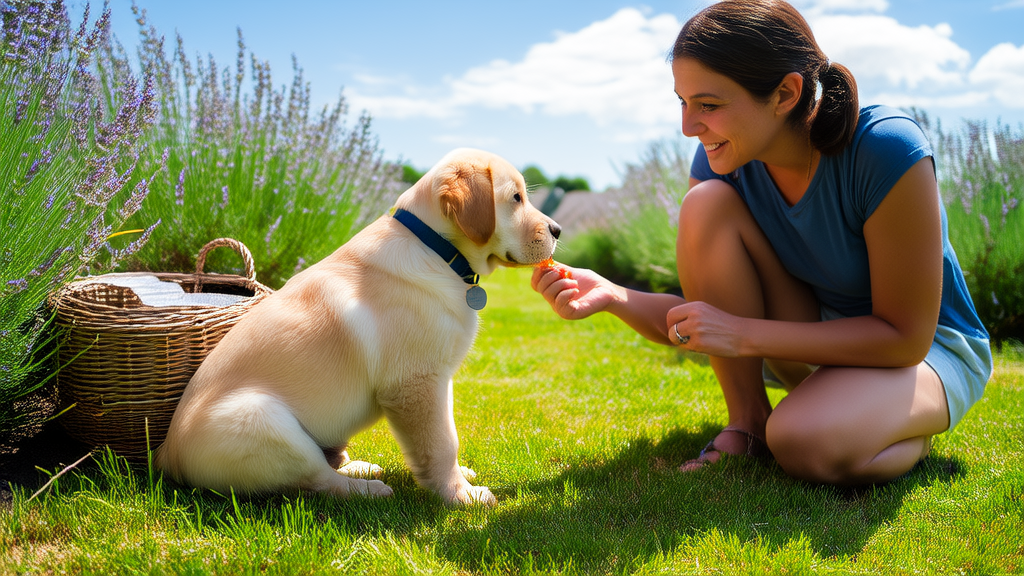
Below is a concrete checklist. Aim for positive exposures (paired with treats and praise) — not just exposure, but positive exposure. If your puppy shows fear, increase distance and decrease intensity.
🧑 People (aim for 100+ positive encounters)
- Children (supervised, calm interactions)
- People wearing hats, sunglasses, hoodies
- People using canes, crutches, wheelchairs
- People of different heights, skin tones, builds
- People carrying bags, umbrellas, boxes
- People with beards, long hair, shaved heads
🌍 Surfaces & Environments
- Grass, gravel, sand, mud
- Metal grates, slippery tile, wet pavement
- Elevators, stairs (carried if under 12 weeks for joint safety)
- Car rides (short trips, 5–10 minutes)
- Vet clinic waiting room (happy visits, no procedures)
- Grooming table, bathtub, crate in different rooms
🔊 Sounds (start at low volume, pair with treats)
- Thunder recordings, fireworks recordings
- Vacuum cleaner, blender, hair dryer
- Doorbell, knocking, alarm clocks
- Traffic, sirens, construction noise
- Other dogs barking (YouTube at low volume)
- Crowd noise, children playing
🐕 Other Animals (after initial vaccines)
- Fully vaccinated adult dogs (calm, puppy-tolerant)
- Puppy kindergarten class (structured, supervised)
- Cats (supervised, controlled introduction)
- Livestock (from a safe distance if rural)
- Watching birds, squirrels from a window
Crate Training Progression: Time Limits by Age
A crate is a management tool and a safe space — not a punishment. The general guideline for maximum crate time during the day is your puppy's age in months plus one, expressed in hours. But this is a maximum, not a target. Puppies need exercise, socialization, and interaction between crate sessions.
| Age | Max Daytime Crate Duration | Nighttime Expectation | Crate Size Tip |
|---|---|---|---|
| 8–10 weeks | 30–60 minutes | Wake every 2–3 hours for potty | Use divider panel — crate should allow standing and turning, not extra room |
| 10–14 weeks | 1–2 hours | Wake every 3–4 hours | Move divider out as puppy grows |
| 14–16 weeks | 2–3 hours | 4–5 hour stretches | Full crate size appropriate for expected adult dimensions |
| 4–6 months | 3–4 hours | 6–8 hours (most sleep through) | Add a bed or mat if puppy no longer chews fabric |
| 6+ months | 4–5 hours max | 8 hours (overnight) | Consider leaving crate door open when home — dog chooses to rest inside |
Teething Timeline and Relief Strategies (3–6 Months)
Puppies have 28 deciduous (baby) teeth that begin erupting at 3–4 weeks and are fully in place by 6–8 weeks. Starting around 12–16 weeks, adult teeth push out the baby teeth. By 6–7 months, all 42 permanent teeth should be erupted. During this process, your puppy will chew relentlessly to relieve gum pressure and discomfort.
Teething Phase Breakdown
- 12–16 weeks: Incisors begin loosening. You may find tiny teeth on the floor (many puppies swallow them — this is harmless). Mild gum bleeding is normal.
- 16–20 weeks: Canines and premolars erupt. This is peak chewing intensity. Your puppy's mouth is sore and chewing provides counter-pressure relief.
- 20–28 weeks: Molars come in. Chewing intensity gradually decreases. Retained baby teeth (especially canines) should be evaluated by your vet — they may need extraction if they don't fall out naturally.
Safe Chew Recommendations
✅ Safe Options
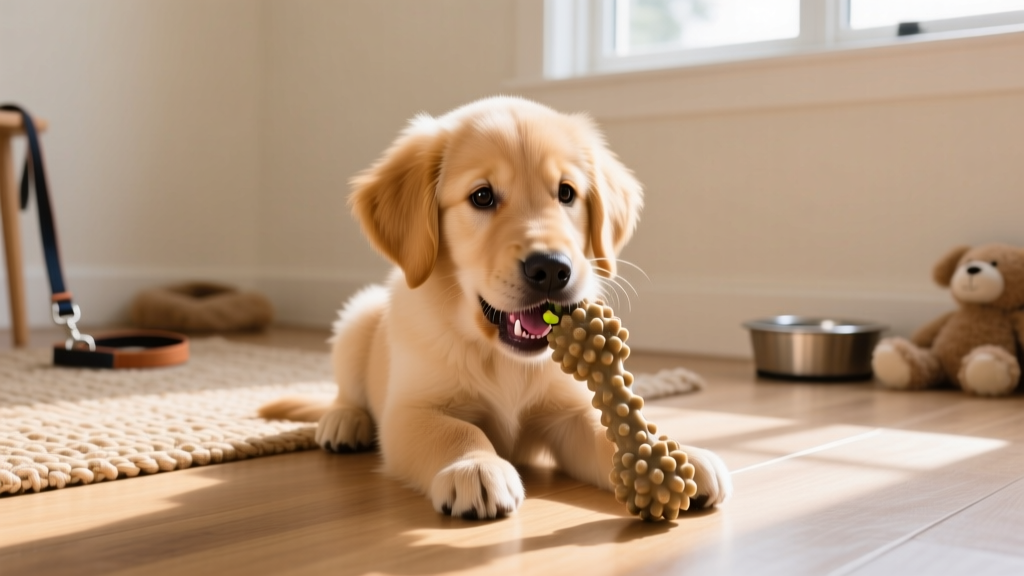
- Kong Classic (frozen with peanut butter or puppy-safe yogurt)
- Nylabone Puppy Chew (flexible, designed for baby teeth)
- Frozen wet washcloth (twisted, soaked in water or low-sodium broth)
- Benebone Puppy (softer rubber formula)
- Carrots (frozen, large enough not to choke on)
- Yak cheese chews (supervise — remove small pieces)
❌ Avoid
- Rawhide (choking and intestinal blockage risk)
- Antlers and weight-bearing bones (tooth fractures — puppies' teeth are fragile)
- Hard nylon bones meant for adult dogs
- Shoes, socks, or old clothing (teaches that fabric items are chew toys)
- Cooked bones of any kind (splinter hazard)
- Ice cubes (too hard for puppy teeth — use crushed ice instead)
Common Puppy Problems: Breed-Stage Solutions
Puppy Biting and Nipping
Puppies explore the world with their mouths, and bite inhibition is learned through feedback. When your puppy bites your skin:
- Say "ouch" in a calm, slightly high-pitched tone (mimics littermate yelp).
- Immediately withdraw attention — stand up, cross arms, look away for 10–15 seconds.
- Redirect to an appropriate chew toy when they return.
- If biting persists after 3 redirects, end the play session with a brief (30–60 second) crate or pen timeout — not as punishment, but as a calm-down period.
Never hold the mouth shut, alpha roll, or use physical punishment. These methods increase fear and can escalate biting. Consistency from all household members is essential — if one person allows mouthing, the puppy will continue the behavior with everyone.
Nighttime Whining in the Crate
For the first 3–5 nights, expect whining. Place the crate near your bed so your puppy can hear and smell you. Cover the crate with a light blanket on three sides to create a den-like feel. A Snuggle Puppy (with heartbeat simulator and heat pack) reduces crying for many puppies. If whining occurs after the initial adjustment period, assess: Does the puppy need to eliminate? Is the room too hot/cold? Is there a noise trigger? Address the cause rather than letting the puppy "cry it out," which can increase anxiety.
Destructive Chewing
Between 3–6 months, chewing peaks due to teething. Between 6–12 months, chewing continues due to adolescent energy and boredom. Management is the strategy: puppy-proof rooms (remove shoes, cords, remotes), provide 5–7 appropriate chew toys rotated weekly for novelty, and ensure adequate physical exercise and mental enrichment (puzzle feeders, snuffle mats, training sessions). A tired puppy is a less destructive puppy — aim for age-appropriate activity levels.
First-Year Cost Breakdown: Budgeting Reality Check
New owners consistently underestimate first-year costs. Below is a realistic range based on 2025–2026 US pricing data. Costs vary significantly by region (urban areas are 20–40% higher) and breed size (large breeds cost more for food, medications, and supplies).
| Category | Small Breed | Medium Breed | Large Breed |
|---|---|---|---|
| Puppy purchase/adoption | $500–$3,500 | $500–$3,000 | $800–$4,000 |
| Veterinary (vaccines, exams, spay/neuter) | $600–$1,200 | $700–$1,500 | $800–$1,800 |
| Food (puppy formula, 12 months) | $250–$500 | $400–$800 | $600–$1,200 |
| Supplies (crate, bed, leash, bowls, toys) | $200–$500 | $250–$600 | $300–$800 |
| Training (puppy class + basic obedience) | $150–$400 | $150–$400 | $150–$400 |
| Preventive medications (flea/tick, heartworm) | $150–$350 | $200–$450 | $250–$500 |
| Pet insurance (annual premium) | $350–$700 | $400–$800 | $500–$1,000 |
| Estimated first-year total | $2,200–$7,150 | $2,600–$7,550 | $3,400–$9,700 |
Emergency fund recommendation: Set aside $1,000–$2,000 for unexpected vet visits. Puppies are prone to ingesting foreign objects, and an intestinal blockage surgery costs $2,500–$7,000. Pet insurance (enrolled before any conditions develop) can reimburse 70–90% of these costs depending on your plan.
Frequently Asked Questions
When should I bring my puppy home?
The optimal age is 8–10 weeks. Puppies removed from their litter before 8 weeks miss critical bite inhibition and social signaling lessons from littermates and the mother. Puppies from responsible breeders are typically available at 8–10 weeks. Some breeders of toy breeds prefer to keep puppies until 10–12 weeks due to fragility and hypoglycemia risk. Avoid any breeder offering puppies younger than 7 weeks — this is a red flag for irresponsible practices.
How do I stop puppy biting and nipping?
Use the redirect-and-withdraw method consistently: when teeth touch skin, say "ouch," withdraw attention for 10–15 seconds, then offer a chew toy. This mimics how littermates teach bite inhibition. Expect 2–4 weeks of consistency before seeing significant improvement. If biting is intense and persistent beyond 16 weeks, consult a certified force-free trainer (look for CPDT-KA or KPA credentials). Never use physical punishment — it damages trust and can create fear-based aggression.
What if my puppy has a reaction to a vaccine?
Mild reactions (lethargy, mild fever, soreness at injection site, reduced appetite) are common and resolve within 24–48 hours. Severe reactions — facial swelling, hives, persistent vomiting, difficulty breathing, collapse — are veterinary emergencies. Contact your vet immediately or visit an emergency clinic. For future vaccinations, your vet may pre-medicate with an antihistamine or split vaccines across multiple visits to reduce reaction risk.
Should I wake my sleeping puppy to go potty?
During the day, yes — especially in the first 12 weeks. Set a timer for every 1–2 hours and gently wake your puppy to go outside. This prevents accidents and builds the association that elimination happens outdoors. At night, wake them for potty breaks based on their age (every 2–3 hours at 8 weeks, extending as they grow). Once your puppy consistently sleeps through without accidents, you can stop nighttime wake-ups.
When can my puppy start group training classes?
Most positive-reinforcement puppy kindergarten classes accept puppies starting at 10–12 weeks, after the first DHPP booster. The AVMA supports early socialization in controlled environments because the behavioral benefits outweigh the minimal disease risk when all attending puppies have begun their vaccine series and the facility is properly sanitized. Look for classes that require proof of vaccination, limit class size to 6–8 puppies, and use only reward-based methods.
Is pet insurance worth it for a puppy?
Enrolling during puppyhood is the most cost-effective time because pre-existing conditions are excluded from all policies. A puppy enrolled at 8 weeks with no prior health issues will have the broadest coverage. Average monthly premiums for puppies range from $30–$85 depending on breed, location, and coverage level. Given that emergency surgeries cost $2,500–$7,000 and hereditary conditions (hip dysplasia, elbow dysplasia, cardiac issues) often appear in the first 2 years, insurance provides financial predictability for most owners.
Dr. Hannah Wickes
All our authors care for dogs every day — read more of their work on the authors page.