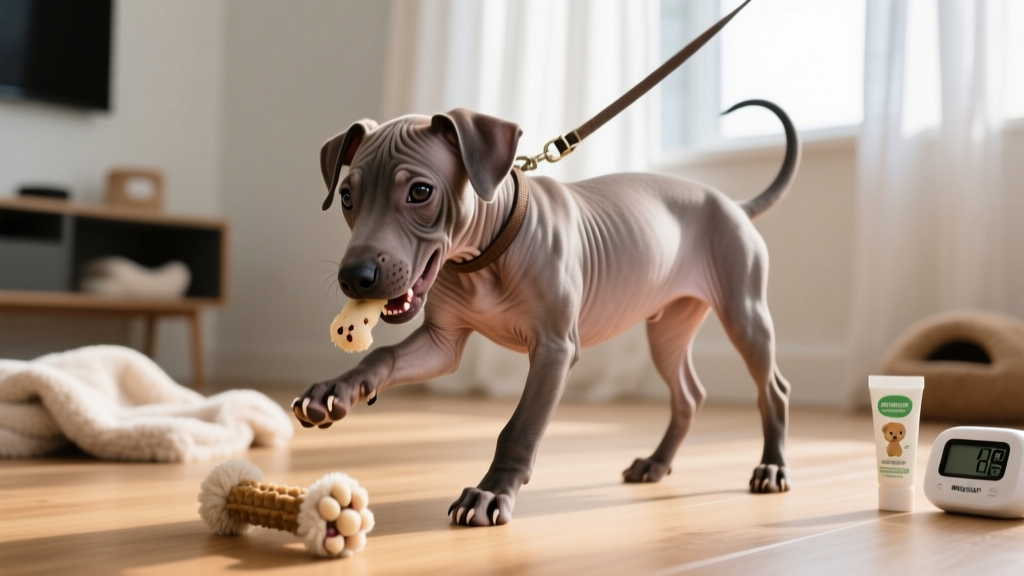
Puppy Dog First Injections & Complete Vaccination Schedule by Age
Complete guide to puppy dog first injections: exact vaccine timelines at 6-8, 10-12, and 14-16 weeks, plus feeding, potty training, and first-year costs.

Bringing a new puppy home means navigating a maze of veterinary appointments, and understanding your puppy dog first injections is the single most important health decision you will make in those early months. The core vaccine series protects against diseases with mortality rates as high as 91% in unvaccinated puppies — notably canine parvovirus, which the Merck Veterinary Manual identifies as the leading infectious killer of puppies under six months.
This guide walks you through every injection your puppy needs, mapped to exact age windows, alongside the feeding, training, and socialization milestones that shape a healthy first year. All costs reflect 2026 US veterinary pricing averages.
Your Puppy's Vaccination Timeline: First Injections Explained
The American Animal Hospital Association (AAHA) canine vaccination guidelines recommend a series of DHPP (distemper, hepatitis, parainfluenza, parvovirus) combination vaccines administered every 2–4 weeks from 6–8 weeks of age through 14–16 weeks. Maternal antibodies — passed from the dam through colostrum — interfere with vaccine response in early weeks, which is why a single shot is never sufficient.
| Age Window | Vaccine(s) Administered | What It Protects Against | Typical Cost (2026) |
|---|---|---|---|
| 6–8 weeks | DHPP #1 (first puppy dog injection) | Distemper, Adenovirus-2 (hepatitis), Parainfluenza, Parvovirus | $20–$35 |
| 8–10 weeks | DHPP #2 + Bordetella (optional) | Same as above (booster) + kennel cough | $25–$45 |
| 10–12 weeks | DHPP #3 + Leptospirosis #1 (risk-based) | Core booster + leptospirosis (bacterial, zoonotic) | $30–$50 |
| 12–14 weeks | Leptospirosis #2 + Lyme (risk-based) | Lepto booster + Lyme disease (tick-borne) | $30–$50 |
| 14–16 weeks | DHPP #4 (final puppy series) + Rabies | Final core booster + rabies (legally required) | $35–$60 |
| 12–16 months | DHPP booster + Rabies booster | First annual/3-year adult boosters | $40–$75 |
What to Expect During and After Puppy Dog First Injections
Most puppies tolerate injections well. Mild post-vaccine reactions include lethargy for 12–24 hours, slight fever (up to 103.5°F / 39.7°C), and reduced appetite. According to the AVMA, serious adverse reactions (facial swelling, hives, vomiting, collapse) occur in fewer than 1% of vaccinated dogs. If your puppy develops facial swelling or difficulty breathing within 4 hours of an injection, contact your emergency vet immediately — this indicates anaphylaxis and requires urgent treatment.
Age-Specific Puppy Milestones: Weeks 4 Through 12 Months
Each developmental window carries specific physical and behavioral expectations. Missing critical periods — especially the socialization window — can create lasting behavioral gaps.
Weeks 4–8: Transitional and Early Socialization
- Physical: Baby teeth fully erupted (28 deciduous teeth); weight roughly doubles from week 4 to week 8; coordination improves dramatically
- Behavioral: Littermate play teaches bite inhibition; startle recovery develops; curiosity peaks around week 6–7
- Your role: If you are the breeder or fostering, begin handling exercises — touch paws, ears, mouth daily for 30–60 seconds. Introduce novel surfaces (tile, carpet, tarps) and mild sounds
- Vaccine status: DHPP #1 typically given at week 6–8; puppy is NOT yet protected — limit environmental exposure to areas where unknown dogs have been
Weeks 8–12: Home Transition and Fear Imprint Period
- Physical: Rapid growth phase; large breeds gain 2–4 lb per week; small breeds gain 0.5–1 lb per week
- Behavioral: First fear impact period (8–11 weeks) — traumatic experiences during this window can create lasting phobias. Keep vet visits positive with high-value treats (boiled chicken, squeeze cheese)
- Your role: Begin crate training, establish feeding routine, start name recognition. Keep training sessions to 3–5 minutes maximum
- Vaccine status: DHPP #2 at 10–12 weeks; still NOT fully protected
Weeks 12–16: Building Confidence and Core Manners
- Physical: Adult teeth begin pushing out deciduous teeth around week 14–16; growth rate begins to slow slightly
- Behavioral: Attention span lengthens to 5–10 minutes; puppy can learn sit, down, come, and loose-leash basics
- Your role: Enroll in a positive-reinforcement puppy class (many require proof of at least 2 DHPP rounds). Practice handling exercises for grooming prep
- Vaccine status: DHPP #3 at 12–14 weeks; DHPP #4 + Rabies at 14–16 weeks. Full protection achieved approximately 2 weeks AFTER the final DHPP #4
Weeks 16–24 (4–6 Months): Adolescence Begins
- Physical: Teething peaks; adult teeth fully in by 6 months (42 permanent teeth); large breeds reach 50–60% of adult weight
- Behavioral: Second fear period may emerge around 6 months; independence increases; recall reliability often drops temporarily
- Your role: Increase exercise duration (see crate and exercise guidelines below); begin proofing commands in distracting environments; spay/neuter discussion with your vet (timing varies by breed size)
Months 6–12: Approaching Maturity
- Physical: Small breeds reach adult size by 9–12 months; large/giant breeds continue growing until 18–24 months
- Behavioral: Sexual maturity if intact; energy remains high but impulse control improves with consistent training
- Your role: Transition to adult food (timing varies by breed size — giant breeds stay on puppy formula until 12–18 months); schedule 12–16 month vaccine boosters
Feeding Schedule: Exact Portions by Age and Weight
Puppies require 2–3 times the caloric density of adult dogs per pound of body weight. The following table uses a standard AAFCO-approved puppy kibble (approximately 400 kcal/cup) as a baseline. Always check your specific food's caloric content and adjust accordingly.
| Age | Meals/Day | Small Breed (10–25 lb adult) | Medium Breed (26–55 lb adult) | Large Breed (56–100 lb adult) |
|---|---|---|---|---|
| 8–12 weeks | 4 | ¼–½ cup total/day | ½–1 cup total/day | 1–2 cups total/day |
| 3–4 months | 3 | ⅓–¾ cup total/day | 1–1½ cups total/day | 2–3 cups total/day |
| 4–6 months | 3 | ½–1 cup total/day | 1½–2½ cups total/day | 3–4½ cups total/day |
| 6–9 months | 2 | ¾–1¼ cups total/day | 2–3 cups total/day | 3½–5 cups total/day |
| 9–12 months | 2 | Transition to adult food | 2½–3½ cups total/day | 4–6 cups total/day (still puppy formula) |
How Often Should I Feed My Puppy?
Feed 4 meals daily from 8–12 weeks, reduce to 3 meals from 3–6 months, then 2 meals from 6 months onward. Split the daily total evenly across meals. Feed at consistent times — for example, 7 AM, 12 PM, 5 PM, and 9 PM for a 4-meal schedule. Remove uneaten food after 15–20 minutes to establish mealtime structure and aid potty training predictability.
Potty Training Timeline and Troubleshooting
Realistic potty training timelines depend on bladder capacity, which develops roughly as: a puppy can hold urine for approximately one hour per month of age, plus one. A 3-month-old puppy has roughly 4 hours of maximum bladder control — and that is during rest, not active play.
| Puppy Age | Max Bladder Hold (awake) | Outdoor Trips/Day | Accident Expectation |
|---|---|---|---|
| 8–10 weeks | 30–60 minutes | 12–15 | Multiple daily; normal |
| 10–14 weeks | 1–2 hours | 8–12 | 2–4 per week if on schedule |
| 3–4 months | 2–3 hours | 6–8 | 1–2 per week |
| 4–6 months | 3–5 hours | 5–6 | Rare if consistent routine |
| 6–12 months | 6–8 hours | 4–5 | Occasional (excitement, marking) |
When Will My Puppy Be Fully Potty Trained?
Most puppies achieve reliable house training between 4–6 months of age with consistent management. Small breeds may take 1–2 months longer due to proportionally smaller bladder capacity and higher metabolism. If your puppy is still having daily accidents past 6 months despite a consistent schedule, consult your veterinarian to rule out urinary tract infection, diabetes, or congenital conditions like ectopic ureters.
Potty Training Protocol
- Take puppy outside within 5 minutes of: waking up, finishing a meal, finishing play, or releasing from crate
- Use a consistent verbal cue ("go potty") while they eliminate; reward immediately with a high-value treat within 2 seconds of completion
- Supervise 100% when loose indoors — tether to you with a leash or use a playpen when you cannot give full attention
- For accidents: clean with enzymatic cleaner (e.g., Nature's Miracle or Rocco & Roxie) to eliminate odor markers; never punish — punishment after the fact creates fear of eliminating in your presence, not understanding of where to go
The Critical Socialization Window: Weeks 3–14
The American Veterinary Society of Animal Behavior (AVSAB) identifies the primary socialization period as 3–14 weeks. During this window, puppies form lasting associations with novel stimuli. The AVSAB position statement on puppy socialization emphasizes that the risk of behavioral euthanasia from poor socialization exceeds the disease risk from controlled exposure before full vaccination.
Socialization Exposure Checklist
Aim for positive (treat-paired) exposure to the following before week 14. Never force interaction — let the puppy approach at their own pace.
- People (12+ types): Children under 10, elderly individuals, people wearing hats/sunglasses, people using wheelchairs/crutches, people of various ethnicities and heights, delivery workers, veterinarians
- Surfaces (8+): Gravel, wet grass, metal grates, stairs, tarps, slippery tile, wobble boards, elevated grooming tables
- Sounds (10+): Vacuum cleaner, thunderstorm recordings (start at low volume), doorbell, car horn, children shouting, fireworks recordings, hair dryer, blender
- Handling (daily): Ear inspection, mouth/tooth handling, paw touching, nail trimming practice, collar/harness manipulation, towel drying, gentle restraint
- Environments (6+): Car rides (short trips to pleasant destinations), pet-friendly store parking lots, outdoor café areas, friend's homes, groomer lobby (carry in before vaccine complete), veterinary clinic (happy visits with treats only)
- Other animals: Fully vaccinated, temperament-tested adult dogs; puppies of similar age in structured class settings. Avoid dog parks until 2 weeks after final DHPP
When Can My Puppy Go Outside and Meet Other Dogs?
Controlled outdoor exposure can begin immediately in low-risk environments: your own yard (if no unknown dogs have access), carried outings in a sling or carrier, and visits to homes of dogs you know are fully vaccinated. Avoid high-traffic dog areas (dog parks, pet store floors, rest stop grass) until 2 weeks after the final DHPP injection at 14–16 weeks — meaning full outdoor freedom typically begins around 16–18 weeks of age.
Teething Timeline and Relief Strategies
Puppy teething follows a predictable sequence. The 28 deciduous (baby) teeth erupt between 3–6 weeks. The 42 permanent teeth begin replacing them starting around 12–16 weeks, with the process typically complete by 6–7 months.
| Age | What Is Happening | Symptoms | Relief Strategy |
|---|---|---|---|
| 3–6 weeks | Baby teeth erupting | Increased mouthing of littermates | Usually managed by dam/littermates |
| 12–16 weeks | Incisors and canines loosening | Drooling, chewing on everything, mild gum bleeding | Frozen damp washcloth, rubber Kong stuffed with soaked kibble |
| 4–5 months | Premolars and molars pushing through | Peak chewing intensity; may find baby teeth on floor | Benebone Wishbone, Nylabone puppy-specific chews (soft formula) |
| 5–7 months | Final molars and canine settlement | Chewing gradually decreases | Rotate chew toys; introduce dental chews (VOHC-approved) if adult teeth fully in |
Crate Training Progression and Time Limits
A crate provides a den-like safe space and leverages a dog's natural instinct to avoid soiling their sleeping area. Time limits are critical — exceeding them creates distress, whining, and negative crate associations.
| Puppy Age | Maximum Continuous Crate Time | Nighttime Expectation |
|---|---|---|
| 8–10 weeks | 1–1.5 hours | 3–4 hours (set alarm for one overnight potty break) |
| 10–14 weeks | 1.5–2 hours | 4–5 hours |
| 3–4 months | 2–3 hours | 5–6 hours |
| 4–6 months | 3–4 hours | 6–8 hours |
| 6+ months | 4–5 hours | 7–8 hours |
Crate Training Steps
- Days 1–3: Leave crate door open; feed all meals inside; toss high-value treats inside; place a worn t-shirt with your scent on the bed
- Days 4–7: Close door during meals, then open immediately after. Begin closing for 1–5 minutes while you remain in sight
- Week 2: Close door, leave room for 5–15 minutes. Expect some whining — do not release while whining (rewards the behavior). Wait for 10 seconds of silence before opening
- Weeks 3–4: Extend to 30–60 minutes; begin leaving the house briefly. Give a frozen stuffed Kong at departure to create positive association
Common Puppy Problems: Breed-Stage Solutions
Puppy Biting and Nipping
Puppies explore the world with their mouths, and bite inhibition must be actively taught. The most effective force-free approach:
- When teeth contact skin, let out a calm "ouch" and immediately withdraw attention for 10–15 seconds (stand up, turn away, or step behind a baby gate)
- Redirect to an appropriate chew toy the moment they stop; reward with praise and play
- Ensure adequate physical exercise and mental enrichment — a bored, under-exercised puppy bites more
- Avoid holding the mouth shut, scruffing, or any physical punishment — these increase fear-based biting
Nighttime Whining
Place the crate in your bedroom for the first 2–4 weeks so the puppy can hear and smell you. If whining occurs after a recent potty break, wait 5–10 minutes before responding. If whining persists, take puppy out on leash for a boring potty trip (no play), then return to crate immediately. This teaches that whining leads to elimination, not play.
Destructive Chewing
Provide a rotation of 5–7 appropriate chew toys, swapping 2–3 each day to maintain novelty. Puppy-proof your home by removing shoes, cords, and low-shelf items. Use bitter apple spray (e.g., Grannick's Bitter Apple, $8–$12) on furniture legs as a deterrent while teaching appropriate chewing targets.
First-Year Cost Breakdown
Budgeting accurately prevents financial stress. The following ranges reflect 2026 US averages for a medium-breed puppy (30–55 lb adult). Small breeds cost less on food; large breeds cost more.
| Category | Items Included | Low Estimate | High Estimate |
|---|---|---|---|
| Veterinary — Vaccines & Wellness | DHPP series (4 rounds), rabies, Bordetella, 3 wellness exams, fecal tests, deworming | $350 | $650 |
| Veterinary — Spay/Neuter | Pre-anesthetic bloodwork, surgery, pain medication, e-collar | $300 | $800 |
| Preventive Medications | Monthly heartworm/intestinal parasite (e.g., Simparica Trio, Interceptor Plus) — 12 months | $180 | $300 |
| Food & Treats | Puppy formula kibble (12 months), training treats | $350 | $700 |
| Supplies | Crate ($50–$120), bed, leash/harness, bowls, toys, enzymatic cleaner, baby gates, grooming tools | $250 | $500 |
| Training | Puppy class (6–8 weeks), optional private sessions | $150 | $500 |
| Microchip & Licensing | Microchip implantation, annual local license | $50 | $100 |
| Pet Insurance (optional) | Monthly premium for accident/illness coverage | $360 | $720 |
| Total First-Year Range | $1,990 | $4,270 | |
Frequently Asked Questions
When should I bring my puppy home?
The optimal age to bring a puppy home is 8–10 weeks. Puppies separated before 8 weeks miss critical littermate socialization that teaches bite inhibition and canine communication. Some breeders of toy breeds retain puppies until 10–12 weeks due to their fragility and higher risk of hypoglycemia. Always ensure your puppy has received at least their first DHPP injection before or within days of coming home.
How do I stop puppy biting and nipping?
Redirect every bite to an appropriate toy, and withdraw attention (stand up, turn away for 10–15 seconds) when teeth contact skin. Consistency from every household member is essential — if one person allows mouthing, the puppy will continue. Most puppies show significant bite inhibition improvement by 4–5 months with consistent redirection. Provide at least 20–30 minutes of structured play and enrichment daily to reduce mouthing from boredom.
What vaccines does my puppy need and when?
Core vaccines include DHPP (distemper, hepatitis, parainfluenza, parvovirus) given as a series at 6–8, 10–12, and 14–16 weeks, plus rabies at 14–16 weeks. Non-core vaccines — Bordetella, leptospirosis, Lyme, canine influenza — are recommended based on your puppy's lifestyle and regional risk. Your veterinarian will determine the appropriate protocol during your first wellness exam.
When can my puppy go outside and meet other dogs?
Controlled exposure in low-risk environments (your yard, carried outings, vaccinated friends' homes) can begin immediately. Avoid high-traffic dog areas until 2 weeks after the final DHPP injection — typically around 16–18 weeks of age. Structured puppy classes that require proof of vaccination are generally safe from 10–12 weeks onward and are strongly recommended by the AVSAB during the socialization window.
How often should I feed my puppy at 8 weeks?
At 8 weeks, feed 4 evenly spaced meals per day. For a medium-breed puppy (expected 30–55 lb adult), this is approximately ½–1 cup of AAFCO-approved puppy kibble total per day, divided into ¼-cup portions at each meal. Adjust based on body condition score — you should be able to feel ribs without pressing hard, and the puppy should have a visible waist when viewed from above.
Beth Carrasco
All our authors care for dogs every day — read more of their work on the authors page.