Raising Puppies That Stay Small: The Complete First-Year Guide
Everything you need to raise puppies that stay small — age milestones, feeding portions, potty training, vaccinations, socialization, and first-year costs.

If you've committed to raising one of the puppies that stay small — think Chihuahuas, Toy Poodles, Pomeranians, Maltese, Yorkshire Terriers, or similar breeds under 15 lb (6.8 kg) as adults — you're signing up for a uniquely rewarding but surprisingly demanding first year. Small-breed puppies face challenges their larger counterparts don't: hypoglycemia risk in the first months, faster metabolic rates requiring more frequent meals, a compressed growth curve, and a socialization window that closes faster than you think.
This guide walks you through every critical stage from week 4 to month 12, with exact feeding portions, vaccination dates, crate time limits, and a realistic cost breakdown. No generic advice — everything here is calibrated for toy and small-breed puppies that will remain under 15 lb at maturity.
When to Bring Your Small-Breed Puppy Home
For puppies that stay small, timing matters more than with larger breeds. The standard recommendation is 8 weeks minimum, but many responsible breeders of toy breeds retain puppies until 10–12 weeks. There's a good reason for this.
Small-breed puppies are extremely fragile between 6–10 weeks. Their blood sugar can crash rapidly (hypoglycemia), their body temperature regulation is poor, and a single missed meal can become an emergency. A breeder who keeps a Chihuahua or Pomeranian until 10–12 weeks is giving that puppy critical developmental time in a controlled environment.
- 8 weeks: Acceptable if you can commit to feeding every 3–4 hours (including overnight), monitoring for hypoglycemia, and maintaining a warm environment (75–80°F / 24–27°C in the puppy's space).
- 10–12 weeks: Ideal for most small breeds. Puppy has better blood sugar stability, has received at least one DHPP vaccine, and has had critical littermate socialization time.
- Avoid before 8 weeks: Puppies removed from their mother and littermates before 8 weeks show significantly higher rates of fear-based behaviors, bite inhibition problems, and attachment issues (AVMA socialization guidelines).
Age-Specific Milestones: Weeks 4 Through Month 12
Small-breed puppies mature faster than large breeds in some ways (they reach adult size sooner) but slower in others (emotional maturity can take 12–18 months). Here's what to expect at each stage.
Feeding Schedule: Exact Portions for Small-Breed Puppies
Puppies that stay small have metabolic rates roughly twice as fast as large-breed dogs relative to body weight. This means they burn through calories quickly and are at real risk of hypoglycemia (dangerously low blood sugar) if meals are skipped or spaced too far apart — especially in the first 12 weeks.
Use a small-breed puppy-specific formula (not adult food, not large-breed puppy food). Look for an AAFCO statement confirming the food is "complete and balanced for growth" and specifically tested or formulated for small/toy breeds. Brands like Royal Canin Small Puppy, Hill's Science Diet Small Paws Puppy, and Purina Pro Plan Toy Breed Puppy are formulated with the higher caloric density and smaller kibble size these puppies need.
Vaccination Schedule: Protecting Your Small Puppy
The American Kennel Club and the American Animal Hospital Association (AAHA) recommend the following core vaccination timeline for puppies. Small breeds follow the same schedule as larger breeds, but you should be aware that toy breeds occasionally show mild post-vaccine reactions (lethargy, mild fever, soreness at injection site) more frequently than larger dogs due to receiving the same dose in a much smaller body.
When can your puppy go outside and meet other dogs? Your puppy can begin controlled socialization outings (carried in your arms, in a stroller, or on a blanket in low-risk environments) immediately after bringing them home. However, avoid dog parks, pet store floors, and unknown dogs until at least 2 weeks after the final DHPP at 14–16 weeks. Puppy socialization classes that require proof of at least one DHPP vaccine and sanitize their floors are generally considered safe from 10 weeks onward — and the AVMA supports this approach because the behavioral risk of under-socialization outweighs the disease risk in controlled settings.
The Socialization Window: Weeks 3–14 (Don't Miss It)
This is arguably the most critical section of this entire guide. The primary socialization window for puppies closes between 12–14 weeks of age. After this period, novel experiences that weren't positively introduced become much harder to normalize. For puppies that stay small — breeds often predisposed to fear-based reactivity, excessive barking, and nervousness — proper socialization during this window is the single biggest factor in long-term behavioral health.
You must balance disease risk (parvo is real and deadly) with behavioral risk. The strategy: controlled exposure, not isolation.
Aim for positive, non-scary exposures. If your puppy shows fear, increase distance, use treats, and never force interaction.
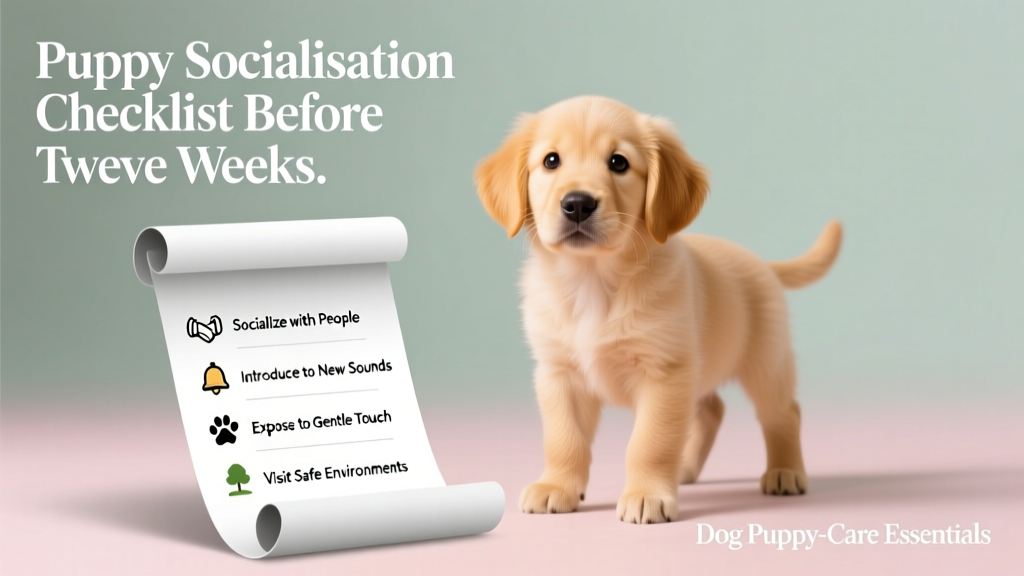
- ☐ People: At least 10–15 different people (different ages, genders, heights, skin tones, people wearing hats/glasses/masks, children who are calm and gentle)
- ☐ Surfaces: Grass, gravel, tile, carpet, metal grates, wet pavement, sand
- ☐ Sounds: Vacuum cleaner (start at low/far), doorbell, clapping, thunderstorm recordings at low volume, traffic noise, children laughing
- ☐ Handling: Paw handling, ear touching, mouth opening, nail clipping simulation, being held in different positions, wearing a harness
- ☐ Objects: Umbrellas opening, plastic bags rustling, bicycles passing, shopping carts, balloons
- ☐ Other vaccinated dogs: At least 3–5 known, fully vaccinated, calm adult dogs in controlled settings
- ☐ Environments: Car rides (short, positive), outdoor café patio (carried), friend's house, vet clinic (happy visits with treats, no procedures)
- ☐ Grooming: Brushing, bathing (gentle, warm water), teeth inspection, nail grinder sound (off, then on at distance)
Potty Training: Realistic Timeline for Small Bladders
Let's set expectations immediately: small-breed puppies take longer to potty train than large breeds. Their bladders are physically tiny (a 3 lb puppy's bladder holds roughly 1–2 tablespoons of urine), and their metabolic rate means they process food and water faster. Most small-breed puppies are mostly reliable by 4–6 months and fully reliable (including overnight) by 6–9 months. Some toy breeds take up to 12 months for complete reliability.
The rule of thumb: A puppy can hold their bladder for approximately one hour per month of age, plus one. So a 3-month-old puppy can hold it roughly 4 hours maximum — but during active play and after meals, they'll need to go much more frequently.
Key strategies for small breeds:
- Use an enzymatic cleaner (Nature's Miracle or Rocco & Roxie) for every accident — ammonia-based cleaners attract puppies back to the same spot.
- Consider an indoor grass pad (like Fresh Patch or DoggieLawn) as a bridge solution for apartment dwellers or extreme weather days. Small breeds can struggle with cold/wet outdoor conditions.
- Reward with a high-value treat (tiny piece of boiled chicken or freeze-dried liver) immediately after elimination in the correct spot — within 1–2 seconds, not after they come back inside.
- Never punish accidents. Rubbing a puppy's nose in urine or yelling creates fear of eliminating in front of you, leading to hiding behavior.
Crate Training Progression & Teething Relief
Crate training is essential for small breeds — it supports potty training (dogs don't want to soil their sleeping space), provides a safe retreat, and prevents dangerous unsupervised roaming (a 4 lb puppy can squeeze through surprisingly small gaps and chew electrical cords).
Choose the right crate size: For puppies that stay small, a crate that's too large defeats the purpose. Your puppy should be able to stand, turn around, and lie down — no more. For most toy breeds, an 18" x 12" x 14" crate (like the MidWest iCrate or Frisco Double Door in the XS size) works well. Many crates include a divider panel so you can adjust space as they grow.
- 8–10 weeks: 30–45 minutes max during the day; overnight with a bathroom break at 2–3 hours
- 10–14 weeks: 1–1.5 hours max during the day; overnight 3–4 hours with one break
- 3–4 months: 2 hours max during the day; overnight 4–5 hours
- 4–6 months: 3 hours max during the day; overnight 6–7 hours
- 6+ months: 4 hours max during the day; overnight 8 hours is fine
Never crate a puppy longer than these limits. Extended crating causes distress, undermines potty training (they'll be forced to soil the crate), and can create long-term confinement anxiety.
Teething Timeline & Relief (3–6 Months)
Small-breed puppies begin losing their 28 baby teeth around 12–16 weeks, with adult teeth (42 total) fully erupted by 6–7 months. Toy breeds are especially prone to retained deciduous teeth — baby teeth that don't fall out when the adult tooth erupts. This is common in Chihuahuas, Yorkies, and Pomeranians and often requires veterinary extraction at the time of spay/neuter.
Safe teething relief options:
- Frozen washcloth: Wet a clean washcloth, twist into a rope, freeze for 2 hours. Supervise use and remove when it starts to shred.
- KONG Puppy (XS or Small): Stuff with a thin layer of puppy-safe peanut butter (xylitol-free — always check the label) or plain Greek yogurt and freeze.
- Nylabone Puppy Chew (Petite size): Designed for puppies under 15 lb; softer than adult versions.
- Benebone Puppy (Tiny): Made from softer nylon appropriate for developing teeth.
Common Puppy Problems & Solutions for Small Breeds
Small-breed puppies present a specific set of behavioral challenges. Here are evidence-based, force-free solutions for the most common ones.
Puppy Biting and Nipping
How to stop puppy biting/nipping: All puppies mouth, but small breeds often get a pass because "they're so tiny it doesn't hurt." This creates a habit that becomes problematic when adult teeth come in. Use the redirect-and-reward method:
- When teeth touch skin, say a neutral marker word ("oops" or "too bad") in a calm tone.
- Immediately withdraw attention — stand up, fold arms, look away for 5–10 seconds.
- Redirect to an appropriate chew toy.
- When puppy chews the toy, reward with praise and engagement.
If the puppy is in an overstimulated, bitey frenzy (common in the "witching hour" around 5–8 PM), they likely need a forced nap in their crate with a calming chew. Overtired puppies bite more, not less.
Excessive Whining in the Crate
Distinguish between protest whining (testing boundaries) and distress whining (genuine panic). If your puppy has been fed, pottied, exercised, and given a chew toy, brief whining when first crated is normal. Wait for a 3–5 second pause in whining before opening the crate — this teaches that quiet, not noise, opens the door. If whining escalates to screaming, self-injury, or prolonged distress (more than 15–20 minutes), consult a certified positive-reinforcement trainer — this may indicate separation anxiety, which small breeds are predisposed to.
Destructive Chewing
Puppy-proof at small-breed scale: electrical cords behind furniture, shoes at floor level, remote controls on coffee tables, and anything smaller than a golf ball (choking hazard). Provide 4–5 rotating chew options and swap them every 2–3 days to maintain novelty. A tired puppy with adequate physical exercise and mental enrichment (snuffle mats, training sessions, food puzzles) chews less destructively.
First-Year Cost Breakdown for Small-Breed Puppies
Small breeds cost less to feed but often more in veterinary care per pound than large breeds (dental procedures, luxating patella surgery, tracheal collapse management are common). Here's a realistic first-year budget based on 2025–2026 US averages.
Budget tip: Set aside an additional $500–$2,000 emergency fund or enroll in pet insurance before your puppy develops any conditions (pre-existing conditions are excluded by all major insurers). Common first-year emergencies for small breeds include foreign body ingestion ($1,500–$4,000 for surgery), parvovirus treatment ($1,500–$5,000), and fractured limbs from falls ($1,000–$3,500).
Frequently Asked Questions
When should I bring my puppy home?
For puppies that stay small, 10–12 weeks is ideal. Eight weeks is the minimum, but toy breeds benefit from extra time with their littermates for bite inhibition learning and emotional development. Never bring a puppy home before 8 weeks unless there is a medical necessity (orphaned puppy, breeder emergency), in which case work closely with your veterinarian.
How often should I feed my puppy?
From 8–12 weeks: 4 meals per day, roughly ¼–⅓ cup of small-breed puppy formula per day total. At 12–16 weeks: 3–4 meals. At 4–6 months: 3 meals. At 6+ months: 2–3 meals, transitioning to 2 meals by 8–9 months. Never free-feed small-breed puppies — you need to monitor intake to catch appetite drops early (a sign of illness).
When will my puppy be fully potty trained?
Expect mostly reliable potty habits by 4–6 months and full reliability (including overnight and when unsupervised for short periods) by 6–9 months. Some toy breeds take up to 12 months. Consistency is the biggest variable — puppies with a strict schedule train faster than those with irregular routines.
What vaccines does my puppy need and when?
Core vaccines: DHPP at 6–8 weeks, 10–12 weeks, and 14–16 weeks, plus Rabies at 14–16 weeks. Non-core vaccines your vet may recommend based on lifestyle: Bordetella (kennel cough), Leptospirosis, and Canine Influenza. Always follow your veterinarian's specific protocol for your area and your puppy's risk profile.
How do I stop puppy biting and nipping?
Use the redirect-and-reward method: when teeth touch skin, calmly withdraw attention for 5–10 seconds, then redirect to an appropriate chew toy and reward. Never hit, hold the mouth shut, or use alpha rolls — these methods increase fear and aggression. Ensure your puppy is getting enough sleep (puppies need 18–20 hours of sleep per day); overtired puppies bite more.
When can my puppy go outside and meet other dogs?
You can carry your puppy in low-risk outdoor environments (your yard, a friend's clean yard, a quiet patio) immediately. Structured puppy classes that require proof of vaccination are generally safe from 10 weeks. Avoid high-risk areas (dog parks, pet store floors, unknown dogs) until 2 weeks after the final DHPP vaccine at 14–16 weeks. The goal is maximizing safe socialization during the critical 3–14 week window while minimizing disease exposure.
Robin Maitland
All our authors care for dogs every day — read more of their work on the authors page.