Why Are Puppies Eating Their Feces? Coprophagia Causes and Solutions
Discover why puppies eating their feces is common, when it's normal vs.
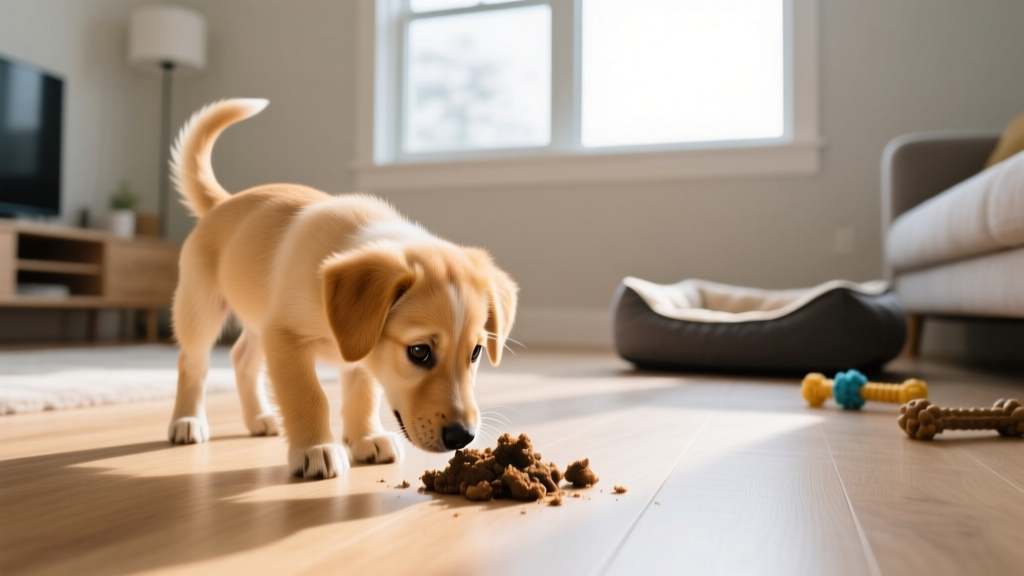
Understanding Coprophagia: Why Puppies Eat Their Feces
If you've caught your puppy snacking on their own stool, you're not alone—and you're not dealing with a broken dog. Coprophagia, the clinical term for feces-eating behavior, affects an estimated 25% of puppies at some point during their first year, according to the American Kennel Club. While deeply unsettling for owners, this behavior typically stems from identifiable developmental, nutritional, or behavioral causes rather than illness.
The key to addressing puppies eating their feces lies in understanding why it's happening at each life stage and responding with targeted, force-free interventions. Punishment-based methods—including yelling, nose-rubbing, or aversive sprays—consistently backfire by increasing anxiety and driving the behavior underground.
Developmental Milestones and Coprophagia Risk by Age
Understanding your puppy's developmental stage helps you predict when coprophagia is most likely to appear and when it should naturally resolve. Here's what to expect week by week:
Weeks 4–8: Neonatal Exploration Phase
Puppies in the litter environment often encounter feces as part of normal sensory exploration. The dam (mother) typically consumes puppy feces during the first 3 weeks to keep the nest clean—a behavior called maternal coprophagia. Puppies may mimic this behavior. At this stage, intervention is minimal: maintain impeccable litter hygiene and separate elimination areas from sleeping/feeding zones.
Weeks 8–12: Peak Oral Exploration
This is the highest-risk window for puppies eating their feces. Puppies investigate the world primarily through their mouths, and stool represents an accessible, warm, texturally interesting substance. Teething discomfort beginning around week 12 can intensify oral fixation. Expect to supervise every potty break and redirect immediately.
Weeks 12–16: Habit Formation Window
By this stage, puppies who have successfully consumed feces multiple times may begin treating it as a self-rewarding behavior—meaning the act itself provides enough satisfaction (attention, taste, texture) that the puppy repeats it without external reinforcement. This is the critical intervention point. Consistent management now prevents a lifelong habit.
Weeks 16–24: Teething Peak and Behavioral Entrenchment
Adult teeth erupt between 4–6 months, creating significant oral discomfort that drives puppies to chew and mouth anything available. If coprophagia hasn't been addressed by week 16, the teething surge can cement it as a coping mechanism. Nutritional deficiencies from rapid growth may also contribute—puppies on inadequate diets may seek missing nutrients in stool.
Months 6–12: Resolution or Entrenchment
Most puppies who experienced early coprophagia outgrow it by 6–8 months if the underlying cause has been addressed. Puppies still eating feces at 6+ months warrant a veterinary workup to rule out exocrine pancreatic insufficiency (EPI), intestinal parasites, malabsorption syndromes, or dietary deficiencies.
Feeding Schedule and Nutritional Factors Linked to Coprophagia
Inadequate nutrition is one of the most common drivers of puppies eating their feces. When a puppy's diet lacks sufficient calories, digestive enzymes, or specific micronutrients, stool may contain partially digested food that still smells and tastes appealing. Here's a feeding framework calibrated to prevent nutritional coprophagia:
| Age | Meals Per Day | 10 lb Puppy (4.5 kg) | 25 lb Puppy (11.3 kg) | 50 lb Puppy (22.7 kg) |
|---|---|---|---|---|
| 8–12 weeks | 4 meals | ¾ cup/day (split 4 ways) | 1½ cups/day (split 4 ways) | 2½ cups/day (split 4 ways) |
| 12–16 weeks | 3 meals | 1 cup/day | 2 cups/day | 3¼ cups/day |
| 4–6 months | 3 meals | 1¼ cups/day | 2½ cups/day | 4 cups/day |
| 6–12 months | 2 meals | 1¼–1½ cups/day | 2½–3 cups/day | 4–5 cups/day |
These portions assume a kibble providing 350–400 kcal/cup. Always check your specific food's guaranteed analysis and caloric density. The AVMA recommends choosing foods with an AAFCO statement confirming "complete and balanced" nutrition for growth or all life stages.
- Diet with less than 22% crude protein (minimum for puppy growth per AAFCO)
- Foods listing corn, wheat, or soy as the first ingredient (lower digestibility means more undigested matter in stool)
- Missing supplemental digestive enzymes or probiotics in puppies with sensitive digestion
- Switching to adult food before 12 months in large/giant breeds
Supplements That May Help
If your puppy's diet is nutritionally complete but coprophagia persists, veterinary nutritionists sometimes recommend:
- Digestive enzyme supplements (e.g., ProZyme or NuVet Plus): ¼–½ teaspoon per meal, added to food to improve nutrient absorption and reduce undigested material in stool
- Canned pumpkin (plain, not pie filling): 1–2 teaspoons per meal to add fiber and improve stool consistency
- Probiotic supplements (e.g., FortiFlora or Proviable): one packet/capsule daily to support gut microbiome health
Always consult your veterinarian before adding supplements to your puppy's diet.
Vaccination Schedule and Outdoor Safety During Coprophagia Risk Period
One of the most dangerous aspects of puppies eating their feces is the disease transmission risk. Canine parvovirus, whipworms, roundworms, and giardia all spread through fecal-oral contact. Your puppy's vaccination status directly determines their risk level.
| Age | Vaccine | Protection Against | Coprophagia Relevance |
|---|---|---|---|
| 6–8 weeks | DHPP (1st dose) | Distemper, Hepatitis, Parainfluenza, Parvovirus | Partial parvo protection; avoid public areas |
| 10–12 weeks | DHPP (2nd dose) + Bordetella | Above + Kennel Cough | Improved but incomplete immunity |
| 14–16 weeks | DHPP (3rd dose) + Rabies | Full core protection + Rabies | Full immunity ~2 weeks after final DHPP |
| 12–16 weeks | Leptospirosis (2-dose series, 2–4 weeks apart) | Leptospira bacteria | Transmitted via contaminated soil/water/stool |
When Can My Puppy Go Outside and Meet Other Dogs?
Your puppy can begin controlled socialization outings at 10–12 weeks (after the second DHPP dose), but only in low-risk environments: private yards, homes of known-vaccinated dogs, and structured puppy classes that require proof of vaccination. Avoid dog parks, public sidewalks with heavy dog traffic, and pet store floors until 2 weeks after the final DHPP dose at 14–16 weeks. During the high-risk coprophagia window (8–16 weeks), this restriction is especially critical.
Potty Training Timeline and Coprophagia Prevention
Effective potty training is your primary defense against puppies eating their feces. If you can manage the environment so stool is removed before the puppy has access to it, you break the behavior chain. Here's a realistic timeline:
| Age | Expected Control | Outing Frequency | Coprophagia Prevention Strategy |
|---|---|---|---|
| 8–10 weeks | 30–45 minutes | Every 30–45 min while awake | Leash on every outing; pick up immediately |
| 10–14 weeks | 1–1.5 hours | Every 60–90 min while awake | Teach "leave it" cue; reward away from stool |
| 14–20 weeks | 2–3 hours | Every 2–3 hours | Reliable "leave it" and recall; supervised yard time |
| 5–6 months | 4–5 hours | Every 4–5 hours | Most puppies lose interest if consistently managed |
| 6–12 months | 6–8 hours | 3–4 times daily | Coprophagia should resolve; consult vet if persistent |
Immediate Management Protocol
- Leash every potty break — even in your own yard. Keep the leash short enough that you can guide the puppy away from their stool the moment they finish.
- Pick up immediately — carry a poop bag on every outing. Remove stool within 10 seconds of elimination.
- Redirect and reward — the instant your puppy finishes eliminating, call them to you, ask for a "sit," and reward with a high-value treat (freeze-dried liver, small cheese pieces). This creates a "potty → come to handler → reward" chain that replaces the "potty → eat stool" chain.
- Teach "leave it" — start training this cue at 10 weeks using force-free methods. Hold a treat in a closed fist, wait for the puppy to stop nosing your hand, mark the moment they pull away with "yes!" and reward from your other hand. Graduate to leaving treats on the floor, then to outdoor practice with low-value items, before using it around stool.
Socialization Window and Environmental Management
The primary socialization window for puppies runs from weeks 3–14, with the most critical period between weeks 6–12. During this time, puppies form lasting associations with new experiences. If your puppy's primary outdoor experiences involve being dragged away from stool or punished for eating it, they may develop negative associations with outdoor elimination—leading to holding behavior, indoor accidents, and increased stress.
Socialization Exposure Checklist (Weeks 8–14)
- ✅ Walking on grass, gravel, mulch, and pavement (different elimination surfaces)
- ✅ Eliminating on leash with handler nearby (builds comfort with supervised potty routines)
- ✅ Encountering other vaccinated dogs in controlled settings (reduces stool-eating triggered by competitive scavenging)
- ✅ Meeting 10+ unfamiliar people (reduces anxiety-driven coprophagia)
- ✅ Experiencing car rides, grooming handling, and nail trims (reduces overall stress load)
- ✅ Being rewarded for "leave it" and recall in 5+ different environments
- ✅ Exposure to various sounds: vacuum, thunderstorm recordings, doorbells, traffic
Pair every new experience with high-value treats. A puppy who associates outdoor time with positive outcomes from their handler is less likely to seek self-rewarding behaviors like coprophagia.
Teething Timeline and Oral Fixation Management
Teething creates intense oral discomfort that drives puppies to mouth and chew anything available—including feces. Understanding the teething timeline helps you provide appropriate alternatives:
| Age | Teething Stage | Safe Chew Options | Avoid |
|---|---|---|---|
| 3–6 weeks | Deciduous (baby) teeth erupt | Soft rubber teething toys (Kong Puppy) | Hard nylon, rawhide |
| 12–16 weeks | Baby teeth begin loosening | Chilled (not frozen) washcloth, soft rubber toys, frozen carrot sticks | Ice cubes (tooth fracture risk), hard bones |
| 4–6 months | Adult teeth erupting (peak discomfort) | Benebone Puppy, Nylabone Puppy Chew, frozen Kong stuffed with pumpkin/yogurt | Rawhide, cooked bones, antlers |
| 6–8 months | All 42 adult teeth in place | Transition to adult chew toys; dental chews (VOHC-approved) | Tennis balls (abrasive to enamel) |
During the 4–6 month peak teething period, keep a rotation of 5–7 different textured chews available. Rotate them daily so novelty is maintained. A puppy with appropriate oral outlets is significantly less likely to turn to coprophagia for oral stimulation.
Crate Training Progression to Limit Coprophagia Access
Crate training serves double duty for coprophagia management: it prevents unsupervised access to stool and establishes a predictable elimination schedule. However, improper crate use can worsen the problem—puppies who are crated too long may eliminate in the crate and then consume the stool out of boredom, hunger, or instinct to keep their den clean.
| Age | Maximum Crate Time (Day) | Maximum Crate Time (Night) | Coprophagia Risk Notes |
|---|---|---|---|
| 8–10 weeks | 1–2 hours | 3–4 hours (set alarm) | High risk if accidents occur in crate; size crate so puppy can't eliminate in one corner and sleep in another |
| 10–14 weeks | 2–3 hours | 4–5 hours | Use divider panel to right-size crate as puppy grows |
| 14–20 weeks | 3–4 hours | 6–7 hours | If puppy consistently soils crate, reduce time and increase outing frequency |
| 5–6 months | 4–5 hours | 7–8 hours | Coprophagia in crate signals crate is too large or puppy is crated too long |
| 6–12 months | 5–6 hours max | 8 hours | No dog should be crated more than 6 hours during the day regularly |
Common Puppy Problems Connected to Coprophagia
Puppy Biting and Nipping
Puppies who exhibit coprophagia often also mouth and bite hands, clothing, and furniture. Both behaviors stem from the same oral exploration drive. To stop puppy biting:
- Redirect to appropriate chew toys every time teeth touch skin
- Withdraw attention (stand up, cross arms, look away for 10–15 seconds) when biting persists—this teaches that biting ends play
- Never use physical punishment (alpha rolls, muzzle grabs, or hitting)—these increase fear and can escalate to defensive aggression
- Provide 2–3 structured chew sessions daily with frozen Kongs or appropriate teething toys to satisfy oral needs
Whining and Attention-Seeking
Some puppies learn that eating feces triggers a dramatic reaction from their owner—chasing, yelling, or grabbing. Even negative attention is reinforcing. If your puppy eats stool and then looks at you expectantly, they've turned coprophagia into an attention game. Solution: stay calm, pick up the stool without commentary, redirect to an alternative behavior (sit, come), and reward that instead.
Destructive Chewing
Puppies with coprophagia and destructive chewing often share a common root cause: insufficient mental and physical stimulation. A puppy who receives less than the recommended daily exercise and enrichment will seek stimulation wherever they can find it—including in their own stool. Ensure your puppy receives:
- Age-appropriate exercise: 5 minutes per month of age, twice daily (a 4-month-old puppy gets ~20 minutes per walk)
- Daily mental enrichment: snuffle mats, puzzle feeders, training sessions (5–10 minutes, 2–3 times daily)
- Supervised free play in a puppy-proofed area for at least 1 hour daily
First-Year Cost Breakdown for Puppies With Coprophagia Concerns
Coprophagia can add specific costs to your first-year puppy budget. Here's a comprehensive breakdown:
| Category | Standard Puppy Costs | Additional Coprophagia-Related Costs | Total Range |
|---|---|---|---|
| Veterinary Care (vaccines, wellness exams, spay/neuter) | $800–$1,500 | Fecal parasite panel ($45–$75), digestive enzyme trial ($30–$60) | $875–$1,635 |
| Food (AAFCO-approved puppy formula) | $400–$800 | Premium/high-digestibility diet upgrade ($150–$300) | $550–$1,100 |
| Supplies (crate, leash, collar, bowls, bed) | $200–$400 | Enzyme cleaners for accidents ($20–$40), poop bag dispenser ($10–$15) | $230–$455 |
| Training (group classes or private sessions) | $150–$400 | Private behavior consultation for persistent coprophagia ($100–$250/session) | $250–$650 |
| Chew Toys and Enrichment | $100–$200 | High-value treat budget for potty training rewards ($50–$100) | $150–$300 |
| Preventive Medications (heartworm, flea/tick) | $200–$400 | Deworming treatments if parasites found ($25–$75) | $225–$475 |
| TOTAL FIRST YEAR | $1,850–$3,700 | $2,280–$4,615 |
When to See a Veterinarian About Puppies Eating Their Feces
- Continues eating feces past 6 months of age despite consistent management
- Has loose, foul-smelling, or unusually voluminous stools (signs of malabsorption)
- Shows weight loss or failure to gain weight despite adequate food intake
- Eats feces from other animals (especially cats, wildlife, or unknown dogs)
- Displays other abnormal behaviors alongside coprophagia (excessive thirst, lethargy, vomiting)
- Has visible worms or rice-like segments in their stool
Your veterinarian may recommend a fecal flotation test ($35–$65), a complete blood count ($80–$150), and/or a trypsin-like immunoreactivity (TLI) test to check for exocrine pancreatic insufficiency ($120–$200). These diagnostics rule out the medical causes that account for roughly 15–20% of persistent coprophagia cases.
For any suspected toxin ingestion or if your puppy consumes feces from an animal that may have been poisoned or treated with medication, contact the ASPCA Animal Poison Control Center at (888) 426-4435 (24/7, consultation fee applies).
Frequently Asked Questions
When should I bring my puppy home?
The optimal age to bring a puppy home is 8–10 weeks. Puppies separated before 8 weeks miss critical littermate socialization and are statistically more likely to develop behavioral problems including coprophagia, separation anxiety, and fear-based aggression. If adopting from a shelter where early separation has already occurred, compensate with structured socialization and consistent routines from day one.
How often should I feed my puppy at 10 weeks old?
At 10 weeks, feed 4 meals per day spaced approximately 4 hours apart during waking hours (e.g., 7 AM, 11 AM, 3 PM, 7 PM). Divide the daily portion equally across meals. Consistent feeding schedules create predictable elimination patterns, which directly supports coprophagia prevention by letting you anticipate and supervise every potty break.
When will my puppy be fully potty trained?
Most puppies achieve reliable house training between 4–6 months of age, though small breeds may take until 8–10 months due to smaller bladder capacity. "Fully trained" means fewer than one accident per month. Coprophagia typically declines as potty training solidifies because the puppy develops a routine of eliminating and moving away from the area rather than lingering.
What vaccines does my puppy need and when?
Core vaccines include DHPP (Distemper, Hepatitis, Parainfluenza, Parvovirus) at 6–8, 10–12, and 14–16 weeks, plus Rabies at 14–16 weeks. Non-core vaccines your veterinarian may recommend based on lifestyle include Bordetella (10–12 weeks), Leptospirosis (12+ weeks, 2-dose series), and Lyme disease (12+ weeks). The AVMA vaccination guidelines recommend tailoring the protocol to your puppy's individual risk factors.
How do I stop puppy biting and nipping?
Redirect every instance of teeth-on-skin to an appropriate chew toy. If biting continues, withdraw attention for 10–15 seconds (stand up, turn away). Ensure your puppy receives adequate chew time with frozen Kongs, teething toys, and safe chews. Puppies typically outgrow intense mouthing by 5–6 months when adult teeth are fully erupted. Never use physical punishment, which can escalate biting into defensive aggression.
When can my puppy go outside and meet other dogs?
Controlled outdoor exposure can begin at 10–12 weeks (after the second DHPP dose) in low-risk environments: your own yard, homes of dogs with known vaccination status, and structured puppy classes requiring proof of vaccination. Full access to public areas (dog parks, busy sidewalks, pet stores) should wait until 2 weeks after the final DHPP dose at 14–16 weeks. This timing is especially important for puppies prone to coprophagia, as parvovirus and parasites spread through fecal contact.
Is coprophagia a sign of a nutritional deficiency?
Sometimes. While most puppy coprophagia is behavioral (exploration, boredom, attention-seeking), persistent cases can indicate insufficient digestive enzymes, inadequate caloric intake, or malabsorption. A veterinary workup including a fecal panel and blood work can differentiate behavioral from medical causes. If your puppy is on an AAFCO-approved growth diet fed at appropriate portions and still eating stool past 4 months, a veterinary nutrition consultation is warranted.
Aaron Whyte
All our authors care for dogs every day — read more of their work on the authors page.


