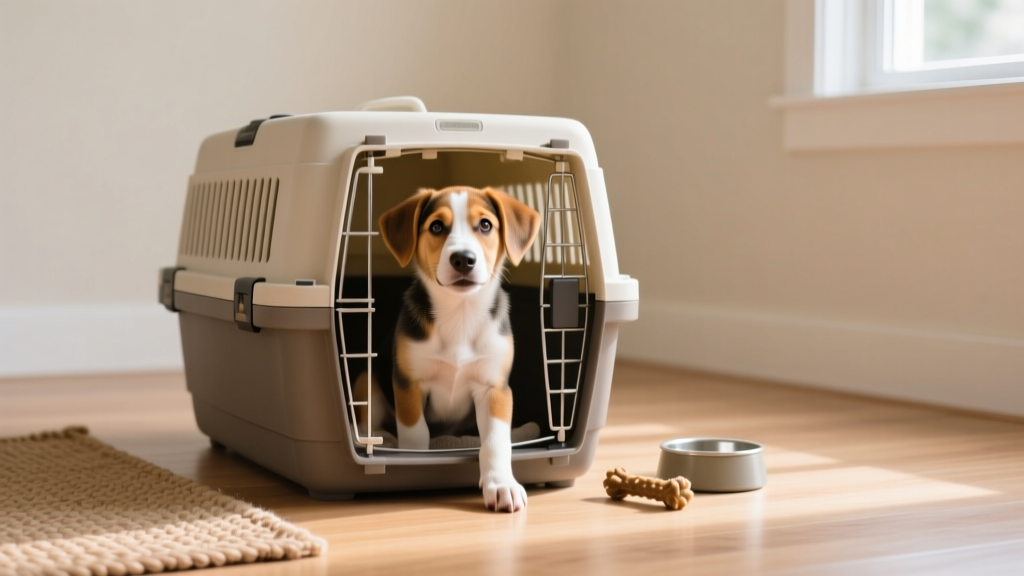
Puggle Dog Puppy Care: Week-by-Week Growth, Feeding & Training Guide
Complete puggle dog puppy guide covering milestones, feeding schedules, potty training timelines, vaccinations, and first-year costs for Beagle-Pug mix owners.

The puggle dog puppy — a first-generation cross between a Pug and a Beagle — has climbed steadily in popularity since the early 2000s, and for good reason. These compact, expressive dogs typically weigh 15–30 lb (7–14 kg) at maturity, blending the Beagle's curious nose and stamina with the Pug's affectionate couch-companion instincts. But raising a puggle puppy requires understanding the unique intersection of two very different breeds: a scent hound built to track and a brachycephalic companion built to cuddle. That combination creates specific developmental quirks, health considerations, and training challenges that generic puppy guides simply don't address.
This guide walks you through every critical stage of your puggle dog puppy's first year, with exact feeding portions, vaccination dates, potty training benchmarks, and cost projections based on current 2026 pricing. Whether you're picking up your puppy at 8 weeks or preparing your home in advance, you'll find actionable specifics — not vague generalizations.
When Should You Bring Your Puggle Puppy Home?
Most responsible breeders and rescue organizations release puggle puppies between 8 and 10 weeks of age. While some states legally permit sales at 6 weeks, veterinary behaviorists strongly recommend waiting until at least 8 weeks. Here's why: the weeks between 6 and 8 are when puppies learn bite inhibition from littermates, develop early social skills, and receive their first round of maternal antibodies. Puggles, in particular, benefit from this extra littermate time because both parent breeds can be prone to mouthy, nippy behavior during play.
- Health certificate from breeder's veterinarian (dated within 10 days)
- Records of first deworming (typically at 2, 4, and 6 weeks)
- Written feeding schedule — exact brand, portion, and frequency
- Scent item from litter (blanket or towel rubbed on littermates)
- Microchip registration paperwork, if already implanted
If your puggle puppy is a backcross (F1B) — meaning one parent is a puggle and the other is either a Pug or a Beagle — ask your breeder which parent breed was doubled. An F1B leaning toward Pug may have a shorter muzzle and greater brachycephalic risk, while one leaning toward Beagle may have higher exercise needs and stronger scent-drive. This affects everything from collar fit to crate size.
Puggle Puppy Milestones: Week-by-Week Development Timeline
Understanding what's normal at each stage prevents unnecessary panic and helps you anticipate behavioral shifts. Puggles mature slightly faster than large breeds but slower than toy breeds — expect full physical maturity around 12–14 months and emotional maturity closer to 18–24 months.
| Age Range | Weight Estimate | Key Milestones | What to Expect |
|---|---|---|---|
| 4–8 weeks | 2–5 lb (0.9–2.3 kg) | Weaning, littermate play, first deworming | Puppy is still with breeder. Eyes and ears fully open. Begins eating gruel transitioning to kibble. Learns bite inhibition from siblings. |
| 8–12 weeks | 5–9 lb (2.3–4 kg) | Home adjustment, bonding, first vet visit, first DHPP vaccine | Critical fear period (8–11 weeks). Puppy may startle easily. Sleeps 18–20 hours/day. Frequent potty accidents are normal. Begins recognizing name and simple cues. |
| 12–16 weeks | 8–14 lb (3.6–6.4 kg) | Socialization window closing, second and third DHPP, leash introduction | Energy bursts increase. Chewing escalates as baby teeth loosen. May test boundaries with selective hearing. Potty intervals extend to 2–3 hours. |
| 16–24 weeks | 12–20 lb (5.4–9 kg) | Teething peak, spay/neuter consultation, advanced training | Adult teeth erupting — expect bloody chew toys. May develop temporary food guarding or resource guarding. Adolescence begins toward end of this window. Howling or barking may increase (Beagle trait). |
| 6–12 months | 15–28 lb (7–12.7 kg) | Sexual maturity, adult coat transition, growth plate closure | Energy peaks around 8–10 months. May regress in training temporarily. Females experience first heat cycle (if intact) between 6–10 months. Males may begin marking. Growth slows significantly after 10 months. |
Breed-specific note: Puggle puppies often inherit the Beagle's vocal tendencies. Expect howling, baying, or "talking" to emerge between 12 and 20 weeks. This is normal and not a sign of distress — but it does mean early quiet-training with positive reinforcement (rewarding calm behavior) should begin before the habit solidifies.
Feeding Schedule: Exact Portions by Age and Weight
Puggles are notoriously food-motivated — a trait inherited from both the Pug (prone to obesity) and the Beagle (a relentless scavenger). Overfeeding is the single most common nutritional mistake puggle owners make. According to the American Kennel Club's feeding guidelines, portion control from puppyhood prevents lifelong weight issues that stress the Pug-inherited compact skeletal frame.
Feed a high-quality, AAFCO-certified small-breed puppy formula — look for a named animal protein as the first ingredient (chicken, lamb, or salmon) and guaranteed analysis showing minimum 22% protein and 8% fat for growth. Brands like Royal Canin Small Puppy, Hill's Science Diet Small Paws Puppy, or Purina Pro Plan Small Breed Puppy are widely available and meet these standards.
| Puppy Age | Meals Per Day | Daily Portion (approx.) | Notes |
|---|---|---|---|
| 8–12 weeks | 4 meals | ¾ to 1 cup total (divided into ¼-cup servings) | Soften kibble with warm water for first 1–2 weeks home. Always provide fresh water. |
| 12–16 weeks | 3 meals | 1 to 1¼ cups total (⅓ to ⅜ cup per meal) | Transition to dry kibble. Use slow-feeder bowl if puppy inhales food (common Beagle trait). |
| 16–24 weeks | 3 meals | 1¼ to 1½ cups total | Monitor body condition score (BCS). Ribs should be palpable but not visible. |
| 6–9 months | 2 meals | 1½ to 2 cups total (¾ to 1 cup per meal) | Transition to adult small-breed formula around 9–10 months. Reduce treats to ≤10% of daily calories. |
| 9–12 months | 2 meals | 1¼ to 1¾ cups adult formula | Final portion depends on adult weight. A 20 lb puggle needs roughly 400–500 kcal/day at maintenance. |
Vaccination Schedule and Veterinary Visits
Your puggle puppy needs a series of core vaccines spaced at specific intervals. Maternal antibodies interfere with early vaccination, which is why boosters are necessary — a single shot at 8 weeks does not provide full immunity. The AVMA recommends following the AAHA canine vaccination guidelines, which your veterinarian will adapt based on local disease prevalence.
| Age | Vaccine(s) | What It Protects Against | Estimated Cost (2026) |
|---|---|---|---|
| 6–8 weeks | DHPP (1st dose) | Distemper, Hepatitis (Adenovirus-2), Parainfluenza, Parvovirus | $25–$45 (often given by breeder) |
| 10–12 weeks | DHPP (2nd dose), Bordetella, Leptospirosis (optional) | Boosters core immunity; kennel cough; leptospirosis for outdoor dogs | $40–$75 per visit |
| 14–16 weeks | DHPP (3rd dose), Rabies (required by law) | Final puppy core booster; rabies (1-year or 3-year depending on product) | $40–$85 per visit |
| 12–16 months | DHPP booster, Rabies booster | Adult immunity maintenance | $50–$90 |
Important for puggle owners: Discuss Leptospirosis vaccination with your veterinarian, especially if you live in an area with wildlife exposure or your puggle will spend time sniffing in wooded areas — a near certainty given the Beagle's scent-drive. The leptospirosis vaccine is a non-core vaccine but is increasingly recommended in suburban and rural areas. Also ask about Lyme disease vaccination if you're in a tick-endemic region.
Until your puppy has completed the full DHPP series (typically after the 14–16 week dose), avoid public dog parks, pet store floors, and areas where unknown dogs defecate. Parvovirus can survive in soil for months and is fatal in up to 91% of untreated puppies, according to the Merck Veterinary Manual.
- Vomiting or diarrhea lasting more than 12 hours
- Bloody stool or dark, tarry stool
- Lethargy lasting more than 24 hours post-vaccination
- Facial swelling or hives after vaccination (possible allergic reaction)
- Refusal to eat for more than 24 hours in a puppy under 16 weeks
- Difficulty breathing, wheezing, or blue-tinged gums
Socialization Window: The Critical 3–14 Week Period
Veterinary behaviorists consider the 3 to 14 week window the most influential period in your puggle puppy's entire life. Experiences during this time — positive or negative — shape adult temperament more than any amount of later training can undo. For puggles specifically, targeted socialization addresses two inherited tendencies: the Beagle's potential wariness of strangers and the Pug's sensitivity to loud environments.
Because the socialization window overlaps with incomplete vaccination, the American Veterinary Society of Animal Behavior (AVSAB) recommends structured, low-risk socialization rather than waiting until vaccines are complete. Carry your puppy, use a stroller, or visit homes of known-healthy, vaccinated dogs.
Puggle-specific tip: Beagles are scent-driven, and puggle puppies will often disengage from socialization to sniff. Rather than pulling them away, use this as a training opportunity: teach a "let's go" cue by tossing a treat a few feet ahead when they're sniffing. This builds recall foundation while respecting their natural instincts.
Potty Training Timeline: Realistic Expectations for Puggle Puppies
Potty training a puggle puppy typically takes 4 to 6 months for reliable indoor habits, with occasional accidents until 8–10 months. This is slightly longer than some breeds due to two competing factors: the Beagle's easily-distracted nature (they forget to go outside because they're following a scent) and the Pug's occasional stubbornness about going out in cold or wet weather.
| Puppy Age | Expected Hold Time | Outing Frequency | Realistic Accident Rate |
|---|---|---|---|
| 8–10 weeks | 30–60 minutes | Every 30–60 min + after every meal, nap, and play session | 3–6 accidents per day is normal |
| 10–14 weeks | 1–2 hours | Every 1–2 hours + key transition times | 1–3 accidents per day |
| 14–20 weeks | 2–3 hours | Every 2–3 hours + scheduled outings | 0–2 accidents per day |
| 5–7 months | 3–4 hours | Every 3–4 hours during day | 0–1 accidents per week |
| 8–12 months | 4–6 hours | 3–4 scheduled outings daily | Rare (stress or illness-related) |
The method that works best for puggles: Combine crate training with a consistent outdoor routine and high-value treats reserved exclusively for outdoor elimination. Take your puppy to the same spot each time — the familiar scent triggers the urge. Use a verbal cue like "go potty" while they're in the act, then immediately reward with a treat and enthusiastic praise. Never punish accidents — puggles are sensitive dogs, and punishment creates fear-based hiding behaviors (peeing behind furniture) rather than learning.
If your puggle puppy refuses to go outside in rain or cold (a common Pug-inherited trait), invest in a waterproof puppy jacket and practice short, positive outdoor sessions in mild weather first. For apartment dwellers, a balcony potty system like the DoggieLawn or Fresh Patch (real grass patches, $30–$45 per month in 2026) can serve as a weather backup.
Crate Training, Teething, and Common Puppy Problems
Crate Training Progression
A properly crate-trained puggle puppy views the crate as a safe den, not a punishment zone. Choose a crate sized for your puggle's expected adult weight — typically a 24-inch crate (suitable for dogs 11–25 lb) with a divider panel to limit space while they're small. Wire crates provide better ventilation, which matters for puggles that may inherit brachycephalic traits and overheat easily.
| Puppy Age | Maximum Crate Time (daytime) | Overnight | Notes |
|---|---|---|---|
| 8–10 weeks | 30–60 minutes | 2–3 hours (set alarm for potty break) | Crate in bedroom for reassurance. Cover with light blanket. |
| 10–14 weeks | 1–2 hours | 3–4 hours | Begin moving crate to permanent location if desired. |
| 14–20 weeks | 2–3 hours | 5–6 hours | Introduce chew-safe toys (Kong stuffed with frozen peanut butter). |
| 5–7 months | 3–4 hours | 7–8 hours | Should be sleeping through the night reliably. |
Teething Timeline and Relief Strategies
Puggle puppies begin losing baby teeth around 12–16 weeks, with the full set of 42 adult teeth typically erupted by 6–7 months. The peak discomfort period is 4–5 months, when canine teeth and premolars push through. Expect increased chewing, drooling, and occasional blood on toys.
Safe chew options for teething puggle puppies:
- Kong Puppy (pink/blue rubber): Stuff with plain yogurt or pumpkin puree and freeze for 2–4 hours. The cold numbs gums. Size Small fits most puggles ($12–$15).
- Nylabone Puppy Chew (chicken or bacon flavor):strong> Designed for dogs under 25 lb. Replace when nubs are worn smooth ($6–$9).
- Frozen washcloth: Wet a clean washcloth, twist into a rope, and freeze. Supervise use and remove if threads come loose.
- Benebone Puppy (small): Nylon chew infused with real bacon. The wishbone shape is easy for small paws to grip ($13–$16).
Avoid: Rawhide (choking and blockage risk for small breeds), antlers or hooves (too hard — risk of tooth fracture), and any chew toy small enough to swallow whole.
Stopping Puppy Biting and Nipping
Puggle puppies are mouthy — the Beagle's tendency to carry things in their mouth combines with the Pug's playful jaw-snapping. Biting peaks between 10 and 16 weeks and again during teething at 4–5 months.
Effective, force-free approach:
- Redirect: When teeth touch skin, immediately offer an appropriate chew toy. Praise enthusiastically when they bite the toy instead.
- Withdraw attention: If redirecting fails, stand up, cross your arms, and ignore the puppy for 15–30 seconds. No talking, no eye contact. Resume play only when all four paws are on the floor.
- Teach "gentle": Hold a treat in a closed fist. Let puppy nose and lick. The moment they stop using teeth, open your hand and say "gentle." Repeat until they consistently use lips only.
- Provide adequate exercise: Overtired puppies bite more. A puggle puppy needs 5 minutes of structured exercise per month of age, twice daily (e.g., a 4-month-old gets 20-minute walks). Mental stimulation — snuffle mats, puzzle feeders, short training sessions — tires them out faster than physical exercise alone.
Never hold a puppy's mouth shut, alpha-roll, or use bitter sprays on your hands. These aversive methods damage trust and can increase fear-based biting. If biting intensifies or causes puncture wounds after 16 weeks, consult a certified professional dog trainer (CPDT) or veterinary behaviorist.
First-Year Cost Breakdown: What to Budget for Your Puggle Puppy
Raising a puggle puppy through the first year involves predictable expenses plus a recommended emergency buffer. The following estimates reflect 2026 national averages — costs vary by region, with urban areas typically 20–40% higher.
| Category | Items Included | Estimated Cost Range |
|---|---|---|
| Purchase/Adoption | Responsible breeder ($800–$2,500) or rescue adoption fee ($200–$500) | $200–$2,500 |
| Veterinary (wellness) | 3 puppy vaccine visits, spay/neuter, microchip, heartworm test, fecal exams | $500–$1,200 |
| Food | 12 months of quality puppy then adult formula (approx. 25–35 lb total) | $250–$500 |
| Preventive medications | Monthly heartworm, flea/tick prevention (e.g., Simparica Trio, NexGard) | $200–$400 |
| Supplies | Crate, bed, bowls, leash/harness, toys, grooming tools, potty supplies | $200–$400 |
| Training | Puppy kindergarten ($150–$300) + basic manners class ($150–$250) | $150–$550 |
| Grooming | Puggles are low-maintenance but need nail trims every 3–4 weeks | $100–$250 (professional) or $30 (home tools) |
| Emergency buffer | Unexpected illness, injury, or foreign body ingestion | $500–$2,000 (or pet insurance at $35–$60/month) |
Total first-year estimate: $2,100–$7,800 depending on acquisition source, region, and whether emergencies arise. Pet insurance from providers like Trupanion, Healthy Paws, or Lemonade typically costs $35–$60/month for a puggle puppy and can reimburse 70–90% of unexpected veterinary bills. Enroll before any conditions are diagnosed — pre-existing conditions are universally excluded.
When Can Your Puggle Puppy Go Outside and Meet Other Dogs?
This is one of the most common questions new puggle puppy owners ask, and the answer balances disease risk against the closing socialization window.
Safe from day one (8 weeks):
- Your own fenced yard (if no unknown dogs have access)
- Carrying your puppy in public spaces — parks, outdoor cafés, friend's homes
- Visits to homes of dogs with verified, current vaccination records
- Puppy kindergarten classes that require proof of at least two DHPP doses
Wait until 1 week after final DHPP booster (typically 17 weeks):
- Public dog parks
- Pet store floors
- Grooming salons (unless they require proof of vaccination)
- Group dog walks with unknown dogs
- Boarding facilities or doggy daycare
The risk of behavioral problems from inadequate socialization actually exceeds the risk of infectious disease in most areas, according to a landmark study published in the Journal of the American Veterinary Medical Association. Structured, controlled exposure during the 8–14 week window — even before vaccines are complete — is considered standard of care by veterinary behaviorists.
Frequently Asked Questions About Puggle Dog Puppies
How often should I feed my puggle puppy at 10 weeks old?
Four meals per day, spaced roughly 4 hours apart during waking hours. Total daily portion should be approximately ¾ to 1 cup of small-breed puppy kibble, divided into ¼-cup servings. Adjust based on your puppy's body condition — you should be able to feel ribs without pressing hard, but not see them prominently.
When will my puggle puppy be fully potty trained?
Most puggle puppies achieve reliable daytime potty habits between 5 and 7 months of age, with nighttime reliability coming slightly earlier (around 4–5 months). Occasional accidents during excitement, stress, or schedule disruptions are normal until about 10 months. Consistency in schedule and positive reinforcement for outdoor elimination are the most effective methods.
My puggle puppy howls when left alone — is this separation anxiety?
Howling alone in a young puppy (under 16 weeks) is typically distress at isolation rather than clinical separation anxiety, which usually develops later. Practice graduated departures: leave for 1 minute, return calmly. Extend to 5, 10, 15 minutes over several days. Provide a frozen Kong and leave white noise playing. If howling persists beyond 30 minutes consistently after 6 months, consult a veterinary behaviorist.
Do puggle puppies shed a lot?
Yes — both Pugs and Beagles are moderate to heavy shedders, and puggles inherit this trait. Expect year-round shedding with seasonal increases in spring and fall. Weekly brushing with a rubber curry brush or de-shedding tool (like the Furminator Short Hair Small, $25–$35) manages loose fur. Puggles with Pug-dominant coats may also have wrinkle-related skin issues requiring regular facial fold cleaning with vet-recommended wipes.
What size will my puggle puppy be when fully grown?
Adult puggles typically weigh 15–30 lb (7–14 kg) and stand 10–15 inches (25–38 cm) at the shoulder. The wide range reflects variation in which parent breed's genes are more dominant. A puppy's weight at 14 weeks, doubled, gives a rough estimate of adult weight. Backcross (F1B) puggles will lean toward the doubled parent breed's size.
Should I get pet insurance for my puggle puppy?
Strongly recommended. Puggles can inherit health conditions from both parent breeds — including brachycephalic obstructive airway syndrome (BOAS) from the Pug side and intervertebral disc disease (IVDD) or epilepsy from the Beagle side. Insurance premiums are lowest when you enroll a young, healthy puppy (typically $35–$50/month for accident-and-illness coverage). Pre-existing conditions are never covered, so early enrollment maximizes lifetime benefits.
This guide is for informational purposes and does not replace professional veterinary care. Always consult your veterinarian for health, nutrition, and medication decisions specific to your puggle puppy. If you suspect your puppy has ingested a toxic substance, contact ASPCA Animal Poison Control at (888) 426-4435 (24/7, consultation fee applies) or Pet Poison Helpline at (855) 764-7661 immediately.
Dr. Hannah Wickes
All our authors care for dogs every day — read more of their work on the authors page.