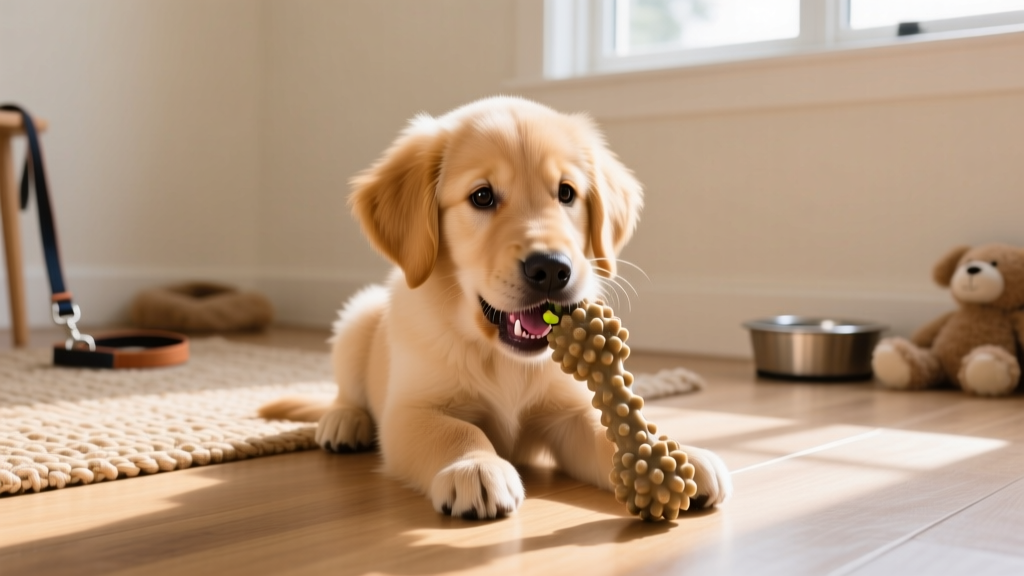
Portuguese Water Dog Puppy: Complete Week-by-Week Care Guide
Everything you need to raise a Portuguese Water Dog puppy: milestones, feeding schedules, potty training timelines, vaccines, and first-year costs.

Bringing home a Portuguese Water Dog puppy means welcoming a highly intelligent, athletic, and people-oriented companion into your life. Originally bred to work alongside Portuguese fishermen — retrieving nets, herding fish, and carrying messages between boats — the "Portie" carries that working-dog drive straight into your living room. Their curly, low-shedding coat and eager-to-please temperament make them popular family dogs, but their energy and intelligence demand a structured puppy-raising plan from day one.
This guide walks you through every developmental stage from week 4 through month 12, with breed-specific expectations, exact feeding portions, vaccination timelines, and realistic cost projections so you can plan confidently.
When Should You Bring Your Portuguese Water Dog Puppy Home?
The American Kennel Club and most veterinary behaviorists recommend waiting until a puppy is at least 8 weeks old before bringing them home. For Portuguese Water Dogs, many responsible breeders prefer to keep puppies until 9–10 weeks. Here's why:
- Weeks 6–8 are critical for littermate social learning — bite inhibition, conflict resolution, and canine body language are rehearsed with siblings during this window.
- Porties are a slow-maturing breed; they don't reach full emotional and physical maturity until 18–24 months, so an extra week or two with the breeder can improve confidence and resilience.
- Most breeders administer the first DHPP vaccine at 6–8 weeks, meaning a puppy going home at 8 weeks has at least partial immunization.
Portuguese Water Dog Puppy Milestones: Weeks 4 Through 12 Months
Porties develop in predictable stages, but individual variation is normal. Use this timeline as a framework, not a rigid schedule.
Weeks 4–8: The Litter Stage (At the Breeder)
- Teeth begin erupting (incisors first); puppies start exploring solid food.
- Critical socialization period opens — exposure to varied textures, sounds, and gentle human handling shapes lifelong confidence.
- Puppies learn bite inhibition through play with littermates.
- Expected weight at 8 weeks: 8–12 lb (3.6–5.4 kg).
Weeks 8–12: Home Transition and Bonding
- Peak fear imprint period (weeks 8–10) — avoid overwhelming or traumatic experiences.
- Puppy will test boundaries; expect mouthing, whining at night, and potty accidents.
- Attention span is roughly 2–5 minutes per training session.
- Begin name recognition, sit, and crate familiarity using positive reinforcement only.
- Expected weight at 12 weeks: 15–22 lb (6.8–10 kg).
Weeks 12–16: Confidence Building
- Second fear period may occur around weeks 12–14 — previously confident puppies may suddenly startle at familiar objects.
- Teething intensifies; chewing needs peak.
- Can begin short, structured leash walks (5 minutes per month of age, twice daily).
- Start puppy kindergarten classes (after second DHPP vaccine).
- Expected weight at 16 weeks: 22–30 lb (10–13.6 kg).
Weeks 16–24 (4–6 Months): The Adolescent Surge
- Energy levels spike — Porties need 45–60 minutes of structured physical and mental exercise daily by 5 months.
- Adult teeth begin replacing baby teeth; expect dropped teeth and increased chewing.
- Testosterone and estrogen levels begin rising even in puppies destined for spay/neuter.
- Introduce water exposure — most Porties take naturally to swimming, but start with shallow, calm water and a canine life jacket for safety.
- Expected weight at 6 months: 30–40 lb (13.6–18.1 kg).
6–12 Months: Adolescence and Refinement
- "Teenage" regression in training is normal — previously reliable recalls may temporarily deteriorate.
- Growth plates remain open; avoid repetitive high-impact exercise (agility jumps, long-distance running on hard surfaces) until 14–18 months.
- Spay/neuter typically performed between 6–9 months (discuss timing with your veterinarian based on individual health assessment).
- Coat transitions from puppy fluff to adult curl/wave — grooming frequency increases.
- Expected weight at 12 months: 35–55 lb (15.9–24.9 kg) depending on sex and genetic line.
Feeding Your Portuguese Water Dog Puppy: Schedule and Portions
Portuguese Water Dogs are prone to gastric dilatation-volvulus (GDV or bloat), a life-threatening condition more common in deep-chested breeds. Feeding multiple small meals and avoiding exercise 60 minutes before and after eating reduces risk.
| Age | Meals per Day | Approximate Daily Amount (Large-Breed Puppy Kibble) | Notes |
|---|---|---|---|
| 8–12 weeks | 4 | 1.5–2 cups (divided) | Soak kibble in warm water for easier chewing |
| 12–16 weeks | 3 | 2–2.5 cups (divided) | Transition to dry kibble; monitor body condition score |
| 4–6 months | 3 | 2.5–3.5 cups (divided) | Adjust based on activity level; ribs should be palpable |
| 6–12 months | 2 | 2.5–4 cups (divided) | Transition to adult food at 12 months (consult your veterinarian) |
Food selection criteria: Choose an AAFCO-certified large-breed puppy formula with calcium content between 1.2–1.5% on a dry matter basis. Excess calcium accelerates growth-plate abnormalities. Recommended brands include Purina Pro Plan Large Breed Puppy, Royal Canin Large Puppy, and Hill's Science Diet Large Breed Puppy. Always provide fresh water and use a slow-feeder bowl to reduce air gulping and bloat risk.
Vaccination Schedule for Your Portuguese Water Dog Puppy
The American Veterinary Medical Association outlines core vaccines every puppy needs. Your veterinarian will adjust timing based on local disease prevalence and maternal antibody levels.
| Age | Vaccines Administered | Estimated Cost |
|---|---|---|
| 6–8 weeks | DHPP (Distemper, Hepatitis, Parainfluenza, Parvovirus) — 1st dose | $25–$40 |
| 10–12 weeks | DHPP — 2nd dose; Bordetella (intranasal or injectable); Leptospirosis (if regionally indicated) | $40–$65 |
| 14–16 weeks | DHPP — 3rd dose; Rabies (required by law in most US states); Leptospirosis booster (if applicable) | $50–$80 |
| 12–16 months | DHPP booster; Rabies booster; Bordetella (every 6–12 months based on exposure) | $60–$100 |
Until your puppy has received at least two DHPP vaccines (typically by 12 weeks), avoid high-risk areas like dog parks, pet stores, and unvaccinated dog environments. However, socialization shouldn't wait — carry your puppy to new environments, invite fully vaccinated adult dogs to your home, and attend structured puppy classes where vaccination proof is required. The Merck Veterinary Manual confirms that controlled socialization during this window is safe and essential.
Potty Training Your Portuguese Water Dog Puppy: Realistic Timelines
Porties are intelligent and generally pick up house-training faster than many breeds, but "fully trained" realistically means 4–6 months of age for reliable accident-free living. Some puppies achieve consistency by 16 weeks; others need until 8 months, especially males marking territory.
Potty Training Schedule by Age
| Age | Outdoor Trips per Day | Maximum Crate Time (Daytime) | Expectation |
|---|---|---|---|
| 8–10 weeks | Every 1–1.5 hours | 1–2 hours | Frequent accidents are normal; reward heavily for outdoor success |
| 10–14 weeks | Every 1.5–2 hours | 2–3 hours | Puppy begins signaling (sniffing, circling, whining at door) |
| 3–4 months | Every 2–3 hours | 3–4 hours | Accidents decrease to 1–2 per week if schedule is consistent |
| 4–6 months | Every 3–4 hours | 4–5 hours | Most Porties are reliably house-trained by this stage |
Troubleshooting common issues:
- Nighttime accidents: Remove water 2 hours before bedtime; set a 2 AM alarm for 8–12 week olds; use a crate sized so the puppy can stand and turn but not soil one end and sleep in the other.
- Submissive urination: Common in Porties under 6 months when greeting. Avoid direct eye contact and excited greetings; crouch sideways and let the puppy approach you. Never punish — this is involuntary.
- Regression at 6–8 months: Hormonal changes and adolescent testing can cause setbacks. Return to a tighter schedule and increase outdoor rewards.
The Socialization Window: Weeks 3–14
Veterinary behaviorists consider weeks 3–14 the primary socialization period — after this window closes, unfamiliar stimuli are more likely to trigger fear rather than curiosity. For Portuguese Water Dogs, whose alertness and wariness of strangers can tip into reactivity without proper exposure, this period is non-negotiable.
Portuguese Water Dog Puppy Socialization Checklist
People (aim for 50+ unique individuals by 14 weeks):
- ☐ Children of various ages (supervised interactions only)
- ☐ People wearing hats, sunglasses, uniforms, bulky coats
- ☐ People using wheelchairs, crutches, or walkers
- ☐ People of different ethnicities, heights, and vocal tones
- ☐ Visitors entering and leaving the home
Environments:
- ☐ Different floor surfaces (tile, gravel, grass, metal grates, wet pavement)
- ☐ Car rides (short trips to pleasant destinations)
- ☐ Outdoor seating areas, parking lots, schoolyards (observing from distance)
- ☐ Grooming table and dryer (critical for Porties who need lifelong grooming)
- ☐ Water exposure — shallow kiddie pool, lake edge, calm stream
Sounds:
- ☐ Thunderstorm recordings at low volume (gradually increase)
- ☐ Vacuum cleaner, blender, doorbell, fireworks recordings
- ☐ Traffic noise, construction sounds, barking dogs
Handling:
- ☐ Paw handling, nail trimming practice (Dremel or clippers)
- ☐ Ear inspection and cleaning
- ☐ Mouth opening for tooth brushing introduction
- ☐ Gentle restraint for mock veterinary exams
Crate Training Progression and Teething Relief
Crate Training by Age
A crate is your Portie puppy's den and your most effective house-training tool. Use a 36-inch wire crate (suitable for adult Porties at 42–60 lb / 19–27 kg) with a divider panel to reduce interior space as your puppy grows.
- 8–10 weeks: Maximum 1–2 hours during the day; crate next to your bed at night. Expect 2–4 nighttime wake-ups.
- 10–14 weeks: Maximum 2–3 hours during the day; begin moving crate to a quieter location if puppy settles well.
- 3–4 months: Maximum 3–4 hours; puppy should enter voluntarily for meals and chew toys.
- 4–6 months: Maximum 4–5 hours; begin leaving crate door open when home so puppy self-selects it for naps.
- Never exceed: Age in months + 1 = maximum hours crated (e.g., a 3-month-old puppy = 4 hours max).
Teething Timeline (3–6 Months) and Safe Chew Strategies
Portuguese Water Dog puppies begin losing deciduous teeth around 12–16 weeks, with the process largely complete by 6–7 months. During this period, chewing intensity peaks and inappropriate chewing (furniture, shoes, baseboards) is the number one owner complaint.
Safe chew recommendations:
- Kong Classic (puppy rubber, pink/blue): Stuff with plain yogurt and blueberries, freeze for 2–4 hours. Provides 20–30 minutes of engagement.
- Benebone Wishbone (puppy size): Nylon-based, bacon-infused; suitable for moderate chewers. Replace when worn down more than 25%.
- Frozen carrot sticks: Low-calorie, naturally soothing. Supervise to prevent choking on large pieces.
- Wet washcloth (frozen): Soak a clean washcloth in water or low-sodium chicken broth, twist into a rope, freeze. Discard once puppy can tear off strips.
Avoid: Rawhide (choking and intestinal blockage risk), antlers and weight-bearing bones (tooth fracture risk — the AVMA advises against hard chews), and any chew toy smaller than the puppy's muzzle.
Common Portuguese Water Dog Puppy Problems and Solutions
✅ Do This
- Redirect biting to a toy, then reward when puppy chews the toy instead
- Use a consistent "ouch" or yelp followed by 10-second withdrawal of attention for nipping
- Provide 3–5 appropriate chew options at all times, rotated weekly
- Teach "drop it" and "leave it" using high-value treat exchanges
- Enroll in force-free puppy kindergarten by 12–14 weeks
❌ Avoid This
- Never hold the puppy's mouth shut, alpha-roll, or use physical punishment
- Don't allow children to run and squeal near a mouthing puppy — it triggers prey-drive chasing
- Avoid prong collars, shock collars, or citronella sprays for behavior correction
- Don't crate as punishment — the crate must remain a positive space
- Don't compare your puppy's timeline to other breeds or littermates
Breed-Specific Behavioral Notes
Mouthiness: As a retrieving breed, Porties explore the world with their mouths more than many breeds. This is not aggression — it's genetic wiring. Channel it into fetch, tug-with-rules, and retrieve-training games from 10 weeks onward.
Separation distress: Porties bond intensely and are prone to separation anxiety if not taught independent settling. Practice leaving the room for 30 seconds, then 1 minute, then 5 minutes, building duration gradually. Provide a frozen Kong when departing.
Whining at night: Typically peaks during the first 3–7 nights home. Ensure the puppy has been exercised, has eliminated, and is in a crate near your bed. A Snuggle Puppy (with heartbeat simulator) can ease the transition. Avoid responding to whining with attention — wait for 3 seconds of silence, then quietly reassure.
First-Year Cost Breakdown: Portuguese Water Dog Puppy
| Category | Low Estimate | High Estimate | Details |
|---|---|---|---|
| Puppy purchase (from responsible breeder) | $2,500 | $4,000 | Includes health testing, AKC registration, early socialization; adoption fees from breed rescue: $300–$600 |
| Veterinary care (vaccines, exams, spay/neuter, preventives) | $800 | $1,500 | Heartworm, flea/tick prevention year-round; fecal tests; microchipping |
| Food (large-breed puppy formula) | $400 | $700 | Premium kibble at $55–$85 per 30-lb bag; 4–6 bags per year |
| Supplies (crate, bed, bowls, leash, harness, grooming tools) | $300 | $600 | Slicker brush, metal comb, dog-safe shampoo, nail grinder, life jacket |
| Professional grooming | $480 | $900 | Every 6–8 weeks at $60–$100+ per session; Porties require lifelong professional grooming |
| Training (puppy class + basic obedience) | $200 | $600 | Group classes $150–$300; private sessions $75–$150/hour if needed |
| Pet insurance (optional but recommended) | $360 | $720 | $30–$60/month; covers hereditary conditions like hip dysplasia and PRA |
| Total First-Year Estimate | $5,040 | $9,020 | Excludes emergency veterinary care (budget an additional $500–$2,000 emergency fund) |
Frequently Asked Questions
How do I stop my Portuguese Water Dog puppy from biting and nipping?
Redirect every bite to an appropriate chew toy immediately. When teeth touch skin, say "ouch" in a calm, flat tone and withdraw attention for 10 seconds — stand up, turn away, or step behind a baby gate. Return and reward when the puppy is calm and chewing the toy. Consistency from every household member is essential. Most Porties significantly reduce mouthing by 5–6 months as adult teeth come in and impulse control develops. If biting intensifies after 6 months or is accompanied by growling and stiffening, consult a certified professional dog trainer (CPDT-KA) or veterinary behaviorist.
How often should I feed my Portuguese Water Dog puppy at each age?
Feed four meals daily from 8–12 weeks, three meals from 12 weeks to 6 months, and two meals from 6 months onward. Split daily portions evenly across meals. Always use a large-breed puppy formula and avoid free-feeding, which makes potty training unpredictable and increases bloat risk.
When will my Portuguese Water Dog puppy be fully potty trained?
Most Porties achieve reliable house-training between 4–6 months with a consistent schedule, crate management, and positive reinforcement. "Fully trained" means fewer than one accident per month. Some puppies — particularly males and those with inconsistent schedules — may take until 8–10 months. If accidents persist beyond 6 months despite consistent management, ask your veterinarian to rule out urinary tract infections or anatomical issues.
What vaccines does my Portuguese Water Dog puppy need and when?
Core vaccines include DHPP at 6–8, 10–12, and 14–16 weeks, plus rabies at 14–16 weeks. Non-core vaccines your veterinarian may recommend based on lifestyle and region include Bordetella (kennel cough), Leptospirosis, and Lyme disease. Always consult your veterinarian for a schedule tailored to your puppy's health status and local disease risks.
When can my puppy go to dog parks and meet unfamiliar dogs?
Wait until at least one week after the final DHPP vaccine (typically given at 14–16 weeks), meaning dog parks are generally safe by 17 weeks. However, many behaviorists recommend avoiding dog parks entirely until 6 months, as uncontrolled encounters with poorly socialized adult dogs can create lasting fear. Structured puppy playgroups with vaccination verification are a safer alternative during early socialization.
How much exercise does a Portuguese Water Dog puppy need?
Follow the 5-minutes-per-month-of-age rule for structured walks: a 4-month-old puppy gets 20-minute walks, twice daily. Supplement with mental enrichment — puzzle toys, training sessions, sniff walks, and shallow water play. Avoid forced running, agility jumps, and repetitive fetching on hard surfaces until growth plates close around 14–18 months. Over-exercising a puppy damages developing joints and increases hip dysplasia risk.
Robin Maitland
All our authors care for dogs every day — read more of their work on the authors page.