Norwegian Lundehund Puppies: The Complete Week-by-Week Care Guide
Everything you need to raise Norwegian Lundehund puppies: age milestones, feeding schedules, vaccination timelines, potty training, and first-year costs.

When Should You Bring a Norwegian Lundehund Puppy Home?
The American Kennel Club and most responsible breeders agree: Norwegian Lundehund puppies should remain with their litter until at least 10 to 12 weeks of age. This is longer than the 8-week minimum common for many breeds, and there's a breed-specific reason for it.
Lundehunds mature slowly — both physically and emotionally. Their unique skeletal flexibility (they can tip their head backward until it touches their spine and splay their front legs flat to the sides) means their joints and growth plates need extra time to stabilize before the stress of a new environment. The additional weeks with the breeder also give puppies critical socialization time with littermates, which reduces fear-based reactivity later in life.
If your breeder offers to send a puppy home at 8 weeks, ask why. Reputable Lundehund breeders — and there are very few in the US, with typically fewer than 30 litters registered annually — almost universally hold puppies to 10-12 weeks. Use the wait time to puppy-proof your home, set up a crate station, and locate a veterinarian familiar with the breed's predisposition to Lundehund Syndrome (a gastrointestinal protein-wasting condition).
Norwegian Lundehund Puppy Milestones: Week by Week
Understanding what's developmentally appropriate at each stage prevents frustration and helps you set realistic expectations. Lundehunds tend to be slightly behind larger breeds in physical milestones but are often precocious in problem-solving and environmental awareness.
| Age Range | Weight Range | Key Milestones | What to Expect |
|---|---|---|---|
| Weeks 4–8 | 1.5–4 lb (0.7–1.8 kg) | Weaning, first socialization window opens, baby teeth fully erupted, start of littermate play hierarchy | Puppy is still with breeder. Eyes and ears fully functional. Begins eating gruel transitioning to softened kibble. First deworming typically at 2, 4, 6 weeks. |
| Weeks 8–12 | 4–7 lb (1.8–3.2 kg) | Fear imprint period (8–11 weeks), first vaccinations, crate introduction, name recognition | If puppy came home at 10–12 weeks, expect clinginess, frequent naps (18–20 hrs/day), and startle responses to new sounds. Keep experiences positive — negative events during this window can create lasting phobias. |
| Weeks 12–16 | 7–11 lb (3.2–5 kg) | Vaccination series continues, bite inhibition training critical, bladder control improving, short leash walks begin | Energy bursts increase. Puppy starts testing boundaries. Chewing intensifies as adult teeth begin loosening baby teeth. This is prime time for foundational obedience cues (sit, come, touch). |
| Weeks 16–24 | 11–16 lb (5–7.3 kg) | Adult teeth erupting, second fear period may emerge (around 6 months), spay/neuter window opens, longer exercise tolerance | Puppy may suddenly seem "forgetful" with previously learned cues — this is normal adolescent regression. Stay consistent with training. Lundehund's independent streak becomes more visible. |
| Months 6–12 | 16–22 lb (7.3–10 kg) | Approaching adult size, sexual maturity, advanced socialization, impulse control training | Lundehunds reach physical maturity around 12–15 months but mental maturity can take 2–3 years. Continue structured training and mental enrichment to prevent boredom-driven destruction. |
Feeding Schedule: Portions, Frequency, and Diet Selection
Norwegian Lundehunds are prone to Lundehund Syndrome — a group of gastrointestinal disorders including inflammatory bowel disease (IBD) and intestinal lymphangiectasia — which makes diet selection more consequential than for many breeds. Work with your veterinarian to choose a diet, and monitor stool quality closely throughout puppyhood.
Feed a high-quality, AAFCO-certified small-breed puppy formula. Look for a named animal protein as the first ingredient (chicken, salmon, or lamb) and a guaranteed analysis showing minimum 28% protein and 17% fat for growth stages. Avoid grain-free diets unless your vet specifically recommends them — the FDA has investigated a potential link between grain-free diets and dilated cardiomyopathy (DCM) in dogs.
| Age | Meals Per Day | Daily Portion (approx.) | Notes |
|---|---|---|---|
| 8–12 weeks | 4 meals | ½ to ¾ cup total/day (split into 4) | Soften kibble with warm water if needed. Feed at 7am, 11am, 3pm, 7pm. |
| 12–16 weeks | 3 meals | ¾ to 1 cup total/day | Transition to dry kibble fully. Reduce to 3 meals: 7am, 12pm, 6pm. |
| 16–24 weeks | 3 meals | 1 to 1¼ cups total/day | Monitor body condition score (BCS). Ribs should be palpable but not visible. |
| 6–12 months | 2 meals | 1 to 1½ cups total/day | Transition to 2 meals around 6 months. Begin transitioning to adult formula around 10–12 months with vet guidance. |
Vaccination Schedule for Norwegian Lundehund Puppies
Your puppy's vaccination protocol should be customized by your veterinarian based on local disease prevalence and the puppy's individual health status. The schedule below reflects the AVMA's core vaccination guidelines for puppies.
| Age | Vaccines Administered | Purpose | Estimated Cost |
|---|---|---|---|
| 6–8 weeks | DHPP (Distemper, Hepatitis/Adenovirus, Parainfluenza, Parvovirus) — 1st dose | Core protection against life-threatening viral diseases. Usually administered by breeder. | $25–$40 (often included in breeder's vet costs) |
| 10–12 weeks | DHPP — 2nd dose; Bordetella (optional, based on lifestyle); Leptospirosis (1st dose, recommended in many areas) | Booster for core immunity. Bordetella for kennel cough if attending puppy classes. Lepto for outdoor/woodland exposure — relevant for Lundehunds who enjoy hiking. | $50–$90 per visit |
| 14–16 weeks | DHPP — 3rd (final puppy) dose; Rabies (required by law); Leptospirosis (2nd dose) | Final core puppy series. Rabies is legally mandated in all US states. After this visit, puppy is considered fully vaccinated in approximately 1–2 weeks. | $60–$120 per visit |
When can your puppy go outside and meet other dogs? Until the full DHPP series is complete (approximately 1 week after the 14–16 week booster), avoid public dog areas like parks, pet stores, and dog beaches where parvovirus can survive in soil for months. However, controlled exposure to known, fully vaccinated adult dogs in clean home environments is safe and beneficial for socialization. Carry your puppy in public spaces to expose them to sights and sounds without ground contact.
The Critical Socialization Window: Weeks 3–14
Canine behaviorists identify weeks 3 through approximately 14 as the primary socialization period. After this window closes, unfamiliar stimuli are more likely to trigger fear rather than curiosity. For Lundehunds — a breed historically isolated on remote Norwegian islands with limited human contact — deliberate socialization is especially important to prevent the shyness and wariness the breed can default to.
The goal is not to overwhelm your puppy but to provide positive, low-pressure exposure to a wide variety of stimuli. Let your puppy approach new things at their own pace. Pair every new experience with high-value treats (small pieces of boiled chicken, freeze-dried liver, or commercial training treats like Zuke's Mini Naturals).
Socialization Exposure Checklist
- ✓ Different floor surfaces (tile, gravel, grass, metal grates, wet pavement)
- ✓ People wearing hats, sunglasses, hoodies, uniforms, costumes
- ✓ Children of various ages (supervised, gentle interactions only)
- ✓ Other vaccinated, friendly dogs (various sizes and breeds)
- ✓ Car rides (start with 5-minute trips, build to 20+ minutes)
- ✓ Vacuum cleaner, blender, hair dryer, doorbell sounds
- ✓ Umbrellas opening, flags flapping, plastic bags rustling
- ✓ Being handled: paw touching, ear inspection, mouth opening, nail clipping simulation
- ✓ Grooming tools: brush, comb, nail clippers, toothbrush
- ✓ Different environments: suburban streets, parking lots, outdoor cafés, friend's homes
- ✓ Water exposure: shallow puddles, sprinklers, kiddie pool (Lundehunds historically hunted on rocky shorelines)
- ✓ Crate as a positive space (meals inside, chew toys, door open)
Aim for at least 3–5 new positive experiences per day during this window. Keep sessions short (5–10 minutes) and always end on a positive note. If your puppy shows fear (cowering, tail tucking, refusing treats), increase distance from the stimulus and let them observe from a safe vantage point. Never force exposure — this creates negative associations.
Potty Training: Realistic Timeline and Troubleshooting
Norwegian Lundehund puppies typically achieve reliable house training between 4 and 6 months of age, though some individuals — particularly those with the breed's characteristic independence — may take up to 8 months. Claims of "fully trained in 3 days" are unrealistic for any breed and especially misleading for a slow-maturing spitz-type dog.
Bladder Capacity Rule of Thumb
A puppy can typically hold their bladder for approximately one hour per month of age, plus one. So a 3-month-old Lundehund can hold for roughly 4 hours during the day (less at night initially, but nighttime control often develops faster due to reduced activity).
Potty Training Protocol
- Establish a schedule: Take puppy outside immediately upon waking, after every meal (within 15–20 minutes), after play sessions, and before bedtime. For a 10–12 week old, this means outdoor trips every 1.5–2 hours during waking hours.
- Use a consistent cue: Say "go potty" or your chosen phrase in a calm tone while the puppy is eliminating. Reward immediately after with a high-value treat and calm praise — not excited play, which can interrupt the behavior.
- Designate a potty spot: Lundehunds respond well to routine. Using the same outdoor spot builds a scent association that encourages repeat elimination.
- Supervise or confine: When you can't watch your puppy, they should be in their crate or a small puppy-proofed pen. Free roaming before potty training is established invites accidents.
- Handle accidents calmly: If you catch them mid-act, interrupt with a neutral "oops" and carry them outside. Never punish after the fact — dogs cannot connect delayed punishment to the behavior. Clean accidents with an enzymatic cleaner (Nature's Miracle or Rocco & Roxie) to eliminate scent markers.
Crate Training Progression and Time Limits
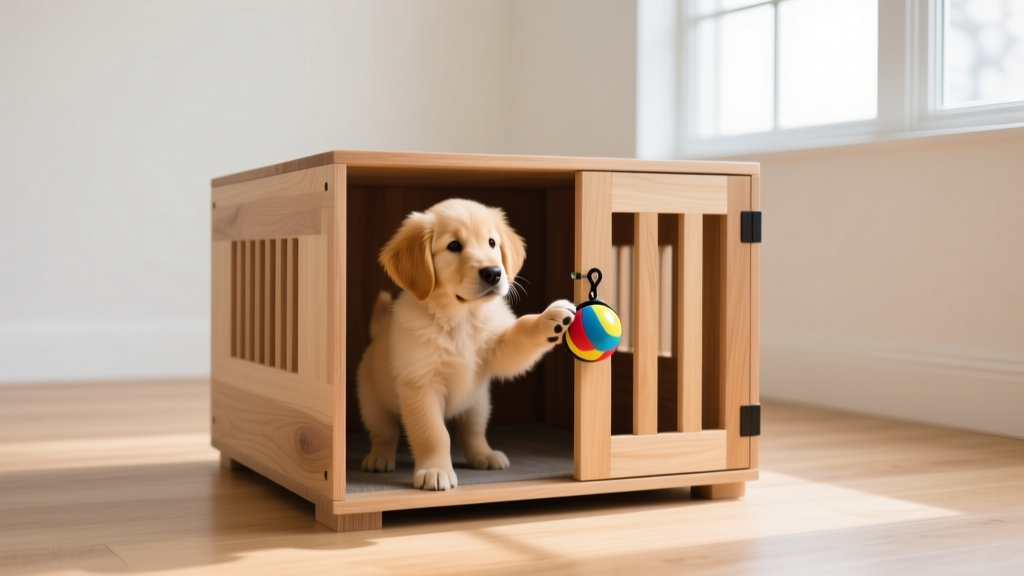
A crate is not a punishment tool — it's a den substitute that keeps your puppy safe and aids house training. Introduce the crate on day one, making it the most comfortable spot in your home with a soft bed (Kong Cozy Cloud or similar), a safe chew toy, and occasional treat surprises.
| Puppy Age | Maximum Daytime Crate Duration | Overnight Duration | Crate Size Recommendation |
|---|---|---|---|
| 10–12 weeks | 1–2 hours | 3–4 hours (set alarm for potty break) | Small wire or plastic crate (24" L x 18" W) with divider panel |
| 12–16 weeks | 2–3 hours | 4–5 hours | Same crate; adjust divider as puppy grows |
| 16–24 weeks | 3–4 hours | 6–7 hours | Transition to medium crate (30" L x 21" W) if needed |
| 6–12 months | 4–5 hours (max) | 7–8 hours | Final adult size: 30" crate. Lundehunds should be able to stand, turn, and lie flat comfortably. |
Whining in the crate: Distinguish between protest whining (intermittent, stops when you don't respond) and distress whining (escalating, accompanied by frantic scratching or panting). For protest whining, wait for 10–15 seconds of silence before letting the puppy out — this prevents reinforcing the noise. For genuine distress, the crate may be too large, the puppy may need a potty break, or you may need to slow your crate training progression. Never let a puppy "cry it out" for extended periods.
Teething Timeline and Relief Strategies
Norwegian Lundehund puppies begin losing their 28 deciduous (baby) teeth around 12–16 weeks, with the full set of 42 adult teeth typically erupted by 6–7 months. The most intense chewing phase occurs between 3 and 6 months as adult teeth push through the gums.
Safe Chew Recommendations by Age
- 10–16 weeks: Soft rubber toys (Kong Classic, size Small, filled with puppy-safe peanut butter and frozen), chilled damp washcloth twisted into a rope, Nylabone Puppy Chew (soft flex material).
- 16–24 weeks: Kong Classic (Medium), Benebone Puppy Wishbone, frozen carrot sticks, bully sticks (supervised only — remove when piece is small enough to swallow).
- 6–12 months: Kong Extreme (black rubber), yak milk chews, antlers (split/sliced only — whole antlers risk tooth fractures), dental chews approved by the Veterinary Oral Health Council (VOHC).
Avoid: Rawhide (choking and GI blockage risk, especially for a GI-sensitive breed), cooked bones (splintering hazard), tennis balls (abrasive surface wears down teeth), and any chew smaller than the puppy's mouth. If your Lundehund swallows a non-food object, contact ASPCA Animal Poison Control at (888) 426-4435 (24/7, consultation fee applies) or your emergency vet immediately.
Common Norwegian Lundehund Puppy Problems and Solutions
Puppy Biting and Nipping
Lundehund puppies use their mouths to explore, and their historical role as puffin hunters (reaching into narrow cliff crevices) selected for a determined, persistent bite style. To stop nipping:
- Redirect: When teeth touch skin, say "ouch" in a calm tone, withdraw attention for 5–10 seconds, then offer an appropriate chew toy.
- Time-outs: If biting persists, calmly place puppy in their crate or a pen for 30–60 seconds as a cool-down — not as punishment.
- Reward gentle play: When puppy licks or plays without teeth, immediately reward with treats and praise.
- Avoid hand-play: Wrestling with your hands teaches puppies that hands are toys. Use tug toys instead.
Most Lundehund puppies significantly reduce mouthing by 5–6 months once adult teeth are fully in. If biting intensifies or seems aggressive (growling, hard biting that breaks skin) after 6 months, consult a certified professional dog trainer (CPDT-KA) or veterinary behaviorist.
Destructive Chewing
Boredom is the primary driver. Lundehunds are intelligent and need mental stimulation. Provide puzzle feeders (Outward Hound Nina Ottosson Dog Brick, Kong Wobbler), rotate toys every 2–3 days to maintain novelty, and ensure your puppy gets adequate physical exercise: 15–20 minutes of structured activity (walks, training games) twice daily for puppies under 6 months, building to 30–45 minutes by 12 months. Avoid forced running or repetitive jumping on hard surfaces until growth plates close (typically 12–15 months).
Separation-Related Distress
Lundehunds bond closely with their people and can develop separation anxiety if not taught independence early. Practice brief departures (30 seconds to 5 minutes) starting in the first week home. Give a long-lasting chew (frozen Kong) as you leave. Gradually extend absences. Never make departures or arrivals emotional events.
First-Year Cost Breakdown for a Norwegian Lundehund
Owning a Lundehund is a financial commitment that goes beyond the initial purchase price. The breed's rarity and GI predisposition mean costs can be higher than average for a small dog.
| Category | Items Included | Estimated Cost Range |
|---|---|---|
| Puppy Purchase | From a responsible breeder (health-tested parents, AKC registration, take-back clause) | $2,000–$3,500 |
| Veterinary Care | 3 puppy wellness visits, vaccination series, deworming, fecal tests, spay/neuter, microchip | $800–$1,500 |
| Food & Treats | Premium small-breed puppy formula, training treats, dental chews (12 months) | $400–$700 |
| Supplies & Gear | Crate, bed, leash, harness (Ruffwear Front Range), bowls, gates, enzymatic cleaner, toys, puzzle feeders, grooming tools | $300–$600 |
| Training | Puppy socialization class, basic obedience (6–8 week courses), possible private sessions | $200–$600 |
| Pet Insurance | Recommended for this breed given Lundehund Syndrome risk. Providers: Trupanion, Healthy Paws, Figo | $40–$70/month ($480–$840/year) |
| Emergency Fund | Set aside for GI emergencies, foreign body ingestion, or unexpected illness | $500–$1,000 (recommended reserve) |
| TOTAL FIRST-YEAR ESTIMATE | $5,180–$8,740+ | |
Pet insurance is strongly recommended for Lundehunds. Lundehund Syndrome treatments — including prescription diets (Hill's Prescription Diet, Royal Canin GI), medications (budesonide, metronidazole), and potential surgical interventions — can cost $3,000–$10,000+ over a dog's lifetime. Enroll before any GI symptoms appear, as pre-existing conditions are typically excluded.
Frequently Asked Questions
How often should I feed my Norwegian Lundehund puppy at each age?
Feed 4 meals per day from 8–12 weeks, 3 meals from 12 weeks to 6 months, and transition to 2 meals per day from 6 months onward. See the feeding schedule table above for exact portions. Always measure food with a standard measuring cup rather than estimating — Lundehunds are small enough that even slight overfeeding leads to excess weight that stresses developing joints.
When will my puppy be fully potty trained?
Most Norwegian Lundehund puppies are reliably house trained between 4 and 6 months of age with a consistent schedule. Some may take up to 8 months. "Reliably trained" means fewer than one accident per month. If accidents increase after a period of success, rule out medical causes (UTI, GI issues) with your vet before assuming it's a behavioral regression.
Are Norwegian Lundehund puppies good with children?
Lundehunds can be wonderful with respectful, calm children but are not ideal for households with toddlers who may grab, pull, or fall on the puppy. Their flexible joints, while remarkable, can be injured by rough handling. Teach children to interact gently and always supervise. Lundehunds tend to withdraw rather than snap when overwhelmed, which means children may not realize they're causing distress.
How much exercise does a Lundehund puppy need?
Follow the 5-minute-per-month-of-age rule for structured walks: a 4-month-old gets about 20 minutes of walking per day, split into two sessions. Free play in a safe yard is additional and self-regulated. Avoid high-impact activities (agility, jumping from heights, long runs) until your vet confirms growth plate closure, typically around 12–15 months. Lundehunds are surprisingly athletic adults — their six toes and flexible joints make them excellent climbers and scramblers — but patience during puppyhood protects their long-term joint health.
What makes Lundehund puppies different from other spitz puppies?
Beyond their famous polydactyly (six fully formed toes on each foot) and extraordinary joint flexibility, Lundehund puppies tend to be more sensitive and slower to mature than other spitz breeds like the Norwegian Elkhound or Finnish Spitz. They require a gentler training approach — heavy-handed corrections cause them to shut down. They also have a unique ear structure (they can fold their ears closed forward or backward to seal the ear canal, an adaptation for puffin hunting in cliff crevices), which means you should check and clean ears weekly to prevent wax buildup and infection.
Tom Renshaw
All our authors care for dogs every day — read more of their work on the authors page.