Morkie Puppy Care Guide
Complete morkie puppy guide covering week-by-week milestones, feeding portions, potty training timelines, vaccination schedules, and first-year costs for 2026.
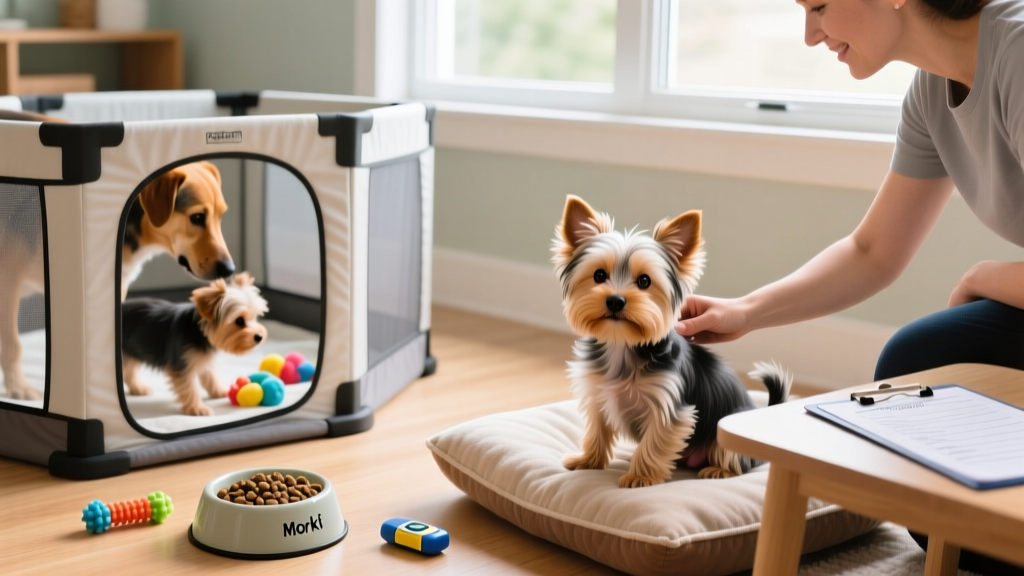
The Morkie — a cross between the Maltese and Yorkshire Terrier — has become one of the most sought-after small designer breeds, and for good reason. Weighing just 4–8 pounds as adults, these compact companions pack outsized personalities. But raising a morkie puppy comes with unique challenges that generic puppy guides simply don't address: their tiny bladders, fragile bone structure, stubborn terrier streak, and predisposition to hypoglycemia all demand breed-specific strategies.
This guide walks you through every developmental stage from weeks 4 through 12 months, with concrete feeding portions, vaccination timelines, training protocols, and realistic cost expectations. Whether you're picking up your puppy next week or preparing for the arrival, you'll find actionable specifics — not vague generalizations.
When Should You Bring Your Morkie Puppy Home?
The American Kennel Club recommends that toy and small-breed puppies remain with their littermates until at least 10–12 weeks of age. This is especially critical for Morkies. Unlike larger breeds that can transition at 8 weeks, toy breeds face genuine hypoglycemia risk (blood sugar crashes) when stressed or separated too early, and the extra weeks with the breeder allow for more stable eating habits and immune system development.
- Weeks 8–10 are a secondary socialization fear period — experienced breeders manage this better than first-time owners
- Toy breeds typically receive their second round of vaccinations at 10–12 weeks before going home
- Bladder capacity at 8 weeks is approximately 1–2 ounces; by 12 weeks it's closer to 3–4 ounces, making initial potty training less punishing
If your breeder insists on releasing puppies at 8 weeks, ask whether the puppy has received its second DHPP vaccination and whether it's been consistently eating solid food for at least two weeks. A responsible breeder will have documentation for both.
Week-by-Week Morkie Puppy Milestones
Understanding what's developmentally appropriate at each stage prevents both underestimation and unrealistic expectations. Here's what to expect from your morkie puppy at every key phase.
Weeks 4–8 (Still with Breeder)
Your puppy is weaning from mother's milk to softened puppy kibble (gruel stage). Eyes are fully open, baby teeth are erupting, and the critical socialization window with littermates is peaking. The breeder should be introducing novel surfaces (tile, carpet, grass), gentle handling exercises, and short periods of crate exposure (15–30 minutes). Weight at this stage: typically 1–2 lb / 0.45–0.9 kg.
Weeks 8–12 (Transition Home)
If you bring your Morkie home during this window, expect 2–3 days of adjustment behavior: whining at night, reluctance to eat, and clinginess. This is normal. Your puppy will sleep 18–20 hours per day in short bursts. Active awake periods last only 20–30 minutes before they crash. Weight: approximately 1.5–3 lb / 0.7–1.4 kg.
Weeks 12–16 (Rapid Learning Phase)
Your morkie puppy is now capable of learning basic cues (sit, name recognition, come). The fear imprinting period (weeks 8–11) has passed, making this the most receptive training window. Bladder control improves noticeably — you can expect 1–2 hours between potty breaks instead of every 30 minutes. Baby teeth begin loosening around week 14. Weight: approximately 2.5–4.5 lb / 1.1–2 kg.
Weeks 16–24 (Teething and Adolescence)
Adult teeth erupt, chewing intensity peaks, and your Morkie tests boundaries. Energy levels increase but remain low compared to larger breeds — expect 20–30 minutes of active play followed by naps. This is when stubbornness and selective hearing (especially recall) often emerge, reflecting the Yorkshire Terrier's independent terrier heritage. Weight: approaching adult size of 4–7 lb / 1.8–3.2 kg.
Months 6–12 (Maturing Adolescent)
By 6 months, most Morkies are close to their adult weight. Spay/neuter is typically recommended between 6–9 months for toy breeds (consult your veterinarian for individual timing). Energy stabilizes into predictable patterns. If potty training has been consistent, accidents should be rare by 6 months. Coat transitions from puppy fluff to the longer, silkier adult texture — this is when matting becomes a real concern if grooming hasn't been established.
Morkie Puppy Feeding Schedule and Portions
Toy breed puppies have disproportionately high metabolic rates relative to their body size. A morkie puppy burns calories faster per pound than a Labrador puppy, making consistent meal timing essential to prevent hypoglycemia — a potentially fatal blood sugar drop that toy breeds are especially vulnerable to during their first 4 months.
| Age | Meals per Day | Portion per Meal (Dry Kibble) | Estimated Daily Total | Notes |
|---|---|---|---|---|
| 8–12 weeks | 4 | ⅛ – ¼ cup | ½ – 1 cup | Moisten with warm water; keep kibble available for free-feeding if puppy skips meals |
| 3–4 months | 3–4 | ¼ cup | ¾ – 1 cup | Transition to dry kibble; stop free-feeding at 4 months to establish routine |
| 4–6 months | 3 | ¼ – ⅓ cup | ¾ – 1 cup | Reduce to 2 meals/day at 6 months |
| 6–12 months | 2 | ⅓ – ½ cup | ⅔ – 1 cup | Transition to adult small-breed formula at 10–12 months |
Food selection specifics: Choose an AAFCO-complete small-breed puppy formula with kibble sized for tiny mouths. Look for named animal protein as the first ingredient (chicken, lamb, or fish — not "meat meal") and a guaranteed analysis showing minimum 22% protein and 8% fat for growth. Recommended brands for toy breeds include Royal Canin X-Small Puppy, Hill's Science Diet Small Paws Puppy, and Purina Pro Plan Toy Breed Puppy. Expect to pay $45–$75 per 4–5 lb bag in 2026.
Vaccination Schedule for Your Morkie Puppy
Toy breeds receive the same core vaccines as larger dogs, but some veterinarians recommend splitting doses for puppies under 5 lb to reduce adverse reaction risk. Always discuss this with your vet before the appointment.
| Age | Vaccine(s) | What It Protects Against | Typical Cost (2026) |
|---|---|---|---|
| 6–8 weeks | DHPP (1st dose) | Distemper, Hepatitis (Adenovirus), Parainfluenza, Parvovirus | $25–$45 |
| 10–12 weeks | DHPP (2nd dose), Bordetella (optional) | Same as above + Kennel Cough | $35–$60 |
| 14–16 weeks | DHPP (3rd dose), Rabies | Core boosters + Rabies (legally required) | $40–$75 |
| 12–16 weeks | Leptospirosis (2-dose series, optional) | Bacterial infection from contaminated water/wildlife | $30–$50 per dose |
Important notes: The AVMA considers DHPP and Rabies as core vaccines for all dogs. Bordetella is recommended if your puppy will attend group training classes, visit groomers, or be boarded. Your puppy is not considered fully protected against parvovirus until 2 weeks after the final DHPP dose at 14–16 weeks — avoid public dog parks and high-traffic areas until then.
Potty Training Your Morkie Puppy: Realistic Timeline
Here's the truth that most breeders won't volunteer: toy breed puppies are notoriously difficult to house-train. A morkie puppy's bladder at 12 weeks holds roughly 3–4 ounces of liquid. That means they physically cannot "hold it" for more than 1–2 hours. Claims of "potty trained in a week" are marketing fiction.
Realistic Potty Training Expectations
- 12–16 weeks: Accidents every day are normal. Take puppy out every 1–2 hours, immediately after meals, after naps, and after play sessions.
- 4–5 months: Accidents reduce to 2–4 per week with consistent scheduling. Puppy begins signaling (circling, sniffing, whining).
- 6–8 months: Most Morkies are reliably trained during the day (1–2 accidents per month). Nighttime control may still be developing.
- 9–12 months: Full reliability for most puppies, though some toy breeds take up to 14 months.
Effective Strategy for Tiny Bladders
Use a dual-system approach: designate an outdoor potty spot for long-term training, but provide an indoor option (puppy pads or a real-grass patch like Fresh Patch or DoggieLawn, $35–$45/month) for overnight and emergency use. Place the indoor option in a consistent location — never move it around, as Morkies are spatial learners who return to the same spot.
For outdoor training, use a specific verbal cue ("go potty" or "do your business") said only while the puppy is eliminating. Reward immediately with a high-value treat (freeze-dried chicken or small cheese pieces) within 2 seconds of finishing. Morkies respond well to food motivation — the Yorkshire Terrier side makes them more food-driven than pure Maltese.
Troubleshooting Common Problems
Submissive/excitement urination: Common in Morkies through 6–8 months. Don't greet your puppy with high energy. Crouch to their level, speak softly, and ignore them until they're calm. Never punish — this worsens the behavior.
Marking behavior: Male Morkies may begin leg-lifting as early as 5–6 months. Neuter timing discussion with your vet is relevant here; early neutering (before 6 months) can reduce but not always eliminate marking instinct.
Regression at 6–8 months: Adolescent Morkies often "forget" training temporarily. Return to the 12-week protocol (frequent trips outside, high-value rewards) for 2–3 weeks. This is developmental, not defiance.
Socialization Window and Exposure Checklist
The Merck Veterinary Manual identifies the primary socialization window as weeks 3–14 — a period when puppies are neurologically primed to accept novel experiences without fear. After 14 weeks, unfamiliar stimuli increasingly trigger caution or avoidance. For Morkies, who tend toward wariness of strangers and sensitivity to loud sounds, maximizing this window is non-negotiable.
Morkie Puppy Socialization Checklist (Weeks 8–14)
Since your puppy isn't fully vaccinated during this period, follow the AVMA's guidance on safe socialization: avoid dog parks and areas with unknown dogs, but expose your puppy to controlled environments.
- People (aim for 50+ individuals): Different ages, genders, skin tones, body sizes. Include people wearing hats, sunglasses, masks, uniforms, hoodies. Have each person offer a treat and let the puppy approach on their terms.
- Surfaces: Tile, hardwood, carpet, gravel, grass, wet pavement, metal grates, plastic tarps. Carry your puppy onto unfamiliar surfaces if they hesitate — don't force.
- Sounds: Vacuum cleaner (start at distance, gradually closer), doorbell, thunderstorm recordings (low volume, paired with treats), car horns, children laughing/screaming, clapping.
- Handling exercises: Touch ears, paws, tail, mouth daily. Practice holding puppy on their back for 10 seconds. Open their mouth and look at teeth. These prevent grooming and vet-visit resistance later.
- Objects: Umbrellas opening, balloons, plastic bags blowing, bicycles, wheelchairs, strollers. Pair each new object with treats.
- Other vaccinated dogs: Arrange playdates with known, vaccinated, gentle adult dogs or puppies in the same vaccination stage. Avoid unknown dogs until the DHPP series is complete.
Crate Training Progression and Time Limits
Crate training serves dual purposes for Morkies: safe confinement during your absence and potty training support (dogs naturally avoid soiling their sleeping area). But toy breeds have smaller bladders, so crate time limits must be shorter than for larger dogs.
| Puppy Age | Maximum Crate Time (Daytime) | Maximum Crate Time (Overnight) |
|---|---|---|
| 8–10 weeks | 30–60 minutes | 2–3 hours (expect nighttime wake-ups) |
| 10–14 weeks | 1–2 hours | 3–4 hours |
| 3–4 months | 2–3 hours | 4–5 hours |
| 4–6 months | 3–4 hours | 6–7 hours |
| 6+ months | 4–5 hours | 7–8 hours |
Crate sizing for Morkies: Choose a crate approximately 18" x 12" x 14" (like the MidWest iCrate or Frisco double-door in XS). Your puppy should be able to stand, turn around, and lie down — but not have enough room to eliminate in one corner and sleep in another. If you buy a larger crate for growth, use the included divider panel.
Building positive associations: Feed all meals inside the crate with the door open for the first 2 weeks. Provide a stuffed Kong or lick mat (spread with peanut butter — xylitol-free only) during crated periods. Cover the crate with a breathable blanket to create a den-like feel. Never use the crate as punishment.
Teething Timeline and Relief Strategies
Morkie puppies begin losing their 28 baby teeth around 12–16 weeks, with the full set of 42 adult teeth typically erupted by 6–7 months. During this period, chewing intensity increases dramatically, and you may notice:
- Increased mouthing and nipping of fingers, clothing, and furniture
- Blood spots on chew toys (normal — gums bleed as teeth loosen)
- Decreased appetite or dropping food (sore gums)
- Finding baby teeth on the floor or in bedding (many puppies swallow them — harmless)
- Occasional mild diarrhea from swallowed teeth and increased saliva
Safe Teething Relief Options
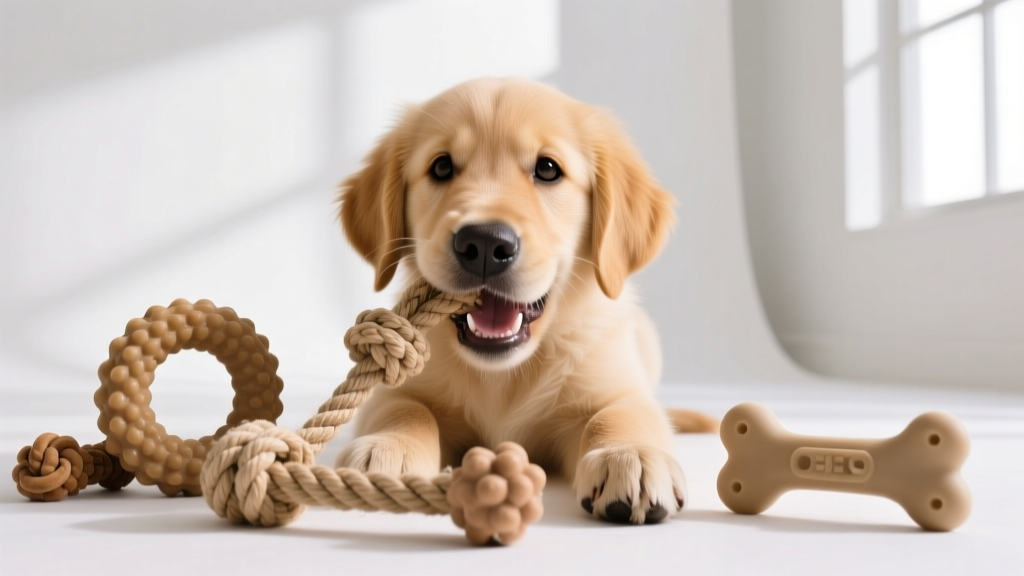
- Frozen washcloth: Wet a clean washcloth, twist into a rope, freeze for 2 hours. Supervise use — remove if puppy starts tearing pieces off.
- Kong Puppy teething stick: The rubber formula is softer than adult Kong products, designed for baby teeth.
- Benebone Puppy Wishbone: Nylon chew in the "small" size, suitable for dogs under 15 lb. Has a bacon or chicken flavor infusion.
- Chilled carrots or apple slices: Cold, crunchy, and safe. Remove apple seeds (contain trace cyanide). Supervise to prevent choking.
- Nylabone Puppy Chew (XS): Specifically the puppy formula, which is softer than adult versions.
Avoid: Rawhide (choking and intestinal blockage risk for toy breeds), antlers and hooves (too hard — can fracture puppy teeth), ice cubes (tooth fracture risk for small mouths), and any toy smaller than a golf ball (swallowing hazard).
Stopping Morkie Puppy Biting and Nipping
Morkie puppies use their mouths to explore the world, and their needle-sharp baby teeth make even gentle mouthing painful. This behavior typically peaks between 10–16 weeks and gradually diminishes with consistent training. Here's a force-free protocol that works:
- Redirect, don't punish: When teeth touch skin, say "ouch" in a calm, medium-volume voice (not a yelp — yelping can excite terrier-mix puppies). Immediately offer an appropriate chew toy. Praise when they bite the toy.
- Time-outs for persistent biting: If your puppy continues after 2–3 redirects, calmly stand up and leave the interaction for 30 seconds. Return and resume play. This teaches that biting ends fun — not that biting gets attention.
- Manage arousal levels: Morkie puppies bite most when overtired. If biting escalates, your puppy likely needs a nap, not more training. Enforce crate naps every 1–2 hours of wakefulness.
- Teach "gentle": Hold a treat in a closed fist. When your puppy licks or sniffs instead of biting, open your hand and give the treat. Practice daily for 5 minutes.
Never hold your puppy's mouth shut, tap their nose, or use any physical punishment. These methods increase fear-based biting and damage the trust bond. The ASPCA recommends positive reinforcement and redirection exclusively for puppy mouthing.
First-Year Cost Breakdown for a Morkie Puppy
Small dogs cost less to feed but often more in veterinary care per pound than larger breeds. Here's a realistic first-year budget based on 2026 pricing across US veterinary practices and pet retailers.
| Category | Items | Estimated Cost Range |
|---|---|---|
| Purchase/Adoption | Reputable breeder or rescue fee | $800–$3,500 (breeder); $200–$600 (rescue) |
| Veterinary | 3 wellness visits, DHPP series, rabies, fecal tests, heartworm test, spay/neuter | $600–$1,200 |
| Food | Small-breed puppy formula (12 months) | $300–$500 |
| Supplies (Initial) | Crate, bed, bowls, leash/harness, grooming tools, toys, gates | $250–$500 |
| Grooming | Professional grooming every 6–8 weeks (Morkies require regular haircuts) | $480–$900/year ($60–$75 per session) |
| Preventive Medications | Heartworm, flea/tick prevention (12 months) | $200–$400 |
| Training | Group puppy class or private sessions | $150–$400 |
| Pet Insurance | Monthly premium (recommended for toy breeds) | $360–$600/year ($30–$50/month) |
| Emergency Fund | Set aside for unexpected illness/injury | $500–$1,000 (reserved) |
Total first-year estimate: $3,640–$9,000 (including puppy purchase). Ongoing annual costs after year one: approximately $1,800–$3,200.
Frequently Asked Questions
How often should I feed my morkie puppy at 10 weeks old?
Four meals per day, spaced roughly 4 hours apart during waking hours (e.g., 7 AM, 11 AM, 3 PM, 7 PM). Each meal should be approximately ⅛ to ¼ cup of high-quality small-breed puppy kibble, moistened with warm water. Free-feeding (leaving kibble available) is acceptable during this stage if your puppy tends to skip meals, but transition to scheduled meals by 4 months to support potty training.
When will my morkie puppy be fully potty trained?
Most Morkies achieve reliable daytime house training between 6–9 months, with full reliability (including overnight) by 10–14 months. Toy breeds mature more slowly in bladder control than medium and large breeds. Consistency is the single biggest factor — puppies whose owners follow a strict schedule (out every 1–2 hours, after every meal and nap) train faster than those with inconsistent routines.
When can my morkie puppy go outside and meet other dogs?
Your puppy can go outside in your own yard or low-traffic areas immediately after coming home. However, avoid public parks, sidewalks with heavy dog traffic, and encounters with unknown dogs until 2 weeks after the final DHPP vaccination at 14–16 weeks (approximately 16–18 weeks of age). For controlled socialization during the critical window, carry your puppy in a sling or stroller to observe the world, and arrange playdates with known, vaccinated dogs in private settings.
What vaccines does my morkie puppy need and when?
Core vaccines: DHPP at 6–8 weeks, 10–12 weeks, and 14–16 weeks; Rabies at 14–16 weeks. Non-core (lifestyle-dependent): Bordetella at 10–12 weeks if attending group classes or grooming; Leptospirosis as a 2-dose series starting at 12 weeks if you live in an area with wildlife exposure. Your veterinarian will tailor recommendations based on your location and lifestyle.
How do I stop my morkie puppy from biting my hands?
Use the redirect method: when teeth contact skin, say "ouch" calmly, withdraw your hand, and immediately offer a chew toy. Praise when they bite the toy. If biting persists after 2–3 redirects, implement a 30-second time-out by leaving the interaction. Most importantly, recognize that overtired puppies bite more — enforce naps every 1–2 hours. Expect gradual improvement over 4–8 weeks, not overnight results.
Are Morkie puppies good with children?
Morkies can coexist well with respectful, gentle children aged 8 and up. However, their small size (often under 5 lb as puppies) makes them extremely fragile — a toddler who falls on or squeezes a morkie puppy can cause serious injury. Supervision is mandatory, and all children must be taught to sit on the floor for interactions rather than carrying the puppy. Many breeders will not place Morkies in homes with children under 6–8 years old for this reason.
Priya Sutaria
All our authors care for dogs every day — read more of their work on the authors page.