Miniature Cavalier Puppies: Week-by-Week Growth, Care & Training Guide
Your complete guide to raising miniature cavalier puppies: age milestones, feeding schedules, potty training timelines, vaccination charts, and first-year costs.

If you've just brought home a miniature cavalier puppy—or you're preparing to welcome one—you're in for a joyful, sometimes exhausting adventure. These small-boned, big-hearted companions are a downsized version of the Cavalier King Charles Spaniel, typically bred by selecting the smallest individuals from litters or crossing with smaller breeds like the Toy Poodle (producing the "Cavapoo" variant). Adult miniature cavaliers usually weigh 8–13 lb (3.6–5.9 kg) and stand 9–11 inches (23–28 cm) at the shoulder, compared to the standard Cavalier's 13–18 lb range.
Their smaller size means everything about puppy care—portions, medication doses, crate sizing, and even how quickly they can get cold or dehydrated—needs to be scaled accordingly. This guide walks you through every critical stage from 4 weeks to 12 months with breed-specific numbers, timelines, and troubleshooting strategies.
When to Bring Your Miniature Cavalier Puppy Home
Responsible breeders will not release a miniature cavalier puppy before 8 weeks of age, and many prefer to hold toy and small-breed puppies until 10–12 weeks. There are sound developmental reasons for this:
- Weeks 4–6: Puppies are still learning bite inhibition and social cues from littermates. Separating them too early increases the risk of fear-based behaviors and resource guarding.
- Weeks 6–8: The first round of core vaccines (DHPP) is administered around 6–8 weeks. Puppies need at least one booster before transitioning to a new home.
- Weeks 8–10: Small breeds are particularly vulnerable to hypoglycemia (low blood sugar) during stress. An extra two weeks with the breeder allows for more stable feeding routines and weight gain.
If a breeder offers you a 5- or 6-week-old miniature cavalier, treat this as a red flag. Early separation is associated with higher rates of separation anxiety, excessive barking, and difficulty with house training later in life, according to research summarized by the American Veterinary Medical Association.
Age-Specific Milestones: What to Expect Each Stage
Miniature cavaliers mature slightly slower than larger breeds in some respects—their emotional and social development benefits from patience. Here's what each stage looks like:
Weeks 4–8 (With the Breeder)
- Eyes and ears fully functional; exploring environment actively
- Deciduous (baby) teeth fully erupted—28 teeth total
- Beginning to eat gruel/moistened kibble alongside nursing
- First socialization window opens: exposure to novel sounds, surfaces, gentle handling
- First DHPP vaccine at 6–8 weeks
- Weight: typically 1.5–3 lb (0.7–1.4 kg)
Weeks 8–12 (Home Transition)
- Primary fear period (8–10 weeks)—avoid traumatic experiences
- Sleeping 18–20 hours per day; short bursts of play (10–15 minutes)
- Bladder capacity: roughly 1–2 hours maximum
- Second DHPP booster at 10–12 weeks; Bordetella optional
- Weight: approximately 2.5–4.5 lb (1.1–2 kg)
- Exercise guideline: 5 minutes of structured walks per month of age (so ~10 minutes max at 8 weeks)
Weeks 12–16 (Foundation Training)
- Third DHPP booster at 14–16 weeks; Rabies vaccine at 12–16 weeks (jurisdiction-dependent)
- Bladder control improving: 2–3 hours between outings
- Can begin short, positive-reinforcement training sessions (3–5 minutes)
- Second fear period may emerge around 12–14 weeks—counter-condition with treats and calm exposure
- Weight: approximately 4–7 lb (1.8–3.2 kg)
- Safe to begin supervised outdoor exposure in low-risk areas after 14-week vaccine
Weeks 16–24 (Adolescence Begins)
- Teething intensifies—deciduous teeth begin falling out around 12–16 weeks, with full adult set (42 teeth) by 6–7 months
- Increased independence and testing of boundaries
- Energy peaks; structured play and mental enrichment become critical
- Spay/neuter typically scheduled around 5–6 months (consult your veterinarian for individual timing)
- Weight: approximately 6–10 lb (2.7–4.5 kg), approaching adult size
Months 6–12 (Approaching Adulthood)
- Adult coat fully in; feathering on ears, chest, legs, and tail becomes more pronounced
- Emotional maturity continues—some miniature cavaliers remain puppy-like until 18–24 months
- Transition from puppy food to adult formula around 9–12 months (small breeds mature faster nutritionally than large breeds)
- Final adult weight typically reached by 10–12 months: 8–13 lb (3.6–5.9 kg)
Feeding Schedule: Portions by Age and Weight
Miniature cavaliers have small stomachs and fast metabolisms. Hypoglycemia is a genuine concern in puppies under 4 lb, so frequent, measured meals are essential. Choose a kibble or wet food that carries the AAFCO statement for "growth" or "all life stages" and lists a named animal protein as the first ingredient.
| Age Range | Estimated Weight | Meals Per Day | Total Daily Amount | Notes |
|---|---|---|---|---|
| 8–12 weeks | 2–4 lb (0.9–1.8 kg) | 4 meals | ¼–⅓ cup/day | Moisten kibble with warm water; monitor for hypoglycemia (lethargy, trembling) |
| 12–16 weeks | 4–6 lb (1.8–2.7 kg) | 3–4 meals | ⅓–½ cup/day | Begin transitioning to dry kibble if desired |
| 4–6 months | 6–9 lb (2.7–4.1 kg) | 3 meals | ½–⅔ cup/day | Increase protein for teething/growth demands |
| 6–9 months | 8–11 lb (3.6–5 kg) | 2 meals | ½–¾ cup/day | Reduce to twice daily; watch body condition score |
| 9–12 months | 9–13 lb (4.1–5.9 kg) | 2 meals | ½–¾ cup/day | Begin transition to adult formula over 7–10 days |
Caloric reference: A growing miniature cavalier puppy needs approximately 55–65 calories per pound of body weight per day. A 5-lb puppy at 12 weeks would need roughly 275–325 kcal/day. Check your food's guaranteed analysis to convert cups to calories—most small-breed puppy formulas contain 380–450 kcal per cup.
Free-feeding warning: While some toy-breed owners leave food out continuously, this makes potty training significantly harder and increases obesity risk. Cavaliers are genetically predisposed to weight gain due to a documented MC4R gene mutation linked to overeating. Measured meals from day one set a healthier lifelong pattern.
Potty Training Timeline and Troubleshooting
Be realistic: most miniature cavalier puppies are reliably house-trained between 4–6 months of age, with occasional accidents continuing until 8–9 months. Their small bladders simply cannot hold as long as larger breeds. Here's a practical progression:
| Age | Bladder Hold Time (Max) | Expected Accidents/Week | Strategy |
|---|---|---|---|
| 8–10 weeks | 1–1.5 hours | 5–10+ | Carry outside every 30–60 min; reward immediately with high-value treat |
| 10–14 weeks | 1.5–2 hours | 3–6 | Introduce verbal cue ("go potty"); begin crate-assisted training |
| 14–20 weeks | 2–3 hours | 1–3 | Bell training on door; consistent feeding schedule to predict bowel movements |
| 5–6 months | 3–4 hours | 0–2 | Extend interval gradually; supervise or confine when indoors |
| 7–9 months | 4–6 hours | 0–1 | Reliable with routine; occasional regression during adolescence is normal |
Troubleshooting common issues:
- Submissive/excitement urination: Common in cavaliers. Avoid leaning over or making direct eye contact during greetings. Crouch sideways, speak softly, and take the puppy outside immediately after calm greetings.
- Nighttime accidents: Set one alarm for 2–3 AM for puppies under 12 weeks. Place the crate near your bed so you can hear stirring. Remove water 1.5 hours before bedtime.
- Regression at 6–8 months: Hormonal changes (especially in intact males marking territory) can cause setbacks. Spaying/neutering and returning to basics—frequent outings, high-value rewards—usually resolves this within 2–3 weeks.
Vaccination Schedule: What Your Puppy Needs and When
Your veterinarian will customize this schedule based on your region's disease risk, but the AAHA canine vaccination guidelines recommend the following core protocol for miniature cavalier puppies:
| Age | Vaccine | Type | Notes |
|---|---|---|---|
| 6–8 weeks | DHPP (Distemper, Hepatitis/Adenovirus, Parainfluenza, Parvovirus) | Core | First dose; often administered by breeder |
| 10–12 weeks | DHPP booster | Core | Second dose; some vets add Leptospirosis based on regional risk |
| 10–12 weeks | Bordetella (Kennel Cough) | Optional/Lifestyle | Recommended if attending puppy classes or using daycare |
| 14–16 weeks | DHPP booster (final puppy dose) | Core | Critical final dose—maternal antibodies wane by this point |
| 12–16 weeks | Rabies | Core (Legal) | Timing varies by state/local law; required for licensing |
| 12+ months | DHPP booster + Rabies booster | Core | Then DHPP every 3 years; Rabies per local law (1 or 3 year) |
When can your puppy go outside and meet other dogs? After the final DHPP booster at 14–16 weeks, your puppy has meaningful protection against parvovirus and distemper. Before that, avoid dog parks, pet store floors, and any area with unknown dog traffic. Controlled playdates with fully vaccinated, healthy adult dogs in private yards are generally considered safe after the 10–12 week booster. The AKC recommends beginning careful socialization before full vaccination because the 3–14 week socialization window closes before all vaccines are complete.
Socialization Window: The Critical 3–14 Week Period
This is arguably the single most important developmental window in your miniature cavalier's life. Research published in the Journal of Veterinary Behavior confirms that puppies who don't receive adequate positive exposure during weeks 3–14 are significantly more likely to develop fear-based aggression, noise phobias, and generalized anxiety as adults.
Miniature cavaliers are naturally sociable and eager to please, which makes socialization rewarding—but their small size means they can feel easily overwhelmed. Keep all exposures positive, brief, and at your puppy's pace.
Rule of thumb: Aim for 3–5 new positive experiences per day during weeks 8–12, and 2–3 per day during weeks 12–14. If your puppy shows fear (cowering, tail tucking, freezing), do not force the interaction. Retreat to a comfortable distance, offer treats, and try again at a lower intensity the next day. This is called counter-conditioning, and it builds confident dogs.
Crate Training Progression and Time Limits
A properly crate-trained miniature cavalier is safer during your absences, potty trains faster, and has a secure "den" for decompression. Choose a crate sized for the puppy's expected adult dimensions—approximately 24" x 18" x 19"—and use a divider panel to shrink the space as they grow. Too much room encourages eliminating in one corner and sleeping in another.
Time limits by age (maximum continuous confinement):
- 8–10 weeks: 30–60 minutes during the day; 2–3 hours overnight (with one potty break)
- 10–14 weeks: 1–2 hours during the day; 3–4 hours overnight (may still need one break)
- 14–20 weeks: 2–3 hours during the day; 5–6 hours overnight
- 5–6 months: 3–4 hours during the day; 7–8 hours overnight
- 7+ months: Up to 4–5 hours during the day; 8 hours overnight
Progression steps:
- Week 1 (days 1–3): Leave the crate door open. Feed all meals inside. Toss high-value treats (freeze-dried liver, small cheese pieces) into the back. Use a consistent cue like "crate" or "kennel."
- Week 1 (days 4–7): Close the door during meals. Stay in sight. Open immediately after eating. Begin short departures (step out of the room for 30 seconds, return, treat for quiet).
- Week 2: Extend closed-door time to 5–10 minutes while you remain nearby. Practice leaving the room briefly.
- Weeks 3–4: Build up to 30 minutes with you out of sight. Introduce a stuffed Kong or lick mat to create positive association with alone time.
Nighttime whining: If your puppy whines after being recently toileted and settled, wait 3–5 minutes before responding. Often, they settle on their own. If whining persists, take them out on-leash (no play), allow them to eliminate, then return directly to the crate. This prevents reinforcing whining as a play invitation.
Teething Timeline and Relief Strategies
Miniature cavalier puppies begin losing their 28 deciduous teeth around 12–16 weeks, with the process continuing through 5–7 months. You may find tiny teeth in bedding or toys, though many puppies swallow them harmlessly. During this period, chewing urges intensify dramatically.
What's normal vs. concerning:
- Increased chewing, drooling, and mild gum bleeding: normal
- Reluctance to eat hard kibble for a day or two: normal—try soaking kibble in warm water
- Retained baby teeth (adult tooth erupting alongside a baby tooth that hasn't fallen out): common in small breeds—consult your veterinarian, as retained deciduous teeth can cause crowding and periodontal disease
- Swollen face, refusal to eat for more than 24 hours, or foul breath: possible infection—see your vet promptly
Safe chew recommendations by stage:
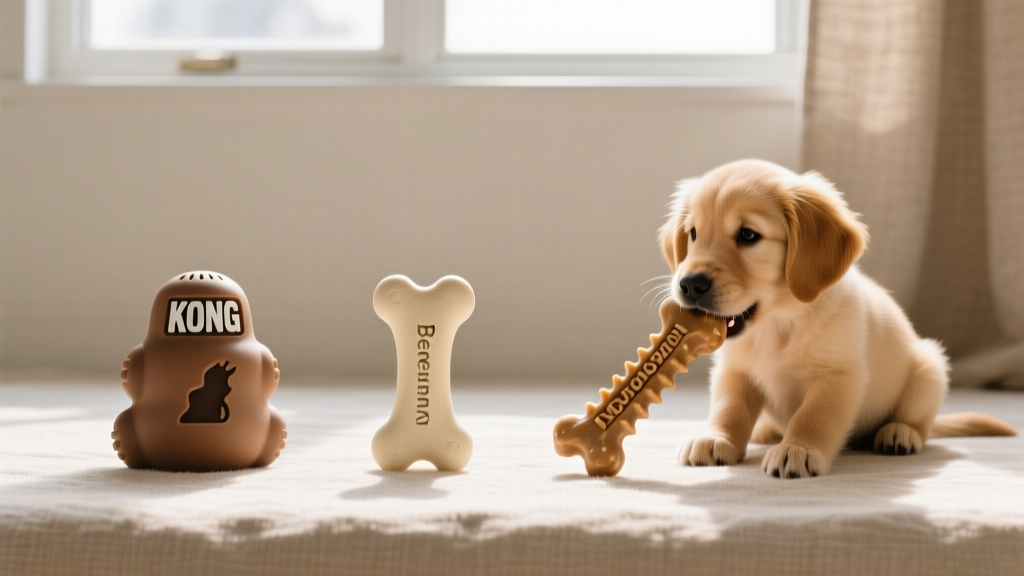
- 12–16 weeks: Frozen, wet washcloths (knot one end, soak in water, freeze); soft rubber teething toys (e.g., KONG Puppy in size XS or S)
- 16–24 weeks: Edible chews sized for small breeds (e.g., Whimzees puppy chews); frozen carrots; Benebone Puppy in size Small
- 5–7 months: Transition to durable rubber toys (KONG Classic size Small); Yak cheese chews (supervised—remove when small enough to swallow); avoid rawhide and hard nylon bones that can fracture developing teeth
Common Puppy Problems: Biting, Whining, and Chewing
Puppy Biting and Nipping
Miniature cavalier puppies are mouthy—not aggressive, but exploratory. Their needle-sharp deciduous teeth make even gentle mouthing painful. Here's how to manage it using positive reinforcement methods:
- Redirect: When teeth touch skin, say "ouch" in a calm, slightly surprised tone (not loud or frightening), then immediately offer an appropriate chew toy. Praise when they chew the toy.
- Time-out: If nipping continues after 2–3 redirects, calmly stand up, cross your arms, and ignore the puppy for 15–30 seconds. This teaches that biting ends social interaction.
- Prevent rehearsal: Puppies bite most when overtired or overstimulated. If your puppy is nipping relentlessly, they likely need a nap in their crate—most puppies under 4 months need enforced rest every 1–2 hours.
Never hold the puppy's mouth shut, push fingers into their throat, or use physical punishment. These methods increase fear and can damage the trust your cavalier naturally wants to give you.
Excessive Whining and Crying
Cavaliers are velcro dogs—they want physical contact with their people at all times. Whining when crated or left alone is extremely common in the first 2–4 weeks home. Strategies:
- Place a warm Snuggle Puppy (heartbeat toy) or a worn t-shirt with your scent in the crate
- Keep the crate in your bedroom for the first 2–3 weeks, then gradually move it to the desired permanent location over several days
- Practice short departures (5–30 minutes) daily to prevent separation distress from developing—cavaliers are among the breeds most prone to separation anxiety
Destructive Chewing
Between 4–8 months, chewing peaks as adult teeth settle and adolescent energy surges. Puppy-proof your home by:
- Using bitter apple spray on baseboards and furniture legs (test on a hidden area first)
- Providing a rotation of 4–5 appropriate chew toys to maintain novelty
- Never leaving shoes, remotes, or children's toys within reach—their small jaws can destroy and ingest these quickly, creating intestinal blockage risk
First-Year Cost Breakdown
Budgeting accurately prevents unpleasant surprises. Here's a realistic first-year cost estimate for a miniature cavalier puppy in the United States (2025–2026 pricing):
| Category | Low Estimate | High Estimate | Details |
|---|---|---|---|
| Puppy purchase/adoption | $1,500 | $3,500+ | Responsible breeder; rescue adoption fees typically $300–$600 |
| Veterinary (wellness) | $600 | $1,200 | 3 puppy visits, vaccines, fecal tests, spay/neuter, heartworm test |
| Preventive medications | $250 | $450 | Monthly heartworm (e.g., Heartgard Plus Small), flea/tick (e.g., NexGard or Bravecto) |
| Food | $300 | $550 | Quality small-breed puppy formula; ~1.5–2 bags/month at $40–$65/bag |
| Supplies | $200 | $400 | Crate, bed, harness, leash, bowls, grooming tools, toys, puppy pads |
| Training | $100 | $400 | Group puppy class ($100–$200 for 6 weeks); private sessions $75–$125/hour if needed |
| Grooming | $200 | $500 | Professional grooming every 6–8 weeks at $50–$80/session; or home grooming tools |
| Pet insurance | $350 | $600 | Monthly premiums $30–$50 for accident/illness; enroll before pre-existing conditions |
| Emergency fund | $0 | $2,000+ | Recommended buffer; cavaliers are prone to mitral valve disease—early detection matters |
Total estimated first-year cost: $3,500–$7,600+ depending on breeder vs. adoption, your region's veterinary pricing, and whether any health issues arise.
Health screening note: Cavaliers are predisposed to mitral valve disease (MVD), with studies suggesting over 50% develop a heart murmur by age 5. Ask your breeder for proof that both parents were screened by a veterinary cardiologist with clear results at age 2.5+ years. Also request OFA or PennHIP hip scores and CERF eye clearances. The Orthopedic Foundation for Animals maintains a public database of tested dogs.
Frequently Asked Questions
How often should I feed my miniature cavalier puppy at 10 weeks old?
At 10 weeks, feed 4 meals per day, totaling approximately ¼–⅓ cup of high-quality small-breed puppy kibble (moistened with warm water if preferred). Space meals roughly 3–4 hours apart during waking hours. Always provide fresh water, but remove the water bowl 1.5 hours before bedtime to reduce overnight accidents.
When will my miniature cavalier puppy be fully potty trained?
Most miniature cavaliers are reliably house-trained by 4–6 months, though occasional accidents can occur until 8–9 months. Consistency is the single biggest factor—puppies with a regular feeding schedule, frequent outdoor trips, and immediate positive reinforcement learn fastest. If your puppy is still having daily accidents past 6 months, consult your veterinarian to rule out urinary tract infection or anatomical issues.
How do I stop my miniature cavalier puppy from biting my hands and ankles?
Use a three-step approach: (1) Redirect to an appropriate chew toy every time teeth contact skin. (2) If redirecting fails, stand still, cross your arms, and withdraw attention for 15–30 seconds. (3) Ensure your puppy is getting enough sleep—overtired puppies bite more. Most puppies need 16–20 hours of sleep per day through 4 months. Never use physical punishment, which increases fear and can lead to defensive aggression.
When can my puppy go to the dog park or meet unfamiliar dogs?
Wait until at least 7 days after the final DHPP booster (typically given at 14–16 weeks), so approximately 15–17 weeks of age. Even then, dog parks carry risk—unvaccinated dogs, parasites, and overwhelming interactions can set back socialization. Prefer structured puppy playgroups supervised by a certified trainer, or arrange one-on-one playdates with dogs whose vaccination status you've confirmed.
What vaccines does my miniature cavalier puppy need, and when?
Core vaccines include DHPP (Distemper, Hepatitis, Parainfluenza, Parvovirus) at 6–8 weeks, 10–12 weeks, and 14–16 weeks, plus Rabies at 12–16 weeks (timing varies by local law). Optional lifestyle vaccines include Bordetella (recommended for puppy classes) and Leptospirosis (regional risk). Discuss your puppy's individual risk profile with your veterinarian at the first wellness visit.
Should I be concerned about heart problems in my miniature cavalier puppy?
Mitral valve disease (MVD) is the leading health concern in Cavalier King Charles Spaniels, including miniatures. While MVD typically manifests in adulthood (often between ages 4–7), early-onset cases occur. Schedule annual veterinary wellness exams that include cardiac auscultation (listening for murmurs). If a murmur is detected, your vet may recommend an echocardiogram and referral to a veterinary cardiologist. Pet insurance is strongly recommended for this breed given the potential lifetime cost of cardiac care ($5,000–$15,000+).
Anouk Beaumont
All our authors care for dogs every day — read more of their work on the authors page.