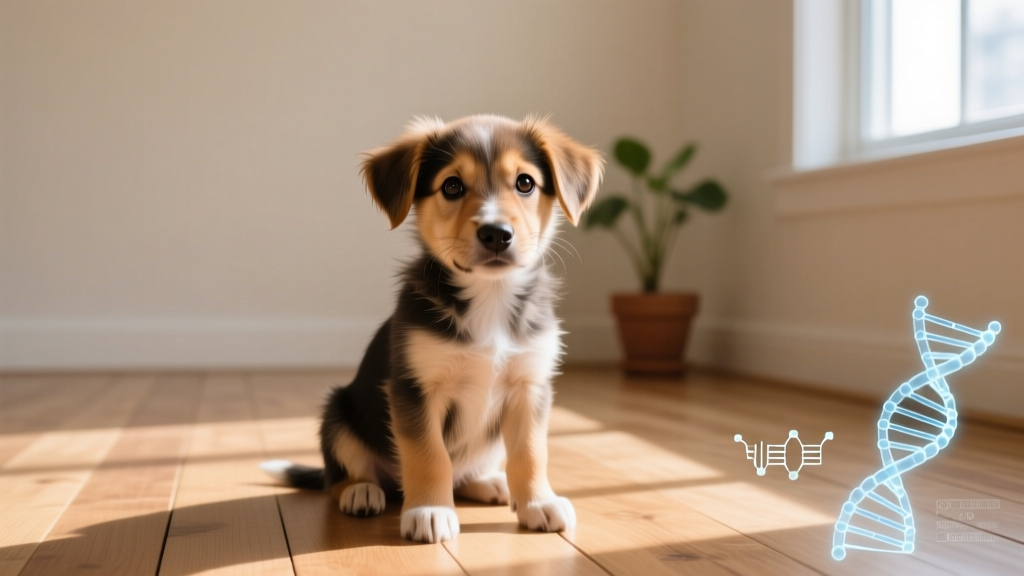
Mini Australian Shepherd Puppies: Complete Growth & Care Guide
Everything you need to raise mini Australian shepherd puppies: age milestones, feeding schedules, vaccination timelines, potty training, and first-year costs.

Mini Australian shepherd puppies pack the intelligence, herding instinct, and boundless energy of their full-sized counterparts into a 20–40 pound package. That combination makes them extraordinary companions — and a genuine challenge for unprepared owners. In my years working with herding-breed owners, the most common regret I hear is "I didn't realize how much structure they'd need as puppies."
This guide walks you through every developmental stage from week 4 through month 12, with breed-specific expectations for your mini Aussie. You'll find exact feeding portions, vaccination weeks, crate time limits, and a realistic first-year budget so you can plan with confidence.
Mini Australian Shepherd Puppy Milestones: Week by Week
Mini Aussies mature slightly faster than standard Australian shepherds but still follow a predictable developmental arc. Understanding these windows helps you anticipate behavioral shifts before they catch you off guard.
Weeks 4–8: The Litter Phase
Weight: 2–5 lb (0.9–2.3 kg)
What's happening: Eyes and ears fully functional. Littermates teach bite inhibition through play. The breeder should begin early neurological stimulation (ENS) and introduce novel surfaces — textured mats, wobble boards, different flooring. Mini Aussie puppies at this stage are highly impressionable; negative experiences can create lasting fear responses.
Your role: If visiting the litter, observe temperament. A confident mini Aussie puppy will approach you, sniff, and recover quickly from a mild startle (like a dropped pen). Avoid the puppy that freezes or hides for extended periods unless you're prepared for extra socialization work.
Weeks 8–12: Home Transition & Fear Period
Weight: 5–10 lb (2.3–4.5 kg)
What's happening: This is the first major fear imprint period (8–11 weeks). Traumatic events — a harsh vet visit, an aggressive dog encounter, isolation — can create permanent phobias. Your mini Aussie puppy is also testing boundaries and learning what's safe in their new environment.
Your role: Keep experiences positive. Pair new stimuli with high-value treats (freeze-dried liver, boiled chicken). Limit alone time to prevent separation distress, which herding breeds are prone to developing.
Weeks 12–16: Confidence Building
Weight: 10–18 lb (4.5–8.2 kg)
What's happening: The fear period eases. Your puppy becomes bolder and more exploratory. Teething discomfort begins around week 12–14 as adult teeth start pushing through. Herding behaviors — nipping at heels, circling, staring — emerge more noticeably.
Your role: Begin structured training sessions (5 minutes, 2–3 times daily). Redirect herding nips to appropriate toys. Start crate training if not already established.
Weeks 16–24: The Teenage Phase Begins
Weight: 18–30 lb (8.2–13.6 kg)
What's happening: Rapid physical growth slows. Your mini Aussie tests previously learned commands — "come" may suddenly be ignored. Sexual maturity approaches; intact males may begin marking, females may show early heat signs. Peak teething occurs between 4–6 months.
Your role: Maintain training consistency. Increase mental stimulation (puzzle feeders, scent games, flirt pole sessions). Schedule spay/neuter discussion with your vet.
Months 6–12: Adolescence & Maturity
Weight: 25–40 lb (11.3–18.1 kg) — approaching adult size
What's happening: Your mini Aussie reaches near-adult height by 9–10 months but continues filling out until 14–18 months. Energy remains very high. Impulse control improves with consistent training but isn't reliable until 18–24 months.
Your role: Introduce advanced training — agility foundations, trick training, recall proofing. Consider enrolling in a herding instinct test through the AKC herding program to channel drive constructively.
Feeding Schedule & Portions for Mini Australian Shepherd Puppies
Mini Aussies are active, high-metabolism dogs. Underfeeding during growth stunts development; overfeeding stresses developing joints and increases hip dysplasia risk. Feed a diet labeled AAFCO-compliant for growth or all life stages, with a named animal protein as the first ingredient and minimum 22% crude protein for puppies.
| Age | Meals per Day | Daily Portion (approx.) | Calories/Day (est.) |
|---|---|---|---|
| 8–12 weeks | 3–4 meals | ¾ – 1 cup total | 300–450 kcal |
| 3–6 months | 3 meals | 1 – 1½ cups total | 450–650 kcal |
| 6–12 months | 2 meals | 1½ – 2 cups total | 600–850 kcal |
| 12+ months (adult) | 2 meals | 1½ – 2¼ cups total | 550–800 kcal |
Important: These are starting points. Adjust based on body condition score (BCS). You should feel ribs easily without pressing hard, and see a visible waist when viewed from above. A mini Aussie puppy that looks "chunky" is at higher risk for orthopedic problems. Consult your veterinarian to fine-tune portions for your individual puppy's growth rate and activity level.
Recommended food types: Look for small-breed puppy formulas from brands like Purina Pro Plan, Royal Canin, or Hill's Science Diet — these have appropriate kibble size and calcium-to-phosphorus ratios for smaller frames. Avoid large-breed puppy formulas unless your vet specifically recommends them, as mini Aussies don't need the restricted calcium levels designed for giant breeds.
Vaccination Schedule: What Your Mini Aussie Puppy Needs & When
Mini Australian shepherd puppies follow the standard AVMA-recommended core vaccination protocol, but there's a breed-specific consideration: some herding breeds carry the MDR1 gene mutation, which affects drug sensitivity. While this primarily impacts medication dosing (not vaccines), discuss MDR1 testing with your breeder or vet so you have the information on file.
| Age | Vaccines | Notes |
|---|---|---|
| 6–8 weeks | DHPP (Distemper, Hepatitis, Parainfluenza, Parvovirus) — 1st dose | Often given by breeder before pickup |
| 10–12 weeks | DHPP — 2nd dose Bordetella (optional, recommended if attending puppy classes) |
Avoid dog parks; controlled socialization only |
| 14–16 weeks | DHPP — 3rd dose Rabies (required by law in most US states) |
Final puppy series; full immunity develops ~2 weeks after last DHPP |
| 12–16 months | DHPP booster Rabies booster (1-year or 3-year, per local law) |
First adult boosters |
Non-core vaccines to discuss with your vet: Leptospirosis (recommended in areas with wildlife exposure), Lyme disease (tick-endemic regions), and Canine Influenza (H3N2/H3N8) if your puppy will be boarded or attend daycare. Your veterinarian will tailor recommendations based on your geographic location and lifestyle.
Potty Training Your Mini Australian Shepherd Puppy: Realistic Timeline
Mini Aussies are intelligent and typically learn potty routines faster than many breeds — but "fast" still means 4–6 months for reliable house training, not days. Their small bladders and high metabolism mean frequent output, especially in the early weeks.
Potty Training Timeline & Expectations
| Age | Bladder Capacity | Outing Frequency | Accidents Expected |
|---|---|---|---|
| 8–10 weeks | 30–45 minutes | Every 30–60 min while awake, after every meal/nap/play | Multiple daily |
| 10–14 weeks | 1–1.5 hours | Every 1–2 hours | 1–3 per week |
| 3–4 months | 2–3 hours | Every 2–3 hours | Occasional (regression possible) |
| 4–6 months | 3–4 hours | Every 3–4 hours | Rare; signals becoming clear |
| 6+ months | 4–6 hours | Every 4–6 hours | Fully reliable if consistently trained |
Troubleshooting common potty problems:
- Submissive urination: Common in young mini Aussies. Don't scold — crouch sideways, avoid direct eye contact during greetings, and take puppy outside immediately after calm greetings.
- Excitement peeing: Keep arrivals low-key. Ignore the puppy for 2–3 minutes when you enter, then greet calmly.
- Nighttime accidents: Remove water 2 hours before bed. Set a 2 AM alarm for puppies under 12 weeks. Use an enzymatic cleaner (Nature's Miracle or Rocco & Roxie) on accident spots — ammonia-based cleaners attract repeat soiling.
- Regression at 4–5 months: Normal. Hormonal changes and increased independence cause temporary setbacks. Return to more frequent outings for 1–2 weeks.
The Critical Socialization Window: Weeks 3–14
This is the single most important developmental window for your mini Australian shepherd puppy. The American Veterinary Society of Animal Behavior (AVSAB) emphasizes that puppies must receive positive exposure to a wide range of stimuli before 14 weeks or risk developing fear-based reactivity — a particularly significant concern for herding breeds, which are genetically predisposed to environmental sensitivity.
Mini Aussie Puppy Socialization Checklist
Surfaces: Grass, gravel, metal grates, wet floors, carpet, tile, sand, mulch, wobble boards
People: Children (supervised), elderly individuals, people wearing hats/sunglasses/hoodies, people using wheelchairs or crutches, delivery workers, people of different ethnicities and heights
Animals: Friendly vaccinated adult dogs (various sizes), calm cats (if available), livestock (mini Aussies benefit from controlled exposure to animals they may later herd)
Sounds: Vacuum cleaner, thunderstorms (play recordings at low volume, pair with treats), doorbell, clapping, traffic noise, fireworks recordings, hair dryer
Handling: Paw touching, ear inspection, mouth opening, nail trimming practice, being held on back, collar/harness grabbing, towel drying
Environments: Car rides (short trips ending in fun destinations), pet store visits (carried until fully vaccinated), outdoor café patios, friends' houses, grooming table exposure
Objects: Umbrellas opening, balloons, plastic bags rustling, skateboards, bicycles, lawn equipment
The rule: Every new experience should end positively. If your puppy shows fear (tucked tail, flattened ears, freezing, attempting to flee), increase distance from the stimulus and offer high-value treats. Never force exposure — flooding a fearful mini Aussie puppy creates deeper fear, not confidence.
Crate Training Progression & Time Limits
Crate training serves dual purposes for mini Aussies: safe confinement during the chewing phase and a foundation for managing the separation anxiety this breed is prone to developing. A properly crate-trained mini Aussie views the crate as a den, not a punishment.
| Age | Max Daytime Crate Time | Max Nighttime Crate Time | Crate Size Recommendation |
|---|---|---|---|
| 8–10 weeks | 30–60 minutes | 2–3 hours (set alarm) | 24" crate with divider |
| 10–14 weeks | 1–2 hours | 3–4 hours | 24" crate with divider |
| 3–4 months | 2–3 hours | 5–6 hours | 30" crate with divider |
| 4–6 months | 3–4 hours | 6–7 hours | 30" crate (divider removed) |
| 6+ months | 4–5 hours max | 7–8 hours | 30" or 36" crate (adult size) |
Progression steps:
- Week 1: Feed all meals in the open crate. Toss treats inside. Let puppy nap in crate with door open.
- Week 2: Close door during meals, open immediately after. Begin 5-minute closed-door sessions while you sit nearby.
- Week 3: Leave the room for 1–5 minutes while puppy is crated. Return before whining starts.
- Week 4+: Gradually extend absences. Practice departures (pick up keys, put on shoes, leave for 30 seconds, return) to prevent departure anxiety.
Mini Aussie-specific tip: Place the crate in a common area where the family spends time. Herding breeds bond closely and isolating their crate in a spare room can trigger distress vocalization. A covered crate with a snuffle mat or frozen Kong inside creates a positive association.
Teething Timeline & Relief Strategies (3–6 Months)
Your mini Australian shepherd puppy will lose 28 deciduous (baby) teeth and gain 42 permanent teeth between 3 and 6 months of age. This process causes significant gum discomfort, which drives the intense chewing and mouthing behavior owners find frustrating.
Teething Phase Breakdown
12–16 weeks: Incisors begin loosening. You may find tiny teeth in bedding or toys. Mild gum redness is normal.
16–20 weeks: Canines and premolars erupt. This is peak discomfort. Chewing intensity increases dramatically. Your puppy may eat more slowly or drop food.
20–24 weeks: Molars come in. Most baby teeth should be shed by 6 months. Retained baby teeth (common in smaller breeds) require veterinary extraction to prevent crowding and dental disease.
Safe chew recommendations:
- Kong Classic (puppy rubber, pink/blue): Fill with soaked kibble and peanut butter (xylitol-free), freeze for 2–4 hours. Provides 20–40 minutes of soothing relief.
- Benebone Puppy Wishbone: Nylon chew with bacon flavor. Size: Small (for puppies under 30 lb). Replace when worn down more than 25%.
- Frozen washcloth: Wet a clean washcloth, twist into a rope, freeze. Supervise use — remove if threads begin to fray and could be swallowed.
- Carrots (frozen, whole): Excellent natural option. Low-calorie, safe if supervised. Most mini Aussies love the crunch.
Avoid: Rawhide (choking and intestinal blockage risk), antlers (tooth fracture risk in young puppies with developing enamel), and any chew smaller than your puppy's muzzle width.
Common Mini Aussie Puppy Problems & Solutions
Herding-breed puppies present a specific set of behavioral challenges that differ from retrievers, toy breeds, or guardian breeds. Understanding the "why" behind each behavior helps you choose effective, force-free solutions.
Puppy Biting & Nipping
Why it happens: Mini Aussies are mouth-oriented herding dogs. Nipping at moving objects — ankles, children's legs, hands — is instinctive herding behavior, not aggression. Puppies also explore the world with their mouths and learn bite inhibition through feedback.
Solution:
- When teeth touch skin, say "ouch" in a calm, sharp tone and immediately withdraw attention for 10–15 seconds (stand up, turn away, or step behind a baby gate).
- Redirect to an appropriate chew toy. Praise enthusiastically when puppy mouths the toy instead.
- Provide 2–3 structured play sessions daily with tug toys (rules: "drop it" on cue, game ends if teeth touch hands).
- Ensure adequate physical exercise — 5 minutes of structured activity per month of age, twice daily (e.g., a 4-month-old gets 20-minute sessions).
- Never use physical punishment, alpha rolls, or muzzle-holding. These damage trust and can escalate biting.
Whining & Vocalization
Why it happens: Mini Aussies are communicative dogs. Crate whining, demand barking, and excitement vocalization are all common. Separation distress is a genuine concern in this breed.
Solution:
- For crate whining: ensure puppy has been exercised, has eliminated, and has a food-stuffed toy. If whining continues, wait for 3 seconds of silence before opening the crate — never reward vocalization with release.
- For demand barking: ignore completely (no eye contact, no verbal response). Reward the moment the puppy is quiet for 5+ seconds.
- Build independence gradually: practice "place" mat training, leave puppy alone in a puppy-proofed room for short periods while you're home.
Destructive Chewing
Why it happens: Beyond teething, mini Aussies chew from boredom and understimulation. A puppy that hasn't had adequate mental exercise will create their own entertainment — usually at the expense of your furniture.
Solution:
- Provide 15–20 minutes of mental stimulation daily: snuffle mats, puzzle feeders (Outward Hound Dog Brick or Nina Ottosson puzzles), scatter feeding, short training sessions.
- Manage the environment: puppy-proof rooms, use bitter apple spray on furniture legs, provide a rotating selection of 4–5 approved chews.
- Increase physical exercise if chewing persists despite mental stimulation.
First-Year Cost Breakdown for a Mini Australian Shepherd
Budgeting accurately prevents surprises. Mini Aussies are generally healthy, but their active nature means higher-than-average spending on enrichment, training, and preventive care.
| Category | Low End | Average | High End |
|---|---|---|---|
| Puppy purchase (responsible breeder) | $1,500 | $2,500 | $4,000 |
| Adoption (rescue/shelter alternative) | $200 | $400 | $600 |
| Veterinary (vaccines, spay/neuter, wellness exams, heartworm/flea prevention) | $800 | $1,200 | $1,800 |
| Food (high-quality puppy formula, 12 months) | $360 | $540 | $780 |
| Supplies (crate, bed, leash/harness, bowls, toys, grooming tools, gates) | $300 | $500 | $800 |
| Training (group puppy class + basic manners course) | $200 | $400 | $800 (private sessions) |
| Pet insurance (annual premium, accident + illness) | $360 | $540 | $720 |
| Grooming (professional, every 8–12 weeks for coat maintenance) | $200 | $350 | $500 |
| TOTAL (with breeder puppy) | $3,720 | $5,530 | $9,400 |
Hidden costs to anticipate: Emergency vet visits ($500–$3,000 per incident — puppies eat things they shouldn't), boarding or pet sitting ($40–$75/night), and replacing destroyed items (shoes, cords, furniture). An emergency fund of $1,000–$2,000 is strongly recommended in addition to pet insurance.
Frequently Asked Questions
When should I bring my mini Australian shepherd puppy home?
The ideal age is 8–10 weeks. Reputable breeders keep mini Aussie puppies until at least 8 weeks to ensure proper littermate socialization and first vaccinations. Some breeders of herding breeds prefer 10 weeks, allowing additional time for temperament evaluation and early training foundations. Never accept a puppy younger than 8 weeks — early separation causes lasting behavioral deficits including bite inhibition problems and fearfulness.
How often should I feed my puppy at each age?
At 8–12 weeks: 3–4 meals per day. At 3–6 months: 3 meals per day. At 6–12 months: transition to 2 meals per day. Consistent meal timing (same hours daily) helps regulate digestion and makes potty training more predictable. Free-feeding (leaving food out constantly) is not recommended for mini Aussies — it makes it difficult to monitor appetite changes, which are an early illness indicator.
When will my mini Aussie puppy be fully potty trained?
Most mini Australian shepherd puppies achieve reliable house training between 4–6 months with consistent scheduling. Some individuals may take up to 8 months, especially males and puppies with less structured routines. "Fully trained" means no accidents for 4+ consecutive weeks. If accidents persist beyond 6 months despite consistent effort, consult your veterinarian to rule out urinary tract infections or anatomical issues.
How do I stop my mini Aussie puppy from biting and nipping?
Use the "ouch + redirect" method consistently: when teeth contact skin, give a calm verbal marker, withdraw attention for 10–15 seconds, then offer an appropriate chew toy. Ensure your puppy receives adequate physical exercise (5 minutes per month of age, twice daily) and mental stimulation (15–20 minutes of training or puzzle work daily). Puppy biting typically decreases significantly by 5–6 months as adult teeth come in and bite inhibition improves. Never use physical punishment — it damages the trust-based bond herding breeds need.
What vaccines does my puppy need and when?
Core vaccines: DHPP at 6–8 weeks, 10–12 weeks, and 14–16 weeks, plus rabies at 14–16 weeks. Non-core vaccines (bordetella, leptospirosis, Lyme, canine influenza) depend on your location and lifestyle. Discuss the complete protocol with your veterinarian at the first wellness visit. See the vaccination table above for detailed timing.
When can my puppy go outside and meet other dogs?
Your puppy can explore your private, fenced yard immediately. For public spaces and introductions to dogs with unknown vaccination histories, wait until 2 weeks after the final DHPP booster (approximately 16–18 weeks). During the vulnerable period, carry your puppy on outings, use a stroller, and arrange playdates only with dogs confirmed to be fully vaccinated and temperament-tested. The socialization window closes around 14 weeks, so controlled early exposure is essential for a well-adjusted mini Aussie.
Anouk Beaumont
All our authors care for dogs every day — read more of their work on the authors page.