Alaskan Klee Kai Puppy Guide: What to Expect From...
Complete Alaskan Klee Kai puppy guide covering milestones, feeding, potty training, socialization, and what to expect from responsible Klee Kai puppy breeders.

Bringing Home an Alaskan Klee Kai: What Every New Owner Needs to Know
The Alaskan Klee Kai is a small, intelligent spitz-type dog that looks like a miniature Husky — and their puppies carry that same striking appearance with a temperament all their own. If you've been researching Klee Kai puppy breeders and preparing to bring one home, you're about to embark on an intense, rewarding journey. These puppies are sharp, vocal, and prone to forming deep bonds with their people — traits that make early preparation essential.
This guide covers every critical stage from weeks 4 through 12 months, with breed-specific expectations for the Alaskan Klee Kai. Whether you're working with a breeder now or counting down the days until pickup, here's your roadmap.
When Should I Bring My Klee Kai Puppy Home?
The ideal age to bring your Alaskan Klee Kai puppy home is 8 to 10 weeks. Reputable Klee Kai puppy breeders will not release puppies before 8 weeks — this is when critical littermate socialization and bite inhibition learning occurs. Some breeders specializing in smaller toy-size Klee Kai may hold puppies until 10-12 weeks to ensure they're eating solid food reliably and have received their first DHPP vaccination.
Bringing a puppy home before 8 weeks increases the risk of fear-based behavioral issues, poor bite inhibition, and difficulty with housetraining. The weeks spent with littermates teach your Klee Kai puppy how to read canine body language — something you cannot replicate in a human household.
Age-Specific Milestones: Weeks 4 Through 12 Months
Alaskan Klee Kai puppies develop rapidly, and knowing what to expect at each stage helps you stay ahead of behavioral and health needs. Klee Kai reach physical maturity around 12 months but often retain puppy-like energy and curiosity until 18-24 months.
| Age Range | Developmental Stage | What to Expect | Your Action Items |
|---|---|---|---|
| Weeks 4-8 | Transitional / Early socialization | Eyes fully open, teeth erupting, learning bite inhibition from littermates, start of solid food transition. Fear imprint period begins around week 8. | If still with breeder: ensure exposure to varied surfaces, household sounds, gentle handling by multiple people. Avoid single traumatic events. |
| Weeks 8-12 | Human socialization peak | Highly impressionable. Rapid learning but short attention spans (3-5 minutes). May show early wariness of strangers — normal for the breed. First fear period peaks around 8-11 weeks. | Begin positive-reinforcement training. Carry puppy in a sling or your arms to expose them to outdoor sights/sounds before full vaccination. Introduce crate training. |
| Weeks 12-16 | Testing boundaries / Independence emerging | Increased confidence. May start ignoring recalls they previously knew. Teething discomfort begins. Prey drive becomes more apparent (chasing small objects, squirrels). | Reinforce recall with high-value treats. Introduce leash walking in low-distraction areas. Provide appropriate chew outlets. |
| Weeks 16-24 | Adolescent transition | Second fear period may emerge (16-20 weeks). Adult teeth fully in by ~6 months. Energy levels spike. May test rules consistently. Vocalization increases (Klee Kai are known talkers). | Maintain consistent rules. Increase structured exercise (15-20 minute walks, puzzle toys). Continue socialization with new environments. |
| 6-12 Months | Adolescence / Approaching maturity | Sexual maturity (intact dogs). Full adult coat comes in. Energy remains high but focus improves. May show dog-selective or dog-aggressive tendencies if under-socialized. Prey drive solidifies. | Consider spay/neuter if not breeding (discuss timing with your vet — many now recommend waiting until 9-12 months for small breeds). Enroll in intermediate obedience. Continue novel experiences weekly. |
Feeding Your Klee Kai Puppy: Schedule and Portions
Alaskan Klee Kai puppies are small but energetic, and their nutritional needs shift rapidly during the first year. Feed a high-quality, AAFCO-certified puppy formula — look for one with named animal protein as the first ingredient and DHA for brain development. Toy and small-breed puppy formulas are ideal because kibble size matches their small mouths.
Klee Kai typically weigh 5-22 lb (2.3-10 kg) as adults, divided into toy (up to 13 in / 33 cm), miniature (13-15 in / 33-38 cm), and standard (15-17 in / 38-43 cm) varieties. Your feeding amounts depend on which size category your puppy is tracking toward.
| Age | Meals Per Day | Daily Portion (Toy Size, 5-9 lb adult) | Daily Portion (Mini/Standard, 10-22 lb adult) | Notes |
|---|---|---|---|---|
| 8-12 weeks | 4 meals | 1/4 – 1/3 cup total/day | 1/3 – 1/2 cup total/day | Moisten kibble slightly if transitioning from breeder's soaked food. Feed at consistent times: 7am, 11am, 3pm, 7pm. |
| 12-16 weeks | 3 meals | 1/3 – 1/2 cup total/day | 1/2 – 3/4 cup total/day | Transition to dry kibble fully. Space meals: 7am, 12pm, 6pm. |
| 4-6 months | 3 meals | 1/2 – 2/3 cup total/day | 3/4 – 1 cup total/day | Monitor body condition score (BCS). Ribs should be palpable but not visible. Adjust up or down 10% based on condition. |
| 6-9 months | 2 meals | 1/2 – 3/4 cup total/day | 3/4 – 1 1/4 cups total/day | Drop to twice daily: 7am and 6pm. Growth rate slows — do not overfeed. |
| 9-12 months | 2 meals | 1/2 – 3/4 cup total/day | 1 – 1 1/2 cups total/day | Transition to adult formula around 10-12 months. Discuss with your veterinarian. |
Vaccination Schedule for Your Klee Kai Puppy
Your Klee Kai puppy's immune system is immature at 8 weeks, making a structured vaccination protocol critical. The American Veterinary Medical Association (AVMA) recommends core vaccines based on maternal antibody waning timelines. Here is the standard protocol for a Klee Kai puppy from a domestic U.S. breeder:
| Age | Vaccine | What It Protects Against | Booster Needed? |
|---|---|---|---|
| 6-8 weeks | DHPP (1st dose) | Distemper, Hepatitis (Adenovirus-2), Parainfluenza, Parvovirus | Yes — booster every 2-4 weeks until 16 weeks |
| 10-12 weeks | DHPP (2nd dose) + Bordetella (optional) | Core diseases + Kennel Cough | Yes — DHPP booster at 14-16 weeks. Bordetella annually if attending group classes. |
| 14-16 weeks | DHPP (3rd dose) + Rabies (1st dose) | Core diseases + Rabies (legally required in most states) | DHPP booster at 1 year, then every 3 years. Rabies booster at 1 year, then per local law (1 or 3 year). |
| 12-16 months | DHPP booster + Rabies booster | Maintenance of immunity | Then every 3 years for DHPP; Rabies per jurisdiction. |
Non-core vaccines to discuss with your veterinarian: Leptospirosis (recommended if you hike or live near standing water), Lyme disease (tick-endemic areas), and Canine Influenza (if boarding or attending daycare). Your vet will tailor recommendations based on your lifestyle and regional disease prevalence.
Potty Training Your Klee Kai Puppy: Realistic Timeline
Alaskan Klee Kai puppies are intelligent but can be stubborn about housetraining. Their small bladders and the breed's tendency to develop "surface preferences" (only wanting to eliminate on grass, or only on concrete) means you need a structured approach from day one.
Realistic timeline: Expect 4-6 months of consistent effort before your Klee Kai puppy is reliably housetrained. Some individuals — especially toy-size females — may take up to 8 months. "Trained in 3 days" promises are marketing, not reality.
Potty Training Schedule and Method
Take your puppy outside at these intervals:
- 8-12 weeks: Every 1-2 hours during the day, plus immediately after waking, eating, drinking, and playing. One overnight trip around 2am.
- 12-16 weeks: Every 2-3 hours. Overnight stretch may extend to 4-5 hours.
- 4-6 months: Every 3-4 hours. Most puppies can hold overnight (7-8 hours).
- 6+ months: Every 4-6 hours during the day. Fully reliable overnight.
Use a consistent cue word ("go potty" or "do your business") said calmly as they eliminate, followed by immediate high-value treat reward (small pieces of boiled chicken or commercial training treats like Zuke's Mini Naturals). Never punish accidents — this teaches your puppy to hide when they need to go, not to eliminate outside.
Common Potty Training Problems in Klee Kai
- Surface preference: If your puppy only goes on grass, gradually introduce a small grass patch on concrete (or vice versa) to build flexibility. Products like Fresh Patch (real grass on a cardboard tray, ~$30-35) can help.
- Submissive urination: Common in young Klee Kai when greeted. Ignore the puppy for the first 2 minutes when arriving home. Greet calmly at their level without looming over them.
- Regression at 4-6 months: Often coincides with a growth spurt or increased water intake. Return to more frequent outings temporarily. Rule out urinary tract infection with your vet if accidents increase suddenly.
Socialization Window: Weeks 3-14
The primary socialization period for puppies closes around 12-14 weeks of age. For Alaskan Klee Kai — a breed naturally reserved with strangers and prone to wariness — this window is the single most important developmental phase you'll manage. Under-socialized Klee Kai can become fearful, reactive, or excessively shy.
The Merck Veterinary Manual emphasizes that positive exposure during this period shapes lifelong behavioral responses. Your goal is not just exposure, but positive exposure — every new experience should be paired with treats, play, or calm reassurance.
Klee Kai Puppy Socialization Checklist
- People (minimum 20 different individuals): Children of various ages, men with beards, people wearing hats/sunglasses, people in wheelchairs, people of different ethnicities and heights. Ask visitors to offer treats at the puppy's pace — never force interaction.
- Surfaces: Grass, gravel, tile, metal grates, wet pavement, carpet, wood floors, plastic tarps. Feed treats on each novel surface.
- Sounds: Vacuum cleaner (start at distance, gradually move closer), thunderstorm recordings (play at low volume during mealtime), car horns, doorbells, clapping, power tools.
- Handling exercises: Touch ears, paws, tail, mouth daily. Open mouth and look at teeth. Practice gentle nail trimming with a Dremel or clippers — reward each paw.
- Other vaccinated dogs: Arrange playdates with known, healthy, fully vaccinated adult dogs. Avoid unknown dogs until vaccination is complete.
- Environmental novelty: Car rides (short trips to pleasant destinations), umbrella opening, balloons, cardboard boxes, plastic bags rustling.
- Alone time training: Leave puppy in crate or pen for 5-10 minutes while you're in another room, gradually increasing to 30 minutes. This prevents separation anxiety, which Klee Kai are predisposed to.
Crate Training Progression and Teething Relief
Alaskan Klee Kai puppies generally adapt well to crates because the breed has a den-seeking instinct inherited from their spitz ancestry. A properly crate-trained Klee Kai will voluntarily retreat to their crate for naps well into adulthood.
Crate Training Time Limits by Age
| Age | Maximum Daytime Crate Time | Maximum Overnight Crate Time | Crate Size Recommendation |
|---|---|---|---|
| 8-10 weeks | 1-2 hours | 3-4 hours (set alarm) | Small wire or plastic crate, 18-22 inches. Use a divider in a larger crate so puppy has just enough room to stand, turn, and lie down. |
| 10-14 weeks | 2-3 hours | 4-5 hours | Same crate with divider adjusted as puppy grows. |
| 4-6 months | 3-4 hours | 6-8 hours | Adjust divider to allow full standing room. |
| 6-12 months | 4-5 hours | 8 hours | Final crate size: 22-24 inches for toy/mini, 24-30 inches for standard Klee Kai. |
Crate training method: Feed all meals inside the crate with the door open for the first week. Toss high-value treats (freeze-dried liver, small cheese pieces) inside and praise when puppy enters voluntarily. Close the door for 30 seconds during meals, gradually extending time. Never use the crate as punishment.
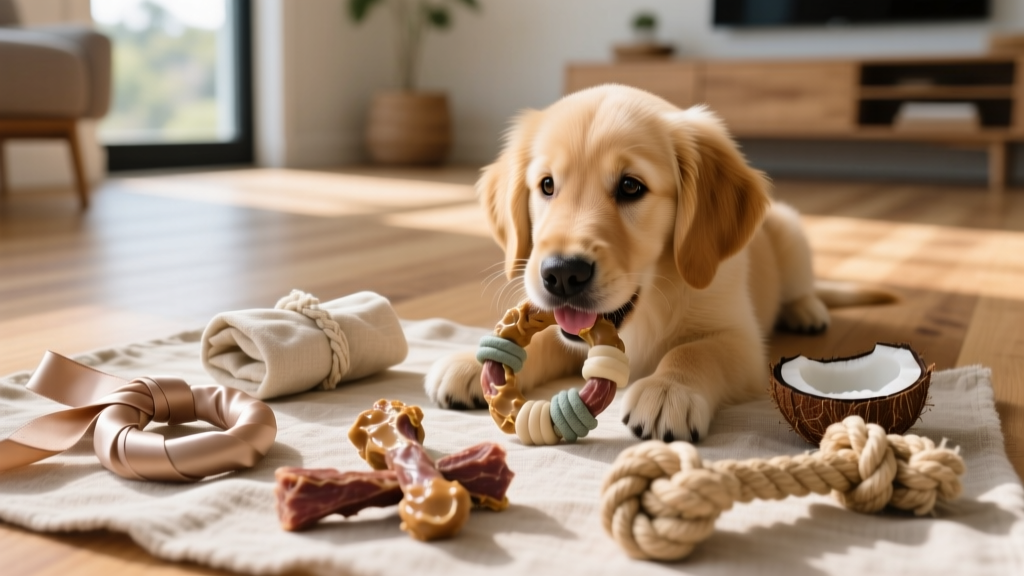
Teething Timeline and Relief Strategies
Klee Kai puppies begin losing baby teeth around 3-4 months and have their full set of 42 adult teeth by approximately 6 months. During this period, expect increased chewing, drooling, and occasional blood on toys — all normal.
Safe chew recommendations by stage:
- 3-4 months (baby teeth loosening): Frozen washcloth twisted into a rope, Nylabone Puppy Chew (soft formula), Kong Puppy toy stuffed with plain yogurt and frozen.
- 4-5 months (active tooth loss): Bully sticks (supervised only — remove when small enough to swallow), Benebone Puppy (softer material), frozen carrot sticks.
- 5-6 months (adult teeth settling): Transition to adult-weight chew toys. West Paw Zogoflex Hurley, Kong Classic (blue or red, sized small for Klee Kai). Avoid rawhide, antlers, and hard nylon bones — these fracture teeth.
Common Klee Kai Puppy Problems and Solutions
Alaskan Klee Kai puppies come with a specific set of behavioral quirks that catch first-time owners off guard. Understanding these breed-specific patterns helps you respond effectively.
Puppy Biting and Nipping
Klee Kai puppies are mouthy — this is normal spitz-breed behavior, not aggression. Their littermates taught them bite inhibition, but you need to continue this education.
Solution protocol:
- When puppy teeth touch skin, say "oops" in a calm, neutral tone and immediately withdraw attention (stand up, turn away, or step behind a baby gate) for 10-15 seconds.
- Return and redirect to an appropriate chew toy. Praise and reward when they chew the toy.
- If biting escalates during play, the puppy is likely overstimulated. End the play session and offer a frozen Kong or enforce a nap in the crate. Puppies need 18-20 hours of sleep per day at 8-12 weeks.
- Never hold the puppy's mouth shut, alpha roll, or use physical punishment. These methods increase fear and can trigger defensive biting.
Excessive Whining and Vocalization
Klee Kai are famously vocal — they howl, "talk," whine, and yodel. Puppy whining typically falls into three categories:
- Need-based: Needs to eliminate, hungry, thirsty, or in pain. Address the underlying need.
- Attention-seeking: Ignore completely until quiet for 3+ seconds, then reward the silence with attention or a treat.
- Anxiety-based: Crate whining during alone-time training. Use gradual desensitization (see crate training section above). A Snuggle Puppy toy with a heartbeat simulator (~$30-40) can ease the first few nights.
Destructive Chewing
Klee Kai puppies explore the world with their mouths, and their intelligence means they'll find creative ways to entertain themselves — often at the expense of your shoes, baseboards, or furniture legs.
Management strategy: Puppy-proof your home by removing accessible items, use bitter apple spray (Grannick's Bitter Apple, ~$10-12) on furniture legs, provide a rotation of 5-7 appropriate chew toys (rotate every 2-3 days to maintain novelty), and supervise or crate when you cannot watch them directly. Increase physical exercise and mental stimulation — 10 minutes of snuffle mat work or frozen Kong enrichment tires a Klee Kai puppy as much as a 30-minute walk.
First-Year Cost Breakdown for an Alaskan Klee Kai
Budgeting accurately prevents financial surprises. Below is a realistic first-year cost estimate for an Alaskan Klee Kai puppy in the United States (2025-2026 pricing). Costs vary by region — urban areas like New York or San Francisco will trend higher, while rural areas may be 15-25% lower.
| Category | Items Included | Estimated Cost Range |
|---|---|---|
| Puppy Purchase | Purchase price from responsible breeder (health-tested parents, UKC/AKKAOA registered) | $1,500 – $3,500 |
| Veterinary Care | Initial exam, DHPP series (3 doses), Rabies vaccine, Bordetella, fecal test, deworming (2-3 rounds), heartworm test, spay/neuter | $600 – $1,200 |
| Preventive Medications | Monthly heartworm prevention (e.g., Heartgard Plus ~$45-60/6-month supply), flea/tick prevention (e.g., Bravecto or NexGard ~$50-70/3-month supply) | $200 – $400/year |
| Food | High-quality puppy food (e.g., Purina Pro Plan Small Breed Puppy, Fromm Gold Puppy) transitioning to adult formula at 10-12 months | $250 – $450/year |
| Supplies | Crate, bed, leash/harness (Ruffwear Front Range ~$40), bowls, ID tags, microchip registration, puppy gate, chew toys, training treats, grooming tools (undercoat rake, slicker brush) | $300 – $600 |
| Training | Group puppy class (6-8 weeks, typically $150-250), optional private sessions for behavioral concerns ($75-150/session) | $150 – $450 |
| Pet Insurance | Monthly premium for accident + illness plan (e.g., Trupanion, Healthy Paws, Lemonade — small breed puppy rates) | $30 – $55/month ($360 – $660/year) |
| Grooming | Klee Kai are self-cleaning and low-maintenance, but professional deshedding bath 2-3x/year during blowout seasons | $0 – $200/year |
| Total Estimated First-Year Cost | $3,660 – $7,460 | |
Ongoing annual costs after year one (excluding the puppy purchase price): approximately $1,500 – $3,000 per year for veterinary care, food, preventives, insurance, and supplies.
Frequently Asked Questions
How often should I feed my Klee Kai puppy at 10 weeks old?
At 10 weeks, feed your Klee Kai puppy 4 meals per day, spaced roughly 4 hours apart during waking hours. Total daily portion for a toy-size puppy is approximately 1/4 to 1/3 cup of high-quality small-breed puppy kibble. Divide that total equally across the four meals. Always provide fresh water and remove uneaten food after 15-20 minutes to establish meal routines that support potty training.
When will my Klee Kai puppy be fully potty trained?
Most Alaskan Klee Kai puppies achieve reliable housetraining between 4 and 6 months of age with consistent scheduling and positive reinforcement. Some toy-size individuals may take up to 8 months due to smaller bladder capacity. If your puppy is having frequent accidents past 6 months despite consistent training, consult your veterinarian to rule out urinary tract infection, diabetes, or other medical causes.
How do I stop my Klee Kai puppy from biting and nipping?
Redirect biting to appropriate chew toys, withdraw attention for 10-15 seconds when teeth touch skin, and ensure your puppy is getting 18-20 hours of sleep per day (overtired puppies bite more). Avoid physical punishment or holding the mouth shut — these create fear and worsen the behavior. Most Klee Kai puppies significantly reduce mouthing by 5-6 months as adult teeth come in and they learn appropriate play behavior through consistent redirection.
What should I look for in responsible Klee Kai puppy breeders?
Responsible Klee Kai puppy breeders will provide OFA health clearances for both parents (patella, cardiac, thyroid), allow you to meet the dam, raise puppies in their home with early neurological stimulation (ENS), follow a vaccination protocol, offer a written health guarantee, and require a spay/neuter agreement for pet-quality puppies. They will also ask you detailed questions about your lifestyle, experience, and plans. Breeders who have multiple litters available year-round, accept credit cards without an application process, or cannot provide health testing documentation should raise red flags.
When can my Klee Kai puppy start puppy classes?
Many puppy socialization classes accept puppies as young as 8-10 weeks, provided they've had at least one DHPP vaccine and a Bordetella vaccine. The AVMA and the American Veterinary Society of Animal Behavior both support early socialization classes, noting that the behavioral risk of under-socialization exceeds the disease risk in controlled environments. Ask the class instructor about their vaccination and sanitation protocols before enrolling.
How much exercise does a Klee Kai puppy need?
Follow the "5 minutes per month of age" guideline: a 3-month-old Klee Kai puppy needs about 15 minutes of structured exercise (walks, training sessions) twice daily. Supplement with free play and mental enrichment (puzzle toys, snuffle mats, training games). Avoid forced running, jumping from heights, or long hikes until growth plates close around 10-12 months. Klee Kai are athletic adults but their developing joints need protection during puppyhood.
Jonas Cole
All our authors care for dogs every day — read more of their work on the authors page.