King Spaniel Puppy Care: Week-by-Week Growth & Training Guide
Complete king spaniel puppy guide covering feeding schedules, potty training timelines, vaccination weeks, socialization checklist, and first-year costs.

When Should You Bring Your King Spaniel Puppy Home?
The ideal age to bring a King Charles Spaniel puppy home is between 8 and 10 weeks. While some breeders release puppies at 8 weeks, many Cavalier King Charles Spaniel breeders prefer to keep puppies until 10–12 weeks. This extra time allows for critical littermate socialization and ensures the puppy has received its first round of vaccinations before transitioning to a new environment.
Bringing a puppy home before 8 weeks is not recommended by the American Kennel Club. Puppies separated from their mother and littermates too early often develop behavioral issues including excessive biting, fear-based reactivity, and difficulty settling. For a breed as people-oriented as the Cavalier, those extra weeks of canine social learning make a measurable difference in confidence and adaptability.
King Spaniel Puppy Age Milestones: What to Expect Week by Week
Cavalier King Charles Spaniels mature at their own pace. Here's a realistic developmental timeline so you can track your puppy's progress and know what's normal at each stage.
Weeks 4–8: The Litter Phase
During this period, your puppy is still with the breeder. They're learning bite inhibition from siblings, beginning to eat solid food (typically a gruel of soaked kibble), and developing coordination. Eyes and ears are fully open. This is also when the primary socialization window opens. A responsible breeder will expose puppies to varied surfaces, gentle handling, household sounds, and multiple people during these weeks.
Weeks 8–12: The Homecoming Window
Your puppy will weigh roughly 4–7 lb (1.8–3.2 kg) at this stage. Expect 18–20 hours of sleep per day — this is normal, not a sign of illness. Your puppy will have short bursts of energy followed by sudden crashes. House-training awareness begins, but bladder control is minimal (roughly 1 hour per month of age). Fear periods often hit around 8–10 weeks, meaning loud noises or unfamiliar environments may trigger cowering or trembling.
Weeks 12–16: The Curiosity Surge
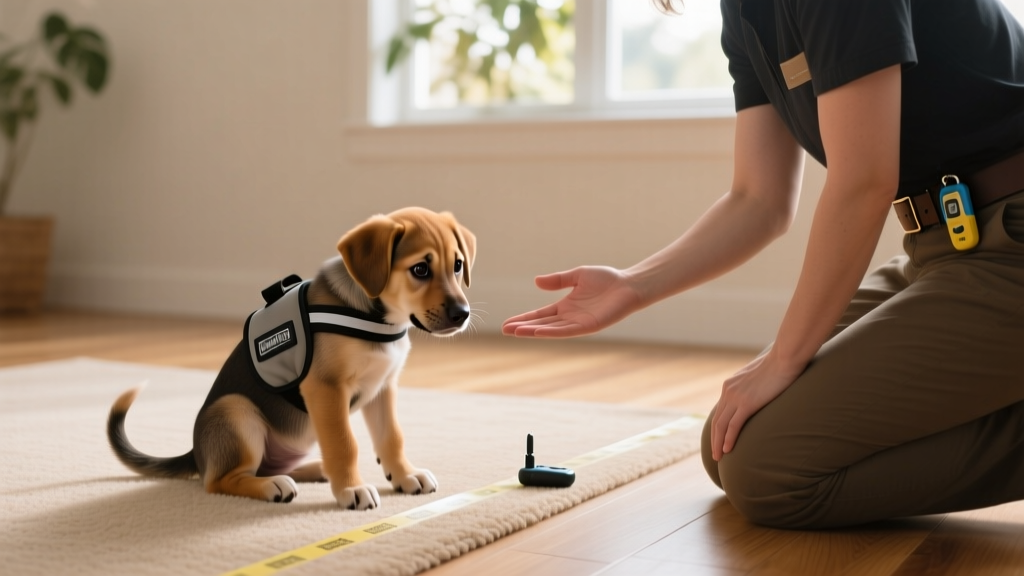
Weight typically reaches 7–11 lb (3.2–5 kg). Confidence grows rapidly. Your puppy will start testing boundaries — stealing shoes, jumping on furniture, ignoring previously learned cues. This is the prime window for structured training sessions (keep them under 5 minutes). A second fear period may appear around 12 weeks, so continue positive, low-pressure exposures.
Weeks 16–24: The Adolescent Shift
Your King Spaniel puppy will weigh 10–14 lb (4.5–6.4 kg) and begin looking more proportional. Teething starts in earnest around 16 weeks. You'll notice increased chewing, drooling, and occasional appetite dips. Energy levels rise, and the puppy may seem to "forget" training. Consistency is critical here — short daily training sessions prevent regression.
Months 6–12: The Teenage Phase
Most Cavaliers reach their adult weight of 13–18 lb (5.9–8.2 kg) by 10–12 months, though some fill out until 18 months. Sexual maturity arrives between 6–9 months; if your puppy is intact, expect marking behavior, roaming interest, and potential same-sex dog reactivity. Spaying or neutering is commonly performed between 6–9 months — discuss timing with your veterinarian, as some research suggests benefits to waiting until growth plates close for certain breeds.
Feeding Schedule: Exact Portions for Your King Spaniel Puppy
Cavaliers are prone to obesity, so precise feeding matters from day one. The following schedule uses a standard high-quality puppy kibble (approximately 400 kcal/cup, AAFCO-approved for growth). Always check your specific food's feeding chart and adjust based on your puppy's body condition score.
| Age | Meals Per Day | Approximate Daily Amount | Per-Meal Portion | Notes |
|---|---|---|---|---|
| 8–12 weeks | 4 | ¾ – 1 cup (total) | ~3–4 tablespoons | Soften kibble with warm water if needed |
| 12–16 weeks | 3 | 1 – 1¼ cups | ~⅓ – ½ cup | Transition to dry kibble fully |
| 4–6 months | 3 | 1¼ – 1½ cups | ~½ cup | Monitor BCS; reduce if ribs not palpable |
| 6–9 months | 2 | 1¼ – 1½ cups | ~⅝ – ¾ cup | Begin transitioning to adult food at 9–10 months |
| 9–12 months | 2 | 1 – 1¼ cups (adult formula) | ~½ – ⅝ cup | Full switch to adult maintenance diet |
Cavaliers are enthusiastic eaters and will rarely self-regulate. Use a measured cup — never free-feed. Treats should not exceed 10% of daily caloric intake. If your puppy leaves food consistently for two or more meals, reduce the portion by 10% rather than coaxing or adding toppers, which creates picky eating habits.
Vaccination Schedule: Protecting Your Puppy Week by Week
Your King Spaniel puppy's immune system is immature at birth. Maternal antibodies provide temporary protection, but these antibodies wane unpredictably between 6 and 16 weeks — which is why a series of vaccines is essential. The American Veterinary Medical Association recommends the following core protocol for puppies:
| Age | Vaccine | What It Protects Against | Booster Needed? |
|---|---|---|---|
| 6–8 weeks | DHPP (1st dose) | Distemper, Hepatitis (Adenovirus), Parainfluenza, Parvovirus | Yes — every 2–4 weeks until 16 weeks |
| 10–12 weeks | DHPP (2nd dose) | Same as above — builds adequate immunity | Yes — final booster at 14–16 weeks |
| 10–12 weeks | Bordetella (optional) | Kennel cough — recommended if attending puppy classes or boarding | Annual or semi-annual depending on exposure |
| 14–16 weeks | DHPP (3rd/final dose) | Completes primary series | Booster at 1 year, then every 3 years |
| 14–16 weeks | Rabies | Rabies virus — legally required in most US states | Booster at 1 year, then every 1–3 years per state law |
Leptospirosis and Lyme vaccines are considered non-core and depend on your geographic region and lifestyle. If you hike with your dog or live in an area with high tick or wildlife exposure, discuss these with your veterinarian.
The Socialization Window: Weeks 3–14 Exposure Checklist
The primary socialization window for puppies closes around 14 weeks. This is not a suggestion — it is a biologically determined period during which a puppy's brain is primed to categorize new experiences as "safe" or "threatening." After 14 weeks, unfamiliar stimuli are far more likely to trigger fear responses. For a breed as sensitive as the Cavalier King Charles Spaniel, missing this window can result in lifelong timidity.
Because your puppy won't be fully vaccinated during much of this window, balance exposure with disease risk. Carry your puppy, use a stroller, or visit controlled environments where you know the vaccination status of other dogs.
King Spaniel Puppy Socialization Checklist
- Surfaces: Grass, gravel, tile, hardwood, metal grates, wet pavement, sand
- People: Children (supervised), elderly individuals, people wearing hats/sunglasses/masks, people of different heights and skin tones, delivery workers
- Sounds: Vacuum cleaner, doorbell, thunderstorm recordings (start at low volume), car engines, sirens, fireworks recordings, clapping, dropping pots
- Objects: Umbrellas opening, plastic bags rustling, bicycles, skateboards, strollers, trash cans, flags
- Animals: Fully vaccinated adult dogs (known health status), cats (if household has them), livestock if rural
- Handling: Paw touching, ear inspection, mouth opening, nail clipping practice, gentle restraint, being lifted by different people
- Environments: Car rides (short trips to pleasant destinations), outdoor café patios, friend's houses, groomer visits (handling-only, no full groom yet)
Aim for 5–10 new positive experiences per day. Pair every exposure with high-value treats (small pieces of boiled chicken or commercial training treats). If your puppy shows fear — cowering, tail tucking, refusing treats — increase distance from the stimulus and proceed more slowly. Never force a frightened puppy closer to something scary.
Potty Training Timeline: Realistic Expectations for Your King Spaniel
Cavaliers are generally eager to please and pick up house-training faster than many breeds, but "fast" still means weeks, not days. Here's what a realistic timeline looks like:
- 8–10 weeks: Accidents every 1–2 hours. Take puppy out after every meal, nap, and play session. Expect 8–12 outdoor trips per day.
- 10–14 weeks: Bladder control improves to 2–3 hours. Accidents drop to 1–3 per week if you maintain a consistent schedule.
- 14–20 weeks: Puppy begins signaling (going to the door, whining, pacing). Accidents become rare — 1–2 per month.
- 5–7 months: Most Cavaliers are reliably house-trained during the day. Nighttime control (6–8 hours) typically solidifies by 6 months.
- 7–12 months: Occasional marking or regression during adolescence is normal. Stay consistent; this is temporary.
Potty Training Troubleshooting
Problem: Puppy pees inside 5 minutes after coming back in from outside.
Solution: Your puppy hasn't associated "outside" with "elimination." Go to the same spot every time. Use a consistent cue word ("go potty"). Wait up to 5 minutes. Reward immediately with a high-value treat the moment they finish — not after they come back inside.
Problem: Puppy only pees on pee pads, won't go outside.
Solution: Gradually move the pad closer to the door each day, then outside, then remove it. Cavaliers can become surface-addicted if pads are used too long. Transition by 12 weeks if possible.
Problem: Nighttime accidents continue past 6 months.
Solution: Remove water 2 hours before bed. Take puppy out immediately before crating. If accidents persist, rule out a urinary tract infection with your veterinarian.
Crate Training Progression: Time Limits by Age
A crate gives your King Spaniel puppy a safe den and accelerates house-training by leveraging their instinct not to soil their sleeping area. Cavaliers are companion dogs, however, and do not tolerate long isolation well. Keep crating durations within these limits:
| Age | Maximum Continuous Crate Time (Daytime) | Overnight |
|---|---|---|
| 8–10 weeks | 1–1.5 hours | 2–3 hours (expect 1–2 nighttime potty breaks) |
| 10–14 weeks | 2 hours | 3–4 hours |
| 14–16 weeks | 2.5–3 hours | 4–5 hours |
| 4–6 months | 3–4 hours | 6–7 hours |
| 6+ months | 4–5 hours | 7–8 hours |
How to introduce the crate: Leave the door open for the first week. Feed meals inside the crate. Toss treats in and let puppy exit freely. Begin closing the door for 1-minute intervals while you sit nearby, gradually increasing duration and distance. Never use the crate as punishment.
If your puppy whines in the crate, wait for a 10-second pause before opening the door — you want to reward quiet, not crying. For persistent whining, evaluate whether the puppy needs to eliminate, is in physical discomfort, or simply needs more exercise before crating.
Teething Timeline and Relief Strategies (3–6 Months)
King Spaniel puppies begin losing their 28 deciduous (baby) teeth around 12–16 weeks, with the process largely complete by 6 months when all 42 adult teeth have erupted. During this window, your puppy will chew relentlessly to relieve gum pressure.
Safe Chew Options by Stage
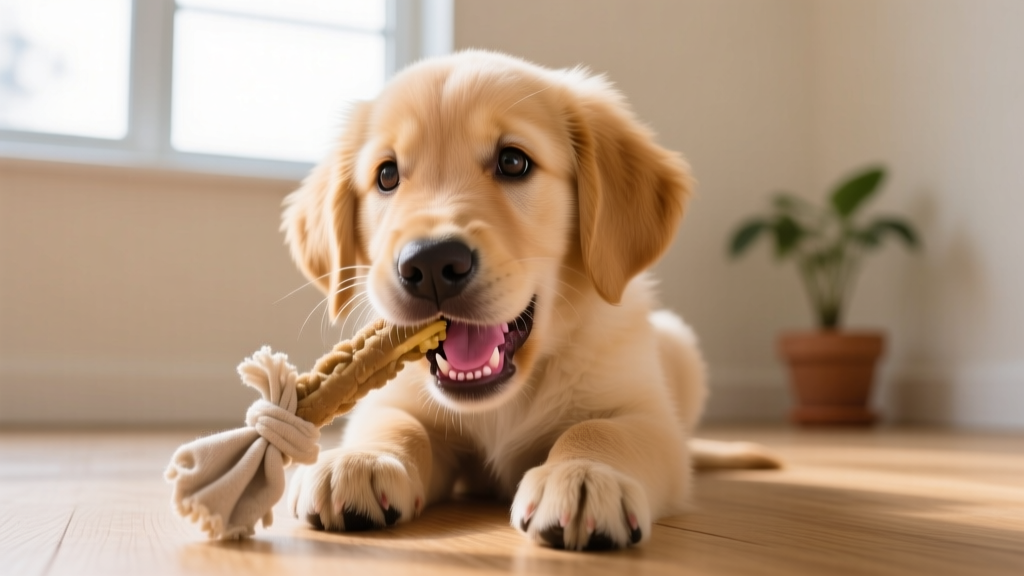
- 12–16 weeks (early teething): Frozen damp washcloth (knot one end, soak in water, freeze), rubber puppy teething rings (e.g., KONG Puppy), chilled carrot sticks
- 16–20 weeks (peak discomfort): Frozen KONG stuffed with plain yogurt or peanut butter (xylitol-free), Nylabone Puppy Chew (soft formula), bully sticks (supervised only — remove when small enough to swallow)
- 20–26 weeks (final eruption): Transition to medium-density chews. Dental chews approved by the Veterinary Oral Health Council (VOHC) can begin once adult teeth are in.
Avoid: Rawhide (choking and intestinal blockage risk), cooked bones (splinter hazard), antlers or hooves (tooth fracture risk in small breeds), and any chew small enough to fit entirely inside your puppy's mouth.
Cavaliers are a brachycephalic-adjacent breed with relatively small jaws. Check your puppy's mouth weekly during teething to ensure baby teeth are falling out as adult teeth emerge. Retained deciduous teeth — where the baby tooth doesn't fall out and the adult tooth erupts alongside it — is common in small breeds and may require veterinary extraction.
Common King Spaniel Puppy Problems and Solutions
Puppy Biting and Nipping
Cavaliers are mouthy as puppies. Nipping peaks between 8–16 weeks and usually diminishes by 5–6 months with consistent management. When teeth touch skin, say "ouch" in a calm, flat tone and immediately withdraw attention for 10–15 seconds (stand up, turn away, or step behind a baby gate). Redirect to an appropriate chew toy when puppy returns. Never hold the mouth shut, tap the nose, or use physical corrections — these increase fear and can damage the trust-based bond Cavaliers thrive on.
Whining and Crying
New puppies cry for predictable reasons: they need to eliminate, they're lonely, they're overstimulated, or they're uncomfortable. Address physical needs first. For attention-seeking whining, reward quiet moments proactively — give a treat when your puppy is lying calmly, not only when they vocalize. Cavaliers are prone to separation distress; practice short absences (30 seconds to 5 minutes) from week one to build independence.
Destructive Chewing
Between 4–8 months, chewing intensifies as adult teeth settle and adolescent energy peaks. Puppy-proof your home: use bitter apple spray on baseboards, keep shoes in closed closets, and provide a rotation of 4–5 approved chew toys to maintain novelty. A tired puppy is a well-behaved puppy — aim for 30–45 minutes of combined physical and mental exercise daily, split into short sessions.
First-Year Cost Breakdown for a King Spaniel Puppy
Budgeting realistically prevents surprises. The following estimates reflect 2026 US averages for a Cavalier King Charles Spaniel puppy. Costs vary by region and provider.
| Category | Estimated Cost Range | Details |
|---|---|---|
| Purchase/Adoption | $2,500 – $4,500 | Responsible breeder (health-tested parents, AKC registered). Rescue adoption: $300–$600 |
| Veterinary (first year) | $800 – $1,500 | Initial exam, vaccine series, spay/neuter ($400–$800), fecal tests, heartworm prevention |
| Food | $350 – $600 | High-quality puppy then adult kibble, ~$30–$50/month |
| Supplies | $300 – $500 | Crate ($50–$80), bed, leash/harness, bowls, toys, grooming tools, baby gates |
| Training | $150 – $400 | Puppy kindergarten class ($100–$200 for 6-week course), optional private sessions |
| Grooming | $200 – $400 | Professional grooming every 6–8 weeks ($40–$60/session) if you don't home-groom |
| Preventive Medications | $200 – $400 | Monthly heartworm, flea, and tick prevention year-round |
| Pet Insurance (optional) | $400 – $700 | $35–$60/month; Cavaliers' MVD risk makes insurance valuable |
Total estimated first-year cost: $4,900 – $9,000 (including puppy purchase from a breeder). Subsequent years typically run $1,500 – $2,800 annually, increasing as the dog ages and cardiac monitoring becomes necessary.
Always consult your veterinarian before making decisions about diet, vaccination timing, or health concerns — this guide provides general education, not individualized medical advice.
Frequently Asked Questions
How often should I feed my 10-week-old King Spaniel puppy?
At 10 weeks, feed 4 meals per day, totaling approximately ¾ to 1 cup of high-quality puppy kibble. Each meal will be about 3–4 tablespoons. Space meals roughly 4 hours apart during waking hours. Always provide fresh water, but remove the water bowl 2 hours before bedtime to reduce overnight accidents.
When will my King Spaniel puppy be fully potty trained?
Most Cavalier King Charles Spaniels are reliably house-trained by 5–7 months of age, assuming a consistent schedule and positive reinforcement. Some puppies achieve daytime reliability as early as 4 months, while nighttime control may take until 6–7 months. Regression during adolescence (8–10 months) is common and temporary.
When can my puppy go outside and meet other dogs?
Your puppy can explore your own yard immediately (if no unvaccinated dogs have access). For public spaces and meeting unknown dogs, wait until 1–2 weeks after the final DHPP vaccine at 14–16 weeks — typically around 17–18 weeks of age. Controlled playdates with fully vaccinated, known-healthy dogs can begin earlier, around 10–12 weeks, in private settings.
How do I stop my King Spaniel puppy from biting?
Use the "ouch and withdraw" method: when teeth contact skin, say "ouch" calmly, then turn away or step behind a gate for 10–15 seconds. Return and redirect to a chew toy. Consistency from every family member is essential. Most Cavaliers outgrow mouthing by 5–6 months. If biting intensifies after 6 months or breaks skin, consult a certified positive-reinforcement trainer or veterinary behaviorist.
What vaccines does my King Spaniel puppy need and when?
Core vaccines include DHPP (Distemper, Hepatitis, Parainfluenza, Parvovirus) given at 6–8 weeks, 10–12 weeks, and 14–16 weeks, plus Rabies at 14–16 weeks. Non-core vaccines like Bordetella, Leptospirosis, and Lyme depend on your puppy's lifestyle and geographic risk. Your veterinarian will tailor the protocol to your area and your dog's exposure level.
Should I get pet insurance for my King Spaniel puppy?
For Cavaliers, the answer is often yes. The breed's predisposition to mitral valve disease (MVD), which can require cardiac medications and specialist visits later in life, makes early enrollment valuable. Enroll while your puppy is young and healthy — pre-existing conditions are excluded by all major pet insurers. Compare providers like Trupanion, Healthy Paws, and Nationwide for breed-specific coverage details.
Anouk Beaumont
All our authors care for dogs every day — read more of their work on the authors page.