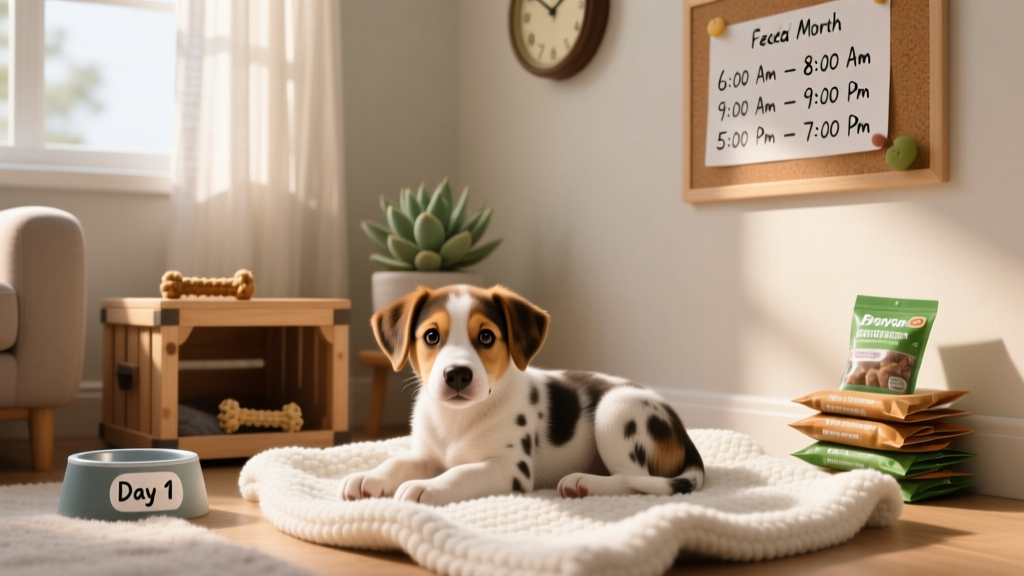
Keeshond Puppy Guide: Milestones, Feeding, Training & First-Year Costs
Complete keeshond puppy guide covering age-specific milestones, feeding schedules, potty training, socialization, vaccines, and first-year cost breakdown.
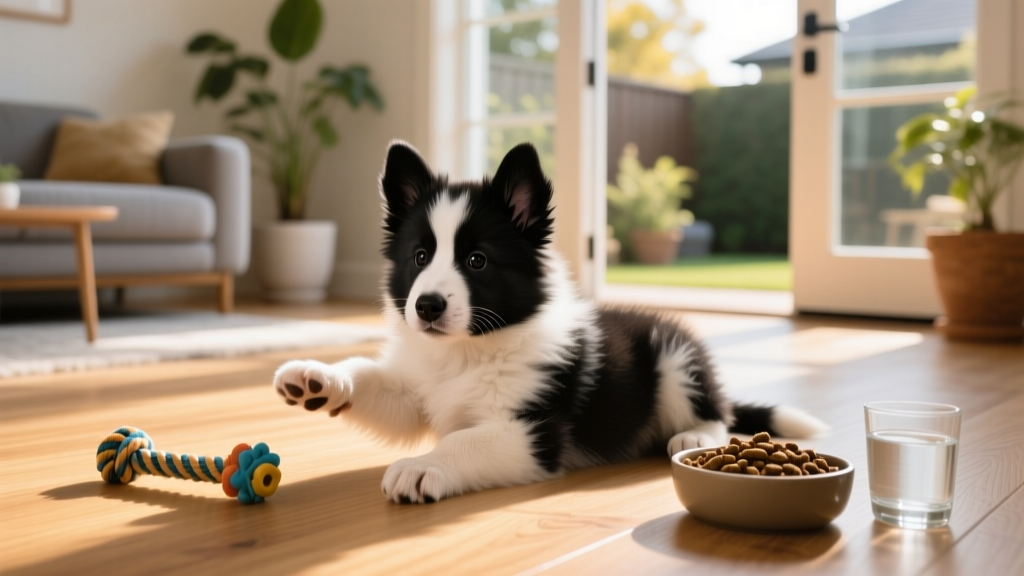
The Keeshond — sometimes called the "Dutch Barge Dog" — is a medium-sized spitz breed known for its plush silver-and-black coat, fox-like expression, and what breed enthusiasts call "spectacles": those distinctive dark markings around the eyes. If you're bringing home a Keeshond puppy, you're signing up for an affectionate, people-oriented companion who thrives on inclusion and positive interaction. But like all puppies, a Keeshond needs structured guidance during those critical early months to grow into the confident, well-mannered adult the AKC breed standard describes.
This guide walks you through every developmental stage from 4 weeks through 12 months, with breed-specific expectations, concrete feeding portions, vaccination timing, and real-world cost figures. Where Keeshond puppies differ from generic puppy advice — their sensitivity to harsh corrections, their early vocal tendencies, their double-coat grooming needs — we'll call it out.
When Should You Bring Your Keeshond Puppy Home?
Responsible Keeshond breeders typically release puppies between 8 and 10 weeks of age. While some states legally permit sales at 6 weeks, the AVMA recommends puppies stay with their littermates until at least 8 weeks. For Keeshonden specifically, many experienced breeders prefer holding puppies until 9 or 10 weeks because the breed matures slightly slower emotionally than some sporting breeds, and those extra weeks of littermate play teach bite inhibition that's harder to replicate in a solo home.
Keeshond Puppy Milestones: Week by Week
Understanding what's developmentally appropriate at each stage prevents frustration and helps you set realistic expectations. Keeshond puppies follow the general canine developmental timeline, but their breed traits — alertness, vocalization, sensitivity — show up early.
Weeks 4–8: The Litter Phase (Breeder's Domain)
- Sensory development: Eyes and ears fully functional; puppy begins responding to name and clapping sounds.
- Social learning: Littermate play teaches bite inhibition — yelping siblings signal "too hard." This is the single most important lesson for reducing nipping later.
- Early weaning: Transition from mother's milk to gruel (puppy kibble soaked in warm water or puppy formula), 3–4 meals daily.
- What you should do: If visiting before pickup, handle the puppy gently for short sessions. Ask the breeder about early neurological stimulation (ENS) protocols.
Weeks 8–12: The Homecoming & Attachment Phase
- Emotional state: Your Keeshond puppy is in a major fear imprint period (peaks around 8–10 weeks). Traumatic experiences — a terrifying vet visit, a rough encounter with a large dog — can leave lasting anxiety.
- Vocalization: Expect crying and whining the first 2–4 nights. Keeshonden are vocal dogs; this is normal. Keep the crate near your bed initially.
- Bonding: This breed attaches deeply to family members. Your puppy will follow you room to room — often called a "Velcro dog."
- Teething begins: Baby teeth are fully in; puppy explores the world with its mouth. Redirect chewing to appropriate toys immediately.
- Exercise limit: Short, gentle play sessions — no forced running or jumping from heights. Growth plates are wide open.
Weeks 12–16: Confidence Building & Early Training
- Learning capacity: Your puppy can now learn sit, down, come, and touch (hand target). Keep sessions under 5 minutes. Use high-value treats (small bits of boiled chicken or commercial training treats like Zuke's Mini Naturals).
- Fear periods: A second fear period often hits around 12–14 weeks. Previously confident puppies may suddenly spook at garbage cans or hats. Don't force exposure; let the puppy investigate at its own pace while you offer treats.
- Potty training progress: Accidents should be decreasing if you've maintained a consistent schedule (see potty training section below).
- Bite inhibition refinement: Baby teeth still sharp. If nipping persists, use the "yelp and redirect" method consistently.
Weeks 16–24: The Juvenile Stage
- Teething peak: Adult teeth push in between 4–6 months. Expect increased chewing, drooling, and possible gum bleeding. Provide frozen Kong toys stuffed with peanut butter (xylitol-free) and Nylabone Puppy Chews.
- Coat transition: The soft puppy coat begins changing to the adult double coat around 4–5 months. This is when matting risk increases sharply — daily brushing becomes essential.
- Testing boundaries: Your Keeshond may "forget" commands it previously knew. This is normal juvenile regression, not stubbornness. Stay consistent with positive reinforcement.
- Energy spikes: Expect 2–3 "zoomie" episodes daily. Provide structured play (tug, fetch in a fenced area) rather than letting the puppy self-entertain destructively.
Months 6–12: Adolescence
- Physical maturity: Keeshonden typically reach near-adult height by 9–10 months but continue filling out until 18–24 months. Adult weight range: 35–45 lb (16–20 kg) for males, 30–40 lb (14–18 kg) for females, per the AKC standard.
- Sexual maturity: Females may experience their first heat cycle (estrus) as early as 6–8 months. Discuss spay/neuter timing with your veterinarian — current veterinary consensus often recommends waiting until after 6 months for medium breeds to allow growth plate closure.
- Adult coat arrival: The full plush coat develops between 12–18 months. Males typically develop a more pronounced mane (ruff) around the neck.
- Training consolidation: Enroll in an intermediate obedience class. Keeshonden excel in rally, agility, and therapy work — start exploring dog sports now.
Keeshond Puppy Feeding Schedule & Portions
Keeshond puppies need a high-quality, AAFCO-certified puppy food formulated for medium breeds (not large-breed formula, which restricts calories too much for a 35–45 lb adult). Look for a named animal protein as the first ingredient and a guaranteed analysis showing minimum 22% protein and 8% fat for growth.
| Age | Meals/Day | Approximate Daily Amount | Notes |
|---|---|---|---|
| 8–12 weeks | 3–4 | ¾ to 1 cup total (split across meals) | Soak kibble in warm water if puppy struggles with hard pieces |
| 12–16 weeks | 3 | 1 to 1¼ cups total | Transition to dry kibble; monitor body condition score (BCS) |
| 4–6 months | 3 | 1¼ to 1½ cups total | Adjust based on activity level and growth rate |
| 6–9 months | 2 | 1½ to 2 cups total | Switch to twice-daily feeding; reduce if gaining excess weight |
| 9–12 months | 2 | 1¾ to 2¼ cups total | Approaching adult portions; discuss transition to adult food at 12 months with your vet |
These are starting points. Individual needs vary based on metabolism, activity level, and whether your puppy is on the larger or smaller end of the breed standard. Use the body condition score (BCS) system: you should be able to feel ribs without pressing hard, and see a visible waist when looking from above. If your Keeshond puppy looks round with no waist tuck, reduce portions by 10%.
How Often Should I Feed My Keeshond Puppy at Each Age?
At 8–12 weeks: 3 to 4 meals daily, spaced roughly 4–5 hours apart during waking hours. At 12 weeks to 6 months: 3 meals daily. At 6 months and beyond: 2 meals daily (morning and evening). Consistency matters more than exact clock times — pick a schedule and stick with it.
Potty Training Your Keeshond Puppy: Timeline & Troubleshooting
Keeshond puppies are moderately easy to house-train compared to some toy breeds, but they are not "self-training." Expect the process to take 4 to 6 months of consistent effort before you can consider your puppy reliably house-trained. Some individuals achieve reliability by 4 months; others need until 8 months. Neither timeline indicates a problem.
The Schedule That Works
- Take puppy outside immediately after: waking up, eating, drinking, playing, and every 1–2 hours during the day.
- Use a consistent potty spot — the scent of previous eliminations triggers the behavior.
- Give a verbal cue ("go potty" or "do your business") as the puppy begins to eliminate. Over time, this cue alone will trigger the behavior.
- Reward immediately — within 2 seconds of finishing — with a high-value treat and verbal praise. Do not wait until you're back inside.
- Supervise or confine — when you can't watch the puppy, it should be in its crate or a small puppy-proofed pen. Unsupervised roaming is the #1 cause of potty training setbacks.
Crate Training Progression & Time Limits
| Age | Max Daytime Crate Duration | Overnight Expectation |
|---|---|---|
| 8–10 weeks | 1–2 hours | 2–3 hours (expect 1–2 nighttime wake-ups) |
| 10–12 weeks | 2 hours | 3–4 hours |
| 3–4 months | 3 hours | 4–5 hours |
| 4–6 months | 4 hours | 6–7 hours |
| 6+ months | 4–5 hours | 7–8 hours |
These are maximums, not targets. Your Keeshond puppy should not live in its crate. Use it as a management tool and safe space, not a default storage location.
When Will My Keeshond Puppy Be Fully Potty Trained?
Most Keeshond puppies show reliable house manners between 5 and 7 months if you've followed a consistent schedule. "Reliable" means fewer than one accident per month. If your puppy is still having daily accidents past 6 months, consult your veterinarian to rule out urinary tract infections or anatomical issues, and evaluate whether your supervision protocol has gaps.
Common Potty Training Troubleshooting
- Submissive urination: Some Keeshond puppies leak small amounts when greeting people excitedly. This is involuntary, not a training failure. Ignore the puppy for the first 30 seconds of greeting, then ask for a sit before offering calm attention. Never scold — it makes the problem worse.
- Excitement urination: Similar to submissive urination but triggered by high arousal. Keep greetings low-key.
- Regression at 4–6 months: Juvenile puppies sometimes "forget" their training during teething or developmental leaps. Return to more frequent outdoor trips and tighter supervision for 1–2 weeks.
Socialization Window: Weeks 3–14
The primary socialization window — the period when puppies most readily accept new experiences without fear — closes around 12–14 weeks. For Keeshonden, a naturally alert and sometimes reserved breed with strangers, this window is critical. Under-socialized Keeshond puppies can develop excessive barking, wariness of visitors, or fear-based reactivity on leash.
The goal is not to overwhelm your puppy but to provide positive, controlled exposures to as many categories of stimuli as possible. Every new experience should be paired with treats and allowed at the puppy's pace.
Keeshond Puppy Socialization Checklist
| Category | Specific Exposures | Target Count |
|---|---|---|
| People | Men with beards, children (supervised), people in hats/sunglasses, delivery workers, people using canes/wheelchairs, tall people, people wearing hoodies | 15–20 different people |
| Surfaces | Gravel, grass, wet pavement, metal grates, carpet, tile, wood floors, wobbly boards | 8–10 surfaces |
| Sounds | Vacuum cleaner, doorbell, thunderstorms (play recordings at low volume), traffic, construction noise, fireworks (recordings), clapping, dropping pots | 10–12 sounds |
| Handling | Paw handling, ear inspection, mouth opening, nail trimming practice, collar/harness on/off, towel drying, brushing | Daily brief sessions |
| Other animals | Friendly vaccinated adult dogs (supervised play), cats (if household has them), livestock at a distance | 5–8 positive dog interactions |
| Environments | Car rides, parking lots, outdoor café patios, pet-friendly stores, veterinary clinic (happy visits only — no shots during socialization visits) | 6–8 locations |
| Objects | Umbrellas opening, balloons, plastic bags blowing, bicycles, skateboards, strollers | 8–10 objects |
When Can My Keeshond Puppy Go Outside and Meet Other Dogs?
Your puppy can explore your own yard immediately after coming home (assuming no parvo risk from unvaccinated dogs using the area). For public spaces, the AVMA's position is that the benefits of early socialization outweigh the disease risk when done carefully. This means:
- Carry your puppy in public areas before full vaccination (avoid letting paws touch high-traffic dog areas like dog parks).
- Arrange playdates with known, fully vaccinated, healthy adult dogs in private yards.
- Enroll in puppy kindergarten classes that require proof of at least one DHPP vaccine and maintain clean, disinfected facilities. Many veterinary behaviorists recommend starting classes by 10–12 weeks.
- Avoid dog parks until your puppy has completed its full vaccination series (typically around 16 weeks) and has developed enough social skills to handle unpredictable group dynamics.
Vaccination Schedule for Your Keeshond Puppy
Your veterinarian will customize a vaccine protocol based on your region and your puppy's risk factors, but the core schedule follows widely accepted guidelines. Core vaccines protect against diseases that are severe, widespread, or pose public health risks.
| Age | Vaccine | Notes |
|---|---|---|
| 6–8 weeks | DHPP (Distemper, Hepatitis/Adenovirus, Parainfluenza, Parvovirus) — 1st dose | Often administered by the breeder or shelter before pickup |
| 10–12 weeks | DHPP — 2nd dose; Bordetella (optional, recommended if attending puppy classes) | Bordetella protects against kennel cough; intranasal or injectable |
| 14–16 weeks | DHPP — 3rd dose; Rabies (required by law in most US states) | This final DHPP dose is critical — maternal antibodies that block earlier vaccines have typically waned by this age |
| 12–16 months | DHPP booster; Rabies booster | After this, DHPP and Rabies are typically given every 3 years, depending on local law and vaccine type |
Non-core vaccines your vet may recommend based on lifestyle: Leptospirosis (common in areas with wildlife and standing water), Lyme disease (tick-endemic regions), and Canine Influenza (H3N2/H3N8, recommended in boarding/daycare settings). Discuss these with your veterinarian at your puppy's first wellness visit.
Teething Timeline & Relief Strategies
Keeshond puppies follow the standard canine teething schedule, but their strong chewing drive (a spitz breed trait) means you need to be proactive about providing appropriate outlets.
- 3–4 weeks: Baby (deciduous) teeth begin erupting. Usually complete by 6–8 weeks (28 baby teeth).
- 3–4 months: Baby teeth begin loosening; adult teeth start pushing through. You may find tiny teeth on the floor or notice blood-tinged drool on toys.
- 4–6 months: Peak teething discomfort. All 42 adult teeth should be in place by 6–7 months.
Safe Teething Relief Options
- Kong Classic (puppy size, pink/blue rubber): Stuff with canned pumpkin (plain, not pie filling), xylitol-free peanut butter, or soaked kibble, then freeze. The cold numbs gums and the chewing satisfies the urge.
- Nylabone Puppy Chew (soft texture): Designed for developing teeth — harder adult Nylabones can fracture puppy teeth.
- Wet washcloth twist: Soak a clean washcloth in water, twist into a rope shape, and freeze. Supervise use and discard if pieces tear off.
- Benebone Puppy (chicken or bacon flavor): The softer puppy formula is appropriate; avoid the adult hardness until all permanent teeth are in.
Retained baby teeth: Small and medium breeds, including Keeshonden, sometimes retain baby teeth alongside emerging adult teeth. If you see a "double tooth" (baby tooth not falling out as the adult tooth erupts), flag it at your next vet visit. Retained deciduous teeth can cause crowding, misalignment, and periodontal disease. Your vet may recommend extraction during the spay/neuter procedure.
Common Keeshond Puppy Problems & Solutions
Puppy Biting and Nipping
Keeshond puppies use their mouths to explore and play, and their sharp baby teeth can make this genuinely painful. How to stop puppy biting:
- Yelp loudly ("Ow!") when teeth touch skin, then immediately redirect to a chew toy. This mimics how littermates teach bite inhibition.
- If yelping excites the puppy more (common with some individuals), use a calm "too bad" and withdraw attention for 15–30 seconds by stepping over a baby gate or turning away.
- Never use physical punishment — no muzzle-holding, no alpha rolls, no tapping the nose. Keeshonden are sensitive dogs; aversive methods damage trust and can create fear-based aggression.
- Provide adequate chew outlets — a puppy without appropriate chews will find your shoes, furniture, or hands.
- Manage arousal levels: Overtired puppies bite more. If nipping escalates in the evening, your puppy likely needs a nap in its crate, not more stimulation.
Whining and Crying (Especially at Night)
Nighttime whining typically peaks in the first 3–5 nights home. Strategies:
- Place the crate next to your bed for the first week so the puppy can hear and smell you.
- Use a Snuggle Puppy (a plush toy with a heat pack and simulated heartbeat) — many owners report faster settling.
- Take the puppy out for a potty break if whining continues past 2 hours (set a quiet alarm). Then return to crate without play or extended interaction.
- Gradually move the crate to its permanent location over 1–2 weeks.
Excessive Barking
Keeshonden are watchful, vocal dogs — they were bred to alert barge owners to approaching visitors. Puppy barking at doorbells, passersby, and unusual sounds is normal breed behavior, not a defect. Manage it by:
- Teaching a "quiet" cue: say "quiet" calmly, wait for 2 seconds of silence, then reward. Gradually increase the silence duration before rewarding.
- Desensitization to triggers: play doorbell recordings at very low volume while feeding treats, gradually increasing volume over days.
- Never yelling "quiet" — the puppy interprets this as you barking along, which reinforces the behavior.
Destructive Chewing
Combine teething discomfort with a Keeshond's natural curiosity and you get a puppy that will sample your baseboards, remote controls, and shoes. Prevention:
- Puppy-proof every room: use bitter apple spray on furniture legs, keep shoes in closed closets, use cord protectors on electrical cables.
- Rotate chew toys every 2–3 days to maintain novelty.
- Supervise or confine — don't give a 4-month-old puppy free run of the house.
First-Year Cost Breakdown for a Keeshond Puppy
Budgeting realistically prevents financial stress and ensures your puppy gets the care it needs. These estimates reflect 2026 US pricing and represent typical ranges — costs vary by region and provider.
| Category | Items Included | Estimated Cost Range |
|---|---|---|
| Puppy purchase | Reputable breeder (health-tested parents, AKC registration, take-back clause) | $1,500–$3,000 |
| Adoption (alternative) | Keeshond rescue organization (includes initial vetting) | $300–$600 |
| Veterinary care | Wellness exams (3–4 visits), puppy vaccine series, fecal tests, deworming, heartworm prevention, spay/neuter | $800–$1,500 |
| Food | Quality puppy kibble (12 months), training treats | $400–$700 |
| Supplies | Crate, bed, leash, harness, collar, ID tags, bowls, grooming tools (slicker brush, undercoat rake, comb), chew toys, puppy pen | $300–$600 |
| Training | Puppy kindergarten class (6–8 weeks), intermediate class | $200–$500 |
| Grooming | Professional grooming every 6–8 weeks (bath, blowout, nail trim — Keeshond coats require skilled maintenance) | $400–$700/year |
| Pet insurance | Monthly premium (accident + illness plan, enrolled as young puppy) | $400–$700/year |
| Emergency fund | Unexpected illness, foreign body ingestion, emergency vet visit | $500–$2,000 (set aside) |
Total first-year estimate (excluding puppy purchase): $3,000–$7,200, depending on your region, grooming frequency, and whether unexpected health issues arise. Pet insurance enrolled during puppyhood (before any conditions are documented) typically covers hereditary conditions Keeshonden are predisposed to, such as hip dysplasia and primary hyperparathyroidism, making early enrollment financially strategic.
Frequently Asked Questions
Are Keeshond puppies good for first-time dog owners?
Yes, with caveats. Keeshonden are eager to please, food-motivated (which makes training easier), and generally less stubborn than some other spitz breeds like Akitas or Shiba Inus. However, their grooming demands are significant — that double coat requires brushing 3–4 times per week minimum, and professional grooming every 6–8 weeks. Their vocal nature also requires patient management. If you're prepared for the coat care and committed to positive reinforcement training, a Keeshond puppy is a solid first-dog choice.
How much exercise does a Keeshond puppy need?
A general guideline is 5 minutes of structured exercise per month of age, twice daily. So a 4-month-old puppy gets about 20 minutes of walks or active play per session. Avoid repetitive high-impact exercise (jogging, long hikes, jumping off furniture) until growth plates close around 12–14 months. Mental exercise — puzzle toys, short training sessions, sniff walks — tires a Keeshond puppy as effectively as physical activity.
Do Keeshond puppies shed a lot?
Puppy coat shedding is moderate, but prepare yourself: when the adult coat begins coming in around 4–6 months (sometimes called "blowing coat"), shedding intensifies dramatically. You'll pull out tufts of soft undercoat during brushing sessions. This heavy shed period lasts 2–4 weeks. A high-quality slicker brush and an undercoat rake (like the Furminator for medium dogs, used gently) are essential. Daily brushing during coat blows prevents painful matting close to the skin.
What health issues should I watch for in Keeshond puppies?
Keeshonden are generally healthy, but breed-specific conditions to discuss with your breeder and veterinarian include:
- Hip dysplasia: Ask for OFA or PennHIP certification on both parents.
- Primary hyperparathyroidism: A hereditary condition unique to the breed; responsible breeders test for the gene mutation.
- Patellar luxation: Kneecap instability, common in many medium breeds.
- Progressive retinal atrophy (PRA): Ask for CERF/OFA eye exam results on parents.
- Autoimmune thyroiditis: Thyroid screening recommended.
The Keeshond Club of America maintains recommended health testing protocols. A responsible breeder will provide documentation of all parent health clearances.
Should I get pet insurance for my Keeshond puppy?
Enrolling while your puppy is young and healthy — before any conditions appear in the medical record — gives you the broadest coverage. Pre-existing conditions are excluded by all major pet insurers, so a diagnosis of hip dysplasia at 8 months without insurance means you're paying $3,000–$7,000 out of pocket for surgery. Companies like Trupanion, Healthy Paws, and Nationwide offer puppy plans starting around $35–$60/month. Compare policies for hereditary condition coverage, annual limits, and deductible structures.
This guide provides general educational information. Always consult your veterinarian for personalized advice about your Keeshond puppy's health, nutrition, and vaccination needs. If your puppy ingests a potentially toxic substance, contact the ASPCA Animal Poison Control Center at (888) 426-4435 immediately (24/7, consultation fee applies).
Jonas Cole
All our authors care for dogs every day — read more of their work on the authors page.