Husky Puppy Care Guide
Complete husky puppy guide covering age milestones, feeding schedules, potty training timelines, vaccination plans, and first-year costs for Siberian Husky owners.

When Should You Bring Your Husky Puppy Home?
The ideal age to bring a Siberian Husky puppy home is 8 to 10 weeks. Reputable breeders following AKC guidelines keep puppies with their littermates through at least week 8, which is critical for bite inhibition learning and early canine social skills. Huskies removed before 8 weeks often develop more intense mouthing behaviors and struggle with dog-to-dog communication later in life.
If your breeder offers to release a puppy at 6 or 7 weeks, push back. The extra 14 days with the litter yields measurable behavioral benefits. For rescue or foster-sourced husky puppies, you may not have a choice on timing — in that case, prioritize early socialization even more aggressively.
First-night reality check: Husky puppies are vocal. Expect crying, howling, and "talking" (those signature woo-woo sounds) the first 2-3 nights in the crate. This is normal adjustment behavior, not separation anxiety. A Snuggle Puppy heartbeat toy ($25-$35) and a blanket that smells like the breeder's home can reduce first-night distress significantly.
Husky Puppy Development Milestones: Week by Week
Siberian Huskies mature at a different pace than many breeds. They're energetic, intelligent, and notoriously independent — traits that show up early. Here's what to expect across the critical first year.
Weeks 4–8 (Still With Breeder)
- Weight: 5–10 lb (2.3–4.5 kg)
- Key development: Eyes fully open, deciduous (baby) teeth erupting, littermate play begins teaching bite inhibition
- What the breeder should be doing: Introducing solid food (gruel to kibble transition), exposing puppies to varied surfaces, sounds, and gentle human handling
- Owner action: If visiting before pickup, handle the puppy daily; ask breeder about early neurological stimulation (ENS) protocols
Weeks 8–12 (Home Transition)
- Weight: 10–18 lb (4.5–8.2 kg)
- Key development: Fear imprint period begins around week 8 — negative experiences during this window can create lasting phobias
- Behavior: Exploratory chewing intensifies, follow-you-everywhere phase, short attention spans (30-60 seconds for training)
- Owner action: Begin name recognition, sit/lure training with high-value treats (Zuke's Mini Naturals, 3 calories each), establish crate routine
Weeks 12–16 (Building Foundations)
- Weight: 18–28 lb (8.2–12.7 kg)
- Key development: Second fear period may occur around 12-14 weeks; bladder control improving but not reliable
- Behavior: Testing boundaries, recall becomes harder as prey drive emerges, leash reactivity may start appearing
- Owner action: Enroll in puppy kindergarten class (force-free/positive reinforcement only), practice recall in fenced areas with long line (15-30 ft), increase mental enrichment
Weeks 16–24 (Adolescent Energy Surge)
- Weight: 28–45 lb (12.7–20.4 kg)
- Key development: Adult teeth replacing baby teeth (3-6 months), growth plates still open, coat begins transitioning from puppy fluff to adult double coat
- Behavior: Peak chewing/destruction phase, selective hearing, digging instincts emerge, escape artist tendencies begin
- Owner action: Provide structured outlets (flirt pole, puzzle feeders, frozen Kongs), never leave unsupervised in yard — huskies are legendary diggers and climbers, reinforce fence lines with buried hardware cloth
Months 6–12 (Teenage Husky)
- Weight: 35–55 lb (15.9–24.9 kg) — females typically 35–50 lb, males 45–60 lb by 12 months
- Key development: Sexual maturity (spay/neuter typically recommended between 6-9 months per your veterinarian's advice), near-adult height reached by 10-12 months
- Behavior: Independence peaks, same commands may need re-teaching, high prey drive solidifies, howling/vocalization patterns become established
- Owner action: Continue training consistency, consider advanced classes or canine sports (canicross, bikejoring) to channel energy, begin longer structured exercise once vet clears growth plates (usually 12-14 months)
Husky Puppy Feeding Schedule: Portions by Age and Weight
Siberian Huskies have a reputation for being efficient eaters — they often need fewer calories per pound than similarly sized breeds. The Merck Veterinary Manual notes that huskies evolved as efficient sled dogs with lower caloric requirements relative to their size. Overfeeding a husky puppy accelerates growth and increases the risk of hip dysplasia and other orthopedic problems.
Feed a high-quality large-breed puppy formula (AAFCO statement: "complete and balanced for growth") until 12 months, then transition to adult food. Look for formulas with 22-28% protein and 12-18% fat. Recommended brands for husky puppies include Purina Pro Plan Large Breed Puppy, Royal Canin Siberian Husky Puppy, or Orijen Puppy Large.
| Age | Meals Per Day | Daily Amount (Cups) | Estimated Puppy Weight |
|---|---|---|---|
| 8–12 weeks | 3–4 | 1.0–1.5 cups | 10–18 lb (4.5–8.2 kg) |
| 3–4 months | 3 | 1.5–2.0 cups | 18–28 lb (8.2–12.7 kg) |
| 5–6 months | 2–3 | 2.0–2.5 cups | 28–38 lb (12.7–17.2 kg) |
| 7–9 months | 2 | 2.5–3.0 cups | 38–50 lb (17.2–22.7 kg) |
| 10–12 months | 2 | 2.5–3.5 cups | 45–55 lb (20.4–24.9 kg) |
Body condition check: You should feel ribs easily without pressing hard, but not see them prominently. A visible waist tuck from above and the side indicates proper weight. Adjust portions up or down 10-15% based on individual metabolism — some huskies thrive on less, others need more.
Vaccination Schedule for Your Husky Puppy
Your veterinarian will customize a vaccination protocol based on your area's disease risk, but the core schedule below follows AVMA guidelines for puppies. Never skip or delay core vaccines — parvovirus is fatal in approximately 80% of untreated puppies and huskies are not immune.
| Age | Vaccine | Details |
|---|---|---|
| 6–8 weeks | DHPP (1st dose) | Distemper, Hepatitis (Adenovirus), Parainfluenza, Parvovirus — often given by breeder before pickup |
| 10–12 weeks | DHPP (2nd dose) + Bordetella | Booster required for immunity; Bordetella (kennel cough) recommended if attending puppy classes |
| 14–16 weeks | DHPP (3rd dose) + Rabies | Final DHPP booster completes core series; Rabies is legally required in most US jurisdictions |
| 12–16 months | DHPP booster + Rabies booster | First annual boosters; subsequent rabies boosters may be every 3 years depending on vaccine type and local law |
Lifestyle vaccines to discuss with your vet: Leptospirosis (recommended if hiking near standing water), Lyme disease (tick-endemic areas), and Canine Influenza (H3N2/H3N8) if your husky will attend daycare or boarding facilities.
Cost estimate for puppy vaccinations: $150–$350 for the full initial series, depending on your region and whether you use a private clinic or low-cost vaccine clinic.
Potty Training Your Husky Puppy: A Realistic Timeline
Set your expectations correctly: most husky puppies achieve reliable house training between 4 and 6 months of age, with occasional accidents possible through 8-9 months. Any guide promising a husky puppy potty trained in 3 days is selling fiction. Huskies are intelligent but independent — they learn the concept quickly but may not see the urgency of complying.
Age-Based Bladder Control Expectations
| Puppy Age | Max Hours Between Potty Breaks | Accident Frequency (Normal) |
|---|---|---|
| 8–10 weeks | 1–2 hours | Multiple daily accidents expected |
| 10–14 weeks | 2–3 hours | 1–2 accidents per week |
| 3–4 months | 3–4 hours | 1–2 accidents per week |
| 5–6 months | 4–6 hours | Fewer than 1 per week |
| 7–12 months | 6–8 hours | Rare; regressions possible during stress |
What works for huskies specifically:
- Consistent outdoor spot: Huskies develop strong location preferences. Take them to the same area every time initially.
- High-value potty rewards: Use freeze-dried liver or chicken (not their regular kibble) immediately after elimination outdoors. Huskies are smart enough to game the system — if the reward isn't motivating, they'll just go inside and move on.
- Crate-assisted training: Dogs naturally avoid soiling their sleeping area. Use the crate between potty breaks (see crate training section below for time limits).
- Enzyme cleaner is non-negotiable: Use Nature's Miracle or Rocco & Roxie enzymatic cleaner on every accident. Regular household cleaners leave uric acid residue that draws the puppy back to the same spot.
Troubleshooting: If your 5-month-old husky is still having daily accidents, consult your veterinarian to rule out urinary tract infection, parasites, or other medical causes before assuming it's a training issue.
The Critical Socialization Window: Weeks 3–14
The primary socialization period for all puppies closes between 12 and 14 weeks. After this window, unfamiliar stimuli trigger fear rather than curiosity. For Siberian Huskies — a breed with strong prey drive and a tendency toward same-sex dog aggression — proper early socialization is especially important.
The challenge: your puppy won't be fully vaccinated during this window. The AVMA and the American Veterinary Society of Animal Behavior both recommend that the benefits of socialization outweigh the disease risk, provided you manage exposure carefully.
Safety rule: Until your puppy completes the DHPP series at 16 weeks, avoid dog parks, pet store floors, and unknown dog areas where parvovirus may be present. Carry your puppy or use a stroller/sling for outdoor exposure to new sights and sounds.
Crate Training Progression and Time Limits
A crate is essential for husky puppies — this is a breed that will dismantle your home with surgical precision if left unsupervised. Crate training also accelerates potty training and provides a safe den. Use a wire crate (MidWest iCrate or Frisco double-door) sized for an adult husky (42-inch length) with a divider panel to reduce space as they grow.
| Age | Max Continuous Crate Time | Notes |
|---|---|---|
| 8–10 weeks | 1–2 hours | Must be let out for potty every 1-2 hours during the day |
| 11–14 weeks | 2–3 hours | Can begin stretching intervals slightly |
| 3–4 months | 3–4 hours | Still needs midday potty break if you work full-time |
| 5–6 months | 4–5 hours | A dog walker or midday visit is still recommended |
| 7+ months | 6–8 hours | Maximum for adult dogs; longer crating leads to stress and behavioral issues |
How to build crate comfort:
- Leave the crate door open with high-value chews (bully stick, frozen Kong stuffed with peanut butter and banana) inside for 2-3 days before closing it.
- Feed all meals in the crate with the door open initially, then closed during meals, then locked for 5 minutes after eating.
- Gradually increase closed-door time: 5 min → 15 min → 30 min → 1 hour over the first week.
- Practice crating while you're home and visible, then while you leave the room briefly. Huskies who only experience the crate when you leave develop negative associations faster.
Nighttime crating: An 8-week-old husky puppy will need one or two nighttime potty breaks. Set an alarm for 3-4 hours after bedtime. By 12-14 weeks, most huskies can sleep 6-7 hours overnight without a break.
Teething Timeline and Relief Strategies (3–6 Months)
Husky puppies begin losing their 28 deciduous teeth around 12-16 weeks, with all 42 adult teeth typically in place by 6-7 months. During this window, chewing intensity peaks — and huskies are already power chewers by nature.
Teething phases:
- 3–4 months: Incisors (front teeth) loosen and fall out first. You may find tiny teeth on the floor or notice your puppy swallowing them (harmless).
- 4–5 months: Canines (fangs) and premolars shed. Bleeding gums are normal. Chewing urgency is highest during this phase.
- 5–6 months: Molars erupt in the back. Chewing may decrease slightly but don't let your guard down.
Safe chew options for teething husky puppies:
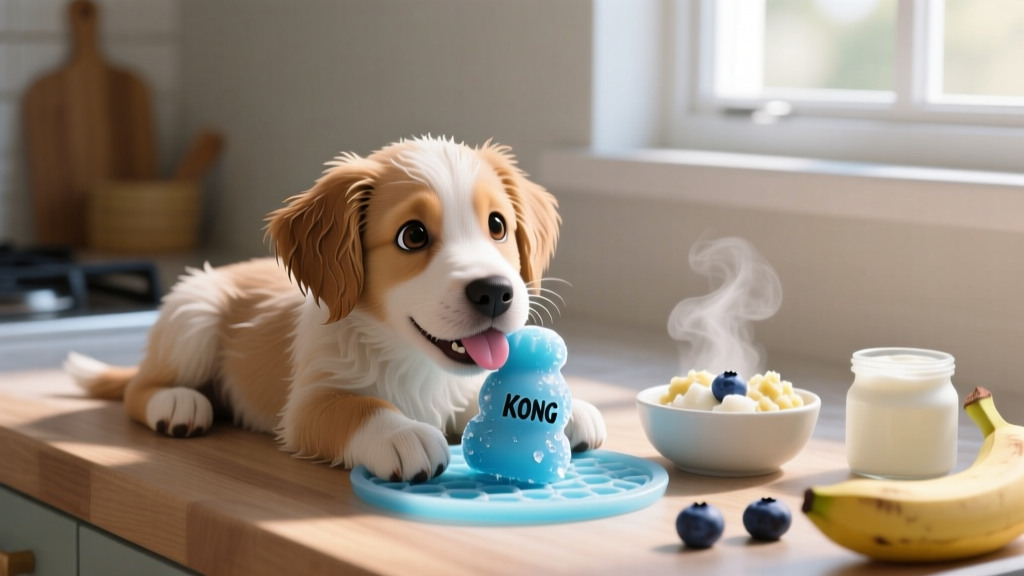
- Frozen Kong Classic (puppy size): Stuff with plain yogurt, mashed banana, and a smear of xylitol-free peanut butter. Freeze 4+ hours. The cold numbs sore gums.
- Benebone Wishbone (puppy formula): Softer nylon designed for developing teeth. Replace when wear grooves deepen.
- Frozen carrots or cucumber slices: Cheap, safe, and soothing. Supervise to prevent choking on large pieces.
- Wet washcloth (twisted and frozen): Soak a clean washcloth in water or low-sodium chicken broth, twist into a rope, freeze, and let puppy chew under supervision. Discard if threads come loose.
- N-Bone Puppy Teething Ring: Edible and digestible, designed for puppies under 6 months.
Avoid: Rawhide (choking and blockage risk), real antlers or weight-bearing bones (can fracture puppy teeth), any chew toy harder than your fingernail (the "thumbnail test" — if you can't dent it, it's too hard for puppy teeth).
Common Husky Puppy Problems and Solutions
Problem 1: Relentless Biting and Nipping
Husky puppies are mouthy — more so than most breeds. Their sled-dog heritage means they were bred to work in close-mouth-contact teams, and they play with their mouths constantly. This is the number one complaint from new husky puppy owners.
Solution:
- Redirect, don't punish: When teeth touch skin, say "ouch" in a calm tone (not a high-pitched yelp, which can excite huskies more), then immediately offer a chew toy. Reward chewing the toy with praise.
- Reverse time-out: If redirecting fails after 2 attempts, stand up and leave the room for 15-30 seconds. This teaches that biting ends play. Return and resume. Consistency is critical — every family member must follow the same protocol.
- Provide adequate outlets: A tired husky puppy bites less. Ensure 30-45 minutes of structured activity daily (training sessions, flirt pole, scent games) beyond free play.
- Expect improvement by 5-6 months: As adult teeth come in and bite inhibition training takes hold, nipping decreases substantially. If intense biting persists past 7 months, consult a certified force-free trainer (IAABC or CPDT-KA certified).
Problem 2: Howling, Whining, and Vocalization
Huskies are among the most vocal dog breeds. Puppies howl when crated, whine for attention, and "talk" during play. This is breed-typical behavior, not a problem to eliminate — but it can be managed.
Solution:
- Ignore demand vocalization: If your puppy howls for attention while you're home, wait for 3 seconds of silence before responding. Reward the silence with attention or a treat.
- Crate howling extinction: Night 1-3 will be loud. If you've ensured the puppy has been pottied, exercised, and is safe, do not open the crate during howling. Opening it during vocalization reinforces the behavior. Most huskies reduce crate howling significantly by night 4-7.
- White noise machine: A Dohm or LectroFan sound machine near the crate can muffle triggering sounds (neighbors, traffic) and reduce reactive howling.
Problem 3: Destructive Chewing
A bored husky puppy can destroy furniture, shoes, drywall, and baseboards in minutes. This isn't spite — it's under-stimulation combined with a powerful chewing drive.
Solution:
- Management first: Puppy-proof every room. Use baby gates to limit access. Shoes in closets, cords behind cord covers, furniture legs sprayed with bitter apple deterrent (Grannick's Bitter Apple, $8-$12).
- Rotate chew toys: Offer 3-4 chews at a time and rotate every 2-3 days to maintain novelty. A bored husky ignores old toys and finds new (expensive) things to chew.
- Mental exercise: 15 minutes of sniffing work (scatter feeding, snuffle mat, frozen Kong) tires a husky puppy as much as 45 minutes of physical exercise.
Problem 4: Escape Attempts and Digging
Husky puppies begin testing fence lines as early as 4-5 months. They dig under, climb over, and squeeze through gaps you didn't know existed.
Solution:
- Fence audit: Minimum 6-foot fence for adult huskies. Bury chicken wire or hardware cloth 12-18 inches along the fence base to prevent dig-outs. Check for gaps wider than 4 inches.
- Never leave unsupervised: Even in a fenced yard, a husky puppy should not be left alone outside until they've demonstrated reliable fence respect over months, and many owners never reach this point.
- Provide a dig pit: Designate a sandbox or specific yard area where digging is allowed. Bury toys and treats to encourage digging there instead of along fence lines.
First-Year Cost Breakdown: Budgeting for Your Husky Puppy
Huskies are not a budget breed. Between their food consumption, grooming needs, training requirements, and veterinary care, first-year costs are significant. Here's a realistic breakdown based on 2026 pricing:
| Category | Low Estimate | Mid Estimate | High Estimate |
|---|---|---|---|
| Puppy purchase (breeder) or adoption fee | $300 (rescue) | $1,500 | $3,000 (show-line breeder) |
| Vaccinations (initial series + boosters) | $150 | $250 | $400 |
| Spay/neuter surgery | $200 | $450 | $700 |
| Food (12 months, large-breed puppy formula) | $400 | $600 | $900 |
| Supplies (crate, bed, leash, harness, bowls, toys) | $200 | $400 | $700 |
| Training (puppy class + basic obedience) | $150 | $350 | $800 (private sessions) |
| Grooming tools (undercoat rake, slicker brush, deshedding tool) | $30 | $60 | $120 |
| Flea/tick/heartworm prevention (12 months) | $150 | $250 | $350 |
| Pet insurance (optional, annual premium) | $0 | $600 | $900 |
| Microchipping | $25 | $50 | $75 |
| Total First Year | $1,605 | $4,910 | $8,845 |
Ongoing annual costs after year one: Expect $1,200–$2,500 per year for food, preventive medications, routine veterinary care, grooming tools replacement, and toys. Emergency veterinary visits (huskies are prone to GI foreign body ingestion from their chewing habits) can add $1,000–$5,000+ per incident, which is why pet insurance is worth serious consideration.
When Can Your Husky Puppy Go Outside and Meet Other Dogs?
This is one of the most common questions new husky puppy owners ask, and the answer requires balancing disease risk with socialization needs.
Safe outdoor exposure (from week 8):
- Your own fenced yard (if no unknown dogs have access)
- Being carried in public areas (parks, outdoor shopping areas, sidewalk cafés)
- Rides in the car to new environments
- Your backyard for potty training and exploration
Restricted until full vaccination (after 16-week DHPP):
- Dog parks
- Pet store floors
- Walking on public sidewalks where unknown dogs frequent
- Unvaccinated dog playdates
Safe socialization options before full vaccination:
- Puppy kindergarten classes that require proof of at least one DHPP dose and Bordetella vaccination
- Playdates at private homes with known, fully vaccinated, puppy-friendly dogs
- Puppy socials hosted by veterinary clinics or force-free training facilities (these are sanitized between sessions)
The window is tight: your puppy's socialization period closes around 14 weeks, but full vaccination isn't complete until 16-18 weeks. The compromise is controlled, low-risk exposure during the socialization window — carry your puppy, attend structured puppy classes, and host playdates at home. The behavioral risk of under-socialization (fear, aggression, reactivity) far outweighs the disease risk when exposure is managed responsibly.
Frequently Asked Questions
How often should I feed my 10-week-old husky puppy?
At 10 weeks, feed 3 to 4 meals per day. Divide the daily total (approximately 1.0–1.5 cups of large-breed puppy kibble) evenly across meals. For example, if feeding 1.25 cups daily, offer roughly ⅓ cup per meal across 4 feedings, or about ⅖ cup across 3 feedings. Consistent meal timing helps with potty training predictability — most puppies need to eliminate 15-30 minutes after eating.
When will my husky puppy be fully potty trained?
Most husky puppies are reliably house trained between 4 and 6 months of age, meaning fewer than one accident per week. Full reliability (months without accidents) typically comes by 8-9 months. Male huskies may take slightly longer than females. Spaying/neutering around 6 months can reduce marking behavior. If accidents increase suddenly at any age, consult your veterinarian to rule out medical causes like UTIs or gastrointestinal issues.
What vaccines does my husky puppy need and when?
The core series is DHPP (Distemper, Hepatitis, Parainfluenza, Parvovirus) given at 6-8 weeks, 10-12 weeks, and 14-16 weeks, plus a Rabies vaccine at 14-16 weeks. Bordetella (kennel cough) is recommended at 10-12 weeks if attending group classes. Your veterinarian may also recommend Leptospirosis, Lyme, or Canine Influenza vaccines based on your geographic area and lifestyle. Boosters are given at 12-16 months, then every 1-3 years depending on the vaccine and local regulations.
How do I stop my husky puppy from biting and nipping?
Use a consistent three-step approach: (1) When teeth touch skin, say "ouch" calmly and redirect to an appropriate chew toy. (2) If biting continues after 2 redirects, stand up and leave the room for 15-30 seconds — this teaches that biting ends play. (3) Ensure your puppy gets 30-45 minutes of structured physical and mental exercise daily; overtired and under-stimulated puppies bite more. Never hit, hold the mouth shut, or use alpha rolls — these methods damage trust and can escalate aggression. Expect significant improvement by 5-6 months as adult teeth erupt and training takes hold.
Can I shave my husky puppy to keep them cool in summer?
Never shave a Siberian Husky. Their double coat insulates against both cold and heat, protects from UV rays, and regulates body temperature. Shaving disrupts the coat structure, and it may never grow back correctly. Instead, provide shade, fresh water, cooling mats (Arf Pets Self-Cooling Mat, $25-$40), and exercise during early morning or evening hours. Brush regularly with an undercoat rake to remove loose fur and improve air circulation through the coat.
Are husky puppies good with children?
Huskies are generally friendly and playful with children, but their puppy energy and mouthiness can overwhelm toddlers. A husky puppy will jump, nip, and body-slam during play — not from aggression, but from exuberance. Always supervise interactions between puppies and children under 10. Teach children to respect the crate as a no-disturb zone and to stop playing when the puppy shows overstimulation signs (hard mouthing, zoomies that won't stop). Positive reinforcement training for both the puppy and the children produces the best outcomes.
This guide provides general care information for Siberian Husky puppies. Always consult your veterinarian for personalized health, nutrition, and vaccination advice tailored to your individual puppy.
Aaron Whyte
All our authors care for dogs every day — read more of their work on the authors page.