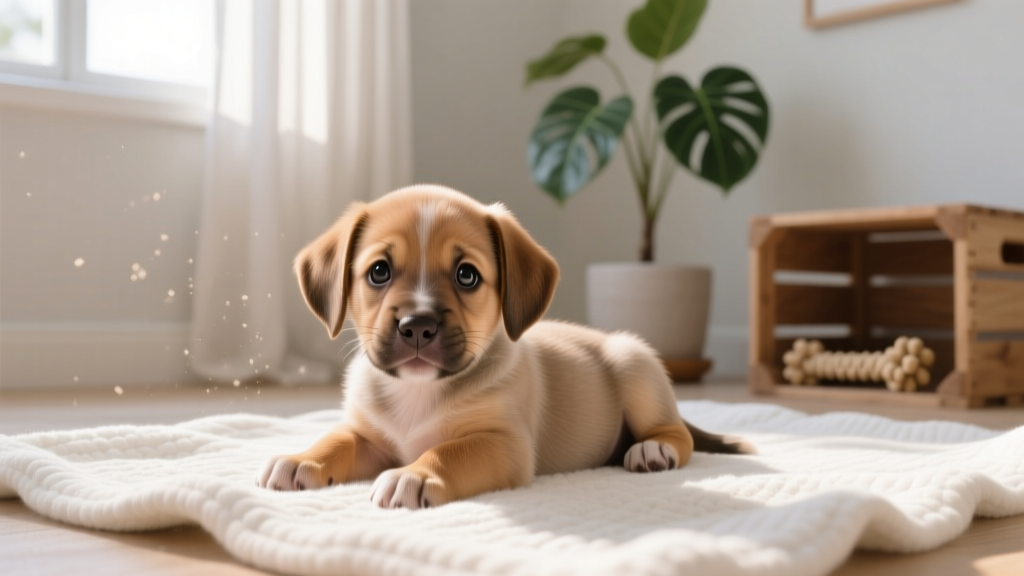
How to Train a Puppy Not to Bite: A Breed: Specific...
Learn how to train a Labrador puppy not to bite with age-specific milestones, teething timelines, socialization checklists, and positive reinforcement techniques.

Why Labrador Puppies Bite So Much (And What's Normal)
Labrador Retrievers were bred to carry waterfowl gently in their mouths, which means they explore the world orally more than almost any other breed. If your 10-week-old Lab is latched onto your ankle like a baby shark, you're not raising a bad dog — you're raising a retriever doing exactly what genetics programmed. The key question isn't if your Lab puppy will bite (they will), but how to train a puppy not to bite using methods that work with their natural drive rather than against it.
Labrador puppies typically mouth and nip between 3 weeks and 6 months of age, with peak intensity around 12–16 weeks when adult teeth begin erupting. According to the American Kennel Club, breed-specific biting patterns in retrievers often persist longer than in other breeds because the oral fixation is hardwired into their working heritage. The good news? Labs are also among the most biddable breeds on the planet, which means bite inhibition training sticks faster when you apply it consistently.
Bringing Your Labrador Puppy Home: Timing and First 48 Hours
When should you bring your puppy home? The optimal age is 8–10 weeks. The AVMA recommends puppies remain with their littermates until at least 8 weeks for critical bite inhibition learning — when a puppy bites a sibling too hard, the sibling yelps and stops playing, teaching the biter that hard bites end fun. Removing a Lab puppy before 8 weeks robs them of this natural feedback loop and makes your job significantly harder.
When you first arrive home, expect your puppy to be overstimulated. Set up a confined space (exercise pen or small puppy-proofed room) with their crate, water, and a long-lasting chew like a frozen Kong stuffed with plain pumpkin. Keep introductions calm — no parade of visitors on day one. Labs are social dogs and will become overwhelmed, which paradoxically increases nipping behavior.
Age-Specific Milestones: What to Expect Week by Week
Understanding developmental stages removes the panic from puppy raising. Here's what normal looks like for a Labrador Retriever at each critical phase:
Weeks 4–8 (Still With Breeder)
- Teeth: Deciduous (baby) incisors and canines fully erupted — 28 total
- Bite behavior: Learning inhibition from littermates and dam; bites are frequent but decreasing in force
- Weight: 8–15 lb (3.6–6.8 kg) depending on sex and line (English vs. American)
- Your job: Verify breeder is handling puppies daily and exposing them to varied surfaces, sounds, and people
Weeks 8–12 (Home Transition)
- Teeth: Full set of 28 baby teeth; chewing intensity increases as gums prepare for adult teeth
- Bite behavior: Peak exploratory mouthing — puppy bites hands, feet, clothing, furniture
- Weight: 15–25 lb (6.8–11.3 kg)
- Your job: Redirect every bite to appropriate chew; begin "leave it" training; hand-feed meals for bonding and gentle-mouth practice
Weeks 12–16 (Socialization Peak)
- Teeth: Baby teeth begin loosening; you may find tiny teeth in bedding or on floor
- Bite behavior: Mouthing may temporarily increase due to gum discomfort; puppy experiments with jaw pressure
- Weight: 25–40 lb (11.3–18.1 kg)
- Your job: Introduce "drop it" cue; increase structured chew time; enroll in positive-reinforcement puppy class
Weeks 16–24 (Teething and Testing)
- Teeth: All 42 adult teeth erupting (complete by ~6 months); gums inflamed, puppy seeks relief
- Bite behavior: Chewing shifts from exploratory to relief-seeking; destructive chewing peaks
- Weight: 40–60 lb (18.1–27.2 kg)
- Your job: Provide frozen chew options; puppy-proof home thoroughly; maintain consistent "no teeth on skin" rule
Months 6–12 (Adolescence)
- Teeth: Full adult set; jaw strength at near-adult levels
- Bite behavior: Mouthing should be minimal if training was consistent; adolescent Labs may "mouth" during excitement or greeting
- Weight: 55–80 lb (24.9–36.3 kg) — males typically 65–80 lb, females 55–70 lb
- Your job: Reinforce settled behavior; provide high-value chews during high-arousal situations (guests arriving, pre-walk excitement)
How to Train a Puppy Not to Bite: The Labrador-Specific Method
Because Labs are mouth-oriented by nature, the standard "yelp and withdraw" technique used for other breeds often backfires — many Lab puppies interpret the yelp as an invitation to play harder. Instead, use this three-part framework designed for retriever temperaments:
Step 1: Redirect Before the Bite
Keep a braided fleece tug toy (12–18 inches, such as the Tug-a-Jug style rope) within arm's reach at all times. When you see your Lab puppy's mouth open toward your skin, intercept with the toy before contact. Labs respond to movement, so drag the toy along the ground to trigger their chase-and-grab instinct.
Step 2: Teach "Gentle" Through Hand-Feeding
Feed at least one meal per day by hand for the first 8 weeks home. Hold a piece of kibble in a closed fist. If the puppy bites or paw-aggressively at your hand, freeze completely. The instant their mouth softens or pulls back, open your hand and let them take the food. This builds a direct neurological association: soft mouth = food appears; hard mouth = food disappears. Labs are food-motivated enough that this protocol typically shows results within 5–7 days of daily practice.
Step 3: The "Game Over" Protocol
If your puppy's teeth touch your skin despite redirection, stand up calmly, cross your arms, and become still and boring for 15–30 seconds. Do not yell, push the puppy away, or grab their muzzle (these escalate arousal in retrievers). After the pause, resume play with a toy. If biting happens three times in one session, the puppy is overstimulated — place them in their crate with a frozen Kong for a 20-minute nap. Most Lab puppy bites between 8–16 weeks are driven by overtiredness, not aggression.
Teething Timeline and Safe Relief Strategies
Labrador puppies go through an intense teething phase between 3 and 6 months. Here's what to provide at each stage:
| Age | What's Happening | Safe Chew Options | Avoid |
|---|---|---|---|
| 3–4 months | Baby teeth loosening, gums tender | Frozen wet washcloth (knotted), rubber Kong Classic (puppy size, pink/blue), Whimzees puppy chews | Hard nylon bones, ice cubes (tooth fracture risk), rawhide |
| 4–5 months | Incisors and premolars erupting, bleeding gums possible | Benebone Puppy (softer formula), frozen carrot sticks, Nylabone Puppy Chew (soft flex material) | Antlers, hooves, cooked bones, tennis balls (abrasive to new teeth) |
| 5–6 months | Canines and molars finalizing, jaw strength increasing rapidly | Kong Classic (medium, red rubber), bully sticks (supervised, 6-inch max), yak cheese chews (small size) | Weight-bearing bones from large animals, plastic bottles, sticks from yard (splinter risk) |
Budget $15–$30 per month on rotating chew supplies during teething. Labs destroy chews faster than most breeds due to their powerful jaw drive, so buy in bulk and rotate textures to maintain novelty.
Feeding Schedule: Portions by Age and Weight
Labradors are prone to rapid growth and obesity. The Merck Veterinary Manual recommends large-breed puppy formulas with controlled calcium-to-phosphorus ratios to prevent orthopedic issues. Feed a food that meets AAFCO guidelines for "growth" and specifically states it's appropriate for large-breed puppies (expected adult weight over 70 lb / 32 kg).
| Age | Meals Per Day | Approximate Daily Amount (Large-Breed Puppy Kibble) | Notes |
|---|---|---|---|
| 8–12 weeks | 4 meals | 1.5–2 cups (355–473 mL) | Soak kibble in warm water for first week if transitioning; use for hand-feeding training |
| 12–16 weeks | 3 meals | 2–2.75 cups (473–651 mL) | Increase if puppy appears ribby (BCS below 4/9); decrease if waist disappears |
| 4–6 months | 3 meals | 2.5–3.5 cups (591–828 mL) | Males trending toward upper range; monitor growth rate — should gain ~2 lb/week max |
| 6–12 months | 2 meals | 3–4 cups (710–946 mL) | Transition to adult food at 12–15 months; reduce calories if BCS exceeds 5/9 |
Exact portions vary by kibble caloric density (typically 350–420 kcal/cup for large-breed puppy formulas). Always check the feeding chart on your specific bag and adjust based on your puppy's body condition score, not just the label recommendation. Labs will eat until they burst — free-feeding is never appropriate for this breed.
Vaccination Schedule for Labrador Puppies
What vaccines does my puppy need and when? Labrador puppies follow the standard core vaccination protocol. Your veterinarian will tailor timing based on local disease prevalence and maternal antibody levels, but expect this framework:
| Age | Vaccines Administered | Estimated Cost (US) |
|---|---|---|
| 6–8 weeks | DHPP (Distemper, Hepatitis/Adenovirus, Parainfluenza, Parvovirus) — first dose; Bordetella (optional, if group socialization planned) | $25–$45 |
| 10–12 weeks | DHPP — second dose; Leptospirosis (first dose, recommended for Labs due to outdoor/water exposure); Lyme (first dose, if tick-endemic area) | $40–$75 |
| 14–16 weeks | DHPP — third (final puppy) dose; Rabies (required by law in all US states); Leptospirosis (second dose, 2–4 weeks after first) | $55–$95 |
Total first-year vaccination cost: $120–$215 depending on your region and clinic. Low-cost vaccine clinics (often run by local shelters or Tractor Supply co-ops) can reduce this to $75–$120. Never skip the DHPP series — parvovirus is nearly always fatal in unvaccinated puppies and Labs' curious, oral nature puts them at higher exposure risk.
Socialization Window: Weeks 3–14 Checklist
The primary socialization period closes around 14 weeks — this is not a suggestion, it's a neurological deadline. Puppies who don't encounter novel stimuli during this window are significantly more likely to develop fear-based reactivity, which in Labs often manifests as fear biting (different from play mouthing). Before the DHPP series is complete, carry your puppy or use a stroller/sling to expose them to the world without placing them on public ground where parvo risk exists.
Labrador Puppy Socialization Checklist (Complete by 14 Weeks)
People (minimum 10 different types):
- Men with beards, hats, sunglasses
- Children ages 3–12 (supervised, calm interactions)
- People using wheelchairs, crutches, or walkers
- People wearing uniforms (delivery drivers, nurses)
- People of different ethnicities and body types
Surfaces and environments:
- Gravel, sand, wet grass, metal grates, tarps
- Elevator rides, car rides (short, positive)
- Busy parking lots (carried, not on ground)
- Veterinary clinic waiting room (happy visit, no procedures)
Handling exercises (daily, 2–3 minutes):
- Touch ears, paws, tail, inside mouth — pair with treats
- Gentle restraint (simulate vet exam positioning)
- Nail grinder vibration on paw (no grinding yet, just sensation)
- Toothbrush in mouth (no toothpaste needed initially)
Sound exposure (play recordings at low volume, increase gradually):
- Thunderstorms, fireworks, vacuum cleaners, doorbells
- Crowd noise, children screaming, construction sounds
Potty Training Timeline: Realistic Expectations for Labs
When will my puppy be fully potty trained? For Labrador Retrievers, expect reliable house training between 4 and 6 months of age, with occasional accidents until 8–9 months. Labs mature faster than some giant breeds but slower than small breeds due to their bladder capacity relative to intake volume. A puppy can typically hold their bladder for one hour per month of age, plus one — so a 3-month-old Lab can manage about 4 hours overnight but only 1–2 hours during active daytime play.
Sample potty log template for tracking:
| Time | Activity | Eliminated? | Location | Notes |
|---|---|---|---|---|
| 7:00 AM | Wake → outside | Pee + poop | Designated spot | Treated, praised |
| 7:30 AM | After breakfast | Pee | Designated spot | Took 4 minutes |
| 9:15 AM | After play session | Accident | Kitchen rug | Missed cue; set timer for next time |
Troubleshooting common Lab potty issues:
- Submissive urination when greeted: Common in Labs until 6–8 months. Ignore the puppy for first 60 seconds when entering; greet at their level with calm, low-energy touch. Never scold — this worsens the behavior.
- Excitement peeing before reaching the door: Shorten the path to outside; carry the puppy if under 15 lb; use a consistent verbal cue ("outside?") to create a pre-elimination routine.
- Nighttime accidents after 4 months: Remove water 2 hours before bed; set a 3 AM alarm for one mid-night potty break until the puppy sleeps through consistently for 7 days.
Crate Training Progression and Time Limits
Crates serve two critical functions for Lab puppies: preventing unsupervised destructive chewing and providing a safe decompression space when overstimulation triggers biting. Labs generally accept crates more readily than independent breeds because they're social and den-oriented — but only if you build positive associations from day one.
Maximum crate time by age (while puppy is awake and crated during the day):
- 8–10 weeks: 30–45 minutes maximum during the day; 3–4 hours overnight (with one potty break)
- 10–14 weeks: 1–1.5 hours during the day; 4–5 hours overnight
- 3–4 months: 2 hours during the day; 5–6 hours overnight
- 4–6 months: 2.5–3 hours during the day; 7–8 hours overnight
- 6+ months: 3–4 hours during the day; 8 hours overnight (if exercised adequately beforehand)
Always provide a safe chew (stuffed Kong, bully stick) when crating. If your Lab puppy screams in the crate, wait for a 5-second pause in vocalization before releasing — releasing mid-scream teaches that screaming opens the door. Cover the crate with a breathable blanket to reduce visual stimulation, and place it in a common area so the puppy doesn't feel isolated.
First-Year Cost Breakdown for a Labrador Retriever
Budget realistically before bringing a Lab puppy home. These figures reflect 2026 US averages and can vary by region:
| Category | Low Estimate | High Estimate | Notes |
|---|---|---|---|
| Puppy purchase/adoption | $300 (rescue) | $2,500 (AKC breeder) | Reputable breeders health-test parents (OFA hips/elbows, EIC, PRA); ask for documentation |
| Veterinary (vaccines, spay/neuter, microchip, wellness exams) | $600 | $1,200 | Gastropexy (preventive bloat surgery) adds $300–$600 if done at spay/neuter |
| Food (large-breed puppy formula, 12 months) | $480 | $840 | Based on $40–$70/month for quality kibble (Purina Pro Plan, Royal Canin, Hill's) |
| Supplies (crate, bed, leash, harness, bowls, chews, toys) | $300 | $600 | Labs destroy beds quickly — budget for 2–3 replacements in year one |
| Training (puppy class + group obedience) | $200 | $600 | 6-week group class: $150–$250; private sessions: $80–$150/hour |
| Pet insurance (optional but recommended) | $360 | $720 | $30–$60/month for accident/illness; Labs are prone to hip dysplasia, ACL tears, bloat |
| TOTAL FIRST YEAR | $2,240 | $6,460 | Emergency fund of $1,000–$2,000 recommended separately |
Frequently Asked Questions
When can my Labrador puppy go outside and meet other dogs?
Your puppy can go into your own private yard immediately. For public spaces and dog-to-dog introductions, wait until 7 days after the second DHPP vaccine (typically around 12–13 weeks). Puppy socialization classes that require proof of first vaccination and maintain sanitized floors are generally safe from 10 weeks onward, per the AVMA's position on early socialization. Avoid dog parks until the full DHPP series is complete at 16+ weeks.
How often should I feed my Labrador puppy at 10 weeks?
Four meals per day, spaced approximately 4 hours apart (e.g., 7 AM, 11 AM, 3 PM, 7 PM). Each meal should be roughly 0.4–0.5 cups of large-breed puppy kibble. Consistent mealtimes also make potty training predictable — puppies typically need to eliminate within 15–30 minutes after eating.
My Lab puppy bites my children — is this dangerous?
Puppy mouthing is not aggression, but children's skin is more fragile and their reactions (screaming, running) trigger a Lab's chase instinct. Never leave children under 12 unsupervised with a puppy. Teach children to "be a tree" (stand still, arms crossed) when the puppy mouths, and redirect the puppy to a toy immediately. If the puppy is too aroused, separate them with a baby gate and give the puppy a frozen chew to decompress.
Will my Labrador grow out of biting without training?
Partially. Most Labs significantly reduce mouthing by 6–7 months as adult teeth settle and impulse control matures. However, puppies who aren't taught bite inhibition during the 8–16 week window often retain a "hard mouth" into adulthood — meaning they may grab hands during excitement without understanding it hurts. Consistent training during the critical period prevents this and is far easier than retraining an adult dog's jaw pressure.
What if the biting gets worse before it gets better?
This is normal between 12–20 weeks as adult teeth erupt and puppies test boundaries. Increase structured chew time to 20–30 minutes twice daily with frozen options. Ensure your puppy is getting 16–18 hours of sleep per day (overtired Labs bite significantly more). If biting intensity increases alongside other symptoms like lethargy, diarrhea, or loss of appetite, consult your veterinarian to rule out pain or illness as a trigger.
Aaron Whyte
All our authors care for dogs every day — read more of their work on the authors page.