How to Get Puppies to Stop Biting: A Week-by-Week Training Guide
Learn how to get puppies to stop biting with age-specific milestones, teething relief strategies, and positive reinforcement techniques that actually work.

Why Puppies Bite — and When It Finally Stops
If you're reading this with tooth marks on your hands and shredded pant cuffs, take a breath: puppy biting is developmentally normal, not a sign of aggression. Puppies explore the world with their mouths the way human toddlers use their hands. Between weeks 3 and 6 months, your puppy is building bite inhibition — learning how much jaw pressure is acceptable — through feedback from littermates and, eventually, from you.
The American Kennel Club notes that most puppies significantly reduce mouthing behavior by 5-6 months as adult teeth fully erupt and impulse control matures. However, the strategies you use between 8 weeks and 6 months determine whether biting fades naturally or becomes an ingrained habit. This guide walks you through every developmental stage with concrete timelines, feeding schedules, vaccination milestones, and breed-adaptable techniques to redirect that needle-sharp energy.
Puppy Development Timeline: What to Expect Week by Week
Understanding where your puppy is developmentally helps you set realistic expectations for biting, potty training, and socialization. Here's what each stage looks like in practice:
Weeks 4–8: Littermate Learning Phase
Biting context: Puppies learn bite inhibition from siblings. A yelp from a littermate teaches them that hard bites end play. This is why puppies should stay with their mother and littermates until at least 8 weeks.
What you'll see: Constant mouthing, tumbling, chewing on anything movable. Deciduous (baby) teeth are fully in by week 6-8 — 28 needle-sharp teeth.
Your role: If adopting at 8 weeks, you're stepping into the littermate's role. Begin redirecting to appropriate chew items from day one.
Weeks 8–12: Home Adjustment & Peak Mouthing
Biting context: This is typically the most intense biting phase. Your puppy has lost littermate feedback and is testing boundaries with you. Expect 15-30 mouthing incidents per day.
What you'll see: Biting hands, feet, clothing. "Zoomies" followed by overtired crankiness that amplifies biting. Potty accidents every 1-2 hours.
Your role: Implement the redirection protocol below. Begin crate training. Keep training sessions under 5 minutes.
Weeks 12–16: Early Improvement Window
Biting context: With consistent redirection, biting frequency should drop 30-50% by week 16. Puppies start responding to "ouch" or yelp cues.
What you'll see: Softer mouthing (less pressure), longer play sessions without teeth, emerging ability to settle. Potty intervals extend to 2-3 hours.
Your role: Increase structured play. Introduce tug toys with clear start/stop rules. Begin short leash walks in low-distraction areas (after full vaccination series).
Weeks 16–24: Teething Transition
Biting context: Baby teeth fall out as 42 adult teeth erupt. Chewing intensity spikes again — but it's driven by gum discomfort, not exploration. This phase can temporarily increase destructive chewing.
What you'll see: Drooling, dropped kibble, mild blood on chew toys (normal), finding baby teeth on the floor. Biting shifts from hands to furniture and shoes.
Your role: Provide frozen chew relief (details below). Puppy-proof your home aggressively. Maintain redirection consistency even when frustrated.
Months 6–12: Adolescent Testing
Biting context: By 6-7 months, adult teeth are fully set and teething-driven chewing subsides. However, adolescent dogs (especially herding and terrier breeds) may continue nipping during excitement. This is impulse control, not teething.
What you'll see: Occasional nipping during high-arousal play, testing of previously learned rules, increased independence. Some regression in potty training around 8-10 months.
Your role: Increase physical exercise and mental enrichment. Practice "leave it" and "drop it" daily. Consider group training classes for socialization reinforcement.
The Redirection Protocol: How to Actually Stop Puppy Biting
The goal isn't to punish biting — it's to teach your puppy that human skin is never an acceptable chew target while providing appropriate alternatives. This force-free protocol is adapted from American Veterinary Society of Animal Behavior recommendations:
Step 1: The Yelp-and-Freeze (Weeks 8–12)
When teeth touch skin, let out a high-pitched "ow!" or yelp — mimicking littermate feedback. Then freeze completely for 3-5 seconds. Do not jerk your hand away (this triggers prey drive and makes biting more fun). Most puppies will release and look confused. Mark that moment with "yes!" and redirect to a toy.
Step 2: Redirect to an Appropriate Chew (All Stages)
Always have a suitable chew item within arm's reach during play. When you redirect, make the toy come alive — wiggle it, drag it, make it interesting. A dead toy on the floor is less appealing than your moving hand. Good redirect options by age:
- 8-12 weeks: Soft braided fleece toys, Kong Puppy (XS) stuffed with moistened kibble
- 12-16 weeks: Nylabone Puppy Chew (softer texture), bully sticks (supervised only)
- 16-24 weeks (teething): Frozen Kong stuffed with plain yogurt and banana, frozen wet washcloth (knotted), Benebone Puppy
- 6+ months: Kong Classic (appropriate size), yak milk chews, antler alternatives (avoid real antlers — they fracture teeth)
Step 3: The Time-Out Reset (12+ Weeks)
If yelping and redirecting don't work after 2-3 attempts in a session, your puppy is overstimulated. Calmly pick them up (or lure them) into their crate or a small pen for a 2-3 minute "reset." This is not punishment — it's helping an overtired puppy who has lost the ability to make good choices. Most puppies fall asleep within minutes. Let them out once calm.
Step 4: Reward the Absence of Biting
This is the step most owners skip. When your puppy is playing with you and has been mouth-free for 30+ seconds, calmly say "good" and deliver a treat or continue the game. You're reinforcing the behavior you want, not just correcting what you don't want.
Feeding Schedule by Age: Fueling Growth Without Fueling Hyperactivity
Overfeeding and inconsistent meal timing contribute to the hyperactive energy that amplifies puppy biting. Here's a baseline feeding framework. Adjust based on your puppy's body condition score (BCS) — you should be able to feel ribs without pressing hard, and see a visible waist from above.
| Age | Meals/Day | Small Breed (10-25 lb adult) | Medium Breed (25-60 lb adult) | Large Breed (60-100+ lb adult) |
|---|---|---|---|---|
| 8–12 weeks | 4 | ¼ – ½ cup/meal | ½ – ¾ cup/meal | ¾ – 1¼ cups/meal (large breed formula) |
| 12–16 weeks | 3 | ⅓ – ⅔ cup/meal | ¾ – 1 cup/meal | 1 – 1¾ cups/meal |
| 4–6 months | 3 | ½ – ¾ cup/meal | 1 – 1½ cups/meal | 1½ – 2½ cups/meal |
| 6–12 months | 2 | ¾ – 1 cup/meal | 1½ – 2 cups/meal | 2 – 3½ cups/meal |
Key notes: These ranges assume AAFCO-certified puppy food with standard caloric density (~350-400 kcal/cup). Always check your specific food's feeding chart and adjust 10-15% weekly based on body condition. Large and giant breeds (expected adult weight over 70 lb) should eat a food labeled for "large breed growth" to prevent rapid bone development linked to hip dysplasia. Consult your veterinarian for breed-specific caloric needs.
Meal timing tip for biting reduction: Feed meals 60-90 minutes before your most active play/training sessions. A puppy with stable blood sugar is calmer and more responsive to redirection. Avoid free-feeding — scheduled meals also make potty training dramatically easier.
Potty Training Timeline and Troubleshooting
Potty training and biting share a common root: puppies lack impulse control, and both improve on the same developmental timeline. Here's a realistic progression:
| Age | Bladder Capacity | Expected Interval | Realistic Goal |
|---|---|---|---|
| 8–10 weeks | ~30-45 minutes | Every 1-2 hours | Learning the outdoor spot; 3-5 accidents/week normal |
| 10–14 weeks | ~1-1.5 hours | Every 2-3 hours | Starting to signal (sniff, circle, whine); 1-2 accidents/week |
| 14–20 weeks | ~2-3 hours | Every 3-4 hours | Reliable signaling; accidents rare with supervision |
| 5–6 months | ~4-5 hours | Every 4-6 hours | Near-full reliability during the day |
| 6–12 months | 6-8 hours | Every 6-8 hours | Fully trained; occasional regression around 8-10 months (hormonal) |
Common potty training mistakes that extend the timeline:
- Punishing accidents: Rubbing a puppy's nose in it or yelling after the fact creates fear of eliminating in front of you — leading to hidden accidents behind furniture. Clean accidents with enzymatic cleaner (Nature's Miracle or Rocco & Roxie) and adjust your supervision schedule.
- Inconsistent outdoor spot: Take your puppy to the same area every time. The scent triggers elimination.
- Skipping the post-meal trip: Puppies typically need to eliminate 15-30 minutes after eating and 10-15 minutes after waking from a nap. Build these trips into your routine.
- Too much freedom too soon: A puppy with access to the whole house at 10 weeks will have accidents. Use baby gates and tether training (leash clipped to you) until reliability is established room by room.
Vaccination Schedule and the Socialization Window
Your puppy's vaccination timeline directly impacts when they can safely explore the world — and the socialization window (weeks 3-14) is the single most critical period for preventing fear-based behaviors, including fear-biting, later in life.
| Age | Vaccines | What It Protects Against | Estimated Cost |
|---|---|---|---|
| 6–8 weeks | DHPP (1st dose) | Distemper, Hepatitis (Adenovirus), Parainfluenza, Parvovirus | $20–$40 |
| 10–12 weeks | DHPP (2nd dose), Bordetella (optional) | Core boosters + Kennel Cough | $30–$60 |
| 14–16 weeks | DHPP (3rd dose), Rabies | Core boosters + Rabies (legally required) | $40–$80 |
| 12–16 months | DHPP booster, Rabies booster | Immunity maintenance | $50–$90 |
Non-core vaccines your veterinarian may recommend based on lifestyle: Leptospirosis, Lyme disease, and Canine Influenza (H3N2/H3N8). Discuss regional risk factors at your first visit.
The Socialization Balancing Act (Weeks 3–14)
The AVSAB's position statement on puppy socialization is clear: the risk of under-socialization (behavioral problems, fear-based aggression) exceeds the disease risk for puppies who have received at least their first DHPP vaccine. Waiting until "all shots are done" at 16 weeks means missing the critical socialization window entirely.
Safe socialization checklist for partially-vaccinated puppies:
Rule of thumb: Aim for 100 new positive experiences before 16 weeks. Each experience should be paired with treats or play so your puppy builds positive associations. A scared puppy who is forced into a situation without positive pairing is being sensitized, not socialized.
Teething Relief: Safe Chew Strategies for the 3–6 Month Surge
Between 12 and 24 weeks, your puppy's 28 baby teeth are replaced by 42 adult teeth. The gum inflammation and pressure can be genuinely painful, and this is when chewing (and biting) often intensifies. Here's how to provide relief safely:
What Works
- Frozen Kong (Puppy or Classic, size-appropriate): Stuff with plain canned pumpkin, mashed banana, or plain yogurt. Freeze for 4+ hours. The cold numbs gums while the texture satisfies the chewing urge. Cost: $12–$18 for the toy.
- Frozen wet washcloth: Wet a clean washcloth, twist into a rope, knot it, and freeze. Supervise use — remove once it thaws and starts to shred. Cost: essentially free.
- Bully sticks (6-inch, appropriate thickness): Single-ingredient, fully digestible. Supervise all use and remove when it becomes a choking-sized nub. Cost: $4–$8 per stick. Buy from reputable brands that source from USDA-inspected facilities.
- Chilled carrot sticks or apple slices (no seeds): Low-calorie, safe, and satisfying crunch. Good for puppies who need to chew between meals without extra calories.
- Nylabone Puppy Chew (flexible texture): Designed for developing teeth. Replace when nubs are worn smooth or pieces break off. Cost: $6–$12.
What to Avoid
- Real antlers and weight-bearing bones: These are harder than dog tooth enamel and are a leading cause of slab fractures in premolars. Veterinary dentists consistently recommend against them.
- Rawhide (especially imported): Risk of chemical contamination, choking, and intestinal blockage. If you want a rawhide-like experience, choose pressed vegetable-based alternatives.
- Ice cubes (for small breeds): Can crack teeth in enthusiastic chewers. Crushed ice or shaved ice is safer.
- Old shoes or socks: Puppies cannot distinguish "old" shoes from "new" shoes. If you give them a shoe to chew, every shoe becomes a chew toy.
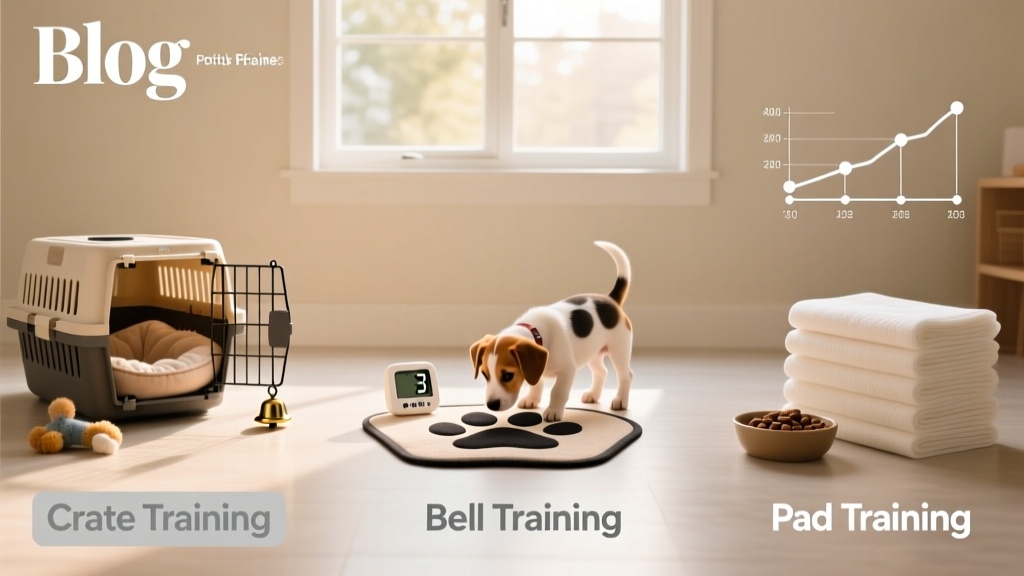
Crate Training Progression and Time Limits
A properly crate-trained puppy has a safe space to decompress when overstimulated — which directly reduces biting episodes triggered by overtiredness. Here's a progressive timeline:
| Age | Maximum Daytime Crate Time | Nighttime Expectation | Training Focus |
|---|---|---|---|
| 8–10 weeks | 30–60 minutes | 2–3 hours (then potty break) | Positive association: meals in crate, treats for entering, door open naps |
| 10–14 weeks | 1–2 hours | 3–4 hours | Short absences from room; quiet settling with a stuffed Kong |
| 14–16 weeks | 2–3 hours | 5–6 hours | Leaving the house briefly; building duration gradually |
| 4–6 months | 3–4 hours | 6–8 hours | Reliable settling; transitioning to pen or puppy-proofed room for longer absences |
Critical rule: The crate must never be used as punishment. If your puppy bites and you need a reset, use a separate pen or gated area — not the crate. The crate should predict good things: meals, stuffed Kongs, cozy blankets. A puppy who fears the crate will scream, whine, and develop anxiety that worsens all behavioral problems.
Whining protocol: If your puppy whines at night, wait 2-3 minutes to see if they self-soothe. If whining continues, take them out on leash for a boring potty trip (no play, no talking, dim lights), then return to crate. This prevents rewarding whining with playtime while ensuring you don't ignore a genuine potty need.
First-Year Cost Breakdown: Budgeting for Your Puppy
New puppy owners consistently underestimate first-year costs. Here's a realistic budget based on 2026 pricing for a medium-breed puppy (adjust 20-30% down for small breeds, 30-50% up for giant breeds):
| Category | Low Estimate | Mid-Range | High Estimate |
|---|---|---|---|
| Puppy purchase/adoption fee | $150 (rescue) | $1,200 (responsible breeder) | $3,500+ (specialty breeds) |
| Veterinary (vaccines, spay/neuter, wellness) | $500 | $900 | $1,500 |
| Food (12 months, quality kibble) | $300 | $550 | $900 |
| Supplies (crate, bed, leash, bowls, gates, toys) | $200 | $400 | $700 |
| Training (group classes, private sessions) | $150 | $400 | $1,200 |
| Pet insurance (annual premium) | $350 | $600 | $900 |
| Heartworm/flea/tick prevention (12 months) | $150 | $250 | $400 |
| TOTAL FIRST YEAR | $1,800 | $4,300 | $9,100 |
Hidden costs new owners forget: Emergency vet visits ($500–$3,000 per incident — puppies eat things they shouldn't), pet deposits for rentals ($200–$500), grooming for coated breeds ($50–$100 every 6-8 weeks), and dog walking or daycare if you work long hours ($200–$600/month).
Frequently Asked Questions
When should I bring my puppy home?
Between 8 and 10 weeks of age. Puppies removed from their litter before 8 weeks miss critical bite inhibition learning from siblings and are statistically more likely to develop behavioral problems including excessive biting, fearfulness, and difficulty with other dogs. Some breeders of toy breeds keep puppies until 10-12 weeks due to fragility and hypoglycemia risk. Never take a puppy younger than 7 weeks under any circumstance.
How often should I feed my puppy?
At 8-12 weeks: 4 meals per day, spaced evenly (e.g., 7am, 11am, 3pm, 7pm). At 12-16 weeks: drop to 3 meals. At 6 months: transition to 2 meals. Never feed one large meal — it increases bloat risk in deep-chested breeds and makes potty timing unpredictable. See the feeding table above for portion guidance by weight class.
When will my puppy be fully potty trained?
Most puppies achieve reliable daytime house training between 4 and 6 months with consistent scheduling. Full reliability (including overnight and during mild distractions) typically develops by 8-12 months. Small breeds may take 1-2 months longer due to smaller bladder capacity. If your puppy is still having daily accidents at 6 months despite consistent routine, consult your veterinarian to rule out urinary tract infection or anatomical issues.
What vaccines does my puppy need and when?
The core series is DHPP (Distemper, Hepatitis, Parainfluenza, Parvovirus) given at 6-8 weeks, 10-12 weeks, and 14-16 weeks, plus Rabies at 14-16 weeks. Non-core vaccines (Bordetella, Leptospirosis, Lyme, Canine Influenza) depend on your region and lifestyle. Your veterinarian will tailor the protocol. Never buy vaccines online and administer them yourself — improper storage and handling render them ineffective, and you lose the legal protection of a veterinarian-administered Rabies certificate.
How do I stop puppy biting and nipping?
Use the four-step redirection protocol outlined above: yelp-and-freeze, redirect to an appropriate chew, time-out reset if overstimulated, and reward bite-free play. Consistency from every household member is essential — if one person allows mouthing and another punishes it, the puppy receives conflicting information and biting persists longer. Most puppies show significant improvement within 2-3 weeks of consistent application. For persistent biting beyond 5-6 months, consult a certified professional dog trainer.
When can my puppy go outside and meet other dogs?
After the first DHPP vaccine (6-8 weeks), your puppy can begin controlled socialization in low-risk environments: carried outings, home visits from healthy dogs, and puppy classes that require vaccination proof. Avoid dog parks, pet store floors, and areas with unknown dog traffic until 7 days after the final DHPP booster (typically around 16-17 weeks). The AVSAB strongly recommends beginning socialization before full vaccination — the behavioral risks of isolation outweigh the disease risks when precautions are taken.
My puppy bites my children — is this dangerous?
Puppy biting is not aggression, but children under 8 are at higher risk of skin breaks from sharp puppy teeth and may react unpredictably (screaming, running) which excites the puppy further. Never leave children under 10 unsupervised with a puppy. Teach children the "be a tree" technique: stand still, fold arms, look at the sky when the puppy gets mouthy. This removes the movement that reinforces biting. Provide children with a toy to redirect the puppy rather than using their hands.
Marcus Aldridge
All our authors care for dogs every day — read more of their work on the authors page.