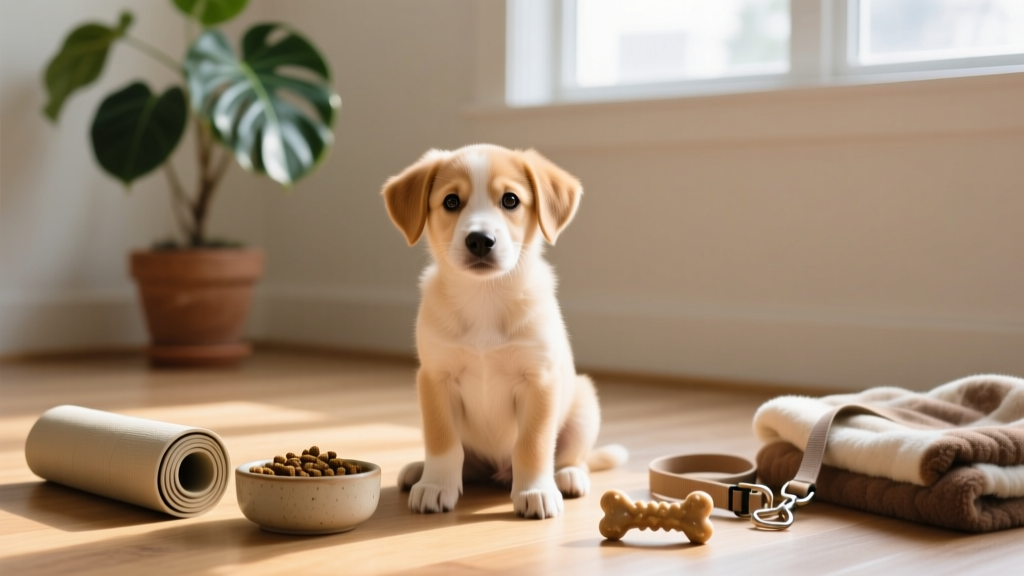
How Often Should Puppies Be Fed? A Complete Week: by:...
How often should puppies be fed at every age?

The First 24 Weeks: Your Puppy's Complete Development Timeline
Bringing a puppy home is equal parts thrilling and overwhelming. Within the first six months, you'll navigate feeding transitions, potty training setbacks, teething chaos, and a vaccination series that feels endless. The good news? Almost every challenge you'll face follows a predictable timeline — and knowing what's coming next removes most of the anxiety.
This guide breaks down your puppy's first year into concrete developmental windows with specific expectations for nutrition, training, health, and behavior. We'll answer the question every new puppy parent asks — how often should puppies be fed — and build outward from there into every other milestone you'll encounter.
Age-Specific Milestones at a Glance
| Age Range | Weight Milestone | Key Development | What to Expect |
|---|---|---|---|
| Weeks 4–8 | 2–5 lb (0.9–2.3 kg) depending on breed | Weaning, first socialization with littermates, deciduous teeth erupting | Transitioning from mother's milk to gruel, learning bite inhibition from siblings |
| Weeks 8–12 | 5–15 lb (2.3–6.8 kg) depending on breed | First DHPP vaccine, peak fear imprinting period, rapid brain development | Nighttime crying, potty accidents every 1–2 hours, mouthing everything |
| Weeks 12–16 | 10–25 lb (4.5–11.3 kg) depending on breed | Second and third DHPP boosters, socialization window closing, bladder capacity increasing | Noticeable improvement in potty reliability, leash walking begins, basic cue learning |
| Weeks 16–24 | 15–40 lb (6.8–18.1 kg) depending on breed | Teething begins, rabies vaccine, sexual maturity approaching | Destructive chewing peaks, testing boundaries, possible fear period around 6 months |
| 6–12 Months | Approaching 70–90% of adult weight | Adult teeth fully in, growth plates closing (small breeds first), spay/neuter window | Energy surges, adolescent regression in training, transition to two meals daily |
How Often Should Puppies Be Fed? The Complete Feeding Schedule
The answer to "how often should puppies be fed" changes as your puppy grows. Young puppies have small stomachs and fast metabolisms — they physically cannot hold enough food in a single meal to sustain their energy for more than a few hours. Here's the exact feeding frequency and portion guidance by age.
Feeding Frequency by Age
| Puppy Age | Meals Per Day | Spacing Between Meals | Notes |
|---|---|---|---|
| 4–8 weeks | 4 meals | Every 4–5 hours | Puppy gruel (kibble soaked in warm water or puppy formula), gradually thickening |
| 8–12 weeks | 4 meals | Every 4–5 hours | Dry kibble or wet food; toy breeds may need 4–5 meals to prevent hypoglycemia |
| 12–16 weeks | 3 meals | Every 5–6 hours | Transition to 3 meals around week 12; reduce midday portion slightly |
| 16 weeks–6 months | 3 meals | Every 5–6 hours | Steady growth phase; monitor body condition score weekly |
| 6–12 months | 2 meals | Every 8–10 hours | Small breeds transition at 6 months; large breeds may stay on 3 meals until 9–12 months |
Estimated Daily Portions by Expected Adult Weight
These are starting-point estimates for a high-quality, AAFCO-complete puppy kibble (approximately 400 kcal/cup). Your puppy's actual needs depend on activity level, metabolism, and the specific food's caloric density. Always check the feeding chart on your food's packaging and adjust based on your puppy's body condition score.
| Expected Adult Weight | 8–12 Weeks (cups/day) | 3–6 Months (cups/day) | 6–12 Months (cups/day) |
|---|---|---|---|
| Under 10 lb (4.5 kg) — Toy breeds | ½ – ¾ cup | ¾ – 1 cup | ¾ – 1 cup (transition to adult food at 9–10 months) |
| 10–25 lb (4.5–11.3 kg) — Small breeds | ¾ – 1¼ cups | 1 – 1¾ cups | 1¼ – 2 cups (transition to adult food at 10–12 months) |
| 25–50 lb (11.3–22.7 kg) — Medium breeds | 1¼ – 2 cups | 1¾ – 2¾ cups | 2 – 3¼ cups (transition to adult food at 12 months) |
| 50–90 lb (22.7–40.8 kg) — Large breeds | 1¾ – 3 cups | 2¾ – 4 cups | 3 – 5 cups (large-breed formula until 12–18 months) |
| Over 90 lb (40.8 kg) — Giant breeds | 2½ – 4 cups | 3¾ – 5½ cups | 4½ – 7 cups (large-breed formula until 18–24 months) |
Potty Training Timeline: Realistic Expectations by Month
Let's be direct: no puppy is reliably house trained in three days. Bladder control develops on a biological timeline that you can't accelerate. A general rule from veterinary behaviorists is that a puppy can hold their bladder for approximately one hour per month of age, plus one. A 3-month-old puppy, for example, can typically hold it for about 4 hours — but that's during the day while resting. Active play, excitement, and drinking water compress that window significantly.
Potty Training Milestones
- 8–10 weeks: Accidents every 1–2 hours. Take puppy out after every meal, nap, play session, and crate release. Expect 8–12 trips outside per day.
- 10–14 weeks: Beginning to show signs (sniffing, circling, heading to the door). Accidents still happen 2–4 times per week. Nighttime stretches of 4–5 hours become possible.
- 14–20 weeks: Noticeable improvement. Most puppies can hold it 5–6 hours during the day. Accidents drop to 1–2 per week if you maintain a consistent schedule.
- 5–6 months: Many puppies are mostly reliable with occasional setbacks. Can hold overnight for 7–8 hours. Still needs scheduled outings — don't assume they'll "ask" consistently yet.
- 6–12 months: Full reliability typically achieved between 6–9 months for most breeds. Toy breeds may take until 10–12 months due to smaller bladder capacity.
Track these four data points daily to identify your puppy's natural elimination pattern:
- Time of meal — e.g., 7:00 AM, ½ cup kibble
- Time of elimination — e.g., 7:18 AM (note: 18 minutes post-meal)
- Type — urination, defecation, or both
- Location — outside (success) or inside (note the room and what happened 30 min prior)
Common Potty Training Problems and Fixes
Problem: Puppy pees inside 10 minutes after coming back in from outside.
This usually means the puppy didn't fully empty their bladder outdoors. Stay outside longer (5–10 minutes), walk in a new area to stimulate elimination, and reward immediately with a high-value treat the moment they go — not after they come inside.
Problem: Puppy only goes in the crate.
The crate may be too large. Your puppy should be able to stand up, turn around, and lie down — but not have a separate "bathroom corner." Use a crate divider panel (most wire crates include one) to reduce the available space as your puppy grows.
Problem: Puppy has sudden regression after weeks of success.
Rule out a urinary tract infection first — this is one of the most common causes of sudden house training regression and requires a vet visit. UTIs are diagnosed via urinalysis (typically $50–$85) and treated with a short course of antibiotics.
Vaccination Schedule: What Your Puppy Needs and When
Your puppy receives temporary immunity from their mother's colostrum (first milk), but this maternal antibody protection wanes between 6 and 16 weeks. The vaccination series is timed to close immunity gaps as maternal antibodies decline. According to the American Veterinary Medical Association, core vaccines protect against diseases that are widespread, severe, or transmissible to humans.
| Age | Vaccine | What It Protects Against | Typical Cost |
|---|---|---|---|
| 6–8 weeks | DHPP (Distemper, Hepatitis/Adenovirus, Parainfluenza, Parvovirus) — 1st dose | Canine distemper (often fatal), adenovirus type 2, parainfluenza, parvovirus (highly contagious, 80% fatality rate in untreated puppies) | $25–$45 |
| 10–12 weeks | DHPP — 2nd dose; Bordetella (optional, recommended for social puppies) | Boosters immunity; Bordetella protects against kennel cough | $25–$45 + $20–$35 for Bordetella |
| 14–16 weeks | DHPP — 3rd (final puppy) dose; Rabies (required by law in most US states) | Final puppy core booster; rabies is 100% fatal and zoonotic (transmissible to humans) | $25–$45 + $20–$30 for rabies |
| 12–16 months | DHPP booster; Rabies booster (1-year or 3-year, depending on local law) | First adult boosters to maintain immunity | $45–$75 combined |
This is one of the most common — and most misunderstood — questions in puppy care. The American Veterinary Society of Animal Behavior (AVSAB) recommends that puppies begin socialization exposures before they complete their full vaccine series, typically starting at 7–8 weeks. The key is controlled exposure: puppy classes that require proof of at least one DHPP vaccine, playdates with known-vaccinated dogs in private yards, and carrying your puppy in public spaces (pet-friendly stores, outdoor cafes) where they can observe without direct ground contact. Avoid dog parks, unknown dogs, and high-traffic elimination areas until the full series is complete at 16 weeks.
The Critical Socialization Window: Weeks 3–14
Between weeks 3 and approximately 14, your puppy's brain is uniquely receptive to new experiences. Exposures during this window shape their lifelong emotional responses. Puppies who miss adequate socialization during this period are statistically more likely to develop fear-based reactivity, separation anxiety, and aggression later in life.
The goal isn't to overwhelm your puppy — it's to provide positive, low-pressure exposures across multiple categories. Here's a practical checklist to work through between weeks 8 and 14 (the window you'll have the most influence over after bringing your puppy home).
Socialization Exposure Checklist
| Category | Specific Exposures (Aim for 3–5 Per Category) | How to Make It Positive |
|---|---|---|
| People | Children (supervised), men with beards, people wearing hats/sunglasses, people in wheelchairs, delivery workers, tall people, people with deep voices | Let puppy approach on their terms; have visitors offer treats; never force interaction |
| Surfaces | Gravel, grass, metal grates, wet pavement, carpet, tile, wobble boards, tarps | Scatter treats on unfamiliar surfaces; play tug near them; let puppy explore at their own pace |
| Sounds | Vacuum cleaner, thunder (play recordings at low volume), doorbells, car horns, fireworks, clapping, dropping pots | Pair sounds with treats or play; start at very low volume and gradually increase over days |
| Handling | Paw touching, ear examination, mouth opening, nail trimming practice, being held gently, collar grabs, towel drying | Touch → treat → release; keep sessions under 2 minutes; practice daily |
| Environments | Car rides, pet-friendly stores, outdoor seating areas, parking lots, veterinary waiting rooms, friend's houses | Bring high-value treats; keep first visits short (10–15 minutes); let puppy observe from a distance |
| Other Animals | Known-vaccinated adult dogs, puppies in structured class, cats (supervised), livestock at a distance | Choose calm, dog-savvy playmates; interrupt if play gets too rough; reward calm observation |
Teething Timeline and Safe Relief Strategies
Puppies have 28 deciduous (baby) teeth that begin erupting around 3–4 weeks and are fully in by 6–8 weeks. Starting around 12–16 weeks, these baby teeth are pushed out by 42 permanent adult teeth. The teething process — when it's most uncomfortable for your puppy — typically peaks between 3 and 6 months of age.
Teething Stages
- 12–16 weeks: Incisors (front teeth) are the first to loosen. You may find tiny teeth on the floor or notice your puppy swallowing them (harmless).
- 16–20 weeks: Canine teeth (fangs) and premolars begin shifting. Chewing intensity increases noticeably.
- 20–24 weeks: Molars erupt in the back. This is often the most painful phase. Your puppy may drool more, eat slower, or have mild gum bleeding.
- 6–7 months: All 42 adult teeth should be fully erupted. If any baby teeth remain ("retained deciduous teeth"), your vet should evaluate them — they're common in toy breeds and can cause dental crowding.
Safe Teething Relief Options
- Frozen wet washcloth: Soak a clean washcloth in water, twist it into a rope, freeze for 2 hours, and let your puppy chew under supervision. Discard if it starts tearing.
- Kong Classic (puppy rubber, pink or blue): Stuff with a mixture of plain canned pumpkin (not pie filling) and kibble, then freeze. The cold rubber soothes gums while the food keeps them engaged for 15–25 minutes.
- Benebone Wishbone or Nylabone Puppy Chew: Choose the puppy-specific versions (softer nylon) sized appropriately for your puppy's current weight.
- Chilled carrot sticks: A whole carrot, refrigerated (not frozen — frozen can crack teeth), provides a safe, low-calorie chewing option.
Crate Training Progression: Building Confidence, Not Confinement
A crate is your puppy's den — a safe space for sleeping, settling, and preventing unsupervised destruction. Done correctly, most puppies learn to enter their crate willingly and sleep through the night within 2–4 weeks. The key is never using the crate as punishment and respecting your puppy's physical limits for confinement duration.
Crate Time Limits by Age
| Puppy Age | Maximum Daytime Crate Time | Maximum Nighttime Crate Time | Notes |
|---|---|---|---|
| 8–10 weeks | 30–60 minutes | 2–3 hours (expect a middle-of-night potty break) | Keep crate near your bed; cover with a light blanket on three sides |
| 10–14 weeks | 1–2 hours | 3–4 hours | Begin moving crate to a quieter location if puppy is settling well |
| 14–18 weeks | 2–3 hours | 5–6 hours | Puppy should be entering crate voluntarily for naps |
| 18 weeks–6 months | 3–4 hours | 7–8 hours | Never crate more than 4 hours during the day without a break |
Crate Training Steps (First 7 Days)
- Day 1–2: Leave crate door open. Toss treats inside. Feed meals near the crate, then inside the crate with the door open. No pressure to stay inside.
- Day 3–4: Feed meals inside crate with door closed but unlatched. Open immediately after puppy finishes eating. Practice closing the door for 30 seconds while puppy eats, then opening.
- Day 5–6: Close and latch door after meals. Stay in the room. Release puppy before they show distress. Practice 5–10 minute sessions with a stuffed Kong while you sit nearby.
- Day 7: Leave the room for 1–2 minutes while puppy is occupied with a chew toy in the crate. Gradually extend absences by 2–5 minutes per session. Return before puppy vocalizes if possible.
If your puppy cries in the crate at night, take them out on leash for a boring potty break (no play, no talking, lights low), then return them to the crate immediately. This teaches them that nighttime crying results in a bathroom trip, not a play session.
Common Puppy Problems: Biting, Whining, and Destructive Chewing
Puppy Biting and Nipping
Puppies explore the world with their mouths, and between 8–16 weeks, they're learning bite inhibition — how hard is too hard. In a litter, puppies teach each other: if one bites too hard, the other yelps and stops playing. You can replicate this learning process using positive reinforcement methods.
What to do:
- When teeth touch skin, let out a calm "ouch" and immediately withdraw attention (stand up, turn away, or step over a baby gate) for 10–15 seconds.
- Return and redirect to an appropriate chew toy. When puppy chews the toy, praise and engage in play.
- Provide structured play sessions with other vaccinated puppies (puppy kindergarten classes) — peer feedback is the fastest way to learn bite inhibition.
- Ensure your puppy gets 16–18 hours of sleep per day (yes, really). Overtired puppies bite more, not less. Enforce naps in the crate.
What NOT to do: Never hold your puppy's mouth shut, push fingers down their throat, use alpha rolls, or yell. These methods create fear and can escalate biting rather than reduce it.
Whining and Crying
Puppies whine for specific reasons: they need to eliminate, they're lonely, they're frustrated, or they're uncomfortable. The fix depends on the cause.
- Crate whining at night (first 2 weeks): Normal adjustment behavior. Keep the crate near your bed, use a snuggle toy with a heartbeat simulator (like the SmartPetLove Snuggle Puppy, ~$30–$40), and take them out for a potty break if whining persists beyond 15–20 minutes.
- Attention whining during the day: Wait for 3–5 seconds of silence, then reward with attention or a treat. Never reward whining by picking them up or giving treats to "quiet them down."
- Whining when left alone: This may be early separation distress. Practice very short departures (30 seconds, then 1 minute, then 3 minutes) and return before your puppy becomes distressed. Build duration gradually over weeks.
Destructive Chewing
Puppies chew because they're teething, bored, or anxious. Management is more effective than correction at this age.
- Puppy-proof every room: Use bitter apple spray (~$8–$12) on furniture legs, secure electrical cords with cord covers, and remove shoes from accessible areas.
- Provide a rotation of 5–7 approved chew items: Rotate them every 2–3 days so each toy feels "new." A Kong, a Benebone, a bully stick (supervised), a frozen washcloth, and a rope toy give variety.
- Interrupt and redirect: If you catch your puppy chewing something inappropriate, calmly say "leave it," offer a toy, and praise when they take it. Never chase — chasing turns it into a game.
First-Year Cost Breakdown: What to Budget
New puppy owners are often surprised by the cumulative cost of the first year. Here's a realistic breakdown based on 2026 pricing for a medium-breed puppy (25–50 lb / 11–23 kg adult weight). Costs will be 20–40% lower for toy breeds and 30–50% higher for giant breeds.
| Category | Budget Estimate | Premium Estimate | Details |
|---|---|---|---|
| Purchase/Adoption | $300–$500 (rescue) | $1,500–$3,500 (responsible breeder) | Reputable breeders include health testing, first vaccines, and take-back clauses; rescue fees typically include spay/neuter and initial vet work |
| Veterinary (Year 1) | $500–$800 | $1,000–$1,800 | Includes vaccine series, spay/neuter ($200–$600), microchip ($45–$65), fecal tests, heartworm prevention |
| Food | $350–$500 | $600–$1,000 | Budget: quality kibble at $40–$55/bag; Premium: fresh/frozen food services at $60–$120/week |
| Supplies | $250–$400 | $500–$800 | Crate ($45–$90), bed, bowls, leash/harness, gates, chew toys, grooming tools, puppy pads |
| Training | $150–$300 | $500–$1,200 | Budget: group puppy classes ($150–$250 for 6-week course); Premium: private in-home sessions ($80–$150/session) |
| Pet Insurance | $360–$600/year | $600–$1,000/year | $30–$50/month for accident+illness; $50–$85/month with wellness add-on; enroll before pre-existing conditions develop |
| Total First Year | $2,000–$3,500 | $5,000–$9,500 | Excludes emergency veterinary care; set aside an additional $500–$1,000 emergency fund |
Frequently Asked Questions
When should I bring my puppy home?
The ideal age to bring a puppy home is 8 to 10 weeks. Before 8 weeks, puppies are still learning critical social skills from their mother and littermates — including bite inhibition and canine communication signals. The American Kennel Club and most state laws prohibit the sale of puppies before 8 weeks. Some breeders of toy breeds keep puppies until 10–12 weeks due to their fragility and hypoglycemia risk.
How often should I feed my puppy at each age?
From 8 to 12 weeks, feed 4 meals per day spaced approximately 4–5 hours apart. At 12 weeks, reduce to 3 meals per day. Between 6 and 12 months (earlier for small breeds, later for large breeds), transition to 2 meals per day. Consistency matters more than exact timing — try to feed at the same times daily, and always remove uneaten food after 15 minutes.
When will my puppy be fully potty trained?
Most puppies achieve reliable house training between 6 and 9 months of age, though toy breeds may take until 10–12 months due to smaller bladder capacity. "Fully trained" means fewer than one accident per month with a consistent schedule. If your puppy is having frequent accidents past 6 months, consult your veterinarian to rule out medical causes before assuming it's a training issue.
What vaccines does my puppy need and when?
The core vaccine series includes DHPP (distemper, hepatitis/adenovirus, parainfluenza, parvovirus) at 6–8 weeks, 10–12 weeks, and 14–16 weeks, plus a rabies vaccine at 14–16 weeks (timing varies by state law). Non-core vaccines like Bordetella, leptospirosis, and Lyme disease are recommended based on your puppy's lifestyle and geographic risk. Your veterinarian will create a customized schedule during your puppy's first wellness exam.
How do I stop puppy biting and nipping?
Puppy biting is normal developmental behavior that typically peaks between 10–16 weeks and diminishes significantly by 5–6 months with consistent training. Use the redirect method: when teeth touch skin, calmly withdraw attention for 10–15 seconds, then offer an appropriate chew toy. Enforce 16–18 hours of sleep daily (overtired puppies bite more), and enroll in a puppy kindergarten class where your puppy can learn bite inhibition from peers. Never use physical punishment — it damages your relationship and often makes biting worse.
When can my puppy go outside and meet other dogs?
Your puppy can begin controlled socialization outings at 7–8 weeks, after their first DHPP vaccine. This includes carrying them in public spaces, visiting friends' homes with known-vaccinated dogs, and attending structured puppy classes that require proof of vaccination. Avoid dog parks, pet store floors, and areas where unknown dogs eliminate until one week after the final DHPP booster at 16 weeks. The risk of behavioral problems from inadequate socialization outweighs the disease risk when exposures are managed carefully, according to the AVSAB.
Marcus Aldridge
All our authors care for dogs every day — read more of their work on the authors page.