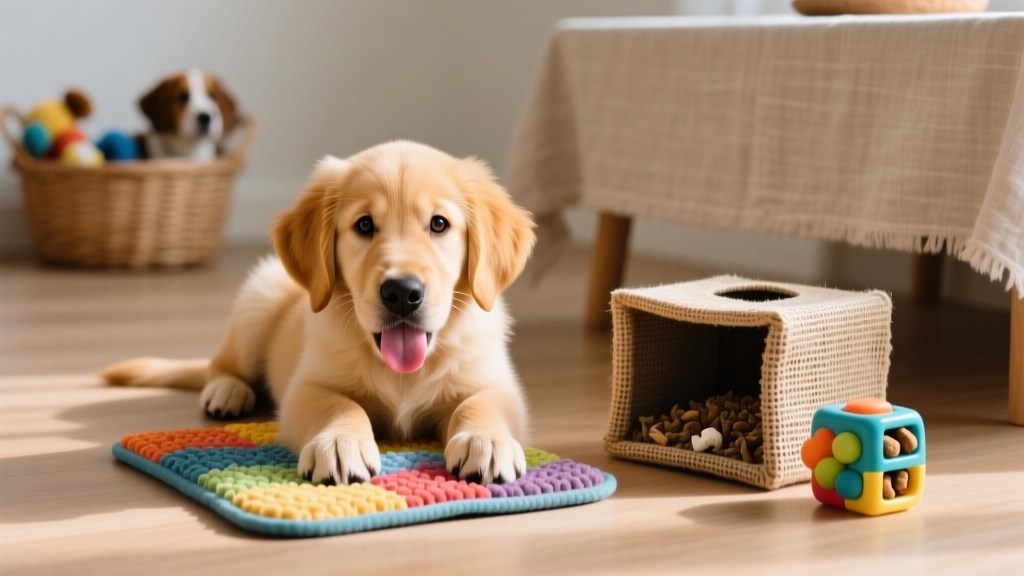
How Long to Potty Train a Puppy
How long to potty train a puppy? Get a realistic week-by-week timeline, age-specific milestones, feeding schedules, vaccination plans, and first-year cost breakdown.

Every new puppy owner asks the same question within the first 48 hours: how long to potty train a puppy? The honest answer isn't a single number — it depends on your puppy's breed size, age when you bring them home, your consistency, and bladder physiology that changes dramatically week by week. Most puppies achieve reliable house training between 4 and 6 months of age, but smaller breeds may take up to 8–10 months due to smaller bladder capacity and faster metabolisms.
This guide walks you through every critical developmental stage from week 4 through month 12, with concrete expectations for potty training progress, feeding, vaccinations, socialization, and the real costs you'll face in year one. Whether you're bringing home a Labrador Retriever, a French Bulldog, or a Chihuahua mix, you'll find actionable timelines calibrated to breed size.
When Should I Bring My Puppy Home?
The American Veterinary Medical Association (AVMA) and most veterinary behaviorists agree: puppies should remain with their mother and littermates until at least 8 weeks of age, with 8–10 weeks being the ideal window for most breeds. Some responsible breeders of toy and small breeds retain puppies until 10–12 weeks to allow additional maturation.
Here's why timing matters for potty training specifically:
| Age at Homecoming | Potty Training Impact | Considerations |
|---|---|---|
| Before 7 weeks | Significantly harder — puppy lacks bladder control and missed critical littermate learning | Higher risk of fear-based behavior issues; not recommended |
| 8 weeks | Standard starting point — puppy can begin learning routines immediately | Most common; expect frequent accidents first 2–4 weeks |
| 10–12 weeks | Easier start — slightly more bladder control and socialization from breeder | Common for toy breeds; may already have some surface preferences |
| 12–16 weeks | Mixed — more control but possibly entrenched habits (good or bad) from prior environment | Common for rescue puppies; may need to undo prior surface preferences |
If you're adopting from a rescue or shelter, you may not control the timing. Puppies arriving after 12 weeks sometimes have learned to eliminate on concrete, newspaper, or crate flooring — habits that take 2–4 weeks of consistent redirection to change.
Potty Training Timeline: Realistic Week-by-Week Expectations
Here's the core answer to how long to potty train a puppy, broken into developmental phases. The most common mistake owners make is expecting too much too soon. A puppy's ability to "hold it" is governed by physiology, not willpower.
Weeks 8–12: The Foundation Phase
What to expect: Accidents every 1–2 hours. Your puppy has virtually no bladder awareness yet — they simply feel the urge and go. This is not defiance; it's biology.
- Take puppy outside every 30–60 minutes during active hours
- Always go out after eating, drinking, waking from a nap, and after play sessions
- Use a consistent verbal cue ("go potty" or "do your business") said calmly while they eliminate
- Reward immediately with a high-value treat (small pieces of boiled chicken or commercial training treats like Zuke's Mini Naturals) within 2 seconds of finishing
- Expect 1–3 accidents per day even with perfect management
Weeks 12–16: Pattern Recognition
What to expect: Your puppy starts to show signs before eliminating — sniffing, circling, heading toward the door. Accidents drop to roughly 1 per day or every other day with consistent routine.
- Extend outdoor trips to every 60–90 minutes during the day
- Begin associating a specific door and outdoor spot with elimination
- Start using a bell-training system if desired (hang bells on the door handle at puppy's nose level)
- Reduce indoor supervision radius — puppy can be in the same room rather than tethered to you
Weeks 16–24: Increasing Reliability
What to expect: Most puppies in this window can hold for 3–5 hours during the day and sleep through the night (7–8 hours) without accidents. This is where most owners say their puppy is "mostly trained."
- Outdoor trips every 2–3 hours during the day
- Accidents become rare — usually 1–2 per week, often triggered by routine changes, excitement, or missed cues
- Puppy may begin signaling (sitting by door, ringing bell, whining) to go out
- Begin reducing treat frequency — reward every other successful trip, then every third
Months 6–12: Full Reliability
What to expect: By 6 months, most medium and large breed puppies are reliably house trained. Toy breeds may take until 8–10 months. Adolescent regression (marking, submissive urination) can occur between 6–9 months, especially in intact males.
- Adult schedule: 3–5 outdoor trips per day
- Accidents should be rare (less than 1 per month) — if more frequent, revisit veterinary check for UTI or other medical causes
- Spaying/neutering between 6–9 months can reduce hormone-driven marking
| Breed Size | "Mostly Trained" By | Fully Reliable By | Key Challenge |
|---|---|---|---|
| Toy (under 15 lb / 7 kg) | 5–6 months | 8–10 months | Tiny bladder; cold/rain aversion |
| Small (15–30 lb / 7–14 kg) | 4–5 months | 6–8 months | Excitement urination common |
| Medium (30–65 lb / 14–29 kg) | 4–5 months | 6 months | Adolescent marking in males |
| Large (65–100 lb / 29–45 kg) | 4–5 months | 6 months | Higher volume = bigger messes |
| Giant (over 100 lb / 45 kg) | 4–5 months | 6–7 months | Slower maturation overall |
Potty Training Troubleshooting: Common Setbacks
Sudden increase in accidents after weeks of success? Rule out medical causes first. Urinary tract infections, parasites (giardia, coccidia), and dietary changes can all cause increased urgency. A urinalysis at your vet typically costs $45–$75.
Puppy only goes on pee pads indoors? Gradually move the pad closer to the door over 5–7 days, then place it just outside the door, then remove it. This surface-preference transition takes patience but works reliably.
Accidents only when left alone? This is often separation anxiety, not a potty training failure. A puppy who is reliable when supervised but eliminates when isolated needs a different behavioral approach — consult a certified positive-reinforcement trainer or veterinary behaviorist.
Feeding Schedule by Age and Weight
Feeding directly impacts potty training because puppies typically need to eliminate 15–30 minutes after eating. A consistent feeding schedule creates a predictable elimination schedule. Free-feeding (leaving food out all day) makes potty training significantly harder.
| Age | Meals Per Day | Toy Breed (5–12 lb) | Small Breed (13–30 lb) | Medium Breed (31–65 lb) | Large Breed (66–100 lb) |
|---|---|---|---|---|---|
| 8–12 weeks | 4 | ¼–½ cup/day | ½–¾ cup/day | ¾–1¼ cups/day | 1¼–2 cups/day |
| 3–6 months | 3 | ⅓–¾ cup/day | ¾–1½ cups/day | 1½–2½ cups/day | 2½–4 cups/day |
| 6–12 months | 2 | ½–¾ cup/day | 1–1¾ cups/day | 2–3 cups/day | 3–5 cups/day |
Important: These are starting estimates. Always check the feeding guide on your specific food brand, as calorie density varies significantly between formulas. A puppy food with 400 kcal/cup requires smaller portions than one with 325 kcal/cup. Monitor your puppy's body condition score (BCS) — you should feel ribs easily without pressing hard, and see a visible waist from above.
Potty training feeding tip: Pick up food after 15–20 minutes at each meal. Remove water 2 hours before bedtime to reduce overnight accidents. Always provide fresh water during the day — never restrict daytime water to manage potty accidents.
Vaccination Schedule and When Your Puppy Can Go Outside
One of the most common questions new owners ask is: when can my puppy go outside or meet other dogs? The answer requires balancing disease protection with the critical socialization window. According to the American Kennel Club (AKC) and the AAHA canine vaccination guidelines, here's the standard core vaccine schedule:
| Age | Vaccines Given | What It Protects Against | Estimated Cost |
|---|---|---|---|
| 6–8 weeks | DHPP (1st dose), Bordetella (optional) | Distemper, Hepatitis (Adenovirus), Parainfluenza, Parvovirus | $25–$50 |
| 10–12 weeks | DHPP (2nd dose), Leptospirosis (1st, optional), Lyme (1st, risk-area) | Boosted core protection; Lepto if recommended | $30–$60 |
| 14–16 weeks | DHPP (3rd dose), Rabies (legally required) | Final core booster; Rabies (1-year or 3-year per local law) | $35–$70 |
| 12–16 months | DHPP booster, Rabies booster | Adult booster schedule begins | $40–$80 |
- Immediately (carried): You can carry your puppy in your arms or a sling to experience outdoor sights and sounds from day one
- After 2nd DHPP (around 12 weeks): Short walks in low-risk areas (your own yard, quiet sidewalks) — avoid dog parks and high-traffic dog areas
- After final DHPP + 1 week (around 17 weeks): Full outdoor access including dog parks, group walks, and puppy classes with other vaccinated dogs
The American Veterinary Society of Animal Behavior (AVSAB) recommends that puppies begin socialization classes as early as 7–8 weeks, provided they have received at least one set of vaccines and a deworming. The risk of behavioral problems from inadequate socialization outweighs the disease risk in controlled class environments.
The Critical Socialization Window: Weeks 3–14
The socialization window — roughly weeks 3 through 14 of life — is the single most important developmental period for your puppy's long-term behavior. During this window, puppies form lasting impressions about what is safe, normal, and acceptable. After 14 weeks, unfamiliar stimuli are more likely to trigger fear responses rather than curiosity.
Since most puppies go home at 8 weeks, you have approximately 6 weeks of prime socialization time to expose your puppy to as many positive experiences as possible. Here's a practical checklist organized by category:
Socialization Exposure Checklist (Weeks 8–14)
People (aim for 50+ positive encounters):
- Children of various ages (supervised, gentle interactions only)
- Adults wearing hats, sunglasses, uniforms, hoodies
- People using wheelchairs, crutches, walkers, or canes
- People of different heights, builds, skin tones, and genders
- People carrying umbrellas, bags, or large objects
Surfaces and environments:
- Grass, gravel, sand, metal grates, wet pavement
- Elevator rides, staircases (carry small puppies down stairs)
- Car rides (short trips to positive destinations, not just the vet)
- Grooming tables, examination tables (practice at home with a raised surface)
Sounds (play recordings at low volume, pair with treats):
- Thunder, fireworks, sirens, vacuum cleaners
- Doorbells, knocking, clapping, shouting
- Construction noise, traffic, lawnmowers
Handling and body awareness:
- Touching paws, ears, mouth, tail, belly
- Gentle restraint (simulate vet exam holds)
- Nail clipping practice (touch clippers to nails without cutting, treat)
- Toothbrush introduction (finger brush with peanut butter)
Other animals (only with fully vaccinated, known-temperament animals):
- Calm adult dogs of various sizes
- Puppy socialization classes (structured, supervised)
- Cats or other household pets (controlled introductions)
The golden rule of socialization: Every new experience must be positive or neutral. If your puppy shows fear (cowering, tail tucking, freezing), increase distance from the stimulus, offer high-value treats, and let them approach at their own pace. Never force a frightened puppy to "face their fears" — this creates lasting negative associations.
Crate Training Progression and Time Limits
Crate training supports potty training because dogs naturally avoid soiling their sleeping area. But crating only works if the crate is the right size and the time limits are appropriate for your puppy's age. A crate that's too large allows a puppy to eliminate in one corner and sleep in another.
| Puppy Age | Max Daytime Crate Time | Max Overnight Crate Time | Notes |
|---|---|---|---|
| 8–10 weeks | 30–60 minutes | 3–4 hours | Set overnight alarm; expect 1–2 wake-ups |
| 11–14 weeks | 1–2 hours | 4–5 hours | May still need one overnight bathroom break |
| 15–16 weeks | 2–3 hours | 5–6 hours | Many puppies sleep through the night now |
| 4–6 months | 3–4 hours | 7–8 hours | Should be sleeping through the night |
| 6+ months | 4–5 hours | 8 hours | Do not exceed 5 hours daytime without a break |
Crate sizing guide: The crate should be large enough for your puppy to stand up, turn around, and lie down comfortably — no more. For growing puppies, buy a crate sized for their expected adult weight and use the included divider panel to reduce the space as they grow. Common sizes: 24-inch crate for toy breeds, 30-inch for small breeds, 36-inch for medium breeds, 42-inch for large breeds, 48-inch for giant breeds.
Nighttime whining protocol: If your puppy whines at night, wait 2–3 minutes to see if they settle. If whining continues, take them out on leash (no play), let them eliminate, then immediately return to the crate. This teaches that whining leads to bathroom breaks, not playtime. If they don't eliminate, they were seeking attention — return them to the crate calmly.
Teething Timeline and Safe Relief Strategies
Puppy teething occurs in two waves. The first set of 28 deciduous (baby) teeth erupt between 3 and 6 weeks of age — usually completed before your puppy comes home. The more challenging phase begins around 3–4 months when adult teeth push out the baby teeth, lasting until approximately 6–7 months when all 42 adult teeth are in place.
During the 3–6 month teething window, expect increased chewing, mild gum bleeding (normal — you may see pink-tinged drool or spots on chew toys), and occasional reluctance to eat hard kibble.
Safe teething relief options:
- Frozen washcloth: Wet a clean washcloth, twist into a rope, freeze for 2 hours. Supervise use and remove when pieces start tearing off.
- KONG Classic (puppy rubber, pink/blue): Stuff with a mix of plain yogurt and mashed banana, freeze overnight. The KONG Puppy size costs approximately $8–$12 and is sized for puppies under 35 lb.
- Benebone Puppy Wishbone: Made from softer nylon designed for developing teeth, approximately $13–$16. Replace when worn down more than 25%.
- Chilled carrots: Whole large carrots (not baby carrots, which are a choking hazard for small puppies) refrigerated for 2 hours provide a crunchy, low-calorie chew.
Avoid: Ice cubes (can fracture teeth in larger breeds), rawhide chews (choking and intestinal blockage risk), hard antlers or weight-bearing bones from large animals (tooth fracture risk), and any chew toy small enough to be swallowed whole.
Common Puppy Problems and Solutions
Puppy Biting and Nipping
Why it happens: Puppies explore the world with their mouths, and littermates teach bite inhibition through yelping and withdrawing play. When you bring a puppy home at 8 weeks, they haven't finished learning how hard is "too hard."
What to do:
- When teeth touch skin, say "ouch" in a calm, slightly high-pitched tone and immediately withdraw attention for 10–15 seconds (stand up, turn away, or step behind a baby gate)
- Redirect to an appropriate chew toy the moment they stop — reward chewing the toy with praise
- Never hold the puppy's mouth shut, yell, or use physical punishment — these methods increase fear and can escalate biting
- If biting is intense and persistent (common with herding breeds like Australian Shepherds and Border Collies), provide structured outlet activities: tug games with rules, flirt pole sessions, and frozen chew toys
- Biting typically decreases significantly by 5–6 months as adult teeth come in and impulse control improves
Excessive Whining and Crying
Context matters: Whining in the crate at night is different from whining during the day when you're eating. Address the root cause:
- Crate whining (first 2–3 weeks): Normal adjustment. Place crate in your bedroom initially, use a heartbeat toy (Snuggle Puppy brand, approximately $30–$40) or a ticking clock wrapped in a towel. Gradually move the crate to the desired permanent location over 1–2 weeks.
- Attention whining: Ignore completely — no eye contact, no talking, no touching. Reward the moment they are quiet for 3+ seconds.
- Need-based whining: If your puppy whines after being crated for 2+ hours, they likely need to eliminate. Take them out immediately.
Destructive Chewing
Puppies chew to explore, relieve teething discomfort, and burn energy. Management is more effective than correction:
- Puppy-proof your home: use bitter apple spray ($8–$12) on baseboards and furniture legs, keep shoes in closed closets, use cord protectors on electrical wires
- Provide a rotation of 4–6 approved chew toys — rotate every 2–3 days to maintain novelty
- Ensure adequate physical exercise (see age-appropriate guidelines below) and mental stimulation (food puzzles, snuffle mats, short training sessions)
First-Year Cost Breakdown
Budgeting realistically prevents sticker shock. These ranges reflect 2025–2026 national averages and vary by region (urban areas typically cost 20–40% more than rural areas).
| Category | Low Estimate | Average Estimate | High Estimate | Details |
|---|---|---|---|---|
| Veterinary (vaccines, exams, spay/neuter) | $400 | $700 | $1,200 | Includes 3 puppy visits, rabies, DHPP series, fecal tests, heartworm prevention, spay/neuter |
| Food (puppy formula) | $250 | $500 | $900 | Varies greatly by breed size and food quality tier |
| Supplies (crate, bed, leash, collar, bowls, toys) | $150 | $300 | $600 | One-time purchases; includes puppy-proofing items |
| Training (group classes or private sessions) | $100 | $300 | $800 | Group puppy class ($100–$200/6 weeks) vs. private ($75–$150/session) |
| Preventive medications (flea/tick, heartworm) | $150 | $250 | $400 | Monthly preventives like NexGard, Simparica Trio, or Heartgard |
| Pet insurance (optional but recommended) | $300 | $500 | $800 | $25–$65/month depending on breed, deductible, and coverage level |
| TOTAL | $1,350 | $2,550 | $4,700 | Does not include purchase/adoption fee or emergency vet visits |
Emergency fund recommendation: Set aside an additional $500–$1,500 for unexpected veterinary emergencies. Puppies are prone to foreign body ingestion (socks, toys, rocks), parvovirus exposure (especially before full vaccination), and traumatic injuries. A single emergency visit with diagnostics and treatment can easily cost $1,000–$5,000.
Frequently Asked Questions
When will my puppy be fully potty trained?
Most puppies are reliably house trained by 4–6 months of age with consistent management. Toy breeds may take 8–10 months due to smaller bladder capacity. "Fully trained" means fewer than one accident per month under normal conditions. If your puppy is older than 7 months and still having frequent accidents, consult your veterinarian to rule out medical causes such as urinary tract infections, ectopic ureters, or diabetes.
How often should I feed my puppy?
Feed 4 meals per day from 8–12 weeks, 3 meals per day from 3–6 months, and 2 meals per day from 6 months onward. Consistent meal timing creates predictable elimination patterns, which directly accelerates potty training. Space meals evenly throughout the day (e.g., 7 AM, 12 PM, 5 PM, 9 PM for four meals).
How do I stop puppy biting and nipping?
Use the "ouch and redirect" method: when teeth touch skin, say "ouch" calmly, withdraw attention for 10–15 seconds, then offer an appropriate chew toy. Ensure your puppy gets adequate physical exercise (5 minutes of structured exercise per month of age, twice daily is a common guideline) and mental stimulation. Never use physical punishment, which can increase fear-based aggression. Most puppy biting diminishes naturally by 5–6 months as adult teeth erupt and impulse control develops.
When can my puppy meet other dogs?
Controlled introductions with fully vaccinated, known-temperament adult dogs can begin after your puppy's first DHPP vaccine at 6–8 weeks. Avoid dog parks, pet store floors, and high-traffic dog areas until 1 week after the final DHPP booster (approximately 17 weeks of age). Enroll in a structured puppy socialization class where all participants are vaccinated — the AVSAB considers these classes safe and essential during the socialization window.
Should I use pee pads for potty training?
Pee pads can be useful for apartment dwellers on high floors, owners with mobility limitations, or toy breeds in extreme climates. However, they teach the puppy to eliminate indoors on fabric-like surfaces, which can slow the transition to outdoor elimination. If you use pads, place them near the exit door and gradually move them outside over 2–3 weeks. For most owners, direct outdoor training from day one produces faster, more reliable results.
My puppy was potty trained and suddenly started having accidents again — what happened?
Adolescent regression is common between 6–9 months, especially in intact males beginning to mark territory. Spaying or neutering can reduce hormone-driven marking. However, always rule out medical causes first: sudden accidents in a previously trained puppy warrant a veterinary urinalysis ($45–$75) to check for UTIs, crystals, or other conditions. Environmental changes (moving house, new family member, schedule disruption) can also trigger temporary setbacks — maintain your routine and reinforce basics.
Potty training a puppy is a marathon, not a sprint. The timeline from first homecoming to full reliability typically spans 4–6 months for most breeds, and up to 10 months for toy breeds. The single most impactful factor is your consistency — puppies thrive on predictable schedules for feeding, elimination, play, and rest. Track your progress, celebrate small wins, and remember that every accident is data, not failure. If you're struggling beyond the timelines described here, a certified professional dog trainer (CPDT-KA or IAABC-certified) can provide personalized guidance using force-free, positive reinforcement methods.
Jonas Cole
All our authors care for dogs every day — read more of their work on the authors page.