How Long Can Puppies Hold Their Pee? A Week-by-Week Potty Training Guide
How long can puppies hold their pee at each age? This week-by-week guide covers bladder capacity, potty schedules, crate limits, and realistic training timelines.

Every new puppy parent asks the same desperate question at 3 AM: how long can puppies hold their pee? The answer changes almost weekly as your puppy grows, and getting it wrong means accidents on your rug — or worse, a puppy left in a crate too long. This guide breaks down bladder capacity by age, builds you a realistic potty schedule, and layers in the feeding, vaccination, and socialization milestones that directly affect house training success.
Bladder Capacity by Age: What to Actually Expect
Puppy bladder development is physical, not behavioral. No amount of training will override a bladder that hasn't grown enough to hold more urine. Here is what the physiology looks like at each stage, based on veterinary developmental timelines referenced in the Merck Veterinary Manual.
| Age | Max Daytime Hold | Max Overnight Hold | Crate Limit | Outings per 24 hrs |
|---|---|---|---|---|
| 8 weeks | 1–2 hours | 3–4 hours | 2 hours max | 10–12 |
| 10 weeks | 2 hours | 4–5 hours | 2 hours max | 8–10 |
| 12 weeks | 3 hours | 5–6 hours | 3 hours max | 7–9 |
| 16 weeks | 4 hours | 6–7 hours | 4 hours max | 5–7 |
| 6 months | 5–6 hours | 7–8 hours | 5 hours max | 4–5 |
| 12 months | 6–8 hours | 8–10 hours | 6–8 hours | 3–4 |
Key nuance: These numbers assume the puppy is resting or in a crate. Active play, excitement, and drinking large amounts of water compress these windows significantly. A puppy that just gulped a bowl of water or had an intense play session may need to go within 15–20 minutes regardless of age.
The First 24 Weeks: Age-Specific Potty Milestones
Weeks 4–8: Pre-Home Period (Still with Breeder)
During this period, puppies are learning substrate preferences — they begin to associate certain surfaces (grass, gravel, newspaper) with elimination. Responsible breeders introduce a designated potty area in the whelping box by week 4. You have no direct control here, but asking your breeder what surface they use will help you replicate it at home and reduce confusion during the transition.
Weeks 8–12: The Foundation Window
This is when most puppies come home, and it's the most accident-prone period. Expect 8–12 bathroom trips per day. Your job is pattern-building: take the puppy out at the same trigger points every single time — immediately upon waking, within 10 minutes of eating, after every play session, and before crating. Use a consistent verbal cue like "go potty" and reward with a high-value treat (freeze-dried liver or small pieces of boiled chicken) within 2 seconds of elimination. Timing matters enormously here; a treat given 10 seconds late reinforces whatever the puppy was doing at second 10, not the potty act.
Weeks 12–16: Growing Capacity, Growing Confidence
Bladder control improves noticeably. You can stretch daytime intervals to 3 hours, and many puppies sleep 5–6 hours overnight without an accident. This is also when puppies start to "ask" to go out — pawing at the door, whining, or pacing. Watch for these signals and respond immediately. If you miss them, the puppy learns that signaling doesn't work and reverts to going indoors.
Weeks 16–24: The Regression Trap
Many owners think their puppy is "fully trained" by 16 weeks and then relax their schedule — only to face a wave of new accidents between 18–24 weeks. This regression coincides with teething discomfort, increased independence, and the onset of adolescent hormonal changes (especially in intact dogs). Maintain your schedule and don't increase freedom prematurely. If accidents resume, go back to the 12-week protocol for 5–7 days before gradually extending intervals again.
Months 6–12: Adolescent Consolidation
By 6 months, most puppies can hold it for 5–6 hours during the day and sleep through the night. Small breeds (under 20 lb / 9 kg) may take longer to fully mature — their bladders are physically smaller, and some toy breeds don't achieve reliable overnight control until 8–10 months. Large breeds typically consolidate faster. True reliability — meaning fewer than 1–2 accidents per month — usually arrives between 8 and 12 months, not at 16 weeks as some training programs imply.
Feeding Schedule: How Meals Drive the Potty Clock
Food intake directly controls elimination frequency. A structured feeding schedule is the single most effective tool for predicting when your puppy needs to go out. Free-feeding (leaving food out all day) makes potty training dramatically harder because you can't predict output timing.
| Age | Meals per Day | Portion Guide (per meal)* | Potty Trip After Eating |
|---|---|---|---|
| 8–12 weeks | 3–4 | ¼–½ cup (small breed) / ½–1 cup (large breed) | Within 10–20 min |
| 12–16 weeks | 3 | ⅓–¾ cup (small) / ¾–1½ cups (large) | Within 15–25 min |
| 4–6 months | 2–3 | ½–1 cup (small) / 1–2 cups (large) | Within 15–30 min |
| 6–12 months | 2 | ¾–1½ cups (small) / 1½–3 cups (large) | Within 20–30 min |
*Portion ranges are approximate and vary by kibble caloric density and individual puppy metabolism. Always follow the feeding chart on your specific food brand and adjust based on body condition score (BCS). Your veterinarian can help you determine the right amount for your puppy's target adult weight.
Crate Training: Time Limits That Protect Bladder Health
A crate is one of the most effective potty training tools because dogs instinctively avoid soiling their sleeping space. But there's a critical limit: if you leave a puppy crated longer than their bladder can hold, they will soil the crate — and then they learn that soiling their sleeping area is acceptable, which undermines the entire training process.
Follow the "month plus one" rule for maximum crate time: a puppy can be crated for their age in months plus one hour. An 8-week-old (2-month) puppy: 3 hours maximum. A 4-month-old: 5 hours maximum. These are absolute ceilings, not targets. Shorter is always better.
Crate progression schedule:
- 8–10 weeks: 30–60 minutes at a time during the day; 3–4 hours overnight with a mid-night potty break
- 10–14 weeks: 1–2 hours during the day; 4–5 hours overnight (you may still need one nighttime break)
- 14–18 weeks: 2–3 hours during the day; 5–6 hours overnight (many puppies drop the night break here)
- 18–24 weeks: 3–4 hours during the day; 6–7 hours overnight
- 6+ months: 4–5 hours during the day; 7–8 hours overnight
If you work full-time and can't come home midday, arrange a dog walker, neighbor, or pet sitter for a midday break. Leaving a 10-week-old puppy crated for 8 hours is not a training problem — it's a bladder physiology problem, and no puppy can solve it.
Socialization Window: Weeks 3–14 Exposure Checklist
The AKC emphasizes that the primary socialization window closes around 14 weeks. Missing this window doesn't mean your dog is doomed, but it does mean behaviors like fear of strangers, surface anxiety, and noise sensitivity become much harder to address later. Potty training and socialization overlap because a stressed or overstimulated puppy will have more accidents — and because you need your puppy comfortable eliminating in varied environments, not just your backyard.
Socialization exposure checklist (aim for all items before 14 weeks):
- Walk on at least 5 different surfaces (grass, gravel, tile, carpet, wet pavement)
- Meet 10+ unfamiliar people of varying ages, sizes, and appearances
- Encounter 5+ calm, vaccinated adult dogs (no dog parks until fully vaccinated)
- Hear common household sounds at low volume: vacuum, blender, doorbell, thunderstorm recordings
- Ride in a car at least 5 times (short trips, not just vet visits)
- Experience being handled: paws touched, ears examined, mouth opened, nails clipped
- Visit 3+ public locations where dogs are allowed (patio, hardware store, park bench)
- Practice pottying on leash and in at least 2 locations outside your yard
Carry your puppy in public areas before vaccinations are complete — don't let them walk on ground where unknown dogs have been. The AVMA recommends balancing disease risk against the behavioral damage of under-socialization, which is why controlled exposure (carrying, puppy classes with vaccination requirements) is preferred over total isolation.
Vaccination Schedule: What Your Puppy Needs and When
Vaccination timing directly affects your potty training routine because it determines where your puppy can safely eliminate outdoors. Until the full DHPP series is complete (typically around 16 weeks), avoid areas with high dog traffic — dog parks, pet store floors, and public sidewalks with heavy dog waste.
| Age | Vaccine | Purpose | Est. Cost |
|---|---|---|---|
| 6–8 weeks | DHPP (1st dose) | Distemper, Hepatitis, Parainfluenza, Parvovirus | $20–$40 |
| 10–12 weeks | DHPP (2nd dose) + Bordetella | Booster + Kennel Cough | $30–$60 |
| 14–16 weeks | DHPP (3rd dose) + Rabies | Final puppy booster + Rabies (legally required) | $35–$70 |
| 12–16 months | DHPP + Rabies booster | 1-year booster | $40–$80 |
Optional vaccines your vet may recommend based on lifestyle: Leptospirosis, Lyme disease, and canine influenza (H3N2/H3N8). Discuss these with your veterinarian based on your geographic area and your dog's exposure risk.
When can your puppy go outside and meet other dogs? Your puppy can explore your own fenced yard immediately (assuming no unknown dogs use it). Public outdoor potty areas are safer after the second DHPP dose at 10–12 weeks, but full protection isn't achieved until 1–2 weeks after the third dose at 16 weeks. Controlled playdates with known, fully vaccinated dogs are acceptable from 8 weeks onward; avoid dog parks until the full series is complete.
Teething Timeline: Months 3–6 and How It Affects Training
Teething doesn't directly affect bladder control, but it creates behavioral disruptions that spill over into potty training. A teething puppy is uncomfortable, distracted, and more likely to have accidents because they're focused on chewing everything in sight rather than signaling they need to go out.
Teething progression:
- 3–4 months: Deciduous (baby) incisors begin falling out; you may find tiny teeth on the floor
- 4–5 months: Canines and premolars loosen; chewing intensity peaks
- 5–6 months: Adult teeth fully erupt; chewing behavior gradually decreases
Safe relief strategies:
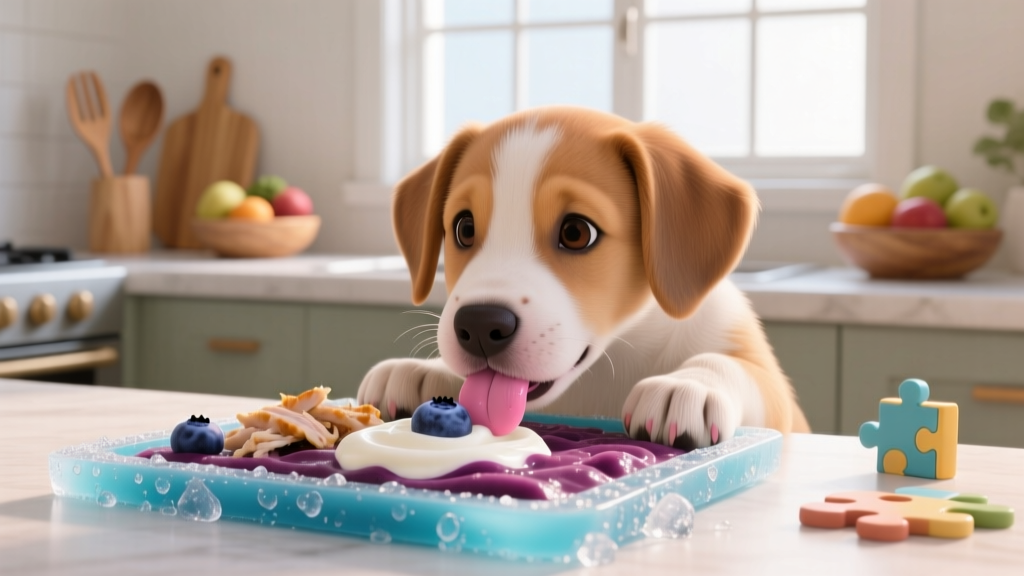
- Frozen Kong Classic (rubber, stuff with plain pumpkin puree and freeze 2 hours) — $15–$20
- Benebone Puppy Chew (nylon, bacon-flavored, sized by weight) — $12–$18
- Wet washcloth twisted and frozen (supervise to prevent fabric ingestion)
- Nylabone Puppy Chew (softer formula for developing teeth) — $6–$10
Common Puppy Problems: Biting, Whining, and Accidents
Puppy Biting and Nipping
Puppies explore the world with their mouths, and bite inhibition is learned through feedback. When your puppy nips your hand, let out a high-pitched "ow" and immediately withdraw attention for 10–15 seconds (stand up, turn away, or step behind a baby gate). Resume play and redirect to an appropriate chew toy. Consistency across all household members is essential — if one person allows mouthing and another punishes it, the puppy can't learn the rule. Never use physical punishment, alpha rolls, or muzzle-holding; these increase fear-based biting. The AKC recommends positive redirection as the gold standard for bite inhibition training.
Crate Whining
First, rule out a potty need. If the puppy was recently out and is whining in the crate, wait for 30–60 seconds of silence before opening the door — even if you have to wait out a 5-minute tantrum. Opening the crate during whining teaches the puppy that noise equals freedom. Cover the crate with a light blanket to reduce visual stimulation, and use a white noise machine or Snuggle Puppy (a plush toy with a heartbeat simulator, ~$35–$45) to ease nighttime anxiety.
Destructive Chewing
Puppies chew for 4–6 months as teeth develop and jaw muscles strengthen. Puppy-proof your home by removing shoes, cords, and low-shelf items. Provide 3–5 rotating chew toys so novelty is maintained. If you catch the puppy chewing something inappropriate, calmly redirect to an approved toy and praise enthusiastically when they take it.
First-Year Cost Breakdown: Budgeting for Your Puppy
| Category | Low Estimate | Mid Estimate | High Estimate |
|---|---|---|---|
| Veterinary (vaccines, spay/neuter, wellness exams, fecal tests, heartworm prevention) | $400 | $700 | $1,200 |
| Food (quality kibble, treats for training) | $300 | $500 | $800 |
| Supplies (crate, bed, leash, collar, bowls, toys, gates, enzymatic cleaner) | $200 | $400 | $700 |
| Training (group classes or private sessions) | $100 | $300 | $800 |
| Pet insurance (optional but recommended) | $300 | $500 | $700 |
| Grooming (breed-dependent) | $0 | $300 | $800 |
| Total First Year | $1,300 | $2,700 | $5,000 |
Emergency veterinary visits are not included above. A single ER visit for something like parvovirus treatment or foreign body ingestion can cost $1,500–$6,000+. Pet insurance premiums average $35–$55/month for puppies and can reimburse 70–90% of unexpected costs.
Frequently Asked Questions
When should I bring my puppy home?
The ideal age is 8–10 weeks. Puppies separated before 8 weeks miss critical littermate socialization (bite inhibition, conflict resolution) that breeders facilitate. Some breeders of toy breeds keep puppies until 10–12 weeks due to fragility and hypoglycemia risk. Avoid puppies offered at 5–6 weeks — this is a red flag for irresponsible breeding.
How often should I feed my puppy?
At 8–12 weeks: 3–4 meals per day. At 12–24 weeks: 3 meals per day. At 6+ months: transition to 2 meals per day. Giant breeds (Great Danes, Mastiffs) should stay on 3 meals longer to reduce bloat risk — consult your vet for breed-specific guidance.
When will my puppy be fully potty trained?
Most puppies achieve reliable daytime control by 4–6 months and overnight control by 6–8 months. Full reliability (rare accidents) typically arrives between 8–12 months. Small breeds may take 2–3 months longer due to smaller bladder capacity. If your puppy is still having daily accidents past 6 months, consult your veterinarian to rule out urinary tract infections or anatomical issues.
How do I stop puppy biting and nipping?
Use the redirect method: when teeth touch skin, say "ow" in a high pitch, withdraw attention for 10–15 seconds, then offer an appropriate chew toy. Reward chewing the toy with calm praise. Ensure all family members follow the same protocol. Expect 3–6 weeks of consistent practice before significant improvement. Enroll in a positive-reinforcement puppy class (typically $120–$200 for a 6-week course) for guided bite inhibition work with other puppies.
When can my puppy go outside and meet other dogs?
Your own yard is safe immediately. Public areas should be limited until the second DHPP vaccine at 10–12 weeks, and dog parks should wait until 1 week after the final DHPP at 16 weeks. Controlled playdates with known, vaccinated dogs can begin at 8 weeks and are actively encouraged during the socialization window. Puppy kindergarten classes that require proof of first vaccination are an excellent option from 10 weeks onward.
House training a puppy is a marathon, not a sprint. The puppies who succeed aren't the ones with the smartest owners — they're the ones with the most consistent owners. Stick to the schedule, celebrate the small wins, and remember that every accident is data, not failure. If you're struggling, a certified positive-reinforcement trainer can troubleshoot your specific situation in just one or two sessions.
Jonas Cole
All our authors care for dogs every day — read more of their work on the authors page.