GSP Puppy Guide: Milestones, Feeding, Training & First-Year Costs
GSP puppy guide: milestones, feeding, training, vaccinations, socialization, and first-year costs for German Shorthaired Pointer owners.

When Should You Bring Your GSP Puppy Home?
German Shorthaired Pointers are high-drive sporting dogs, and the timing of your puppy's transition to your home matters more than with many breeds. The AKC recommends that puppies stay with their littermates and dam until at least 8 weeks of age — but for GSPs, many experienced breeders prefer 8.5 to 9 weeks. The extra days allow the puppy to complete critical bite-inhibition learning from siblings and develop early impulse control through litter play.
Bringing a GSP puppy home before 7 weeks increases the risk of separation anxiety, poor bite inhibition, and fear-based reactivity later in life. If your breeder offers a 9-week release, take it. That single extra week coincides with a developmental fear period (weeks 8–10) where the puppy benefits from the stability of familiar surroundings before facing the stimulus overload of a new home.
Veterinary note: Schedule your puppy's first wellness exam within 48–72 hours of bringing them home. Your vet will establish a baseline weight, check for congenital issues like umbilical hernias or heart murmurs, and set up a tailored vaccination plan. Always consult your veterinarian before making health decisions for your puppy.
GSP Puppy Development Milestones by Age
German Shorthaired Pointers mature physically faster than many breeds but remain mentally adolescent well into their second year. Here is what to expect at each stage:
Weeks 4–8: Litter Life and Early Learning
At this stage your GSP puppy is still with the breeder. Eyes and ears are fully functional. Puppies begin learning bite inhibition from siblings, practicing prey-drive behaviors (stalking, pouncing on littermates), and starting to explore solid food. A responsible breeder will begin early neurological stimulation (ENS) and introduce novel textures, sounds, and mild environmental challenges. Expect your puppy to weigh approximately 5–8 lb (2.3–3.6 kg) at 8 weeks.
Weeks 8–12: The Adjustment Window
This is your puppy's first period home. GSP puppies at this age are bold, curious, and mouthy. Expect 18–20 hours of sleep per day, punctuated by intense bursts of energy lasting 10–20 minutes. Your puppy will test boundaries constantly. Weight at 12 weeks: roughly 12–18 lb (5.4–8.2 kg). Coordination is still developing — clumsy movements and frequent tripping are normal.
Weeks 12–16: Confidence and Challenge
Your GSP puppy's confidence surges during this window. This is prime time for foundational obedience — sit, down, recall, and leash introduction. The second fear period (around 12–14 weeks) may cause temporary skittishness around previously familiar stimuli. Keep exposures positive; never force a fearful puppy to confront something. Weight at 16 weeks: approximately 20–30 lb (9–13.6 kg).
Weeks 16–24: The Adolescent Shift
GSP puppies enter a rebellious phase. Recall reliability often drops. Prey drive intensifies — you may notice your puppy locking onto squirrels, birds, or joggers with newfound intensity. Teething peaks around months 4–6. Weight at 6 months: roughly 35–50 lb (16–23 kg). This is the stage where many first-time GSP owners feel overwhelmed; consistency in training pays dividends here.
Months 6–12: Physical Maturity, Mental Adolescence
Your GSP will approach adult size (males: 55–70 lb / 25–32 kg; females: 45–60 lb / 20–27 kg) but remain mentally immature. Impulse control is still developing. This is an ideal window for introducing structured activities like intro-to-agility, nosework, or field conditioning. Expect testing of household rules — counter-surfing, jumping, and selective deafness on recall are common. Full mental maturity arrives around 2–3 years.
Feeding Schedule: Exact Portions by Age and Weight
GSPs are athletic, high-metabolism dogs that need consistent nutrition to fuel growth without promoting rapid weight gain (which stresses developing joints). Feed a large-breed puppy formula that meets AAFCO standards for growth. Look for guaranteed analysis showing minimum 22% protein and 8% fat for puppy maintenance.
| Age | Meals Per Day | Approximate Daily Amount (Large-Breed Puppy Kibble) | Notes |
|---|---|---|---|
| 8–12 weeks | 3–4 meals | 1.5–2 cups (total daily) | Soak kibble in warm water for first week if transitioning |
| 12–16 weeks | 3 meals | 2–2.5 cups | Monitor body condition score; ribs should be palpable but not visible |
| 4–6 months | 2–3 meals | 2.5–3.5 cups | Transition to 2 meals/day at 6 months |
| 6–9 months | 2 meals | 3–4 cups | Adjust based on activity level and BCS |
| 9–12 months | 2 meals | 3.5–4.5 cups | Begin considering transition to adult formula at 12 months |
Important: These are starting guidelines. Individual caloric needs vary by metabolism, activity level, and the specific kibble's caloric density. A cup of one brand may contain 350 kcal while another contains 450 kcal. Always read the feeding chart on your food's packaging and adjust based on your puppy's body condition score (BCS). Your vet can help you calibrate portions at each wellness visit.
How Often Should I Feed My GSP Puppy?
At 8–12 weeks: 3 to 4 meals per day, spaced evenly. At 12–16 weeks: 3 meals per day. From 6 months onward: 2 meals per day. GSPs are deep-chested dogs at risk for gastric dilatation-volvulus (bloat), so avoid feeding a single large meal. Always wait at least 60 minutes after eating before vigorous exercise.
Vaccination Schedule: What Your GSP Puppy Needs and When
Your GSP puppy receives maternal antibodies from colostrum that protect against disease in early weeks but also interfere with vaccine effectiveness. This is why puppies receive a series of vaccinations — each booster catches the immune system as maternal antibodies wane.
| Age | Vaccines | Details |
|---|---|---|
| 6–8 weeks | DHPP (1st dose) | Distemper, Hepatitis (Adenovirus), Parainfluenza, Parvovirus. Often administered by breeder. |
| 10–12 weeks | DHPP (2nd dose), Bordetella (optional) | Bordetella (kennel cough) recommended if puppy will attend group classes or boarding. |
| 14–16 weeks | DHPP (3rd dose), Rabies | Rabies is legally required in most US states. Some vets administer at 12 weeks depending on local law. |
| 12–16 months | DHPP booster, Rabies booster | First annual boosters. After this, DHPP may move to 3-year intervals per AVMA guidelines. |
Lifestyle vaccines to discuss with your vet: Leptospirosis (recommended if your GSP will hunt, hike near standing water, or live in areas with wildlife), Lyme disease (tick-endemic regions), and Canine Influenza (if boarding or attending dog events frequently).
When Can My GSP Puppy Go Outside and Meet Other Dogs?
Until your puppy completes the DHPP series (final dose at 14–16 weeks), they are vulnerable to parvovirus, which can survive in soil for over a year. You can carry your puppy in public spaces (stores, outdoor cafes) for socialization, but avoid dog parks, pet store floors, and areas where unknown dogs defecate. After the 16-week DHPP booster, wait 5–7 days for immune response, then your puppy can safely explore public spaces and meet fully vaccinated dogs. Puppy socialization classes that require proof of vaccination are generally safe from 10 weeks onward.
Socialization Window: Weeks 3–14 Exposure Checklist
The primary socialization window for dogs closes around 12–14 weeks. For a breed as driven and reactive as the GSP, systematic early exposure is non-negotiable. Under-socialized GSPs are at elevated risk for leash reactivity, fear-based aggression toward strangers, and difficulty settling in novel environments.
GSP Puppy Socialization Checklist
Surfaces (walk on or touch): Grass, gravel, sand, wet pavement, metal grates, plastic tarps, hardwood floors, carpet, tile, rubber mats
Sounds (play recordings at low volume, pair with treats): Thunder, fireworks, gunshots (critical for hunting breeds), vacuum cleaner, doorbell, children screaming, traffic, clapping, metal pots banging
People (positive, treat-paired encounters): Men with beards, people wearing hats/sunglasses, children (supervised), elderly individuals, people in uniforms, people using wheelchairs or crutches, delivery workers
Animals (controlled, vaccinated only): Calm adult dogs, cats (if household has cats), livestock (if rural property)
Experiences: Car rides (start with 2-minute sessions), being touched on paws/ears/mouth/tail, nail clippers near feet (no cutting needed — just desensitize), wearing a harness, being crated with a frozen Kong, gentle restraint (for vet handling prep)
Environments: Parking lots, outdoor markets, friend's houses, empty sports fields, wooded trails (carried until vaccinated), pet-friendly stores
Rule of thumb: Aim for 5–10 new positive experiences per day during weeks 8–14. Keep sessions short (2–5 minutes) and always pair novel stimuli with high-value treats (boiled chicken, small cheese pieces). If your puppy shows fear, increase distance from the stimulus and let them observe without pressure.
Potty Training Timeline and Troubleshooting
GSP puppies are intelligent and can learn potty routines faster than many breeds, but their high energy and distractibility mean they sometimes "forget" when something more interesting is happening. Set realistic expectations.
| Age | Expected Progress | Outings Per Day |
|---|---|---|
| 8–10 weeks | Accidents every 1–2 days is normal. Learning the concept of "outside = potty." | Every 1–2 hours while awake, plus after every meal, nap, and play session |
| 10–14 weeks | Beginning to signal (sniffing, circling, heading to door). Accidents 1–3 times per week. | Every 2 hours while awake |
| 14–20 weeks | Reliable with supervision. Occasional accidents when routine changes or puppy is overly excited. | Every 2–3 hours |
| 5–6 months | Mostly reliable indoors. May still need overnight outing. | Every 3–4 hours during day |
| 6–9 months | Fully reliable for most puppies. Males may begin leg-lifting and marking. | Every 4–5 hours, 4–5 outings/day |
When Will My GSP Puppy Be Fully Potty Trained?
Most GSP puppies achieve reliable house training between 5 and 7 months of age with consistent management. Some individuals — particularly males — may have occasional marking incidents through 9–12 months. Key factors that accelerate training: strict schedule adherence, immediate outdoor trips after crate release, and enthusiastic praise (not food rewards, which can cause excitement-urination in some GSP puppies) for outdoor elimination.
Potty Training Troubleshooting
Problem: Puppy pees inside 10 minutes after coming back in from outside.
Solution: Your puppy likely didn't actually eliminate outside — they were too distracted by smells, sounds, or yard wildlife (very common with GSPs). Use a leash even in a fenced yard during potty trips. Stand in one spot and wait. Use a consistent cue word ("go potty"). Only come inside after elimination.
Problem: Puppy has accidents only when I'm not watching.
Solution: This is a management issue, not a training failure. When you cannot actively supervise, your puppy should be in their crate or a puppy-proofed pen. Freedom is earned gradually over months, not granted immediately.
Crate Training Progression and Time Limits
Crating is essential for a GSP puppy. This breed is notorious for destructive chewing and counter-surfing when unsupervised, and a crate keeps them safe from household hazards (electrical cords, toxic foods, small objects they could swallow).
| Age | Maximum Continuous Crate Time (Daytime) | Overnight |
|---|---|---|
| 8–10 weeks | 1–1.5 hours | 3–4 hours (set alarm for one overnight potty break) |
| 10–14 weeks | 1.5–2 hours | 4–5 hours |
| 14–18 weeks | 2–3 hours | 5–6 hours |
| 4–6 months | 3–4 hours | 6–7 hours (many puppies sleep through the night by 16 weeks) |
| 6+ months | 4–5 hours | 7–8 hours |
Crate training steps for GSPs:
- Week 1: Leave crate door open. Feed all meals inside. Toss high-value treats (freeze-dried liver, small jerky pieces) into crate for puppy to retrieve. Do not close the door.
- Week 2: Close door during meals. Open immediately when puppy finishes. Begin 30-second closed-door sessions while you sit nearby.
- Week 3: Extend closed-door time to 5–10 minutes while you remain in the room. Introduce a stuffed Kong or lick mat as a crate-only enrichment item.
- Week 4: Step out of the room for 1–5 minutes. Return before puppy becomes distressed. Gradually extend absences.
GSP-specific tip: Place the crate in a room where the family spends time. GSPs are velcro dogs that bond intensely with their people. Isolating the crate in a basement or garage will increase whining and anxiety.
Teething Timeline and Relief Strategies
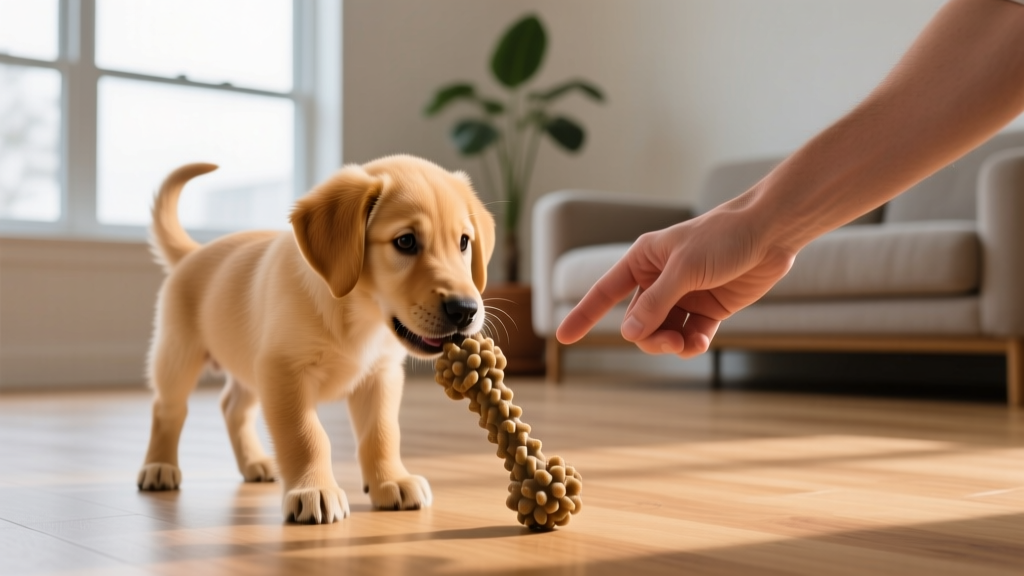
GSP puppies begin losing deciduous (baby) teeth around 12–16 weeks, with the process completing by 6–7 months. During peak teething (3–6 months), your puppy will chew everything within reach. This is the stage where GSP puppies destroy baseboards, shoes, and furniture legs if not managed proactively.
Safe Chew Recommendations by Stage
- 8–12 weeks: Soft rubber toys (Kong Classic, puppy-sized), wet frozen washcloths (twist, soak in water, freeze), Nylabone puppy-specific chews (softer formula)
- 12–20 weeks: Frozen Kongs stuffed with plain yogurt and banana, Benebone puppy chews, bully sticks (supervised only — remove when small enough to swallow), yak cheese chews
- 5–7 months: Standard Kong Classic (medium size for GSP), antler alternatives (avoid real antlers — too hard, risk of tooth fracture), Goughnuts chew toys (designed for powerful chewers)
Avoid: Rawhide (choking and intestinal blockage risk), cooked bones (splintering), tennis balls (abrasive felt wears down teeth over time), and any chew harder than your puppy's teeth — if you cannot indent the chew with your thumbnail, it is too hard for a teething puppy.
Common GSP Puppy Problems and Solutions
How Do I Stop My GSP Puppy From Biting and Nipping?
GSP puppies are among the mouthiest breeds in the sporting group. Biting is normal — they explore the world with their mouths and have been practicing jaw pressure with littermates since week 4. Here is a force-free protocol:
- Redirect: When teeth touch skin, say a calm "oops" and immediately offer an appropriate chew toy. Praise enthusiastically when puppy mouths the toy.
- Withdraw attention: If redirecting fails, stand up, cross your arms, and be still for 10–15 seconds. Resume interaction only when puppy is calm.
- Time-outs: For persistent hard biting, calmly place puppy in their crate or a pen for 30–60 seconds. This is not punishment — it is a brief cool-down to reset arousal levels.
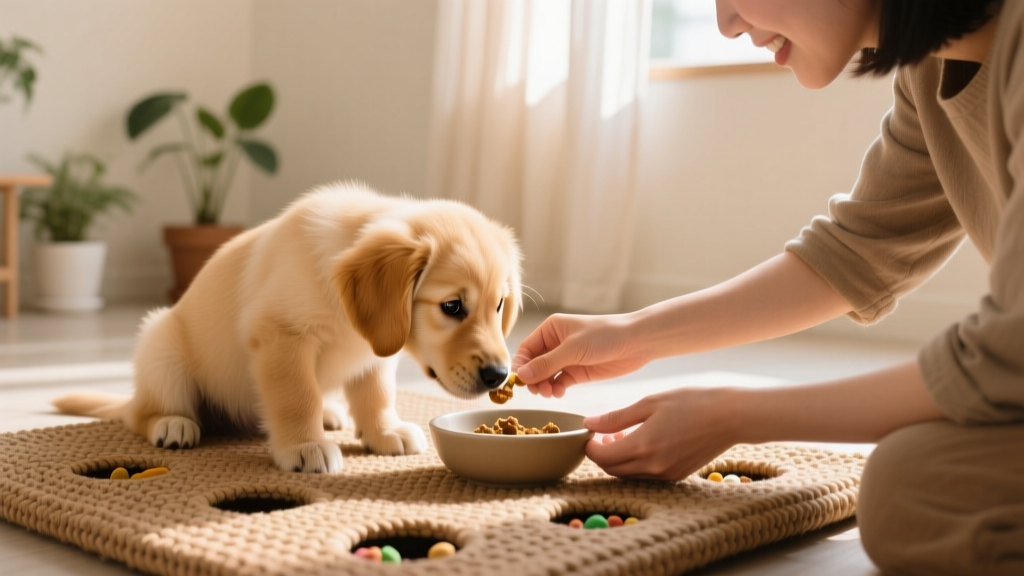
- Exercise check: Overtired and under-exercised GSP puppies bite more. Ensure your puppy is getting age-appropriate physical activity (5 minutes of structured exercise per month of age, twice daily) and sufficient mental stimulation (snuffle mats, training sessions, scent games).
Hard nipping typically decreases significantly by 16–20 weeks as puppies learn bite inhibition. If biting intensifies or breaks skin consistently past 5 months, consult a certified positive-reinforcement trainer.
Whining in the Crate
GSP puppies are vocal. Crate whining usually stems from one of three causes: need to eliminate, under-exercised energy, or separation distress. Address each systematically: ensure a potty trip immediately before crating, provide adequate daytime exercise and enrichment, and practice graduated absences rather than leaving for hours on day one. Covering the crate with a light blanket can reduce visual stimulation and promote settling.
Destructive Chewing Beyond Teething
If your GSP puppy continues destroying household items past 7 months, the root cause is almost always insufficient mental and physical stimulation. A GSP needs a job. Introduce scent work (hide treats in a snuffle mat or around a room), flirt pole sessions (5–10 minutes, twice daily), or basic trick training. A mentally tired GSP is a well-behaved GSP.
First-Year Cost Breakdown for a GSP Puppy
Budgeting accurately prevents surprises. Here is a realistic first-year cost estimate for a GSP puppy in the United States (2026 pricing):
| Category | Low Estimate | Mid Estimate | High Estimate | Notes |
|---|---|---|---|---|
| Puppy purchase (responsible breeder) | $800 | $1,200 | $2,000 | Health-tested parents, AKC registration, take-back clause |
| Veterinary (wellness visits, vaccines, spay/neuter) | $600 | $900 | $1,500 | Includes heartworm test, fecal exams, microchip |
| Food (large-breed puppy formula) | $400 | $600 | $900 | Premium brands at $55–$80/bag |
| Supplies (crate, bed, leash, harness, bowls, toys) | $200 | $350 | $600 | Wire crate (42-inch for adult GSP), martingale collar, front-clip harness |
| Training (group classes, private sessions) | $150 | $400 | $1,000 | Puppy kindergarten + basic obedience minimum |
| Preventive medications (heartworm, flea/tick) | $200 | $350 | $500 | Year-round prevention recommended by AVMA |
| Pet insurance (optional) | $400 | $600 | $900 | $35–$75/month; recommended for breeds prone to hip dysplasia |
| Total first year | $2,750 | $4,400 | $7,400 |
Adoption from a breed-specific rescue (e.g., German Shorthaired Pointer Rescue) typically costs $300–$500 and often includes initial veterinary care, spay/neuter, and microchip. Both responsible breeders and adoption are valid paths to a wonderful GSP companion.
Frequently Asked Questions
Are GSP puppies good for first-time dog owners?
GSPs can work for committed first-time owners who understand the breed's exercise requirements (minimum 60–90 minutes of vigorous activity daily as an adult) and are willing to invest in training. They are not ideal for sedentary households or people who work 10+ hours away from home without dog-walking support. Their intelligence, mouthiness, and prey drive require active management, especially during the first two years.
When can I start running with my GSP puppy?
Wait until growth plates close, typically around 12–18 months for a medium-large breed like the GSP. Before that, stick to free play, short leash walks (5 minutes per month of age, twice daily), and off-leash exploration in safe areas. Forced exercise (running alongside a bicycle, long jogs) on immature joints increases the risk of hip dysplasia and other orthopedic issues.
My GSP puppy won't come when called outside. Is this normal?
Yes. GSPs are bred to range far from their handlers while hunting, and recall is often the most challenging skill to build with this breed. Start recall training indoors with zero distractions, using high-value rewards (real chicken, hot dog pieces). Gradually add distractions. Use a long line (15–30 foot training lead) outdoors until recall is reliable at 80%+ in moderate-distraction environments. Never punish a puppy for coming to you, even if it took 10 minutes — they must associate returning with positive outcomes.
Should I get pet insurance for my GSP puppy?
Strongly consider it. GSPs are predisposed to hip dysplasia (estimated 10–15% prevalence per OFA breed statistics), elbow dysplasia, and certain eye conditions. Emergency surgery for bloat (GDV) can cost $3,000–$7,000. Enrolling at 8 weeks, before any pre-existing conditions develop, gives you the broadest coverage. Compare plans from multiple providers and check whether hip dysplasia is covered (some policies exclude it or impose waiting periods).
How much exercise does a GSP puppy need daily?
Follow the 5-minute rule: 5 minutes of structured exercise per month of age, twice daily. An 8-week-old puppy gets roughly 10-minute sessions. A 6-month-old puppy can handle 30-minute sessions. Supplement structured walks with free play, training sessions (which tire a GSP mentally), and scent games. Avoid repetitive high-impact activities (fetch on hard surfaces, jumping from heights) until 12+ months.
Priya Sutaria
All our authors care for dogs every day — read more of their work on the authors page.