Great Pyrenees Puppies: The Complete First-Year Care Guide
Everything you need to raise Great Pyrenees puppies — age milestones, feeding schedules, potty training, socialization, vaccines, and first-year costs.

Great Pyrenees puppies are deceptively calm. Those fluffy white bundles look like oversized stuffed animals, but beneath the soft exterior is a livestock guardian breed with an independent mind, a deep protective instinct, and a growth curve that demands precise nutritional management. Raising a Great Pyrenees puppy is nothing like raising a Labrador or Golden Retriever — their temperament, joint vulnerability, and slow maturation require a specialized approach from day one.
This guide walks you through every stage of your Great Pyrenees puppy's first year with exact timelines, feeding portions, training benchmarks, and realistic cost expectations. Whether you're waiting to bring your pup home or already navigating the chewing-and-whining phase, you'll find actionable, breed-specific guidance below.
When Should You Bring Your Great Pyrenees Puppy Home?
The American Kennel Club recommends that puppies stay with their mother and littermates until at least 8 weeks of age. For Great Pyrenees, many responsible breeders prefer to keep puppies until 10 to 12 weeks. Here's why that extra time matters for this breed:
- Bite inhibition development: Great Pyrenees puppies are mouthy. Weeks 8–12 with littermates teach them how hard is too hard when biting — a lesson that's much harder for humans to replicate.
- Confidence building: Guardian breeds can be naturally cautious. Extra weeks in a stable litter environment reduce fear-based reactivity later.
- Size management: A 12-week-old Great Pyrenees puppy typically weighs 25–35 lb (11–16 kg), making them physically sturdier for the transition to a new home.
If your breeder releases puppies at 8 weeks, that's still within normal range — but be prepared for more intensive socialization and bite-inhibition work on your end.
Great Pyrenees Puppy Milestones: Week by Week
Understanding what's developmentally appropriate at each stage prevents frustration and helps you set realistic expectations. Great Pyrenees mature slowly — they may not reach full emotional maturity until 2 to 3 years of age.
| Age Range | Typical Weight | What to Expect | Your Priority |
|---|---|---|---|
| Weeks 4–8 | 8–18 lb (3.6–8 kg) | Eyes and ears fully functional; first socialization window opens; weaning onto solid food; learning bite inhibition from littermates | If still with breeder: confirm early neurological stimulation (ENS) and introduction to varied surfaces, sounds, and gentle human handling |
| Weeks 8–12 | 18–30 lb (8–14 kg) | Peak fear imprint period (8–11 weeks); strong bonding with new family; frequent napping (18–20 hours/day); mouthing and nipping intensify | Positive-only socialization; begin name recognition and short (2–3 min) training sessions; establish crate and potty routines |
| Weeks 12–16 | 30–50 lb (14–23 kg) | Fear period typically subsides; confidence grows; testing boundaries begins; baby teeth start loosening; attention span lengthens to 5–10 minutes | Expand socialization exposures; begin leash walking practice; reinforce recall with high-value treats; puppy kindergarten classes |
| Weeks 16–24 | 50–80 lb (23–36 kg) | Peak teething discomfort; chewing escalates significantly; second fear period may appear around 6 months; guarding instincts may begin surfacing | Provide structured chew outlets; continue positive exposures to prevent over-protectiveness; begin basic obedience (sit, down, stay, leave it) |
| Months 6–12 | 70–110 lb (32–50 kg) | Sexual maturity (spay/neuter timing discussion with vet); adolescent independence and selective hearing; growth plates still open — no forced running or jumping | Consistent obedience reinforcement; controlled exercise only (5 min per month of age, twice daily); advanced socialization with livestock or novel environments if applicable |
Feeding Your Great Pyrenees Puppy: Portions and Schedule
Great Pyrenees puppies are giant-breed dogs, and their nutrition is one area where mistakes have long-term consequences. Overfeeding accelerates growth rate, which increases the risk of developmental orthopedic diseases like hip dysplasia and osteochondrosis dissecans (OCD). The Merck Veterinary Manual notes that giant breeds should be fed a diet specifically formulated for large/giant breed growth, with controlled calcium levels (1.0–1.8% on a dry matter basis).
What to Feed
Choose a kibble or wet food that meets AAFCO nutritional standards for growth/all life stages and specifically states it is appropriate for large-size dogs (adult weight over 70 lb). Avoid high-calorie, high-calcium puppy formulas designed for small or medium breeds.
Feeding Schedule and Portions
| Puppy Age | Meals Per Day | Approximate Daily Amount (Dry Kibble) | Notes |
|---|---|---|---|
| 8–12 weeks | 3–4 meals | 2–3 cups/day (split across meals) | Soften kibble with warm water if transitioning from breeder's food |
| 12–16 weeks | 3 meals | 3–4 cups/day | Monitor body condition score (BCS) — you should feel ribs without pressing hard |
| 4–6 months | 2–3 meals | 4–6 cups/day | Transition to 2 meals/day around 5–6 months |
| 6–12 months | 2 meals | 5–8 cups/day | Males will eat more than females; adjust based on BCS, not bag guidelines alone |
Critical note: Cup measurements vary significantly between brands. Always check the feeding chart on your specific food and adjust based on your puppy's body condition, not just age. A Great Pyrenees puppy should look lean — not skinny, but with a visible waist and easily palpable ribs. Excess weight on growing giant-breed joints is one of the most preventable causes of lifelong mobility problems.
How Often Should I Feed My Puppy at Each Age?
The short answer: 3–4 meals daily until 12 weeks, then 3 meals until about 5–6 months, then 2 meals for life. Free-feeding (leaving food out all day) is not recommended for Great Pyrenees — it makes potty training harder and increases the risk of bloat (gastric dilatation-volvulus), a life-threatening condition common in deep-chested giant breeds.
Potty Training Your Great Pyrenees Puppy
Great Pyrenees puppies are generally clean dogs and tend to housetrain more easily than some high-energy breeds. However, their large bladder capacity can sometimes work against you — they may not signal urgency as obviously as smaller breeds, and their thick coat can hide dampness from accidents.
When Will My Puppy Be Fully Potty Trained?
Most Great Pyrenees puppies achieve reliable housetraining between 4 and 6 months of age. Some individuals — especially males — may take until 8 months for complete reliability. "Reliable" means fewer than one accident per month with consistent routine. If you're still having daily accidents past 6 months, consult your vet to rule out urinary tract infection or other medical causes.
Potty Training Timeline and Strategy
Recommended Schedule by Age
- 8–12 weeks: Take outside every 1–2 hours during the day, plus immediately after every meal, nap, and play session. Expect 1–2 overnight wake-ups.
- 12–16 weeks: Every 2–3 hours during the day. Most puppies can hold 4–5 hours overnight.
- 4–6 months: Every 3–4 hours during the day. Overnight stretching to 6–8 hours is common.
- 6+ months: Every 4–6 hours during the day. Full overnight sleep is typical.
Troubleshooting tip: If your Great Pyrenees puppy has repeated accidents in the same indoor spot, clean it with an enzymatic cleaner (not ammonia-based). Their scent-marking instinct is strong, and residual odor will draw them back.
Crate Training Progression
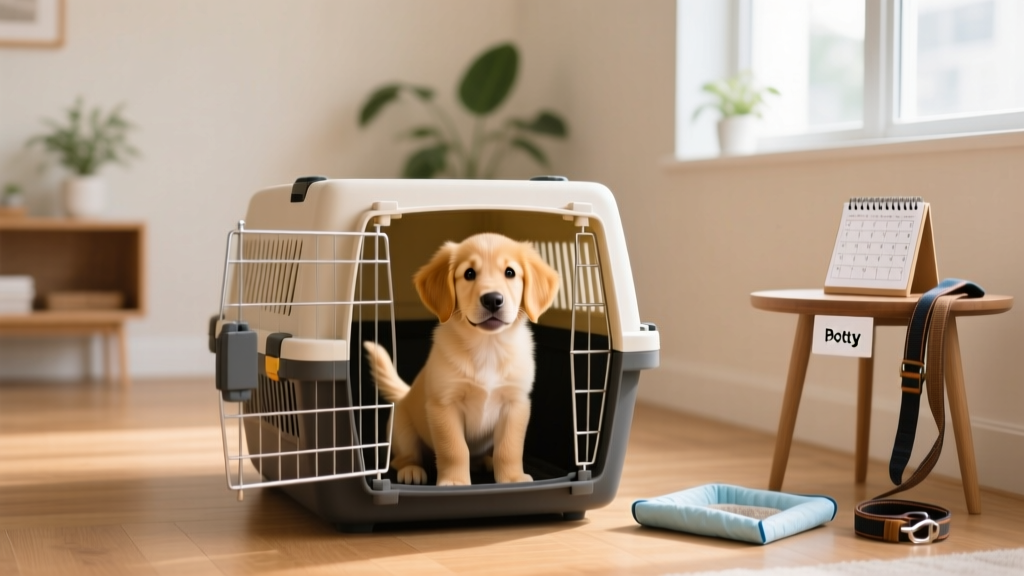
The crate is your most powerful potty training tool. Dogs naturally avoid soiling their sleeping area, and a properly sized crate leverages this instinct. For a Great Pyrenees puppy, buy a large crate (48–54 inches) with a divider panel so you can expand the space as they grow.
| Puppy Age | Max Crate Time (Daytime) | Max Crate Time (Overnight) |
|---|---|---|
| 8–10 weeks | 1–2 hours | 3–4 hours (set an alarm) |
| 11–14 weeks | 2–3 hours | 5–6 hours |
| 15–20 weeks | 3–4 hours | 7–8 hours |
| 5–6 months | 4–5 hours | 8–9 hours |
Important: Crating is a management tool, not a babysitter. A Great Pyrenees puppy left crated for 8 hours during the day will develop behavioral problems. If you work full-time, arrange a midday break via a dog walker, neighbor, or coming home at lunch.
The Socialization Window: Weeks 3–14
The American Veterinary Medical Association identifies the primary socialization period for puppies as roughly 3 to 14 weeks of age. For Great Pyrenees, this window is particularly critical because guardian breeds have a genetic predisposition toward wariness of strangers and novel stimuli. Without deliberate positive exposure during this period, that wariness can harden into fear-based aggression or excessive territorial behavior.
When Can My Puppy Go Outside and Meet Other Dogs?
This is where new owners often receive conflicting advice. The traditional veterinary recommendation is to keep puppies away from public areas until their vaccination series is complete (around 16 weeks). However, the AKC and the American Veterinary Society of Animal Behavior now emphasize that the behavioral risk of under-socialization outweighs the disease risk for most puppies — provided you manage exposures carefully.
Practical approach: From 8 to 16 weeks, carry your puppy or use a stroller/wagon to expose them to the outside world without letting their paws touch high-risk surfaces (dog park ground, unknown yard grass). Arrange playdates with fully vaccinated, temperament-tested adult dogs in controlled, clean environments.
Great Pyrenees Socialization Checklist
Guardian breed note: Great Pyrenees puppies often show early guarding behaviors — standing between you and a stranger, low barking at novel approaches. This is normal breed behavior, not necessarily aggression. Reward calm observation of strangers rather than reactive barking. If fear responses intensify, consult a certified professional dog trainer (CPDT-KA or IAABC-certified) who uses force-free methods.
Vaccination Schedule for Great Pyrenees Puppies
Your veterinarian will tailor a vaccination protocol based on your region's disease prevalence and your puppy's individual risk factors. The following schedule reflects the AVMA's core vaccination guidelines for puppies:
| Age | Vaccines | What They Protect Against | Typical Cost Range |
|---|---|---|---|
| 6–8 weeks | DHPP (1st dose) | Distemper, Hepatitis (Adenovirus), Parainfluenza, Parvovirus | $25–$50 |
| 10–12 weeks | DHPP (2nd dose), Bordetella (optional) | Same as above (booster); Kennel cough | $40–$75 |
| 14–16 weeks | DHPP (3rd dose), Rabies | Final DHPP booster; Rabies (legally required in most US states) | $50–$90 |
| 12–16 months | DHPP booster, Rabies booster | Annual or 3-year boosters depending on vaccine type | $50–$100 |
Non-core vaccines to discuss with your vet: Leptospirosis (recommended if your dog has access to standing water or wildlife areas), Lyme disease (tick-endemic regions), and Canine Influenza (if your dog will attend daycare or boarding). Your vet will determine which are appropriate based on your lifestyle and geography.
Teething Timeline and Relief Strategies
Great Pyrenees puppies follow the standard canine teething timeline, but their powerful jaw muscles mean the chewing phase can be particularly destructive if you're not prepared.
| Age | What's Happening | Relief Strategy |
|---|---|---|
| 3–4 months | Deciduous (baby) incisors begin falling out; gums inflamed and itchy | Chilled (not frozen) wet washcloths; soft rubber teething toys like KONG Puppy |
| 4–5 months | Canines and premolars erupting; peak chewing intensity; you may find small teeth around the house | Benebone Wishbone (size-appropriate); frozen carrot sticks; Nylabone Puppy chew |
| 5–6 months | Most adult teeth in place; chewing should begin to taper | Transition to durable adult chew toys; monitor for retained baby teeth (common in some lines — vet may need to extract) |
Safety warning: Avoid rawhide chews, cooked bones, antlers, and hard nylon bones for puppies under 6 months — their developing teeth can fracture. If you suspect your puppy has swallowed a dangerous object or is showing signs of oral pain (drooling, refusing food, pawing at mouth), contact your vet or call the ASPCA Animal Poison Control Center at (888) 426-4435 (24/7, consultation fee applies) if the object may be toxic.
Common Great Pyrenees Puppy Problems and Solutions
How Do I Stop Puppy Biting and Nipping?
Great Pyrenees puppies are notoriously mouthy. This is partly developmental (teething) and partly breed-typical (they use their mouths to "herd" and interact). Here's a force-free protocol:
- Redirect: When teeth touch skin, say "ouch" in a calm tone and immediately offer a chew toy. Reward chewing on the toy with praise.
- Withdraw attention: If biting continues after 2–3 redirects, stand up and leave the room for 15–30 seconds. Return and offer a toy again.
- Prevent rehearsal: Keep a chew toy within reach during all play sessions. Anticipate biting triggers (overtiredness, overstimulation) and offer naps in the crate.
- Be patient: Mouthing typically decreases significantly by 5–6 months as adult teeth come in and impulse control improves. Some Great Pyrenees remain gently mouthy into adulthood — it's a breed trait, not a behavior problem.
Never hold your puppy's mouth shut, push fingers down their throat, or use physical punishment. These methods damage trust and can escalate fear-based biting in a breed that will grow to 85–130 lb (39–59 kg).
Whining and Crying (Especially at Night)
Nighttime whining is nearly universal in the first 1–2 weeks home. Your puppy is alone for the first time, in an unfamiliar place. Strategies that work:
- Place the crate in your bedroom for the first 2–3 weeks so they can hear and smell you.
- A Snuggle Puppy (heat pack and simulated heartbeat toy) can ease the transition.
- Set a quiet alarm for 3–4 hours after bedtime to take them out for a potty break — this prevents crying from a full bladder.
- If whining continues after a potty break and comfort, wait for a brief pause in crying before opening the crate. You want to reward quiet, not crying.
Destructive Chewing
Great Pyrenees puppies can demolish baseboards, furniture legs, and shoes with impressive speed. Management is the solution: puppy-proof your home (use baby gates to limit access), provide 5–8 appropriate chew options rotated weekly to maintain novelty, and never leave an unsupervised puppy loose in the house until they've earned that freedom (usually 12–18 months for this breed).
Stubbornness and "Selective Hearing"
This isn't a problem — it's a breed characteristic. Great Pyrenees were bred to make independent decisions while guarding flocks without human direction. They don't have a retriever's eagerness to please. Training works best with:
- High-value rewards (real chicken, cheese, freeze-dried liver)
- Short sessions (5–10 minutes max)
- Training in low-distraction environments before proofing in busier settings
- Patience — a Great Pyrenees who takes 30 repetitions to learn "come" isn't stupid; they're evaluating whether compliance is worth their time
First-Year Cost Breakdown for a Great Pyrenees
Giant breeds cost more to raise than smaller dogs — there's simply more of them to feed, medicate, and equip. Here's a realistic budget for your Great Pyrenees puppy's first year, based on 2025–2026 US pricing:
| Category | Items | Estimated Cost |
|---|---|---|
| Purchase/Adoption | Reputable breeder (health-tested parents, AKC registered) OR breed rescue | $1,500–$3,000 (breeder) / $300–$600 (rescue) |
| Veterinary | 3 puppy vaccine visits, deworming, fecal tests, heartworm prevention, spay/neuter, microchip | $800–$1,500 |
| Food | Giant breed puppy formula (10–12 months of feeding) | $600–$1,200 |
| Supplies | XL crate with divider, 6-ft leash, harness (front-clip for training), stainless bowls, grooming tools (undercoat rake, slicker brush), bed, baby gates | $300–$600 |
| Training | Puppy kindergarten + basic obedience (group classes) | $200–$500 |
| Preventive Medications | Monthly flea/tick, heartworm (dose by weight — giant breed doses cost more) | $300–$600 |
| Grooming | Professional grooming if desired (not required — Pyrs don't need haircuts, but baths and de-shedding blowouts help) | $0–$400 (DIY to occasional pro) |
| Pet Insurance | Optional but recommended for giant breeds (higher emergency costs) | $50–$100/month ($600–$1,200/year) |
Total first-year estimate: $4,350–$9,600 (including puppy purchase from a breeder). This does not include emergency veterinary care — giant breeds are at higher risk for bloat, joint injuries, and foreign body surgeries. An emergency fund of $1,000–$2,000 or active pet insurance is strongly recommended.
Frequently Asked Questions About Great Pyrenees Puppies
Are Great Pyrenees puppies good with children?
Generally yes — Great Pyrenees tend to be gentle and patient with children in their own family. However, their large size as puppies (a 4-month-old can weigh 40+ lb) means they can accidentally knock over toddlers. Always supervise interactions between any dog and young children, and teach children not to climb on, pull ears, or disturb a sleeping puppy.
How much exercise does a Great Pyrenees puppy need?
Follow the "5 minutes per month of age, twice daily" guideline. A 4-month-old puppy gets roughly 20 minutes of structured walking, twice a day. Free play in a fenced yard doesn't count against this limit but should also be monitored — Great Pyrenees puppies will overheat in warm weather (their thick coat is designed for cold climates). Avoid forced running, jogging, or jumping off high surfaces until growth plates close, typically around 18–24 months.
Do Great Pyrenees puppies bark a lot?
They bark more than average breeds, yes. Barking is a core guardian behavior — they alert to anything unusual. In puppyhood, this usually starts around 4–6 months as they become more aware of their environment. Early training to acknowledge and redirect alert barking ("thank you, that's enough") is more effective than trying to eliminate it entirely. If you live in an apartment or have close neighbors, this is an important consideration.
When should I spay or neuter my Great Pyrenees?
Current research on giant breeds suggests delaying spay/neuter until 12–18 months (after sexual maturity but before full skeletal maturity) may reduce the risk of certain joint disorders and cancers compared to early alteration. Discuss timing with your veterinarian, who can consider your dog's individual health, sex, and lifestyle.
Will my Great Pyrenees puppy's coat change?
Yes. Great Pyrenees puppies are born with softer, fluffier coats that often appear cream or have badger markings (gray/tan patches, usually on the ears and face). The adult double coat — a dense undercoat and longer, weather-resistant outer coat — develops between 12 and 24 months. Badger markings typically fade with age but may persist. Weekly brushing with an undercoat rake becomes essential as the adult coat comes in, and you should expect significant seasonal shedding ("blowing coat") once or twice yearly.
Should I get pet insurance for my Great Pyrenees puppy?
For giant breeds, pet insurance is strongly recommended. Emergency surgeries for bloat (GDV) can cost $3,000–$7,000. Hip dysplasia surgery runs $3,500–$7,000 per hip. Enrolling while your puppy is young and healthy ensures pre-existing condition exclusions don't apply later. Compare plans from providers like Trupanion, Healthy Paws, and Nationwide, paying attention to annual limits, deductible structure, and whether they cover hereditary conditions.
Your primary veterinarian's after-hours number
Nearest 24-hour emergency veterinary clinic
ASPCA Animal Poison Control: (888) 426-4435 (consultation fee applies)
Pet Poison Helpline: (855) 764-7661
Robin Maitland
All our authors care for dogs every day — read more of their work on the authors page.