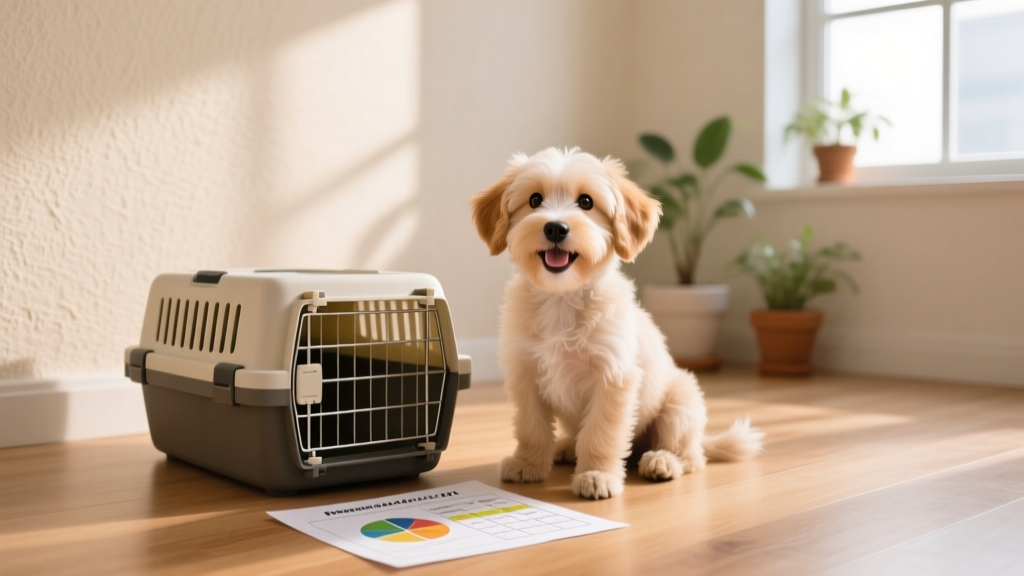
Good Apartment Puppies: Best Breeds & Complete Puppy Care Guide
Discover the best good apartment puppies for small-space living, plus a complete week-by-week puppy care guide covering feeding, potty training, and costs.

Living in an apartment doesn't mean you can't enjoy the companionship of a well-matched puppy. The key is selecting a breed whose energy level, vocal tendencies, and adult size align with shared-wall living—and then raising that puppy with a structured plan from day one. This guide covers the top breeds that thrive in apartments, then walks you through every milestone from 8 weeks to 12 months with exact schedules, portions, and costs.
The breeds most consistently successful in apartments share three traits: moderate-to-low energy, minimal barking instinct, and adaptability to routine. Top picks include the Cavalier King Charles Spaniel, French Bulldog, Bichon Frise, Greyhound (yes, really—they're couch potatoes), and Havanese. Avoid high-drive herding breeds, most terriers, and vocal hounds unless you have exceptional time for exercise and enrichment.
Top 5 Good Apartment Puppies: Breed Comparison
Before committing to a puppy, compare these breeds across the metrics that matter most in apartment living. Data below reflects AKC breed standards and typical owner-reported experiences compiled from breed clubs and veterinary behaviorists.
| Breed | Adult Weight | Daily Exercise | Barking Level | Shedding | Puppy Price Range |
|---|---|---|---|---|---|
| Cavalier King Charles Spaniel | 13–18 lb / 6–8 kg | 30–45 min | Low | Moderate | $2,000–$4,500 |
| French Bulldog | 16–28 lb / 7–13 kg | 20–30 min | Low–Moderate | Low | $2,500–$5,500 |
| Bichon Frise | 12–18 lb / 5–8 kg | 30–40 min | Moderate | Low (hypoallergenic) | $1,500–$3,500 |
| Greyhound (Retired Racer) | 60–70 lb / 27–32 kg | 30–40 min | Very Low | Low | $300–$600 (adoption) |
| Havanese | 7–13 lb / 3–6 kg | 25–35 min | Low–Moderate | Low (hypoallergenic) | $1,800–$3,500 |
Why Greyhounds? It surprises many people, but retired racing Greyhounds are among the best good apartment puppies (or rather, young adults). They sprint for short bursts, then sleep 18+ hours a day. Adoption through groups like Greyhound adoption organizations provides a calm, already-crate-trained companion at a fraction of breeder pricing.
Puppy Age Milestones: Week-by-Week Development Timeline
Every puppy—regardless of breed—passes through predictable developmental windows. In an apartment setting, hitting these milestones on schedule is especially important because neighbors are close and space for "burning off energy" is limited. Here's what to expect and how to respond at each stage.
- Weeks 4–8 (with breeder): Critical litter socialization. Puppies learn bite inhibition from siblings, begin solid food transition, and receive first deworming. Do not bring puppy home before 8 weeks—most states legally prohibit it, and early separation correlates with increased fear-based behaviors (per the AVMA puppy care guidelines).
- Weeks 8–12 (home adjustment): Peak fear imprint period. Everything is new—elevator sounds, hallway neighbors, garbage trucks. Keep experiences positive with treats. Potty training begins immediately with outings every 1–2 hours. Expect 3–5 accidents per day.
- Weeks 12–16 (confidence building): Second DHPP vaccine received. Puppy can begin controlled socialization in low-risk environments. Crate training solidifies—puppy should tolerate 2–3 hours crated during the day. Bite inhibition training intensifies.
- Weeks 16–24 (adolescent onset): Teething begins around 3.5–4 months. Energy surges in short bursts. This is where apartment-specific training pays off: settle-on-mat behavior, quiet-on-cue for hallway noises, and polite elevator etiquette. Spay/neuter typically scheduled at 5–6 months for small breeds.
- Months 6–12 (adolescence): Testing boundaries, possible fear regression around 8–10 months. Exercise needs increase but should remain structured (not free-running in dog parks until growth plates close at ~12 months for small breeds, ~18 months for larger breeds like Greyhounds). Consistency in rules prevents lifelong problem behaviors.
Feeding Schedule: Exact Portions by Age and Weight
Apartment puppies need carefully managed nutrition because overfeeding leads to rapid growth, which stresses developing joints—and a heavy puppy in a walk-up apartment means more strain on you during potty trips. Feed an AAFCO-approved puppy formula with a named first protein ingredient.
| Puppy Age | Meals Per Day | Small Breed (10–20 lb adult) Cups/Day | Medium Breed (20–40 lb adult) Cups/Day | Notes |
|---|---|---|---|---|
| 8–12 weeks | 4 | ½ – ¾ cup | ¾ – 1¼ cups | Moisten kibble with warm water for easier chewing during early teething |
| 12–16 weeks | 3 | ¾ – 1 cup | 1 – 1½ cups | Transition to dry kibble; monitor body condition score (ribs palpable, waist visible) |
| 4–6 months | 3 | 1 – 1¼ cups | 1½ – 2 cups | Growth rate peaks; adjust based on BCS not bag recommendations |
| 6–12 months | 2 | 1 – 1½ cups | 2 – 2¾ cups | Small breeds transition to adult food at 10–12 months; medium breeds at 12 months |
Apartment-specific feeding tip: Use a snuffle mat or puzzle feeder (like the Outward Hound Dog Brick, ~$15–$22) for at least one meal daily. This provides mental enrichment that substitutes for yard exploration time and reduces boredom-related barking. Remove food after 15–20 minutes to establish routine and make potty timing more predictable.
Potty Training in an Apartment: Realistic Timeline & Troubleshooting
Potty training in an apartment is fundamentally different from house training with a fenced yard. You're dealing with elevators, stairwells, leashing up for every trip, and potentially shared outdoor spaces. Set realistic expectations: most apartment puppies achieve reliable house training between 4–6 months of age, with occasional accidents until 8–9 months. Any guide promising "trained in 3 days" is misleading.
Track these data points for the first 4 weeks to identify your puppy's natural rhythm:
- Time of last meal/water → Expect elimination 15–30 minutes after eating, 10–15 minutes after drinking
- Time taken outside → Record exact time; look for patterns (most puppies need out within 30 min of waking)
- Result (pee/poop/both/nothing) → Helps predict bowel movement timing (usually 2–4 times/day at 8–12 weeks, decreasing to 1–2 by 6 months)
- Location → Consistency in spot builds substrate preference
- Accidents → Note time, location, and what puppy was doing beforehand to identify triggers
Common apartment potty training problems and solutions:
- "Puppy won't go on concrete/balcony grass pad" — If your puppy was raised on grass by the breeder, they may resist artificial surfaces. Place a real sod patch (available from garden centers, ~$8–$15) on the balcony initially, then gradually transition to the surface you prefer over 2–3 weeks.
- "Accidents happen in the elevator" — This means outings are too far apart. For 8–12 week puppies, take them out every 60–90 minutes during the day, and set a phone alarm for one overnight trip around 2–3 AM.
- "Puppy holds it outside, then goes inside" — The outdoor environment is overstimulating. Find a quieter spot, stand still for up to 5 minutes, and reward immediately (within 1 second) when they eliminate. Use a consistent cue word like "go potty."
Vaccination Schedule and When Your Puppy Can Go Outside
This is one of the most common questions from new apartment puppy owners: when can my puppy walk in the hallway, use the shared courtyard, or meet the neighbor's dog? The answer depends on vaccine timing. Puppies receive a series of core vaccines because maternal antibodies interfere with early immune response.
| Age | Vaccines Administered | Cost Range | Outdoor Access After |
|---|---|---|---|
| 6–8 weeks | DHPP (Distemper, Hepatitis, Parainfluenza, Parvovirus) — 1st dose | $25–$45 | Carry only; no ground contact with unknown dogs |
| 10–12 weeks | DHPP — 2nd dose; Bordetella (optional but recommended for apartment living) | $35–$60 | Low-risk outdoor areas (your own yard, known-vaccinated dog playdates); avoid dog parks |
| 14–16 weeks | DHPP — 3rd dose; Rabies (required by law in all US states) | $40–$75 | Full outdoor access 1 week after final DHPP (~17 weeks); dog parks OK after 18–20 weeks |
Critical apartment socialization note: The AKC recommends that puppies receive positive exposure to as many novel stimuli as possible during the 3–14 week socialization window—before vaccines are complete. The risk of behavioral problems from under-socialization statistically exceeds the risk of disease exposure in controlled settings. Carry your puppy through apartment hallways, let them observe (from your arms) the lobby, elevator dings, and people in hats. Arrange playdates only with dogs you know are fully vaccinated.
Puppies can deteriorate rapidly. Contact your veterinarian or an emergency clinic if your puppy exhibits:
- Vomiting or diarrhea lasting more than 12 hours (or any bloody stool — possible parvovirus)
- Lethargy combined with refusal to eat for more than 8 hours
- Difficulty breathing, persistent coughing, or blue-tinged gums
- Seizures or collapse
- Signs of pain when touched (crying, guarding, aggression in a normally sweet puppy)
ASPCA Animal Poison Control (for toxic ingestion): (888) 426-4435 — 24/7, consultation fee applies.
Socialization Checklist for Apartment Puppies (Weeks 3–14)
Apartment life exposes puppies to a unique set of stimuli that suburban-yard puppies might never encounter. Use this checklist to ensure systematic, positive exposure during the critical socialization window. Pair every new experience with high-value treats (small bits of boiled chicken or commercial training treats like Zuke's Mini Naturals, ~$7/bag).
Goal: positive or neutral response to each item. If puppy shows fear, increase distance and proceed more slowly — never force exposure.
- Elevator rides (empty, then with one person)
- Elevator dings and door sounds
- Hallway echoes and footstep noises
- Fire alarm tests (from a distance first)
- Stairwell acoustics
- Lobby/buzzer sounds
- Delivery drivers and packages
- People wearing hats, sunglasses, hoodies
- Children (supervised, calm interactions)
- Other leashed dogs (known-vaccinated only)
- Umbrellas opening
- Rolling suitcases and carts
- Car rides (short trips, 5–10 min)
- Different floor surfaces (tile, carpet, grates)
- Being handled: paws, ears, mouth, tail
- Veterinary clinic visits ("happy visits" with no procedures)
Teething Timeline, Crate Training Progression, and Common Puppy Problems
Teething: Months 3–6
Puppy deciduous (baby) teeth begin erupting at 3–4 weeks and are fully in by 6–8 weeks. The transition to adult teeth starts around 3.5–4 months and is usually complete by 6–7 months. During this period, your puppy will chew everything within reach—and in an apartment, that includes baseboards, door frames, and furniture legs.
Safe chew recommendations by age:
- 3–4 months: Frozen Kong Classic (size appropriate — Small for dogs under 20 lb, ~$12–$16) stuffed with plain yogurt and banana. Nylabone Puppy Chew (softer formula, ~$6–$9).
- 4–6 months: Bully sticks (6-inch, ~$4–$7 each — supervise to prevent choking on small pieces). Benebone Wishbone (size-appropriate, ~$14–$20). Avoid rawhide, which poses intestinal blockage risk.
- Relief strategy: Keep 3–4 approved chews in rotation in the freezer. When puppy chews furniture, redirect to a frozen chew and reward enthusiastically. Never punish after the fact—dogs cannot connect delayed consequences to their action.
Crate Training Progression with Time Limits
The crate is your puppy's safe den and the most effective tool for preventing destructive behavior when you're not home. A general guideline for maximum crate time during the day: puppy's age in months + 1 = hours they can hold their bladder (so a 3-month-old can manage approximately 4 hours maximum, but this is an upper limit, not a goal).
| Puppy Age | Max Daytime Crate Time | Nighttime Crate Time | Crate Size Recommendation |
|---|---|---|---|
| 8–10 weeks | 1–2 hours | 3–4 hours (set alarm) | Small wire crate (22"L) with divider panel |
| 10–14 weeks | 2–3 hours | 5–6 hours | Same crate, adjust divider as puppy grows |
| 4–6 months | 3–4 hours | 7–8 hours | Upgrade to adult-size crate if needed (24"–30"L) |
| 6–12 months | 4–5 hours | 8 hours (sleeping through night) | Adult crate; consider transitioning to puppy-proofed room if reliable |
Common Puppy Problems and Solutions
Biting/Nipping: This is normal puppy behavior that peaks between 8–16 weeks. When teeth touch skin, say "ouch" in a calm but firm tone, immediately withdraw attention for 10–15 seconds (stand up, turn away), then redirect to an appropriate chew toy. Never hold the puppy's mouth shut, tap their nose, or use any aversive technique — these methods increase fear and can escalate biting. Consistency from all household members is essential; expect 3–6 weeks of consistent redirection before seeing significant improvement.
Whining in the crate: Distinguish between protest whining (ignore for up to 10–15 minutes; rewarding whining teaches that noise = freedom) and distress whining (panting, drooling, frantic pawing — this requires you to slow the crate training progression and build positive associations more gradually). A covered crate, white noise machine, and a Snuggle Puppy with heartbeat (~$30–$40) can reduce anxiety for the first 2–3 weeks.
Destructive chewing: In apartments, this often targets baseboards and door frames near the exit (separation anxiety-related). Provide 3–5 approved chew options, rotate them weekly to maintain novelty, and puppy-proof with bitter apple spray (~$8–$12) on targeted areas. Ensure the puppy receives adequate physical exercise and mental enrichment — a 15-minute training session tires a puppy more than a 30-minute walk.
First-Year Cost Breakdown for Apartment Puppies
Budgeting accurately prevents surprise financial stress. The following ranges reflect 2026 national averages for a small-breed apartment puppy (Cavalier, Bichon, Havanese). Costs will be 20–40% higher in major metro areas (NYC, SF, Seattle).
| Category | Low Estimate | Mid Estimate | High Estimate | What's Included |
|---|---|---|---|---|
| Puppy Purchase/Adoption | $500 | $2,500 | $5,500 | Responsible breeder (health-tested parents) or rescue adoption fee |
| Veterinary (Year 1) | $450 | $750 | $1,200 | 3 vaccine visits, rabies, spay/neuter, fecal tests, heartworm prevention |
| Food & Treats | $300 | $500 | $800 | Quality puppy kibble ($40–$70/bag), training treats, dental chews |
| Supplies | $250 | $450 | $700 | Crate, bed, leash/harness, bowls, gates, puppy-proofing, toys, grooming tools |
| Training | $100 | $350 | $800 | Group puppy class ($100–$200 for 6 weeks) or private sessions ($80–$150/hour) |
| Pet Insurance (optional) | $360 | $480 | $720 | $30–$60/month; highly recommended for breeds prone to hereditary conditions |
| TOTAL (Year 1) | $1,960 | $5,030 | $9,720 | Varies significantly by breed source and metro area |
Apartment-specific costs to budget for: Pet rent or pet deposit ($200–$500 one-time or $25–$75/month), dog walker if you work outside the home ($15–$25 per 30-minute walk), and potential damage deposit claims for scratched floors or chewed baseboards. Setting aside a $1,000–$2,000 emergency fund specifically for veterinary emergencies is strongly recommended — even with insurance, deductibles and co-pays add up.
Frequently Asked Questions
When should I bring my puppy home?
No earlier than 8 weeks of age. Many responsible breeders of toy and small breeds (Cavaliers, Havanese, Bichons) prefer to keep puppies until 10–12 weeks because smaller breeds mature more slowly and benefit from additional litter socialization. While waiting is difficult, puppies homed at 10–12 weeks often show better stress resilience and bite inhibition in apartment environments where neighbor interactions are frequent.
How often should I feed my puppy at each age?
Feed 4 meals daily from 8–12 weeks, 3 meals daily from 12 weeks to 6 months, then transition to 2 meals daily from 6 months onward. Small-breed puppies (under 15 lb expected adult weight) are at risk for hypoglycemia (low blood sugar) if meals are skipped or spaced too far apart — never let a small-breed puppy go more than 4–5 hours without food during the first 12 weeks.
When will my puppy be fully potty trained?
Most puppies achieve reliable house training between 4–6 months with consistent scheduling. Small breeds may take slightly longer (up to 8 months) due to smaller bladder capacity. "Fully trained" means fewer than one accident per month. If your puppy is still having daily accidents past 6 months, consult your veterinarian to rule out urinary tract infection or anatomical issues before assuming it's a training problem.
What vaccines does my puppy need and when?
Core vaccines follow a 3-dose DHPP series at 6–8 weeks, 10–12 weeks, and 14–16 weeks, plus a rabies vaccine at 14–16 weeks (timing varies by state law). For apartment dogs, the Bordetella vaccine is strongly recommended due to shared hallways, elevators, and proximity to other dogs — discuss timing with your veterinarian, as it can be given intranasally as early as 3 weeks or by injection starting at 6–8 weeks.
How do I stop puppy biting and nipping?
Use the redirect-and-withdraw method consistently: when teeth contact skin, say "ouch," stand up, and turn away for 10–15 seconds. Then offer an appropriate chew toy and praise enthusiastically when the puppy chews it. Every person in the household must follow the same protocol — inconsistency prolongs the behavior. Expect biting to peak around 12–16 weeks (coinciding with early teething discomfort) and gradually diminish by 5–6 months with consistent training. If biting intensifies rather than decreases after 16 weeks of consistent redirection, consult a certified professional dog trainer (CPDT-KA or IAABC credentialed).
When can my puppy go outside and meet other dogs?
Your puppy can experience the outdoors in a carrier or your arms immediately upon coming home — this is essential for socialization. Ground-level walks in low-traffic areas are generally safe 1 week after the second DHPP vaccine (around 11–13 weeks). Dog parks, pet stores, and group classes with unknown dogs should wait until 1 week after the final DHPP at 16 weeks (approximately 17 weeks of age). Playdates with known, fully-vaccinated, healthy dogs in private settings are safe from 10–12 weeks onward and highly encouraged during the socialization window.
This guide provides general educational information and is not a substitute for professional veterinary advice. Always consult your veterinarian for decisions specific to your puppy's health, vaccination timing, and nutrition. Individual puppies may develop on different timelines — the milestones above represent typical ranges, not guarantees.
Marcus Aldridge
All our authors care for dogs every day — read more of their work on the authors page.