Best Puppy Training Tools for Golden Retrievers: A Week-by-Week Guide
Discover the best puppy training tools for Golden Retrievers with week-by-week milestones, feeding schedules, vaccination timelines, and socialization checklists.

Bringing Your Golden Retriever Puppy Home: Timing and First Steps
Golden Retrievers are among the most trainable breeds, but success depends on starting with the right puppy training tools at the right developmental stage. Most responsible breeders won't release a Golden Retriever puppy before 8 weeks of age — and many now hold puppies until 10-12 weeks to ensure proper littermate socialization. The American Kennel Club recommends puppies stay with their mother and siblings through at least week 8 to learn bite inhibition and canine communication signals.
When you do bring your puppy home, have these essentials ready before day one:
- A 36-inch wire crate with a divider panel (MidWest iCrate or Frisco Double Door, $45-$75)
- An adjustable martingale collar (11-14 inch neck size for 8-week Goldens) and a 4-6 foot nylon leash
- Enzymatic cleaner (Nature's Miracle or Rocco & Roxie, $12-$18) for inevitable potty accidents
- Kong Classic (Medium, red rubber) and Nylabone Puppy Chew ($8-$15 each)
- Clicker for marker training (PetSafe Clik-R, $5-$8)
- Treat pouch with separate compartments for high-value and low-value rewards
Veterinary Note: Schedule your puppy's first vet visit within 48-72 hours of bringing them home. Your veterinarian will establish a baseline weight, check for congenital issues like umbilical hernias, and set up a vaccination protocol tailored to your area's disease risks.
Golden Retriever Puppy Milestones: What to Expect Week by Week
Weeks 4-8 (Breeder's Care Period)
During this period, your puppy is still with the breeder. They're learning bite inhibition from littermates, beginning to eat solid food (puppy kibble softened with warm water, 3-4 meals daily), and receiving their first DHPP vaccine around 6-8 weeks. Golden Retrievers at this stage weigh approximately 5-10 lb (2.3-4.5 kg). Socialization exposure should include various floor surfaces, household sounds, and gentle handling of paws, ears, and mouth.
Weeks 8-12 (Home Transition)
Your puppy will weigh 15-25 lb (6.8-11.3 kg) by week 12. Expect 18-20 hours of sleep daily, frequent potty breaks (every 1-2 hours during the day), and the onset of fear periods (around 8-10 weeks). This is prime time for name recognition, basic sit/lure training with pea-sized treats, and crate acclimation. Golden Retrievers at this age mouth everything — redirect to appropriate chew toys within 1-2 seconds of unwanted biting.
Weeks 12-16 (Foundation Training)
Weight reaches 25-40 lb (11.3-18.1 kg). Attention span extends to 3-5 minutes per training session. Introduce "leave it," "drop it," and loose-leash walking foundations. Your puppy will receive their final DHPP booster around 14-16 weeks, after which outdoor exploration can expand significantly. Crate time can extend to 3-4 hours maximum during the day.
Weeks 16-24 (Skill Building)
Weight climbs to 40-55 lb (18.1-24.9 kg). This is when Golden Retriever puppies often test boundaries — ignoring recalls, jumping on visitors, and counter-surfing. Increase training difficulty gradually: add distance, duration, and distraction one variable at a time. Begin structured puppy kindergarten classes (AKC S.T.A.R. Puppy or equivalent) once vaccinations are complete.
Months 6-12 (Adolescence)
Your Golden will reach 55-70 lb (24.9-31.8 kg) by month 12. Hormonal changes (even in spayed/neutered dogs) drive increased independence and selective hearing. Maintain daily 10-15 minute training sessions. This is the critical window for preventing resource guarding — practice trading up (offering higher-value items for objects in mouth) at least 3x weekly. Most Goldens aren't emotionally mature until 2-3 years, so patience with adolescent regression is essential.
Feeding Schedule: Exact Portions by Age and Weight
Golden Retrievers are prone to rapid growth-related orthopedic issues, including hip dysplasia and elbow dysplasia. Research published in the Journal of the American Veterinary Medical Association shows that keeping Golden puppies lean (body condition score 4-5/9) significantly reduces hip dysplasia risk. Overfeeding is more dangerous than underfeeding.
| Age | Weight Range | Meals Per Day | Daily Amount (cups) | Calories/Day |
|---|---|---|---|---|
| 8-12 weeks | 15-25 lb (6.8-11.3 kg) | 3-4 | 1.5-2.5 cups | 600-900 kcal |
| 3-4 months | 25-40 lb (11.3-18.1 kg) | 3 | 2.5-3.5 cups | 900-1,200 kcal |
| 5-6 months | 40-55 lb (18.1-24.9 kg) | 2-3 | 3-4 cups | 1,200-1,500 kcal |
| 7-12 months | 55-70 lb (24.9-31.8 kg) | 2 | 3.5-4.5 cups | 1,400-1,800 kcal |
Critical: Choose a food labeled for "large breed puppies" (AAFCO statement confirming it meets growth requirements for dogs expected to reach 70+ lb at maturity). Brands like Purina Pro Plan Large Breed Puppy, Royal Canin Golden Retriever Puppy, or Hill's Science Diet Large Breed Puppy are formulated with controlled calcium:phosphorus ratios (1.1:1 to 1.4:1) to support proper bone development.
Vaccination Schedule: Protecting Your Golden Puppy
Golden Retrievers are no more or less susceptible to infectious diseases than other breeds, but their social nature means higher exposure risk once they begin meeting other dogs. The American Animal Hospital Association (AAHA) canine vaccination guidelines recommend the following core protocol:
| Age | Vaccine | What It Protects Against | Booster Required? |
|---|---|---|---|
| 6-8 weeks | DHPP (1st dose) | Distemper, Hepatitis (Adenovirus), Parainfluenza, Parvovirus | Yes — every 2-4 weeks until 16 weeks |
| 10-12 weeks | DHPP (2nd dose) | Same as above | Yes |
| 10-12 weeks | Bordetella (optional) | Kennel cough | Annually if boarding/grooming |
| 14-16 weeks | DHPP (3rd/final puppy dose) | Same as above | Booster at 1 year, then every 3 years |
| 12-16 weeks | Rabies (single dose) | Rabies virus | Booster at 1 year, then per state law (1-3 years) |
| 12+ weeks | Leptospirosis (2-dose series) | Leptospira bacteria (zoonotic) | Annually in endemic areas |
When Can My Puppy Go Outside and Meet Other Dogs?
Full immunity doesn't develop until 7-10 days after the final DHPP booster (around 16-17 weeks). Before then, you can carry your puppy in public spaces for socialization exposure, but avoid dog parks, pet store floors, and areas where unknown dogs have eliminated. Puppy classes that verify vaccination status are generally safe from 10-12 weeks onward.
Socialization Window: The 3-14 Week Critical Period
Golden Retrievers are known for their friendly temperament, but this doesn't happen automatically. The primary socialization window closes around 12-14 weeks, according to veterinary behaviorist Dr. Ian Dunbar's research. Missing this window increases the risk of fear-based reactivity later in life — a growing concern even in typically outgoing breeds.
Rule of thumb: Every novel experience should end with your puppy in a relaxed or playful state. If they show fear (tucked tail, flattened ears, freezing), increase distance from the trigger and offer high-value treats. Never force exposure — flooding (forced exposure to feared stimuli) creates lasting negative associations.
Potty Training Timeline: Realistic Expectations for Goldens
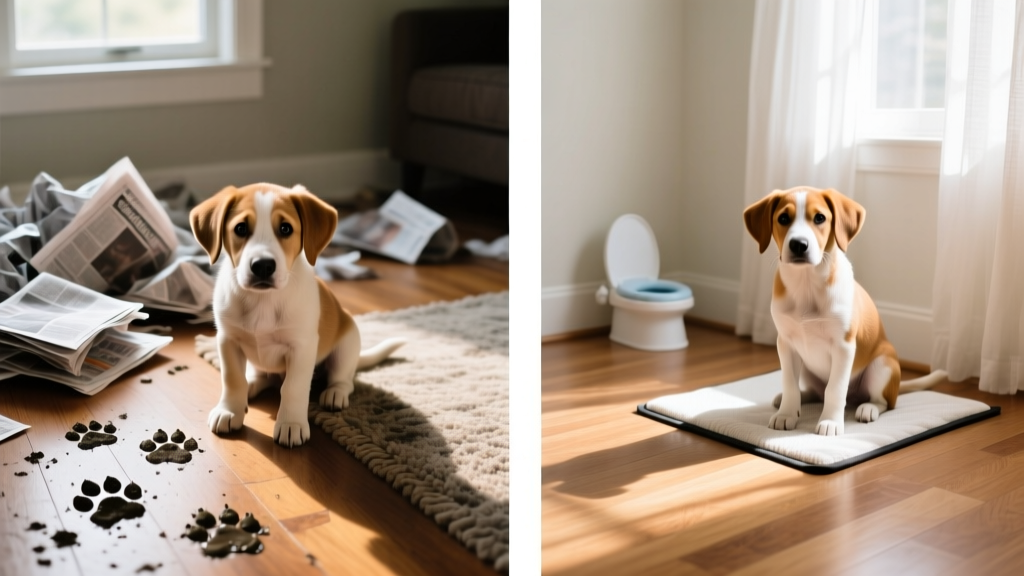
Golden Retrievers typically achieve reliable house training between 4-6 months of age, though some individuals take until 8-9 months. "Reliable" means fewer than 1-2 accidents per month with consistent management. Here's what to expect:
| Age | Bladder Capacity | Outdoor Trips/Day | Expected Accidents/Week | Key Milestones |
|---|---|---|---|---|
| 8-10 weeks | 30-45 minutes | 12-15 | 5-10 | Learning to signal (whining, circling) |
| 10-14 weeks | 1-1.5 hours | 8-12 | 3-5 | Beginning to go to door independently |
| 3-4 months | 2-3 hours | 6-8 | 1-3 | Consistent door signaling developing |
| 5-6 months | 4-5 hours | 4-6 | 0-2 | Can hold overnight (6-8 hours) |
| 7-12 months | 6-8 hours | 3-5 | 0-1 | Reliable with consistent schedule |
Troubleshooting common issues:
- Submissive urination when greeting: Normal in Goldens until 6-12 months. Greet calmly outdoors or on easy-clean surfaces. Avoid direct eye contact and overhead petting during greetings.
- Regression at 6-9 months: Adolescent hormonal changes can cause temporary setbacks. Return to frequent outdoor trips and heavy reinforcement for 2-3 weeks.
- Nighttime accidents after sleeping through: Often indicates UTI or excessive evening water intake. Restrict water 2 hours before bed and consult your veterinarian if accidents persist beyond 3 nights.
Crate Training Progression: Building a Safe Space
Golden Retrievers generally adapt well to crates when introduced properly. The crate becomes their den — a place for naps, chew time, and overnight sleep. Here's a progressive timeline:
Week 1 (8-9 weeks old): Place crate in high-traffic area with door open. Feed all meals inside. Toss treats in for puppy to retrieve. Goal: puppy enters voluntarily 10+ times daily.
Week 2 (9-10 weeks): Close door during meals, open immediately after. Begin 5-minute closed-door sessions while you sit nearby. Give a stuffed Kong or bully stick to create positive association.
Weeks 3-4 (10-12 weeks): Extend to 15-30 minute sessions while you're in another room. Overnight crating begins — expect 1-2 nighttime potty breaks. Place crate near your bed initially to reduce separation anxiety.
Months 3-4: Crate for 1-2 hours during the day while you're home. Overnight holds extend to 4-5 hours (still may need one potty break).
Months 5-6: Daytime crating up to 3-4 hours maximum. Overnight holds reach 6-8 hours for most puppies. Begin leaving crate door open during the day so puppy can self-select it as a rest spot.
- 8-10 weeks: 30-45 minutes (daytime), 2-3 hours overnight with potty break
- 11-14 weeks: 1-2 hours (daytime), 4-5 hours overnight
- 3-4 months: 2-3 hours (daytime), 5-6 hours overnight
- 5-6 months: 3-4 hours (daytime), 6-8 hours overnight
Exceeding these limits risks urinary tract infections, anxiety disorders, and crate-aversion behaviors. If you work full-time, arrange a midday potty break via dog walker, neighbor, or coming home.
Teething Timeline and Chew-Safe Strategies
Golden Retriever puppies begin losing their 28 deciduous (baby) teeth around 12-16 weeks, with all 42 adult teeth typically erupted by 6-7 months. This is peak chewing season — and Goldens are already a mouth-oriented breed (they were bred to carry game gently).
Teething Phases:
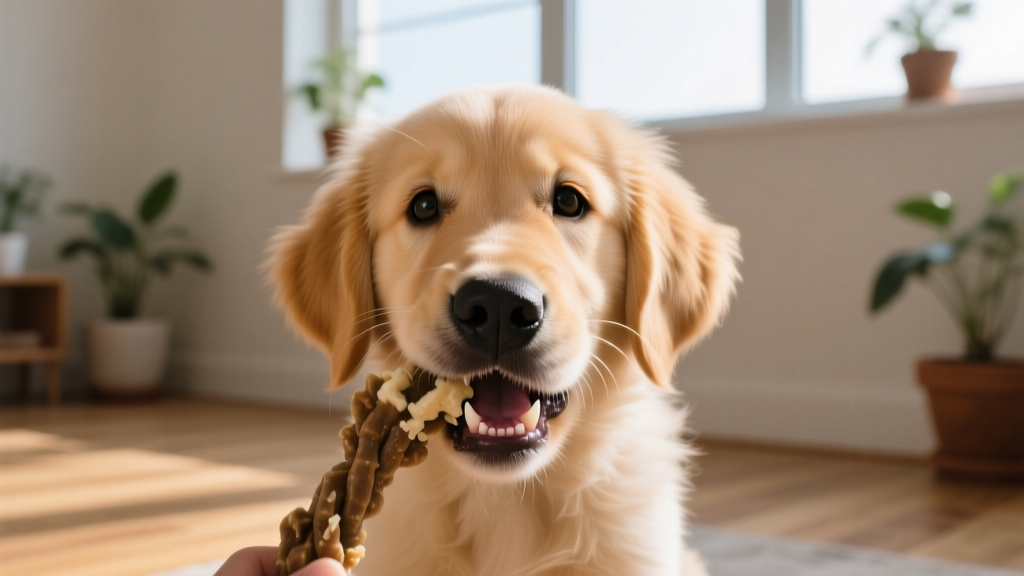
- 3-4 months: Incisors loosen first. You may find tiny teeth in bedding or toys. Offer frozen carrots, chilled rubber Kongs, and wet washcloths twisted into rope shapes.
- 4-5 months: Canines and premolars shed. Bleeding gums are normal — you may see pink-tinged drool or blood spots on chew toys. Provide softer options during peak discomfort.
- 5-7 months: Molars erupt (the last adult teeth). This is when puppies often destroy furniture if appropriate outlets aren't available. Rotate 5-7 different chew textures to maintain interest.
Safe chew recommendations by age:
- 8-12 weeks: Kong Puppy (pink/blue rubber, softer formula), Nylabone Puppy, frozen carrot sticks
- 3-5 months: Kong Classic (red), Benebone Puppy, Whimzees Puppy chews, yak milk chews (supervised)
- 6+ months: Kong Classic (red), West Paw Zogoflex, bully sticks (supervised, limit to 1-2/week for calorie control)
Avoid: Rawhide (choking and intestinal blockage risk), cooked bones (splintering), antlers (tooth fracture risk in young dogs with developing dentition), and any chew smaller than your puppy's muzzle width.
Stopping Puppy Biting and Nipping: Breed-Specific Solutions
Golden Retrievers were bred to carry birds in their mouths — they're genetically wired to put things in their mouths. Puppy biting peaks between 10-16 weeks and typically resolves by 5-6 months with consistent management. Here's what works:
The Redirect Method (most effective for Goldens):
- When puppy teeth touch skin, say "Oops!" in a calm, neutral tone (not a yelp — yelping excites many Goldens and increases biting).
- Immediately present an appropriate chew toy within 1-2 seconds.
- When puppy bites the toy, praise calmly and engage in 30 seconds of toy play.
- If puppy returns to biting skin, stand up and walk away for 10-15 seconds (removing attention).
The Time-Out Method (for persistent biters):
- After two redirects fail, calmly pick up puppy and place in a playpen or small safe area for 30-60 seconds.
- Release and resume play. If biting resumes, repeat.
- Keep time-outs boring — no toys, no attention, just a brief pause.
What NOT to do: Never hold the muzzle shut, tap the nose, or use physical punishment. These methods increase fear and can trigger defensive biting in adolescence. According to a study in the Journal of Veterinary Behavior, aversive training methods correlate with increased aggression in dogs.
First-Year Cost Breakdown: Budgeting for Your Golden
Golden Retrievers are large dogs with corresponding costs. Here's a realistic first-year budget based on 2025-2026 pricing:
| Category | Low Estimate | Medium Estimate | High Estimate |
|---|---|---|---|
| Puppy purchase (responsible breeder) | $2,000 | $3,000 | $4,500 |
| Initial vet (exams, vaccines, spay/neuter) | $600 | $900 | $1,400 |
| Food (large-breed puppy formula, 12 months) | $500 | $750 | $1,100 |
| Supplies (crate, bed, toys, leash, collar, bowls) | $200 | $400 | $700 |
| Training (puppy class + basic obedience) | $150 | $350 | $800 |
| Preventive medications (heartworm, flea/tick) | $200 | $350 | $500 |
| Pet insurance (optional but recommended) | $400 | $600 | $900 |
| Grooming (professional baths, nail trims) | $150 | $300 | $500 |
| Total First Year | $4,200 | $6,650 | $10,400 |
Hidden costs to anticipate: Emergency vet visits ($500-$3,000 per incident), boarding/pet sitting ($40-$75/night), replacement of destroyed items (shoes, furniture, baseboards), and annual heartworm testing if doses are missed.
Essential Puppy Training Tools for Golden Retrievers
Golden Retrievers respond exceptionally well to positive reinforcement training. Here are the tools that professional trainers recommend for this breed:
Food-Based Rewards
- Training treats: Zuke's Mini Naturals or Blue Buffalo Bits (small, soft, quickly consumed). Budget $15-$25/month during peak training months.
- High-value rewards: Freeze-dried liver, boiled chicken, or string cheese for difficult distractions.
- Treat delivery: Hip Dog Treat Training Pouch ($18-$25) with magnetic closure for rapid access.
Management Tools
- Long line (15-30 feet): For recall practice in open areas before off-leash reliability. Biothane material resists water and tangling ($25-$40).
- Exercise pen (x-pen): Creates a safe play zone larger than a crate. Essential for potty training management ($40-$65 for 8-panel, 24-inch height).
- Baby gates: Restrict access to un-puppy-proofed rooms. Pressure-mounted gates work for most doorways ($25-$45 each).
Skill-Building Tools
- Clicker: Precise marker for desired behaviors. PetSafe Clik-R or box clicker ($5-$8).
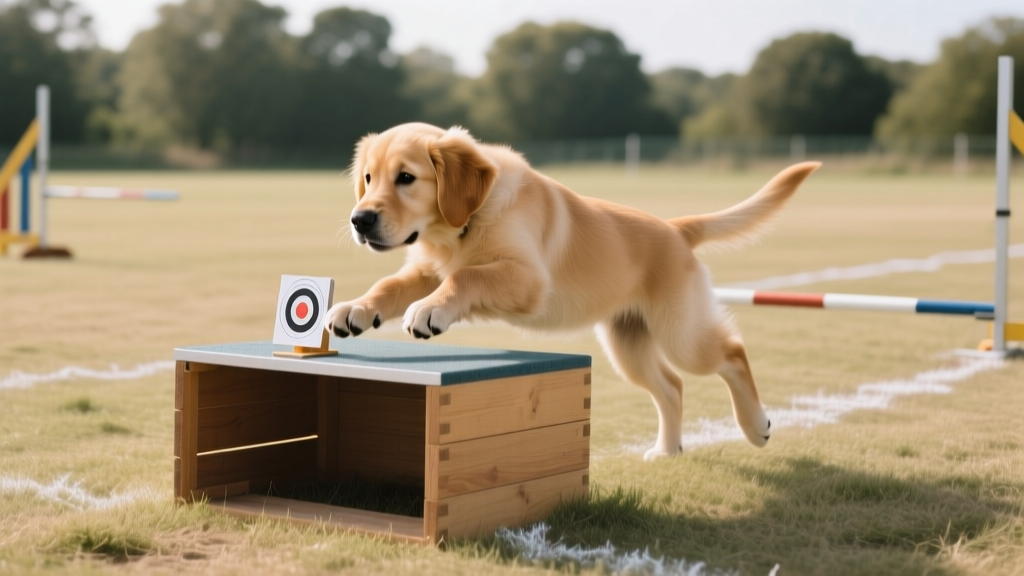
- Target stick: For teaching spins, weaves, and positional cues. Karen Pryor Target Stick ($12-$15).
- Snuffle mat: Builds scent-work skills and provides mental enrichment. ($20-$35 or DIY with fleece strips).
Frequently Asked Questions
When should I bring my Golden Retriever puppy home?
Ideally between 8-12 weeks. Puppies removed before 8 weeks miss critical littermate socialization that teaches bite inhibition and canine body language. Some breeders hold puppies until 10-12 weeks for additional socialization exposure, which can benefit first-time owners who may feel overwhelmed by the 8-10 week fear period.
How often should I feed my puppy at 10 weeks old?
At 10 weeks, feed 3-4 meals daily. Divide the total daily amount (approximately 1.5-2.5 cups of large-breed puppy food) equally across meals. Feed at consistent times — for example, 7 AM, 12 PM, 5 PM, and 9 PM for four meals, or 7 AM, 1 PM, and 7 PM for three meals. Remove uneaten food after 15-20 minutes to establish meal-time structure.
When will my Golden Retriever puppy be fully potty trained?
Most Golden Retrievers achieve reliable house training between 4-6 months with consistent management. "Reliable" means fewer than 1-2 accidents per month. Some individuals, particularly males, may take until 8-9 months. Consistency in schedule, supervision, and reinforcement matters more than the puppy's innate ability.
What vaccines does my puppy need and when?
Core vaccines include DHPP (distemper, hepatitis, parainfluenza, parvovirus) given at 6-8, 10-12, and 14-16 weeks, with a booster at 1 year. Rabies is given once between 12-16 weeks, boosted at 1 year. Non-core vaccines (Bordetella, Leptospirosis, Lyme) depend on your geographic area and lifestyle. Your veterinarian will customize the protocol based on local disease prevalence.
How do I stop my Golden puppy from biting my hands and ankles?
Redirect to appropriate chew toys within 1-2 seconds of skin contact. If redirecting fails twice, implement a 30-60 second time-out in a playpen. Ensure your puppy gets 2-3 hours of structured activity daily (training sessions, puzzle toys, supervised play) — under-exercised puppies bite more. The behavior typically diminishes significantly by 5-6 months as adult teeth erupt and impulse control develops.
When can my puppy go to the dog park?
Wait until 7-10 days after the final DHPP booster (typically around 16-17 weeks of age). Even then, choose dog parks carefully — avoid overcrowded parks, watch for rough play styles that could overwhelm your puppy, and stay for short 15-20 minute visits initially. Many trainers recommend structured playdates with known, vaccinated dogs as a safer alternative to public dog parks during the first year.
For ongoing guidance, the AKC Puppy Care resources and the Merck Veterinary Manual Dog Owners section provide breed-specific information as your Golden grows. Remember: every puppy develops at their own pace. When in doubt about health or behavioral concerns, consult your veterinarian rather than relying solely on online advice.
Marcus Aldridge
All our authors care for dogs every day — read more of their work on the authors page.