Best Puppy Training App Guide
Use the best puppy training app alongside this Golden Retriever-specific milestone guide covering feeding, potty training, vaccines, and socialization

When to Bring Your Golden Retriever Puppy Home (And Why Timing Matters)
Golden Retriever puppies should stay with their littermates and dam until at least 8 weeks of age, though many responsible breeders keep puppies until 8.5 to 9 weeks to complete early socialization exercises. During weeks 4–8, puppies learn bite inhibition from siblings, develop foundational canine communication skills, and receive maternal antibodies that protect them until their first vaccines take hold.
If you're evaluating the best puppy training app before your Golden arrives, start your research now — most top-rated apps like Puppr, Doggy Time, and PetDesk let you build profiles and set reminder schedules before your puppy's arrival date. Puppr (iOS/Android, $4.99/month or $34.99/year as of 2026) offers breed-specific lesson plans with video demonstrations from certified trainers, making it particularly useful for Golden Retriever owners who need guidance on managing the breed's signature mouthiness.
Bring your Golden Retriever puppy home between 8 and 9 weeks of age. Puppies removed before 8 weeks show higher rates of separation anxiety, resource guarding, and fear-based reactivity later in life, according to research published in the Journal of Veterinary Behavior. Never accept a puppy younger than 7 weeks regardless of breeder claims.
Golden Retriever Puppy Milestone Timeline: Weeks 4 Through 12 Months
Golden Retrievers mature more slowly than many breeds. While a Border Collie might hit behavioral milestones at 5 months, your Golden may not reach full emotional maturity until 18–24 months. This extended puppyhood is normal for the breed and affects every training decision you'll make.
| Age Range | Weight Range (lb/kg) | Key Milestones | Training Focus |
|---|---|---|---|
| 4–8 weeks | 5–15 lb / 2.3–6.8 kg | Litter socialization, bite inhibition from siblings, weaning onto solid food, fear period begins (~5 weeks) | Handled daily by breeder, exposed to varied surfaces, sounds, and gentle human interaction |
| 8–12 weeks | 15–25 lb / 6.8–11.3 kg | Peak socialization window, first vaccines, crate training begins, name recognition, extreme mouthing/biting phase | Sit, name recall, handling exercises, crate acclimation, potty schedule establishment |
| 12–16 weeks | 25–35 lb / 11.3–15.9 kg | Second fear period (~14 weeks), baby teeth begin loosening, socialization window closing, vaccine series completing | Down, stay (3–5 seconds), loose-leash walking foundations, continued positive exposures |
| 16–24 weeks | 35–50 lb / 15.9–22.7 kg | Peak teething, adolescent energy surge, testing boundaries, reliable recall becomes harder as distractions increase | Proofing commands in new environments, impulse control games, extended crate duration |
| 6–12 months | 50–70 lb / 22.7–31.8 kg | Sexual maturity (6–8 months if intact), second fear period possible (~8 months), growth plates still open | Reliable recall, advanced impulse control, structured exercise (avoid forced running until 18 months) |
Use your training app's milestone tracker to log these developments. Most Golden owners find that tracking weight weekly and training progress daily through an app like Dogo (free tier available, $9.99/month premium) helps identify regression patterns — especially during fear periods when previously confident puppies suddenly spook at familiar objects.
Feeding Schedule: Exact Portions for Your Golden Retriever Puppy
Golden Retrievers are predisposed to obesity and hip dysplasia, making controlled feeding critical. Research from AVMA's nutrition resources confirms that keeping Golden puppies lean (Body Condition Score 4–5 out of 9) reduces hip dysplasia severity and extends lifespan by an average of 1.8 years.
Feed a large-breed puppy formula (AAFCO statement must read "growth" or "all life stages") with calcium content between 1.0% and 1.5% on a dry matter basis. Purina Pro Plan Large Breed Puppy, Royal Canin Golden Retriever Puppy, and Hill's Science Diet Large Breed Puppy all meet these criteria.
| Age | Meals Per Day | Daily Amount (cups)* | Notes |
|---|---|---|---|
| 8–12 weeks | 3–4 | 1.5–2.0 cups | Soften kibble with warm water if puppy struggles to chew; remove uneaten food after 15 minutes |
| 12–16 weeks | 3 | 2.0–2.5 cups | Transition to dry kibble; monitor BCS weekly — ribs should be easily felt without pressing hard |
| 4–6 months | 2–3 | 2.5–3.5 cups | Drop to 2 meals/day at 6 months; adjust based on activity level and growth rate |
| 6–12 months | 2 | 3.0–4.0 cups | Males typically eat more than females; reduce by 10% if BCS exceeds 5 |
*Cup measurements based on standard 8 oz measuring cup and typical large-breed puppy kibble (~350–400 kcal/cup). Always check your specific food's feeding chart and adjust based on your puppy's body condition, not the label alone. Consult your veterinarian for personalized portions.
Set feeding reminders in your training app — Puppr and Doggy Time both include meal logging features that track intake over time, which proves invaluable if your puppy develops gastrointestinal issues and your vet needs a dietary history.
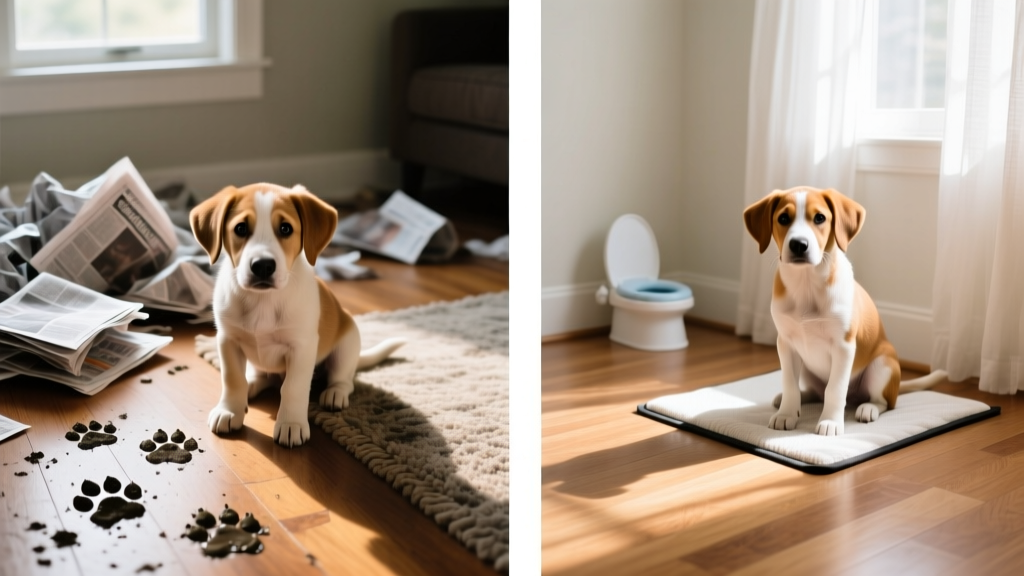
Potty Training Your Golden Retriever: Realistic Timeline and Troubleshooting
When will my puppy be fully potty trained? Most Golden Retrievers achieve reliable house training between 4 and 6 months of age, with occasional accidents possible until 8–10 months. This is faster than many breeds due to the Golden's eagerness to please, but "fully trained" means fewer than 1 accident per month — not zero accidents ever.
A puppy can hold their bladder for approximately 1 hour per month of age, plus 1. So a 3-month-old Golden can hold for roughly 4 hours — but only during rest. Active, playing puppies need to go out far more frequently. Set your training app's timer for potty breaks every 30–45 minutes during active play periods.
Potty Training Progression
- Weeks 8–10: Take puppy outside every 30 minutes during waking hours, immediately after meals, after naps, and after play sessions. Use a consistent verbal cue like "go potty." Reward with a treat immediately upon elimination outdoors — not after coming back inside.
- Weeks 10–14: Extend intervals to 45–60 minutes. Begin associating a specific outdoor area with elimination. If accidents happen indoors, clean with enzymatic cleaner (Nature's Miracle or Rocco & Roxie) — never ammonia-based products, which smell like urine to dogs.
- Weeks 14–20: Puppy should begin "asking" to go out (sitting by door, whining, pacing). Extend intervals to 60–90 minutes. Nighttime holds of 6–7 hours become possible.
- Months 5–6: Reliable 2–3 hour daytime intervals. Occasional accidents during excitement or after schedule disruptions are normal. If accidents increase suddenly, rule out urinary tract infection with your vet.
Troubleshooting Common Potty Problems
Submissive urination: Common in Golden puppies when greeted enthusiastically. Solution: ignore puppy for first 2 minutes upon entering, greet calmly at their level, avoid direct eye contact during greetings. Most outgrow this by 6–8 months.
Excitement urination: Different from submissive — occurs during high-arousal play. Solution: take potty break before exciting activities, keep play sessions shorter, and redirect to calm behaviors.
Crate accidents: If puppy soils crate, the crate is likely too large (they need only enough room to stand, turn, and lie down) or they're being crated too long. A 36-inch crate with a divider panel works well for growing Goldens.
Socialization Window: The Critical Weeks 3–14 Exposure Checklist
The American Veterinary Society of Animal Behavior (AVSAB Puppy Socialization Position Statement) confirms that the primary socialization period for puppies occurs between 3 and 14 weeks of age. For Golden Retrievers — a breed known for friendliness — this window is your opportunity to build confidence that prevents the fear-based reactivity that can develop even in genetically sound dogs.
- ☐ Meet 10+ different people (varying ages, heights, skin tones, clothing styles including hats, sunglasses, hoodies)
- ☐ Walk on 5+ surfaces (grass, gravel, tile, metal grates, wet pavement)
- ☐ Hear 10+ sounds (vacuum, thunderstorm recordings, doorbell, children playing, traffic, hair dryer)
- ☐ See 5+ other dog breeds from a safe distance (fully vaccinated adult dogs only for direct contact)
- ☐ Experience gentle handling of ears, paws, mouth, tail — paired with treats
- ☐ Ride in car 3+ times (short trips, not just vet visits)
- ☐ Visit 3+ public spaces (parking lots, quiet parks, outdoor seating areas)
- ☐ Encounter 3+ objects that move oddly (umbrellas opening, plastic bags blowing, skateboards)
- ☐ Practice brief separations from owner (5–15 minutes with a trusted caregiver)
- ☐ Attend 1+ structured puppy socialization class (requires at least first DHPP vaccine + 7 days)
Track exposures in your training app — many owners use the notes feature in Puppr or a simple spreadsheet to log new experiences daily.
When can my puppy go outside and meet other dogs? Your Golden can go outside in your own yard immediately. For public spaces, carry your puppy or use a stroller until their first DHPP vaccine takes effect (approximately 7 days after the first dose at 6–8 weeks). Puppy socialization classes that require proof of first vaccination and maintain sanitized facilities are safe from 8 weeks onward, per AVSAB guidelines. Avoid dog parks and high-traffic dog areas until the full vaccine series is complete (typically 16 weeks).
Vaccination Schedule: Exactly What Your Golden Retriever Needs and When
Golden Retriever puppies follow the standard AKC-recommended core vaccination schedule, but your veterinarian may adjust timing based on local disease prevalence and your puppy's individual risk factors.
| Age | Vaccine | Type | Estimated Cost |
|---|---|---|---|
| 6–8 weeks | DHPP (Distemper, Hepatitis/Adenovirus, Parainfluenza, Parvovirus) | Core — Dose 1 | $25–$50 |
| 10–12 weeks | DHPP Dose 2 + Bordetella (Kennel Cough) | Core + Lifestyle | $40–$75 |
| 14–16 weeks | DHPP Dose 3 + Rabies | Core — Final puppy doses | $50–$90 |
| 12–16 months | DHPP booster + Rabies booster | Core — 1-year boosters | $50–$100 |
Lifestyle vaccines to discuss with your vet: Leptospirosis (recommended in areas with wildlife exposure), Lyme disease (tick-endemic regions, particularly Northeast and Upper Midwest US), and Canine Influenza (H3N2/H3N8 — recommended if your Golden will attend daycare or group classes).
Set vaccine reminders in your training app or use PetDesk (free, integrates directly with many veterinary clinics) to receive automated appointment reminders and access your puppy's vaccine records digitally. Always consult your veterinarian to determine the appropriate schedule for your specific puppy.
Teething Timeline and Crate Training Progression
Teething: Months 3–6
Golden Retrievers begin losing baby teeth around 12–14 weeks, with the full set of 42 adult teeth typically erupted by 6 months. During peak teething (14–20 weeks), expect increased chewing, drooling, and occasional blood on toys — all normal.
Safe chew recommendations by stage:
- 12–16 weeks: Frozen Kong Classic (puppy size, filled with wet food and frozen), Nylabone Puppy Chew (softer formula), chilled carrot sticks
- 16–20 weeks: Kong Classic (medium, regular formula), Benebone Wishbone (puppy formula), frozen washcloth twisted into a rope and supervised
- 20–24 weeks: Kong Extreme (black rubber, more durable), yak cheese chews (supervised — remove when small enough to swallow), bully sticks (limited to 10 minutes, supervised)
Avoid: Rawhide (choking and blockage risk), cooked bones (splinter hazard), tennis balls (abrasive felt wears down teeth — use rubber fetch balls like Chuckit! Ultra instead), and any chew small enough to fit entirely inside your puppy's mouth.
Crate Training Progression with Time Limits
Golden Retrievers generally adapt to crates more readily than independent breeds, but a structured progression prevents anxiety and whining.
| Age | Maximum Daytime Crate Duration | Maximum Nighttime Duration | Crate Size Recommendation |
|---|---|---|---|
| 8–10 weeks | 30–60 minutes | 3–4 hours (will need one overnight potty break) | 36" crate with divider — allow only enough space to stand, turn, lie down |
| 10–14 weeks | 1–2 hours | 4–5 hours | Expand divider slightly as puppy grows |
| 14–20 weeks | 2–3 hours | 6–7 hours | Remove divider by ~16 weeks for most Goldens |
| 5–6 months | 3–4 hours | 7–8 hours | Full 42" crate for adult male Goldens (55–75 lb / 25–34 kg) |
| 6–12 months | 4–5 hours maximum | 8 hours | Consider transitioning to pen or puppy-proofed room by 9–12 months |
Crate training steps: Feed meals in the crate from day one. Toss high-value treats (small pieces of boiled chicken or freeze-dried liver) inside and let puppy enter/exit freely. Close the door for 30 seconds, then open before puppy whines. Gradually increase duration. Never use the crate as punishment. If your puppy whines after being settled for 10+ minutes, take them outside to potty — then back to crate with minimal interaction. Most Golden puppies stop protest-whining within 5–7 nights of consistent practice.
Common Golden Retriever Puppy Problems and Solutions
Golden Retrievers are bred as retrieving dogs, which means their puppies are genetically wired to carry things in their mouths. This breed trait drives the three most common behavioral complaints from Golden puppy owners:
Puppy Biting and Nipping
How do I stop puppy biting and nipping? Golden puppies use their mouths the way human toddlers use their hands — to explore, play, and communicate. Complete elimination of mouthing is unrealistic before 5–6 months, but you can reduce intensity and frequency significantly.
- Redirect: When teeth touch skin, immediately offer an appropriate chew toy. Praise enthusiastically when puppy chews the toy instead.
- Reverse time-out: If redirecting fails, stand up and walk away for 15–30 seconds. This teaches that biting ends play — the opposite of what puppy wants. Return and resume play calmly.
- Teach "gentle": Hold a treat in a closed fist. When puppy licks or noses your hand instead of biting, say "gentle" and open your hand to give the treat. Practice daily.
- Manage arousal: Biting escalates when puppies are overtired or overstimulated. Enforce nap times — puppies need 18–20 hours of sleep per day. An overtired Golden puppy is a bitey Golden puppy.
Never hold a puppy's mouth shut, yell, or use physical punishment. These methods increase fear and can trigger defensive biting. Positive reinforcement and consistent redirection produce reliable results within 2–4 weeks.
Destructive Chewing
Golden Retrievers chew more intensely than most breeds through the 4–8 month window. Puppy-proof your home by removing shoes, remote controls, and anything within 2 feet of the floor. Provide a rotation of 5–7 approved chew toys (rotating keeps them novel) and supervise all free-roaming time until 10–12 months.
Jumping on People
Goldens are social, physical dogs who greet with full-body enthusiasm. Teach an incompatible behavior: a solid "sit" for greetings. Ask visitors to ignore jumping (turn away, no eye contact) and reward sitting with attention. Practice with family members before introducing guests.
First-Year Cost Breakdown for a Golden Retriever Puppy
Budget realistically. Golden Retrievers are large dogs with higher food, medication, and supply costs than smaller breeds. Here's what to expect in the first year (2026 US averages):
| Category | Low Estimate | Mid Estimate | High Estimate |
|---|---|---|---|
| Puppy purchase (responsible breeder) or adoption fee | $350 (rescue) | $2,500 | $4,500+ |
| Veterinary (vaccines, spay/neuter, wellness exams, fecal tests, heartworm prevention) | $600 | $900 | $1,500 |
| Food (large-breed puppy formula, then adult transition) | $400 | $650 | $1,000 |
| Supplies (crate, bed, leash/harness, bowls, toys, grooming tools) | $300 | $500 | $800 |
| Training (group classes, training app subscription, possible private sessions) | $150 | $400 | $1,200 |
| Flea/tick prevention + heartworm medication (year-round) | $200 | $350 | $500 |
| Grooming (Golden Retrievers need brushing 3–4x/week; professional grooming optional) | $50 (DIY supplies) | $300 | $600 |
| FIRST-YEAR TOTAL | $2,050 | $5,600 | $10,100 |
These figures exclude emergency veterinary care, which can range from $500–$5,000+ per incident. Pet insurance (Trupanion, Healthy Paws, or Lemonade — averaging $45–$80/month for a Golden puppy in 2026) or a dedicated emergency fund of at least $2,000 is strongly recommended.
Frequently Asked Questions
When should I bring my Golden Retriever puppy home?
Between 8 and 9 weeks of age. Reputable breeders who participate in Puppy Culture or Avidog early development programs often keep puppies until 8.5–9 weeks to complete critical littermate socialization. Puppies separated before 8 weeks face higher risks of behavioral problems, according to the Merck Veterinary Manual.
How often should I feed my puppy at each age?
8–12 weeks: 3–4 meals daily. 12–16 weeks: 3 meals daily. 4–6 months: 2–3 meals daily. 6 months and beyond: 2 meals daily. Golden Retrievers are prone to bloat (gastric dilatation-volvulus), so never feed one large meal — always split into at least two feedings and avoid vigorous exercise for 30 minutes before and after meals.
When will my puppy be fully potty trained?
Most Golden Retrievers achieve reliable house training between 4 and 6 months, with occasional accidents until 8–10 months. Consistency is the single biggest factor — puppies on a strict schedule (same outdoor spot, same verbal cue, same reward routine) train 2–3 weeks faster than those with inconsistent routines.
What vaccines does my puppy need and when?
Core vaccines: DHPP at 6–8, 10–12, and 14–16 weeks, plus Rabies at 14–16 weeks. Lifestyle vaccines (discuss with your vet): Bordetella at 10–12 weeks, Leptospirosis, Lyme, and Canine Influenza based on regional risk. Booster shots at 12–16 months, then every 1–3 years depending on vaccine type and local regulations.
How do I stop puppy biting and nipping?
Use the redirect-and-withdraw method: offer a chew toy when teeth touch skin, and if biting continues, stand up and walk away for 15–30 seconds. Enforce 18–20 hours of daily sleep (overtired puppies bite more). Teach "gentle" using closed-fist treat exercises. Expect gradual improvement over 4–8 weeks, not overnight results. Never use physical punishment.
When can my puppy go outside and meet other dogs?
Your own yard is safe immediately. For public spaces, wait until 7 days after the first DHPP vaccine (usually around 8–9 weeks of age) for low-risk environments like puppy classes. Avoid dog parks, pet store floors, and areas with unknown dog traffic until the full DHPP series is complete at 16 weeks. Supervised playdates with known, fully vaccinated adult dogs are safe from 8 weeks onward.
Is a puppy training app worth it for a Golden Retriever?
Yes — particularly for first-time Golden owners. Apps like Puppr and Dogo provide structured lesson plans with video demonstrations, which is valuable because Goldens respond best to positive reinforcement techniques that require precise timing. Use the app alongside (not instead of) at least one in-person group puppy class, which provides irreplaceable socialization opportunities with other puppies and handlers. Budget $5–$10/month for a premium app subscription — a small investment compared to the cost of correcting behavioral problems later.
Aaron Whyte
All our authors care for dogs every day — read more of their work on the authors page.