Golden Retriever Puppy Guide
Complete Golden Retriever puppy guide covering the best puppy toy picks by age, feeding schedules, potty training timelines, vaccinations, and first-year costs.
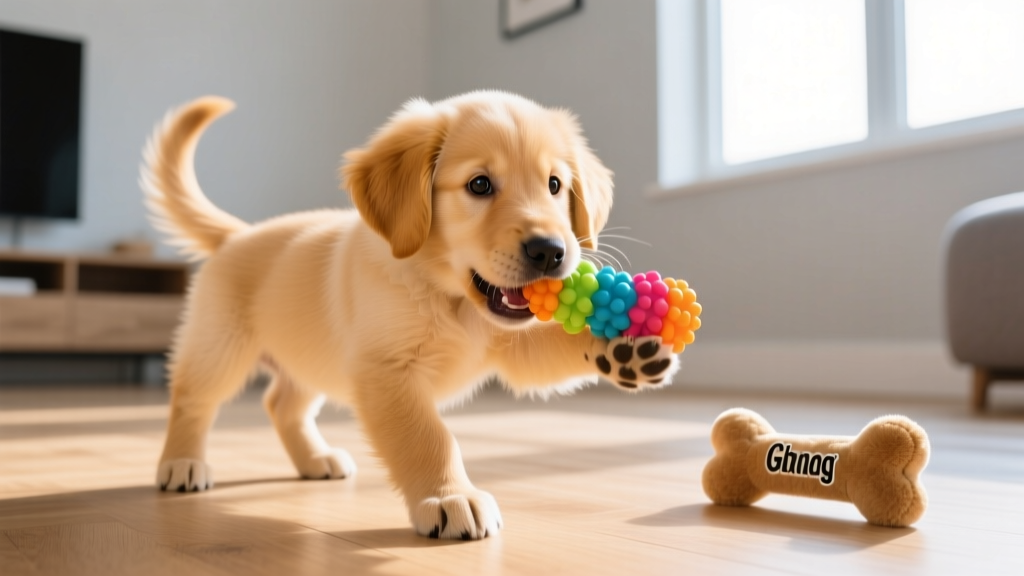
Golden Retrievers are one of America's most popular breeds for good reason — they're eager to please, deeply loyal, and famously gentle. But raising a Golden Retriever puppy from 8 weeks to adulthood requires a structured plan that accounts for their rapid growth phases, notorious mouthiness, and breed-specific health vulnerabilities. This guide pairs developmental milestones with the right puppy toy selections at every stage, because for a breed that was literally developed to carry waterfowl through brush, having appropriate things to chew and carry isn't optional — it's essential.
When to Bring Your Golden Retriever Puppy Home
The AKC recommends that puppies stay with their littermates and dam until at least 8 weeks of age. For Golden Retrievers specifically, many responsible breeders prefer to keep puppies until 9–10 weeks. Here's why that extra week matters:
- Weeks 6–8: Critical bite inhibition learning from littermates. A Golden puppy separated at 6 weeks misses foundational lessons about how hard is too hard when mouthing.
- Weeks 8–9: First fear imprint period begins. Puppies benefit from the security of familiar surroundings during this window.
- Week 9–10: The breeder can assess individual temperament and match the puppy to the right household.
If you're adopting from a rescue, the puppy may come home at 8 weeks out of necessity. That's manageable — just be extra intentional about bite inhibition training and socialization.
Golden Retriever Puppy Milestones: Week by Week
Weeks 4–8 (At the Breeder)
What's happening: Weaning from mother's milk to softened kibble. Eyes and ears fully functional. Littermate social hierarchy forming. Introduction to novel textures and sounds.
What to expect if visiting: Puppies should be curious, wobbly, and willing to approach humans. A Golden pup that hides or freezes consistently may need extra socialization support.
Weeks 8–12 (The Homecoming)
What's happening: Rapid bonding with new family. Sleep needs are enormous — expect 18–20 hours of sleep per day. Bladder capacity is roughly 1 hour per month of age (so about 2 hours max at 8 weeks). First fear imprint period peaks around week 8–10.
Key action: Keep experiences positive and low-pressure. Avoid overwhelming introductions. This is the prime window for building positive associations with handling, grooming tools, and nail trims using food rewards.
Weeks 12–16 (Growing Confidence)
What's happening: Puppy begins testing boundaries. Attention span lengthens slightly (to about 3–5 minutes per training session). Baby teeth start loosening. Energy bursts become more intense.
Key action: Begin structured positive reinforcement training. Keep sessions under 5 minutes. Introduce the concept of "drop it" and "leave it" — critical for a breed that picks up everything.
Weeks 16–24 (The Teenage Phase Begins)
What's happening: Adult teeth erupting. Chewing intensity peaks. Second fear imprint period may occur around 16–20 weeks. Growth spurts cause temporary clumsiness. Males may begin lifting leg.
Key action: Rotate puppy toy selections to prevent boredom. Increase mental enrichment. Be patient if your previously confident puppy suddenly seems unsure of familiar things.
Months 6–12 (Adolescence)
What's happening: Sexual maturity (if intact). Females typically reach 60–70% of adult weight by 6 months; males, about 65–75%. Energy levels are high but focus may decrease. This is when many Golden owners report their puppy "forgot" everything they learned.
Key action: Continue training consistently. Consider enrolling in an intermediate obedience class. Spay/neuter discussions should happen with your vet — the AVMA provides general guidance, but Golden Retrievers have breed-specific considerations regarding joint development and timing.
Feeding Your Golden Retriever Puppy: Schedule and Portions
Golden Retrievers are large-breed dogs, meaning they need a diet formulated for large-breed puppy growth — one that meets AAFCO nutrient profiles for growth/all life stages but controls calcium and calorie density to prevent rapid skeletal growth. Look for a statement on the bag: "This food is formulated to meet the nutritional levels established by the AAFCO Dog Food Nutrient Profiles for growth/all life stages, including growth of large-size dogs (70 lb or more as an adult)."
| Age | Meals Per Day | Approximate Daily Amount | Notes |
|---|---|---|---|
| 8–12 weeks | 3 meals | 1.5–2 cups/day (split into 3) | Soften kibble with warm water if needed |
| 12–16 weeks | 3 meals | 2–2.5 cups/day | Puppy should have visible waist when viewed from above |
| 4–6 months | 2–3 meals | 2.5–3.5 cups/day | Transition to 2 meals around 5–6 months |
| 6–12 months | 2 meals | 3–4 cups/day | Monitor body condition score (BCS); adjust for activity level |
Important: These are starting estimates. A 30 lb Golden puppy at 4 months eating a calorie-dense large-breed puppy food (roughly 380–420 kcal/cup) will need different portions than one eating a lower-calorie formula. Always use the feeding chart on your specific food bag as a starting point, then adjust based on your puppy's body condition score. You should be able to feel ribs without pressing hard, and see a defined waist from above. According to the Merck Veterinary Manual, overfeeding large-breed puppies increases the risk of developmental orthopedic diseases like hip dysplasia.
Potty Training Your Golden Retriever: A Realistic Timeline
Golden Retrievers are generally eager to please, which works in your favor for house training. But "eager to please" doesn't mean "trained in a weekend." Here's what realistic progress looks like:
Potty Training Milestones
- 8–10 weeks: Expect accidents every 1–2 hours if not taken outside. You are managing the environment, not training yet.
- 10–14 weeks: Puppy begins going to the door or showing signals (sniffing, circling). Still expect 1–3 accidents per week.
- 4–6 months: Reliable for 3–4 hour stretches during the day. Occasional regression during teething or growth spurts is normal.
- 6–9 months: Most Golden Retrievers are reliably house trained by this age if you've been consistent.
- 9–12 months: Full bladder control (6–8 hours overnight).
Troubleshooting common setbacks:
- Submissive urination: Very common in young Goldens. Don't punish — it makes it worse. Greet calmly, avoid looming over the puppy, and take them outside immediately upon coming home.
- Excitement peeing: Similar to submissive urination. Keep arrivals low-key until bladder control matures.
- Regression at 4–6 months: Often coincides with teething or a fear period. Go back to basics: more frequent trips outside, higher-value treats for outdoor elimination, and supervision.
Potty Training Log Template
Track these data points daily for the first 4 weeks to identify patterns:
| Time | Went Outside? | Result | Accident Location | Notes (meal time, play, nap) |
|---|---|---|---|---|
| 6:30 AM | Yes | Pee + poop | — | Right after waking from crate |
| 7:15 AM | Yes | Pee | — | 15 min after breakfast |
| 9:00 AM | No | — | Kitchen rug | Was playing, didn't signal |
Pattern recognition: Most 8–12 week Golden puppies need to eliminate within 15–20 minutes after eating, drinking, waking, or intense play.
Vaccination Schedule for Your Golden Retriever Puppy
Core vaccines protect against life-threatening diseases. Your veterinarian will tailor the exact schedule based on local disease prevalence and your puppy's risk factors, but here is the standard protocol:
| Age | Vaccine(s) | Type | Notes |
|---|---|---|---|
| 6–8 weeks | DHPP (Distemper, Hepatitis/Adenovirus, Parainfluenza, Parvovirus) | Core | Often given by breeder; confirm records |
| 10–12 weeks | DHPP booster + Bordetella (kennel cough) | Core + Lifestyle | Bordetella recommended if attending puppy classes |
| 14–16 weeks | DHPP final booster + Rabies | Core | Rabies required by law in most US jurisdictions |
| 12–16 weeks (optional) | Leptospirosis, Lyme disease, Canine Influenza (H3N2/H3N8) | Lifestyle | Discuss with your vet based on regional risk and outdoor exposure |
Golden Retriever-specific note: This breed has a higher-than-average incidence of vaccine-associated adverse reactions compared to some breeds, though serious reactions remain rare. The AVMA recommends discussing risk factors with your veterinarian. Never combine multiple vaccines in a single visit without your vet's approval for a small puppy.
The Socialization Window: Weeks 3–14
The American Veterinary Society of Animal Behavior (AVSAB) identifies the primary socialization period as 3–14 weeks. For Golden Retrievers, who are generally sociable, this window is about building confidence and resilience — not just friendliness. A well-socialized Golden isn't just one who loves everyone; it's one who stays calm when things are unfamiliar.
Socialization Exposure Checklist
Aim for positive experiences with the following by 14 weeks. Never force interactions — let the puppy approach at their own pace and reward calm curiosity.
- ☐ At least 10 different people (varying ages, heights, ethnicities, wearing hats/glasses/coats)
- ☐ 5+ children of different ages (supervised, calm interactions only)
- ☐ 3+ friendly, fully vaccinated adult dogs
- ☐ Surfaces: grass, gravel, tile, carpet, metal grates, wet pavement
- ☐ Sounds: vacuum cleaner, doorbell, thunderstorm audio (start at low volume), traffic, construction noise
- ☐ Objects: umbrellas opening, shopping carts, bicycles, strollers, balloons
- ☐ Handling: paw touching, ear inspection, mouth opening, nail clipping practice, towel wrapping
- ☐ Environments: car rides, veterinary clinic (happy visits only), pet store, outdoor café patio
- ☐ Grooming tools: brush, comb, nail clippers, electric toothbrush (turned off, then on)
- ☐ Restraint: gentle collar hold, harness handling, being lifted and held for 5–10 seconds
Before vaccinations are complete: You can socialize safely by carrying your puppy, using a stroller, visiting homes of known-vaccinated dogs, and attending well-managed puppy classes that require at least one DHPP dose and a Bordetella vaccine. The risk of behavioral problems from poor socialization outweighs the disease risk in most environments, according to AVSAB position statements.
Choosing the Right Puppy Toy for Every Golden Retriever Stage
Golden Retrievers are mouth-oriented dogs. Bred to retrieve game, they have a soft mouth and a near-constant desire to carry things. The right puppy toy at the right developmental stage isn't a luxury — it's a behavioral management tool that protects your belongings and your puppy's teeth.
8–12 Weeks: Gentle Introduction
What works: Soft plush toys (no small parts), rubber teething rings, knotted fleece tug toys. Size should be small enough for an 8-week-old Golden to carry (roughly 4–6 inches long).
Specific picks: KONG Puppy (small, pink/blue rubber — softer formula for baby teeth), Nylabone Puppy Chew (chicken flavor, petite size), Snuggle Puppy with heartbeat (helps crate transition).
What to avoid: Hard nylon bones, rawhide, tennis balls (the felt is abrasive on baby teeth and they can be a choking hazard for determined chewers).
Budget: $8–$25 for this stage.
12–16 Weeks: Building Retrieving Habits
What works: Bumpers and soft retrieve dummies (2-inch size), rope toys for supervised tug, treat-dispensing puzzle toys for mental stimulation.
Specific picks: KONG Classic (small red), West Paw Zogoflex Bumi (small), Outward Hound Nina Ottosson Dog Brick puzzle toy.
Training tip: Start teaching "drop it" using two identical toys — offer the second one to get the puppy to release the first. This builds the foundation for reliable retrieve work later.
Budget: $15–$40 for this stage.
16–24 Weeks: Peak Teething
What works: Freezable rubber toys, chilled wet washcloths (supervised only), medium-density nylon chews, edible dental chews approved for puppies.
Specific picks: KONG Classic (medium red — upgrade size as puppy grows), Nylabone Dura Chew (medium, bacon flavor), Benebone Puppy (medium), frozen carrot sticks as a low-cost edible option.
Critical safety rule: Any toy that fits entirely inside your puppy's mouth is a choking hazard. As your Golden grows, upgrade toy sizes. A 16-week Golden puppy typically needs "medium" sized toys, not "small."
Budget: $20–$55 for this stage.
6–12 Months: Power Chewer Phase
What works: Large KONG Classic (red or black depending on chew intensity), Goughnuts MAXX 50 Ring, durable rope toys, flirt poles for prey-drive exercise, tennis balls for fetch (now safe with adult teeth, but supervise for destruction).
Specific picks: KONG Extreme (black, large), Chuckit! Ultra Ball (medium), West Paw Zogoflex Hurley (large).
Golden-specific tip: Introduce a "toy box" system. Keep 10–15 toys but only make 3–4 available at a time. Rotate weekly to maintain novelty. This breed bores easily and will destroy "boring" toys out of frustration.
Budget: $35–$80 for this stage.
Puppy Toy Safety Warning
Always supervise your Golden Retriever puppy with any chew toy. Discard toys immediately if they show signs of breaking apart, splintering, or if pieces small enough to swallow come loose. If your puppy ingests a foreign object, contact your veterinarian or the ASPCA Animal Poison Control Center at (888) 426-4435 (24/7, consultation fee applies). Intestinal blockages from swallowed toy pieces are a leading cause of emergency surgery in young dogs, with treatment costs ranging from $2,000–$7,000.
Teething Timeline and Relief Strategies
Golden Retriever puppies go through two distinct teething phases:
- Deciduous (baby) teeth erupt: 3–6 weeks of age (usually complete before you bring puppy home)
- Deciduous teeth fall out / adult teeth erupt: 3–6 months of age (this is the phase you'll deal with)
By 6–7 months, all 42 adult teeth should be in place. If baby teeth remain alongside adult teeth (retained deciduous teeth), your vet may need to extract them — a common issue in many breeds.
Signs your Golden is teething:
- Increased chewing on everything (furniture, shoes, hands)
- Drooling more than usual
- Small spots of blood on toys or in saliva (normal in small amounts)
- Reluctance to eat hard kibble
- Finding tiny teeth around the house (many puppies swallow them — this is harmless)
- Red or swollen gums
Relief strategies that work:
- Freeze a wet washcloth twisted into a rope shape — supervise use and discard when threads come loose
- Offer frozen carrot sticks or frozen banana slices as edible chews
- Soak kibble in warm water for 5 minutes if your puppy seems reluctant to eat
- Provide a variety of textures: rubber, nylon, rope, and edible chews
- Redirect mouthing of hands to an appropriate toy within 1 second — consistency is everything
Crate Training Progression and Time Limits
Crate training is essential for potty training, safety when unsupervised, and creating a calm retreat for your Golden. But crating for too long causes distress and undermines the training. Here are safe maximum crate times:
| Puppy Age | Maximum Daytime Crate Time | Maximum Overnight Crate Time |
|---|---|---|
| 8–10 weeks | 30–60 minutes | 3–4 hours (set alarm for potty break) |
| 11–14 weeks | 1–2 hours | 4–5 hours |
| 15–16 weeks | 2–3 hours | 5–6 hours |
| 4–6 months | 3–4 hours | 6–8 hours |
| 6+ months | 4–5 hours | 8 hours |
Crate training progression:
- Days 1–3: Crate door open, meals fed inside, treats tossed in for the puppy to retrieve. Never close the door yet.
- Days 4–7: Close door for 1–5 minutes while you sit nearby. Open before the puppy protests.
- Week 2: Close door, step away for 5–15 minutes. Return before distress. Gradually extend.
- Week 3–4: Leave the room briefly. Build to 30-minute absences.
- Month 2+: Puppy should enter crate voluntarily for naps. Use a stuffed KONG as a crate-only enrichment item to build positive association.
Crate size for Golden Retrievers: Buy a 42-inch crate (appropriate for adult Goldens) and use the included divider panel to shrink the space while your puppy is small. The puppy should be able to stand, turn around, and lie down comfortably — but not have enough room to eliminate in one corner and sleep in another.
Common Golden Retriever Puppy Problems and Solutions
Problem: Mouthing and Biting
Why it happens: Golden Retrievers are a retrieving breed — their mouths are their primary tool for interacting with the world. Puppy mouthing peaks between 8–16 weeks and intensifies during teething.
Solution:
- Redirect to a puppy toy within 1 second of teeth touching skin
- If biting persists, stand up and withdraw attention for 10–15 seconds (time-out from play, not isolation)
- Teach "gentle" by offering a treat in a closed fist and opening only when the puppy licks instead of biting
- Ensure the puppy gets adequate physical exercise and mental enrichment — overtired puppies bite more
- Provide frozen chew toys during teething peaks
Timeline: Most Goldens significantly reduce mouthing by 5–6 months with consistent redirection. Some continue gentle mouthing into adulthood — it's a breed trait, not a failure.
Problem: Destructive Chewing
Why it happens: Teething discomfort, boredom, insufficient exercise, or separation anxiety. Golden Retrievers are social dogs and can develop anxiety when left alone for extended periods.
Solution:
- Puppy-proof the home: remove shoes, cords, and small objects from floor level
- Provide 3–4 appropriate chew options at all times and rotate weekly
- Use bitter apple spray on furniture legs (test on a hidden area first)
- Ensure 30–45 minutes of structured exercise per day for puppies under 6 months (short walks, training sessions, controlled play)
- Crate or confine to a puppy-safe pen when unsupervised
Problem: Whining in the Crate
Why it happens: The puppy is either signaling a need (potty, hunger) or protesting confinement. Learning to distinguish the two is critical.
Solution:
- If the puppy was recently outside and fed, wait 5–10 minutes to see if they self-settle before responding
- If whining occurs at a typical potty interval (2–3 hours after last trip), take them out immediately — no play, just business, then back in the crate
- Cover the crate with a light blanket to reduce visual stimulation
- Place a Snuggle Puppy (with simulated heartbeat) or a worn t-shirt with your scent in the crate
- Never use the crate as punishment — it must remain a safe space
First-Year Cost Breakdown for a Golden Retriever
Budgeting accurately prevents unpleasant surprises. Here's a realistic first-year cost estimate for a Golden Retriever puppy in the United States (2026 figures):
| Category | Low Estimate | Medium Estimate | High Estimate | Notes |
|---|---|---|---|---|
| Puppy purchase/adoption | $500 (rescue) | $2,000 (breeder) | $3,500+ (show-line breeder) | Responsible breeders health-test parents (OFA hips, elbows, heart, eyes) |
| Veterinary care (first year) | $600 | $1,000 | $1,800 | Includes vaccines, spay/neuter, fecal tests, heartworm prevention |
| Food (large-breed puppy formula) | $400 | $650 | $1,000 | Depends on brand; premium foods cost $60–$90/bag (30 lb) |
| Supplies (crate, bed, leash, harness, bowls, puppy toy assortment, gates) | $250 | $450 | $750 | Includes 42-inch crate ($60–$120), orthopedic bed ($40–$100) |
| Training classes | $150 | $350 | $800 | Puppy kindergarten + basic obedience; private sessions cost more |
| Preventive medications (heartworm, flea/tick) | $200 | $350 | $500 | Year-round prevention recommended in most US regions |
| Pet insurance (optional) | $400 | $600 | $900 | $35–$75/month; Golden Retrievers are prone to hip dysplasia and cancer |
| TOTAL FIRST YEAR | $2,500 | $5,400 | $9,250+ | Emergency vet visits not included; budget $1,000–$2,000 contingency |
Frequently Asked Questions
When should I bring my Golden Retriever puppy home?
Ideally between 8–10 weeks of age. Reputable Golden Retriever breeders often keep puppies until 9–10 weeks to ensure proper littermate socialization and temperament evaluation. Never bring a puppy home before 8 weeks unless there are extenuating health circumstances requiring hand-rearing.
How often should I feed my Golden Retriever puppy?
From 8–16 weeks, feed 3 meals per day. From 4–6 months, you can transition to 2 meals per day. Adult Goldens do well on 2 meals daily for life. Consistent meal timing (rather than free-feeding) helps with potty training predictability and lets you monitor appetite changes — an early indicator of health issues.
When will my Golden Retriever be fully potty trained?
Most Golden Retrievers achieve reliable house training between 6–9 months of age, assuming consistent management. "Fully trained" means the dog signals to go outside and can hold it for 4–6 hours during the day. Overnight control (8 hours) typically develops by 9–12 months. Individual variation is significant — some Goldens are reliable by 4 months, others take a full year.
What vaccines does my puppy need and when?
Core vaccines include DHPP (Distemper, Hepatitis, Parainfluenza, Parvovirus) at 6–8 weeks, 10–12 weeks, and 14–16 weeks, plus Rabies at 14–16 weeks. Lifestyle vaccines like Bordetella (kennel cough), Leptospirosis, Lyme, and Canine Influenza may be recommended based on your location and activities. Your veterinarian will determine the appropriate schedule.
How do I stop my Golden Retriever puppy from biting and nipping?
Redirect to an appropriate puppy toy within 1 second of teeth touching skin. If biting continues, withdraw attention for 10–15 seconds by standing up and turning away. Never hit, hold the mouth shut, or use alpha rolls — these methods increase fear and aggression. Ensure the puppy gets adequate exercise and nap time; overtired puppies bite significantly more. With consistent redirection, most Goldens reduce mouthing substantially by 5–6 months.
When can my puppy go outside and meet other dogs?
Your puppy can go outside in low-risk environments (your own yard, carried on walks) immediately after coming home. For public areas with unknown dog traffic (dog parks, pet stores), wait until 7 days after the final DHPP booster at 14–16 weeks. For supervised playdates with known, fully vaccinated dogs, you can begin after the first DHPP at 6–8 weeks. Puppy classes that require proof of at least one DHPP dose and Bordetella are generally considered safe starting at 10–12 weeks.
Tom Renshaw
All our authors care for dogs every day — read more of their work on the authors page.