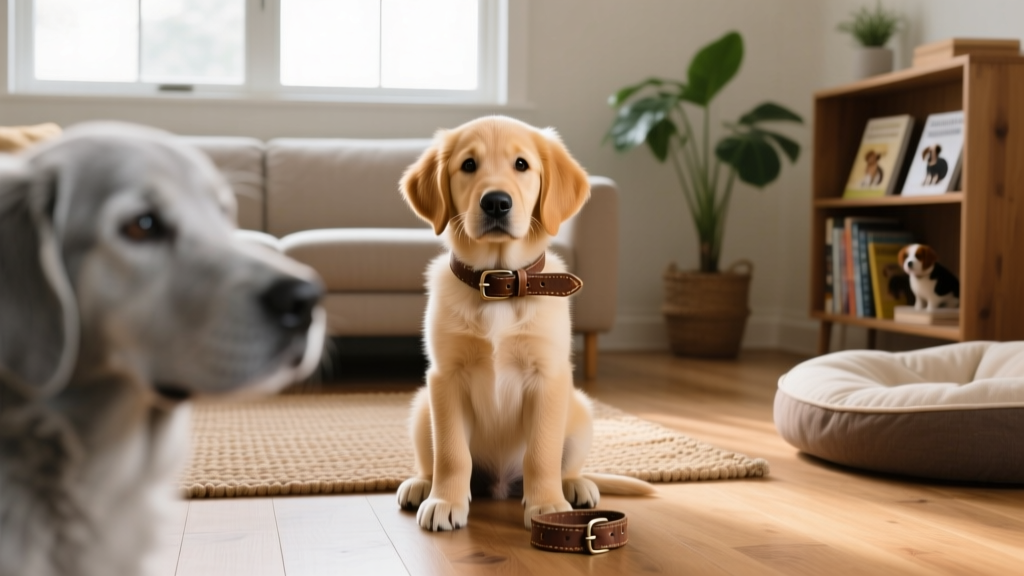
Golden Retriever Puppy Stages: Week-by-Week Growth & Care Guide
Navigate every Golden Retriever puppy stage with week-by-week milestones, feeding schedules, vaccination timelines, and breed-specific training tips for 2026.

Golden Retrievers are one of the most popular breeds in the United States for good reason — they're eager to please, deeply affectionate, and remarkably trainable. But raising a Golden Retriever puppy from an 8-week-old bundle of fluff into a well-mannered 65-pound adult requires understanding the specific developmental windows your puppy will pass through. This guide breaks down every critical puppy stage with breed-specific expectations, so you know exactly what's normal, what needs intervention, and when to call your vet.
When Should You Bring Your Golden Retriever Puppy Home?
The consensus among veterinary behaviorists and the American Kennel Club is clear: 8 weeks of age is the earliest a Golden Retriever puppy should leave the litter, and many responsible breeders now keep puppies until 9-10 weeks. Here's why timing matters:
- Weeks 6-8: Puppies learn bite inhibition, social cues, and canine communication from littermates. Removing a puppy before this window closes can lead to increased mouthing and difficulty reading other dogs later in life.
- Week 8 (optimal): The fear imprint period begins around week 8, making this the ideal transition window — your puppy is neurologically primed to form attachments to new humans and environments.
- Weeks 9-10 (extended stay): Some Golden breeders hold puppies longer to complete the first DHPP vaccination at 8 weeks before sending them home, which reduces disease exposure risk.
Red flag: Any breeder offering a Golden Retriever puppy at 5-6 weeks should be avoided. Early separation is linked to higher rates of separation anxiety and reactivity in the breed.
Golden Retriever Puppy Stages: Week-by-Week Milestone Timeline
| Age Range | Weight Range | Key Milestones | What to Expect |
|---|---|---|---|
| 4-8 weeks (with breeder) |
4-15 lb / 1.8-6.8 kg | Eyes/ears fully functional, deciduous teeth erupt, socialization with littermates begins, weaning onto solid food | Puppy learns bite inhibition from siblings; curiosity spikes; first deworming and possible first DHPP vaccine at 6-8 weeks |
| 8-12 weeks (home transition) |
15-22 lb / 6.8-10 kg | Peak socialization window opens, fear imprint period (weeks 8-11), rapid bonding, crate training foundation | Expect crying the first 2-3 nights; heavy mouthing/nipping; short attention spans (5-10 min training sessions); potty accidents every 1-2 hours |
| 12-16 weeks | 22-35 lb / 10-16 kg | Socialization window closes around 14-16 weeks, fear period may recur at 12 weeks, bladder control improves, baby teeth begin loosening | Training retention improves dramatically; may suddenly "forget" commands during fear periods; chewing intensifies; can hold bladder 3-4 hours |
| 16-24 weeks (4-6 months) |
35-50 lb / 16-23 kg | Peak teething phase, adult teeth erupting, growth rate slows, sexual maturity begins (intact dogs), flight instinct emerges | Destructive chewing peaks; may wander or ignore recall; Golden-specific: mouth-carrying behavior intensifies (they'll carry shoes, pillows, toys constantly) |
| 6-12 months (adolescence) |
50-65 lb / 23-29 kg (females: 50-60 lb / 23-27 kg; males: 55-68 lb / 25-31 kg) | Adolescent regression in training, growth plates closing (around 12-14 months), coat transitions from puppy fluff to adult double coat, spay/neuter window | "Teenage" phase — previously reliable commands may be ignored; energy is high but focus is low; Golden-specific: retrieving drive fully emerges, mouthiness may persist longer than other breeds |
Feeding Schedule: Exact Portions by Age and Weight
Golden Retrievers are notoriously food-motivated and prone to rapid weight gain. Overfeeding during puppyhood increases the risk of hip dysplasia and elbow dysplasia — conditions the breed is genetically predisposed to. The goal is steady, moderate growth: a Golden puppy should have a visible waist when viewed from above and ribs you can feel but not see.
| Age | Meals Per Day | Daily Amount (Large-Breed Puppy Kibble) | Calories/Day (approx.) |
|---|---|---|---|
| 8-12 weeks | 3-4 meals | 1.5-2 cups total | 600-800 kcal |
| 3-6 months | 3 meals | 2-3 cups total | 900-1,200 kcal |
| 6-12 months | 2 meals | 3-4 cups total | 1,200-1,600 kcal |
| 12+ months (adult) | 2 meals | 3-4 cups total | 1,300-1,700 kcal |
Critical: Use a large-breed puppy formula (look for the AAFCO statement specifying growth for large-breed dogs — those expected to reach 70+ lb as adults). These formulas have controlled calcium (1.0-1.5% on a dry matter basis) and phosphorus levels to protect developing joints. Brands like Purina Pro Plan Large Breed Puppy, Royal Canin Golden Retriever Puppy, and Hill's Science Diet Large Breed Puppy all meet this standard.
Transition timing: Switch from puppy to adult food around 12-14 months, when growth plates have mostly closed. Your vet can confirm this with an X-ray if needed.
Vaccination Schedule for Golden Retriever Puppies
The following core vaccination schedule follows AVMA guidelines and the AAHA canine vaccination task force recommendations. Your vet may adjust timing based on local disease prevalence.
| Age | Vaccine | Notes | Estimated Cost |
|---|---|---|---|
| 6-8 weeks | DHPP (Distemper, Hepatitis/Adenovirus, Parainfluenza, Parvovirus) — 1st dose | Often given by breeder; maternal antibodies may interfere | $20-40 |
| 10-12 weeks | DHPP — 2nd dose; Bordetella (optional but recommended for group classes) | Bordetella is intranasal or injectable; critical if attending puppy socials | $40-75 (combo visit) |
| 14-16 weeks | DHPP — 3rd (final puppy) dose; Rabies (required by law) | Full immunity develops ~2 weeks after final DHPP; rabies is legally required in all US states | $50-90 (combo visit) |
| 12-16 weeks | Leptospirosis (2-dose series, 2-4 weeks apart) | Recommended for Goldens — the breed loves water, and Lepto is transmitted through contaminated standing water/wildlife urine | $25-45 per dose |
| 6 months+ | Lyme disease vaccine (2-dose series) | Strongly recommended in tick-endemic areas (Northeast, Upper Midwest, Pacific Coast) | $30-50 per dose |
When can your puppy go outside and meet other dogs? Until the final DHPP booster at 14-16 weeks (plus 2 weeks for immunity), your Golden puppy is vulnerable to parvovirus and distemper. You can carry your puppy in public spaces for socialization exposure, but avoid dog parks, pet store floors, and areas where unknown dogs have eliminated. Puppy socialization classes that require proof of at least one DHPP dose and maintain sanitized facilities are generally considered safe after the first vaccine at 8 weeks, per the American Veterinary Society of Animal Behavior.
The Critical Socialization Window: Weeks 3-14
Golden Retrievers are generally outgoing, but the socialization window (peaking between weeks 6-14) is when your puppy's brain is most receptive to forming positive associations with new stimuli. Miss this window, and fear-based reactivity becomes significantly harder to address later.
Golden-specific tip: Goldens are mouth-oriented dogs. During socialization outings, carry a tug toy or stuffed Kong. If your puppy mouths strangers, redirect to the toy rather than punishing — you want people interactions to stay positive.
Potty Training Timeline: Realistic Expectations for Goldens
Golden Retrievers are generally easier to house-train than many breeds because they're eager to please and respond well to routine. However, "fully potty trained" means different things at different stages:
| Age | Bladder Capacity | Realistic Expectation | Outing Frequency |
|---|---|---|---|
| 8-10 weeks | 15-20 minutes | Accidents are normal; you are training yourself to watch for cues | Every 30-60 min while awake; immediately after eating, playing, waking |
| 10-14 weeks | 30-60 minutes | Accidents decrease; puppy may start going to the door | Every 1-2 hours; set a timer |
| 14-20 weeks | 1-2 hours | Most Goldens are reliably house-trained by 16-20 weeks with consistent routine | Every 2-3 hours during the day |
| 6-12 months | 4-6 hours | Fully reliable during the day; overnight holding 7-8 hours | 4-5 outings per day |
When will your puppy be fully potty trained? Most Golden Retrievers achieve reliable house training between 4-6 months with a consistent schedule. However, adolescent males (6-10 months) may begin marking indoors — this is hormonal, not a training failure. Spaying/neuter and consistent management resolve this in most cases.
Troubleshooting common issues:
- Submissive urination (peeing when greeted): Common in Goldens under 1 year. Ignore the puppy for the first 2 minutes when arriving home; greet calmly at their level; never punish.
- Excitement urination: Similar management — keep greetings low-key, take puppy outside immediately upon entry.
- Regression at 6-8 months: Normal adolescent phase. Return to frequent outings, increase praise for outdoor elimination, and rule out UTI with a vet visit if accidents are sudden and frequent.
Crate Training Progression and Time Limits
Crating is one of the most effective tools for Golden Retriever puppy management — it aids potty training, prevents destructive chewing, and gives your puppy a safe den. Goldens typically adapt well to crates because of their den-seeking instincts, but time limits must be respected.
| Puppy Age | Maximum Crate Time (daytime) | Overnight | Recommended Crate Size |
|---|---|---|---|
| 8-10 weeks | 30-60 minutes | 2-3 hours (will need a nighttime potty break) | 36-inch crate with divider panel |
| 11-14 weeks | 1-2 hours | 4-5 hours (one nighttime break may still be needed) | 36-inch with divider (space to stand, turn, lie down) |
| 15-20 weeks | 2-3 hours | 6-7 hours | Remove divider if puppy fits comfortably |
| 5-6 months | 3-4 hours | 7-8 hours | Full 42-inch crate for adult Golden (most males need 42") |
Crate training steps for Goldens:
- Days 1-3: Leave crate door open; feed all meals inside; toss high-value treats (freeze-dried liver, small cheese pieces) inside for puppy to retrieve.
- Days 4-7: Close door during meals; open immediately after eating. Begin 5-minute closed-door sessions while you sit nearby.
- Week 2: Extend to 15-30 minutes with you in another room. Give a frozen Kong stuffed with peanut butter (xylitol-free) or plain yogurt to create a positive association.
- Week 3+: Use crate for nap times and overnight. Never use the crate as punishment — it must remain a positive space.
Never do this: If your Golden puppy whines or barks in the crate, do NOT let them out while they're vocalizing (unless you suspect a potty emergency). Wait for 3-5 seconds of silence, then open the door. Releasing during barking teaches that noise = freedom.
Teething Timeline and Relief Strategies (3-6 Months)
Golden Retrievers go through an intense teething phase that many owners underestimate. Here's the progression:
- 3-4 weeks: Deciduous (baby) incisors erupt
- 4-6 weeks: Baby canines and premolars come in
- 12-16 weeks: Baby incisors begin falling out; adult incisors erupt
- 16-20 weeks: Adult canines and premolars push through — this is peak discomfort
- 5-6 months: Adult molars erupt; all 42 adult teeth should be in by 6-7 months
Safe chew recommendations for teething Golden puppies:
- Kong Classic (puppy rubber, pink/blue): Stuff with wet puppy food and freeze for 2-4 hours. The cold numbs gums.
- Nylabone Puppy Chew (softer formula): Choose the large size even for young puppies — Goldens have powerful jaws and will destroy small chews quickly.
- Frozen washcloth: Wet a clean washcloth, twist into a rope, freeze. Supervise use and discard if pieces are torn off.
- Benebone Puppy (wishbone shape): The ergonomic shape lets puppies grip with their paws while chewing.
Avoid: Rawhide (choking and blockage risk), antlers/hard bones (can fracture puppy teeth — the Merck Veterinary Manual notes that objects harder than a dog's tooth enamel cause slab fractures), and ice cubes for puppies under 4 months (too hard for developing teeth).
Common Golden Retriever Puppy Problems and Solutions
🦷 Excessive Mouthing and Biting
Why Goldens do it: This breed was developed to carry game birds — their mouths are their primary tool. Mouthing is genetically hardwired, not aggression.
Solution:
- Always have a toy within reach to redirect mouth to appropriate object
- When teeth touch skin, say "ouch" in a calm voice, stand up, and withdraw attention for 10-15 seconds (negative punishment)
- Provide 15-20 minutes of structured chewing time daily with approved items
- Never use your hands as play objects — it teaches that skin is a toy
😢 Whining and Crying (Especially at Night)
Why Goldens do it: Goldens are highly social dogs bred to work closely with humans. Isolation distress is common in the first 2-3 weeks home.
Solution:
- Place crate in your bedroom for the first 2-4 weeks so puppy can hear/smell you
- Use a Snuggle Puppy (heartbeat toy) or a clock wrapped in a towel to simulate littermate sounds
- Take puppy out for a potty break at 2-3 AM for the first week, then gradually push to 4 AM, then eliminate
- Exercise puppy thoroughly before bedtime — a tired Golden is a quiet Golden
🏠 Destructive Chewing
Why Goldens do it: Combination of teething pain, boredom, and the breed's oral fixation. Peaks between 4-7 months.
Solution:
- Puppy-proof your home: use bitter apple spray on furniture legs, block access to shoes/cords
- Rotate chew toys every 3 days to maintain novelty
- Provide at least 30-45 minutes of physical exercise and 15-20 minutes of mental enrichment (snuffle mats, puzzle toys) daily
- Supervise 100% of free time until 12 months — use baby gates or exercise pens when you can't watch directly
How do you stop puppy biting/nipping? The key insight for Golden owners is that you won't eliminate mouthing entirely until adult teeth are fully in (around 6-7 months). Your goal is to redirect it, not suppress it. Force-free methods — redirection, time-outs from play, and rewarding gentle mouth contact — are both more effective and safer than any aversive technique. If biting breaks skin consistently past 5 months, consult a certified professional dog trainer (CPDT-KA) or veterinary behaviorist.
First-Year Cost Breakdown for a Golden Retriever Puppy
Budgeting accurately prevents surprises. Here's a realistic first-year cost range for a Golden Retriever puppy in the United States (2026 estimates):
| Category | Low Estimate | High Estimate | Details |
|---|---|---|---|
| Puppy purchase (responsible breeder) | $2,000 | $4,500 | OFA/CHIC health-tested parents, AKC registration, take-back clause; rescue/adoption: $300-600 |
| Veterinary care (first year) | $600 | $1,200 | 3-4 puppy vaccine visits, spay/neuter ($300-600), fecal tests, heartworm prevention |
| Food (large-breed puppy formula) | $400 | $800 | Premium brands: $55-80/bag (30 lb); budget: $30-45/bag |
| Supplies (crate, bed, leash, bowls, toys, gates) | $300 | $700 | 42" wire crate: $60-120; orthopedic bed: $50-150; baby gates (2): $60-100 |
| Training (group classes + optional private sessions) | $200 | $800 | Puppy kindergarten (6-8 weeks): $150-250; private sessions: $80-150/hour |
| Preventive medications (heartworm, flea/tick) | $200 | $500 | Heartgard Plus: $80-120/year; NexGard/Bravecto: $150-300/year |
| Pet insurance (optional but recommended) | $400 | $900 | $35-75/month for accident+illness; Goldens are prone to expensive conditions (hip surgery: $3,000-7,000) |
| Total First Year | $4,100 | $9,400 | Excluding purchase price: $2,100-4,900 in care costs alone |
Hidden costs to budget for: Emergency vet visits (puppies eat things they shouldn't — expect at least one scare), grooming ($50-80 per session every 8-12 weeks if you don't groom at home), and damage replacement (chewed shoes, destroyed blinds — budget $100-200 for puppy-proofing losses).
Frequently Asked Questions
How often should I feed my Golden Retriever puppy at each age?
From 8-12 weeks: 3-4 meals per day (divide daily portion equally). From 3-6 months: 3 meals per day. From 6-12 months: 2 meals per day. Consistent meal timing helps with potty training predictability — puppies typically need to eliminate 15-30 minutes after eating.
When will my Golden Retriever puppy be fully potty trained?
Most Goldens are reliably house-trained by 4-6 months with a consistent schedule. Full reliability (including overnight and during exciting situations) typically solidifies by 8-10 months. Submissive urination may persist until 12-18 months in some individuals — this resolves with maturity and calm greeting protocols.
What vaccines does my Golden Retriever puppy need and when?
Core vaccines: DHPP at 6-8, 10-12, and 14-16 weeks; Rabies at 14-16 weeks. Lifestyle vaccines recommended for Goldens: Leptospirosis (12-16 weeks, 2-dose series), Bordetella (10-12 weeks, especially for puppy classes), and Lyme (6+ months in tick-endemic areas). Your vet will customize based on your location and lifestyle.
When can my Golden puppy go outside and meet other dogs?
You can carry your puppy in public spaces immediately for socialization exposure. However, avoid areas where unknown dogs have been (dog parks, pet stores, sidewalks with heavy dog traffic) until 2 weeks after the final DHPP vaccine — typically around 18 weeks of age. Puppy socialization classes with vaccinated, tested puppies in sanitized facilities are safe after the first DHPP dose.
How do I stop my Golden puppy from biting and nipping?
Redirect every mouth-to-skin contact to an appropriate chew toy. When teeth touch skin, say "ouch" calmly, stand up, and withdraw attention for 10-15 seconds. Provide 15-20 minutes of structured chewing daily. Never play wrestling games with your hands. Expect mouthing to gradually decrease as adult teeth fully erupt around 6-7 months — this is a developmental phase, not a behavioral flaw.
Should I get pet insurance for my Golden Retriever puppy?
Strongly recommended. Golden Retrievers are predisposed to hip dysplasia (estimated 20% prevalence per OFA data), elbow dysplasia, certain cancers (hemangiosarcoma, lymphoma — the breed has one of the highest cancer rates among purebreds), and skin allergies. Enrolling at 8-10 weeks, before any conditions are documented, ensures pre-existing condition exclusions don't apply. Expect $35-75/month for comprehensive coverage.
Raising a Golden Retriever puppy is a marathon, not a sprint. The puppy stages between 8 weeks and 12 months will test your patience — especially during the teething months and the adolescent regression around 7-9 months. But Goldens are remarkably forgiving of training mistakes, eager to reconnect after any rough day, and deeply rewarding companions once they mature. Stay consistent with your schedule, invest in early socialization, and don't skip those puppy vet visits. Your future calm, well-mannered Golden is being built right now, one positive experience at a time.
Dr. Hannah Wickes
All our authors care for dogs every day — read more of their work on the authors page.