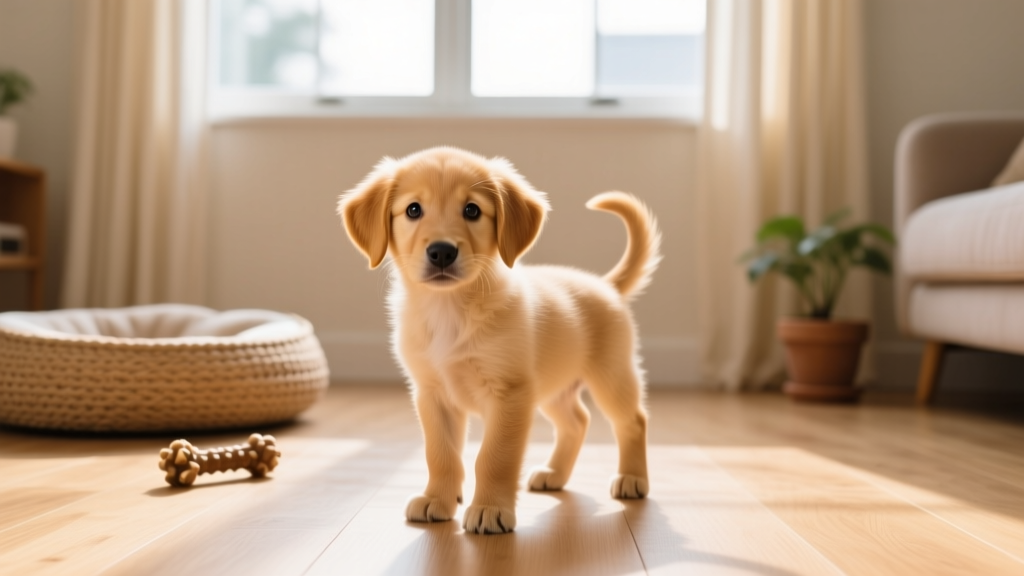
Golden Retriever Puppy Playtime: A Complete Week: by:...
Master golden retriever puppy playtime, feeding, potty training, and milestones from 8 weeks to 12 months with this breed-specific, week-by-week care guide.

Golden Retrievers are famously enthusiastic companions, but raising one from a wobbly 8-week-old into a calm, well-mannered adult requires a structured approach that matches their rapid developmental stages. This guide maps out exactly what to expect — and what to do — at every milestone, with breed-specific insights on energy management, socialization, and the kind of play that builds a confident, happy Golden.
When Should You Bring Your Golden Retriever Puppy Home?
The American Kennel Club recommends that puppies stay with their littermates and dam until at least 8 weeks of age. For Golden Retrievers specifically, many experienced breeders prefer to keep puppies until 9 or even 10 weeks. This extra time allows critical bite-inhibition learning from siblings and reduces the intensity of the fear imprint period (weeks 8–11), which can make transitions smoother.
If your breeder offers a 9- or 10-week release, take it. Puppies who leave at 8 weeks aren't "behind," but those extra days of litter play teach Goldens — a mouthy breed by nature — to moderate their jaw pressure. That single skill will save you weeks of nipping troubleshooting later.
Golden Retriever Puppy Milestones: Week-by-Week Timeline
Golden Retrievers mature more slowly than many breeds. While a Border Collie might hit behavioral milestones faster, Goldens often retain puppy-like exuberance well into their second year. Here's what to expect at each stage:
| Age Range | Developmental Stage | What to Expect | Your Action Items |
|---|---|---|---|
| Weeks 4–8 (with breeder) | Canine socialization, bite inhibition begins | Puppies learn play etiquette from littermates; teeth erupt; solid food introduced | Visit at least twice; handle paws, ears, mouth; expose to varied surfaces at breeder's facility |
| Weeks 8–12 | Human bonding period; fear imprint window opens | Intense curiosity mixed with startle responses; heavy mouthing; short attention spans (3–5 minutes); sleeping 18–20 hours/day | Begin name recognition, sit, and recall; limit play sessions to 5 minutes per month of age; start crate training |
| Weeks 12–16 | Ranking period; testing boundaries | Increased independence; may "forget" learned cues; chewing intensifies as adult teeth prepare to erupt; attention span grows to 8–10 minutes | Enroll in positive-reinforcement puppy class; practice cues in new environments; introduce fetch and tug with rules |
| Weeks 16–24 | Juvenile period; teething peak | Peak energy and destructiveness; adult teeth erupting (chewing urgency); can hold bladder 4–5 hours; may regress on potty training | Provide structured play (obstacle courses, scent games); rotate chew toys daily; increase exercise to 25–30 min sessions twice daily |
| Months 6–12 | Adolescence; sexual maturity | Second fear period (6–8 months); recall may deteriorate; size reaches 60–70 lb but behavior still puppy-like; energy peaks around 8–10 months | Maintain training consistency; consider spay/neuter (discuss timing with vet); introduce swimming and retrieving games; avoid forced repetitive exercise (protect growing joints) |
Feeding Your Golden Retriever Puppy: Portions by Age and Weight
Golden Retrievers are prone to rapid growth and obesity, both of which increase the risk of hip and elbow dysplasia. Research published in the Journal of the American Veterinary Medical Association has shown that keeping Golden Retrievers lean (body condition score 4–5 on a 9-point scale) significantly extends their lifespan. Feed a large-breed puppy formula — never adult or all-life-stages food — to control growth rate.
Choose a food that meets AAFCO nutritional adequacy standards for growth, specifically labeled for large breeds (expected adult weight over 70 lb).
| Age | Typical Weight (lb/kg) | Meals Per Day | Daily Total (cups) | Notes |
|---|---|---|---|---|
| 8–12 weeks | 10–22 lb / 4.5–10 kg | 3–4 | 1.5–2.5 cups | Soak kibble in warm water for first 2 weeks if transitioning from breeder's food |
| 3–6 months | 22–50 lb / 10–23 kg | 3 | 2.5–3.5 cups | Monitor body condition weekly; ribs should be easily felt without pressing |
| 6–12 months | 50–70 lb / 23–32 kg | 2 | 3–4 cups | Transition to 2 meals at 6 months; reduce to 3 cups if BCS exceeds 5 |
| 12–18 months | 60–75 lb / 27–34 kg | 2 | 3–4 cups (adult formula) | Gradual 7-day transition to adult food at 12–15 months |
Important: These are starting estimates. Individual caloric needs vary by activity level, metabolism, and specific food caloric density (kcal/cup). Always adjust based on body condition scoring rather than the bag's recommendation, which tends to overestimate portions.
Potty Training Your Golden Retriever Puppy: Realistic Timeline
Golden Retrievers are generally eager to please, which makes them more tractable for house training than some breeds. However, "fully reliable" (meaning no accidents for 30+ consecutive days in the home environment) typically takes 4–6 months, not the "3 days" promised by some online programs.
Bladder capacity follows a rough formula: a puppy can hold urine for approximately one hour per month of age, plus one. So a 3-month-old Golden can manage about 4 hours maximum — and that's under calm conditions, not after vigorous play or drinking a full bowl of water.
| Age | Max Hold Time | Outdoor Trips Per Day | Expected Accident Frequency |
|---|---|---|---|
| 8–10 weeks | 30–45 minutes | 15–20 | Multiple daily (normal) |
| 10–12 weeks | 1–2 hours | 12–15 | 1–3 per day |
| 3–4 months | 2–3 hours | 8–10 | 0–2 per day |
| 4–6 months | 4–5 hours | 6–8 | 0–1 per week |
| 6+ months | 6–8 hours | 4–5 | Rare (regression possible during adolescence) |
- Take puppy out immediately after: waking, eating, drinking, playing, and every hour in between during weeks 8–12.
- Use a consistent verbal cue ("go potty") and reward with a high-value treat (small piece of chicken or cheese) within 3 seconds of elimination.
- Supervise 100% of indoor time or confine to a crate/pen. Unsupervised roaming is the #1 cause of prolonged training.
- Clean accidents with enzymatic cleaner (Nature's Miracle or Rocco & Roxie) — standard household cleaners don't eliminate urine proteins that trigger repeat soiling.
Golden-specific troubleshooting: Golden Retriever puppies are notorious for "submissive urination" — leaking small amounts when greeting people. This is not a house-training failure. Keep greetings calm and low-key; avoid leaning over the puppy. Most outgrow this by 6–8 months.
The Critical Socialization Window: Weeks 3–14
The American Veterinary Medical Association identifies the primary socialization period as weeks 3–14. For Golden Retrievers — a breed selected for cooperation and sociability — this window is where you build the foundation for their famously friendly temperament. Missing it doesn't mean your dog will be fearful, but it does mean more remedial work later.
The key principle: exposures must be positive. A Golden puppy who is forced to interact with a scary stimulus (loud machinery, aggressive dog) during this period can develop lasting fear responses. Let the puppy approach new things at their own pace and pair every new experience with treats.
Socialization Exposure Checklist
Aim for 100+ unique positive exposures by week 14. Track progress with this framework:
- People (aim for 15+ types): Children ages 2–12, elderly individuals, people in hats, people in sunglasses, tall men, people with canes or wheelchairs, delivery workers, people wearing hoodies, people of different ethnicities
- Surfaces (aim for 10+): Gravel, wet grass, metal grates, tile, carpet, sand, wooden planks, wobbly boards, plastic tarps, snow (if applicable)
- Sounds (aim for 15+): Vacuum cleaner (start at distance), thunder recordings (low volume), doorbell, clapping, traffic noise, construction sounds, children screaming, fireworks recordings (very low volume), car horns, hair dryer
- Handling (practice daily): Ear examination, paw touching, mouth opening, nail clipping simulation, gentle restraint, belly rubs from unfamiliar people, tail lifting
- Environments (aim for 10+): Car rides, parking lots, outdoor café patios, pet-friendly stores (carry puppy until fully vaccinated), friend's houses, apartment hallways, elevators, bridges/overpasses
- Other animals (after vaccination clearance): Calm adult dogs (3+ verified-vaccinated dogs), cats (supervised), livestock at a distance
Vaccination Schedule for Golden Retriever Puppies
The AAHA Canine Vaccination Guidelines recommend a series of core vaccines with boosters every 2–4 weeks from 6 weeks through at least 16 weeks of age. Your veterinarian will tailor this schedule to your local disease risk, but here is the standard protocol:
| Age | Vaccines Administered | Type | Estimated Cost |
|---|---|---|---|
| 6–8 weeks | DHPP (Distemper, Hepatitis, Parainfluenza, Parvovirus) #1 | Core | $25–$40 |
| 10–12 weeks | DHPP #2 + Bordetella (optional, recommended if attending puppy class) | Core + Lifestyle | $40–$65 |
| 14–16 weeks | DHPP #3 + Rabies | Core | $45–$75 |
| 12–16 months | DHPP booster + Rabies booster + Bordetella (if applicable) | Core + Lifestyle | $50–$90 |
Leptospirosis and Lyme: Golden Retrievers who will spend time hiking, near standing water, or in tick-endemic areas may benefit from these non-core vaccines. Discuss with your vet at the 12-week visit.
When can my puppy go outside and meet other dogs? Full protection is achieved approximately 2 weeks after the final DHPP booster at 14–16 weeks (so around 16–18 weeks of age). Before that, avoid dog parks, pet store floors, and areas with unknown dog traffic. Controlled playdates with fully vaccinated, healthy adult dogs in private yards are generally safe from 10 weeks onward.
Golden Retriever Puppy Playtime: Structuring Safe, Productive Play
Golden retriever puppy playtime is more than entertainment — it's a primary training and development tool. But Goldens are large-breed dogs with growing joints that are vulnerable to damage from repetitive high-impact activity until growth plates close (typically 14–18 months).
Age-Appropriate Play Activities
8–12 weeks: Short (3–5 minute) sessions of gentle tug with a soft fleece toy, treat-scatter games on grass (builds nose-to-ground behavior), and brief exploration of safe outdoor spaces. Total structured play: 15–20 minutes per day, broken into 3–4 sessions.
12–16 weeks: Introduce fetch with a soft bumper or tennis ball (limit to 5–8 throws per session to protect joints). Begin "find it" scent games — hide treats around a room and encourage searching. Start short, low-intensity tug with rules ("drop it" on cue). Total structured play: 20–30 minutes per day.
4–6 months: Longer fetch sessions (10–15 throws), introduction to shallow water wading, puzzle toys (Kong Wobbler, Outward Hound Nina Ottosson puzzles), and basic agility on flat ground (walking over poles laid on grass, weaving through cones). Avoid jumping, hard surface running, and repetitive fetch on concrete. Total structured play: 40–60 minutes per day.
6–12 months: Swimming (Goldens are natural retrievers in water — this is the ideal low-impact exercise), structured retrieve games with directional cues, flirt pole sessions (keep pole low, no high jumps), and scent work games. Total structured play: 60–90 minutes per day, split into 2–3 sessions.
Teething Timeline and Relief Strategies (3–6 Months)
Golden Retriever puppies begin losing their 28 deciduous (baby) teeth around 12–16 weeks, with the full set of 42 adult teeth typically erupted by 6–7 months. During this window, chewing intensity increases dramatically as the puppy seeks relief from gum discomfort.
What to Expect
- 12–14 weeks: Incisors loosen first; you may find tiny teeth on the floor or notice blood-tinged drool on chew toys (this is normal)
- 14–18 weeks: Canine teeth (fangs) shed; chewing urgency peaks; puppy may mouth hands more frequently
- 18–24 weeks: Premolars and molars erupt; jaw strength increases significantly; risk of furniture damage is highest
- 24–28 weeks: Adult teeth fully in; chewing urgency gradually decreases if adequate outlets are provided
Safe Chew Recommendations
- Frozen Kong Classic (size Medium for 8–12 week Goldens, Large for 3+ months): Fill with plain yogurt and banana, freeze for 4 hours. Provides 20–30 minutes of soothing chewing.
- Benebone Wishbone (Medium): Nylon chew with bacon flavoring infused into material. Durable for aggressive chewers. Replace when worn down by 25%.
- Carrots (frozen, whole): Low-calorie, natural crunch. Supervise to prevent choking on large pieces.
- Yak cheese chews (Himalayan Dog Chew, medium): Long-lasting, digestible. Microwave puffed end pieces to avoid choking hazard when chew gets small.
Avoid: Rawhide (choking and blockage risk), cooked bones (splintering), ice cubes (tooth fracture risk in powerful chewers), and any chew smaller than the puppy's mouth that could be swallowed whole.
Crate Training Progression and Time Limits
Golden Retrievers generally adapt well to crate training because of their den-seeking instincts, but the process still requires patience and positive association building. Never use the crate as punishment.
| Age | Max Crate Time (Day) | Max Crate Time (Night) | Crate Size |
|---|---|---|---|
| 8–10 weeks | 30–45 minutes | 2–3 hours (then potty break) | 30" crate with divider panel |
| 10–14 weeks | 1–2 hours | 3–4 hours | 36" crate with divider |
| 3–4 months | 2–3 hours | 5–6 hours | 36" crate, adjust divider |
| 4–6 months | 3–4 hours | 7–8 hours | 42" crate (adult size) |
| 6+ months | 4–6 hours max | 8 hours | 42" crate (full size for adult Golden) |
Whining protocol: If your Golden puppy whines in the crate at night, wait 2–3 minutes before responding. If whining continues, take them out on leash directly to the potty spot (no play, no talking). If they eliminate, quiet praise and back in the crate. If they don't eliminate within 5 minutes, they were whining for attention — return to crate without reward. Consistency is critical; one 3 AM play session can set training back by a week.
Common Golden Retriever Puppy Problems and Solutions
Puppy Biting and Nipping
Golden Retrievers were bred to carry game in their mouths, making them one of the most mouth-oriented breeds. Nipping is not aggression — it's exploration and play behavior. However, it must be redirected.
Protocol:
- When teeth touch skin, say "ouch" in a calm, flat tone (not high-pitched yelping, which can excite some Goldens more).
- Immediately withdraw attention for 10–15 seconds (stand up, turn away, or step behind a baby gate).
- Return and offer an appropriate chew toy. When puppy mouths the toy, praise calmly.
- If biting continues after 3 redirections, the puppy is overtired. Place in crate for a nap with a frozen Kong.
Most Golden Retrievers show significant bite inhibition improvement by 16 weeks if this protocol is applied consistently by all household members. Complete cessation typically occurs by 5–6 months when adult teeth are fully erupted.
Destructive Chewing
Peak destruction occurs between 4–7 months. Golden Retrievers are powerful chewers, and a bored adolescent Golden can dismantle baseboards, shoes, and furniture legs rapidly. Management is more effective than correction:
- Use baby gates to limit access to puppy-proofed rooms only
- Provide 5–7 appropriate chews, rotated every 2–3 days to maintain novelty
- Apply bitter apple spray (Grannick's Bitter Apple) to furniture legs and baseboards
- Exercise adequately — a tired Golden puppy is a non-destructive puppy
Jumping on People
Goldens are social and physically demonstrative. Jumping starts cute at 15 lb but becomes problematic at 65 lb. Teach "four on the floor" from day one: reward all four paws on the ground with attention and treats. When puppy jumps, turn your back and fold your arms (zero attention). Consistency from every visitor is essential.
First-Year Cost Breakdown for a Golden Retriever
Budgeting realistically prevents surrender — Golden Retrievers are consistently among the top breeds surrendered due to cost underestimation. Here's a detailed first-year cost breakdown based on 2025–2026 pricing:
| Category | Low Estimate | Mid Estimate | High Estimate | Notes |
|---|---|---|---|---|
| Puppy purchase (responsible breeder) | $1,500 | $2,500 | $4,000 | Adoption from breed rescue: $300–$600 |
| Veterinary (vaccines, spay/neuter, wellness) | $600 | $900 | $1,400 | Spay/neuter: $300–$700 depending on clinic |
| Food (large-breed puppy formula) | $480 | $720 | $1,100 | $40–$90/month depending on brand |
| Supplies (crate, bed, toys, leash, bowls, gates) | $250 | $450 | $700 | Chew toy replacement is ongoing cost |
| Training (puppy class + basic obedience) | $150 | $350 | $800 | Group class: $150–$250; private: $80–$150/session |
| Preventives (heartworm, flea/tick) | $200 | $350 | $500 | Simparica Trio, NexGard, or similar; weight-based pricing |
| Pet insurance (optional but recommended) | $360 | $600 | $900 | $30–$75/month; Golden-specific conditions justify coverage |
| TOTAL FIRST YEAR | $3,540 | $5,870 | $9,400 | Excluding emergency veterinary care |
Emergency fund recommendation: Set aside an additional $1,000–$2,000 for unexpected veterinary needs. Golden Retrievers have higher-than-average rates of emergency visits for foreign body ingestion (they eat everything), allergic reactions, and gastrointestinal issues during the puppy/juvenile period.
Frequently Asked Questions
How often should I feed my Golden Retriever puppy at each age?
Feed 3–4 meals per day from 8–12 weeks, reduce to 3 meals from 3–6 months, and transition to 2 meals at 6 months. Consistent meal timing (e.g., 7 AM, 12 PM, 5 PM) supports predictable potty schedules and helps monitor appetite changes that could signal illness.
When will my Golden Retriever puppy be fully potty trained?
Most Golden Retrievers achieve reliable house training between 4–6 months with consistent management. "Fully trained" means zero accidents for 30+ days. Some individuals, particularly males, may take until 8 months. If accidents increase after initial success, consult your veterinarian to rule out urinary tract infection or other medical causes.
How do I stop my Golden Retriever puppy from biting and nipping?
Use the withdraw-and-redirect method: say "ouch" calmly, withdraw attention for 10–15 seconds, then offer an appropriate chew toy. If nipping persists after three redirections, the puppy is overtired and needs a nap. Never hold the puppy's mouth shut, tap the nose, or use physical punishment — these methods damage trust and can increase fear-based biting. Consistent application by all household members typically yields significant improvement within 2–4 weeks.
When can my Golden Retriever puppy go to the dog park?
Wait until 2 weeks after the final DHPP vaccine (approximately 16–18 weeks of age) and after the rabies vaccine. Even then, choose dog parks carefully — a single aggressive encounter during the juvenile fear period (around 6–8 months) can create lasting reactivity. Many trainers recommend structured playdates with known, vaccinated dogs over public dog parks for the first year.
My Golden puppy is whining in the crate — what should I do?
First, determine the cause: potty need, boredom, or anxiety. Puppies under 4 months may genuinely need to eliminate during the night. Take them out on leash to the potty spot with zero stimulation. If they don't go within 5 minutes, return to the crate. For daytime whining, ensure the puppy has been exercised and has a food-stuffed toy in the crate. Gradually increase alone time in 5-minute increments. If whining escalates to panic (frantic scratching, self-injury), consult your veterinarian — some puppies benefit from short-term anti-anxiety support.
Robin Maitland
All our authors care for dogs every day — read more of their work on the authors page.