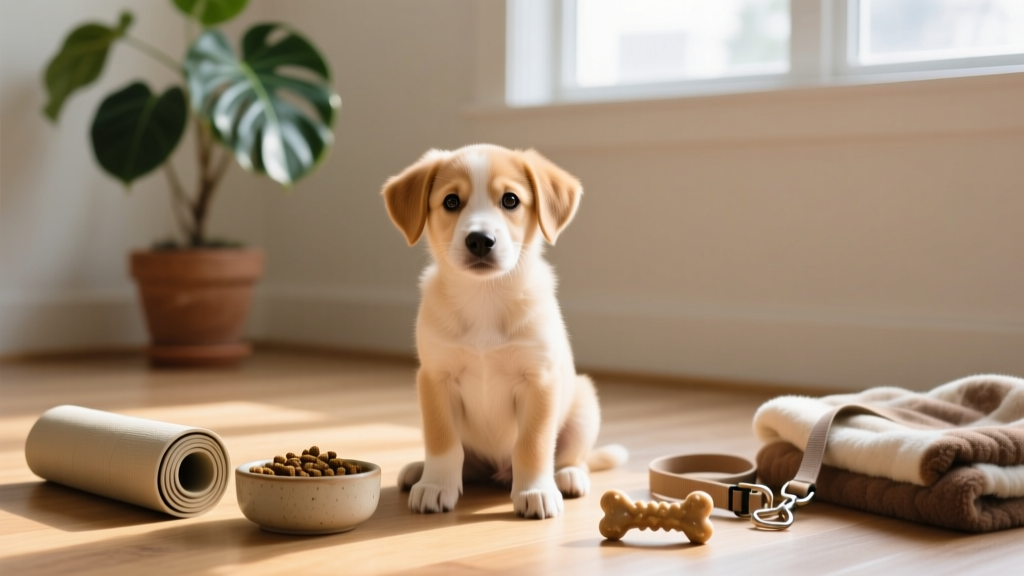
Golden Retriever Puppy Playing Peekaboo: Milestones,...
Your complete guide to raising a golden retriever puppy — from peekaboo play and socialization windows to feeding schedules, vaccines, and potty training timelines.

Why Your Golden Retriever Puppy Playing Peekaboo Is Actually a Developmental Milestone
If you've ever watched your golden retriever puppy duck behind a couch, pop out, and seem delighted by their own reappearance — congratulations, you're witnessing a cognitive leap. Golden retriever puppy playing peekaboo isn't just adorable; it signals emerging object permanence, the understanding that things continue to exist even when out of sight. This typically develops between 8 and 12 weeks of age and lays the groundwork for everything from separation anxiety prevention to advanced recall training later in life.
Golden retrievers are consistently among the top three most popular breeds in the United States according to the American Kennel Club, and for good reason: they're biddable, affectionate, and eager learners. But raising a golden retriever puppy requires breed-specific knowledge — these dogs mature slowly (mentally, they're puppies until around age three), are prone to specific orthopedic conditions, and have a socialization window that closes faster than most owners realize.
This guide walks you through every stage of your golden retriever puppy's first year with exact numbers, timelines, and practical strategies. Whether your puppy is currently hiding behind your legs or you're preparing for their arrival, here's everything you need.
Age-Specific Milestones: What to Expect Week by Week
Weeks 4–8 (With the Breeder)
Your puppy is still with their litter during this period. Critical developments include:
- Week 4: Eyes and ears fully functional; puppy begins exploring beyond the whelping box
- Week 5: Littermate play escalates — bite inhibition foundations are laid through sibling feedback
- Week 6: Startle responses to novel sounds emerge; early neurological stimulation should be underway
- Week 7: Human attachment bonds form; this is when your puppy begins recognizing individual people
- Week 8: Fear imprinting period begins — negative experiences during weeks 8–10 can create lasting phobias
Key takeaway: A responsible breeder will have exposed your golden retriever puppy to at least 7 different floor surfaces, various household sounds, and gentle handling of paws, ears, and mouth before you bring them home.
Weeks 8–12 (The Adjustment Period)
This is when most golden retriever puppies go to their new homes. Expect:
- First 72 hours: Whimpering at night, loose stools from stress, and clingy following behavior are all normal
- Week 9: Your puppy begins testing boundaries — "no" means nothing yet, so management (gates, crate) is your primary tool
- Week 10: Object permanence solidifies — this is peak golden retriever puppy playing peekaboo time, and it's an excellent window for early hide-and-seek recall games
- Week 11–12: Attention span extends to roughly 3–5 minutes per training session; you can begin teaching "sit," "touch," and name recognition
Weeks 12–16 (Confidence Building)
- Week 12–13: Second fear period may occur — previously confident puppies may suddenly seem "spooky" about familiar objects
- Week 14: The primary socialization window closes around this time (see detailed section below)
- Week 15–16: Puppy can typically hold bladder for 3–4 hours during the day; nighttime sleep stretches to 6–7 hours
- Bite intensity: Should be noticeably decreasing if you've been consistently redirecting to appropriate chew items
Weeks 16–24 (The Adolescent Shift)
- Month 4–5: Baby teeth begin loosening; you may find small teeth in bedding or notice increased chewing urgency
- Month 5–6: "Selective hearing" emerges — your previously reliable recall may deteriorate temporarily
- Month 6: Most golden retrievers reach approximately 50–60% of adult weight (females ~35–40 lb / 16–18 kg; males ~42–50 lb / 19–23 kg)
Months 6–12 (Physical vs. Mental Maturity Gap)
Golden retrievers are large-breed dogs that don't reach full skeletal maturity until 18–24 months. During months 6–12:
- Your puppy may look nearly adult-sized but still has open growth plates — avoid forced running, jumping from heights, or repetitive fetch on hard surfaces
- Sexual maturity occurs (females typically experience first estrus between 6–12 months; males begin marking behavior)
- Energy levels peak — plan for 45–60 minutes of structured activity daily, split into multiple sessions to protect developing joints
- Mental maturity lags significantly behind physical growth; continue structured training and don't assume "they should know this by now"
Feeding Your Golden Retriever Puppy: Schedule and Portions
Golden retrievers are predisposed to obesity and hip dysplasia, making controlled growth critical. The Merck Veterinary Manual notes that overfeeding large-breed puppies accelerates growth rate and increases orthopedic disease risk. You should feed a large-breed puppy formula (calcium content between 1.2–1.8% on a dry matter basis) rather than standard puppy food.
| Age | Expected Weight | Meals Per Day | Total Daily Amount | Per Meal |
|---|---|---|---|---|
| 8–12 weeks | 10–20 lb (4.5–9 kg) | 3–4 | 1.5–2.5 cups | 0.5–0.75 cups |
| 3–4 months | 20–35 lb (9–16 kg) | 3 | 2.5–3.5 cups | 0.8–1.2 cups |
| 4–6 months | 35–55 lb (16–25 kg) | 2–3 | 3–4 cups | 1–1.5 cups |
| 6–9 months | 50–65 lb (23–29 kg) | 2 | 3–4.5 cups | 1.5–2.25 cups |
| 9–12 months | 55–75 lb (25–34 kg) | 2 | 3.5–5 cups | 1.75–2.5 cups |
Important: These are starting points. You should be able to feel your puppy's ribs without pressing hard, and see a visible waist when looking from above — this is a body condition score (BCS) of 4–5 out of 9. Adjust portions based on your individual puppy's condition, not the bag's recommendation. Consult your veterinarian at each wellness visit to confirm growth trajectory.
Transition tip: When you bring your puppy home, ask the breeder for a 5–7 day supply of their current food. Mix 75% old food / 25% new food for two days, then 50/50 for two days, then 25/75 for two days before switching completely. This prevents gastrointestinal upset during an already stressful transition.
Potty Training Timeline: Realistic Expectations for Golden Retrievers
Golden retrievers tend to house-train faster than some breeds due to their biddable nature, but "fully potty trained" is a process, not an event. Here's what realistic progression looks like:
| Age | Bladder Capacity | Expected Accidents/Week | What You're Doing |
|---|---|---|---|
| 8–10 weeks | 20–30 minutes | 3–5 (normal) | Taking out every 20–30 min, after every meal/nap/play session |
| 10–12 weeks | 45–60 minutes | 1–3 | Beginning to signal (sniffing, circling); reward heavily for outdoor elimination |
| 3–4 months | 1.5–2 hours | 0–2 | Puppy starts going to door independently; still needs supervision or confinement when unsupervised |
| 4–6 months | 3–4 hours | 0–1 | Reliable with routine; occasional regression during teething or environmental changes |
| 6–8 months | 4–6 hours | 0 (most days) | Considered "house trained" but still benefits from consistent schedule |
Troubleshooting common golden retriever potty issues:
- Submissive urination (8–16 weeks): Your puppy squats and leaks when greeted. This is involuntary — do NOT punish. Instead, greet calmly, crouch sideways rather than looming overhead, and take puppy outside immediately after calm greetings.
- Excitement urination: Similar mechanism. Manage by keeping arrivals low-key until puppy is calm, then leash and walk outside.
- Regression at 4–5 months: Often coincides with teething discomfort or increased independence. Return to more frequent outings and higher-value treats (freeze-dried liver, boiled chicken) for outdoor elimination.
The Socialization Window (Weeks 3–14): Your Golden Retriever's Critical Period
The American Veterinary Society of Animal Behavior (AVSAB) emphasizes that the primary socialization period for puppies closes between 12–14 weeks. After this window, unfamiliar stimuli are more likely to trigger fear than curiosity. For golden retrievers — a breed prized for stable temperament — missing this window can result in the anxiety and reactivity that contradicts their genetic potential.
Your golden retriever puppy playing peekaboo during weeks 8–12 is demonstrating the cognitive flexibility that makes this socialization window so powerful. They're learning that the world is full of things that disappear and reappear, that novel experiences are safe, and that they can recover from momentary uncertainty.
Socialization Exposure Checklist (Weeks 8–14)
The vaccination-socialization balance: The AVSAB's position statement recommends that puppies attend socialization classes beginning at 7–8 weeks, provided they've had at least one set of vaccines and a deworming. The risk of behavioral problems from inadequate socialization outweighs the disease risk in controlled environments. Avoid dog parks, pet store floors, and areas where unknown dogs congregate until your puppy's vaccination series is complete.
Vaccination Schedule for Your Golden Retriever Puppy
| Age | Vaccine | Type | Notes |
|---|---|---|---|
| 6–8 weeks | DHPP (Distemper, Hepatitis/Adenovirus, Parainfluenza, Parvovirus) #1 | Core | Often administered by breeder before pickup |
| 8–10 weeks | DHPP #2 | Core | First vet visit; begin building immunity |
| 10–12 weeks | DHPP #3 + Bordetella (optional) | Core + Non-core | Bordetella recommended if attending puppy classes or boarding |
| 12–14 weeks | Leptospirosis #1 (if recommended for your area) | Non-core | Discuss regional risk with your veterinarian |
| 14–16 weeks | DHPP #4 (final puppy dose) + Rabies | Core | Rabies required by law in most US jurisdictions |
| 14–16 weeks | Leptospirosis #2 (booster, if started) | Non-core | Completes initial series |
| 6 months | Lyme disease series (if in tick-endemic area) | Non-core | Two doses, 2–4 weeks apart |
When can my puppy go outside and meet other dogs? Your puppy can begin controlled socialization outings immediately after their first DHPP vaccine (typically 6–8 weeks). However, avoid high-risk environments — dog parks, pet store floors, communal dog areas — until at least one week after their final DHPP booster at 14–16 weeks. Structured puppy classes with vaccination requirements are safe and strongly recommended starting at 8–10 weeks.
Always consult your veterinarian to customize this schedule based on your puppy's health status, regional disease prevalence, and lifestyle risk factors.
Teething Timeline and Safe Relief Strategies
Golden retrievers are enthusiastic chewers even by puppy standards. Understanding the teething timeline helps you prepare appropriate outlets and protect your belongings.
Teething progression:
- 3–4 weeks: Deciduous (baby) incisors erupt
- 4–6 weeks: Baby canines and premolars come in — this is why breeders see the most littermate biting
- 12–16 weeks: Baby incisors begin falling out; you may find tiny teeth in bedding or notice blood-tinged drool
- 4–5 months: Adult canines erupt — often the most uncomfortable phase; chewing intensity peaks
- 5–6 months: Adult premolars and molars complete eruption; full set of 42 adult teeth by 6–7 months
Safe chew recommendations by stage:
- 8–12 weeks: Soft rubber toys (Kong Puppy, West Paw Zogoflex Tux in size small), frozen wet washcloths twisted into rope shape, bully sticks (supervised only, remove when small enough to swallow)
- 3–5 months: Medium-density rubber (Classic Kong, size medium), frozen carrot sticks, yak cheese chews (soak in water first to soften), Nylabone Puppy-specific textures
- 5–7 months: Transition to adult-density rubber toys; introduce antler alternatives like Benebone or GoughNuts Ring (avoid real antlers and weight-bearing bones from large animals — these fracture golden retriever teeth at alarming rates)
Red flags requiring veterinary attention: Retained baby teeth (adult tooth erupting alongside baby tooth with no sign of baby loosening after two weeks), persistent bad breath beyond typical puppy odor, refusal to eat hard food, or visible swelling along the gumline.
Crate Training Progression and Time Limits
Golden retrievers generally adapt well to crate training because they have a natural den instinct. The crate becomes their safe space — but only if you respect age-appropriate time limits.
Crate time limits by age (maximum daytime confinement):
- 8–10 weeks: 30–45 minutes maximum (bladder limitation)
- 10–12 weeks: 1–1.5 hours maximum
- 3–4 months: 2–3 hours maximum
- 4–5 months: 3–4 hours maximum
- 5–6 months: 4–5 hours maximum
- 6+ months: 5–6 hours maximum (but less is better — dogs are social animals)
Nighttime crating: Puppies can typically sleep 1–2 hours longer than their daytime limit because metabolism slows during sleep. An 8-week-old golden retriever puppy may manage 3–4 hours overnight before needing a potty break. Set an alarm for a mid-night outing rather than waiting for crying.
Progression strategy:
- Week 1: Crate door open, meals fed inside, treats tossed in for puppy to retrieve. No forced confinement.
- Week 2: Door closed for 1–2 minutes while you sit beside crate. Treat through bars for quiet behavior.
- Week 3: Door closed for 5–10 minutes while you remain in the room. Briefly step out of sight for 10–30 seconds, return before puppy becomes distressed.
- Week 4+: Gradually extend time and distance. The golden retriever puppy playing peekaboo during this stage — ducking into the crate, popping out — is practicing voluntary crate entry. Reward this behavior every time.
Common Golden Retriever Puppy Problems and Solutions
Puppy Biting and Nipping
Golden retrievers are a mouthy breed — they were developed to carry waterfowl, so oral fixation is genetic. Expect significant mouthing from 8 weeks through 5–6 months.
How to stop puppy biting:
- Redirect, don't punish: When teeth touch skin, say "too bad" in a neutral tone, immediately offer an appropriate chew toy, and praise when puppy mouths the toy instead.
- Reverse time-outs: If puppy continues biting after redirection, YOU leave — step over a baby gate or leave the room for 15–30 seconds. This teaches that biting ends play, which is how littermates naturally communicate.
- Satisfy the need: Ensure puppy has 5–8 appropriate chew items available at all times, rotated to maintain novelty.
- Exercise and enrichment: A tired puppy bites less. Provide 3–4 short (5–10 minute) training sessions daily plus sniffing walks and food puzzles.
Whining and Crying (Especially at Night)
Your golden retriever puppy is separated from their littermates for the first time. Whining is a distress call, not manipulation.
- Place a warm Snuggle Puppy (heartbeat toy) or a blanket that smells like the breeder's home in the crate
- Keep the crate in your bedroom for the first 2–3 weeks so your puppy can hear and smell you
- If you're confident puppy has been out recently and isn't in distress, wait 30–60 seconds before responding — many puppies self-soothe within this window
- Never let puppy out of crate while actively crying (this reinforces the behavior); wait for a brief pause in vocalization
Destructive Chewing
Golden retrievers tend to be heavy chewers through 18–24 months, not just the teething phase.
- Manage the environment: puppy-proof rooms with bitter apple spray on baseboards, keep shoes in closets, use baby gates
- Provide appropriate alternatives at multiple locations throughout the house
- Supervise or confine: an unsupervised golden retriever puppy WILL find something to destroy — this is management failure, not a behavior problem
First-Year Cost Breakdown for a Golden Retriever
| Category | Low Estimate | High Estimate | Details |
|---|---|---|---|
| Puppy purchase/adoption | $500 (rescue) | $3,500 (AKC breeder) | Health-tested breeders charge $2,000–$3,500; golden retriever rescues typically $300–$600 |
| Veterinary (wellness + vaccines) | $600 | $1,200 | 3–4 puppy visits, vaccines, deworming, fecal tests, spay/neuter ($300–$700) |
| Food (large-breed puppy formula) | $480 | $840 | $40–$70/month for quality large-breed puppy food (Purina Pro Plan, Royal Canin, Hill's) |
| Supplies (initial setup) | $350 | $700 | Crate ($60–$120), bed, bowls, leash/harness, gates, toys, grooming tools |
| Training | $200 | $800 | Group puppy class ($150–$250); private sessions if needed ($80–$150/session) |
| Preventive medications | $250 | $500 | Heartworm/intestinal parasite preventive + flea/tick (NexGard, Simparica Trio, Interceptor Plus) |
| Pet insurance (optional but recommended) | $480 | $900 | $40–$75/month; golden retrievers are predisposed to expensive conditions (hip dysplasia, cancer) |
| Total first year | $2,860 | $8,440 | Excludes emergency veterinary care |
Budget tip: Pet insurance purchased before your puppy develops any symptoms will cover hereditary conditions like hip dysplasia, elbow dysplasia, and certain cancers — all of which golden retrievers are predisposed to. Waiting until a diagnosis appears means those conditions become pre-existing and uncovered.
Frequently Asked Questions
When should I bring my golden retriever puppy home?
The optimal age is 8–9 weeks. Before 8 weeks, puppies are still learning critical bite inhibition and social skills from littermates and their dam. After 10 weeks, the socialization window is already narrowing. If a breeder insists on keeping a puppy past 12 weeks, ask for documentation of the socialization protocol they're following.
How often should I feed my golden retriever puppy at different ages?
Feed 3–4 meals daily from 8–12 weeks, transition to 3 meals at 3–4 months, then 2 meals from 5 months onward. Never feed a single large meal to a golden retriever — this breed has a deep chest and is at elevated risk for gastric dilatation-volvulus (bloat). Multiple smaller meals reduce this risk.
When will my golden retriever puppy be fully potty trained?
Most golden retrievers achieve reliable house training between 5–7 months of age, meaning zero accidents for 30+ consecutive days with a consistent schedule. Some individuals take up to 9 months. If your puppy is still having frequent accidents past 6 months despite consistent management, consult your veterinarian to rule out urinary tract infection or anatomical issues.
What vaccines does my golden retriever puppy need and when?
Core vaccines include DHPP (series at 6–8, 10–12, and 14–16 weeks) and Rabies (14–16 weeks). Non-core vaccines like Bordetella, Leptospirosis, and Lyme disease depend on your puppy's lifestyle and regional risk. Your veterinarian will determine the appropriate protocol during your first wellness visit.
How do I stop my golden retriever puppy from biting and nipping?
Use redirection to appropriate chew items combined with reverse time-outs (you leave when teeth touch skin). Never hold your puppy's mouth shut, yell, or use physical punishment — these methods damage trust and can increase fear-based aggression. Expect mouthing to persist until approximately 5–6 months when adult teeth are fully erupted. Consistency from every household member is essential.
When can my golden retriever puppy go outside and meet other dogs?
Your puppy can begin controlled socialization outings (carried or on leash in low-risk areas) after their first DHPP vaccine at 6–8 weeks. Structured puppy classes are safe starting at 8–10 weeks. Avoid dog parks and high-traffic dog areas until one week after the final DHPP booster at 14–16 weeks. The AVSAB recommends prioritizing socialization during this period rather than waiting for full vaccination.
Is the golden retriever puppy playing peekaboo behavior a sign of intelligence?
Yes — peekaboo-style play indicates your puppy is developing object permanence, a cognitive milestone typically reached between 8–12 weeks. Golden retrievers that engage in this type of exploratory play during the socialization window tend to develop stronger problem-solving skills and greater environmental confidence. Use this natural curiosity to your advantage by playing hide-and-seek recall games: have someone hold your puppy while you hide in another room, then call their name and reward lavishly when they find you.
The information in this guide is intended for educational purposes and does not replace professional veterinary advice. Always consult your veterinarian regarding your puppy's specific health, nutrition, and vaccination needs. If you suspect your puppy has ingested a toxic substance, contact the ASPCA Animal Poison Control Center at (888) 426-4435 (24/7, consultation fee applies).
Marcus Aldridge
All our authors care for dogs every day — read more of their work on the authors page.