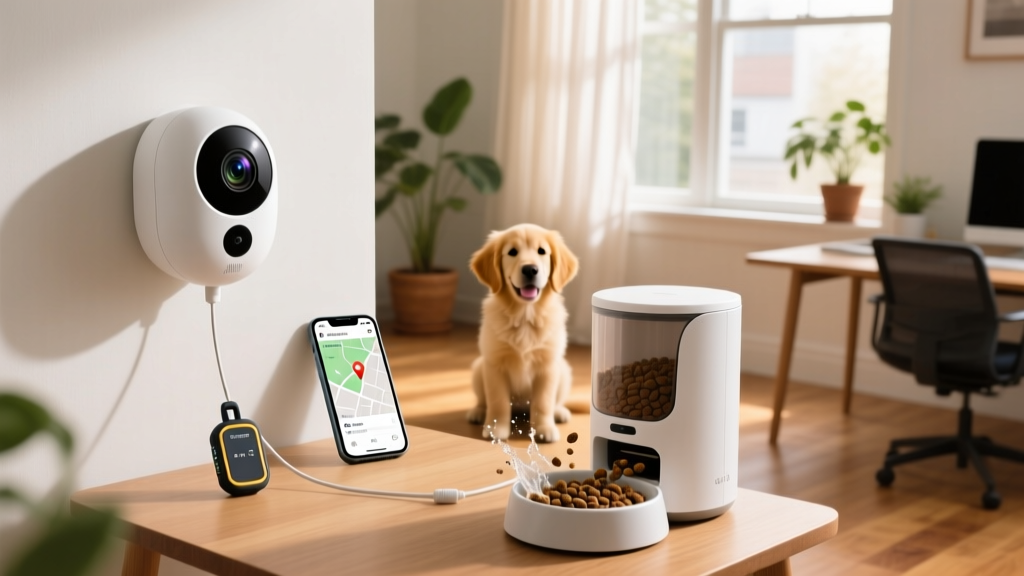
Golden Retriever Puppy Kibble Guide
Complete Golden Retriever puppy kibble feeding schedule, milestones, potty training, vaccines, and first-year cost breakdown for new owners.

When to Bring Your Golden Retriever Puppy Home
The American Kennel Club and most responsible breeders agree: Golden Retriever puppies should stay with their littermates and dam until at least 8 weeks of age. Many reputable Golden breeders hold puppies until 9–10 weeks to ensure proper bite inhibition development and litter-mate socialization. Bringing a puppy home before 7 weeks increases the risk of fear-based reactivity, poor bite inhibition, and separation anxiety later in life.
Plan your pickup day for a Friday evening or the start of a long weekend so you have 2–3 uninterrupted days for decompression. Golden Retrievers are notably social dogs, and a sudden transition from a busy litter to a quiet home can trigger stress whining the first few nights. Having a crate set up beside your bed with a Snuggle Puppy (a plush toy with a heartbeat simulator, ~$40) significantly reduces first-night distress.
Veterinary note: Schedule a wellness exam within 48–72 hours of bringing your puppy home. Your vet will establish a baseline weight, check for congenital issues like umbilical hernias, and set up a tailored vaccination plan. Always consult your veterinarian before changing any feeding or medical protocol.
Golden Retriever Puppy Milestones: Weeks 4 Through 12 Months
Golden Retrievers mature more slowly than many breeds. While a Border Collie might hit behavioral milestones weeks earlier, Goldens often retain puppy behaviors — including mouthiness and clumsiness — well into their second year. Here is what to expect at each stage.
Weeks 4–8: Litter Socialization & Weaning
- Weight: 4–10 lb / 1.8–4.5 kg (gaining roughly 1–1.5 lb per week)
- Teeth: Deciduous incisors and canines erupt; puppy begins chewing on littermates
- Diet: Transitioning from mother's milk to softened puppy kibble (mush consistency)
- Behavior: Learning bite inhibition from siblings; startle response to loud noises develops
- What you can do: If you are the breeder or fostering, introduce shallow water dishes, novel textures (towel, cardboard), and brief one-on-one human handling sessions (5 minutes each)
Weeks 8–12: Home Transition & Bonding
- Weight: 10–20 lb / 4.5–9 kg
- Sleep: 18–20 hours per day — yes, really. Enforce naps in the crate
- Attention span: 3–5 minutes per training session maximum
- Key risk: Parvovirus susceptibility is highest during this window; do NOT allow contact with unvaccinated dogs or public dog areas
- What you can do: Name recognition, sit, crate-meal association, handling exercises (touch paws, ears, mouth daily)
Weeks 12–16: Fear Impact Period & Rapid Growth
- Weight: 20–35 lb / 9–16 kg
- Behavior: A well-known fear imprint window occurs around 8–11 weeks, with a second around 6–14 months. During the 12–16 week phase, puppies may suddenly seem cautious about previously familiar things
- Vaccination: Final puppy shots administered; socialization can safely expand after the 16-week booster + 5–7 day wait
- What you can do: Keep experiences positive — never force a fearful puppy to approach something scary. Use high-value treats (boiled chicken, cheese) to pair with novel stimuli
Weeks 16–24: Teething & Boundary Testing
- Weight: 35–55 lb / 16–25 kg
- Teeth: Adult teeth push out baby teeth; you may find tiny teeth on the floor or notice increased chewing
- Behavior: Mouthing and nipping may intensify before improving; leash pulling emerges as the puppy gains confidence
- What you can do: Provide frozen Kong toys stuffed with kibble and peanut butter (xylitol-free), redirect biting to appropriate chews, begin structured leash walking (5 minutes per month of age, twice daily)
Months 6–12: Adolescence & Slowing Growth
- Weight: 50–70 lb / 23–32 kg (males typically larger)
- Behavior: "Selective hearing" emerges; previously reliable recall may temporarily deteriorate
- Spay/neuter: Many Golden Retriever specialists recommend waiting until 12–18 months for joint development; discuss timing with your vet
- What you can do: Continue training — enroll in intermediate obedience or canine sports foundations (rally, nose work). Maintain structured exercise to protect developing joints; avoid repetitive high-impact activities like frisbee on hard surfaces
Golden Retriever Puppy Kibble Feeding Schedule
Golden Retrievers are prone to rapid growth-related orthopedic diseases, including hip dysplasia and elbow dysplasia. Research from the Merck Veterinary Manual confirms that overfeeding and excessive calcium intake during puppyhood directly increase the risk of these conditions. This makes precise portion control — not free-feeding — essential.
Choose a kibble labeled as AAFCO-compliant for large-breed puppy growth. Large-breed puppy formulas contain controlled calcium (1.0–1.8% on a dry-matter basis) and moderate fat (12–17%) to prevent growth rates that outpace bone development. Recommended brands that meet these criteria include Purina Pro Plan Large Breed Puppy, Royal Canin Golden Retriever Puppy, and Hill's Science Diet Large Breed Puppy.
| Age | Expected Weight | Meals per Day | Total Daily Kibble (cups) | Notes |
|---|---|---|---|---|
| 8–10 weeks | 10–15 lb / 4.5–6.8 kg | 3–4 | 1.0–1.5 | Moisten with warm water if transitioning from breeder's food |
| 10–12 weeks | 15–20 lb / 6.8–9 kg | 3 | 1.5–2.0 | Begin feeding dry; remove uneaten food after 15 min |
| 3–4 months | 20–35 lb / 9–16 kg | 3 | 2.0–2.75 | Monitor body condition score — ribs should be palpable but not visible |
| 4–6 months | 35–50 lb / 16–23 kg | 2–3 | 2.75–3.5 | Drop to 2 meals/day around 5 months |
| 6–9 months | 50–65 lb / 23–29 kg | 2 | 3.0–4.0 | Transition to adult food NOT recommended yet; stay on puppy formula |
| 9–12 months | 55–70 lb / 25–32 kg | 2 | 3.5–4.5 | Discuss large-breed adult food transition with your vet at 12-month checkup |
Important: These are starting guidelines. Individual metabolism, activity level, and the caloric density of your specific kibble (check the label's kcal/cup) will shift portions. A Golden puppy at a healthy body condition score (BCS 4–5 out of 9) should have a visible waist when viewed from above and ribs you can feel with light pressure but not see through the coat.
Potty Training Your Golden Retriever: Realistic Timeline
Golden Retrievers are generally among the easier breeds to house-train thanks to their food motivation and eagerness to please. However, "fully reliable" means different things at different ages. Here is a realistic timeline based on bladder capacity development and behavioral maturity.
| Age | Bladder Hold Time (max) | Outdoor Trips per Day | Accident Expectation | Milestone |
|---|---|---|---|---|
| 8–10 weeks | 1–2 hours | 10–12 | Frequent — daily accidents are normal | Learning the concept of "outside = potty" |
| 10–14 weeks | 2–3 hours | 8–10 | 2–4 per week | Begin signaling (whining at door, circling) |
| 3–4 months | 3–4 hours | 6–8 | 1–2 per week | Reliable overnight hold (6–7 hours) emerging |
| 4–6 months | 4–5 hours | 5–6 | Rare — 1–2 per month | Most puppies signal clearly; regression possible during teething |
| 6–9 months | 6–8 hours | 4–5 | Occasional marking (especially intact males) | Considered "house-trained" with supervision |
| 9–12 months | 8 hours | 3–4 | Very rare if routine maintained | Fully reliable in familiar environments |
Troubleshooting common setbacks:
- Submissive urination (weeks 8–16): Golden puppies often leak small amounts when greeting. Do NOT scold — this is involuntary. Greet calmly, crouch sideways, avoid direct eye contact during initial hello.
- Teething regression (3–5 months): Discomfort can cause a puppy to forget signals. Increase outdoor trips by 1–2 per day during peak teething weeks.
- Adolescent marking (6–10 months): Intact males may begin lifting their leg indoors. Interrupt with a neutral "oops" and redirect outside. Spaying/neutering reduces but does not always eliminate marking.
Socialization Window: The Critical Weeks 3–14 Checklist
The primary socialization window for puppies closes around 12–14 weeks of age, according to the American Veterinary Medical Association. This means the single most important thing you can do for your Golden Retriever's long-term temperament happens before their final vaccines are complete. The good news: controlled socialization during this window is safe and strongly recommended by veterinary behaviorists.
Safe socialization rules pre-vaccination: Carry your puppy in public spaces (no paws on ground where unknown dogs have been). Host vaccinated, healthy adult dogs at your home. Avoid dog parks, pet store floors, and high-traffic dog areas until 5–7 days after the 16-week DHPP booster.
Vaccination Schedule & When Your Puppy Can Go Outside
Golden Retriever puppies receive a series of core vaccines at specific intervals. Maternal antibodies from the dam's colostrum interfere with vaccine response in young puppies, which is why boosters are given every 2–4 weeks until 16 weeks of age.
| Age | Vaccine | Details |
|---|---|---|
| 6–8 weeks | DHPP (1st dose) | Distemper, Hepatitis (Adenovirus-2), Parainfluenza, Parvovirus. Often given by the breeder. |
| 10–12 weeks | DHPP (2nd dose) + Bordetella | Bordetella (kennel cough) recommended if puppy will attend group classes, boarding, or grooming. |
| 14–16 weeks | DHPP (3rd dose) + Rabies | Rabies is legally required in all US states. Timing varies by jurisdiction — your vet will follow local law. |
| 12 months | DHPP booster + Rabies booster | After the 1-year booster, DHPP and Rabies are typically given every 3 years (check local requirements). |
When can your puppy go outside and meet other dogs?
- Immediately (carried): You can carry your puppy in public from day one. Exposure to sights, sounds, and people (while held) is safe and beneficial.
- Controlled playdates: Your puppy can play with fully vaccinated, healthy adult dogs you know and trust starting at 8 weeks, in your home or theirs.
- Public ground contact: Wait until 5–7 days after the 16-week DHPP booster (approximately 16.5–17 weeks) before allowing paws on public ground where unknown dogs have been.
- Dog parks: Not recommended until at least 6 months, and even then with caution — dog parks carry high disease and unpredictable-dog risk.
Teething, Biting & Common Golden Retriever Puppy Problems
Golden Retrievers are retrievers — their mouths are genetically wired to carry, chew, and explore through biting. This is not aggression. It is normal breed behavior that requires consistent redirection, not punishment.
Teething Timeline & Relief
- 3–4 weeks: Deciduous (baby) teeth begin erupting
- 8 weeks: Full set of 28 baby teeth in place
- 12–16 weeks: Baby teeth begin loosening; adult teeth start pushing through
- 4–6 months: Peak teething discomfort; all 42 adult teeth should erupt by 6–7 months
Safe chew recommendations:
- Kong Classic (puppy rubber, pink/blue): Stuff with kibble mixed with plain pumpkin purée and freeze for 2–4 hours. Size: Medium for puppies under 35 lb, Large for 35+ lb. (~$12–15)
- Benebone Puppy Wishbone: Nylon chew with bacon flavor; designed for teething puppies under 6 months. (~$14)
- Frozen washcloth: Wet a clean washcloth, twist into a rope, freeze for 2 hours. Supervise use and remove if puppy tears off pieces.
- Yak cheese chews: Hard, long-lasting, and digestible. Choose puppy-sized pieces to prevent choking. (~$8–12 each)
Avoid: Rawhide (choking and intestinal blockage risk), antlers (too hard — can fracture puppy teeth), and any cooked bones (splintering hazard).
Stopping Puppy Biting & Nipping
Golden Retriever puppies typically bite harder and more persistently than many breeds because of their retrieving heritage. The strategy that works best combines management with positive reinforcement:
- Redirect: When teeth touch skin, immediately offer an appropriate chew toy. Praise enthusiastically when they bite the toy instead.
- Time-out (not punishment): If the puppy continues to bite after redirection, calmly stand up and step behind a baby gate for 15–30 seconds. This teaches "biting makes the fun human disappear." Return and resume play.
- Enforced naps: Overtired puppies bite more. A Golden Retriever puppy under 6 months needs a crate nap every 1.5–2 hours. Many "behavior problems" vanish after a nap.
- Never use: Alpha rolls, muzzle grabbing, shock collars, or prong collars. These methods increase fear and aggression and are rejected by the American Veterinary Society of Animal Behavior as inhumane and counterproductive.
Crate Training Progression
| Age | Max Daytime Crate Time | Max Overnight Crate Time | Notes |
|---|---|---|---|
| 8–10 weeks | 30–60 minutes | 2–3 hours (will need a potty break) | Feed meals in crate; cover with light blanket |
| 10–14 weeks | 1–2 hours | 4–5 hours | Set one overnight alarm for potty at ~3 AM |
| 3–4 months | 2–3 hours | 6–7 hours | Most puppies sleep through the night by 14–16 weeks |
| 4–6 months | 3–4 hours | 8 hours | Begin leaving crate door open during supervised free time |
| 6–12 months | 4–5 hours | 8–9 hours | Never exceed 5 hours crated during the day without a break |
Use a 42-inch wire crate with a divider panel for a Golden Retriever puppy. The divider lets you expand space as the puppy grows while keeping the sleeping area small enough to discourage pottying inside. A crate that is too large too early undermines house training.
First-Year Cost Breakdown for a Golden Retriever
Budgeting accurately prevents sticker shock. The following ranges reflect 2026 US pricing for a single Golden Retriever puppy with no major health complications. Costs are divided into one-time and recurring expenses.
| Category | Low Estimate | High Estimate | Details |
|---|---|---|---|
| Puppy purchase/adoption | $500 (rescue) | $3,500 (AKC breeder) | Responsible breeders health-test parents (OFA hips/elbows, cardiac, eyes); expect documentation |
| Initial vet visits (3–4 wellness exams) | $300 | $600 | Includes exam fees, fecal tests, deworming |
| Vaccinations (full puppy series + rabies) | $200 | $450 | Prices vary by clinic; low-cost vaccine clinics available in many areas |
| Spay/neuter | $300 | $800 | Many Golden specialists recommend waiting until 12–18 months; budget now for later |
| Puppy kibble (12 months) | $500 | $900 | Large-breed puppy formula at 3–4.5 cups/day; premium brands cost more |
| Supplies (crate, bed, bowls, leash, harness, toys, gates) | $300 | $600 | 42" crate with divider ~$70; orthopedic bed ~$60–120; chew toys ~$80–150 |
| Training classes | $150 | $500 | Puppy kindergarten (6–8 weeks, $150–250) + intermediate class |
| Flea/tick/heartworm prevention (12 months) | $200 | $400 | Simparica Trio, NexGard, or Heartgard Plus; pricing by weight tier |
| Microchip + registration | $25 | $60 | Often included in first vet visit; register with HomeAgain or AKC Reunite |
| Pet insurance (optional but recommended) | $400 | $900 | $35–75/month; Goldens are prone to conditions that make insurance worthwhile |
| Total first-year estimate | $2,875 | $8,710 | Excluding emergency vet care; set aside $500–1,000 emergency fund |
Frequently Asked Questions
How often should I feed my Golden Retriever puppy at 10 weeks old?
At 10 weeks, feed three meals per day, totaling approximately 1.5–2.0 cups of large-breed puppy kibble daily. Divide evenly: roughly 0.5–0.65 cups per meal. Offer food for 15 minutes, then pick up the bowl whether finished or not. This establishes a routine and helps you monitor appetite changes, which are an early indicator of illness.
When will my Golden Retriever be fully potty trained?
Most Golden Retrievers are reliably house-trained between 5 and 7 months of age with a consistent schedule. "Reliably" means fewer than one accident per month when the puppy has regular outdoor access. Full reliability in unfamiliar environments (visiting friends, hotels) may take until 9–12 months. If accidents persist past 6 months despite consistent training, consult your vet to rule out urinary tract infection or anatomical issues.
What vaccines does my puppy need and when?
Core vaccines for Golden Retrievers include DHPP (distemper, hepatitis, parainfluenza, parvovirus) given at 6–8 weeks, 10–12 weeks, and 14–16 weeks, plus a rabies vaccine at 14–16 weeks (timing varies by state law). Bordetella (kennel cough) is strongly recommended at 10–12 weeks if your puppy will attend group training, daycare, or grooming. Leptospirosis and Lyme vaccines may be recommended depending on your geographic area — consult your veterinarian for a region-specific plan.
How do I stop my Golden puppy from biting my hands?
Redirect every bite to an appropriate chew toy, and if biting persists, implement a 15–30 second time-out by stepping behind a baby gate. Ensure your puppy is getting enough sleep (18–20 hours/day for puppies under 4 months) — overtired puppies bite significantly more. Most Golden Retrievers show major improvement in bite inhibition between 5 and 7 months as adult teeth fully erupt and teething discomfort resolves.
When can my Golden Retriever puppy go to the dog park?
Wait until at least 5–7 days after the 16-week DHPP booster (roughly 17 weeks) before visiting any area where unknown dogs congregate. Even then, dog parks carry risks of disease transmission, parasite exposure, and unpredictable dog interactions. Many trainers and veterinarians recommend avoiding dog parks entirely and instead arranging controlled playdates with known, vaccinated, temperament-tested dogs. If you do use a dog park, visit during off-peak hours and stay prepared to leave immediately if any dog shows rough or aggressive behavior.
Should I feed my Golden puppy grain-free kibble?
The FDA has investigated a potential link between grain-free diets (particularly those high in peas, lentils, and potatoes) and dilated cardiomyopathy (DCM) in dogs, including Golden Retrievers. As of 2026, the investigation is ongoing, and the FDA recommends discussing diet choices with your veterinarian. Most veterinary nutritionists recommend grain-inclusive large-breed puppy formulas from manufacturers that employ full-time veterinary nutritionists and conduct AAFCO feeding trials.
Robin Maitland
All our authors care for dogs every day — read more of their work on the authors page.