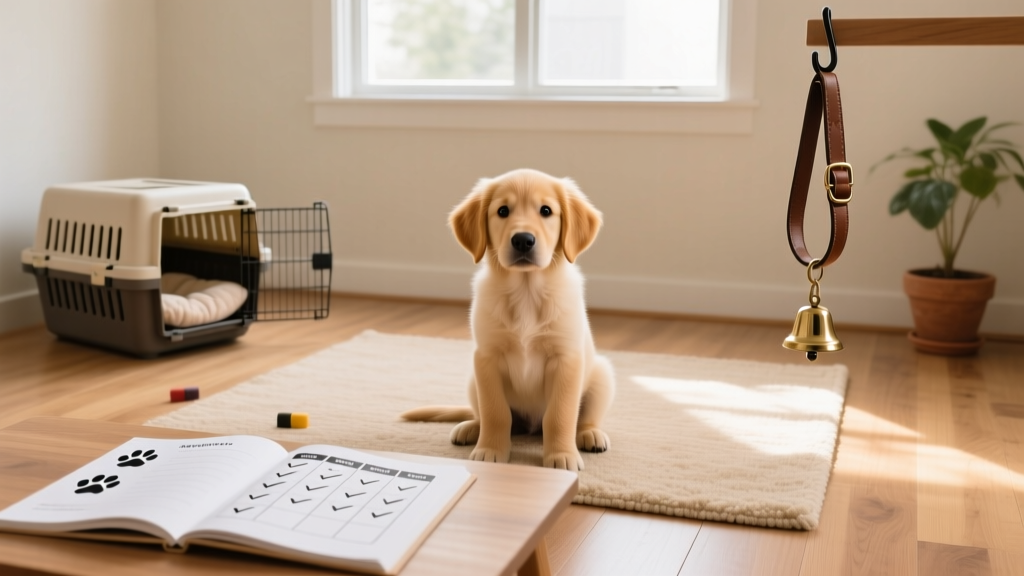
Golden Retriever Puppy Games: Training Milestones & Care Guide
Master Golden Retriever puppy games, training milestones, feeding schedules, and socialization windows with this comprehensive week-by-week care guide.

Why Puppy Games Matter for Golden Retriever Development
Golden Retrievers are among the most trainable breeds in the world, but that intelligence needs proper channeling from day one. Structured puppy games aren't just entertainment — they're neurological building blocks that shape your Golden's confidence, bite inhibition, impulse control, and bond with you. According to the American Kennel Club, puppies that engage in regular interactive play during their first 16 weeks show measurably better recall and lower reactivity as adults.
This guide walks you through every critical week of your Golden Retriever puppy's first year, combining developmental milestones with specific games, feeding protocols, vaccination timelines, and the realistic costs you'll face. Whether you've just committed to a breeder or brought your 8-week-old home yesterday, you'll find exact numbers and actionable frameworks here — not generic advice that could apply to any breed.
When Should I Bring My Golden Retriever Puppy Home?
The ideal window for bringing a Golden Retriever puppy home is between 8 and 10 weeks of age. Reputable breeders following AKC Breeder of Merit standards will not release puppies before 8 weeks because the 6-8 week period is critical for litter-mate socialization — puppies learn bite inhibition and canine communication from their siblings during this time.
Bringing a Golden home before 8 weeks increases the risk of:
- Excessive mouthing and poor bite inhibition (they never learned "too hard" from siblings)
- Separation anxiety (premature litter separation creates attachment insecurity)
- Resource guarding (competition with littermates wasn't properly resolved)
If circumstances force an earlier pickup (rescue situations, breeder emergencies), plan for intensive hand-feeding and structured play sessions to compensate for missed sibling time.
Age-Specific Milestones and Puppy Games by Week
Golden Retrievers develop on a predictable timeline, but individual variation of 1-2 weeks is normal. Here's what to expect and how to engage your puppy at each stage.
Weeks 4-8: The Litter Period (Still with Breeder)
During this period, your puppy is still with the breeder. Responsible Golden Retriever breeders will be:
- Introducing solid food (puppy kibble soaked in warm water or goat's milk replacer)
- Starting early neurological stimulation (ENS) protocols
- Exposing puppies to varied textures (grass, tile, carpet, gravel)
- Beginning crate introduction (open-door, treats inside, no forced confinement)
- Starting name recognition and basic handling exercises
What you can do: Visit the litter if possible. Bring a t-shirt with your scent for the puppy to sleep with. Ask your breeder about their socialization protocol — the best Golden breeders follow the Puppy Culture or Avidog methods.
Weeks 8-12: The Homecoming and Bonding Window
This is your Golden's most impressionable period. Their brain is primed for attachment, and every experience shapes their emotional baseline.
Recommended Puppy Games (5-10 minutes, 3-4x daily):
2. Tug with Rules: Use a fleece tug toy. Teach "take it" and "drop it" from day one. Golden Retrievers are mouth-oriented — channeling this into structured tug prevents destructive chewing later. Never use hands as tug toys.
3. Find It: Place 3-4 treats on the floor in plain sight, say "find it," let puppy eat them. Gradually hide treats behind furniture legs. This builds scent confidence and tires them mentally.
4. Hand Targeting: Present your palm, mark and reward when puppy's nose touches it. This becomes the foundation for recall, loose-leash walking, and "go to your mat."
Developmental expectations: Attention span of 2-5 minutes. Sleep needs of 18-20 hours per day. Bladder control of approximately 1 hour per month of age (so 2 hours max at 8 weeks).
Weeks 12-16: The Confidence-Building Phase
Your Golden is now more coordinated, curious, and capable of longer play sessions. This is prime time for building confidence and introducing mild challenges.
Recommended Puppy Games (10-15 minutes, 3x daily):
2. Wobble Board Work: Use a balance disc or wobble board (available from FitPAWS, ~$35-50). Lure puppy onto the unstable surface with treats. This builds proprioception and core strength — critical for a large breed prone to hip dysplasia.
3. Snuffle Mat Foraging: Hide kibble in a snuffle mat (Wooly Snuffle Mat, ~$30-45). Golden Retrievers are natural foragers. A 10-minute snuffle session provides the same mental fatigue as a 30-minute walk.
4. Puppy Obstacle Course: Use household items — broomstick on books to step over, cardboard box tunnels, cookie sheets for novel surfaces. Reward exploration, never force.
Developmental expectations: Attention span of 5-10 minutes. Beginning to test boundaries. First fear period may emerge around 12-14 weeks (puppy becomes suddenly cautious of previously normal stimuli — this is normal, don't force exposure).
Weeks 16-24: The Adolescent Transition
Your Golden is now a "teenager" — physically larger but emotionally still a puppy. Impulse control is inconsistent, and the second fear period (around 6-8 months) can make previously confident puppies suddenly fearful.
Recommended Puppy Games (15-20 minutes, 2-3x daily):
2. Hide and Seek: Have someone hold puppy while you hide in another room. Call puppy's name once. Reward enthusiastically when they find you. Builds recall and problem-solving.
3. Shaping Games: Use a clicker to shape novel behaviors — touching a target stick, going to a mat, spinning. Golden Retrievers excel at shaping and this burns mental energy efficiently.
4. Controlled Fetch Introduction: Use two identical balls. Throw one, show the second when puppy returns. Puppy drops first ball to get second thrown. This teaches retrieve without force-breaking. Keep sessions to 5-8 throws to protect developing joints.
Months 6-12: The Extended Adolescence
Your Golden will look like an adult but act like a puppy. Males may reach 65-75 lb (29-34 kg) while still chewing shoes and jumping on guests. Mental maturity won't arrive until 2-3 years.
Recommended Games and Activities:
- Scent work introduction: Birch or clove essential oil on cotton swabs hidden around a room. Goldens excel at nose work and this is low-impact on growing joints.
- Structured playdates: With vaccinated, temperament-tested dogs. Avoid dog parks until at least 12 months (disease risk and uncontrolled play can create reactivity).
- Training games with duration: "Stay" games, place command with increasing distance and distraction.
- Swimming introduction: Goldens are natural swimmers. Introduce calm, shallow water with a canine life jacket (Ruffwear Float Coat, ~$90-100) for safety. Never throw a puppy into water.
Golden Retriever Feeding Schedule: Portions by Age and Weight
Golden Retriever puppies grow rapidly, and overfeeding is one of the most common mistakes owners make. Excess weight during growth accelerates skeletal problems including hip and elbow dysplasia. According to research published in the Merck Veterinary Manual, large-breed puppies should be fed to maintain a lean body condition score (BCS) of 4/9, not the rounded look many owners find "cute."
Feed a food specifically formulated for large-breed puppies — it will have controlled calcium-to-phosphorus ratios (1.1:1 to 1.4:1) and reduced caloric density compared to regular puppy formulas.
| Age | Meals Per Day | Daily Amount (Large-Breed Puppy Kibble) | Expected Weight Range |
|---|---|---|---|
| 8-12 weeks | 4 meals | 1.5-2 cups total (0.375-0.5 cups per meal) | 10-22 lb / 4.5-10 kg |
| 12-16 weeks | 3 meals | 2-2.75 cups total | 22-35 lb / 10-16 kg |
| 4-6 months | 3 meals | 2.75-3.5 cups total | 35-50 lb / 16-23 kg |
| 6-9 months | 2 meals | 3-4 cups total | 50-60 lb / 23-27 kg |
| 9-12 months | 2 meals | 3.5-4.5 cups total | 55-70 lb / 25-32 kg |
How to know if you're feeding the right amount: You should be able to feel your puppy's ribs without pressing hard, but not see them prominently. Viewed from above, there should be a visible waist tuck. If your puppy looks like a barrel, reduce food by 10%. If the spine and hip bones are prominent, increase by 10%.
Recommended large-breed puppy foods (2026): Purina Pro Plan Large Breed Puppy ($55-65 for 34 lb bag), Royal Canin Golden Retriever Puppy ($60-70 for 30 lb bag), or Hill's Science Diet Large Breed Puppy ($50-60 for 30 lb bag). All carry the AAFCO statement for large-breed growth.
Potty Training Timeline: Realistic Expectations for Golden Retrievers
Golden Retrievers are generally easier to house-train than many breeds because they're eager to please and respond well to routine. However, "fully potty trained" means different things at different ages.
Realistic potty training milestones:
- 8-10 weeks: Accidents every 1-2 days if on a strict schedule. Bladder capacity is approximately 2 hours maximum.
- 12-16 weeks: Accidents becoming rare (1-2 per week) if schedule is consistent. Beginning to signal (going to the door, whining).
- 4-6 months: Mostly reliable with occasional accidents when routine is disrupted. Can hold 4-5 hours during the day.
- 6-8 months: Functionally house-trained for most households. Can hold 6-8 hours overnight. Still may have accidents during excitement or if left too long.
- 12 months: Fully reliable barring medical issues or extreme schedule changes.
- Take puppy outside within 5 minutes of: waking up, eating, drinking, playing, and after crate release.
- Use a consistent verbal cue ("go potty" or "do your business") while they're eliminating.
- Reward immediately with a high-value treat and enthusiastic praise outside — not after coming back inside.
- Supervise 100% when loose in the house. Use a 6-foot leash tethered to your waist if you can't give full attention.
- If you catch an accident mid-stream, interrupt with a calm "oops" and carry outside immediately. Never punish after the fact — dogs cannot connect past actions with present punishment.
- Enzymatic cleaner (Nature's Miracle or Rocco & Roxie, ~$15-20) for any accident spots. Standard cleaners don't break down uric acid crystals, and residual scent invites repeat offenses.
Common troubleshooting: If your Golden puppy suddenly starts having frequent accidents after being reliable, rule out a urinary tract infection (UTI) — common in puppies and requiring veterinary treatment. Also consider whether recent changes (new family member, schedule shift, moving) are causing stress-related regression. This is temporary with consistent re-training.
Socialization Window: Weeks 3-14 Exposure Checklist
The primary socialization window for puppies closes between 12 and 14 weeks of age, according to the American Veterinary Medical Association. After this window, unfamiliar stimuli trigger fear rather than curiosity. For Golden Retrievers — a breed known for friendliness — proper socialization during this period is what maintains their legendary temperament.
A poorly socialized Golden can become fearful, reactive, or anxious despite good genetics. Here's your exposure checklist, organized by category:
People (Goal: 50+ different people by 14 weeks)
- Men with beards, hats, sunglasses, hoodies
- Children of various ages (supervised, gentle interactions only)
- People in wheelchairs, using crutches or walkers
- People wearing uniforms (mail carriers, delivery drivers)
- People of different ethnicities, heights, and body types
- People carrying bags, umbrellas, or large objects
Surfaces and Environments
- Grass, gravel, sand, mud, wet surfaces
- Metal grates, manhole covers, shiny floors
- Elevators, stairs (carry puppy down stairs until 12 weeks to protect joints)
- Car rides (start with 5-minute trips to pleasant destinations)
- Veterinary clinic visits ("happy visits" with treats, no procedures)
Sounds
- Thunder recordings (play at low volume during meals, gradually increase)
- Vacuum cleaners, blenders, doorbells
- Fireworks recordings, construction noise
- Bicycle bells, car horns, children shouting
Handling and Body Manipulation
- Paw handling (prepare for nail trims)
- Ear examination and gentle cleaning
- Mouth opening (prepare for dental care and medication)
- Being held on their side, back, and in various positions
- Gentle restraint (prepare for vet visits and grooming)
Vaccination Schedule for Golden Retriever Puppies
Your puppy's vaccination timeline is non-negotiable. Parvovirus and distemper are frequently fatal in unvaccinated puppies, and Golden Retrievers are no more naturally resistant than any other breed. The AVMA recommends the following core protocol, though your veterinarian may adjust based on local disease prevalence.
| Age | Vaccines | Notes | Estimated Cost |
|---|---|---|---|
| 6-8 weeks | DHPP (Distemper, Hepatitis, Parainfluenza, Parvovirus) — 1st dose | Often administered by breeder before pickup | $25-40 |
| 10-12 weeks | DHPP — 2nd dose; Bordetella (optional based on lifestyle) | Required for puppy classes; Bordetella recommended if attending group training | $40-60 |
| 14-16 weeks | DHPP — 3rd dose; Rabies (required by law) | Final puppy vaccine; full protection achieved 2 weeks after this dose | $50-75 |
| 12-16 months | DHPP booster; Rabies booster; Leptospirosis (recommended for Goldens) | Leptospirosis is increasingly common; Goldens who swim in lakes/ponds are at higher risk | $60-90 |
Non-core vaccines to discuss with your veterinarian:
- Lyme disease: Recommended if you live in or travel to tick-endemic areas (Northeast, Upper Midwest, Pacific Northwest).
- Canine influenza (H3N2/H3N8): Recommended if your dog will be boarded, attend daycare, or participate in group activities.
- Leptospirosis: Strongly recommended for Golden Retrievers, who are outdoor-oriented and may drink from standing water.
When can my puppy go outside and meet other dogs? After the final DHPP dose at 14-16 weeks, wait an additional 2 weeks (until approximately 16-18 weeks of age) before visiting public areas where unknown dogs have been. Controlled playdates with fully vaccinated, healthy adult dogs in private yards are acceptable after the second DHPP dose (10-12 weeks).
Teething Timeline and Relief Strategies
Golden Retriever puppies begin teething around 3-4 weeks (deciduous teeth erupting) and go through their most intense chewing phase between 3 and 6 months when adult teeth push in. By 6-7 months, all 42 adult teeth should be in place.
Teething stages:
- 3-6 weeks: Baby teeth erupt (28 deciduous teeth). Minimal chewing behavior — puppy is still with breeder.
- 12-16 weeks: Incisors begin to loosen. You may find tiny teeth in bedding or toys. Increased mouthing.
- 4-6 months: Peak teething discomfort. Canines and premolars are replacing. Puppy will chew everything within reach. Gums may appear red or slightly bloody — this is normal.
- 6-7 months: All adult teeth should be in. If baby canines haven't fallen out by 7 months (retained deciduous teeth — common in Goldens), your vet will need to extract them to prevent dental crowding.
Safe chew recommendations by age:
- 8-12 weeks: Frozen washcloths (wet, twisted, frozen), Nylabone Puppy Chew (soft formula), Kong Classic (puppy size, stuffed with soaked kibble and frozen).
- 3-6 months: Benebone Puppy ($12-15), frozen carrot sticks (supervised), West Paw Zogoflex Hurley ($15-20). Avoid rawhide, antlers, and hard nylon bones during active teething — they can fracture developing teeth.
- 6+ months: Transition to adult chews as recommended by your veterinarian. Bully sticks (supervised, ~$5-8 each) are a popular option for Goldens.
Crate Training Progression for Golden Retrievers
Golden Retrievers generally adapt well to crate training because they're den-oriented and food-motivated (which makes positive association easy). However, crating a puppy too long causes distress and undermines training.
Maximum crate time by age:
| Age | Maximum Daytime Crate Time | Maximum Overnight Crate Time | Recommended Crate Size |
|---|---|---|---|
| 8-10 weeks | 1-2 hours | 3-4 hours (expect overnight potty break) | 36" wire crate with divider |
| 11-14 weeks | 2-3 hours | 5-6 hours | 36" with divider (adjust as puppy grows) |
| 15-16 weeks | 3-4 hours | 6-7 hours | 36" with divider |
| 4-6 months | 4-5 hours | 7-8 hours | 42" crate (remove divider) |
| 6+ months | 5-6 hours max | 8 hours | 42" crate (adult size for most Goldens) |
Crate training progression:
- Days 1-3: Crate door open, meals fed inside, treats tossed in for puppy to retrieve. No forced confinement.
- Days 4-7: Close door during meals, open immediately after. Begin closing for 30-second intervals while you sit nearby.
- Week 2: Extend closed-door time to 5-10 minutes while you remain in the room. Reward quiet behavior.
- Week 3: Step out of the room for 1-5 minutes. Return before puppy becomes distressed. Gradually extend absences.
- Week 4+: Puppy should be comfortable with 30-60 minute absences. Begin using crate for naps and overnight.
Crate whining solutions: If your Golden puppy whines in the crate, first determine if it's a potty need or protest. Take outside on leash — if they eliminate, reward and return to crate. If they don't eliminate within 5 minutes, return to crate and ignore whining (extinction burst will occur — the whining will get worse before it stops). Covering the crate with a breathable blanket and using a white noise machine can reduce stimulation-triggered whining.
Common Golden Retriever Puppy Problems and Solutions
Problem: Excessive Biting and Nipping
Golden Retrievers are a mouth-oriented breed — they were bred to carry game gently, and that oral fixation manifests as constant mouthing in puppyhood. This is normal but needs redirection.
Solution protocol:
- Redirect: Always have a chew toy within arm's reach. When puppy mouths skin, say "oops" calmly, withdraw attention for 5 seconds, then offer the toy.
- Reverse time-out: If biting continues after two redirections, you leave the room for 30 seconds (puppy-proofed area or behind a baby gate). The puppy loses access to you, which is their primary reward.
- Satisfy the need: Ensure adequate chewing outlets (see teething section above). A puppy with no appropriate chew options will use your hands.
- Avoid rough hand play: Wrestling with your hands teaches puppy that hands are toys. Use tug toys for physical play instead.
When to be concerned: If biting breaks skin consistently, is accompanied by growling or stiffening, or targets children specifically, consult a certified professional dog trainer (CPDT-KA) or veterinary behaviorist immediately. This is not typical Golden puppy behavior.
Problem: Jumping on People
A 50-pound adolescent Golden launching at guests is not charming. Start prevention early.
Solution: Teach "four on the floor" — reward puppy with attention and treats only when all four paws are on the ground. Turn your back and cross your arms when puppy jumps. Guests should do the same. Pair with an incompatible behavior: teach "sit to greet" so the puppy has a clear alternative.
Problem: Destructive Chewing
Golden puppies will chew baseboards, shoes, and furniture if not managed.
Solution: Puppy-proof your home (elevate shoes, use bitter apple spray on furniture legs, block access to carpeted areas with baby gates). Provide 5-7 approved chew toys of varying textures. Rotate toys weekly to maintain novelty. Ensure adequate physical exercise (age-appropriate — 5 minutes of structured exercise per month of age, twice daily) and mental stimulation (puzzle toys, training sessions, snuffle mats).
First-Year Cost Breakdown for a Golden Retriever
Golden Retrievers are large dogs with large-dog expenses. Here's a realistic first-year budget based on 2026 pricing across US markets:
| Category | Items | Estimated Cost Range |
|---|---|---|
| Puppy Purchase | AKC-registered Golden from health-tested parents (OFA hips/elbows, heart clearance, eye clearance by veterinary ophthalmologist) | $2,000-4,000 |
| Veterinary Care | Vaccinations (3 rounds), spay/neuter ($400-800), microchip, fecal tests, heartworm prevention (Heartgard Plus, ~$80/year), flea/tick prevention (NexGard or Simparica Trio, ~$200-250/year) | $800-1,500 |
| Food | Large-breed puppy food (12 months), transitioning to adult food at 12-15 months. Approximately 3-4 bags (30-34 lb each) | $250-400 |
| Supplies | Crate (42" wire, ~$60-80), bed ($40-70), leash/harness set (Ruffwear Front Range, ~$55), food bowls, toys, chew items, puppy gate, enzymatic cleaner, grooming tools (undercoat rake, slicker brush) | $300-500 |
| Training | Puppy kindergarten class ($150-250 for 6-8 weeks), basic manners class ($150-250), optional private sessions ($80-150/hour) | $300-650 |
| Grooming | Professional grooming every 8-12 weeks (if desired; Goldens can be home-groomed). $60-90 per session. | $0-360 |
| Insurance (Optional) | Pet insurance (Trupanion, Healthy Paws, or Fetch). $40-80/month for a Golden puppy. | $480-960 |
| Total First-Year Cost | $4,130-8,370 | |
Hidden costs to budget for: Emergency vet visits ($500-3,000 per incident — puppies eat things they shouldn't), boarding or pet sitting ($30-60/day), replacement of destroyed items (shoes, furniture), and potential orthopedic screening (OFA PennHIP evaluation at 12-16 weeks, ~$300-500, recommended for breeding prospects).
Frequently Asked Questions About Golden Retriever Puppies
How often should I feed my Golden Retriever puppy at each age?
At 8-12 weeks, feed 4 meals per day (0.375-0.5 cups each). At 12 weeks, reduce to 3 meals per day. At 6 months, transition to 2 meals per day. Never free-feed a Golden puppy — they will overeat, leading to rapid growth that stresses developing joints and increases hip dysplasia risk.
When will my Golden Retriever puppy be fully potty trained?
Most Golden Retrievers are functionally house-trained by 6-8 months with consistent scheduling. Full reliability (including overnight and during schedule disruptions) typically comes by 12 months. Males may take slightly longer than females. Spaying/neutering can reduce marking behaviors that emerge around 6-8 months.
How do I stop my Golden puppy from biting and nipping?
Redirect to appropriate chew toys every time. Use reverse time-outs (you leave the room for 30 seconds) when redirection fails. Never punish physically — this damages the trust Goldens are famous for and can create fear-based aggression. Most Golden puppies significantly reduce mouthing by 5-6 months as adult teeth come in and the oral exploration phase winds down.
What puppy games are best for mental stimulation?
For Golden Retrievers, the most effective mental stimulation games are scent-based (find it, snuffle mats, beginner nose work), retrieval-based (two-ball fetch, name-the-toy), and shaping games (clicker training new tricks). A 15-minute training session tires a Golden puppy as much as a 45-minute walk — and is safer for developing joints than prolonged exercise.
When can my puppy meet other dogs and go to public places?
Controlled playdates with fully vaccinated, temperament-known dogs in private settings can begin after the second DHPP vaccine (10-12 weeks). Public areas (dog parks, pet stores, hiking trails with heavy dog traffic) should wait until 2 weeks after the final DHPP dose — typically 16-18 weeks of age. Puppy classes that require vaccination proof are acceptable after the first DHPP (6-8 weeks).
Should I consult a veterinarian before starting any new food, supplement, or exercise routine?
Yes. Always consult your veterinarian before making significant changes to your puppy's diet, introducing supplements, or starting new exercise programs. Your vet knows your individual puppy's health history, growth rate, and any breed-specific risk factors that may affect recommendations.
Aaron Whyte
All our authors care for dogs every day — read more of their work on the authors page.