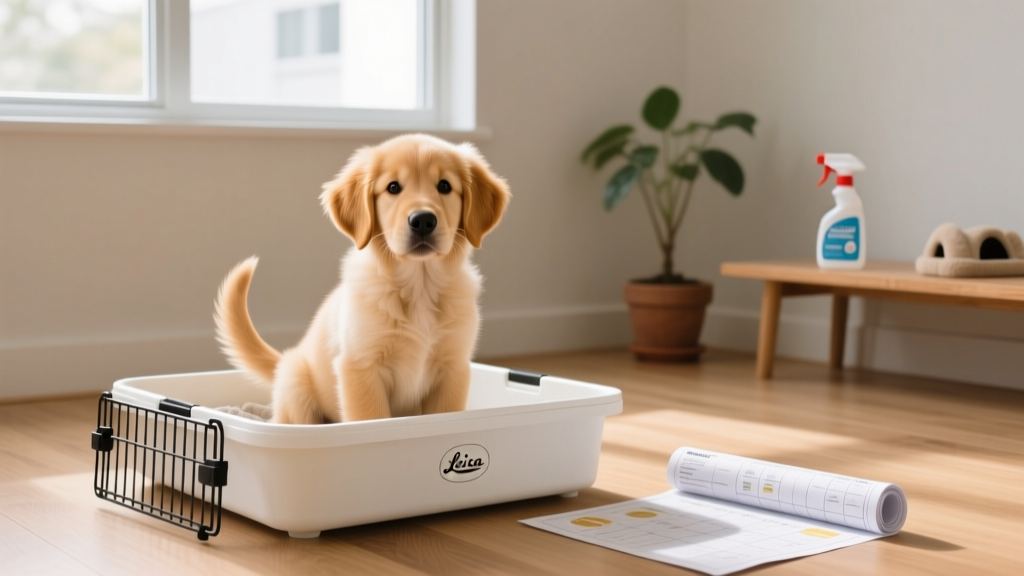
Golden Retriever Puppy Eats Strawberry: Safe Feeding Guide by Age
Can your golden retriever puppy eat strawberries safely? Learn age-specific feeding, portions, and a full puppy care timeline from 4 weeks to 12 months.

Can Your Golden Retriever Puppy Eat Strawberries?
If you've just brought home a golden retriever puppy and caught them snatching a strawberry off the kitchen floor, take a breath — they'll be fine. Strawberries appear on the ASPCA's non-toxic plant list and are widely considered safe for dogs of all ages. That said, a golden retriever puppy eats strawberry differently than an adult dog: their smaller mouths, developing teeth, and immature gut microbiomes require you to prepare and portion this fruit carefully.
This guide covers everything from the exact moment your golden retriever puppy can try their first strawberry bite to a comprehensive care timeline spanning feeding schedules, vaccinations, potty training, and first-year costs.
Strawberry Feeding Guide by Puppy Age
Golden retrievers are large-breed dogs prone to rapid growth-related joint issues, so treat calories must stay under 10% of daily intake. Strawberries contain roughly 4 calories each — making them an excellent low-calorie training treat when sized appropriately.
| Puppy Age | Strawberry Serving Size | Preparation Method | Frequency |
|---|---|---|---|
| 8–12 weeks | ½ strawberry (approx. 4–5 g) | Mashed or finely minced, no seeds visible | 2–3 times per week max |
| 12–16 weeks | 1 small strawberry (approx. 8–10 g) | Quartered into pea-sized pieces | 3–4 times per week |
| 4–6 months | 2 medium strawberries (approx. 18–20 g) | Sliced into bite-sized chunks | Daily as training treats |
| 6–12 months | 3–4 medium strawberries (approx. 30–40 g) | Halved or whole (supervised) | Daily, within 10% treat budget |
Preparation Rules for Every Age
- Always wash thoroughly — pesticide residue is a concern even on organic berries
- Remove the green stem and leaves — while not toxic, they're difficult for puppies to digest and can cause mild GI upset
- Never serve frozen whole strawberries to puppies under 6 months — they're a choking hazard for small mouths
- Avoid strawberry-flavored products — jams, syrups, and yogurts contain xylitol or excessive sugar, both dangerous for dogs
When Your Golden Retriever Puppy Eats Strawberry for the First Time
Follow the 3-day introduction protocol: offer a tiny amount (fingernail-sized piece) on day one, wait 24 hours while monitoring stool consistency and energy levels. If no vomiting, diarrhea, or lethargy occurs, increase to the age-appropriate serving on day three. Golden retrievers are generally not a breed prone to food sensitivities, but individual puppies can react to any novel food.
If your puppy shows signs of an allergic reaction — facial swelling, hives, difficulty breathing — contact your veterinarian immediately or call the ASPCA Animal Poison Control at (888) 426-4435.
Golden Retriever Puppy Milestones: Weeks 4 Through 12 Months
Weeks 4–8: The Litter Phase
Your golden retriever puppy is still with their breeder and littermates during this critical period. Key developments include:
- Week 4: Baby teeth erupting, transitioning to gruel (kibble soaked in puppy formula or goat's milk)
- Week 5–6: Play-biting emerges — littermates teach bite inhibition naturally
- Week 7–8: Fear imprint period begins — negative experiences now can create lasting phobias
- No strawberries yet — puppies this young should only consume mother's milk and breeder-approved gruel
Weeks 8–12: Welcome Home
This is the standard age to bring your golden retriever puppy home. Expect 10–15 lb body weight and 3–4 meals daily.
- Sleep: 18–20 hours per day is normal — don't skip naps for play
- Crate: Introduce immediately; keep sessions to 30–60 minutes max during the day
- Bite inhibition: Redirect nipping to chew toys; yelp and withdraw attention for 10–15 seconds when teeth touch skin
- First strawberry taste: A mashed half-strawberry is safe at 8 weeks as an occasional treat
Weeks 12–16: Confidence Building
Your golden is now 15–25 lb and gaining coordination rapidly.
- Bladder control: Improving — can hold approximately 3 hours during the day
- Training: Begin teaching sit, down, and recall using positive reinforcement with small food rewards (strawberry pieces work well here)
- Socialization peak: This is the most important window — see the checklist below
- Second fear period: Around 12–14 weeks, puppies may suddenly react fearfully to previously familiar things
Weeks 16–24: The Adolescent Shift
Weight reaches 30–50 lb. Energy increases significantly, and testing boundaries becomes common.
- Teething: Adult teeth pushing in — see the teething section below
- Exercise: 5 minutes of structured activity per month of age (so 20–25 minutes at 4–5 months)
- Recall regression: Expect your previously reliable recall to deteriorate temporarily — maintain consistency
- Spay/neuter discussion: For golden retrievers, many veterinarians now recommend waiting until 12–18 months to reduce joint disorder risk, per AKC health guidance
Months 6–12: Young Adult Transition
Your golden retriever will reach 55–75 lb (females typically 55–65 lb, males 65–75 lb).
- Feeding: Transition from puppy formula to adult large-breed food around 12 months (not before)
- Exercise: 60–90 minutes daily, but avoid forced running on hard surfaces until growth plates close (around 18 months)
- Mental stimulation: Puzzle feeders, scent work, and retrieve games prevent destructive boredom
- Strawberry serving: Full adult portions (3–4 berries daily) are appropriate by 6 months
Feeding Schedule: Portions and Frequency by Age
Golden retrievers are prone to obesity, which exacerbates hip and elbow dysplasia. The Merck Veterinary Manual emphasizes measured feeding over free-feeding for large breeds.
| Age | Meals Per Day | Large-Breed Puppy Kibble (cups/day) | Estimated Weight Range |
|---|---|---|---|
| 8–12 weeks | 4 meals | 1½–2 cups total | 10–20 lb |
| 3–4 months | 3 meals | 2–2¾ cups total | 20–35 lb |
| 5–6 months | 3 meals → 2 meals | 2¾–3½ cups total | 35–50 lb |
| 7–9 months | 2 meals | 3–4 cups total | 50–65 lb |
| 10–12 months | 2 meals | 3½–4½ cups total | 60–75 lb |
Critical note: Use a large-breed puppy formula (AAFCO-approved, with calcium restricted to 1.0–1.5% on a dry matter basis) to prevent developmental orthopedic disease. Brands like Purina Pro Plan Large Breed Puppy, Royal Canin Golden Retriever Puppy, or Hill's Science Diet Large Breed Puppy meet these requirements. Adjust portions based on your puppy's body condition score — you should feel ribs easily without seeing them prominently.
Treat budget reminder: Strawberry treats and other snacks should not exceed 10% of daily caloric intake. For a 30-lb golden retriever puppy eating roughly 1,200 calories/day, that's 120 treat calories — about 30 strawberries' worth, though variety is better.
Vaccination Schedule and When Your Puppy Can Go Outside
| Age | Vaccine(s) | Protection Against |
|---|---|---|
| 6–8 weeks | DHPP (1st dose) | Distemper, Hepatitis (Adenovirus), Parainfluenza, Parvovirus |
| 10–12 weeks | DHPP (2nd dose) + Bordetella | Above + Kennel Cough |
| 14–16 weeks | DHPP (3rd dose) + Rabies | Above + Rabies (legally required) |
| 12–16 months | DHPP booster + Rabies booster | Maintenance of core immunity |
When Can My Puppy Go Outside and Meet Other Dogs?
This is one of the most common questions golden retriever puppy owners ask — and the answer requires balancing disease risk against the socialization clock. According to the AVMA vaccination guidelines, puppies are not fully protected against parvovirus and distemper until approximately 7–10 days after their final DHPP dose at 14–16 weeks.
Safe outdoor activities before full vaccination (8–16 weeks):
- Carried outings in a sling or backpack to expose puppy to sights, sounds, and surfaces
- Private backyard exploration (if no unknown dogs have access)
- Visits to fully vaccinated, healthy adult dogs in private homes
- Puppy kindergarten classes that require proof of at least one DHPP dose (per AKC socialization recommendations)
Avoid until fully vaccinated: dog parks, pet store floors, public sidewalks with heavy dog traffic, and boarding facilities without confirmed vaccination requirements.
Potty Training Timeline: Realistic Expectations
Golden retrievers are generally eager to please and pick up house-training faster than many breeds, but "fully potty trained" means different things at different stages.
| Age | Bladder Capacity | Expected Accidents/Week | Training Focus |
|---|---|---|---|
| 8–10 weeks | 30–45 minutes | 4–8 per week is normal | Establish outdoor routine; reward immediately with treats and praise |
| 10–14 weeks | 1–2 hours | 2–4 per week | Crate between outings; supervise or confine at all times |
| 3–4 months | 2–3 hours | 0–2 per week | Add verbal cue ("go potty"); begin fading treat frequency |
| 5–6 months | 4–5 hours | Rare (regression possible during teething) | Extend time between outings; teach door-bell signaling |
| 7–12 months | 6–8 hours (adult capacity) | Accident-free most weeks | Maintain routine; address marking behavior in intact males |
Troubleshooting common golden retriever potty issues:
- Submissive urination (common in goldens): Don't punish — greet calmly at their level, avoid direct eye contact during greetings, take outside immediately upon arrival
- Excitement urination: Keep arrivals low-key; ask visitors to ignore puppy for first 2 minutes
- Nighttime accidents after 4 months: Reduce water intake 2 hours before bed; set a 3 AM alarm for one final outing during the transition period
Socialization Window: The Critical Weeks 3–14
The primary socialization period for puppies closes around 12–14 weeks. Research published in the Journal of Veterinary Behavior shows that puppies with inadequate socialization during this window are significantly more likely to develop fear-based aggression and anxiety disorders. For golden retrievers — a breed valued for its stable temperament — maximizing this window is essential.
Golden retriever-specific note: Goldens are naturally social and often seem fine without extensive socialization — this is misleading. Without deliberate exposure, even easygoing breeds can develop separation anxiety, door-darting, or over-excitability around visitors. The goal isn't just tolerance but genuine calmness in novel situations.
Teething Timeline and Relief Strategies
Golden retriever puppies begin teething around 3–4 weeks (deciduous teeth erupting) and finish the transition to adult teeth by 6–7 months. The most intense chewing phase occurs between 3–6 months when adult teeth push through the gums.
| Phase | Age | What's Happening | Safe Relief Options |
|---|---|---|---|
| Baby teeth in | 3–6 weeks | 28 deciduous teeth erupting | Soft rubber toys, damp washcloth (chilled, not frozen) |
| Peak chewing | 3–4 months | Adult incisors and canines emerging | Kong Classic (puppy size, stuffed and frozen), Nylabone Puppy Chew |
| Heavy chewing | 4–6 months | Premolars and molars replacing baby teeth | Benebone Wishbone (puppy), frozen carrot sticks, bully sticks (supervised) |
| Final phase | 6–7 months | Last molars settling; retained baby teeth check | Medium Kong Classic, rope toys (supervised, replace when fraying) |
What NOT to give: Ice cubes (can fracture developing teeth), hard antlers or weight-bearing bones, cooked bones of any kind, and toys small enough to swallow. Golden retrievers are enthusiastic chewers — size up when in doubt.
Retained baby teeth: Small breeds commonly retain deciduous teeth, but goldens can too. At your 6-month vet visit, ask your veterinarian to check for any "double teeth" that need extraction to prevent adult tooth misalignment.
Crate Training Progression and Time Limits
Crate training leverages a dog's natural den instinct and is one of the most effective tools for house-training, safety, and managing separation anxiety in golden retrievers.
| Puppy Age | Maximum Daytime Crate Time | Overnight Crate Time | Crate Size |
|---|---|---|---|
| 8–10 weeks | 30–60 minutes | 3–4 hours (expect 1–2 nighttime potty breaks) | 36" crate with divider panel |
| 10–14 weeks | 1–2 hours | 5–6 hours (1 nighttime break) | 36" with divider, gradually expanding |
| 4–5 months | 2–3 hours | 6–7 hours | Expand divider as puppy grows |
| 6–12 months | 3–4 hours | 7–8 hours | Full 42" crate for adult golden |
Golden retriever-specific crate tips:
- Use a 42-inch wire crate (like the MidWest iCrate or Frisco Double Door) with an adjustable divider — goldens grow into the 42" size as adults
- Place the crate in a high-traffic family area; goldens are social and isolate poorly
- Feed meals inside the crate with the door open to build positive associations
- Never use the crate as punishment — it must remain a safe space
- Provide a stuffable Kong or lick mat for longer sessions to prevent whining from boredom
Common Golden Retriever Puppy Problems and Solutions
Problem: Puppy Biting and Nipping
Golden retrievers are mouthy by nature — they were bred to carry game softly. This means more nipping than many breeds, but it's modifiable.
- Redirect: Always have a chew toy within reach; swap skin for toy immediately
- Time-out method: If teeth touch skin, say "ouch" calmly, stand up, and leave for 15–20 seconds. Return and resume play. Repeat consistently.
- Enrichment check: Puppies bite more when under-stimulated — ensure 2–3 mental enrichment sessions daily (snuffle mats, training, frozen Kongs)
- Avoid: Physical corrections, alpha rolls, or holding the mouth shut — these damage trust and can escalate biting
Problem: Whining and Crying in the Crate
- Distinguish needs: Puppies whine for bathroom needs, anxiety, or boredom. Take outside first; if no elimination within 5 minutes, return to crate
- Ignore demand whining: Once bathroom needs are met, wait for 5 seconds of silence before releasing — rewarding whining teaches whining
- Cover the crate: A light blanket over the top and sides reduces visual stimulation and calms many puppies
- White noise: A fan or white noise machine near the crate masks household sounds that trigger alertness
Problem: Destructive Chewing
- Manage the environment: Puppy-proof rooms before giving access; use baby gates to limit roaming
- Rotate toys: Keep only 3–4 toys available at a time, rotating every 2–3 days to maintain novelty
- Exercise first: A physically and mentally tired golden retriever puppy is far less likely to destroy furniture — prioritize a training session or fetch before leaving them alone
First-Year Cost Breakdown for a Golden Retriever Puppy
Budgeting accurately prevents surprises. These ranges reflect 2025–2026 US pricing from veterinary cost surveys and major retailers.
| Category | Low Estimate | High Estimate | Notes |
|---|---|---|---|
| Puppy purchase/adoption | $500 (rescue) | $3,500 (AKC breeder) | Health-tested breeders typically $1,800–$3,000 |
| Veterinary care (vaccines, exams, spay/neuter) | $800 | $1,800 | Includes heartworm test, fecal exams, microchip |
| Food (large-breed puppy formula, 12 months) | $600 | $1,200 | Premium brands cost more; raw diets significantly higher |
| Supplies (crate, bed, leash, bowls, toys, gates) | $350 | $700 | One-time purchases; replace chew toys regularly |
| Training (puppy kindergarten + basic obedience) | $200 | $600 | Group classes $150–$300; private sessions $75–$150/hour |
| Preventive medications (heartworm, flea/tick) | $300 | $600 | Simparica Trio, NexGard, or Heartgard Plus typical |
| Pet insurance (optional but recommended) | $480 | $960 | $40–$80/month for comprehensive coverage |
| Grooming supplies (brushes, shampoo, nail clippers) | $75 | $200 | Goldens need regular brushing; professional grooming optional |
| TOTAL First Year | $3,305 | $9,560 | Excluding emergency veterinary care |
Emergency fund recommendation: Set aside $1,000–$2,000 for unexpected veterinary visits. Golden retriever puppies are prone to eating foreign objects (socks, toys, rocks) that may require surgical removal — a $2,000–$5,000 procedure without insurance.
Frequently Asked Questions
When should I bring my golden retriever puppy home?
Between 8–10 weeks of age. Responsible breeders keep golden retriever puppies until at least 8 weeks to ensure proper socialization with littermates and completion of the first critical developmental period. Some breeders specializing in service dog lines hold puppies until 10–12 weeks for additional evaluation.
How often should I feed my golden retriever puppy?
At 8–12 weeks, feed 4 meals per day. Transition to 3 meals at 12 weeks, then 2 meals at 5–6 months. Maintain 2 meals per day throughout adulthood. Never feed just one large meal daily — golden retrievers are at elevated risk for gastric dilatation-volvulus (bloat), and splitting meals reduces this risk.
When will my golden retriever puppy be fully potty trained?
Most golden retrievers are reliably house-trained by 5–6 months, with occasional accidents possible until 8–9 months. Males may take slightly longer, especially if intact. Consistency in schedule, crate use, and positive reinforcement are the primary factors in speed of training.
What vaccines does my puppy need and when?
Core vaccines follow a DHPP series at 6–8, 10–12, and 14–16 weeks, with a rabies vaccine at 14–16 weeks. Non-core vaccines (Bordetella, Leptospirosis, Lyme) depend on your geographic area and lifestyle. Your veterinarian will customize the protocol based on local disease prevalence.
How do I stop my golden retriever puppy from biting?
Use the redirect-and-withdraw method: offer a chew toy when mouthing begins, and if teeth contact skin, calmly withdraw attention for 15–20 seconds. Pair this with adequate physical exercise (appropriate for age) and mental enrichment. Most golden retrievers significantly reduce biting by 5–6 months as adult teeth come in and impulse control improves.
Can my golden retriever puppy eat strawberries every day?
Yes, once they're over 12 weeks old and have tolerated the initial introduction without GI upset. Daily servings should stay within the 10% treat calorie limit — roughly 2–4 medium strawberries depending on your puppy's weight and total food intake. Strawberries are a far healthier option than most commercial training treats.
Are there any fruits my golden retriever puppy should never eat?
Yes. Grapes and raisins are highly toxic to dogs and can cause acute kidney failure. Cherries (pits contain cyanide), avocados (persin toxin), and unripe tomatoes are also unsafe. If your puppy ingests any toxic food, call the ASPCA Animal Poison Control at (888) 426-4435 immediately — a consultation fee applies but the guidance can be lifesaving.
This article provides educational guidance for golden retriever puppy care. Always consult your veterinarian for personalized health, nutrition, and vaccination decisions specific to your puppy's individual needs.
Beth Carrasco
All our authors care for dogs every day — read more of their work on the authors page.