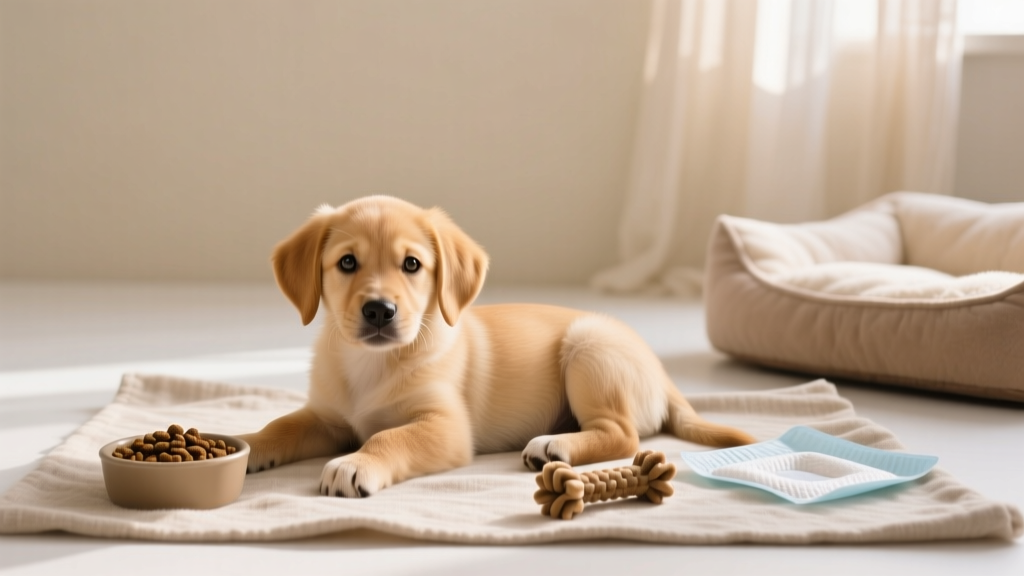
Dog Tricks to Teach Puppies: A Golden Retriever Training & Care Guide
Discover the best dog tricks to teach puppies, plus a complete Golden Retriever puppy care timeline covering feeding, potty training, vaccines, and socialization.
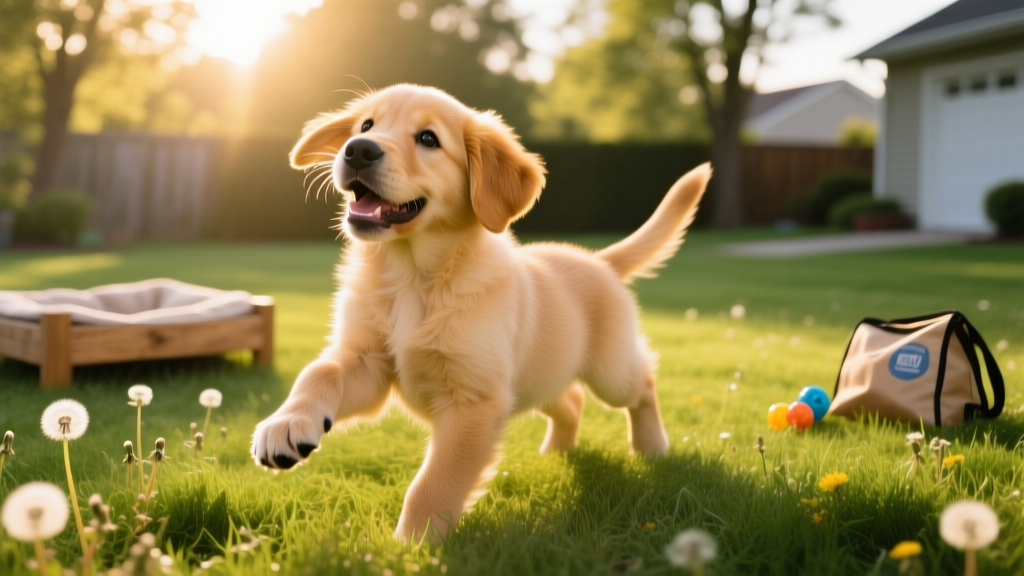
Golden Retrievers are among the most trainable breeds on the planet — consistently ranked in the top three for working and obedience intelligence by canine neuropsychologist Stanley Coren. But that eagerness to learn doesn't mean training happens on autopilot. Knowing which dog tricks to teach puppies and when to teach them makes the difference between a well-mannered adult dog and a 70-pound adolescent who still mouths your hands and jumps on guests.
This guide combines a complete Golden Retriever puppy care roadmap — feeding, vaccinations, potty training, socialization, teething, and first-year costs — with a structured trick-training progression calibrated to your puppy's developmental windows. Every timeline below is based on breed-specific growth patterns and veterinary developmental science.
When Should I Bring My Golden Retriever Puppy Home?
Responsible Golden Retriever breeders keep puppies until 8 weeks of age minimum. Some breeders specializing in field and service lines retain puppies until 10-12 weeks to complete early neurological stimulation (ENS) protocols and temperament evaluations.
The American Kennel Club recommends 8 weeks as the standard rehoming age. Before this, puppies learn critical bite inhibition and social cues from littermates. A Golden pulled at 6 weeks is significantly more likely to develop mouthiness and poor impulse control — traits that are especially problematic in a breed that will eventually weigh 55-75 lb (25-34 kg).
Golden Retriever Puppy Age Milestones: What to Expect Week by Week
| Age Range | Developmental Stage | Key Milestones & Expectations |
|---|---|---|
| 4–8 weeks | Litter socialization (with breeder) | Deciduous teeth erupt, littermate play teaches bite inhibition, introduction to solid food (gruel/kibble soaked in warm water), first DHPP vaccine at 6-8 weeks |
| 8–12 weeks | Human bonding & fear imprint period | Peak fear sensitivity (8-11 weeks) — avoid traumatic experiences. Begin crate training, name recognition, short 3-5 minute training sessions. Potty accidents every 1-2 hours. Sleep 18-20 hours/day. |
| 12–16 weeks | Confidence building & boundary testing | Fear period subsides. Puppy gains bladder control (can hold 2-3 hours). Begin structured trick training. Second and third DHPP vaccines. Start leash walking in low-distraction areas. |
| 16–24 weeks | Adolescent independence | Teething begins (~16 weeks). Chewing intensity peaks. Recall may regress. Introduce intermediate tricks. Can hold bladder 3-4 hours. Socialization window closes around 14-16 weeks — urgency here is critical. |
| 6–12 months | Sexual maturity & adolescent energy surge | Growth plates still open (Goldens mature slowly — plates close 14-18 months). Spay/neuter typically recommended 6-9 months per veterinary guidance. Energy spikes, mouthing may return. Advanced tricks and impulse control work. |
Feeding Schedule: Exact Portions for Your Golden Retriever Puppy
Golden Retrievers are prone to rapid growth, which increases the risk of hip dysplasia and other orthopedic conditions. Large-breed puppy formulas with controlled calcium-phosphorus ratios (1.1:1 to 1.4:1) and moderate caloric density are essential. Look for an AAFCO statement specifying "growth" or "all life stages" with the large-breed growth designation.
| Puppy Age | Expected Weight (lb / kg) | Daily Food Amount | Meals Per Day | Per-Meal Portion |
|---|---|---|---|---|
| 8–12 weeks | 10–20 lb / 4.5–9 kg | 1.5–2 cups | 3–4 meals | ⅓–½ cup per meal |
| 12–16 weeks | 20–35 lb / 9–16 kg | 2–2.5 cups | 3 meals | ⅔–¾ cup per meal |
| 16–24 weeks | 35–50 lb / 16–23 kg | 2.5–3.5 cups | 2–3 meals | 1–1.5 cups per meal |
| 6–12 months | 50–70 lb / 23–32 kg | 3–4 cups | 2 meals | 1.5–2 cups per meal |
Brand examples (2026 pricing): Purina Pro Plan Large Breed Puppy ($45–55 per 34 lb bag), Royal Canin Golden Retriever Puppy ($50–60 per 25 lb bag), Hill's Science Diet Large Breed Puppy ($48–58 per 30 lb bag). Expect to spend $40–65/month on food during the first year.
Transition to adult food between 12-18 months — Goldens mature slower than smaller breeds. Always transition over 7-10 days, mixing 25% new food with 75% old food and increasing the ratio every 2-3 days to avoid GI upset.
Potty Training Timeline: Realistic Expectations for Golden Retrievers
Golden Retrievers are generally eager to please, which helps with house training — but their large bladders take longer to develop full capacity than small breeds. Here's a realistic timeline, not a "trained in 3 days" fantasy:
- 8–10 weeks: Accidents every 1-2 hours. Take out immediately after waking, eating, drinking, and playing. Expect 15-20 trips outside per day.
- 10–14 weeks: Can hold 1.5-2 hours during the day. Nighttime stretches of 3-4 hours become possible.
- 14–20 weeks: Daytime control extends to 2-3 hours. Nighttime holds of 5-6 hours. Accidents drop to 1-3 per week if schedule is consistent.
- 5–6 months: Most Goldens are reliably house trained with zero daytime accidents. Nighttime holds of 7-8 hours.
- 6-8 months: Occasional regression during adolescence or heat cycles (intact females). Marking behavior may emerge in intact males.
• Submissive urination (8-16 weeks): Normal for Goldens. Don't scold — greet calmly at puppy's level, take outside immediately. Most outgrow by 6 months.
• Regression at 4-6 months: Often coincides with teething distraction or increased independence. Return to frequent scheduled outings.
• Excitement urination: Ignore jumping, reward four-on-floor behavior. Manage guest greetings with leash and calm entry protocol.
Vaccination Schedule: Core and Non-Core Vaccines by Week
Your veterinarian will customize this schedule based on regional disease prevalence and your puppy's risk profile. The following reflects AVMA-recommended core vaccination guidelines:
| Age | Vaccine | Notes |
|---|---|---|
| 6–8 weeks | DHPP (1st dose) | Distemper, Hepatitis (Adenovirus-2), Parainfluenza, Parvovirus. Often administered by breeder. |
| 10–12 weeks | DHPP (2nd dose) + Bordetella (optional) | Bordetella recommended if attending puppy classes, boarding, or visiting dog parks. Intranasal or injectable. |
| 14–16 weeks | DHPP (3rd dose) + Rabies | Rabies required by law in most US states. DHPP final booster ensures maternal antibody interference has cleared. |
| 12–16 months | DHPP booster + Rabies booster | After this, DHPP and Rabies typically given every 3 years (check local regulations). |
Non-core vaccines your vet may recommend: Leptospirosis (2-dose series, increasingly common in suburban areas), Lyme disease (endemic in Northeast and Upper Midwest), Canine Influenza (H3N2/H3N8 — recommended for dogs in group settings).
Cost estimate: Puppy vaccine series (3 DHPP + Rabies + Bordetella) typically runs $150–$300 at a general practice, $80–$150 at low-cost clinics. Leptospirosis and Lyme add $30–$50 each.
The Socialization Window (Weeks 3–14): Your Golden's Critical Checklist
The primary socialization window for puppies closes between 12-14 weeks according to Merck Veterinary Manual. After this period, unfamiliar stimuli trigger fear rather than curiosity. For Golden Retrievers — a breed prone to softness and sensitivity — incomplete socialization can manifest as fear-based reactivity, shyness with strangers, or noise phobias in adulthood.
Before full vaccination is complete, the AVMA and the American Veterinary Society of Animal Behavior (AVSAB) agree: the risk of behavioral problems from poor socialization exceeds the disease risk. Carry your puppy or use a stroller to expose them to the world without placing them on high-traffic ground.
Socialization Exposure Checklist (Weeks 8–14)
- Surfaces: Gravel, grass, metal grates, wet pavement, sand, carpet, tile, wood floors
- People: Children (supervised), elderly individuals, people in hats/sunglasses, people with canes/wheelchairs, delivery workers, people of varying heights and builds
- Sounds: Vacuum cleaner, thunderstorm recordings (low volume, paired with treats), doorbell, car horns, power tools, fireworks audio
- Objects: Umbrellas opening, plastic bags rustling, bicycles, skateboards, trash cans, automatic doors
- Animals: Fully vaccinated adult dogs (playdates, not dog parks), cats (supervised), livestock if accessible
- Handling: Paw touching, ear inspection, mouth opening, nail clipping practice, gentle restraint, towel drying
- Locations: Pet-friendly stores, outdoor café patios, car rides (short, positive), parking lots, school playgrounds (after hours)
Target: Aim for 5-7 novel positive experiences per day during weeks 8-12. Each exposure should be paired with high-value treats (small pieces of boiled chicken, freeze-dried liver, or commercial training treats like Zuke's Mini Naturals).
Dog Tricks to Teach Puppies: A Golden Retriever Training Progression
Golden Retrievers were bred to work cooperatively with hunters — they learn quickly, retain well, and genuinely enjoy training sessions. Here's a trick progression matched to your puppy's cognitive and physical development:
Stage 1: Foundation Skills (8–12 Weeks)
Sessions: 3-5 minutes, 3-5 times daily. Use high-value treats. End on success.
- Name recognition: Say puppy's name → treat when they look at you. Build to eye contact duration.
- Sit: Lure nose upward with treat → rear drops naturally. Mark with "yes!" or clicker → reward.
- Crate entry: Toss treat into crate → mark "go in" → reward inside. Build duration before closing door.
- Touch (hand target): Present flat palm → puppy noses it → mark and treat. Foundation for future tricks.
- Drop it: Trade low-value toy for high-value treat. Never pry from mouth — teaches resource guarding.
Stage 2: Core Tricks (12–20 Weeks)
Sessions: 5-10 minutes, 2-3 times daily. Begin adding verbal cues after behavior is reliable.
- Down: Lure from sit position downward. Golden puppies with long bodies may need shaping (reward incremental steps).
- Stay (3-10 seconds): From sit or down, open palm → take one step back → return → reward. Add distance and duration separately.
- Come (recall): Start in low-distraction environment. Use long line (15-30 ft) for safety. Never punish a dog who comes to you.
- Shake/paw: From sit, gently touch paw → mark when they lift it. Most Goldens offer paw naturally within 3-5 sessions.
- Leave it: Closed fist with treat → wait for puppy to stop nosing → reward from OTHER hand. Critical impulse control skill.
Stage 3: Intermediate Tricks (5–8 Months)
Sessions: 10-15 minutes. Begin proofing behaviors in higher-distraction environments.
- Roll over: From down, lure treat along shoulder → hip → over back. Break into steps if puppy resists.
- Spin (left and right): Lure in tight circle. Add "spin" and "twist" as separate cues.
- Fetch with hold: Goldens are natural retrievers. Shape: pick up toy → hold 1 second → bring to you → trade for treat. Build hold duration.
- Go to mat/place: Send to designated bed or mat. Build duration to 5-10 minutes. Essential for managing door-dashing and guest greetings.
- Play dead (bang): From down, lure onto side. Pair with hand signal. Goldens tend to ham this up — great party trick.
Stage 4: Advanced Skills (8–18 Months)
- Retrieve named objects: Teach names of 3-5 toys. "Get your ball" → reward correct selection.
- Loose-leash walking in public: Reward at your knee. Stop when leash tightens. Expect 6-12 months of consistent practice before reliability.
- Emergency recall: Pair unique cue (whistle or special word) with ultra-high-value reward (rotisserie chicken). Practice monthly to maintain.
- Settle on cue: Captured calmness. Reward voluntary lying down with chin on floor. Build to 30+ minutes on mat.
Crate Training Progression: Time Limits by Age
A properly crate-trained Golden Retriever will voluntarily seek out their crate for naps and decompression well into adulthood. The key is never exceeding your puppy's physical capacity to hold their bladder:
| Puppy Age | Maximum Crate Time (Daytime) | Maximum Crate Time (Nighttime) | Crate Size Recommendation |
|---|---|---|---|
| 8–10 weeks | 30–60 minutes | 2–3 hours (set alarm) | 36" crate with divider panel — block off to create ~24" space |
| 10–14 weeks | 1–2 hours | 3–4 hours | Same — adjust divider as puppy grows |
| 14–18 weeks | 2–3 hours | 5–6 hours | Expand divider to ~30" |
| 4–6 months | 3–4 hours | 7–8 hours | Full 42" crate for adult Golden |
| 6+ months | 4–5 hours max | 8 hours | 42" crate (Goldens need 42" not 36") |
Crate recommendations: MidWest iCrate 42" ($55–70), Frisco Double Door 42" ($45–60). Always use a divider panel — too much space encourages eliminating in one corner and sleeping in another.
Teething Timeline (3–6 Months): Relief Strategies and Safe Chews
Golden Retriever puppies begin losing deciduous teeth around 12-16 weeks, with adult teeth fully in by 6-7 months. The chewing drive during this period is intense and non-negotiable — your job is to direct it toward appropriate items.
Safe chew options:
- Frozen Kong Classic (size Medium, red rubber): Fill with peanut butter (xylitol-free), plain yogurt, or soaked kibble. Freeze 4+ hours. $12–16 retail.
- Benebone Wishbone (Puppy, Bacon flavor): Nylon chew designed for puppies under 60 lb. Softer than adult version. $15–18.
- Frozen carrots: Whole large carrots, frozen. Excellent for soothing gums. Supervise — remove when small enough to choke on.
- Bully sticks (6-inch, odor-free): Fully digestible single-ingredient chew. Supervise to prevent gulping last piece. $4–7 each.
- Wet washcloth (twisted and frozen): Soak clean washcloth in water or low-sodium chicken broth, twist into rope shape, freeze. Supervise use.
Stopping Puppy Biting and Nipping: Golden Retriever–Specific Solutions
Golden Retrievers are a "mouthy" breed — they were literally bred to carry birds. Puppy nipping peaks between 8-16 weeks and should decrease with consistent management. Here's what works:
- Redirect to appropriate chew: Puppy mouths skin → say "oops" calmly → offer Kong or toy → praise chewing toy. Do this every single time.
- Withdraw attention: If biting persists after redirect, stand up, fold arms, and be still for 10-15 seconds. No eye contact. Resume interaction when puppy is calm. This mimics littermate behavior — puppies who bite too hard get ignored.
- Provide adequate enrichment: A tired puppy is a gentle puppy. Goldens need mental stimulation (snuffle mats, puzzle feeders, training sessions) alongside physical exercise. 5 minutes of structured exercise per month of age, twice daily (e.g., 10-minute walks at 8 weeks).
- Manage arousal levels: Puppies bite most when overstimulated. If your Golden puppy is biting frantically, they likely need a nap, not more play. Enforce 2-3 hour nap periods in the crate.
- Teach "gentle" cue: Offer treat in closed fist. Puppy noses and licks → open hand → treat. If teeth touch skin → close fist → try again. Most Goldens learn this within 3-5 sessions.
What NOT to do: Never hold the puppy's mouth shut, spray water in their face, yell, or use physical punishment. These methods increase anxiety and can escalate biting into fear-based aggression.
First-Year Cost Breakdown: Budgeting for Your Golden Retriever Puppy
| Category | Low Estimate | High Estimate | Notes |
|---|---|---|---|
| Puppy purchase (responsible breeder) | $1,500 | $3,500 | AKC-registered, health-tested parents (OFA hips/elbows, cardiac, eyes). Rescue/adoption: $200–$600. |
| Veterinary care (vaccines, exams, spay/neuter) | $600 | $1,200 | Includes 3 wellness exams, full vaccine series, heartworm test, fecal panels, spay/neuter ($300–$600). |
| Food (large-breed puppy formula) | $480 | $720 | $40–$60/month average over 12 months. |
| Heartworm/flea/tick prevention | $200 | $400 | Simparica Trio, NexGard, or Interceptor Plus — year-round in most US regions. |
| Supplies (crate, bed, leash, bowls, toys) | $200 | $450 | 42" crate ($55–70), orthopedic bed ($40–80), leash/harness ($30–50), Kong + chews ($50–80). |
| Training (group classes or private) | $150 | $600 | Puppy kindergarten ($150–$250 for 6-week course). Private trainer: $75–$150/session. |
| Pet insurance (optional but recommended) | $400 | $800 | $35–$65/month. Goldens are high-risk for hip dysplasia, cancer, and bloat — insurance pays off. |
| Total First Year | $3,530 | $7,670 | Excluding emergency vet visits. Budget $500–$1,000 emergency fund minimum. |
When Can My Puppy Go Outside and Meet Other Dogs?
This is one of the most common questions from new Golden Retriever owners, and the answer balances disease risk against the closing socialization window:
Immediately (8+ weeks): You can carry your puppy outdoors, use a stroller, or hold them on your lap at outdoor cafés. Exposure to sights, sounds, and smells is safe and critical. Avoid ground-level contact in areas with unknown dog traffic.
After 2nd DHPP (10-12 weeks): Supervised playdates with fully vaccinated adult dogs in private yards are generally safe. Puppy kindergarten classes (where all attendees are vaccinated for their age) are strongly recommended by the AVSAB.
After 3rd DHPP (14-16 weeks): Most veterinarians clear puppies for dog parks, group walks, and public ground contact 1-2 weeks after the final puppy DHPP booster. This means approximately 16-18 weeks of age.
Important caveat: Dog parks are high-risk environments for disease transmission and poor social experiences. Many veterinary behaviorists recommend avoiding dog parks entirely and instead arranging structured playdates with known, vaccinated, temperamentally stable dogs.
Frequently Asked Questions
How often should I feed my 10-week-old Golden Retriever puppy?
At 10 weeks, feed 3-4 meals per day. A typical 10-week Golden weighs 12-18 lb and needs approximately 1.5-2 cups of large-breed puppy food daily, split into portions of ⅓ to ½ cup per meal. Adjust based on body condition score — you should be able to feel ribs easily without seeing them prominently.
When will my Golden Retriever puppy be fully potty trained?
Most Golden Retrievers are reliably house trained by 5-6 months with consistent scheduling. Some individuals — particularly intact males who may begin marking — take until 8-9 months. If your puppy is having frequent accidents past 6 months despite a consistent routine, consult your veterinarian to rule out urinary tract infection or anatomical issues.
What is the best age to start teaching tricks to a Golden Retriever puppy?
You can begin foundation skills (name recognition, sit, hand target) the day you bring your puppy home at 8 weeks. Keep sessions to 3-5 minutes. Formal trick training (down, stay, shake, roll over) can start at 12 weeks once your puppy has settled in and built confidence. Goldens are fast learners — many know 10+ cues by 6 months with consistent daily practice.
Should I spay or neuter my Golden Retriever, and when?
Consult your veterinarian for individualized timing. Current research (including a University of California, Davis study) suggests that delaying spay/neuter until after growth plates close (14-18 months for Goldens) may reduce the risk of hip dysplasia, cranial cruciate ligament tears, and certain cancers. However, intact dogs require strict management to prevent unplanned breeding. Discuss risks and benefits with your vet.
My Golden puppy is chewing everything — is this normal?
Yes. Chewing peaks between 3-6 months during teething and again during adolescence (6-10 months) as a stress-relief and exploration behavior. Provide 5-7 appropriate chew options at all times, rotate them to maintain novelty, and manage the environment by puppy-proofing rooms (use baby gates, pick up shoes, secure electrical cords). Chewing typically decreases significantly by 12-18 months.
Marcus Aldridge
All our authors care for dogs every day — read more of their work on the authors page.