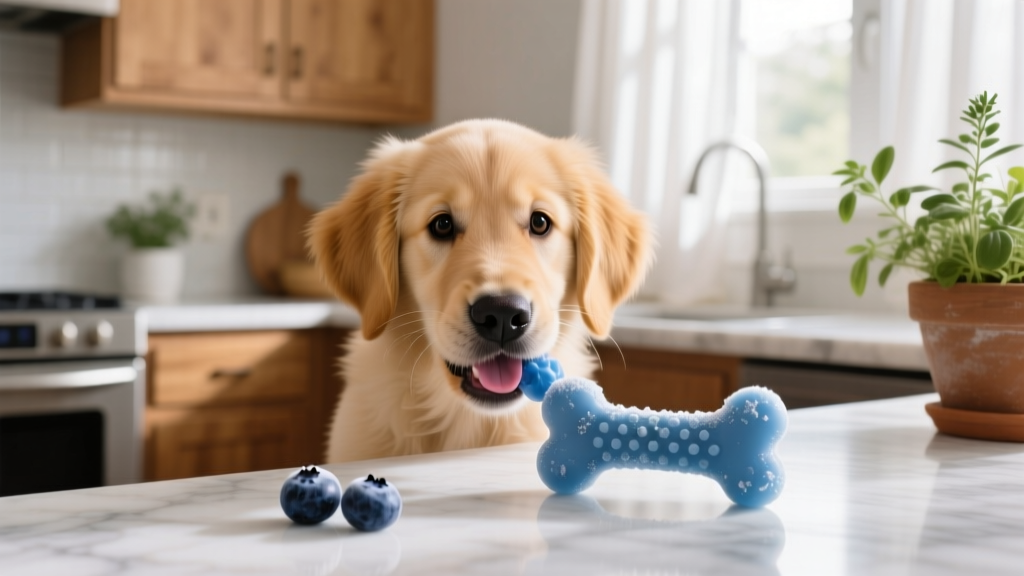
Golden Retriever Puppy Diarrhea Treatment & Care Guide by Age
Complete Golden Retriever puppy guide covering diarrhea treatment, feeding schedules, vaccination timelines, potty training, and first-year costs by age.

Why Golden Retriever Puppies Are Prone to Diarrhea
Golden Retrievers are one of the most popular breeds in the United States, and for good reason — their gentle temperament and intelligence make them outstanding family dogs. But if you've just brought home a Golden puppy, you may already be dealing with one of the most common (and stressful) new-owner problems: loose stools. Golden Retriever puppies have notoriously sensitive digestive systems during their first six months, and understanding puppy diarrhea treatment within the context of this breed's specific developmental stages is critical for keeping your pup healthy.
Goldens are predisposed to gastrointestinal upset for several reasons. Their rapid growth rate puts stress on developing digestive tracts. Their enthusiastic eating habits — Goldens are famously food-motivated — mean they often gulp food, grass, and anything else they find. And their socialization needs expose them to new environments, bacteria, and stressors that can trigger digestive episodes.
Golden Retriever Puppy Milestones: Week by Week
Understanding what's normal at each developmental stage helps you distinguish between expected puppy quirks and genuine health concerns — including when diarrhea is a minor dietary adjustment issue versus a medical emergency.
Weeks 4–8: Transitional Period (Still with Breeder)
- Weight: 5–10 lb (2.3–4.5 kg)
- Diet transition: Weaning from mother's milk to softened puppy kibble (4 meals/day)
- Diarrhea risk: HIGH — weaning stress and immature gut flora make loose stools common
- Social development: Learning bite inhibition from littermates, early human bonding
- What to expect: Soft-formed stools are normal; watery diarrhea lasting more than 24 hours requires breeder/vet attention
Weeks 8–12: Home Transition (The Danger Zone for Diarrhea)
- Weight: 10–20 lb (4.5–9 kg)
- Key stressor: Environmental change is the #1 trigger for puppy diarrhea in Goldens
- Development: Peak fear period (8–11 weeks); critical socialization window opens
- Sleep: 18–20 hours per day — overtired puppies have worse digestion
- Diarrhea treatment focus: Maintain breeder's exact food; add 1 tsp plain canned pumpkin per meal for firming
Weeks 12–16: Rapid Growth Phase
- Weight: 20–35 lb (9–16 kg)
- Physical: Adult teeth begin erupting; puppies chew everything (including things that cause GI upset)
- Diarrhea risk: MODERATE — foreign object ingestion and teething stress are primary triggers
- Training: Potty training starts clicking; basic commands learned through positive reinforcement
- Feeding change: Transition from 3 meals to 2 meals around week 16
Weeks 16–24: Adolescent Energy Surge
- Weight: 35–55 lb (16–25 kg)
- Behavior: Second fear period (around 6 months); testing boundaries
- Diarrhea risk: MODERATE to LOW — gut is maturing, but scavenging behavior peaks
- Exercise: 5 minutes per month of age, twice daily (structured walks, not forced running)
- Spay/neuter: Typically performed around 6 months; post-surgical GI upset possible
Months 6–12: Approaching Maturity
- Weight: 55–75 lb (25–34 kg) — males typically heavier
- Diet: Transition to adult food around 12 months (Golden-specific large-breed formula)
- Diarrhea risk: LOW — persistent diarrhea at this stage warrants veterinary investigation for food sensitivities or conditions like gastroenteritis
- Training: Advanced obedience; CGC (Canine Good Citizen) preparation
- Adult coat: Feathering develops; grooming needs increase significantly
Feeding Schedule: Exact Portions for Golden Retriever Puppies
Overfeeding is one of the most common causes of puppy diarrhea in Golden Retrievers. This breed will eat past the point of fullness, and excess food overwhelms their developing digestive systems. The following schedule uses a high-quality large-breed puppy formula (minimum 22% protein, 8% fat per AAFCO guidelines) as a baseline. Adjust based on your puppy's body condition score — you should be able to feel (but not see) ribs easily.
| Age | Expected Weight | Meals/Day | Total Daily Amount | Per-Meal Portion |
|---|---|---|---|---|
| 8–12 weeks | 10–20 lb (4.5–9 kg) | 4 | 1.5–2 cups | ⅜–½ cup |
| 12–16 weeks | 20–35 lb (9–16 kg) | 3 | 2–2.75 cups | ⅔–¾ cup |
| 4–6 months | 35–55 lb (16–25 kg) | 2 | 2.75–3.5 cups | 1⅓–1¾ cups |
| 6–12 months | 55–75 lb (25–34 kg) | 2 | 3.5–4.5 cups | 1¾–2¼ cups |
Diarrhea prevention feeding tips for Goldens:
- Use a slow-feeder bowl (e.g., Outward Hound FunFeeder) — Goldens inhale food, causing gas and loose stools
- Never switch foods cold-turkey; transition over 7–10 days (25% new food days 1–3, 50% days 4–6, 75% days 7–9, 100% day 10)
- Avoid feeding table scraps entirely during the first 6 months — Golden GI tracts are particularly sensitive to dietary fat
- Probiotics (e.g., Purina FortiFlora or Proviable-DC) can help stabilize gut flora during food transitions and stress events
Puppy Diarrhea Treatment: Age-Specific Protocols for Golden Retrievers
Not all puppy diarrhea is created equal. Your response should be calibrated to your Golden's age, symptom severity, and accompanying signs. Here's a breed-specific treatment framework developed from common veterinary protocols.
- Stool is soft but formed (like soft serve ice cream)
- Puppy is alert, playful, and drinking water normally
- No blood, mucus, or unusual color (black/tarry or bright red)
- No vomiting, fever (normal: 101–102.5°F / 38.3–39.2°C), or lethargy
- Episode follows a known stressor (new home, vaccination, diet change)
- Puppy under 12 weeks with more than 2 episodes of watery diarrhea in 24 hours
- Blood in stool (fresh red or dark tarry appearance)
- Concurrent vomiting — especially if unable to keep water down
- Lethargy, weakness, or collapse
- Signs of dehydration: tacky gums, skin that doesn't snap back when gently pinched, sunken eyes
- Known or suspected ingestion of a foreign object (Golden puppies are notorious chewers)
- Diarrhea lasting more than 48 hours despite home management
At-Home Treatment Protocol by Age
8–12 weeks: Withhold food for 6–8 hours only (never fast a puppy this young longer). Offer small sips of water every 30 minutes. Resume feeding with a bland diet of boiled white meat chicken (shredded, no skin, no bones) mixed with white rice in a 1:2 ratio. Feed 2–3 tablespoons every 3–4 hours. Gradually reintroduce regular kibble over 2–3 days. Add ½ teaspoon plain canned pumpkin (not pie filling) per meal.
12–16 weeks: Withhold food for 8–12 hours. Bland diet as above, but portions increase to ¼–⅓ cup per feeding, 4 times daily. You can introduce a veterinary-recommended probiotic. If stools don't firm within 24–36 hours, schedule a vet visit for a fecal float test ($35–$65) to rule out parasites like giardia or coccidia, which are common in Golden puppies from group environments.
4–6 months: Withhold food for 12–18 hours. Bland diet at ½–¾ cup per feeding, 3 times daily. At this age, you can also offer bone broth (unsalted, no onion or garlic) for hydration. Consider a kaolin-pectin supplement (e.g., Pro-Pectalin) at the dose your vet recommends — typically 1 mL per 10 lb body weight every 8 hours.
6–12 months: Your Golden's digestive system is more resilient. A 24-hour fast is safe for otherwise healthy adolescents. Follow with bland diet at 1–1.5 cups per feeding, 2–3 times daily. If diarrhea is recurrent at this age, discuss food sensitivity testing and potential diet trials with your veterinarian.
Common Causes of Diarrhea Specific to Golden Retriever Puppies
| Cause | Most Common Age | Why Goldens Are Susceptible | Prevention |
|---|---|---|---|
| Stress colitis (new home) | 8–10 weeks | Highly social breed; separation from littermates causes acute stress response | Bring home a blanket from breeder with littermate scent; maintain identical food |
| Dietary indiscretion (scavenging) | 3–8 months | Strong retrieving/scavenging instinct; will eat anything that fits in their mouth | Puppy-proof thoroughly; supervise outdoor time; teach "leave it" and "drop it" early |
| Parasites (giardia, coccidia, roundworm) | 6–16 weeks | Group housing at breeders; oral exploration of contaminated environments | Fecal testing at first vet visit; follow deworming schedule strictly |
| Food intolerance | 4–12 months | Breed predisposition to food sensitivities (chicken and beef are common triggers) | Limited-ingredient diet trial under veterinary guidance; novel protein options |
| Post-vaccination GI upset | 6–16 weeks (vaccine days) | Immune system activation can temporarily disrupt gut function | Feed bland diet on vaccine days; probiotics 3 days before and after |
Vaccination Schedule for Your Golden Retriever Puppy
Vaccination timing is critical — too early and maternal antibodies neutralize the vaccine; too late and your puppy is unprotected during peak vulnerability. Golden Retriever puppies follow the standard core vaccine schedule recommended by the American Veterinary Medical Association, with some breed-specific considerations.
| Age | Vaccines | Type | Notes |
|---|---|---|---|
| 6–8 weeks | DHPP (Distemper, Hepatitis, Parainfluenza, Parvovirus) | Core | First dose; often given by breeder before pickup |
| 10–12 weeks | DHPP booster + Bordetella (kennel cough) | Core + Non-core | Bordetella recommended if attending puppy socialization classes |
| 14–16 weeks | DHPP final booster + Rabies | Core | Rabies required by law in most US states; DHPP series now considered complete |
| 12–16 months | DHPP booster + Rabies booster | Core | First annual boosters; after this, DHPP may move to 3-year intervals |
Optional non-core vaccines to discuss with your vet: Leptospirosis (recommended in areas with wildlife exposure), Lyme disease (tick-endemic regions), and Canine Influenza (H3N2/H3N8 — if your Golden will be in daycare or boarding).
Post-vaccine diarrhea note: Mild GI upset within 24–48 hours of vaccination is relatively common and usually self-limiting. Follow the bland-diet protocol above. However, facial swelling, hives, vomiting, or collapse within hours of vaccination may indicate an anaphylactic reaction — seek emergency veterinary care immediately.
Potty Training Timeline: Realistic Expectations for Golden Retrievers
Golden Retrievers are generally among the easier breeds to potty train — their intelligence and eagerness to please work in your favor. However, "fully trained" doesn't happen overnight, and setting unrealistic expectations leads to frustration for both you and your puppy.
Realistic Potty Training Milestones
- 8–10 weeks: Zero bladder control. Take outside every 1–2 hours, plus immediately after eating, waking, and playing. Expect 8–12 outdoor trips per day.
- 10–14 weeks: Beginning to show signs of awareness (sniffing, circling). Still needs trips every 2 hours. Accidents are normal — do not punish.
- 14–18 weeks: Bladder capacity increasing. Can hold for 3–4 hours during the day. Nighttime: one middle-of-night trip may still be needed.
- 4–6 months: Most Golden puppies can hold for 4–5 hours during the day. Nighttime: sleeping through (6–8 hours) becomes possible.
- 6–9 months: Considered reliably house-trained for most Golden Retrievers. Occasional accidents during excitement or illness are still normal.
Key method: Use positive reinforcement exclusively. Take puppy to the same outdoor spot. Use a consistent cue word ("go potty"). Reward immediately with a high-value treat (small training treats like Zuke's Mini Naturals, broken into pea-sized pieces) and verbal praise the moment they finish — not when they come back inside.
Diarrhea and potty training interaction: If your Golden puppy develops diarrhea, temporarily suspend potty training expectations. Increase outdoor trips to every 30–60 minutes. The puppy cannot control loose stools and punishing accidents during GI illness creates negative associations that set training back weeks.
Socialization Window (Weeks 3–14): Your Golden's Critical Exposure Checklist
The American Kennel Club emphasizes that the primary socialization window for puppies closes around 14 weeks. For Golden Retrievers — a breed that thrives on positive human and animal interaction — missing this window can result in fearfulness, reactivity, and anxiety that are far harder to address later.
Important timing conflict: Your puppy won't be fully vaccinated until 16 weeks, but the socialization window closes at 14 weeks. The AVMA and American Veterinary Society of Animal Behavior (AVSAB) recommend controlled socialization during this overlap period — the behavioral risk of poor socialization outweighs the disease risk when exposure is managed carefully.
Safe socialization before full vaccination: Carry your puppy in a sling or wagon through public areas. Host puppy playdates at your home with known-vaccinated dogs. Enroll in puppy kindergarten classes that require proof of at least one DHPP vaccine and maintain sanitized facilities. Avoid dog parks, pet store floors, and high-traffic public areas until the full DHPP series is complete at 16 weeks.
Crate Training Progression: Time Limits by Age
Crate training is essential for Golden Retriever puppies — it aids potty training, prevents destructive chewing, and provides a safe den. But Goldens are social dogs, and excessive crating causes stress that can manifest as both behavioral issues and physical symptoms, including stress-induced diarrhea.
| Age | Maximum Crate Time (Daytime) | Maximum Crate Time (Night) | Crate Size Recommendation |
|---|---|---|---|
| 8–10 weeks | 30–60 minutes | 2–3 hours (then potty break) | 36" crate with divider panel |
| 11–14 weeks | 1–2 hours | 3–4 hours | 36" crate, divider adjusted |
| 15–16 weeks | 2–3 hours | 4–5 hours | 36" crate, divider opening more |
| 4–6 months | 3–4 hours | 6–7 hours | 42" crate (full adult size) |
| 6–12 months | 4–5 hours | 7–8 hours | 42" crate, fully open |
Golden-specific crate tips: Goldens are mouth-oriented — always include a safe chew toy in the crate (Kong Classic stuffed with frozen peanut butter for puppies). Place the crate in a common area where the family spends time; isolating a Golden's crate in a spare room increases whining and anxiety. Never use the crate as punishment — it must remain associated with positive experiences.
Teething Timeline (3–6 Months): Relief Strategies for Golden Puppies
Golden Retriever puppies begin losing their 28 deciduous (baby) teeth around 12–16 weeks, with the full set of 42 adult teeth typically erupted by 6–7 months. This is peak chewing season, and it directly relates to diarrhea — puppies chewing on inappropriate objects (shoes, sticks, household items) frequently ingest materials that cause GI upset.
Safe Chew Recommendations by Stage
- 12–16 weeks (early teething): Frozen washcloths soaked in water, Nylabone Puppy Chew (soft formula), KONG Puppy rubber toys (pink/blue). Avoid hard rubber at this stage — baby teeth are fragile.
- 16–20 weeks (active tooth loss): Bully sticks (supervised, 6-inch maximum), frozen carrots, Benebone Puppy (softer nylon). You may find dropped baby teeth in bedding — this is normal and not a cause for concern.
- 20–28 weeks (adult teeth setting): KONG Classic (red, medium or large), West Paw Zogoflex Tux, Yak cheese chews (supervised). Transition to harder chews gradually.
Diarrhea warning: If your Golden puppy swallows large pieces of any chew toy, watch for signs of intestinal blockage: vomiting, diarrhea followed by constipation, abdominal pain, loss of appetite, and lethargy. This is a veterinary emergency. The cost of surgical removal of a foreign body typically ranges from $1,500–$5,000.
Common Golden Retriever Puppy Problems & Solutions
Beyond diarrhea, Golden puppies present a predictable set of behavioral challenges. Addressing them early with force-free, positive reinforcement methods prevents escalation.
Puppy Biting and Nipping
Goldens are a mouthy breed — they were developed to carry game gently, and their puppies explore the world through their mouths. Biting peaks between 8–16 weeks.
- Redirect: When teeth touch skin, say "ouch" in a calm voice, withdraw attention for 10–15 seconds, then offer an appropriate chew toy
- Trade up: If puppy is chewing something inappropriate, offer a higher-value item rather than forcibly removing the object
- Time-outs: If biting is intense and persistent, calmly place puppy in their crate or a pen for a 2–3 minute cool-down (not as punishment — as a reset)
- Never: Hold the mouth shut, alpha roll, or use physical punishment — these methods damage trust and can increase fear-based biting
Whining and Crying (Especially at Night)
- Place crate near your bed for the first 2–3 weeks so puppy can hear and smell you
- Use a Snuggle Puppy (heartbeat toy) to simulate littermate comfort
- Take puppy out for a potty break if whining persists past 30 minutes — they may genuinely need to go
- Gradually move crate to the permanent location over 1–2 weeks once puppy is settled
Destructive Chewing
- Puppy-proof one room at a time; rotate access as puppy proves trustworthy
- Provide 4–5 appropriate chew options rotated daily to maintain novelty
- Ensure adequate physical exercise (age-appropriate) and mental enrichment (snuffle mats, training sessions, food puzzles)
- Supervise 100% of free-roaming time until 12–18 months (Goldens mature slowly)
First-Year Cost Breakdown: Golden Retriever Puppy
Budgeting accurately prevents surprises. Golden Retrievers are large dogs, and their costs reflect their size — especially for food, medications (dose-based), and gear. Here's a realistic first-year breakdown based on 2026 pricing.
| Category | Low Estimate | Medium Estimate | High Estimate |
|---|---|---|---|
| Puppy purchase (responsible breeder) | $2,000 | $3,000 | $5,000+ |
| Adoption/rescue (alternative) | $200 | $400 | $600 |
| Veterinary care (vaccines, wellness, spay/neuter) | $600 | $1,000 | $1,800 |
| Food (large-breed puppy formula, 12 months) | $480 | $720 | $1,200 |
| Preventive medications (heartworm, flea/tick) | $240 | $400 | $600 |
| Supplies (crate, bed, bowls, leash, harness, toys) | $200 | $400 | $700 |
| Training (group classes + optional private sessions) | $150 | $400 | $1,200 |
| Pet insurance (annual premium) | $360 | $600 | $960 |
| Emergency fund (recommended reserve) | $500 | $1,000 | $2,000 |
| Total (with breeder puppy) | $4,730 | $7,520 | $13,460 |
Diarrhea-related costs to budget for: A fecal float test ($35–$65), deworming medication ($15–$40), and a probiotic supplement ($20–$35) are common first-year expenses for Golden puppies. More serious cases requiring diagnostics like a parvo test ($45–$80) or abdominal X-rays ($200–$400) can add up quickly, which is why pet insurance or an emergency fund is strongly recommended.
Frequently Asked Questions
When should I bring my Golden Retriever puppy home?
Between 8 and 10 weeks of age. Responsible breeders will not release puppies before 8 weeks — this is the minimum time needed for littermate socialization and weaning. Some Golden breeders prefer to keep puppies until 10 weeks for additional socialization, which can benefit first-time owners. Never accept a puppy younger than 7 weeks; early separation is associated with increased behavioral problems and digestive issues.
How often should I feed my Golden puppy at each age?
At 8–12 weeks: 4 meals per day, spaced roughly 4 hours apart during waking hours. At 12–16 weeks: 3 meals per day. At 16 weeks and beyond: 2 meals per day (morning and evening). Consistent meal timing helps regulate digestion and makes potty training more predictable, since puppies typically need to eliminate 15–30 minutes after eating.
When will my Golden Retriever puppy be fully potty trained?
Most Golden Retrievers are reliably house-trained between 5 and 7 months of age, though occasional accidents during excitement or illness can occur through 12 months. "Reliably trained" means fewer than 1 accident per month under normal conditions. If your puppy is still having frequent accidents past 8 months, consult your veterinarian to rule out urinary tract infections or anatomical issues before assuming it's a training problem.
What vaccines does my Golden puppy need and when?
Core vaccines: DHPP at 6–8 weeks, 10–12 weeks, and 14–16 weeks; Rabies at 14–16 weeks. Non-core vaccines your vet may recommend based on lifestyle: Bordetella (10–12 weeks), Leptospirosis (12+ weeks), Lyme disease (12+ weeks). See the full vaccination table above for details. Boosters are given at 12–16 months, then typically every 1–3 years depending on the vaccine and local regulations.
How do I stop my Golden puppy from biting and nipping?
Use redirection and positive reinforcement. When teeth touch skin, calmly say "ouch," withdraw attention for 10–15 seconds, then redirect to an appropriate chew toy and praise enthusiastically when they chew it. Ensure your puppy gets adequate physical exercise and mental stimulation — overtired, under-stimulated puppies bite more. Enroll in a positive-reinforcement puppy class where structured play with other puppies teaches bite inhibition naturally. Never use physical punishment, which increases fear-based aggression.
When can my Golden puppy go outside and meet other dogs?
Your puppy can go outside in your own yard (if no unvaccinated dogs have access) immediately. For public outings, carry your puppy in controlled environments from day one for socialization purposes. Structured puppy classes can begin after the first DHPP vaccine (typically 7–8 weeks) per AVMA guidance. Dog parks, pet stores, and high-traffic public areas should be avoided until the full DHPP series is complete at 16 weeks. One-on-one playdates with fully vaccinated, healthy dogs in private yards are safe from 10 weeks onward.
Is puppy diarrhea always an emergency?
Not always, but age matters enormously. A single episode of soft stool in a 5-month-old Golden who is otherwise acting normally is typically not urgent — monitor, offer a bland diet, and ensure hydration. However, any diarrhea in a puppy under 12 weeks that persists more than 12 hours warrants a vet call, because young puppies can become dangerously dehydrated within hours. Multiple episodes, blood in stool, concurrent vomiting, or lethargy at any age are always reasons to contact your veterinarian immediately.
Aaron Whyte
All our authors care for dogs every day — read more of their work on the authors page.