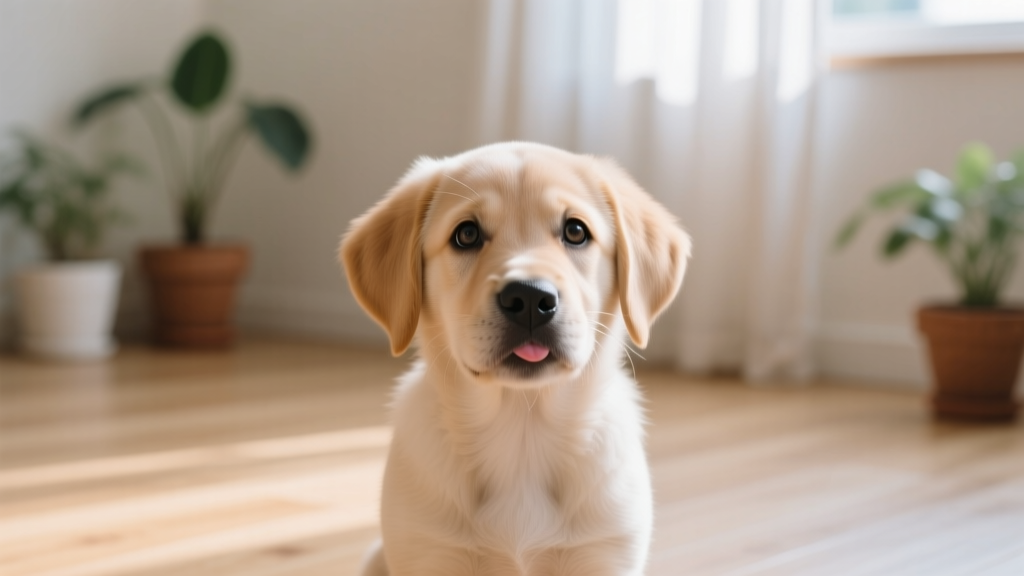
Golden Retriever Puppy Care Guide: Collar, Leash & Milestones
Complete Golden Retriever puppy guide covering collar and leash fitting, feeding schedules, vaccination timelines, potty training, and first-year costs.

Golden Retrievers are one of America's most beloved breeds — and for good reason. Their gentle temperament, intelligence, and eagerness to please make them wonderful family dogs. But raising a Golden Retriever puppy requires preparation, patience, and breed-specific knowledge. From selecting the right puppy collar and leash for their rapidly growing neck to navigating the critical socialization window, every decision in those first months shapes the dog they'll become.
This guide covers everything you need to raise a Golden Retriever puppy from 8 weeks through their first year, with exact timelines, feeding portions, vaccination schedules, and real cost estimates based on 2026 veterinary pricing.
When Should I Bring My Golden Retriever Puppy Home?
The ideal age to bring a Golden Retriever puppy home is 8 weeks (56 days). While some breeders may release puppies at 7 weeks, the American Kennel Club and most veterinary behaviorists strongly recommend waiting until at least 8 weeks. During weeks 6-8, puppies learn critical bite inhibition and social cues from their littermates and mother — lessons you cannot replicate at home.
Golden Retrievers are a large, slow-maturing breed. Many reputable breeders now keep puppies until 10-12 weeks, particularly for show or working lines. This extra time with the litter often produces more confident, emotionally stable puppies. If your breeder offers this option, seriously consider it — the additional socialization within the litter pays dividends for years.
Age-Specific Milestones: What to Expect Week by Week
Golden Retrievers grow rapidly in their first year, typically reaching their full adult height by 12 months and filling out in weight and chest until 18-24 months. Here's what to expect at each developmental stage:
Weeks 4-8 (Still With Breeder)
At this stage, your puppy is still with their mother and littermates. Their eyes and ears are fully functional, baby teeth have erupted, and they're eating solid food (soaked kibble transitioning to dry). This is when early socialization begins — responsible breeders expose puppies to various surfaces, sounds, and gentle handling. You should not have your puppy yet during this period.
Weeks 8-12 (The Homecoming)
Weight range: 10-22 lb (4.5-10 kg). Key developments: Your puppy is forming primary attachments and learning household routines. This is peak fear imprinting period — negative experiences can create lasting phobias. Keep introductions calm and positive. Your puppy will sleep 18-20 hours per day. Expect frequent potty breaks (every 1-2 hours during the day). This is the time to introduce the puppy collar and leash for short indoor sessions — 5 minutes maximum, using a lightweight flat nylon or cotton collar (not a harness yet for leash training) and a 4-6 foot lightweight leash.
Weeks 12-16 (Building Confidence)
Weight range: 22-40 lb (10-18 kg). Key developments: Your puppy is becoming more coordinated, playful, and bold. Teething discomfort begins. Second fear period may emerge around 12-14 weeks — your puppy may suddenly seem fearful of things they previously tolerated. Continue positive exposures without forcing interactions. Increase leash walks to 10-15 minutes. Begin basic obedience: sit, down, name recognition, and loose-leash walking foundations.
Weeks 16-24 (The Adolescent Transition)
Weight range: 40-60 lb (18-27 kg). Key developments: Adult teeth are replacing baby teeth (peak teething at 4-5 months). Energy and independence increase. Your Golden may start testing boundaries and "forgetting" previously learned commands — this is normal adolescent behavior, not regression. Maintain consistent training. Switch from a puppy collar to a larger adjustable collar or consider a front-clip harness for walks as pulling strength increases. Males may begin lifting their leg around 5-6 months.
Months 6-12 (Approaching Adulthood)
Weight range: 55-75 lb (25-34 kg) for males; 50-65 lb (23-29 kg) for females. Key developments: Sexual maturity occurs (spay/neuter is typically recommended between 6-12 months for Golden Retrievers — discuss timing with your vet, as some research suggests waiting until after 12 months may reduce certain joint disorder risks in large breeds). Your dog is physically near-adult but mentally still adolescent. Golden Retrievers are notably slow to mature mentally — expect puppy-like behavior until 2-3 years old. Continue structured training and exercise.
Feeding Schedule: Portions by Age and Weight
Golden Retrievers are prone to obesity, and overfeeding during puppyhood can accelerate growth rates linked to hip and elbow dysplasia. Feed a large-breed puppy formula that meets AAFCO standards for growth — these diets have controlled calcium and phosphorus ratios critical for proper bone development.
| Age | Meals Per Day | Daily Amount (approx.) | Notes |
|---|---|---|---|
| 8-12 weeks | 3-4 meals | 1.5 - 2 cups/day | Soak kibble in warm water for first 2 weeks if needed |
| 3-4 months | 3 meals | 2 - 2.5 cups/day | Begin transitioning to dry kibble fully |
| 4-6 months | 3 meals | 2.5 - 3.5 cups/day | Adjust based on body condition score — ribs should be palpable but not visible |
| 6-9 months | 2 meals | 3 - 4 cups/day | Transition to 2 meals/day around 6 months |
| 9-12 months | 2 meals | 3.5 - 4.5 cups/day | Consider transition to adult large-breed formula at 12 months |
Important: These are starting guidelines. The exact amount depends on your specific food's caloric density (check the feeding chart on the bag), your puppy's activity level, and their individual metabolism. Use a body condition score assessment every 2 weeks — your puppy should have a visible waist when viewed from above and you should feel (but not see) their ribs easily. Consult your veterinarian if you're unsure about portions.
Vaccination Schedule for Golden Retriever Puppies
Golden Retrievers follow the standard core vaccination protocol recommended by the American Veterinary Medical Association. Your puppy should have received their first set of vaccines from the breeder at 6-8 weeks. Continue the series as follows:
| Age | Vaccines | Notes |
|---|---|---|
| 6-8 weeks | DHPP (Distemper, Hepatitis, Parainfluenza, Parvovirus) — 1st dose | Usually administered by breeder; confirm records |
| 10-12 weeks | DHPP — 2nd dose; Bordetella (optional, recommended if attending puppy classes) | First vet visit — full physical exam, fecal parasite screening, heartworm test discussion |
| 14-16 weeks | DHPP — 3rd (final) dose; Rabies (required by law in most US states) | Begin monthly heartworm prevention after this visit |
| 12-16 months | DHPP booster; Rabies booster | After this, DHPP typically given every 3 years; Rabies per local law (1 or 3 year) |
Non-core vaccines to discuss with your vet: Leptospirosis (recommended in many areas, especially if your Golden will swim in lakes or ponds — Goldens love water), Lyme disease (if you live in or travel to tick-endemic regions), and Canine Influenza (if your dog will be frequently boarded or attend daycare).
The Socialization Window: Weeks 3-14
The primary socialization period for puppies closes around 12-14 weeks of age. This is a finite developmental window during which puppies form lasting impressions about what is safe and normal in their world. After this window closes, unfamiliar things are more likely to trigger fear. For a breed as socially oriented as the Golden Retriever, proper socialization during this period is essential.
According to the Merck Veterinary Manual, puppies who receive diverse, positive exposures during this window are significantly less likely to develop fear-based behavioral problems later in life.
Golden Retriever Puppy Socialization Checklist
Aim for positive exposures to each category — never force interactions. Let your puppy approach at their own pace and reward calm, curious behavior with treats and praise.
- Surfaces: Grass, gravel, concrete, tile, sand, metal grates, wet surfaces, stairs (carry up, let walk down with support)
- People: Men with beards, children (supervised, gentle), people wearing hats/sunglasses/uniforms, people using wheelchairs or crutches, people of different ethnicities and ages
- Other animals: Vaccinated, friendly adult dogs; calm cats (if available); livestock (at a safe distance)
- Sounds: Vacuum cleaner, thunderstorm recordings (play at low volume, increase gradually), doorbell, traffic, construction noise, fireworks recordings, clapping, children shouting
- Objects: Umbrellas opening, plastic bags rustling, brooms, bicycles, skateboards, balloons, flags
- Handling: Paw touching, ear examination, mouth opening, nail clipping (just touching the clipper), gentle restraint, being lifted, wearing a collar/harness, having the puppy collar and leash attached
- Environments: Car rides, friend's houses, outdoor café (carried or in wagon until vaccinated), veterinary clinic (happy visits with no procedures), pet-friendly stores
- Experiences: Being alone for short periods (5-15 minutes), eating near people without food being taken away, gentle grooming with a soft brush, bath time introduction
Key rule: Every new experience should end on a positive note. If your puppy shows fear, increase distance from the stimulus, reduce intensity, and pair with high-value treats. Never flood a puppy by forcing them to endure something frightening.
Potty Training Timeline and Troubleshooting
Golden Retrievers are generally eager to please, which works in your favor for house training. However, their large bladder capacity develops gradually, and realistic expectations prevent frustration.
Realistic Potty Training Timeline
- 8-12 weeks: Accidents are normal and frequent. Your puppy can hold their bladder approximately 1 hour per month of age (so a 2-month-old puppy = ~2 hours max). Take them out every 1-2 hours during the day, immediately after meals, after naps, and after play sessions. Expect 2-5 accidents per week even with diligent management.
- 3-4 months: Bladder control improves. Accidents decrease to 1-2 per week with consistent routine. Your puppy may begin to signal (go to the door, whine, circle).
- 4-6 months: Most Golden Retrievers are reliably house trained during the day by 5-6 months, meaning fewer than 1 accident per month. Nighttime control may lag behind — some puppies still need one overnight outing until 6 months.
- 6-9 months: Fully reliable during the day. Occasional marking behavior may appear in males around 6 months (address with increased supervision and neutering discussion with your vet).
Common Potty Training Problems and Solutions
Problem: Puppy has accidents when left alone.
Solution: This is a management issue, not defiance. Your puppy's bladder simply isn't mature enough. Use a crate or exercise pen sized appropriately (large enough to stand and turn, but not so large they can eliminate in one corner and sleep in another). Increase outing frequency. Consider a dog walker for midday breaks if you work away from home.
Problem: Puppy pees outside but poops inside.
Solution: Puppies often need more time to find the right spot for bowel movements. Extend outdoor time by 5-10 minutes. Take your puppy to the same area each time — the scent of previous eliminations triggers the urge. Reward immediately with a treat and verbal praise the moment they finish.
Problem: Puppy was doing great, then regressed.
Solution: Regression is common around 4-5 months (adolescence onset) and again around 8-10 months (sexual maturity). Return to basics — increase supervision, decrease freedom, and go back to scheduled outings. Rule out urinary tract infection with your vet if accidents increase suddenly.
Teething Timeline and Relief Strategies
Golden Retriever puppies go through two teething phases, and the breed's natural retrieving instinct means they'll want to carry and chew on everything during these periods.
Teething Phases
- 3-4 weeks: Deciduous (baby) teeth erupt — 28 total. Your puppy will still be with the breeder during this phase.
- 3-4 months: Baby teeth begin falling out, replaced by 42 adult teeth. You may find tiny teeth on the floor or notice mild bleeding from the gums — both are normal.
- 4-6 months: Peak teething discomfort. Your puppy will chew intensely to relieve gum pressure. Adult canines and molars are erupting. This is when destructive chewing peaks if appropriate outlets aren't provided.
- 6-7 months: All adult teeth should be fully erupted. If baby teeth remain alongside adult teeth (retained deciduous teeth — common in smaller breeds but occasionally seen in Goldens), consult your vet; extraction may be needed.
Safe Chew Recommendations for Golden Retriever Puppies
- Kong Classic (puppy rubber, pink or blue): Fill with soaked kibble and freeze — provides 20-30 minutes of soothing, cold chewing relief. Size: Medium for puppies under 35 lb, Large for 35+ lb.
- Benebone Puppy Wishbone: Nylon chew infused with bacon flavor. Choose the puppy-specific version (softer material). Size based on weight.
- Frozen carrot sticks: A low-calorie, natural option. Supervise to prevent choking on large pieces.
- Nylabone Puppy Chew Keys: Textured surface massages gums. Replace when worn down significantly.
- Wet washcloth (frozen): Wet a clean washcloth, twist into a rope shape, freeze, and let your puppy chew under supervision. Discard if they begin tearing off and swallowing fabric.
Avoid: Rawhide (choking and blockage risk), antlers or weight-bearing bones (tooth fracture risk), any chew smaller than your puppy's mouth, and any chew that can be swallowed whole. If you're unsure whether a chew is safe, consult your veterinarian.
Crate Training Progression and Time Limits
Golden Retrievers generally adapt well to crate training due to their den-seeking instincts and desire for a secure resting space. The crate should be a positive retreat, never used as punishment.
| Puppy Age | Maximum Crate Time (daytime) | Maximum Crate Time (nighttime) | Notes |
|---|---|---|---|
| 8-10 weeks | 1-2 hours | 3-4 hours (expect one overnight potty break) | Crate should be just large enough to stand, turn, and lie down |
| 11-14 weeks | 2-3 hours | 4-5 hours | Begin feeding meals in the crate to build positive association |
| 15-16 weeks | 3-4 hours | 5-6 hours | Most puppies can sleep through the night without a potty break by 16 weeks |
| 4-6 months | 4-5 hours | 7-8 hours | Transition to a larger crate (42-inch for adult Goldens) with a divider panel |
| 6+ months | 5-6 hours max | 8 hours | No dog should be crated more than 6-8 hours total daily; arrange midday breaks |
Crate training steps: Start with the door open, tossing treats inside. Progress to feeding meals in the crate with the door closed but you nearby. Gradually increase duration and distance. If your puppy whines, wait for a brief moment of quiet before opening the door — releasing during whining teaches that whining opens the door. However, never ignore whining that may indicate a potty need; learn to distinguish protest whining from urgency signals.
Choosing the Right Puppy Collar and Leash for Your Golden
Golden Retriever puppies grow rapidly, meaning you'll go through multiple collar sizes in the first year. Here's how to select and fit gear at each stage:
Collar Fitting by Age
- 8-12 weeks: Start with a lightweight flat nylon collar, 5/8-inch width, adjustable from approximately 8-12 inches. You should be able to fit two fingers between the collar and your puppy's neck. Check fit weekly — Golden puppies can outgrow a collar in 2-3 weeks during growth spurts. Attach a lightweight ID tag immediately.
- 3-5 months: Upgrade to a 3/4-inch flat collar, adjustable 12-18 inches. This is when you'll begin outdoor walks, so ensure the D-ring for leash attachment is sturdy.
- 5-12 months: Transition to a full-width (1-inch) adjustable collar, 16-24 inches. Many owners switch to a martingale collar at this stage for walking security, as adolescent Goldens can be strong pullers and may slip standard buckle collars.
Leash Selection
- 8-16 weeks: Use a lightweight 4-foot nylon or cotton leash (3/8 or 1/2 inch width). The goal is loose-leash walking foundations — short, positive sessions in low-distraction environments.
- 4-12 months: Upgrade to a 6-foot, 3/4-inch width leash. Leather or biothane leashes offer better grip as your puppy's pulling strength increases. A front-clip harness (such as the Ruffwear Front Range or Kurgo Tru-Fit) can significantly reduce pulling during this adolescent phase while you continue training.
Retractable leashes: Avoid using retractable leashes during puppyhood. They teach pulling (the dog learns that tension on the leash extends their range), offer poor control in emergencies, and the thin cord can cause burns if it wraps around skin. Save retractable leashes — if you use them at all — for adulthood in open, low-traffic areas only.
Common Golden Retriever Puppy Problems and Solutions
Mouthing and Nipping
Golden Retrievers are a mouthy breed — they were developed to carry game, and this instinct manifests as constant mouthing, carrying objects, and nipping during play. This is not aggression; it's breed-typical behavior that needs redirection, not punishment.
Solution: When your puppy nips, say "ouch" in a calm, slightly surprised tone and immediately redirect to an appropriate chew toy. If they continue nipping, end the play session by calmly leaving the area for 30-60 seconds (this mimics how littermates respond — they stop playing when bitten too hard). Provide abundant appropriate carrying outlets: soft toys, knotted rope toys, and frozen Kongs. Never use physical punishment, alpha rolls, or mouth-holding — these damage trust and can create fear-based biting.
Jumping Up on People
Goldens are enthusiastic greeters, and a 50-lb adolescent launching at visitors is problematic even though their intent is friendly.
Solution: Teach an incompatible behavior — a dog who is sitting cannot simultaneously jump. Reward all four-on-the-floor behavior with attention and treats. When your puppy jumps, turn away and ignore completely (no eye contact, no talking, no pushing — pushing is interpreted as play). Once all paws are on the ground, immediately turn back and reward. Ask visitors to follow the same protocol.
Destructive Chewing
Combined with teething and the breed's oral fixation, Golden puppies can be remarkably destructive if under-stimulated.
Solution: Management is key. Puppy-proof your home by removing accessible shoes, cords, and small objects. Provide a rotation of appropriate chews (rotate every 2-3 days to maintain novelty). Ensure adequate physical exercise (following the 5-minutes-per-month-of-age guideline for structured walks) and mental enrichment (food puzzles, snuffle mats, short training sessions). Confine your puppy to a safe area when unsupervised.
Whining and Crying (Especially at Night)
The first nights home are often the hardest. Your puppy has never been alone and is in an unfamiliar environment.
Solution: Place the crate in your bedroom for the first 2-3 weeks so your puppy can hear and smell you. A warm blanket and a snuggle puppy toy with a heartbeat simulator can ease the transition. If your puppy whines after being settled, wait 5-10 minutes to see if they self-soothe. If whining persists, take them out for a quick, boring potty break (no play, no talking, lights low), then return to the crate. This prevents reinforcing whining as a play invitation while ensuring their physical needs are met.
First-Year Cost Breakdown for a Golden Retriever
Golden Retrievers are large dogs, and their size affects every cost category — more food, larger medications, bigger supplies. Here's a realistic first-year budget based on 2026 US pricing:
| Category | Low Estimate | High Estimate | Details |
|---|---|---|---|
| Purchase/Adoption | $300 (rescue) | $3,500 (breeder) | Responsible breeders typically charge $2,000-$3,500; adoption fees $200-$500 |
| Veterinary (wellness) | $600 | $1,200 | 3-4 puppy visits, vaccines, fecal tests, spay/neuter ($300-$700), microchip |
| Preventive medications | $300 | $500 | Monthly heartworm + flea/tick prevention (NexGard, Simparica Trio, etc.) |
| Food | $500 | $900 | Large-breed puppy formula, 2-4 cups/day; premium brands cost more |
| Supplies | $300 | $600 | Crate ($80-$150), puppy collar and leash sets ($25-$60), bed, bowls, toys, grooming tools, gates |
| Training | $150 | $600 | Group puppy class ($150-$250 for 6-8 week course); private sessions $75-$150/hour if needed |
| Grooming | $0 | $400 | Goldens can be home-groomed; professional grooming $50-$80 per session, every 6-8 weeks |
| Pet insurance | $400 | $700 | Monthly premiums $35-$60; highly recommended for Goldens due to hip/elbow/cancer risks |
| Emergency fund buffer | $0 | $2,000 | Set aside for unexpected illness — puppy intestinal blockages, infections, etc. |
| Total First Year | $2,550 | $10,400 | Most owners spend $3,500-$5,000 in the first year |
Breed-specific cost considerations: Golden Retrievers have higher-than-average lifetime veterinary costs due to predisposition to hip dysplasia (prevalence estimated at 20% per the Orthopedic Foundation for Animals), elbow dysplasia, certain cancers (hemangiosarcoma, lymphoma), and hypothyroidism. Pet insurance purchased during puppyhood (before any conditions are documented) is one of the smartest financial decisions you can make for this breed.
When Can My Puppy Go Outside and Meet Other Dogs?
This is one of the most common questions new puppy owners ask, and the answer requires balancing disease risk against the urgent need for socialization during the critical window.
Safe outdoor exposure (before full vaccination):
- Your own yard (if no unknown dogs have access) — safe immediately
- Carrying your puppy through neighborhoods, outdoor shopping areas, and parks — safe immediately, no ground contact needed
- Visiting friends' homes with known, fully vaccinated dogs — safe after your puppy's first DHPP at 8 weeks
- Puppy socialization classes (most require proof of first DHPP and Bordetella) — typically safe starting at 10 weeks per American Veterinary Society of Animal Behavior guidelines
Avoid until full vaccination (typically 16-18 weeks):
- Dog parks (highest disease risk environment)
- Pet store floors (high traffic, unknown vaccination status of other dogs)
- Rest areas and public dog relief areas
- Interaction with dogs of unknown vaccination status
The AVSAB explicitly states that the risk of behavioral problems from inadequate socialization outweighs the disease risk for most puppies, provided you choose controlled, clean environments with known-vaccination-status dogs. Don't wait until 16 weeks to begin socialization — by then, the critical window is closing.
Frequently Asked Questions
How often should I feed my Golden Retriever puppy at 10 weeks old?
At 10 weeks, feed 3-4 meals per day, totaling approximately 1.5-2 cups of large-breed puppy food daily. Divide evenly across meals. Consistent meal timing (rather than free-feeding) supports potty training because you can predict when your puppy will need to eliminate — typically 15-30 minutes after eating.
When will my Golden Retriever be fully potty trained?
Most Golden Retrievers are reliably house trained during the day by 5-6 months of age, with nighttime reliability following shortly after. "Fully trained" means fewer than one accident per month. Some individual puppies take longer — males sometimes lag behind females by a few weeks. Consistency in routine is the single biggest factor in speed of training.
How do I stop my Golden puppy from biting my hands and feet?
Redirect every nip to an appropriate chew toy. If your puppy persists, calmly end the interaction by stepping away for 30-60 seconds. Ensure your puppy gets adequate physical exercise and mental stimulation — overtired and under-stimulated puppies mouth more. This behavior typically decreases significantly by 5-6 months as adult teeth come in, but consistent redirection is essential throughout puppyhood.
What size collar does a Golden Retriever puppy need?
At 8 weeks, start with an adjustable flat collar ranging from 8-12 inches in length and 5/8 inch in width. You'll likely need to size up every 3-4 weeks during the first few months. By 6 months, most Golden puppies need a collar adjustable to 16-20 inches. Always maintain the two-finger rule for fit.
Should I get a harness or collar for walking my Golden puppy?
Use a flat collar for ID tags at all times. For leash walking, many trainers recommend starting with a flat collar and teaching loose-leash walking from the beginning. If your puppy pulls significantly (common in adolescent Goldens), a front-clip harness provides better control without encouraging pulling. Use both — collar for tags, harness for walks — during the training phase.
When should I start formal training classes?
Enroll in a positive-reinforcement puppy kindergarten class as soon as your puppy has had their first DHPP vaccine (typically around 8-10 weeks) and a Bordetella vaccine. Most classes accept puppies starting at 10-12 weeks. Early classes focus on socialization, basic cues, and owner education — they're as much about teaching you as teaching your puppy.
Jonas Cole
All our authors care for dogs every day — read more of their work on the authors page.