Golden Retriever Puppies: Complete 2026 Care Guide for New Owners
Everything you need to raise Golden Retriever puppies in 2026 — milestones, feeding schedules, potty training, vaccinations, and first-year costs.

Bringing Home Golden Retriever Puppies: What to Expect in 2026
Golden Retrievers remain one of America's most beloved breeds for good reason — their intelligence, gentle temperament, and trainability make them exceptional family dogs. But raising Golden Retriever puppies requires breed-specific knowledge that goes beyond generic puppy advice. This guide covers every developmental stage from weeks 4 through 12 months, with exact feeding portions, vaccination timelines, and realistic potty training expectations based on the breed's unique growth patterns and behavioral tendencies.
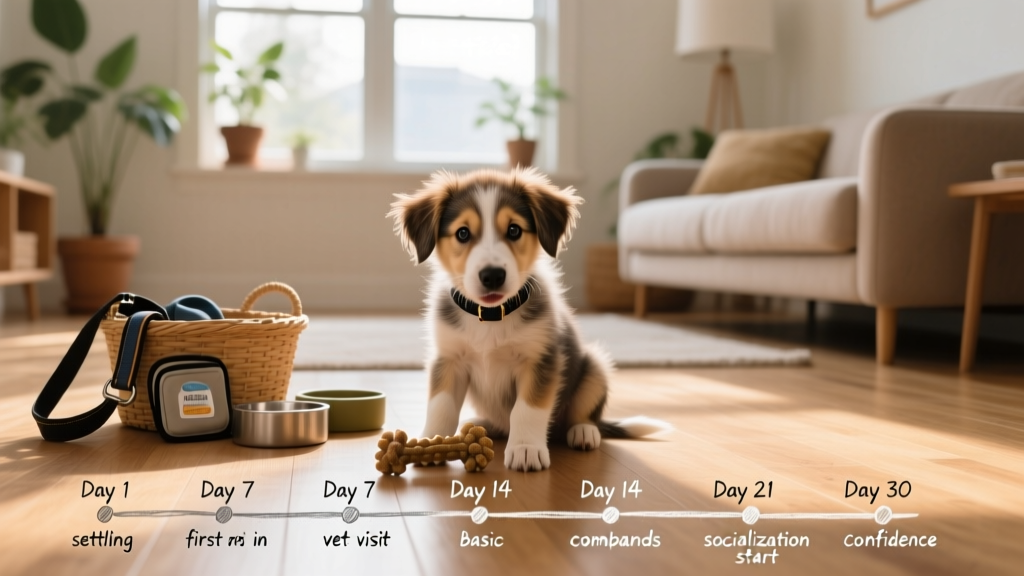
Golden Retriever puppies should join your family between 8-10 weeks of age. Reputable breeders keep puppies with their littermates until at least 8 weeks to learn bite inhibition and canine social cues. Puppies removed earlier often develop behavioral issues including excessive mouthing and fear-based reactivity.
Age-Specific Milestones: Weeks 4 Through 12 Months
Weeks 4-8: Early Development (Still with Breeder)
During this critical period, puppies transition from milk to solid food, begin exploring their environment, and learn foundational social skills from their mother and siblings. By week 6, they should be eating puppy kibble softened with warm water three times daily. This is when breeders begin early neurological stimulation and introduce novel textures, sounds, and gentle handling.
Weeks 8-12: The Fear Impact Period
Your Golden arrives home weighing 10-15 pounds and will gain approximately 2-3 pounds per week. Expect 18-20 hours of sleep daily in short bursts. This stage coincides with the first fear impact period (weeks 8-11), where negative experiences can create lasting phobias. Keep introductions positive and avoid overwhelming environments like crowded dog parks or loud events.
Weeks 12-16: Rapid Growth and Testing Boundaries
Weight increases to 25-35 pounds. Your puppy will test household rules and may appear to "forget" previously learned commands. Consistency is critical — maintain the same verbal cues and reward structure. This is prime time for puppy kindergarten classes (after second DHPP vaccine at 10-12 weeks).
Weeks 16-24: Adolescence Begins
Growth rate slows to 1-2 pounds weekly. Your Golden now weighs 40-55 pounds and has near-adult height but lacks adult coordination. Expect increased independence, selective hearing, and potential regression in house training. Spay/neuter typically occurs around 6 months for Goldens, though some veterinarians recommend waiting until 12-18 months to reduce orthopedic risks in large breeds.
Months 6-12: Approaching Maturity
Your Golden reaches 80-90% of adult weight (55-75 pounds for males, 55-65 pounds for females). Energy levels remain high but attention span improves. Continue structured training and avoid repetitive high-impact exercise (fetch on hard surfaces, long runs) until growth plates close around 18-24 months to prevent joint damage.
Feeding Schedule: Exact Portions by Age and Weight
| Age | Weight Range | Daily Amount (Large-Breed Puppy Kibble) | Meals Per Day | Per-Meal Portion |
|---|---|---|---|---|
| 8-12 weeks | 10-20 lbs | 1.5-2 cups | 3-4 | ½ cup |
| 3-4 months | 20-35 lbs | 2-3 cups | 3 | ¾-1 cup |
| 5-6 months | 35-50 lbs | 3-4 cups | 2 | 1.5-2 cups |
| 7-12 months | 50-70 lbs | 3.5-5 cups | 2 | 1.75-2.5 cups |
Critical nutrition note: Golden Retrievers are predisposed to hip and elbow dysplasia. Feed only large-breed puppy formulas with controlled calcium (1.2-1.8% dry matter) and phosphorus (1.0-1.6%) to support steady bone development without excessive growth. Brands meeting WSAVA guidelines include Royal Canin Golden Retriever Puppy, Hill's Science Diet Large Breed Puppy, and Purina Pro Plan Large Breed Puppy.
How often should I feed my puppy? Maintain 3-4 meals daily until 4 months, then transition to 2 meals. Free-feeding leads to rapid growth and obesity — Goldens are genetically prone to weight gain. Remove uneaten food after 15-20 minutes.
Vaccination Schedule: Protecting Your Golden Retriever Puppy
| Age | Vaccine | Protection Against | Booster Required? |
|---|---|---|---|
| 6-8 weeks | DHPP #1 | Distemper, Hepatitis, Parainfluenza, Parvovirus | Yes, every 3-4 weeks until 16 weeks |
| 10-12 weeks | DHPP #2 + Bordetella | Above + Kennel Cough | Yes |
| 14-16 weeks | DHPP #3 + Rabies | Above + Rabies | DHPP booster at 1 year, then every 3 years |
| 12-16 weeks | Leptospirosis (2-dose series) | Bacterial infection from contaminated water | Annual |
| 16+ weeks | Lyme (2-dose series, 2-4 weeks apart) | Tick-borne disease | Annual in endemic areas |
When can my puppy go outside and meet other dogs? After the second DHPP vaccine (10-12 weeks), your puppy can safely attend puppy classes and meet fully vaccinated dogs in controlled settings. Avoid public dog parks until the full series completes at 16 weeks. Parvovirus survives in soil for months and is fatal in 80% of untreated puppies.
Socialization Window: Weeks 3-14 (The Critical Period)
The American Veterinary Society of Animal Behavior emphasizes that the primary socialization period closes between 12-14 weeks. Incomplete socialization during this window is the leading cause of fear-based aggression and anxiety in adult dogs. Your Golden Retriever puppy needs systematic, positive exposure to:
Golden-specific tip: This breed's natural friendliness can mask fear responses. Watch for subtle stress signals — lip licking, yawning, whale eye (showing whites of eyes), tucked tail — and increase distance from the stressor immediately. Flooding a fearful puppy with exposure creates worse problems than gradual desensitization.
Potty Training Timeline: Realistic Expectations for Golden Retrievers
When will my puppy be fully potty trained? Most Golden Retriever puppies achieve reliable house training between 4-6 months, though some take until 8-9 months. The general rule: puppies can hold their bladder for their age in months plus one hour (a 3-month-old holds for 4 hours maximum during the day).
| Age | Maximum Daytime Hold Time | Nighttime Hold Time | Accidents Expected Per Week |
|---|---|---|---|
| 8-10 weeks | 1-2 hours | 3-4 hours (set alarm) | 5-10 |
| 11-14 weeks | 2-3 hours | 5-6 hours | 2-5 |
| 15-20 weeks | 3-4 hours | 6-8 hours | 1-3 |
| 5-6 months | 4-5 hours | 8 hours | 0-2 |
| 7+ months | 6-8 hours | 8+ hours | 0-1 |
Troubleshooting Common Issues
Frequent small accidents: Rule out urinary tract infection with your vet. UTIs affect 14% of dogs annually and cause urgency.
Submissive urination: Common in Goldens under 1 year. Avoid direct eye contact and excited greetings. Crouch sideways and offer treats to reduce social pressure.
Regression at 6-9 months: Hormonal changes during adolescence cause temporary setbacks. Return to puppy-level supervision and increase outdoor potty frequency.
Crate Training Progression: Building Positive Associations
Crate training leverages a dog's natural den instinct and prevents destructive behavior when unsupervised. Golden Retrievers are mouthy, destructive chewers during puppyhood — a crate protects your home and keeps your puppy safe from ingesting dangerous objects.
| Age | Maximum Continuous Crate Time | Total Daily Crate Time |
|---|---|---|
| 8-10 weeks | 1-2 hours | 4-6 hours (with breaks) |
| 11-14 weeks | 2-3 hours | 6-8 hours |
| 15-20 weeks | 3-4 hours | 8-10 hours |
| 5-6 months | 4-5 hours | 10-12 hours |
| 7+ months | 6-8 hours | 12-14 hours |
Setup recommendations: Use a 42-inch wire crate (MidWest iCrate or Frisco Heavy Duty) with a divider panel to adjust space as your Golden grows. The crate should allow standing, turning, and lying down comfortably — excess space encourages soiling one corner. Place the crate in a family area, not isolated rooms. Cover with a breathable blanket on three sides to create den-like security.
Whining protocol: If your puppy whines after being settled for 30+ minutes, take them outside to potty on leash (no play), then return to crate. If whining continues without potty need, wait for 5 seconds of silence before releasing. Never open the crate during active whining — this reinforces the behavior.
Teething Timeline: Managing the Chewing Phase
Golden Retriever puppies begin losing baby teeth around 12-16 weeks, with adult teeth fully erupted by 6-7 months. This 4-month teething window coincides with peak destructive chewing. Your puppy's urge to chew is biological, not behavioral — they need relief from gum inflammation and pressure from emerging teeth.
Safe Chew Recommendations by Stage
Weeks 12-16 (early teething): Frozen washcloths soaked in low-sodium chicken broth, rubber KONG Classic (puppy size) filled with plain yogurt and frozen, Nylabone Puppy Chew (soft formula).
Weeks 16-20 (peak teething): Benebone Wishbone (puppy formula), bully sticks (supervised only — remove when 2 inches remain), frozen carrots, West Paw Zogoflex Toppl.
Weeks 20-28 (final teeth eruption): Adult-formula KONG Classic (medium size), Earth Animal No-Hide chews, GoughNuts Ring (green indicator for safe wear).
Common Golden Retriever Puppy Problems and Solutions
Mouthing and Biting: "How do I stop puppy biting?"
Golden Retrievers are a retrieving breed genetically programmed to use their mouths. Puppy biting peaks between 8-16 weeks and gradually decreases with consistent training. When teeth contact skin:
- Say "ouch" in a calm, high-pitched tone (mimics littermate yelp)
- Immediately withdraw attention for 10-15 seconds (turn away or leave room)
- Return and redirect to appropriate chew toy
- Reward gentle mouthing with continued play
If biting intensifies after yelping (common in high-arousal Goldens), skip the vocal cue and go straight to withdrawal. Provide 15-20 minutes of structured chew time daily with frozen toys to satisfy oral fixation.
Jumping on People
Goldens are enthusiastic greeters. Teach an incompatible behavior: sit for greetings. Practice with family members first — approach puppy, if they sit, deliver treat at chest level (not overhead, which encourages jumping). If they jump, turn sideways and ignore until all four paws touch the floor. Guests must follow the same protocol consistently.
Counter-Surfing and Food Stealing
This breed's food motivation makes them notorious counter-surfers. Management is more reliable than training alone — use baby gates to block kitchen access when unsupervised. Teach "leave it" with high-value trade-ups: show treat in closed fist, wait for puppy to back away, then reward with different treat from other hand. Never leave food unattended during training phase.
First-Year Cost Breakdown: Budgeting for Your Golden Retriever
| Category | Low Estimate | Average | High Estimate |
|---|---|---|---|
| Puppy Purchase (Responsible Breeder) | $2,500 | $3,500 | $5,000 |
| Initial Supplies (Crate, Bed, Bowls, Leash, Toys) | $300 | $500 | $800 |
| Food (Large-Breed Puppy Formula, 12 months) | $600 | $900 | $1,200 |
| Veterinary Care (Vaccines, Spay/Neuter, Wellness Exams) | $800 | $1,200 | $1,800 |
| Heartworm/Flea/Tick Prevention (12 months) | $200 | $350 | $500 |
| Training (Puppy Kindergarten + Basic Obedience) | $200 | $400 | $800 |
| Grooming (Professional Bath/Brush Every 6-8 Weeks) | $400 | $600 | $900 |
| Pet Insurance (Optional but Recommended) | $600 | $900 | $1,200 |
| Total First-Year Cost | $5,600 | $8,350 | $12,200 |
Golden Retrievers have high lifetime healthcare costs due to cancer predisposition (60% develop cancer, per the Golden Retriever Club of America). Pet insurance purchased before 6 months of age locks in lower premiums and covers hereditary conditions like hip dysplasia and cardiac disease that manifest later.
Frequently Asked Questions
When should I start formal training classes?
Enroll in puppy kindergarten at 10-12 weeks (after first DHPP vaccine). Classes focus on socialization and basic cues using positive reinforcement. Avoid trainers using prong collars, shock collars, or alpha rolls — these methods damage the trusting temperament Goldens are known for.
How much exercise does a Golden Retriever puppy need?
Follow the "5 minutes per month of age" rule: a 4-month-old gets 20 minutes of structured exercise twice daily. Focus on sniffing walks, training games, and swimming (low-impact on developing joints). Avoid forced running, jumping from heights, or repetitive fetch on hard surfaces until 18 months.
Will my Golden Retriever puppy calm down?
Energy peaks between 8-18 months. Most Goldens settle into moderate-energy adults by age 3, but remain playful throughout life. Provide daily mental stimulation (puzzle feeders, scent work, training sessions) to prevent boredom-driven destruction.
Should I adopt instead of buying from a breeder?
Absolutely. Golden Retriever rescues like Golden Retriever Rescue organizations place adult dogs and puppies in need of homes. Adoption fees ($300-$600) typically include spay/neuter, vaccinations, and microchipping. Both paths are valid — choose based on your timeline, budget, and preference for known health history versus providing a second chance.
Jonas Cole
All our authors care for dogs every day — read more of their work on the authors page.