Golden Puppy Lab Care Guide: Care, Training & Year 1 Costs
Complete golden puppy lab care guide covering age milestones, feeding schedules, potty training timelines, vaccination plans, and realistic first-year costs.

If you've just committed to bringing home a golden puppy lab — a Labrador Retriever and Golden Retriever mix — you're signing up for one of the most trainable, affectionate, and energetic companions in the dog world. But these puppies are also mouthy, high-energy, and prone to destructive chewing if their developmental needs aren't met on schedule. This guide walks you through every critical week of your golden puppy lab's first year with exact timelines, feeding portions, and cost expectations so nothing catches you off guard.
When Should You Bring Your Golden Puppy Lab Home?
The ideal age to bring a golden puppy lab home is 8 to 10 weeks. Reputable breeders keep puppies with their littermates and dam until at least 8 weeks because the period between weeks 5 and 8 is when puppies learn bite inhibition, social signaling, and basic canine communication from their siblings. Removing a puppy before 8 weeks correlates with higher rates of fear-based reactivity and poor impulse control later in life, according to the American Kennel Club.
If your breeder recommends waiting until 10 or even 12 weeks, this is often a positive sign — they're using the extra time for early neurological stimulation and initial house-training foundations. However, puppies brought home after 14 weeks without adequate socialization exposure may require more intensive behavioral support during the adjustment period.
Golden Puppy Lab Age Milestones: What to Expect Week by Week
Weeks 4–8: The Litter Phase (With Breeder)
- Weight: 4–8 lb (1.8–3.6 kg)
- Development: Eyes and ears fully functional; deciduous (baby) teeth erupting; beginning to eat gruel/moistened kibble
- Behavior: Littermate play fighting teaches bite inhibition; startle responses to loud sounds develop
- What the breeder should be doing: Introducing varied surfaces (tile, grass, carpet), handling exercises (paw touching, ear inspection), and brief human separation periods
Weeks 8–12: The Home Transition
- Weight: 10–20 lb (4.5–9 kg)
- Development: Peak fear imprint period (8–11 weeks) — traumatic experiences during this window can create lasting phobias
- Behavior: Mouthing and nipping intensify; puppy follows you room to room; short attention spans (2–5 minutes per training session)
- Sleep: 18–20 hours per day — enforced nap times in the crate are essential to prevent overtired biting fits
- Key milestone: First veterinary wellness exam within 3–5 days of homecoming
Weeks 12–16: Confidence Building
- Weight: 20–35 lb (9–16 kg)
- Development: Second fear period may emerge around 12–14 weeks; bladder capacity increases to roughly 1 hour per month of age plus 1
- Behavior: Testing boundaries; beginning to understand "sit" and "come" with high-value treats; leash walking coordination improves
- Key milestone: Completion of initial DHPP vaccine series (final booster at 14–16 weeks)
Weeks 16–24: The Adolescent Shift
- Weight: 35–55 lb (16–25 kg)
- Development: Adult teeth replacing baby teeth (starting around 16 weeks); rapid skeletal growth; growth plates remain open
- Behavior: Increased independence; may "forget" previously learned commands; chewing peaks as adult teeth settle; sexual maturity begins
- Key milestone: Spay/neuter discussion with your vet (typically recommended between 6–12 months for large-breed mixes like the golden puppy lab, per AVMA guidelines)
Months 6–12: Approaching Adulthood
- Weight: 50–75 lb (23–34 kg) — females typically 50–65 lb, males 60–75 lb
- Development: Growth plates close between 10–14 months; adult coat replaces puppy coat (heavy shedding begins)
- Behavior: Energy remains very high; impulse control still developing; may challenge household rules
- Key milestone: Transition from puppy food to adult large-breed formula around 10–12 months
Golden Puppy Lab Feeding Schedule by Age and Weight
Golden puppy labs are large-breed mixes, which means they need a large-breed puppy formula (not standard puppy food) to prevent rapid growth that stresses developing joints. Look for an AAFCO statement specifying "growth" or "all life stages" and a calcium content between 1.0–1.5% on a dry matter basis. Brands like Purina Pro Plan Large Breed Puppy, Royal Canin Large Puppy, or Hill's Science Diet Large Breed Puppy are widely recommended by veterinary nutritionists.
| Age | Approx. Weight | Meals/Day | Total Cups/Day* |
|---|---|---|---|
| 8–12 weeks | 10–20 lb (4.5–9 kg) | 3–4 meals | 1.5–2.5 cups |
| 3–4 months | 20–30 lb (9–14 kg) | 3 meals | 2.5–3.5 cups |
| 5–6 months | 35–50 lb (16–23 kg) | 2 meals | 3–4 cups |
| 7–9 months | 50–65 lb (23–29 kg) | 2 meals | 3.5–4.5 cups |
| 10–12 months | 55–75 lb (25–34 kg) | 2 meals | 3.5–5 cups (transition to adult formula) |
*Cup measurements assume a kibble with approximately 350–400 kcal per cup. Always adjust based on your puppy's body condition score (BCS): you should be able to feel ribs without pressing hard, and see a visible waist when viewed from above. Consult your veterinarian if your puppy appears over- or under-conditioned.
Water: Fresh water should be available at all times. Remove water 1.5–2 hours before bedtime during potty training to reduce overnight accidents.
Vaccination Schedule for Your Golden Puppy Lab
Your golden puppy lab's vaccination timeline follows the core protocol recommended by the American Veterinary Medical Association. The maternal antibodies your puppy received through colostrum gradually wane between 6 and 16 weeks, which is why boosters are given at specific intervals — each booster catches the immune system as maternal protection drops.
| Age | Vaccine | Notes |
|---|---|---|
| 6–8 weeks | DHPP (Distemper, Hepatitis/Adenovirus, Parainfluenza, Parvovirus) — 1st dose | Often administered by breeder or shelter before pickup |
| 10–12 weeks | DHPP — 2nd dose; Bordetella (optional based on lifestyle) | Bordetella recommended if attending puppy classes or visiting dog facilities |
| 14–16 weeks | DHPP — 3rd (final) dose; Rabies (required by law) | Puppy is NOT fully protected until 1–2 weeks after this final DHPP booster |
| 12–16 months | DHPP booster; Rabies booster (1-year or 3-year depending on local law) | Your vet may also recommend Leptospirosis or Lyme based on regional risk |
Your puppy can explore your own yard immediately, but avoid public dog areas (dog parks, pet store floors, unvaccinated dog playdates) until 1–2 weeks after the final DHPP booster at 14–16 weeks. This means roughly 16–18 weeks of age. However, controlled socialization with known, fully vaccinated adult dogs in private settings is safe and encouraged starting at 8 weeks — the socialization window is too important to wait.
The Critical Socialization Window: Weeks 3–14
According to the Merck Veterinary Manual, a dog's primary socialization period closes between 12 and 14 weeks of age. After this window, unfamiliar stimuli are more likely to trigger fear rather than curiosity. For golden puppy labs — who are genetically predisposed to be friendly but can develop noise sensitivity or surface phobias without proper exposure — this period is non-negotiable.
Carry your unvaccinated puppy in a sling or cart to expose them to the world safely before their vaccines are complete. Here's your socialization checklist:
Golden rule of socialization: Every new experience must be paired with something positive (treats, praise, play). If your puppy shows fear, increase distance and let them observe — never force interaction. Flooding a fearful puppy with exposure worsens the fear.
Potty Training Your Golden Puppy Lab: Realistic Timeline
Golden puppy labs are generally eager to please and pick up potty routines faster than many breeds, but "faster" still means 3 to 6 months for reliable house training. Puppies who seem "trained" at 12 weeks often regress during the 4–6 month fear period or when routines change. Here's what a realistic progression looks like:
| Age | Bladder Capacity | Expected Accidents/Week | Outing Frequency |
|---|---|---|---|
| 8–10 weeks | 30–60 minutes | 3–5+ | Every 30–45 min while awake; every 2 hours overnight |
| 10–14 weeks | 1–2 hours | 1–3 | Every 1–1.5 hours while awake; every 3–4 hours overnight |
| 4–5 months | 2–4 hours | 0–2 | Every 2–3 hours; overnight stretches of 5–6 hours possible |
| 6–8 months | 4–6 hours | 0–1 (regression possible) | Every 3–4 hours; overnight 7–8 hours typical |
| 9–12 months | 6–8 hours | 0 (barring illness) | 3–5 outings/day; fully reliable |
Troubleshooting common potty training problems:
- Puppy pees inside right after coming in from outside: Your puppy didn't associate the outing with elimination. Go to the same spot each time, use a cue word like "go potty," and reward immediately (within 2 seconds) with a high-value treat after they finish — not after they come back inside.
- Submissive/excitement urination when greeting: This is involuntary and common in golden puppy labs. Ignore the puppy for the first 60 seconds when arriving home; greet calmly at their level without direct eye contact; never punish — punishment worsens submissive urination.
- Regression at 4–6 months: Often coincides with a fear period or teething discomfort. Return to a tighter outing schedule for 1–2 weeks; rule out urinary tract infection with your vet if accidents are sudden and frequent.
Teething Timeline and Safe Chew Strategies (3–6 Months)
Golden puppy labs are notorious chewers, and the teething phase from roughly 12 to 24 weeks is when your baseboards, shoes, and furniture are at maximum risk. Here's the dental progression:
- Weeks 12–16: Baby incisors loosen and fall out; you may find tiny teeth on the floor or notice small amounts of blood on chew toys (normal)
- Weeks 16–20: Baby canines and premolars replaced; chewing intensity peaks as adult teeth push through inflamed gums
- Weeks 20–24: Adult molars erupt; chewing gradually decreases but golden puppy labs retain a strong oral fixation well into adulthood
Safe chew recommendations by stage:
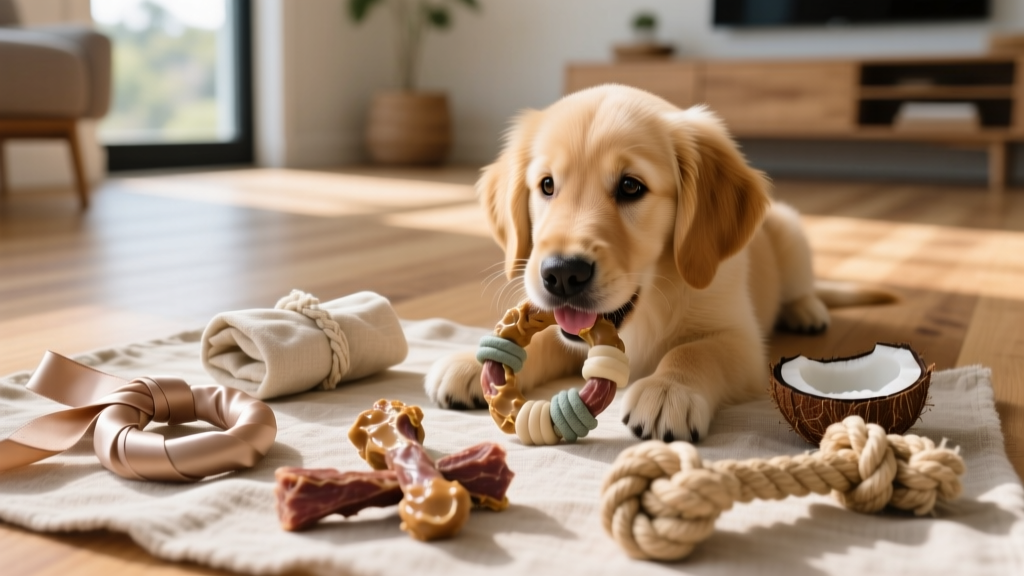
- Weeks 8–12: Soft rubber toys (Kong Classic Puppy size M), frozen wet washcloths (twisted and frozen), Nylabone Puppy Chew (soft flex material)
- Weeks 12–20: Kong Classic (red rubber, size L), frozen carrot sticks, Benebone Puppy Wishbone, Bullymake natural chews (supervised only)
- Weeks 20–24+: Kong Extreme (black rubber), Himalayan yak chews (supervised, remove when small enough to swallow), West Paw Zogoflex Hurley
Crate Training Progression and Time Limits
A crate is essential for your golden puppy lab's safety and potty training success. Golden labs are social dogs and can develop separation anxiety if crated excessively, so follow these age-appropriate time limits:
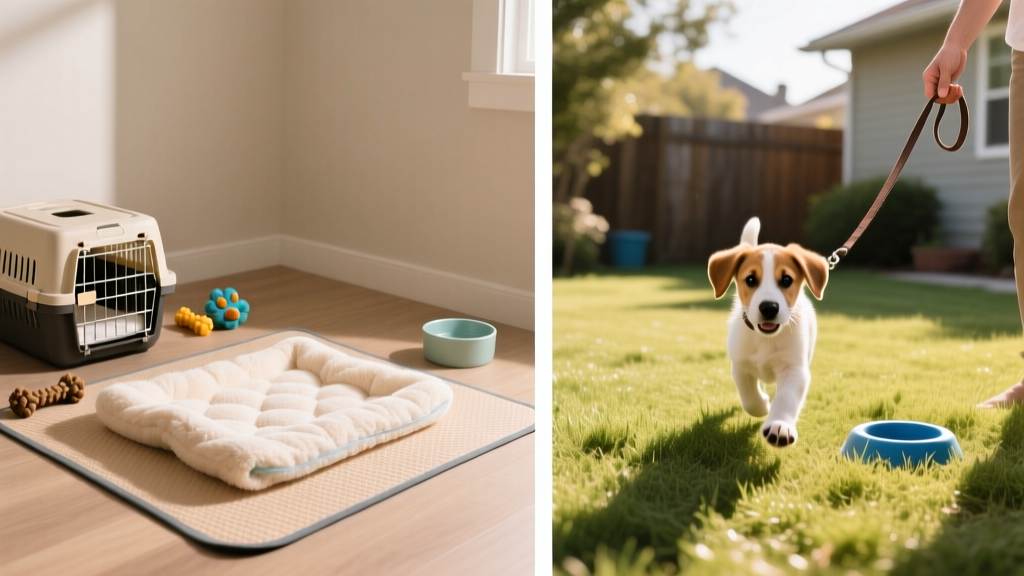
- 8–10 weeks: Maximum 30–60 minutes during the day (except overnight); crate placed in main living area; feed meals inside with door open
- 10–14 weeks: Maximum 1–2 hours during the day; begin closing door during meals and naps; overnight stretches of 2–4 hours
- 4–5 months: Maximum 3–4 hours during the day; overnight 5–7 hours; begin leaving room while puppy is crated for short periods
- 6+ months: Maximum 4–5 hours during the day; overnight 8 hours; never crate a golden puppy lab for 8+ hours during the day — arrange a midday dog walker or come home at lunch
Positive crate training protocol: Use only force-free methods. Toss high-value treats (freeze-dried liver, small cheese pieces) into the crate; feed all meals inside; provide a stuffed Kong when crating; never use the crate as punishment. If your puppy whines after being settled and exercised, wait for a 3–5 second pause in whining before releasing — releasing during whining teaches that noise opens the door.
Common Golden Puppy Lab Problems and Solutions
Puppy Biting and Nipping
Golden puppy labs are retrievers — their mouths are their primary way of interacting with the world. Expect significant mouthing from weeks 8 through 20. Solutions:
- Redirect: When teeth touch skin, say "ouch" in a calm voice, withdraw attention for 5–10 seconds, then offer an appropriate chew toy
- Enforced naps: Most intense biting sessions occur when the puppy is overtired. A golden puppy lab at 10 weeks needs a nap after every 45–60 minutes of awake time — put them in the crate with a chew toy and they'll usually fall asleep within minutes
- Satisfy the oral need: Provide 3–5 minutes of structured chewing (stuffed Kong, lick mat) before training sessions and when guests arrive
- Never: Hold the mouth shut, tap the nose, or use physical punishment — these methods increase fear and can trigger defensive biting
Destructive Chewing
Beyond teething, golden puppy labs chew from boredom and under-stimulation. A 5-month-old golden puppy lab needs approximately 45–60 minutes of structured physical exercise (leash walks, fetch, swimming) plus 15–20 minutes of mental enrichment (puzzle feeders, sniffing games, training sessions) daily. Under-stimulated puppies destroy furniture, drywall, and personal items.
Whining and Vocalization
Golden puppy labs are vocal dogs. Crate whining is common in the first 2–3 weeks. Protocol: ensure the puppy has been exercised, has eliminated, and is not hungry or in discomfort before crating. Then ignore whining completely. Most puppies extinguish crate whining within 5–10 nights if the protocol is consistent. If whining persists beyond 3 weeks, consult a certified positive-reinforcement trainer (look for CPDT-KA or IAABC credentials).
Jumping on People
Golden puppy labs greet with enthusiasm that becomes problematic as they approach 50+ lb. Start training "four on the floor" at 8 weeks: reward all four paws on the ground with treats and attention; turn your back and withdraw attention the moment the puppy jumps. Teach guests to do the same — one person who encourages jumping will undermine weeks of training.
First-Year Cost Breakdown for a Golden Puppy Lab
Budgeting for a golden puppy lab's first year helps prevent sticker shock. Here's a realistic breakdown based on 2025–2026 pricing across US markets:
| Category | Low Estimate | Medium Estimate | High Estimate |
|---|---|---|---|
| Puppy purchase (responsible breeder) | $1,200 | $2,000 | $3,500 |
| OR adoption from rescue/shelter | $200 | $400 | $600 |
| Veterinary (vaccines, wellness exams, spay/neuter, heartworm/flea prevention) | $600 | $1,000 | $1,800 |
| Food (large-breed puppy formula, 12 months) | $400 | $650 | $1,000 |
| Supplies (crate, bed, leash/harness, bowls, toys, grooming tools, baby gates) | $250 | $450 | $800 |
| Training (group puppy class + optional private sessions) | $150 | $400 | $1,200 |
| Pet insurance (annual premium) | $400 | $600 | $900 |
| Emergency fund recommendation (set aside) | $500 | $1,000 | $2,000 |
| TOTAL FIRST YEAR (excluding puppy purchase) | $2,300 | $4,100 | $7,700 |
Golden puppy labs are prone to ear infections (due to floppy, hairy ears trapping moisture) and gastrointestinal upset (they eat everything). Both are common reasons for unplanned vet visits in the first year, so the emergency fund is not optional — it's essential.
Frequently Asked Questions
How often should I feed my golden puppy lab at 10 weeks old?
At 10 weeks, feed 3 to 4 meals per day, totaling approximately 1.5 to 2.5 cups of large-breed puppy kibble (depending on your puppy's current weight and the kibble's caloric density). Divide the daily total equally across meals. For example, if feeding 2 cups per day in 4 meals, each meal is ½ cup. Consistent meal timing also helps regulate potty patterns — puppies typically need to eliminate within 15–30 minutes after eating.
When will my golden puppy lab be fully potty trained?
Most golden puppy labs achieve reliable house training between 5 and 7 months of age, meaning fewer than one accident per month. Full reliability (months without accidents) typically comes by 9–12 months. Expect occasional regression during fear periods (around 4–6 months and again at 8–10 months). Consistency in your outing schedule and reward timing is the single biggest factor in how quickly your puppy becomes reliable.
How do I stop my golden puppy lab from biting my hands and ankles?
Use a three-part approach: (1) Redirect every mouth-to-skin contact to an appropriate chew toy, (2) Implement enforced naps every 45–60 minutes for puppies under 16 weeks — most biting is overtiredness, not aggression, and (3) Provide daily structured chewing outlets (frozen Kongs, lick mats). Ankle biting during walks is common in retriever puppies; stop walking immediately when it happens, wait for the puppy to release, then reward with forward movement. This phase typically resolves by 5–6 months as adult teeth fully erupt and impulse control develops.
What vaccines does my golden puppy lab need and when?
Core vaccines follow this schedule: DHPP (Distemper, Hepatitis, Parainfluenza, Parvovirus) at 6–8 weeks, 10–12 weeks, and 14–16 weeks; Rabies at 14–16 weeks (required by law). Non-core vaccines your vet may recommend based on lifestyle and region: Bordetella (kennel cough) at 10–12 weeks if attending group classes, Leptospirosis starting at 12+ weeks in areas with wildlife exposure, and Lyme disease in tick-endemic regions. A DHPP and Rabies booster are due at 12–16 months. Always consult your veterinarian to customize the protocol for your puppy's specific risk profile.
When can my golden puppy lab go to the dog park?
Wait until 1–2 weeks after the final DHPP booster, which is typically given at 14–16 weeks. This means dog parks are generally safe around 16–18 weeks of age. However, many trainers and behaviorists recommend avoiding dog parks entirely until 5–6 months, when your puppy has better social skills and can handle the intensity of unfamiliar dog interactions. Until then, arrange playdates with known, vaccinated, temperament-tested dogs in controlled environments.
Dr. Hannah Wickes
All our authors care for dogs every day — read more of their work on the authors page.