Golden Lab Puppy: Complete Week-by-Week Care & Training Guide
Your complete golden lab puppy guide covering feeding schedules, potty training timelines, vaccination weeks, socialization checklists, and first-year costs.

The golden lab puppy — a cross between the Golden Retriever and the Labrador Retriever — consistently ranks among the most sought-after mixed breeds in the United States. Combining two of the most popular AKC-registered breeds, this designer cross typically inherits the friendly temperament, intelligence, and eager-to-please attitude that make both parent breeds exceptional family dogs. But raising a golden lab puppy (sometimes called a Goldador or Golden Lab mix) requires a structured plan that accounts for their high energy, rapid growth rate, and specific developmental windows.
This guide walks you through every critical milestone from the day you bring your puppy home through their first year, with exact feeding portions, vaccination timelines, and training strategies tailored to large-breed retriever crosses. All medical decisions should be made in partnership with your veterinarian, as individual puppies may have unique health needs.
When Should I Bring My Golden Lab Puppy Home?
The ideal window to bring your golden lab puppy home is between 8 and 10 weeks of age. While some breeders release puppies at 8 weeks, many responsible breeders of larger retriever crosses prefer to keep puppies until 10 weeks to allow additional littermate socialization and early bite-inhibition learning.
Bringing a puppy home before 8 weeks is strongly discouraged. The American Veterinary Medical Association notes that puppies separated from their mothers and littermates too early show higher rates of fear-based behaviors, resource guarding, and difficulty with bite inhibition later in life.
- Purchase a 36-inch or 42-inch wire crate with a divider panel (your golden lab puppy will grow into the larger size)
- Stock AAFCO-approved large-breed puppy formula food (minimum 22% protein, controlled calcium/phosphorus ratio)
- Schedule your first veterinary wellness exam within 48 hours of pickup
- Puppy-proof your home: secure electrical cords, remove toxic houseplants (lilies, sago palm, oleander), and gate off staircases
Golden Lab Puppy Age Milestones: What to Expect Week by Week
Large-breed retriever crosses develop on a predictable but rapid timeline. Understanding what's normal at each stage helps you distinguish typical puppy behavior from potential concerns that warrant a vet visit.
Weeks 4–8 (Still with Breeder)
Your puppy is learning critical social skills from littermates and their mother during this period. Teeth are fully erupted (28 deciduous teeth), and the puppy should be fully weaned onto solid food by week 6. Responsible breeders begin early neurological stimulation (ENS) and introduce varied surfaces, sounds, and gentle handling. By week 8, your puppy should weigh approximately 10–15 lb (4.5–6.8 kg) and show curiosity about humans, willingness to approach, and normal play-biting with siblings.
Weeks 8–12 (Adjustment Period)
This is the primary bonding and socialization window. Expect your golden lab puppy to sleep 18–20 hours per day, with short bursts of intense activity followed by sudden crashes. Fear periods commonly occur around weeks 8–10 — your puppy may suddenly seem startled by previously familiar objects or sounds. Respond with calm reassurance; do not force interaction with frightening stimuli. Weight at 12 weeks typically reaches 20–30 lb (9–13.6 kg).
Weeks 12–16 (Training Foundation)
Attention spans lengthen slightly, making this an ideal window to introduce basic cues (sit, down, name recognition, come). The second fear period may emerge around weeks 14–16. Baby teeth begin loosening. Your puppy should reliably eliminate outdoors with a consistent schedule, though accidents remain normal. Weight: 30–45 lb (13.6–20.4 kg).
Weeks 16–24 (Adolescent Transition)
Permanent teeth fully erupt by 6 months (42 adult teeth). Energy levels surge. Your puppy may begin testing boundaries, appearing to "forget" previously learned commands. Spay/neuter is commonly performed during this window — discuss optimal timing with your veterinarian, as recent research suggests delaying gonadectomy in large breeds until 12–18 months may reduce joint disorder risks. Weight: 45–65 lb (20.4–29.5 kg).
Months 6–12 (Adolescence)
Your golden lab puppy is now a physical adolescent but still mentally immature. Growth plates remain open. Expect continued chewing, increased independence on walks, and potential leash reactivity if socialization was incomplete. Most golden lab mixes reach 80–90% of adult weight by 10–12 months. Final adult weight typically falls between 60–80 lb (27–36 kg), depending on which parent breed's size genes dominate.
Feeding Schedule: Exact Portions by Age and Weight
Golden lab puppies require a large-breed puppy formula to support controlled growth and reduce the risk of developmental orthopedic diseases like hip dysplasia and osteochondritis dissecans (OCD). The American Kennel Club recommends large-breed puppy foods that maintain calcium levels between 1.2% and 1.5% on a dry matter basis.
Feed measured meals — never free-feed a retriever cross, as both Golden Retrievers and Labradors are genetically predisposed to obesity.
| Age Range | Meals Per Day | Approximate Daily Amount | Typical Puppy Weight |
|---|---|---|---|
| 8–12 weeks | 3–4 meals | 1.5–2.5 cups/day | 10–30 lb (4.5–13.6 kg) |
| 3–6 months | 3 meals | 2.5–4 cups/day | 30–50 lb (13.6–22.7 kg) |
| 6–12 months | 2 meals | 3.5–5 cups/day | 50–75 lb (22.7–34 kg) |
| 12+ months | 2 meals | 3–4.5 cups/day (adult formula) | 60–80 lb (27–36 kg) |
Important: These are starting guidelines. Your specific food's caloric density varies by brand. Check the feeding chart on your food's packaging and adjust based on your puppy's body condition score (BCS). You should be able to feel — but not prominently see — your puppy's ribs. Transition from puppy to adult formula between 12 and 18 months for large-breed crosses.
Vaccination Schedule: Protecting Your Golden Lab Puppy
Your puppy's immune system is immature at 8 weeks, relying on maternal antibodies that gradually wane. The core vaccination series is timed to build active immunity as those maternal antibodies decline. Your veterinarian will tailor this schedule based on your puppy's exact age, health status, and regional disease prevalence.
| Age | Vaccines Administered | Notes |
|---|---|---|
| 6–8 weeks | DHPP (Distemper, Hepatitis/Adenovirus, Parainfluenza, Parvovirus) | Often given by breeder; first dose in series |
| 10–12 weeks | DHPP booster + Bordetella (optional) + Leptospirosis (risk-dependent) | Bordetella recommended if attending puppy classes or boarding |
| 14–16 weeks | DHPP final booster + Rabies (required by law) | Rabies timing varies by state; some require 12 weeks minimum |
| 12–16 months | DHPP booster + Rabies booster + Leptospirosis (annual) | First annual boosters; subsequent intervals per vet recommendation |
Estimated vaccination costs: $75–$150 per visit for core vaccines at a general practice, or $20–$40 per vaccine at low-cost clinics. Total first-year vaccination costs typically range from $200–$450.
Until your golden lab puppy completes the full DHPP series (typically around 16 weeks), avoid high-traffic dog areas like dog parks, pet store floors, and unvaccinated dog environments. However, socialization shouldn't wait — carry your puppy to experience new sights and sounds, and arrange playdates with fully vaccinated, healthy adult dogs in private yards. The Merck Veterinary Manual emphasizes that the socialization window (3–14 weeks) is critical and cannot be fully recovered if missed.
Socialization Window (Weeks 3–14): Your Exposure Checklist
The primary socialization period closes around 14 weeks. After this window, unfamiliar stimuli are more likely to trigger fear responses rather than curiosity. For retriever crosses — breeds that thrive on human interaction — thorough early socialization is essential for preventing fear-based reactivity, separation anxiety, and resource guarding.
Aim for positive, low-pressure exposure to the following categories before week 14. Keep sessions short (5–10 minutes) and pair every new experience with high-value treats (small pieces of boiled chicken, cheese, or commercial training treats like Zuke's Mini Naturals).
Potty Training Timeline: Realistic Expectations for Retriever Crosses
Golden lab puppies are generally quicker to house-train than many breeds thanks to their intelligence and food motivation — but "quick" still means 4 to 6 months for reliable outdoor elimination, with occasional accidents possible up to 12 months. Any source promising full potty training in days is setting you up for frustration.
The general rule: a puppy can hold their bladder for approximately one hour per month of age, plus one. So a 3-month-old puppy can typically hold for about 4 hours — but this applies to resting/crated puppies, not active ones.
| Puppy Age | Max Bladder Hold Time | Outdoor Trips Per Day | Realistic Accident Frequency |
|---|---|---|---|
| 8–10 weeks | 1–2 hours | 12–15 trips | Multiple daily accidents (normal) |
| 3–4 months | 3–4 hours | 8–10 trips | 1–2 accidents per week |
| 5–6 months | 5–6 hours | 6–8 trips | Rare accidents (1–2 per month) |
| 7–12 months | 6–8 hours | 4–6 trips | Fully reliable (barring illness) |
Key strategies:
- Take your puppy to the same outdoor spot every time — scent triggers elimination
- Use a consistent verbal cue ("go potty" or "do your business") while they eliminate, then reward immediately with a treat after they finish
- Crate your puppy when unsupervised — dogs naturally avoid soiling their sleeping area
- Clean indoor accidents with enzymatic cleaner (Nature's Miracle or Rocco & Roxie) to eliminate scent markers
- Never punish accidents — this teaches your puppy to hide when they need to eliminate, making training harder
Crate Training Progression and Time Limits
A crate is one of the most valuable tools for golden lab puppy owners. Both parent breeds are prone to destructive chewing during adolescence, and a properly introduced crate keeps your puppy safe when unsupervised while accelerating potty training.
Size recommendation: A 42-inch crate with a divider panel allows you to adjust the interior space as your puppy grows. The crate should be large enough for your dog to stand, turn around, and lie down comfortably — but not so large that they can eliminate in one corner and sleep in another.
Crate time limits by age:
- 8–10 weeks: 30–60 minutes maximum during the day; overnight as needed (expect 1–2 wake-ups for potty breaks)
- 11–14 weeks: 1–2 hours during the day; overnight stretches of 4–5 hours
- 3–4 months: 2–3 hours during the day; 6–7 hours overnight
- 5–6 months: 3–4 hours during the day; 7–8 hours overnight
- 7+ months: Up to 4–5 hours during the day; 8 hours overnight
Never use the crate as punishment. Feed meals inside the crate, provide a stuffed Kong or safe chew toy, and keep the crate in a family-occupied area so your puppy doesn't feel isolated.
Teething Timeline and Safe Relief Strategies
Golden lab puppies go through two teething phases, and both parent breeds are notorious chewers, making this a particularly intense developmental stage.
Phase 1 — Deciduous teeth erupt (weeks 3–6): 28 baby teeth come in. You likely won't deal with this phase directly if you bring your puppy home at 8 weeks.
Phase 2 — Permanent teeth replace baby teeth (3–6 months): This is the demanding phase. Your puppy will chew relentlessly as 42 adult teeth push through the gums. You may find tiny baby teeth on the floor or in your puppy's bedding — this is normal, and most puppies swallow the ones they don't drop.
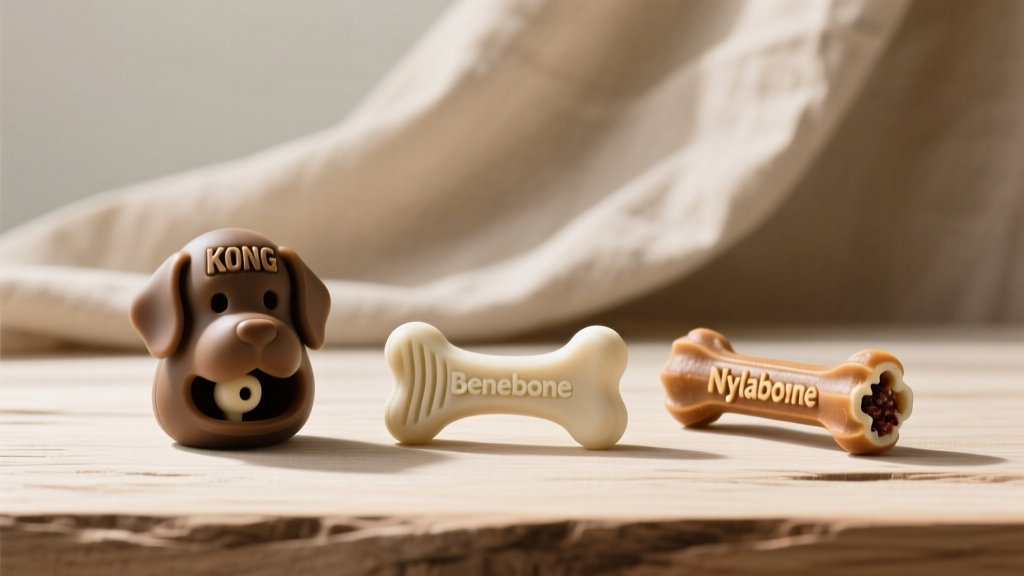
- KONG Puppy (pink or blue rubber): Stuff with plain yogurt or peanut butter (xylitol-free) and freeze for 2–4 hours. The cold numbs sore gums.
- Nylabone Puppy Chew (Power Chew line): Designed for aggressive chewers; replace when knuckle ends become small enough to swallow.
- Frozen wet washcloth: Wet a clean washcloth, twist into a rope, freeze, and supervise your puppy while they chew. Remove once it thaws.
- Benebone Wishbone (puppy line): Bacon-infused nylon; choose the appropriate size for your puppy's current weight.
Avoid: Rawhide (choking and blockage risk), cooked bones (splinter hazard), ice cubes for puppies under 4 months (tooth fracture risk in developing teeth), and any chew toy smaller than your puppy's fist.
Common Golden Lab Puppy Problems and How to Solve Them
Retriever crosses share a cluster of predictable puppy behaviors driven by their breeding history. Understanding why these behaviors occur helps you address them effectively using positive reinforcement methods.
Puppy Biting and Nipping
Both Golden Retrievers and Labradors were bred to carry game in their mouths, making them naturally "mouthy" breeds. Your golden lab puppy will put their mouth on hands, ankles, clothing, and furniture. This is not aggression — it's exploratory behavior and play.
Solution: Redirect to an appropriate chew toy every time teeth touch skin. If biting continues, stand up calmly, cross your arms, and disengage for 10–15 seconds (a "time-out" from play). Resume interaction when your puppy is calm. Never yelp loudly — this can overstimulate retriever puppies and escalate biting. Consistency from all household members is essential; expect improvement within 3–4 weeks of consistent redirection.
Excessive Chewing and Destruction
Retriever crosses have powerful jaws and high oral fixation. Adolescent golden lab puppies (5–10 months) can destroy baseboards, furniture legs, shoes, and remote controls in minutes.
Solution: Management first — puppy-proof rooms and use the crate when unsupervised. Provide a rotation of 5–7 appropriate chew toys, swapping them every few days to maintain novelty. Increase physical exercise (age-appropriate: 5 minutes of structured walking per month of age, twice daily) and mental enrichment (snuffle mats, puzzle feeders, training sessions).
Whining and Crying in the Crate
Nighttime whining is nearly universal in the first 2–3 weeks. Your puppy has just been separated from their littermates for the first time.
Solution: Place the crate in your bedroom for the first 2–4 weeks so your puppy can hear and smell you. Cover the crate with a light blanket to create a den-like feel. Use a heartbeat toy (Snuggle Puppy brand) or a warm water bottle wrapped in a towel. If your puppy whines after a recent potty break, wait 5–10 minutes before responding — rewarding silence teaches that quiet earns attention. Never let your puppy out of the crate while actively whining, as this reinforces the behavior.
Jumping on People
Golden lab puppies greet the world with enthusiasm and zero concept of personal space. Jumping is a natural greeting behavior that becomes problematic as your puppy approaches 50+ lb.
Solution: Teach an incompatible behavior — "sit to greet." Have visitors approach only when your puppy is sitting. If your puppy jumps, the visitor turns away and steps back. Repeat until your puppy sits, then reward with calm petting. Practice with family members before introducing guests.
First-Year Cost Breakdown for a Golden Lab Puppy
Budgeting accurately prevents financial stress and ensures your puppy receives consistent care. Costs below reflect 2026 U.S. averages and vary by region.
| Category | Estimated Cost Range | Details |
|---|---|---|
| Puppy Purchase | $800–$2,500 | Responsible breeders; adoption fees $200–$500 |
| Veterinary (Year 1) | $500–$1,200 | Vaccines, wellness exams, fecal tests, heartworm prevention, spay/neuter ($200–$600) |
| Food | $450–$900 | Large-breed puppy formula; premium brands $60–$90/bag (30 lb) |
| Supplies | $300–$600 | Crate, bed, leash/harness, bowls, toys, grooming tools, baby gates |
| Training | $150–$500 | Group puppy classes ($150–$250 for 6-week course); private sessions $75–$150/hour |
| Preventive Medications | $200–$450 | Heartworm (Heartgard Plus, Interceptor Plus), flea/tick (NexGard, Bravecto, Simparica Trio) |
| Pet Insurance (optional) | $360–$720 | $30–$60/month; enroll early to cover hereditary conditions |
| Emergency Fund Buffer | $500–$1,500 | Foreign body ingestion, ear infections, GI upset — common puppy ER visits |
| Total Estimated First Year | $3,260–$8,370 | Excluding puppy purchase; $4,060–$10,870 including purchase from breeder |
Frequently Asked Questions About Golden Lab Puppies
How often should I feed my golden lab puppy at 8 weeks old?
At 8 weeks, feed 3 to 4 small meals per day, totaling approximately 1.5–2 cups of large-breed puppy formula. Divide the daily portion evenly across meals. For example, if feeding 2 cups daily, offer 0.5 cups at each of 4 meals spaced roughly 4–5 hours apart. Consistent meal timing also helps predict potty schedules — most puppies need to eliminate within 15–30 minutes after eating.
When will my golden lab puppy be fully potty trained?
Most golden lab puppies achieve reliable house training between 5 and 7 months of age with consistent scheduling. "Reliable" means fewer than one accident per month. Some puppies — particularly males — may take until 8–10 months. If your puppy is still having frequent accidents after 6 months of consistent training, consult your veterinarian to rule out urinary tract infections, diabetes, or other medical causes.
How do I stop my golden lab puppy from biting my hands?
Redirect every instance of skin-to-teeth contact to an appropriate chew toy. If your puppy persists, calmly disengage from play for 10–15 seconds by standing still and crossing your arms (no eye contact, no talking). Resume play when your puppy is calm or offers a sit. This teaches that biting ends fun interactions. Expect this process to take 3–6 weeks of consistent application from every household member. The behavior naturally decreases as permanent teeth fully erupt around 6 months.
What vaccines does my golden lab puppy need and when?
Core vaccines include DHPP (Distemper, Hepatitis, Parainfluenza, Parvovirus) given at 6–8 weeks, 10–12 weeks, and 14–16 weeks, plus Rabies at 14–16 weeks (timing varies by state). Non-core vaccines your vet may recommend based on lifestyle and risk include Bordetella (kennel cough), Leptospirosis, Lyme disease, and Canine Influenza. Always consult your veterinarian for a personalized vaccination protocol.
When can my golden lab puppy go to the dog park?
Wait until at least one week after the final DHPP booster (typically around 17 weeks of age) before visiting public dog parks. Before that, socialize in controlled environments: private yards with known, vaccinated dogs, or structured puppy socialization classes where all participants have verified vaccination records. Dog parks carry higher disease exposure risk and can be overwhelming for young puppies.
Should I get pet insurance for my golden lab puppy?
Enrolling during puppyhood — before any conditions are documented in your puppy's medical record — is the optimal time. Both Golden Retrievers and Labradors are predisposed to hereditary conditions including hip dysplasia, elbow dysplasia, certain cancers, and eye disorders. Most pet insurance policies exclude pre-existing conditions, so early enrollment ensures coverage if these issues develop later. Expect premiums of $30–$60 per month for accident-and-illness plans from providers like Trupanion, Healthy Paws, or Nationwide.
- Vomits repeatedly (3+ times in 24 hours) or has bloody diarrhea
- Refuses food for more than 24 hours
- Shows signs of lethargy lasting more than 12 hours
- Has difficulty breathing, persistent coughing, or pale/blue gums
- Ingests any toxic substance — call ASPCA Animal Poison Control at (888) 426-4435 (24/7, consultation fee applies)
- Experiences seizures, collapse, or inability to stand
Raising a golden lab puppy is rewarding but demanding work. Their intelligence and eagerness to bond make them highly trainable, but their energy and mouthiness require patience and consistency throughout the first year. Stick to structured schedules, invest in early socialization, and don't hesitate to consult your veterinarian or a certified positive-reinforcement trainer when challenges arise.
Aaron Whyte
All our authors care for dogs every day — read more of their work on the authors page.