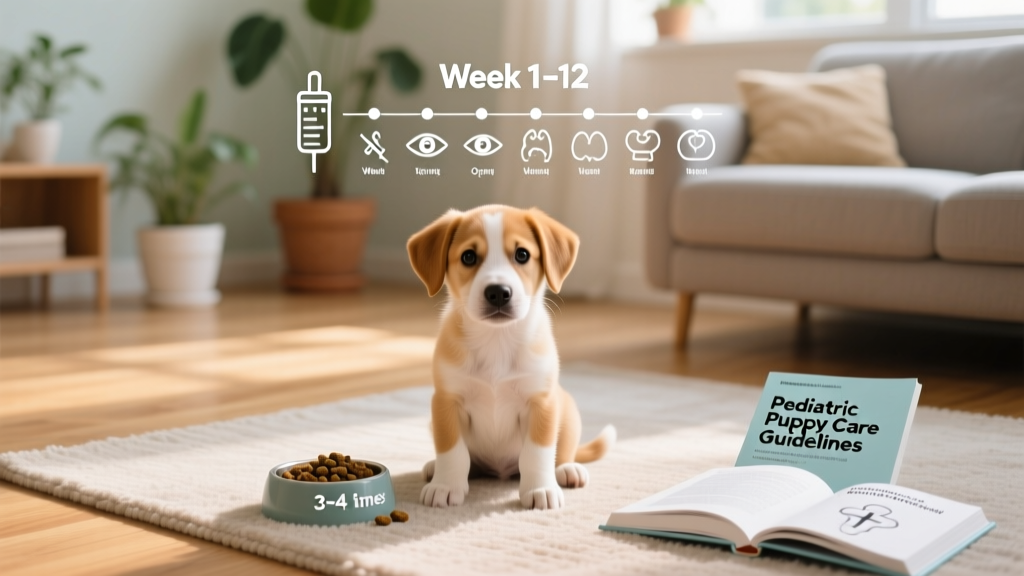
Giardia in Puppies: Complete Puppy Care & Prevention Guide
Learn how giardia in puppies affects development, feeding, potty training, and vaccination schedules. Age-specific milestones, costs.

If you're bringing a new puppy home, the excitement can quickly turn to worry when you encounter gastrointestinal issues. Giardia in puppies is one of the most common intestinal parasites diagnosed in young dogs, affecting up to 30% of puppies in some shelter and breeding environments according to the Merck Veterinary Manual. This guide combines essential puppy care milestones with targeted giardia prevention, so you can navigate your puppy's first year with confidence.
Understanding Giardia Risk During Critical Puppy Development
Giardia duodenalis is a microscopic protozoan parasite that colonizes the small intestine. Puppies are especially vulnerable between 6 weeks and 6 months of age because their immune systems are still developing and they're frequently exposed to contaminated environments during socialization and exploration phases.
The parasite spreads through the fecal-oral route—puppies ingest cysts from contaminated water, soil, surfaces, or direct contact with infected dogs. Once ingested, cysts release trophozoites in the intestine, causing symptoms that can derail your carefully planned puppy care schedule:
- Diarrhea (often pale, greasy, foul-smelling)
- Weight loss or failure to thrive
- Dehydration (critical in puppies under 12 weeks)
- Reduced appetite (complicating feeding schedules)
- Lethargy (interfering with socialization windows)
A giardia infection during weeks 8-14 can be particularly disruptive because this overlaps with the prime socialization window and initial vaccination series. Missed socialization opportunities during this period can have lasting behavioral impacts, which is why prevention is far superior to treatment.
Age-Specific Milestones: What to Expect Week by Week
Puppy development follows predictable stages, but giardia risk requires extra vigilance at each milestone. Here's your timeline with parasite prevention integrated:
Weeks 4-8: Early Development (Breeder/Shelter Phase)
- Physical: Rapid growth, gaining 5-10% body weight daily. Eyes and ears fully functional.
- Social: Learning bite inhibition from littermates, beginning to explore solid food.
- Giardia risk: HIGH—puppies in group housing often exposed. Responsible breeders run fecal tests at 6 weeks.
- Your action: Request fecal test results before committing to a puppy. Ask about deworming protocol (pyrantel at 2, 4, 6 weeks).
Weeks 8-12: Home Transition & Immune Gap
- Physical: Weighing 5-15 lbs depending on breed. Baby teeth sharp, chewing everything.
- Social: Fear imprint period (8-11 weeks)—negative experiences have lasting impact.
- Giardia risk: PEAK—stress of rehoming suppresses immunity. Maternal antibodies waning before vaccines fully protective.
- Your action: Schedule vet visit within 48 hours of homecoming for fecal exam. Keep puppy confined to easily sanitized areas.
Weeks 12-16: Socialization Push & Vaccine Series
- Physical: Coordination improving, can hold bladder 2-3 hours. Adult teeth beginning to erupt.
- Social: Socialization window closing around 14-16 weeks—critical exposure period.
- Giardia risk: MODERATE-HIGH—increased environmental exposure during outings, but vaccine protection improving.
- Your action: Carry puppy in public spaces, avoid high-risk areas (dog parks, standing water). Use puppy-safe disinfectant on paws after outings.
Weeks 16-24: Adolescence Begins
- Physical: 50-75% of adult weight. Bladder control extending to 4-5 hours.
- Social: Testing boundaries, increased independence, may show fear of previously accepted stimuli.
- Giardia risk: MODERATE—immune system stronger, but outdoor exploration increases exposure.
- Your action: Supervise all outdoor time. Prevent drinking from puddles, streams, or communal water bowls.
Months 6-12: Teenage Phase
- Physical: Approaching adult size (80-100% depending on breed). Sexual maturity (spay/neuter timing).
- Social: Second fear period possible (6-14 months). May regress in training.
- Giardia risk: MODERATE—still susceptible but better able to fight infection.
- Your action: Continue annual fecal testing. Discuss preventive fenbendazole protocols with vet if in high-risk area.
Feeding Schedule: Maintaining Nutrition During Parasite Risk
Proper nutrition supports immune function, making your puppy more resilient against giardia and other parasites. Here's a feeding framework based on age and weight:
| Age | Meals/Day | Portion (10 lb puppy) | Portion (20 lb puppy) | Portion (40 lb puppy) |
|---|---|---|---|---|
| 6-12 weeks | 4 meals | ¾ - 1 cup/day | 1¼ - 1¾ cups/day | 2 - 2¾ cups/day |
| 3-6 months | 3 meals | 1 - 1½ cups/day | 1¾ - 2½ cups/day | 2¾ - 3¾ cups/day |
| 6-12 months | 2 meals | 1¼ - 1¾ cups/day | 2 - 3 cups/day | 3 - 4½ cups/day |
Giardia-specific feeding considerations:
- Use stainless steel or ceramic bowls—plastic bowls harbor bacteria and are harder to fully sanitize
- Wash bowls daily with hot soapy water or run through dishwasher
- Never leave food out between meals—this attracts insects that can carry cysts
- If giardia diagnosed: Your vet may recommend a bland diet (boiled chicken and rice) for 3-5 days, then gradual return to regular food. Feed 1.5x normal amount in small frequent meals to support recovery
- Probiotics (Purina FortiFlora or Proviable) can help restore gut flora post-treatment—ask your vet for dosing
Potty Training Timeline: Complications from Giardia
Giardia causes unpredictable diarrhea, which can set back potty training progress by weeks. Here's a realistic timeline with troubleshooting for parasite-related setbacks:
Standard Potty Training Timeline
- 8-10 weeks: Accident every 1-2 hours. Take outside after meals, naps, play. Praise immediately for success.
- 10-12 weeks: Bladder control improving to 2 hours. Still expect 1-2 accidents daily.
- 12-16 weeks: Can hold 2-3 hours. Accidents should decrease to 2-3 per week.
- 16-20 weeks: Holding 3-4 hours. Most puppies "get it" by this age if consistent.
- 5-6 months: Considered mostly trained (1-2 accidents per month acceptable).
- Full reliability: 6-12 months depending on breed and consistency.
When Giardia Disrupts Progress
If your puppy develops giardia-related diarrhea:
- Increase potty breaks to every 30-45 minutes during active diarrhea
- Use enzyme cleaner (Nature's Miracle, Rocco & Roxie) on all accident sites—regular cleaners don't eliminate cysts
- Temporarily restrict access to carpeted areas where cysts can persist
- Don't punish accidents—diarrhea is involuntary and punishment creates fear-based hiding behavior
- Resume normal schedule 48-72 hours after diarrhea resolves with medication
Realistic expectation: A giardia episode at 10 weeks can delay full training by 2-4 weeks. This is normal—don't panic or assume your puppy is "untrainable."
Vaccination Schedule: Timing Around Parasite Treatment
Vaccines are critical for puppy survival, but giardia treatment can complicate the schedule. Here's the standard protocol with adjustments:
| Age | Vaccine | Purpose | Giardia Consideration |
|---|---|---|---|
| 6-8 weeks | DHPP (1st dose) | Distemper, Hepatitis, Parainfluenza, Parvovirus | Usually given by breeder/shelter. If giardia active, vet may delay 1-2 weeks |
| 10-12 weeks | DHPP (2nd dose) + Bordetella | Booster immunity + kennel cough protection | Can proceed if giardia treatment underway and puppy eating normally |
| 14-16 weeks | DHPP (3rd dose) + Rabies | Final puppy booster + legal requirement | Critical—don't delay rabies. Reschedule only if severe dehydration |
| 12-16 months | DHPP + Rabies boosters | Adult immunity maintenance | Standard schedule unless chronic giardia issues |
Key point from the American Veterinary Medical Association: Vaccines should be delayed only if the puppy has active fever, severe illness, or is immunocompromised. Mild giardia with normal appetite and energy usually doesn't require postponement—your vet will make the final call.
Socialization Window (Weeks 3-14): Balancing Exposure and Infection Risk
The socialization window is arguably the most critical period in your puppy's life. According to the American Kennel Club, puppies who don't receive adequate positive exposure during weeks 3-14 are significantly more likely to develop fear-based behavioral problems later. But how do you socialize safely when giardia risk is high?
Safe Socialization Checklist (Weeks 8-14)
Week 8-9: Home-Based Exposure
- ☐ Different floor textures (tile, carpet, wood, linoleum)
- ☐ Household sounds (vacuum, doorbell, TV, washing machine)
- ☐ Gentle handling (paws, ears, mouth, tail)
- ☐ Family members wearing hats, sunglasses, coats
- ☐ Car rides (5-10 minutes, positive treats)
Week 10-11: Controlled Outdoor Exposure
- ☐ Carry puppy to quiet outdoor spaces (avoid ground contact)
- ☐ Watch people/dogs from distance (parking lots, benches)
- ☐ Meet 2-3 fully vaccinated, healthy adult dogs in controlled settings
- ☐ Visit vet clinic for positive "happy visits" (no shots, just treats)
- ☐ Exposure to children (supervised, calm interactions)
Week 12-14: Expanding Experiences
- ☐ Puppy kindergarten class (require proof of vaccination + negative fecal test)
- ☐ Short walks on leash in low-traffic areas
- ☐ Outdoor seating at cafes (puppy on lap or mat, not ground)
- ☐ Different weather conditions (light rain, wind)
- ☐ Grooming tools (brush, nail clippers) without actual grooming
Giardia-specific socialization rules:
- AVOID: Dog parks, communal water bowls, areas with visible feces, standing water (puddles, ponds)
- SAFE: Carried outings, private yards (your own or verified clean), controlled playdates with tested dogs
- AFTER EACH OUTING: Wipe paws with pet-safe wipes, wash hands thoroughly
Teething Timeline (3-6 Months): Safe Chew Options During Parasite Concerns
Teething puppies chew everything, which increases giardia exposure risk if they're mouthing contaminated objects. Here's the timeline with safe alternatives:
- 12-16 weeks: Baby teeth start loosening. Provide chilled (not frozen) washcloths, rubber KONG toys
- 16-20 weeks: Peak chewing intensity. Rotate toys daily to maintain interest
- 20-24 weeks: Adult teeth erupting. Introduce harder chews: Nylabone Power Chew, Benebone
- 24-28 weeks: Most adult teeth in. Can introduce edible chews if vet approves
Giardia-safe chew guidelines:
- Disinfect toys weekly: Rubber/nylon toys in dishwasher (top rack, no detergent), plush toys in washing machine (hot water, dry on high heat)
- Avoid natural chews from unknown sources (rawhides, bully sticks can harbor parasites)
- Supervise outdoor chewing: Don't let puppy chew sticks, rocks, or grass that may be contaminated
- Rotate and sanitize: Have 2 sets of toys—one in use, one being sanitized
Crate Training Progression: Managing Giardia-Related Accidents
Crates are essential for potty training and safety, but giardia diarrhea can make crate time stressful. Here's a progression with parasite-specific adjustments:
| Age | Max Crate Time (Day) | Max Crate Time (Night) | Giardia Adjustment |
|---|---|---|---|
| 8-10 weeks | 1-2 hours | 3-4 hours | Reduce to 1 hour during active diarrhea. Use washable bedding |
| 11-14 weeks | 2-3 hours | 4-5 hours | Line crate with puppy pads + towel during treatment. Change immediately if soiled |
| 15-16 weeks | 3-4 hours | 5-6 hours | Resume normal schedule 48 hours after diarrhea resolves |
| 4-6 months | 4-5 hours | 6-8 hours | Standard guidelines. Ensure puppy can turn around comfortably |
Important: Never use the crate as punishment, especially during illness. Puppies with giardia may associate the crate with feeling sick, creating long-term resistance. Keep crate time positive with food puzzles, frozen KONGs, and calm praise.
Common Puppy Problems & Giardia-Specific Solutions
Every puppy has behavioral challenges, but giardia can amplify certain issues:
Problem: Puppy Biting/Nipping
Normal cause: Teething, play behavior, exploration
Giardia complication: Sick puppies may bite more due to discomfort or irritability
Solution:
- Redirect to appropriate chew toys immediately
- Yelp loudly and withdraw attention for 10-20 seconds when teeth touch skin
- Provide frozen treats (low-sodium chicken broth in ice cube tray) to soothe gums
- If biting increases during giardia treatment, puppy may need pain management—consult vet
Problem: Whining/Crying in Crate
Normal cause: Separation anxiety, need to eliminate, boredom
Giardia complication: Abdominal cramping, urgent need to defecate, dehydration
Solution:
- During active giardia: Take puppy out immediately if whining starts—don't wait it out
- After treatment: Gradually return to ignoring attention-seeking whining (wait for 5 seconds of quiet before releasing)
- Use white noise machine near crate to mask sounds that trigger anxiety
Problem: Destructive Chewing
Normal cause: Teething, insufficient exercise, boredom
Giardia complication: Puppy may chew contaminated items (shoes that walked outside, floor mats)
Solution:
- Remove all potentially contaminated items from puppy's reach during treatment
- Provide 4-5 appropriate chew toys, rotated daily
- Once giardia cleared, deep-clean areas puppy accessed (steam clean carpets, wash fabric items in hot water)
First-Year Cost Breakdown: Budgeting for Giardia Prevention & Treatment
Giardia adds unexpected costs to an already expensive first year. Here's a realistic budget for 2026:
| Category | Standard Cost | With Giardia | Notes |
|---|---|---|---|
| Veterinary Care | $400-800 | $550-1,100 | Includes 3-4 wellness visits, vaccines, spay/neuter. Giardia adds fecal tests ($40-80 each), treatment ($50-150), follow-up visits |
| Food | $300-600 | $350-700 | High-quality puppy food. May need prescription GI diet temporarily ($60-120 for 2 weeks) |
| Supplies | $200-400 | $250-500 | Crate, bed, bowls, leash, toys. Giardia requires extra enzyme cleaner ($15-30), sanitizing supplies ($20-40) |
| Training | $150-400 | $150-400 | Puppy kindergarten, possibly private sessions. May need to pause during illness |
| Preventive Medications | $200-400 | $200-400 | Flea/tick, heartworm (some preventives also cover intestinal parasites) |
| TOTAL FIRST YEAR | $1,250-2,600 | $1,500-3,100 | Giardia adds approximately $250-500 in direct costs, plus potential lost wages for extra vet visits |
Cost-saving tips:
- Pet insurance (start at 8 weeks before giardia diagnosis—pre-existing conditions not covered)
- Wellness plans from veterinary chains (Banfield, VCA) bundle preventive care at 10-20% discount
- Ask breeder/shelter about health guarantees—some cover parasite treatment within first 14 days
Frequently Asked Questions
When should I bring my puppy home?
Ideally between 8-10 weeks of age. This allows the puppy to complete critical littermate socialization (bite inhibition, canine communication) while still within the prime human socialization window. Request a fecal test within 48 hours before pickup, and schedule your vet visit within 48 hours of homecoming.
How often should I feed my puppy at different ages?
See the feeding schedule table above, but general guidelines: 4 meals daily from 6-12 weeks, 3 meals from 3-6 months, and 2 meals from 6-12 months. Adjust portions based on your puppy's body condition score—you should be able to feel but not see ribs, and there should be a visible waist when viewed from above.
When will my puppy be fully potty trained?
Most puppies achieve reliable house training between 5-6 months, but full reliability (no accidents for 3+ months) often takes 6-12 months. Giardia episodes can delay this by 2-4 weeks per incident. Consistency matters more than speed—puppies trained with positive reinforcement and regular schedules succeed faster than those punished for accidents.
What vaccines does my puppy need and when?
Core vaccines include DHPP (distemper, hepatitis, parainfluenza, parvovirus) at 6-8, 10-12, and 14-16 weeks, plus rabies at 14-16 weeks. Bordetella (kennel cough) is recommended if attending puppy classes. See the vaccination table above for giardia-specific timing considerations.
How do I stop puppy biting and nipping?
Use the redirect-and-withdraw method: when teeth touch skin, yelp loudly, withdraw attention for 10-20 seconds, then offer an appropriate chew toy. Consistency from all family members is critical—mixed messages confuse puppies. Never use physical punishment (alpha rolls, muzzle grabbing) as these increase fear-based biting. If biting intensifies during illness, consult your vet about pain management.
When can my puppy go outside and meet other dogs?
Your puppy can go outside immediately, but with restrictions until fully vaccinated (around 16-18 weeks). Carry your puppy or use a stroller for outings. Avoid high-risk areas (dog parks, areas with unknown dogs, standing water) until 2 weeks after final DHPP booster. Puppy classes can start after the first DHPP (around 8-10 weeks) if all attendees provide proof of vaccination and negative fecal tests.
Can I get giardia from my puppy?
Yes, giardia is zoonotic (transmissible to humans), though the strains that infect dogs don't always infect people. Practice good hygiene: wash hands after handling puppy or feces, don't let puppy lick your face, wear gloves when cleaning up diarrhea. Immunocompromised individuals should avoid handling infected puppies. See your doctor if you develop diarrhea after your puppy is diagnosed.
How long does giardia treatment take?
Treatment typically involves fenbendazole (Panacur) or metronidazole for 5-7 days. Symptoms usually improve within 2-3 days, but complete the full course. A follow-up fecal test 2-4 weeks after treatment confirms clearance. Some puppies require a second treatment round if the first doesn't fully eliminate the parasite.
Will my puppy have long-term health issues from giardia?
Most puppies recover completely with proper treatment. However, severe or untreated giardia can cause malabsorption issues, weight loss during critical growth periods, and occasionally chronic gastrointestinal sensitivity. Early detection and treatment minimize long-term risks. Discuss any ongoing digestive concerns with your vet at wellness visits.
When to Call Your Veterinarian Immediately
- Diarrhea lasting more than 24 hours in puppies under 12 weeks
- Blood in stool (bright red or dark/tarry)
- Vomiting combined with diarrhea
- Signs of dehydration (tacky gums, skin tenting, sunken eyes)
- Lethargy or refusal to eat for more than 12 hours
- Fever over 103.5°F (39.7°C)
- Weight loss or failure to gain weight over 1 week
ASPCA Animal Poison Control: (888) 426-4435 (24/7, consultation fee applies) if you suspect your puppy ingested a toxic substance alongside potential giardia exposure.
Raising a puppy while managing giardia risk requires vigilance, but it's entirely manageable with the right information and veterinary partnership. By following age-appropriate care schedules, maintaining strict hygiene, and staying alert to symptoms, you'll give your puppy the best foundation for a healthy, well-adjusted life. Remember: prevention is always easier and less expensive than treatment, so prioritize fecal testing and environmental management from day one.
Priya Sutaria
All our authors care for dogs every day — read more of their work on the authors page.