Giant Schnauzer Puppy: Complete Growth & Care Guide by Age
Raising a Giant Schnauzer puppy? This breed-specific guide covers feeding, milestones, potty training, vaccines, socialization, and first-year costs.

Bringing home a Giant Schnauzer puppy is a commitment that extends well beyond the first few weeks of cuteness. This powerful, intelligent working breed — originally developed in Bavaria to drive livestock and guard property — matures slowly, often not reaching full physical and mental adulthood until 24 to 36 months. That means the decisions you make during puppyhood will shape a dog that could weigh 65 to 105 lb (29 to 48 kg) for the next decade or more.
This guide is built around the specific developmental windows of a Giant Schnauzer puppy, with breed-aware advice on nutrition, training timelines, socialization priorities, and the health conditions this breed is predisposed to. Every feeding measurement, vaccine week, and cost estimate reflects what you'll actually encounter as a Giant Schnauzer owner.
Age-Specific Milestones: What to Expect Week by Week
Giant Schnauzers follow a large-breed growth curve, meaning they gain weight rapidly in early months but take longer to reach skeletal maturity than smaller breeds. Here's what your puppy should be doing at each stage.
Weeks 4–8: Litter Life & Early Development
Your puppy is still with the breeder during this critical period. They're learning bite inhibition from littermates, beginning to eat solid food (gruel transition), and developing early sensory awareness. Do not remove a Giant Schnauzer puppy from the litter before 8 weeks. The American Kennel Club and veterinary behaviorists strongly recommend puppies remain with their mother and siblings through week 8 for proper social development. At this stage, your pup should weigh approximately 8–12 lb (3.6–5.4 kg).
Weeks 8–12: Homecoming & Bonding
This is when most Giant Schnauzer puppies go home. Expect 18–20 hours of sleep per day, frequent potty breaks (every 1–2 hours), and the beginnings of crate acclimation. Your puppy will weigh roughly 15–25 lb (7–11 kg) by week 12. Focus on building trust, establishing routines, and beginning gentle positive-reinforcement training using treats and praise. Keep sessions under 5 minutes — Giant Schnauzer puppies are bright but easily overstimulated at this age.
Weeks 12–16: Confidence Building & First Fears
Around week 12, many puppies enter a "fear imprint" period where negative experiences can have lasting effects. Avoid forced interactions with unfamiliar dogs or loud environments. Continue socialization with controlled, positive exposures. Weight at 16 weeks: approximately 30–40 lb (14–18 kg). Your puppy's adult teeth begin pushing in around week 14–16, so expect increased chewing behavior.
Weeks 16–24 (4–6 Months): The Teenage Phase Begins
Your Giant Schnauzer puppy is now visibly leggy and may appear disproportionate — this is normal for large breeds. Weight: 45–65 lb (20–29 kg). This is the prime window for structured obedience classes. Giant Schnauzers are highly trainable but require mental stimulation; without it, they develop destructive habits. Begin introducing structured leash walking with a front-clip harness (not a prong or choke collar). Teething peaks between 4–6 months.
Months 6–12: Adolescent Energy & Continued Growth
Weight at 6 months: 55–75 lb (25–34 kg). By 12 months, your Giant Schnauzer will reach approximately 70–90% of adult weight (60–95 lb / 27–43 kg) but will continue filling out through 24–30 months. This is when many owners see testing of boundaries, selective hearing, and heightened territorial instincts — all breed-typical behaviors. Consistent training, adequate exercise (45–60 minutes daily), and continued socialization are non-negotiable during this phase.
Feeding Schedule: Portions by Age and Weight
Giant Schnauzers require a large-breed puppy formula to support controlled growth and reduce the risk of developmental orthopedic diseases like hip dysplasia and osteochondritis dissecans (OCD). Look for an AAFCO statement confirming the food meets nutritional profiles for "growth" or "all life stages" and specifically mentions large-breed puppies. The food's calcium-to-phosphorus ratio should be between 1.1:1 and 1.4:1.
| Age | Estimated Weight | Daily Amount | Meals/Day | Per Meal |
|---|---|---|---|---|
| 8–12 weeks | 15–25 lb (7–11 kg) | 2.5–3.5 cups | 3–4 | 0.6–1 cup |
| 3–4 months | 25–40 lb (11–18 kg) | 3.5–4.5 cups | 3 | 1.2–1.5 cups |
| 5–6 months | 40–60 lb (18–27 kg) | 4–5.5 cups | 2–3 | 1.5–2 cups |
| 7–9 months | 55–80 lb (25–36 kg) | 4.5–6 cups | 2 | 2.25–3 cups |
| 10–12 months | 65–95 lb (29–43 kg) | 4.5–6.5 cups | 2 | 2.25–3.25 cups |
Important: These are starting guidelines based on a typical large-breed kibble providing approximately 350–400 kcal/cup. Adjust based on your puppy's body condition score (BCS) — you should be able to feel ribs without pressing hard, and see a visible waist when viewed from above. Giant Schnauzers are prone to bloat (gastric dilatation-volvulus), so feed from a floor-level bowl (not elevated), avoid exercise 60 minutes before and after meals, and consider splitting food into more frequent smaller portions if your puppy eats rapidly.
Vaccination Schedule for Your Giant Schnauzer Puppy
Your puppy will receive a series of core vaccines beginning at 6–8 weeks. Giant Schnauzers do not require a modified vaccination protocol compared to other large breeds, but you should discuss breed-specific concerns (such as autoimmune thyroiditis predisposition) with your veterinarian, as this may influence decisions around vaccine timing or titer testing later in life.
| Age | Vaccine | Notes |
|---|---|---|
| 6–8 weeks | DHPP (Distemper, Hepatitis, Parainfluenza, Parvovirus) — 1st dose | Often given by breeder before pickup |
| 10–12 weeks | DHPP — 2nd dose; Bordetella (optional) | Required for puppy class enrollment at most facilities |
| 14–16 weeks | DHPP — 3rd dose; Rabies (12–16 weeks per state law) | Final DHPP booster is critical — maternal antibodies may block earlier doses |
| 12–16 months | DHPP booster; Rabies booster | Then every 3 years per AAHA guidelines |
According to the American Animal Hospital Association (AAHA) canine vaccination guidelines, the final DHPP dose at 14–16 weeks is the most important in the series because maternal antibodies can neutralize earlier vaccines. Never skip this appointment. Your veterinarian will also discuss lifestyle-dependent vaccines such as Leptospirosis and Lyme, which may be relevant depending on your region and outdoor exposure.
Always consult your veterinarian before adjusting any vaccination schedule. Puppies with compromised immune systems or those experiencing adverse reactions (facial swelling, vomiting, collapse within hours of vaccination) require immediate veterinary attention.
The Socialization Window: Weeks 3–14 Are Critical
The primary socialization period for all puppies closes around 12–14 weeks of age. For Giant Schnauzers — a breed with strong guarding instincts and natural wariness of strangers — this window is arguably the most important developmental phase you'll influence. Inadequate socialization during this period is the leading contributor to fear-based reactivity and territorial aggression in adult Giant Schnauzers.
According to the American Kennel Club's socialization guidelines, puppies should experience a wide variety of positive exposures before 14 weeks. Here's a breed-specific checklist for your Giant Schnauzer puppy:
Key rule: Every new experience must be paired with high-value treats and must be voluntary. If your puppy shows fear (tucked tail, flattened ears, avoidance), increase distance from the stimulus and let them approach at their own pace. Never force an interaction. Giant Schnauzers who are pushed past their comfort threshold during this period often develop lasting negative associations.
Potty Training Timeline: Realistic Expectations
Giant Schnauzer puppies are intelligent and generally pick up potty training faster than some breeds, but their small bladders and rapid metabolism in early months mean accidents are inevitable. Here's a realistic timeline:
| Age | Bladder Capacity | Outdoor Breaks Needed | Accident Frequency | Training Status |
|---|---|---|---|---|
| 8–10 weeks | 30–45 minutes | Every 1–1.5 hours + after meals/naps/play | Multiple daily | Learning phase — supervise constantly |
| 10–14 weeks | 1–1.5 hours | Every 1.5–2 hours | 2–4 per week if consistent | Beginning to signal (sniffing, circling) |
| 3–4 months | 2–3 hours | Every 2–3 hours | 1–2 per week | Reliable with schedule; regression possible during fear period |
| 5–6 months | 4–5 hours | Every 3–4 hours | Rare (stress or schedule change) | Mostly reliable during the day |
| 7–12 months | 6–8 hours | Every 4–6 hours | Very rare | Fully house-trained (daytime); overnight holds possible by 6–7 months |
When will my puppy be fully potty trained? Most Giant Schnauzer puppies achieve reliable daytime house training between 5 and 6 months of age with consistent scheduling. Overnight reliability typically arrives by 6–7 months, when the puppy can hold for 7–8 hours. If accidents persist beyond 6 months despite consistent routine, consult your veterinarian to rule out urinary tract infections or congenital issues such as ectopic ureters, which have a slightly higher prevalence in large-breed females.
Troubleshooting tips: Use an enzymatic cleaner (such as Nature's Miracle or Rocco & Roxie) for every accident — standard household cleaners don't break down uric acid crystals, and residual scent will trigger repeat soiling. Never punish accidents discovered after the fact; your puppy cannot connect the punishment with the earlier behavior. Instead, interrupt mid-accident with a calm "oops" and carry them outside immediately, rewarding heavily for finishing outdoors.
Crate Training Progression & Time Limits
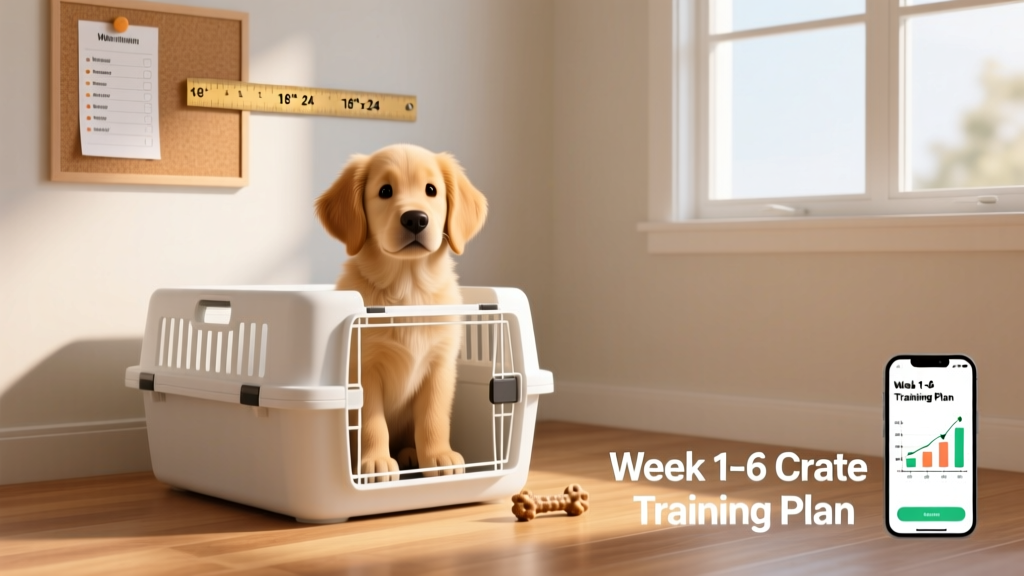
Crate training is essential for Giant Schnauzer puppies — both for house training and for preventing destructive behavior when unsupervised. This breed's intelligence and jaw strength mean an uncrated, bored puppy can cause significant damage to furniture, baseboards, and electrical cords within minutes.
Invest in a 48-inch wire crate (such as the MidWest Ultima Pro or Frisco Heavy Duty) from the start. Use the included divider panel to section off space appropriate to your puppy's current size — they should be able to stand, turn around, and lie down comfortably, but not have enough room to eliminate in one corner and sleep in another.
| Age | Maximum Crate Time (Daytime) | Overnight | Notes |
|---|---|---|---|
| 8–10 weeks | 1–1.5 hours | 3–4 hours (set alarm for potty break) | Feed meals in crate; cover with light blanket |
| 10–14 weeks | 2 hours | 4–5 hours | Begin short departures from home |
| 3–4 months | 3 hours | 5–6 hours | Add a stuffed Kong or safe chew toy |
| 5–6 months | 4 hours | 7–8 hours | Transition to overnight freedom if potty-reliable |
| 7–12 months | 4–5 hours | 8 hours or free overnight | Never exceed 5 hours crated during the day without a midday break |
Progression strategy: Weeks 1–2, feed all meals in the crate with the door open. Week 3, begin closing the door during meals and for 5-minute intervals while you remain visible. Week 4, extend to 15–30 minutes with you in another room. Pair every crating session with a high-value chew (frozen Kong stuffed with peanut butter and banana, or a bully stick appropriate for the puppy's jaw size). If your Giant Schnauzer puppy whines in the crate, wait for a brief pause in vocalization before releasing — this teaches that quiet, not noise, opens the door.
Teething Timeline: Months 3–6
Giant Schnauzer puppies begin losing deciduous (baby) teeth around 12–16 weeks, with the process typically completing by 6–7 months. During this period, your puppy will experience gum soreness and an intense drive to chew on everything. This is the number one reason Giant Schnauzer puppies destroy household items between months 3 and 6.
Safe chew recommendations by stage:
- 3–4 months (incisors and canines loosening): Frozen carrot sticks, chilled rubber toys (Kong Puppy, Nylabone Puppy Chew), wet frozen washcloth twisted into a rope
- 4–5 months (premolars erupting): Benebone Wishbone (puppy formula), Whimzees Puppy chews, frozen blueberries in a Kong
- 5–6 months (molars finishing): Medium-density rubber toys (West Paw Zogoflex Hurley), digestible dental chews sized for large breeds, yak cheese chews (supervised — remove when small enough to swallow)
What to avoid: Rawhide (choking and intestinal blockage risk), cooked bones (splinter hazard), ice cubes (can fracture developing teeth), and any toy small enough to fit entirely inside your puppy's mouth. Given the Giant Schnauzer's powerful jaw — adult bite force is estimated at approximately 300+ PSI — choose toys rated for "power chewers" even during the puppy stage.
Common Giant Schnauzer Puppy Problems & Solutions
Every breed has puppyhood challenges shaped by its genetics. Giant Schnauzers were bred for independent thinking, territorial alertness, and high drive. These traits create specific behavioral patterns during puppyhood that require targeted, force-free solutions.
Puppy Biting and Nipping
Giant Schnauzer puppies are notably mouthy — more so than many breeds. Their herding and guarding heritage means they use their mouths to interact with the world. Biting hands, ankles, and clothing is normal but must be redirected consistently.
Solution: When teeth touch skin, immediately stop all interaction — stand up, cross your arms, and turn away for 10–15 seconds (negative punishment). Then redirect to an appropriate chew toy and reward enthusiastically when they chew it instead. For ankle-biting during walks, carry a tug toy and redirect before the behavior starts. Never use physical punishment, muzzle-holding, or "alpha rolls" — these damage trust and can escalate defensive biting in this sensitive, strong-willed breed.
Whining and Vocalization
Giant Schnauzers are vocal dogs. Puppy whining in the crate, when left alone, or when they want something is common. The key is distinguishing between distress whining (needs attention — may need to eliminate) and demand whining (wants something and is testing boundaries).
Solution: For demand whining, completely ignore the behavior — no eye contact, no verbal response, no physical interaction. Reward the moment silence occurs. For crate whining overnight, ensure the puppy has been exercised, has eliminated, and has a comfort item (a snuggle puppy with a heartbeat simulator works well for the first 2–3 weeks). If whining persists for more than 20–30 minutes despite meeting all needs, consult a certified positive-reinforcement trainer to rule out separation anxiety.
Destructive Chewing
A bored Giant Schnauzer puppy will dismantle baseboards, shred couch cushions, and chew through drywall. This breed needs 45–90 minutes of combined physical and mental exercise daily, even as a puppy (adjusted for joint-safe activities: short walks, sniffing sessions, puzzle toys, and training games — not forced running or jumping until growth plates close around 18–24 months).
Solution: Provide a rotation of 5–7 appropriate chew toys, swapping every 2–3 days to maintain novelty. Use puzzle feeders (Outward Hound Dog Brick, Kong Wobbler) for meals instead of a bowl to burn mental energy. Puppy-proof your home by using baby gates to restrict access to tempting rooms and applying bitter apple spray to furniture legs and cords.
First-Year Cost Breakdown
Giant Schnauzers are expensive dogs to raise, and the first year is the costliest. Here's a realistic budget based on 2025–2026 pricing from veterinary clinics, pet supply retailers, and professional service providers across the United States.
| Category | Items | Estimated Cost |
|---|---|---|
| Puppy purchase | Reputable breeder (health-tested parents, OFA hips, cardiac, thyroid) | $2,500–$4,500 |
| Veterinary care | Wellness visits (4–5), vaccines, deworming, fecal tests, heartworm prevention, spay/neuter (6–12 months) | $1,200–$2,200 |
| Food | Large-breed puppy formula (~4–6 cups/day avg), treats for training | $600–$1,000 |
| Supplies | 48" crate, bed, leash/harness set, bowls, grooming tools, puppy-proofing (gates, cord protectors), toys, enzymatic cleaner | $400–$800 |
| Grooming | Professional grooming every 6–8 weeks (coat clipping/stripping), plus at-home maintenance supplies | $500–$900 |
| Training | Puppy kindergarten class ($150–$250), basic obedience ($200–$400), possible private sessions for breed-specific reactivity ($100–$150/session) | $350–$800 |
| Preventive medications | Flea/tick (Simparica Trio, NexGard), heartworm (Heartgard Plus or Interceptor Plus) — year-round | $250–$450 |
| Pet insurance | Comprehensive plan (Trupanion, Healthy Paws, Lemonade) — monthly premiums for large breed puppy | $450–$800/year |
| Miscellaneous | Licensing, microchip (if not included by breeder), boarding/daycare, emergency fund contribution | $300–$600 |
Total estimated first-year cost: $6,550–$12,050 (excluding the puppy purchase, which adds $2,500–$4,500). Ongoing annual costs after year one typically range from $2,500–$4,500 for food, preventive care, grooming, and insurance.
When Can My Puppy Go Outside and Meet Other Dogs?
This is one of the most common questions Giant Schnauzer puppy owners ask — and the answer balances disease risk against the closing socialization window.
Before the final DHPP vaccine at 14–16 weeks, your puppy is vulnerable to parvovirus, distemper, and other potentially fatal diseases. The AVMA recommends avoiding high-risk areas (dog parks, pet store floors, areas with unknown dog traffic) until at least one week after the final puppy vaccine.
However, the socialization window closes around 14 weeks — before full vaccination is complete. The solution, supported by the American Veterinary Society of Animal Behavior (AVSAB), is controlled socialization: carry your puppy in public spaces (using a sling or backpack carrier), arrange playdates with fully vaccinated, known-healthy dogs in private yards, and attend puppy classes that require proof of at least one DHPP dose and a negative fecal test. Avoid unknown dogs, dog park fencing, and communal water bowls until the vaccine series is complete.
Frequently Asked Questions
When should I bring my Giant Schnauzer puppy home?
The ideal age is 8–10 weeks. Never accept a puppy younger than 8 weeks — early separation from the litter increases the risk of behavioral problems including bite inhibition issues, separation anxiety, and poor social skills. Some Giant Schnauzer breeders prefer to keep puppies until 10 weeks to ensure adequate socialization within the litter, which is also acceptable and often beneficial for this slower-maturing breed.
How often should I feed my puppy at each age?
Feed 3–4 meals per day from 8–12 weeks, transition to 3 meals per day from 3–4 months, and move to 2 meals per day from 5–6 months onward. Never free-feed a Giant Schnauzer puppy — measured portions and scheduled meals support controlled growth and help monitor appetite changes that could signal illness. Always feed a formula specifically designed for large-breed puppies.
How do I stop my Giant Schnauzer puppy from biting?
Use a combination of negative punishment (immediate withdrawal of attention when teeth touch skin) and redirection (offering an appropriate chew toy). Consistency from every household member is critical — if one person allows mouthing and another scolds, the puppy becomes confused and the behavior persists. Most Giant Schnauzer puppies significantly reduce mouthing by 5–6 months once adult teeth are fully in, provided they've had consistent redirection. Enroll in a puppy kindergarten class for structured bite inhibition exercises with other puppies.
What health conditions should I watch for in Giant Schnauzer puppies?
Giant Schnauzers are predisposed to several conditions you should discuss with your breeder and veterinarian: hip dysplasia (OFA screening of parents is essential), autoimmune thyroiditis, degenerative myelopathy (DM — DNA test available), and certain cancers including melanoma and squamous cell carcinoma. During puppyhood, watch for signs of developmental orthopedic disease: lameness, reluctance to jump, or "bunny-hopping" gait. These warrant prompt veterinary evaluation. Giant Schnauzers also have a higher-than-average incidence of bloat (GDV) — discuss prophylactic gastropexy with your veterinarian at the time of spay/neuter.
Are Giant Schnauzer puppies good with children?
Giant Schnauzers can be excellent family dogs, but their puppy exuberance — combined with their eventual large size — means interactions with young children must always be supervised. A 50-lb adolescent Giant Schnauzer can easily knock over a toddler during play. Teach children to respect the puppy's crate and sleep space, and teach the puppy gentle play through positive reinforcement. The breed tends to be more reserved with unfamiliar children than with family members, making early socialization with kids of various ages especially important.
Emergency resources: If your Giant Schnauzer puppy ingests a toxic substance (chocolate, xylitol, grapes/raisins, rodenticide, human medications), contact the ASPCA Animal Poison Control Center at (888) 426-4435 (24/7, consultation fee applies) or the Pet Poison Helpline at (855) 764-7661. For emergencies like bloat symptoms (distended abdomen, unproductive retching, restlessness), difficulty breathing, seizures, or collapse, go to your nearest emergency veterinary clinic immediately.
Tom Renshaw
All our authors care for dogs every day — read more of their work on the authors page.