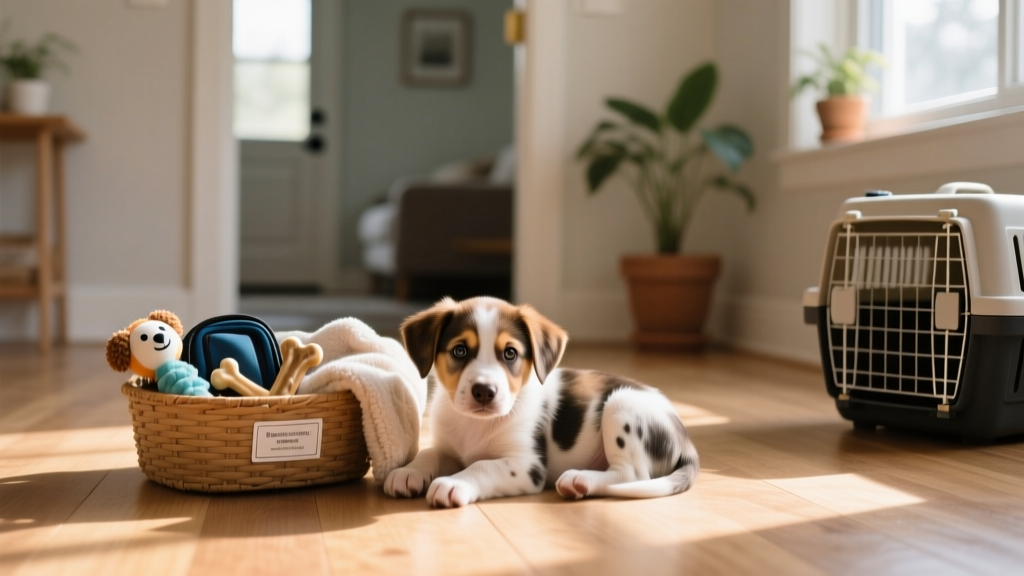
What Is the Gestation Period for Puppies? A Complete...
About is the gestation period for puppies: Learn the full 63-day canine pregnancy timeline, whelping signs, and your puppy's first 12 months of

If you're expecting a litter — or just curious about canine reproduction — the first question is usually: what is the gestation period for puppies? The short answer is approximately 63 days (9 weeks), measured from the date of ovulation. However, because sperm can survive inside the female reproductive tract for up to 7 days before fertilization, the actual calendar window from breeding to birth can range from 58 to 72 days, according to the American Kennel Club.
This guide walks you through the full arc: from the three stages of canine pregnancy, through whelping, and into your puppies' first year of life — with concrete milestones, feeding charts, vaccination schedules, and real cost data so you know exactly what to expect.
The Canine Gestation Period Explained: 63 Days, Three Trimesters
Dogs carry their litters for roughly two months. Unlike humans, canine pregnancy is divided into three trimesters of approximately 21 days each. Here's what happens at each stage:
Trimester 1 (Days 1–21): Fertilization & Implantation
- Days 1–7: Sperm travels to the oviducts; fertilization occurs. No outward signs in the dam.
- Days 8–14: Fertilized eggs move into the uterine horns. The embryos begin cell division.
- Days 15–21: Embryos implant into the uterine lining. Some dogs may show mild morning sickness (vomiting, decreased appetite) around day 21. A veterinarian can confirm pregnancy via abdominal palpation around day 28.
Trimester 2 (Days 22–42): Organ Development
- Days 22–28: Heartbeats detectable via ultrasound (~day 25). The Merck Veterinary Manual notes this is the most reliable early confirmation method.
- Days 29–35: Limb buds, eyes, and spinal cord form. The dam's nipples may enlarge and darken ("pinking up").
- Days 36–42: Skeletons begin to calcify. An X-ray can count fetal skeletons after day 45, but ultrasound is preferred earlier to avoid radiation exposure.
Trimester 3 (Days 43–63): Growth & Whelping Prep
- Days 43–49: Puppies grow rapidly; the dam's abdomen visibly enlarges. She may eat 25–50% more food. Switch her to a high-calorie puppy-formula kibble.
- Days 50–56: Puppies' coats develop. Nesting behavior begins. Set up a whelping box (minimum 4×4 feet for medium breeds).
- Days 57–63: The dam's body temperature drops below 100°F (37.8°C) within 24 hours of labor. This is your most reliable whelping predictor — take her rectal temperature twice daily starting day 57.
When Should I Bring My Puppy Home?
The consensus among veterinary behaviorists and the AVMA is that puppies should remain with their dam and littermates until 8 weeks of age (56 days). Some small or toy breeds benefit from staying until 10–12 weeks due to slower neurological development and hypoglycemia risk.
Bringing a puppy home before 8 weeks increases the likelihood of:
- Bite inhibition problems (littermates teach each other "too hard!")
- Separation anxiety and fear-based reactivity
- Difficulty with house training impulse control
If you're acquiring a puppy from a responsible breeder, expect a pickup window between 8 and 10 weeks. Reputable breeders will have already started early neurological stimulation (ENS) and initial socialization.
Puppy Age Milestones: Week-by-Week Development Timeline
Once puppies arrive, the pace of change is extraordinary. Here's what to expect at each developmental stage:
| Age Range | Physical Milestones | Behavioral Expectations | Owner Action Items |
|---|---|---|---|
| Weeks 4–8 | Eyes/ears fully functional; deciduous (baby) teeth erupt; weaning from dam's milk to gruel/kibble | Play-biting peaks; littermate social skills develop; startle responses to loud noises | Breeder handles daily; begin name recognition; introduce varied floor textures |
| Weeks 8–12 | Weight doubles from birth; coordination improves rapidly; bladder capacity ~1–2 hours | Peak socialization window opens; fear imprinting possible (avoid traumatic events); follow humans eagerly | Bring home; begin crate training; 10–15 short positive exposures per day |
| Weeks 12–16 | Adult coat begins replacing puppy fuzz; jaw strength increases; bladder capacity ~2–3 hours | Testing boundaries; may "forget" known cues; chewing intensity rises | Enroll in puppy kindergarten class; rotate chew toys; enforce consistent rules |
| Weeks 16–24 | Deciduous teeth fall out (3–6 months); adult teeth emerge; growth rate slows for large breeds | Second fear period (~16–20 weeks); increased independence; prey drive may surface | Continue socialization; avoid forcing scary encounters; begin leash manners training |
| 6–12 Months | Skeletal growth plates close (varies: small breeds ~10 mo, giant breeds ~18–24 mo); sexual maturity | Adolescent "rebellion" — known cues may be ignored; energy peaks; marking/mounting if intact | Discuss spay/neuter timing with vet; advance to intermediate training; increase structured exercise |
Feeding Schedule: Exact Portions by Age and Weight
Puppies require significantly more calories per pound than adult dogs — up to 2–3 times the adult maintenance requirement during peak growth. Below is a feeding framework based on a standard high-quality puppy kibble (approximately 400 kcal/cup). Always check your specific brand's guaranteed analysis and feeding chart, and consult your veterinarian for breed-specific guidance, especially for large and giant breeds that need controlled calcium/phosphorus ratios.
| Puppy Age | Meals Per Day | Approx. Cups/Day (Small Breed 10–20 lb adult) | Approx. Cups/Day (Medium Breed 30–50 lb adult) | Approx. Cups/Day (Large Breed 60–90 lb adult) |
|---|---|---|---|---|
| 4–6 weeks | Free-feed gruel | Transitioning from milk | Transitioning from milk | Transitioning from milk |
| 6–8 weeks | 4 meals/day | ¾ – 1 cup | 1 – 1½ cups | 1½ – 2 cups |
| 8–12 weeks | 4 meals/day | ¾ – 1 cup | 1¼ – 2 cups | 2 – 3 cups |
| 12–16 weeks | 3 meals/day | ¾ – 1¼ cups | 1½ – 2½ cups | 2½ – 4 cups |
| 16–24 weeks | 3 meals/day | 1 – 1½ cups | 2 – 3 cups | 3 – 5 cups |
| 6–12 months | 2 meals/day | 1 – 1½ cups | 2 – 3½ cups | 3½ – 5½ cups |
Key feeding rules:
- Use an AAFCO statement–labeled puppy food that specifies "growth" or "all life stages."
- Large/giant breeds (expected adult weight >70 lb / 32 kg) must eat a "large breed puppy" formula to prevent orthopedic disease from excess calcium.
- Meals should be offered at consistent times and removed after 15–20 minutes to establish routine and monitor appetite.
- Free-feeding (leaving food out all day) is not recommended past 8 weeks — it makes potty training harder and obscures early illness signs.
Vaccination Schedule: What Your Puppy Needs and When
Core vaccines protect against life-threatening diseases. The AVMA and the American Animal Hospital Association (AAHA) recommend the following puppy vaccination protocol:
| Age | Vaccine | What It Protects Against | Notes |
|---|---|---|---|
| 6–8 weeks | DHPP (1st dose) | Distemper, Hepatitis (Adenovirus-2), Parainfluenza, Parvovirus | Often given by breeder or shelter before pickup |
| 10–12 weeks | DHPP (2nd dose) + Bordetella (optional) | Same as above + Kennel Cough | Bordetella recommended if attending puppy classes or boarding |
| 14–16 weeks | DHPP (3rd dose) + Rabies | Core diseases + Rabies | Rabies is legally required in most US states; timing varies by jurisdiction |
| 12–16 months | DHPP booster + Rabies booster | All core diseases | After this, DHPP is typically given every 3 years; Rabies intervals vary by law |
Important: Puppies are NOT fully protected until approximately 5–7 days after their final DHPP dose at 14–16 weeks. Until then, avoid high-traffic dog areas (dog parks, pet store floors, unvaccinated dog playdates). Controlled socialization with known-vaccinated adult dogs in private yards is acceptable and encouraged.
Socialization Window (Weeks 3–14): The Critical Exposure Checklist
Canine behavioral research consistently shows that the primary socialization window closes around 14 weeks of age. Puppies that lack positive exposure to novel stimuli during this window are significantly more likely to develop fear-based aggression and anxiety later in life.
Here is a structured checklist to work through during weeks 8–14 (your at-home window after bringing puppy home):
The golden rule: Every new experience should be paired with high-value treats (boiled chicken, cheese, commercial training treats). If the puppy shows fear, increase distance and lower intensity — never force exposure. One traumatic event during this window can create a lifelong phobia.
Potty Training Timeline and Troubleshooting
Realistic potty training expectations save enormous frustration. Here's what the data actually shows:
Potty Training Benchmarks
- 8–12 weeks: Accidents are the norm. Bladder capacity is roughly 1 hour per month of age (a 2-month-old = ~2 hours max). Take puppy out every 1–2 hours, immediately after eating, after naps, and after play.
- 3–4 months: Noticeable improvement if you've been consistent. Most puppies can hold for 3–4 hours during the day. Nighttime stretches reach 5–6 hours.
- 4–6 months: Reliably house-trained if you've followed a schedule. Occasional accidents still happen during excitement or routine changes.
- 6–12 months: Fully reliable for most breeds. Small breeds may take longer due to smaller bladder capacity.
Troubleshooting common problems:
- Submissive urination (greeting peeing): Not a potty training failure — it's an involuntary response. Ignore the puppy for the first 60 seconds when arriving home; greet calmly at their level.
- Marking behavior (6+ months, especially intact males): Spaying/neutering reduces but doesn't always eliminate marking. Interrupt with a neutral "oops" and redirect outside; reward heavily for outdoor elimination.
- Regression after being "trained": Common at 6–10 months (adolescence). Return to 8-week-level supervision for 2 weeks. Rule out UTI with a vet visit if accidents are sudden and frequent.
- Crate soiling overnight: The crate may be too large (puppy pees in one corner, sleeps in another). Use a divider to size it so the puppy can stand, turn, and lie down — no more.
Crate Training Progression and Time Limits
A crate is a management tool and a safe den — not a punishment space. Here are age-appropriate maximum crate durations:
| Puppy Age | Max Daytime Crate Duration | Max Overnight Duration | Notes |
|---|---|---|---|
| 8–10 weeks | 1–2 hours | 3–4 hours (set alarm for potty break) | Keep crate in bedroom; cover partially for security |
| 10–14 weeks | 2–3 hours | 5–6 hours | Provide a frozen Kong or safe chew for longer stretches |
| 14–16 weeks | 3–4 hours | 6–7 hours | Begin transitioning crate to a common area if puppy is settled |
| 4–6 months | 4–5 hours | 7–8 hours | Ensure ample exercise and mental stimulation before crating |
| 6+ months | 5–6 hours | 8 hours | Consider a dog walker for midday breaks if you work full-time |
Crate training steps:
- Feed all meals inside the open crate for the first week.
- Toss high-value treats inside; let puppy enter and exit freely. Use a cue word like "crate" or "kennel."
- Close the door for 30 seconds while you sit beside it. Gradually extend to 5 minutes, then 15, then 30.
- Leave the room briefly (30 seconds → 5 minutes → 20 minutes) while puppy is calm inside.
- Never release a whining or barking puppy — wait for 3 seconds of silence before opening the door.
Teething Timeline and Relief Strategies (3–6 Months)
Puppies have 28 deciduous teeth that begin erupting around 3–4 weeks and are fully in by 8 weeks. Starting at approximately 12–16 weeks, these baby teeth loosen as 42 permanent adult teeth push through. The process typically completes by 6–7 months.
Signs of active teething:
- Increased chewing on furniture, shoes, hands
- Drooling more than usual
- Small spots of blood on chew toys (normal)
- Temporary decrease in appetite or reluctance to eat hard kibble
- Finding tiny teeth on the floor or in bedding
Safe relief strategies:
- Frozen wet washcloth: Wet a clean washcloth, twist it into a rope, freeze for 2 hours. Supervise use and discard if it starts shredding.
- Rubber chew toys: Kong Classic (stuff with peanut butter and freeze), Nylabone Puppy Chew (specifically the puppy-grade, softer formula).
- Chilled carrots: Whole carrots from the fridge offer crunch and cold relief with minimal calories.
- Rotate toys: Keep 4–5 chew options available and swap daily to maintain novelty.
Common Puppy Problems and Solutions
Puppy Biting and Nipping
Mouthing is normal developmental behavior — puppies explore the world with their mouths. It peaks between 8–16 weeks and gradually decreases with consistent training.
- Redirect: When teeth touch skin, say "oops" in a neutral tone and immediately offer an appropriate chew toy. Praise enthusiastically when they bite the toy instead.
- Time-out: If redirecting fails 3 times, calmly stand up and leave the play area for 30 seconds. This teaches "biting ends fun."
- Never use: Physical punishment, muzzle grabbing, alpha rolls, or holding the mouth shut. These damage trust and can escalate fear-based aggression.
Nighttime Whining in the Crate
Expect 3–7 nights of protest when crate training begins. Strategies:
- Place the crate next to your bed for the first 2 weeks so the puppy can hear and smell you.
- Use a heartbeat toy (Snuggle Puppy brand) or a warm water bottle wrapped in a towel.
- Take the puppy out for a boring, no-play potty break if whining persists past 30 minutes, then return directly to crate.
- White noise machines or soft classical music can mask triggering household sounds.
Destructive Chewing
Chewing peaks during teething (3–6 months) and again during adolescence (8–12 months) as jaw strength increases. Management:
- Puppy-proof one room: remove shoes, electrical cords, toxic houseplants (lilies, sago palm, pothos), and small swallowable objects.
- Provide at least 5 approved chew items of varying textures.
- Use bitter apple spray (Grannick's Bitter Apple, ~$8/bottle) on furniture legs and baseboards as a deterrent — but pair with positive chew alternatives, not as a standalone fix.
When Can My Puppy Go Outside and Meet Other Dogs?
This is one of the most common questions new owners ask, and the answer balances disease risk against the closing socialization window:
- Private yards: Safe immediately, provided no unvaccinated dogs have access to the yard.
- Carried outings: From 8 weeks, carry your puppy in a sling or your arms to experience outdoor sights and sounds without ground contact in public areas.
- Puppy classes: The AVMA supports puppy socialization classes starting at 8–10 weeks (after the first DHPP dose), provided all attending puppies are age-appropriately vaccinated and the facility is sanitized between sessions.
- Dog parks and pet stores: Avoid until 5–7 days after the final DHPP at 14–16 weeks. Parvovirus can survive in soil for over a year and is a leading killer of unvaccinated puppies.
- Playdates with known dogs: Acceptable from 8 weeks onward if the other dog is fully vaccinated, healthy, and has a known gentle temperament.
First-Year Cost Breakdown
Budgeting realistically prevents surprises. Below are 2026 estimated costs for a medium-breed puppy (30–50 lb adult) in the United States. Costs vary by region, with urban areas typically 20–40% higher.
| Category | Low Estimate | Mid-Range Estimate | High Estimate | Details |
|---|---|---|---|---|
| Puppy acquisition (breeder) | $800 | $1,800 | $3,500+ | Varies enormously by breed; adoption fees typically $100–$500 |
| Veterinary (wellness + vaccines) | $400 | $700 | $1,200 | 3 puppy visits, DHPP series, rabies, fecal tests, heartworm start |
| Spay/neuter | $200 | $500 | $900 | Varies by clinic, dog size, and whether pre-anesthetic bloodwork is included |
| Food (puppy formula, 12 months) | $300 | $550 | $900 | Based on mid-tier to premium kibble; raw diets cost significantly more |
| Supplies (crate, bed, leash, bowls, toys) | $150 | $350 | $600 | One-time purchases; include Kong, harness, enzymatic cleaner |
| Training (puppy class + basic obedience) | $100 | $300 | $800 | Group classes $100–$250 for 6 weeks; private sessions $75–$150/hour |
| Preventive medications (flea/tick, heartworm) | $150 | $300 | $500 | Monthly preventives; varies by product (NexGard, Simparica Trio, Heartgard) |
| Pet insurance (optional) | $300 | $500 | $800 | Monthly premiums $25–$65; enroll at 8 weeks for pre-existing condition coverage |
| Total Estimated First Year | $2,400 | $5,000 | $9,200+ | Excludes emergency vet visits ($1,000–$5,000+ per incident) |
Pro tip: Set aside an emergency fund of $1,000–$2,000 specifically for unexpected veterinary costs. Puppies are prone to foreign body ingestion, parasites, and orthopedic injuries. Pet insurance enrolled at 8 weeks old typically covers hereditary conditions that appear later, making early enrollment financially advantageous.
Frequently Asked Questions
How often should I feed my puppy at 10 weeks old?
At 10 weeks, feed 4 meals per day, spaced roughly 4–5 hours apart (e.g., 7 AM, 12 PM, 4 PM, 8 PM). Divide the daily portion equally across meals. Consistent timing helps regulate digestion and makes potty training more predictable, since puppies typically need to eliminate 15–30 minutes after eating.
When will my puppy be fully potty trained?
Most puppies achieve reliable house training between 4 and 6 months of age with consistent scheduling. Small breeds may take until 8–10 months due to smaller bladder capacity. "Fully trained" means fewer than 1 accident per month under normal conditions. Setbacks during adolescence (6–10 months) are normal and temporary if you maintain routine.
How do I stop puppy biting and nipping?
Use the redirect-and-timeout method: every time teeth contact skin, say a neutral marker word ("oops"), immediately offer a chew toy, and praise enthusiastically when the puppy bites the toy. If biting continues after 3 redirects, calmly end the interaction by standing up and stepping away for 30 seconds. Consistency from every household member is essential — mixed signals (letting puppy bite during play but scolding during other times) will extend the phase. Most puppies significantly reduce mouthing by 16–20 weeks.
What is the gestation period for puppies if breeding was not timed precisely?
If you don't know the exact ovulation date, the observable gestation window is 58 to 72 days from the last breeding. Sperm can remain viable for up to 7 days in the reproductive tract, and eggs remain fertile for 2–3 days after ovulation. A veterinarian can narrow the expected whelping date using ultrasound measurements (crown-rump length) performed between days 25–35, which is accurate to approximately ±2 days.
Can I bathe my 8-week-old puppy?
Yes, but keep baths brief (5 minutes), use lukewarm water (100–102°F / 38–39°C), and a puppy-specific shampoo (never human shampoo — the pH is wrong for canine skin). Avoid getting water in ears and eyes. Dry thoroughly with a towel and low-heat hair dryer. Baths before 8 weeks are generally unnecessary unless the puppy is soiled; the dam handles grooming in the litter.
Should I wake my puppy up at night to potty?
Yes, for the first 2–4 weeks home (8–12 weeks of age). Set an alarm for 4 hours after bedtime. Take the puppy out on leash to the same spot, wait up to 5 minutes, reward any elimination, and return directly to the crate with minimal interaction. As bladder capacity grows, gradually extend the interval until the puppy sleeps through the night, typically around 14–16 weeks.
Jonas Cole
All our authors care for dogs every day — read more of their work on the authors page.