German Shepherd Puppy 1 Month to 1 Year: Complete Growth & Care Guide
Complete German Shepherd puppy 1 month to 1 year guide: feeding schedules, vaccination timeline, potty training, socialization, and first-year costs.

If you're researching life with a German Shepherd puppy 1 month old or just preparing to bring one home, you're facing one of the most rewarding — and demanding — journeys in dog ownership. German Shepherds (GSDs) are intensely intelligent, physically robust, and emotionally bonded to their people. But raising one from a tiny four-week-old puppy into a confident, well-mannered adult requires precise timing, breed-specific strategies, and a lot of patience.
This guide covers every critical stage from 4 weeks through 12 months, with exact feeding portions, vaccination dates, socialization checklists, and realistic cost breakdowns. Whether you're a first-time GSD owner or adding another to your pack, you'll find actionable, veterinary-informed guidance here.
When Should You Bring a German Shepherd Puppy Home?
A German Shepherd puppy 1 month old (4 weeks) is still firmly in the care of their mother and littermates. At this age, puppies are just beginning to wobble around, sample solid food, and develop early social skills through play with siblings. Do not bring a 4-week-old puppy home.
The American Kennel Club and most veterinary behaviorists recommend waiting until 8 to 10 weeks minimum before separating a puppy from their litter. For German Shepherds specifically, many reputable breeders hold puppies until 10 to 12 weeks because:
- Weeks 5-7 are critical for bite inhibition learning from littermates
- Week 7 fear imprint period (first of two) makes environmental transitions risky
- GSDs mature slower emotionally than smaller breeds — extra littermate time builds resilience
- Responsible breeders complete first DHPP vaccine before release (typically 6-8 weeks)
If a breeder offers you a German Shepherd puppy at 4 or 5 weeks old, consider this a significant red flag. Early separation is linked to increased fear-based aggression, resource guarding, and difficulty with bite inhibition later in life.
German Shepherd Puppy Milestones: Week by Week
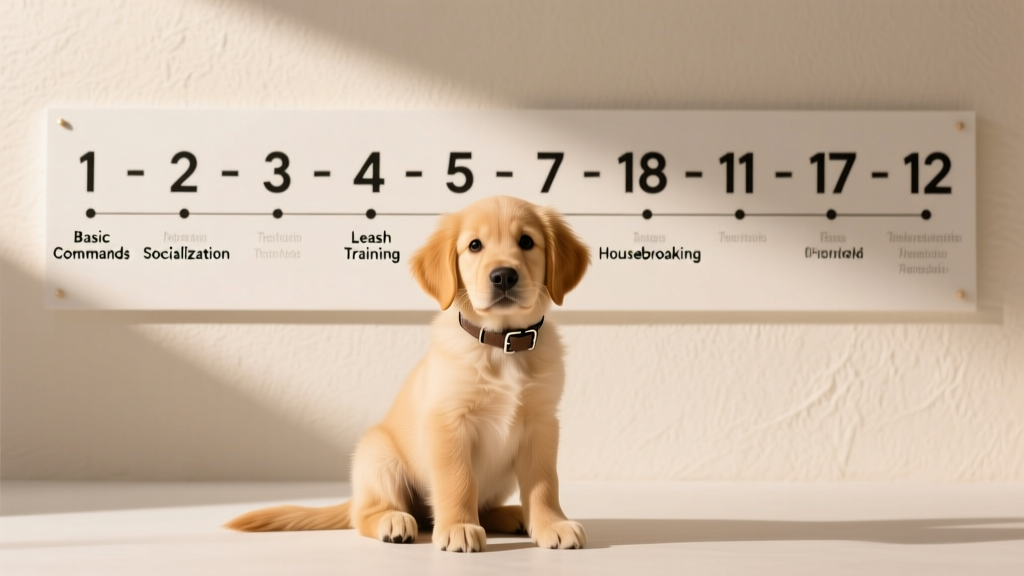
Understanding what's developmentally normal at each stage prevents panic and sets realistic expectations. Here's your breed-specific milestone timeline:
Weeks 4-8 (Still With Breeder)
- Physical: Baby teeth fully erupted, coordination improving rapidly, weight reaching 8-12 lb (3.6-5.4 kg)
- Sensory: Full vision and hearing established; startle reflexes normalizing
- Social: Littermate play teaches bite inhibition, hierarchy negotiation, and body language
- Cognitive: Beginning to learn their name, respond to food motivation, explore beyond nesting area
- Owner action: Visit the breeder 2-3 times; handle puppies daily; begin scent bonding by leaving a worn t-shirt with litter
Weeks 8-12 (Coming Home & Bonding)
- Physical: Weight 12-20 lb (5.4-9 kg); sleeping 18-20 hours/day; growth spurts cause clumsiness
- Emotional: Strong attachment forming to primary caregiver; separation anxiety may surface
- Social: Primary socialization window open — this is the most critical learning period of their life
- Cognitive: Capable of learning sit, down, name recognition, and crate entry with positive reinforcement
- Owner action: Begin crate training, establish feeding routine, schedule vet wellness exam within 48 hours of arrival
Weeks 12-16 (Building Confidence)
- Physical: Weight 25-40 lb (11-18 kg); noticeable leg lengthening; energy bursts followed by deep naps
- Fear period: Second fear imprint window (8-11 weeks may extend); avoid traumatic experiences
- Behavioral: Testing boundaries; nipping and mouthing peak; early leash walking possible in safe areas
- Owner action: Enroll in positive-reinforcement puppy class (after second DHPP); practice handling exercises for grooming/vet prep
Weeks 16-24 (Adolescence Begins)
- Physical: Weight 40-60 lb (18-27 kg); adult teeth replacing baby teeth; coat may begin transitioning from puppy fuzz
- Behavioral: "Selective hearing" emerges; previously reliable commands may be ignored; independence increases
- Social: May show wariness of strangers (normal breed trait); continued positive exposures essential
- Owner action: Maintain training consistency; increase mental stimulation (puzzle toys, scent work); discuss spay/neuter timing with vet
Months 6-12 (Young Adult Transition)
- Physical: Approaching adult height (22-26 in / 56-66 cm at shoulder); weight 55-85 lb (25-39 kg) depending on sex and line
- Mental: Still very much a puppy in impulse control; GSDs mature mentally around 2-3 years
- Behavioral: Prey drive, herding instinct, and protective tendencies may become more pronounced
- Owner action: Transition to adult food around 12 months; consider advanced obedience or sport training (agility, nose work, IGP foundations)
Feeding Schedule: Exact Portions for Your GSD Puppy
German Shepherds are large-breed dogs with specific nutritional requirements. Overfeeding or feeding the wrong calcium-to-phosphorus ratio can contribute to hip dysplasia and other orthopedic conditions. Always choose a food labeled "for large-breed puppies" that meets AAFCO growth standards.
| Age | Meals/Day | Cups/Day (Dry Kibble) | Expected Weight | Notes |
|---|---|---|---|---|
| 8-12 weeks | 4 | 1.5 - 2 cups | 12-20 lb (5.4-9 kg) | Moisten kibble slightly; feed at 7am, 11am, 3pm, 7pm |
| 3-4 months | 3 | 2 - 3 cups | 20-35 lb (9-16 kg) | Drop to 3 meals; morning, midday, early evening |
| 4-6 months | 3 | 3 - 4 cups | 35-55 lb (16-25 kg) | Monitor body condition score; ribs should be palpable |
| 6-9 months | 2 | 3.5 - 5 cups | 50-70 lb (23-32 kg) | Transition to 2 meals; avoid exercise 1 hour before/after eating (bloat risk) |
| 9-12 months | 2 | 4 - 5.5 cups | 60-85 lb (27-39 kg) | Begin transitioning to adult large-breed formula at 12 months |
Key feeding rules for GSDs: Use a slow-feeder bowl to prevent gulping. Never free-feed — measured meals allow you to catch appetite changes early (often the first sign of illness). Pick up uneaten food after 15-20 minutes. And always wait at least 60 minutes between meals and vigorous exercise to reduce gastric dilatation-volvulus (bloat) risk, a life-threatening condition GSDs are predisposed to.
Vaccination Schedule: What Your GSD Puppy Needs and When
Your veterinarian will customize a protocol based on your region and your puppy's risk factors, but the American Veterinary Medical Association recognizes these core vaccines for all puppies:
| Age | Vaccine | Type | Notes |
|---|---|---|---|
| 6-8 weeks | DHPP (1st dose) | Core | Distemper, Hepatitis (Adenovirus), Parainfluenza, Parvovirus. Often given by breeder. |
| 10-12 weeks | DHPP (2nd dose) | Core | Booster essential — maternal antibodies may interfere with first dose |
| 10-12 weeks | Bordetella (optional) | Non-core | Recommended if attending puppy classes or boarding |
| 14-16 weeks | DHPP (3rd dose) | Core | Final puppy series dose; some vets add Leptospirosis based on region |
| 14-16 weeks | Rabies | Core (legal requirement) | Required by law in most US states; timing varies by jurisdiction |
| 12-16 months | DHPP + Rabies booster | Core | 1-year booster; subsequent boosters every 1-3 years per vet guidance |
Lyme disease vaccine: If you live in the Northeast, Upper Midwest, or Pacific Northwest, ask your vet about the Lyme vaccine (non-core, given at 12+ weeks with a booster 2-4 weeks later). German Shepherds who spend time in wooded or grassy areas are at elevated tick exposure risk.
The Socialization Window: Your GSD Puppy's Critical Period (Weeks 3-14)
Here's the single most important thing to understand about raising a German Shepherd: the primary socialization window closes around 14 weeks of age. After this period, unfamiliar things trigger fear rather than curiosity. Missing this window is the number one reason GSDs develop reactivity, fear-based aggression, and anxiety disorders.
You don't need to wait until all vaccines are complete to begin socialization. The AVMA and the American Veterinary Society of Animal Behavior (AVSAB) confirm that the disease risk of controlled socialization is far lower than the behavioral risk of isolation. Carry your puppy, use a stroller, or visit low-risk environments (friends' homes, quiet parking lots) before their final DHPP.
GSD Puppy Socialization Checklist (Weeks 8-14)
People & Handling:
- ☐ Men with beards, hats, sunglasses
- ☐ Children of different ages (supervised, calm interactions)
- ☐ People using wheelchairs, crutches, or walkers
- ☐ Paw handling, ear inspection, mouth opening (daily — 30 seconds each)
- ☐ Being gently restrained (vet prep)
Environments:
- ☐ Different floor surfaces: tile, carpet, gravel, grass, metal grates
- ☐ Car rides (short, positive — end with a treat or play)
- ☐ Elevator or stairwell exposure
- ☐ Outdoor seating areas (patios, benches — observe from distance)
- ☐ Nighttime walks with streetlights and shadows
Sounds:
- ☐ Thunderstorm recordings (low volume, paired with treats)
- ☐ Vacuum cleaner, blender, doorbell
- ☐ Traffic noise, sirens at distance
- ☐ Fireworks audio (desensitization protocol)
Other Animals:
- ☐ Vaccinated, calm adult dogs (arranged playdates, not dog parks)
- ☐ Cats (controlled, leashed introductions if household has cats)
- ☐ Livestock or horses at a distance (if rural setting)
Rule of thumb: Every positive exposure should end with your puppy under threshold — curious or neutral, not panicked. If your puppy freezes, tucks their tail, or tries to flee, increase distance and use high-value treats (boiled chicken, cheese) to rebuild positive associations.
Potty Training Timeline: Realistic Expectations for Your GSD
German Shepherds are highly trainable, but "fully potty trained" is a process, not an event. Here's a realistic timeline based on bladder development and consistency of training:
| Age | Bladder Capacity | Outdoor Trips/Day | Accident Expectation | Milestone |
|---|---|---|---|---|
| 8-10 weeks | 30-45 minutes | 10-12 | Multiple daily | Learning "outside = potty" |
| 10-14 weeks | 1-1.5 hours | 8-10 | 1-3 per day | Beginning to signal (sniffing, circling) |
| 3-4 months | 2-3 hours | 6-8 | 0-2 per week | Reliable with schedule; occasional regression |
| 4-6 months | 3-4 hours | 5-6 | Rare (1-2/month) | Mostly reliable; may regress during fear periods |
| 6-9 months | 4-6 hours | 4-5 | Very rare | Considered "trained" if consistent routine maintained |
Troubleshooting common potty training setbacks:
- Submissive urination (peeing when greeted): Don't punish — it's involuntary. Greet calmly, crouch sideways, avoid direct eye contact initially.
- Excitement urination: Similar to submissive; manage by taking puppy outside immediately upon arriving home before excitement peaks.
- Regression at 4-5 months: Normal during developmental leaps. Return to more frequent trips and higher-value outdoor rewards.
- Marking behavior (6+ months, especially intact males): Discuss spay/neuter timing with your vet; interrupt and redirect to appropriate outdoor elimination.
Crate Training Progression: Building a Safe Haven
A crate is not a punishment — it's your GSD's den, a management tool for potty training, and a safety measure when you can't supervise. German Shepherds generally take well to crates because of their den-seeking instincts, but proper introduction matters.
Crate time limits by age:
- 8-10 weeks: 30-60 minutes maximum (except overnight with a potty break at 2-3 hours)
- 10-14 weeks: 1-2 hours maximum during the day
- 3-4 months: 2-3 hours maximum
- 4-6 months: 3-4 hours maximum
- 6+ months: 4-6 hours maximum (never exceed 8 hours total without a break)
Progression strategy:
- Days 1-3: Leave crate door open; feed meals inside; toss treats in for voluntary entry
- Days 4-7: Close door during meals; open immediately after eating
- Week 2: Close door for 5-10 minutes while you're in the room; reward quiet behavior
- Week 3: Briefly leave the room (1-5 minutes); return before puppy panics
- Week 4+: Gradually extend absences; always exercise puppy before crating
Crate size for a growing GSD: Purchase a 42-inch or 48-inch wire crate with a divider panel. Adjust the divider as your puppy grows — they should be able to stand, turn around, and lie down comfortably, but excess space defeats the potty training benefit. Recommended models include the MidWest iCrate (42" — approximately $65-85) or the Frisco Double Door crate (48" — approximately $75-95).
Teething Timeline and Safe Relief Strategies (3-6 Months)
German Shepherd puppies begin losing their 28 deciduous (baby) teeth around 12-16 weeks, with the process completing by approximately 6-7 months when all 42 adult teeth have erupted. During this period, chewing intensity increases dramatically.
Teething phases:
- 12-16 weeks: Incisors loosen first; you may find tiny teeth in bedding or toys
- 16-20 weeks: Canines and premolars erupt; peak chewing intensity; mild gum bleeding is normal
- 20-28 weeks: Molars come in; chewing may decrease slightly but remains significant
Safe chew options for GSD puppies:
- KONG Classic (puppy rubber, pink/blue): Fill with soaked kibble and freeze — provides 20-40 minutes of soothing activity ($12-16)
- Benebone Puppy Wishbone: Nylon chew designed for puppies under 6 months; softer than adult version ($14-18)
- Frozen washcloth: Wet a clean washcloth, twist, freeze — excellent for gum relief and nearly free
- Nylabone Puppy Chew Keys: Textured surfaces massage gums; replace when worn down ($8-12)
Avoid: Raw bones (splinter risk, bacterial contamination), antlers (too hard — can fracture developing teeth), ice cubes (some vets caution against tooth cracking), and any rope toys without supervision (ingestion of fibers can cause intestinal blockage).
Common German Shepherd Puppy Problems and Solutions
GSD puppies come with a specific set of behavioral challenges that differ from, say, a Labrador or a Chihuahua. Understanding the breed's drives helps you respond appropriately.
Puppy Biting and Nipping
This is the number one complaint from new GSD owners. German Shepherds are mouth-oriented dogs — they were bred to herd and protect using their mouths. Biting peaks between 8-16 weeks and can feel relentless.
How to stop puppy biting (force-free methods):
- Redirect: Always have a chew toy within arm's reach. When teeth touch skin, say "oops" calmly and present the toy.
- Withdraw attention: If biting continues after redirect, stand up, cross arms, and be still for 10-15 seconds. Resume play when puppy is calm.
- Time-outs: For persistent hard biting, calmly place puppy in a playpen for 30-60 seconds. This teaches "biting = fun ends."
- Satisfy the drive: Provide 2-3 structured chewing sessions daily with approved items. A tired mouth is a gentle mouth.
Never do: Hold the muzzle shut, yell, bite back, or use physical punishment. These methods increase fear and can escalate aggression — especially dangerous with a breed that will grow to 70-90 lb.
Whining and Crying (Especially at Night)
A newly separated GSD puppy will vocalize — this is normal attachment behavior, not manipulation. Strategies:
- Place crate in your bedroom for the first 2-3 weeks so puppy can hear/smell you
- Use a Snuggle Puppy (heartbeat toy — approximately $30-40) to simulate littermate comfort
- Take puppy out for a potty trip if crying persists past 15 minutes (set alarm for 2-3am)
- After potty, return to crate with minimal interaction — no play, no talking
Destructive Chewing
GSDs are high-drive working dogs. Without adequate mental stimulation, they will "employ themselves" — often by dismantling your furniture. Prevention:
- Provide 15-20 minutes of training per day (split into 3-5 minute sessions)
- Rotate toys weekly to maintain novelty
- Use food puzzles (Outward Hound Nina Ottosson puzzles — $15-30) for meals
- Supervise or confine — no unsupervised free-roaming until 12-18 months
When Can Your GSD Puppy Go Outside and Meet Other Dogs?
This question balances disease risk against socialization urgency. Here's the practical framework:
- Immediately (8 weeks): Carry puppy in your arms or a sling to experience outdoor sights, sounds, and smells. Visit friends' homes with known-vaccinated dogs.
- After 2nd DHPP (10-12 weeks): Begin short leash walks on low-traffic residential sidewalks. Attend puppy classes that require proof of vaccination.
- After final DHPP (14-16 weeks + 5-7 days): Full outdoor access — dog parks, hiking trails, pet stores. However, dog parks are still risky for young puppies due to unpredictable dog interactions.
- 6+ months: Structured playgroups or well-managed dog parks may be appropriate if your GSD has solid recall and you can read canine body language.
Avoid dog parks entirely until at least 5-6 months. A single negative encounter with an aggressive dog during the fear imprint period can create lasting reactivity. Instead, arrange controlled playdates with dogs you know are vaccinated, stable, and good with puppies.
First-Year Cost Breakdown: What to Budget
German Shepherds are large, active, intelligent dogs with above-average care costs. Here's a realistic first-year budget based on 2025-2026 US pricing:
| Category | Low Estimate | Mid Estimate | High Estimate |
|---|---|---|---|
| Puppy purchase (responsible breeder) | $1,500 | $2,500 | $4,000+ |
| Veterinary (vaccines, wellness, spay/neuter) | $600 | $900 | $1,400 |
| Food (large-breed puppy formula, 12 months) | $500 | $750 | $1,100 |
| Supplies (crate, bed, leash, bowls, toys) | $250 | $450 | $700 |
| Training (puppy class + basic obedience) | $200 | $400 | $800 |
| Pet insurance (annual premium) | $480 | $720 | $1,080 |
| Grooming (nail trims, occasional baths) | $100 | $250 | $500 |
| Flea/tick/heartworm prevention (12 months) | $200 | $350 | $500 |
| TOTAL (excluding purchase price) | $2,330 | $3,820 | $6,080 |
Important note on adoption: If you adopt a GSD puppy or young dog from a breed-specific rescue (such as a regional German Shepherd Rescue organization), the purchase cost drops to $200-$500 and typically includes initial veterinary care, spay/neuter, and microchipping. Adoption is an equally valid path to a wonderful companion.
Emergency fund recommendation: Set aside $1,000-$2,000 for unexpected veterinary costs. GSD puppies are prone to swallowing foreign objects (toys, socks, rocks) that may require surgical removal — a $2,000-$5,000 procedure. Pet insurance with accident and illness coverage is strongly recommended for this breed.
Frequently Asked Questions
How often should I feed my German Shepherd puppy at 8 weeks?
Four meals per day, spaced roughly 4 hours apart (e.g., 7am, 11am, 3pm, 7pm). Total daily amount is approximately 1.5-2 cups of large-breed puppy kibble, divided across the four meals. Adjust based on your puppy's body condition — you should feel ribs easily without pressing hard, but not see them protruding.
When will my German Shepherd puppy be fully potty trained?
Most GSDs are reliably potty trained between 4-6 months with a consistent schedule, but "fully reliable" (including overnight and during exciting events) typically takes 6-9 months. Some males may take slightly longer. Consistency — same outdoor spot, same schedule, high-value rewards — is the single biggest factor in speed of training.
How do I stop my GSD puppy from biting my hands and ankles?
Redirect to an appropriate chew toy every single time teeth touch skin. If biting persists, stand still and withdraw attention for 10-15 seconds (the "be a tree" method). For ankle-biting specifically, this is often herding instinct — redirect to a flirt pole or tug toy to satisfy the chase drive in an appropriate way. Never use physical punishment, which damages trust and can increase aggression in this sensitive breed.
What size crate do I need for a German Shepherd puppy?
Buy a 42-inch or 48-inch wire crate with an adjustable divider panel. Start with the divider creating a space just large enough for your puppy to stand, turn, and lie down. Expand the space monthly as they grow. An adult male GSD typically needs a 48-inch crate; most females fit comfortably in a 42-inch.
Should I get pet insurance for my German Shepherd puppy?
Strongly recommended. GSDs are predisposed to expensive conditions including hip dysplasia (surgical correction: $3,500-$7,000 per hip), elbow dysplasia, degenerative myelopathy, hemangiosarcoma, and bloat (emergency surgery: $3,000-$7,000). Enroll before any pre-existing conditions develop — ideally within the first month of bringing your puppy home. Providers like Trupanion, Healthy Paws, and Lemonade offer breed-specific plans starting around $40-$90/month for puppies.
Robin Maitland
All our authors care for dogs every day — read more of their work on the authors page.