German Shepherd Puppies for Adoption: Complete Puppy Care Guide
Everything you need to know about German Shepherd puppies for adoption — milestones, feeding, potty training, vaccines, and first-year costs.

Before You Adopt: Understanding the German Shepherd Puppy Commitment
Bringing home one of the German Shepherd puppies for adoption you've been searching for is a milestone moment — but this breed demands more preparation than most first-time owners anticipate. German Shepherds (GSDs) are large, intelligent, high-drive working dogs that require structured socialization, consistent training, and significant financial investment during their first year. According to the American Kennel Club breed standard, adult males reach 65–90 lb (29–41 kg) and females 50–70 lb (23–32 kg), with a lifespan of 7–10 years.
This guide covers every critical milestone from the moment you bring your GSD puppy home through their first birthday, with breed-specific timelines, portion sizes, and cost breakdowns you can actually use.
When Should I Bring My German Shepherd Puppy Home?
The ideal window for bringing a German Shepherd puppy home is 8 to 10 weeks of age. Before 8 weeks, puppies are still learning bite inhibition and canine social cues from their littermates — removing them earlier can lead to increased nipping and difficulty reading other dogs' body language later in life.
Responsible breeders and reputable rescue organizations will not release a GSD puppy before 8 weeks. Some breeders specializing in working-line German Shepherds keep puppies until 10–12 weeks to complete early neurological stimulation (ENS) protocols and initial temperament testing. If you're adopting from a rescue, puppies may come to you slightly older — this is actually an advantage, as you'll have more behavioral data and often a head start on vaccination.
- Confirm puppy has received at least one DHPP vaccine (given at 6–8 weeks)
- Request deworming records (puppies should be dewormed at 2, 4, 6, and 8 weeks)
- Obtain written health guarantee and genetic testing documentation for hips (OFA/PennHIP), elbows, and cardiac screening from the sire/dam
- Schedule your first veterinary wellness exam within 48 hours of homecoming
German Shepherd Puppy Milestones: Week-by-Week Timeline
German Shepherds develop rapidly, and missing a critical window can create behavioral gaps that take months to address. Here's what to expect at each stage:
Weeks 4–8 (Still With Breeder/Rescue)
During this period, your puppy is developing primary social bonds and learning bite inhibition from siblings. Eyes and ears are fully functional. The puppy begins transitioning from mother's milk to gruel (high-quality puppy kibble soaked in warm water or puppy milk replacer). Early neurological stimulation exercises should be underway if the breeder follows the Bio Sensor/Super Dog program.
Weeks 8–12 (Homecoming & Bonding)
This is your primary bonding window. Expect clingy behavior, nighttime whining, and frequent potty accidents. Your puppy's brain is highly receptive to new experiences — this is the peak of the primary socialization period. Fear periods typically occur around 8–10 weeks, so avoid overwhelming experiences (loud fireworks, aggressive dogs, chaotic environments). German Shepherd puppies at this age sleep 18–20 hours per day in short bursts.
Weeks 12–16 (Expanding Horizons)
Your GSD puppy is gaining coordination and confidence. Teething discomfort begins around 12–14 weeks as deciduous (baby) teeth start loosening. Command retention improves — you can begin structured training sessions of 5–10 minutes. A second fear period may occur around 14–16 weeks; watch for sudden wariness of previously familiar stimuli.
Weeks 16–24 (Adolescent Foundations)
Energy levels surge. Your puppy is now capable of 20–30 minute structured walks (follow the "5 minutes per month of age" rule for forced exercise to protect developing joints). Adult teeth are fully in by 6 months. Spay/neuter discussions typically happen with your vet during this window — many GSD breeders and orthopedic veterinarians recommend waiting until 12–18 months for large breeds to allow growth plate closure, per research published in the Journal of the American Animal Hospital Association.
Months 6–12 (Adolescence)
Expect testing of boundaries, selective hearing, and possible regression in previously learned commands. Sexual maturity brings marking behavior and potential same-sex dog reactivity. German Shepherds at this stage need 60–90 minutes of combined physical and mental exercise daily. This is the ideal time to enroll in intermediate obedience or introductory scent work classes.
Feeding Schedule: Exact Portions by Age and Weight
German Shepherd puppies are prone to rapid growth-related orthopedic issues including hip dysplasia and panosteitis. Overfeeding is a documented risk factor. Feed a large-breed puppy formula (AAFCO-approved for growth/large breed) that contains controlled calcium (1.0–1.5% on a dry matter basis) and moderate caloric density.
| Age | Expected Weight Range | Meals Per Day | Approximate Daily Amount (Large-Breed Puppy Kibble) |
|---|---|---|---|
| 8–12 weeks | 10–20 lb (4.5–9 kg) | 4 meals | 1.5–2.5 cups/day |
| 3–4 months | 20–35 lb (9–16 kg) | 3 meals | 2.5–3.5 cups/day |
| 5–6 months | 35–55 lb (16–25 kg) | 3 meals | 3.5–4.5 cups/day |
| 7–9 months | 50–70 lb (23–32 kg) | 2 meals | 4–5.5 cups/day |
| 10–12 months | 60–85 lb (27–39 kg) | 2 meals | 4.5–6 cups/day |
Important: These are starting guidelines. Adjust based on your puppy's body condition score (BCS) — you should be able to feel ribs without pressing hard, and see a visible waist when viewed from above. Consult your veterinarian for portion adjustments based on your specific puppy's growth curve. Always provide fresh water and remove uneaten food after 15–20 minutes to establish meal routines.
Socialization Window: Your GSD Puppy's Critical Weeks 3–14
The American Veterinary Society of Animal Behavior (AVSAB) identifies weeks 3–14 as the primary socialization period for puppies. For German Shepherds — a breed with strong guardian instincts and natural wariness of strangers — this window is especially critical. Inadequate socialization during this period is the leading contributor to fear-based reactivity and overprotective behavior in adult GSDs.
- People: Meet at least 15–20 different people including children, elderly individuals, people wearing hats/sunglasses/uniforms, tall men, and people using mobility aids
- Surfaces: Walk on grass, gravel, tile, wet pavement, metal grates, plastic tarps, and stairs
- Sounds: Expose to vacuum cleaners, thunderstorms (play recordings at low volume), traffic, doorbells, clapping, and dropping objects — pair each with treats
- Handling: Practice paw handling, ear inspection, mouth opening, nail trimming simulations, and collar/harness grabbing — 30 seconds daily
- Other animals: Supervised meetings with fully vaccinated, temperament-tested adult dogs; visual exposure to cats at a distance
- Environments: Car rides (short trips ending in fun, not just vet visits), outdoor seating areas, parking lots, pet-friendly stores (carry puppy until fully vaccinated)
- Novel objects: Umbrellas opening, plastic bags rustling, balloons, bicycles, skateboards — introduce at a distance and let puppy approach voluntarily
Key rule: Never force your GSD puppy to interact with something that frightens them. Use counter-conditioning — pair the scary stimulus with high-value treats (boiled chicken, cheese) at a distance where the puppy remains under threshold. Gradually decrease distance over multiple sessions.
Vaccination Schedule for German Shepherd Puppies
German Shepherd puppies follow the standard core vaccination protocol, but your vet may adjust timing based on local disease prevalence and maternal antibody levels. According to the American Veterinary Medical Association, the following schedule represents the standard protocol:
| Age | Vaccines Administered | Notes |
|---|---|---|
| 6–8 weeks | DHPP (Distemper, Hepatitis/Adenovirus, Parainfluenza, Parvovirus) — 1st dose | Often given by breeder/rescue before adoption |
| 10–12 weeks | DHPP — 2nd dose; Bordetella (optional, recommended if attending puppy classes) | Bordetella can be given intranasally or by injection |
| 14–16 weeks | DHPP — 3rd dose; Rabies (required by law in most US states) | Final DHPP dose ensures protection after maternal antibodies wane |
| 12–16 months | DHPP booster; Rabies booster; Bordetella booster (if applicable) | After this, DHPP typically given every 3 years; Rabies per local law |
Non-core vaccines to discuss with your veterinarian: Leptospirosis (recommended in areas with wildlife exposure), Lyme disease (if in tick-endemic regions), and Canine Influenza (H3N2/H3N8, if boarding or attending group events). Your vet will determine which are appropriate based on your puppy's lifestyle and regional risk factors.
Potty Training Timeline and Troubleshooting
German Shepherd puppies are generally quick learners when it comes to house training, thanks to their intelligence and desire to please. However, "quick" still means weeks, not days.
Realistic potty training timeline:
- 8–12 weeks: Accidents every 1–2 days is normal. Puppy can hold bladder approximately 1 hour per month of age (so a 2-month-old = ~2 hours max). Take outside every 30–60 minutes during active periods, immediately after meals, after naps, and after play sessions.
- 3–4 months: Accidents should decrease to 1–2 per week with consistent routine. Puppy can hold for 3–4 hours during the day.
- 4–6 months: Most GSD puppies are reliably house trained during the day with a consistent schedule. Nighttime reliability (sleeping 7–8 hours without accidents) typically solidifies during this window.
- 6–8 months: Full reliability expected. If accidents persist beyond 6 months, consult your veterinarian to rule out urinary tract infection, anatomical issues, or behavioral causes.
- Punishing accidents: Never rub your puppy's nose in it or yell. This teaches the puppy to hide when eliminating, not to eliminate outside.
- Inconsistent schedule: GSDs thrive on routine. Feed at the same times, go out at the same times, use the same door.
- Free-feeding: Scheduled meals create predictable elimination patterns. Free-feeding makes potty training significantly harder.
- Skipping the reward: Always give a high-value treat immediately after outdoor elimination. Praise alone is not enough for most GSD puppies during early training.
Teething Timeline and Safe Chew Strategies
German Shepherd puppies begin losing their 28 deciduous teeth around 12–16 weeks, with all 42 adult teeth typically erupted by 6–7 months. During this period, your puppy will chew relentlessly to relieve gum discomfort.
Teething relief timeline:
- 3–4 months: Incisors loosen first. Expect increased mouthing of hands and clothing. Offer frozen washcloths (wet, twisted, frozen) and rubber chew toys like the KONG Classic (puppy size, filled with softened kibble and frozen).
- 4–5 months: Canines and premolars erupt. This is peak destructive chewing. Puppy-proof your home — remove shoes, cords, and small objects. Provide Nylabone Puppy Chew (specifically the puppy-formula, softer texture) and Benebone Wishbone (puppy size).
- 5–7 months: Molars come in. Chewing intensity may briefly increase again. Transition from puppy chews to adult-density options like the KONG Extreme (black rubber) as baby teeth fully shed.
Safety note: Avoid rawhide, cooked bones, antlers, and hard nylon bones during teething — these can fracture developing teeth or cause intestinal blockage. If your puppy swallows a potentially dangerous object, contact the ASPCA Animal Poison Control Center at (888) 426-4435 (24/7, consultation fee applies) or your emergency veterinarian immediately.
Crate Training Progression and Time Limits
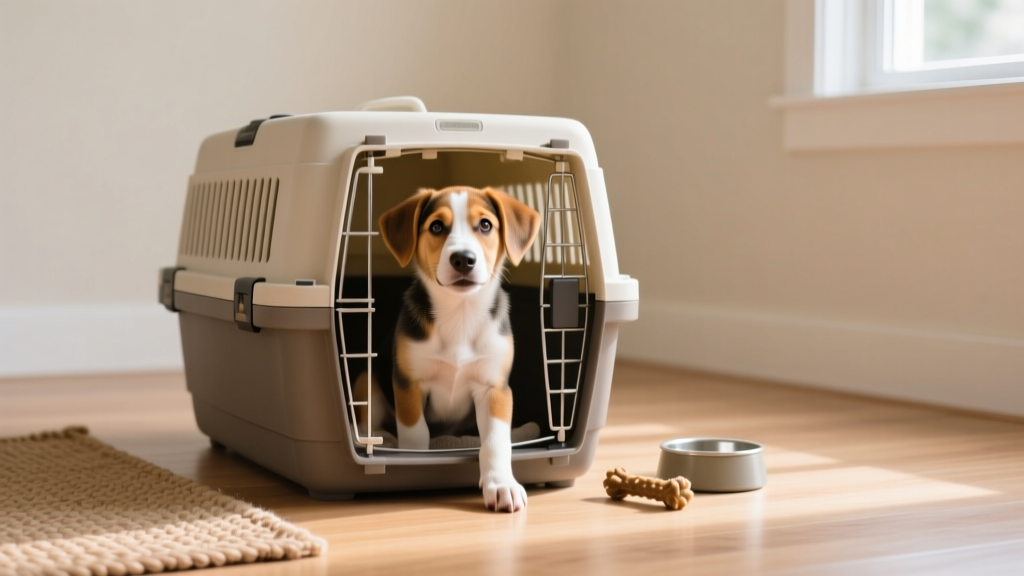
Crate training is essential for German Shepherds — it aids potty training, prevents destructive behavior during unsupervised periods, and gives your puppy a safe retreat. German Shepherds are prone to separation anxiety, and a properly conditioned crate becomes a critical coping tool.
Crate time limits by age (while awake and during the day):
- 8–10 weeks: 30–60 minutes maximum at a time
- 11–14 weeks: 1–2 hours maximum
- 3–4 months: 2–3 hours maximum
- 5–6 months: 3–4 hours maximum
- 7+ months: 4–5 hours maximum during the day
At night, puppies can typically hold for longer — add 1–2 hours to the daytime maximum. A 12-week-old GSD puppy can usually sleep 4–5 hours in the crate overnight before needing a potty break.
Crate conditioning protocol: Start by feeding all meals in the crate with the door open. Introduce a cue word ("crate" or "kennel"). Toss high-value treats inside and let puppy exit freely. Gradually close the door for 10 seconds, then 30 seconds, then 1 minute, building duration over days — not hours. Never use the crate as punishment. If your GSD puppy whines in the crate, wait for a brief moment of silence before releasing to avoid reinforcing the whining.
Common German Shepherd Puppy Problems and Solutions
Puppy Biting and Nipping
German Shepherd puppies are notoriously mouthy — this is a herding breed with strong prey drive and oral fixation. Nipping peaks between 8–16 weeks and can continue through teething if not addressed.
How to stop puppy biting: When teeth touch skin, give a calm "ouch" or yelp, then immediately redirect to an appropriate chew toy. If biting persists, implement a brief (10–15 second) timeout — stand up, cross your arms, and withdraw attention completely. Resume interaction only when puppy is calm. Consistency from every household member is essential. Never hold the puppy's mouth shut, use alpha rolls, or employ physical punishment — these methods increase fear and can escalate to defensive biting.
Excessive Whining and Vocalization
GSD puppies are vocal dogs. Whining in the crate, whining for attention, and whining during confinement are all normal. Identify the cause: need to eliminate, boredom, anxiety, or learned attention-seeking behavior. For attention whining, reward silence rather than vocalization. For anxiety whining, work on gradual desensitization to being alone (start with 30-second absences and build slowly).
Destructive Chewing
A bored German Shepherd puppy is a destructive German Shepherd puppy. Provide at least 3–5 appropriate chew options at any time, rotate them weekly to maintain novelty, and ensure your puppy receives adequate mental stimulation (food puzzles, training sessions, sniff walks) in addition to physical exercise.
First-Year Cost Breakdown for Your German Shepherd
Budgeting accurately prevents financial stress and ensures your GSD puppy receives proper care. Below are realistic 2026 cost ranges for the first year of ownership:
| Category | Estimated Cost Range | Details |
|---|---|---|
| Adoption/Rescue Fee | $150–$500 | Rescue organizations; breeder puppies range $1,500–$3,500+ |
| Veterinary (First Year) | $800–$1,500 | Wellness exams (3–4 visits), vaccines, fecal tests, heartworm prevention, spay/neuter ($300–$700 if done in year one) |
| Food (12 Months) | $600–$1,100 | Large-breed puppy formula transitioning to adult; premium brands like Purina Pro Plan, Royal Canin, or Hill's Science Diet |
| Supplies | $350–$700 | Crate ($60–$120 for 42" or 48" wire crate), bed, leash/harness, bowls, chew toys, grooming tools, baby gates |
| Training | $200–$600 | Puppy socialization class ($100–$200 for 6-week session), basic obedience ($150–$300); private sessions $75–$150/hour |
| Preventive Medications | $250–$500 | Monthly heartworm/flea/tick prevention (e.g., Simparica Trio, NexGard Plus) |
| Pet Insurance (Optional) | $500–$900 | $40–$75/month; highly recommended for GSDs due to hip/elbow dysplasia risk |
| Total First Year | $2,850–$5,800+ | Excluding emergency vet visits; add $500–$3,000 emergency fund buffer |
When Can My Puppy Go Outside and Meet Other Dogs?
This is one of the most common questions new GSD owners ask — and the answer balances disease risk against socialization urgency.
Safe outdoor access: Your puppy can explore your own yard (if private and not frequented by unknown dogs) immediately. For public spaces where unvaccinated dogs may have been, wait until 7 days after the final DHPP vaccine at 14–16 weeks — typically around 17 weeks of age.
Meeting other dogs: Your puppy can meet fully vaccinated, healthy adult dogs in controlled settings (private homes, fenced yards) starting immediately after homecoming. Avoid dog parks, pet store floors, and high-traffic dog areas until the full vaccination series is complete. Enroll in puppy socialization classes that require proof of at least the first DHPP vaccine and Bordetella — these controlled environments are considered low-risk and are strongly recommended by the American Veterinary Society of Animal Behavior.
Frequently Asked Questions
How often should I feed my German Shepherd puppy at 10 weeks old?
At 10 weeks, feed 4 meals per day, spaced approximately 4 hours apart during waking hours. A typical schedule: 7:00 AM, 11:00 AM, 3:00 PM, 7:00 PM. Remove uneaten food after 15–20 minutes to establish routine and aid potty training.
When will my German Shepherd puppy be fully potty trained?
Most German Shepherd puppies achieve reliable daytime house training between 4–6 months with a consistent schedule. Full reliability (including overnight and when left alone for several hours) typically solidifies by 6–8 months. Individual variation is normal — some GSDs may take up to 9 months, especially intact males who may begin marking behavior around 6 months.
My German Shepherd puppy bites everything — is this normal?
Yes. German Shepherds are a herding breed with strong oral tendencies. Mouthing and nipping peak between 8–16 weeks and may intensify again during teething (3–6 months). Consistent redirection to appropriate chew toys, brief timeouts for skin contact, and ensuring adequate physical and mental exercise will reduce the behavior. If biting is accompanied by growling, stiffening, or resource guarding, consult a certified positive-reinforcement trainer or veterinary behaviorist promptly.
Should I get pet insurance for my German Shepherd puppy?
Strongly recommended. German Shepherds have elevated risk for hip dysplasia (approximately 19% prevalence per the Orthopedic Foundation for Animals), elbow dysplasia, degenerative myelopathy, and gastric dilatation-volvulus (bloat). Emergency surgery for bloat alone costs $3,000–$7,000. Enroll while your puppy is young and before any conditions are documented — pre-existing conditions are excluded by all major pet insurance providers.
Anouk Beaumont
All our authors care for dogs every day — read more of their work on the authors page.