German Shepherd King Puppies: Complete Week-by-Week Care Guide
Raise healthy German Shepherd King puppies with this week-by-week guide covering feeding schedules, vaccinations, potty training, socialization, and first-year costs.

If you've just committed to bringing home one of the German Shepherd King puppies from a litter — or you're deep in the research phase trying to find the right breeder — you're about to embark on one of the most rewarding (and exhausting) journeys in dog ownership. These puppies, typically the result of pairing a German Shepherd with a Cavalier King Charles Spaniel or another "King"-named lineage, inherit a unique blend of intelligence, loyalty, and affection that demands a thoughtful, structured approach from day one.
This guide walks you through every critical milestone from weeks 4 through 12 months, with exact feeding portions, vaccination timelines, crate training progressions, and realistic cost breakdowns. Whether your German Shepherd King puppy leans more toward the GSD's working-dog drive or the Cavalier's gentle companionship, the developmental windows below apply universally.
When Should You Bring Your German Shepherd King Puppy Home?
The optimal window for bringing your puppy home is 8 to 10 weeks of age. The American Kennel Club and most veterinary behaviorists agree that puppies benefit from remaining with their littermates through at least week 8, where they learn bite inhibition, social hierarchy, and basic canine communication.
Bringing a puppy home before 7 weeks increases the risk of fear-based behavioral issues, poor bite inhibition, and separation anxiety later in life. Some responsible breeders of German Shepherd King puppies hold pups until 10-12 weeks, particularly if they've started early neurological stimulation (ENS) protocols or initial crate training — this is a positive sign, not a red flag.
Pre-Arrival Checklist
- Purchase a 42-inch wire crate (grow-into size with a divider panel) — expect $60–$90 for a quality MidWest iCrate or Frisco model
- Stock enzymatic cleaner (Nature's Miracle or Rocco & Roxie, ~$12–$18)
- Set up a confined "puppy zone" using an exercise pen ($35–$55)
- Schedule a veterinary wellness exam within 48 hours of pickup
- Buy 4–6 identical chew toys (KONG Puppy, Nylabone Puppy Chew — $8–$14 each)
Age-Specific Milestones: What to Expect Week by Week
German Shepherd King puppies develop rapidly, and knowing what's normal at each stage prevents unnecessary panic and helps you provide the right stimulation at the right time.
Weeks 4–8: The Breeder's Window
During this period, your puppy is still with the breeder. Here's what should be happening:
- Week 4: Eyes and ears fully functional; puppy begins walking steadily and exploring beyond the whelping box. Introduction to gruel (softened kibble mixed with puppy milk replacer).
- Week 5: Littermate play intensifies — this is where puppies learn that biting too hard ends the game. Early vocalizations (barking, growling during play) emerge.
- Week 6: First deworming (typically pyrantel pamoate at 2, 4, and 6 weeks). Puppy shows clear preferences for certain littermates and begins responding to human voices.
- Week 7: Fear imprint period begins (weeks 7–9). Negative experiences during this window can create lasting phobias. A good breeder introduces novel surfaces, sounds, and gentle handling.
- Week 8: Ready for transition to new home. Puppy should have had at least one deworming round and initial socialization exposure. Weight typically ranges from 10–18 lb (4.5–8 kg) depending on which parent breed dominates genetically.
Weeks 8–12: The Adjustment Period
This is your most intensive bonding and training window. Expect:
- Sleep: 18–20 hours per day. Puppies this age literally cannot stay awake for more than 1–2 hours between naps.
- Potty frequency: Every 1–2 hours during the day, plus 1–2 overnight wake-ups.
- Bite inhibition learning: Your puppy will mouth everything — hands, feet, clothing. This is normal developmental behavior, not aggression.
- Weight gain: Approximately 1–2 lb (0.5–1 kg) per week. By week 12, expect 18–28 lb (8–13 kg).
Weeks 12–16: Emerging Personality
- Teething discomfort may begin as deciduous (baby) teeth start loosening.
- Attention span increases to 5–10 minutes, making short training sessions productive.
- Secondary fear imprint period (weeks 12–14) — avoid overwhelming experiences like crowded events or aggressive dog encounters.
- Puppy begins testing boundaries; consistency in house rules becomes critical.
Weeks 16–24: The Adolescent Shift
- Adult teeth fully erupt by 6 months (42 permanent teeth).
- Energy levels surge — expect 45–60 minutes of structured exercise daily.
- Sexual maturity begins; discuss spay/neuter timing with your veterinarian (current evidence suggests waiting until 12–18 months for large-breed dogs to reduce orthopedic risk).
- Height growth accelerates — puppy may appear lanky and uncoordinated.
Months 6–12: The Teenage Phase
- Regression in previously learned commands is normal and temporary. Stay consistent.
- Chewing intensity peaks between 6–10 months as jaw strength increases and boredom tolerance decreases.
- Adult coat begins replacing puppy coat — expect significant shedding.
- By 12 months, your German Shepherd King puppy will reach approximately 70–85% of adult weight (estimated 50–80 lb / 23–36 kg depending on genetic mix).
Feeding Schedule: Exact Portions by Age and Weight
Proper nutrition during the growth phase is non-negotiable for large-breed crosses. German Shepherd King puppies need a large-breed puppy formula that meets AAFCO guidelines for growth, with controlled calcium (1.0–1.5% on a dry matter basis) and phosphorus to protect developing joints.
| Age | Meals Per Day | Approximate Daily Portion* | Expected Weight Range |
|---|---|---|---|
| 8–12 weeks | 3–4 meals | 1.5–2.5 cups/day | 10–28 lb (4.5–13 kg) |
| 3–6 months | 3 meals | 2.5–4 cups/day | 25–50 lb (11–23 kg) |
| 6–9 months | 2 meals | 3–5 cups/day | 40–65 lb (18–29 kg) |
| 9–12 months | 2 meals | 3.5–5.5 cups/day | 50–80 lb (23–36 kg) |
*Portions based on a large-breed puppy kibble providing approximately 350–400 kcal/cup (e.g., Royal Canin Giant Puppy, Purina Pro Plan Large Breed Puppy, or Hill's Science Diet Large Breed Puppy). Always adjust based on your puppy's body condition score (BCS) — you should be able to feel ribs without pressing hard, and see a visible waist when viewed from above.
How Often Should I Feed My Puppy at Each Age?
At 8–12 weeks, feed 3–4 evenly spaced meals (e.g., 7 AM, 12 PM, 5 PM, and optionally 9 PM). Drop to 3 meals at 12 weeks, then transition to 2 meals at 6 months. Never free-feed a German Shepherd King puppy — these dogs are prone to rapid eating, which increases bloat (gastric dilatation-volvulus) risk. Use a slow-feeder bowl ($10–$20) if your puppy inhales food in under 2 minutes.
Vaccination Schedule: What Your Puppy Needs and When
Your German Shepherd King puppy's immune system is immature at 8 weeks, making a structured vaccination protocol essential. The American Veterinary Medical Association recommends the following core vaccination timeline:
| Age | Vaccine | Notes |
|---|---|---|
| 6–8 weeks | DHPP (Distemper, Hepatitis, Parainfluenza, Parvovirus) — 1st dose | Often administered by breeder before pickup |
| 10–12 weeks | DHPP — 2nd dose + Bordetella (optional) | Bordetella recommended if attending puppy classes or boarding |
| 14–16 weeks | DHPP — 3rd dose + Rabies | Rabies legally required in most US states; final DHPP completes core series |
| 12–16 months | DHPP booster + Rabies booster | Subsequent boosters every 1–3 years per veterinary guidance |
Non-core vaccines to discuss with your vet: Leptospirosis (especially in areas with wildlife or standing water), Lyme disease (tick-endemic regions), and Canine Influenza (H3N2/H3N8, recommended in high-density dog areas).
Expect to pay $75–$120 per vaccine visit, with the full puppy series totaling approximately $250–$450 in the first year.
The Socialization Window: Weeks 3–14
The primary socialization period closes around 14 weeks of age. After this window, unfamiliar stimuli are more likely to trigger fear responses rather than curiosity. The Merck Veterinary Manual emphasizes that puppies who miss adequate socialization during this critical period are significantly more likely to develop fear-based aggression, anxiety disorders, and reactivity.
Since your puppy won't be fully vaccinated until 16 weeks, you must balance socialization with disease risk. Carry your puppy to novel environments, avoid dog parks, and arrange controlled playdates with known, fully-vaccinated adult dogs.
Socialization Exposure Checklist (Weeks 8–14)
✅ People: Children, elderly individuals, people wearing hats/sunglasses/masks, people of different ethnicities and heights, delivery workers, people using wheelchairs or crutches
✅ Surfaces: Gravel, grass, sand, metal grates, wet pavement, carpet, tile, wood floors, stairs (carpeted and bare)
✅ Sounds: Vacuum cleaner, thunderstorm recordings (start at low volume), doorbell, traffic, construction noise, fireworks recordings, hair dryer, blender
✅ Objects: Umbrellas opening, balloons, trash cans, bicycles, skateboards, plastic bags blowing in wind, garden hoses
✅ Handling: Nail trimming practice, ear inspection, mouth opening, paw handling, gentle restraint, being lifted and placed on a table
✅ Environments: Car rides (start with 5-minute trips), pet store parking lots, outdoor café patios, friend's houses, quiet neighborhood walks
✅ Animals: Fully-vaccinated adult dogs (controlled introductions), cats (if applicable), livestock (from a safe distance)
Rule of thumb: Aim for 5–10 positive novel experiences per day during this window. Pair every new stimulus with high-value treats (small pieces of boiled chicken or freeze-dried liver). If your puppy shows fear, increase distance from the stimulus and let them approach voluntarily — never force exposure.
Potty Training Timeline and Troubleshooting
When Will My Puppy Be Fully Potty Trained?
Realistic expectations: most German Shepherd King puppies achieve reliable house training between 4 and 6 months of age, with occasional accidents possible until 8–10 months. "Reliable" means fewer than 1–2 accidents per month when you're following a consistent schedule.
The Bladder Capacity Formula
A general guideline: puppies can hold their bladder for approximately (age in months + 1) hours during the day. So a 3-month-old puppy can hold it for roughly 4 hours maximum — but you should take them out far more frequently to prevent accidents and reinforce the habit.
| Time | Location | Result | Reward Given | Notes |
|---|---|---|---|---|
| 7:00 AM | Backyard spot | ✅ Pee + poop | Yes — chicken bit | First thing out of crate |
| 8:30 AM | Backyard spot | ✅ Pee only | Yes — kibble | After play session |
| 10:00 AM | — | ❌ Accident (kitchen) | N/A | Missed cue — increase frequency |
Common Potty Training Mistakes
- Punishing accidents: Rubbing a puppy's nose in waste or yelling creates fear of eliminating in front of you — they'll start hiding to pee, making training harder. Instead, interrupt calmly ("oops!") and carry them outside immediately.
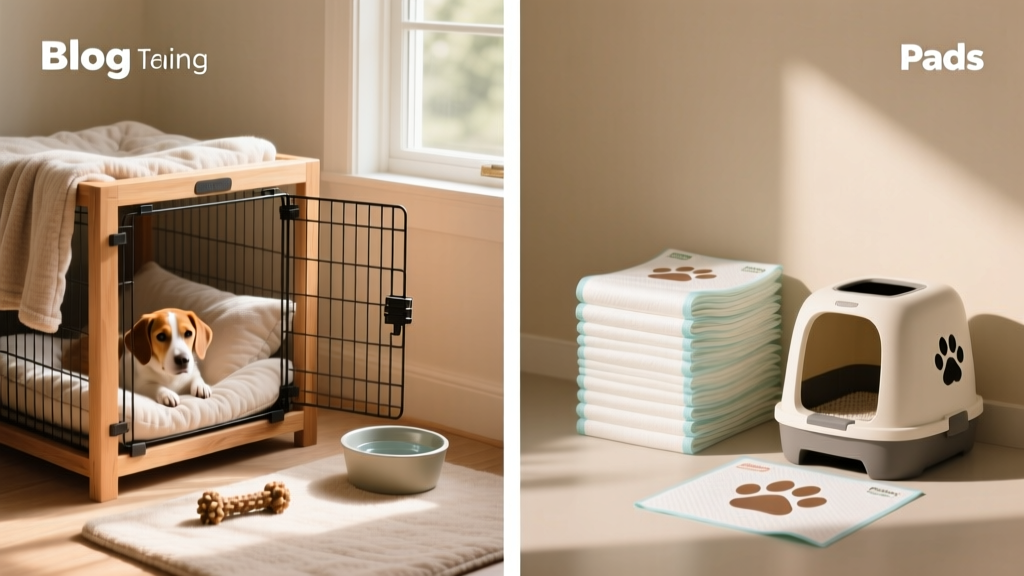
- Using pee pads long-term: Pee pads teach puppies that indoor surfaces are appropriate elimination spots. If you must use them temporarily (apartment living), transition to outdoor elimination by week 12.
- Inconsistent schedule: Take your puppy to the exact same outdoor spot every time. The scent triggers elimination. Go out within 5 minutes of: waking up, eating, drinking, playing, and after every crate session.
Crate Training Progression and Time Limits
A crate is your puppy's den — not a punishment tool. Done correctly, crate training accelerates potty training, prevents destructive chewing, and gives your puppy a safe space to decompress.
Time Limits by Age
- 8–10 weeks: 30–60 minutes maximum during the day; overnight wake-ups every 2–3 hours for potty breaks
- 10–14 weeks: 1–2 hours during the day; overnight stretches of 3–4 hours
- 3–4 months: 2–3 hours during the day; overnight stretches of 5–6 hours
- 4–6 months: 3–4 hours during the day; overnight 6–8 hours (most puppies sleep through the night by 4 months)
- 6+ months: Up to 4–5 hours during the day (with exercise before and after); overnight 8+ hours
Never crate a puppy for longer than they can hold their bladder. If you work full-time, arrange for a midday dog walker or come home during lunch. A puppy crated for 8 hours at 10 weeks old will soil the crate, learn to sit in their own waste, and develop lasting housetraining setbacks.
Crate Training Steps
- Week 1: Leave the crate door open. Feed all meals inside the crate. Toss high-value treats in and let puppy enter and exit freely.
- Week 2: Close the door during meals, then immediately open it when finished. Begin closing the door for 5-minute intervals while you sit nearby.
- Week 3: Leave the room for brief periods (2–5 minutes) while puppy is crated with a stuffed KONG. Return before puppy vocalizes.
- Week 4+: Gradually extend alone time. If puppy whines, wait for a 3-second pause in vocalization before releasing — this teaches that silence, not noise, opens the door.
Teething Timeline and Relief Strategies
German Shepherd King puppies begin losing their 28 deciduous teeth around 3–4 months of age, with all 42 adult teeth typically erupted by 6–7 months. During this window, your puppy will chew relentlessly to relieve gum pressure and loosen baby teeth.
Safe Chew Recommendations
- Frozen KONG Puppy (rubber, size-appropriate): Fill with plain yogurt mixed with peanut butter (xylitol-free) and freeze for 4+ hours. Provides 20–40 minutes of relief. $12–$16.
- Benebone Puppy Wishbone: Nylon chew infused with bacon flavor. Designed for puppies under 6 months with softer material than adult versions. $14–$18.
- Frozen carrot sticks: A low-calorie, edible option. Supervise to prevent choking on large pieces.
- Wet washcloth (frozen): Soak a clean washcloth in water, twist into a rope, and freeze. Supervise closely — discard if puppy tears off fabric pieces.
Avoid: Rawhide (choking and intestinal blockage risk), cooked bones (splinter hazard), antlers and hooves (tooth fracture risk in young dogs with softer teeth), and any chew toy small enough to swallow whole.
Common Puppy Problems and Breed-Specific Solutions
How Do I Stop Puppy Biting and Nipping?
German Shepherd King puppies are mouthy — this is a combination of the GSD's herding instinct (which involves mouth-use) and normal puppy exploration. Biting peaks between 8–16 weeks and gradually diminishes with consistent training.
The redirect method:
- When puppy teeth touch skin, say "ouch" in a calm, slightly high-pitched tone (mimics a littermate's yelp).
- Immediately withdraw attention — stand up, cross arms, look away for 10–15 seconds.
- Re-engage by offering an appropriate chew toy. Praise enthusiastically when puppy mouths the toy.
- If biting continues after 2–3 redirects, end the play session with a brief (1–2 minute) calm-down period in the crate or pen.
Never hold the puppy's mouth shut, bite back, or use alpha rolls. These methods increase fear and can escalate to defensive aggression. Positive reinforcement and consistent redirection work faster and build trust.
Excessive Whining in the Crate
Distinguish between "I need to potty" whining and "I don't want to be alone" whining. If your puppy was recently taken out and is whining, wait for a brief pause in vocalization before responding. Rewarding silence with release teaches the puppy that quiet behavior gets results.
Destructive Chewing Beyond Teething
If your German Shepherd King puppy is chewing furniture, shoes, or baseboards past 6 months, the issue is usually insufficient physical exercise, mental stimulation, or both. Solutions:
- Increase daily exercise to 45–60 minutes (split into two sessions)
- Add 10–15 minutes of daily puzzle toy work (Outward Hound Nina Ottosson puzzles, $15–$30)
- Rotate chew toys every 3–4 days to maintain novelty
- Use bitter apple spray ($8–$12) on tempting furniture edges as a deterrent, paired with redirecting to appropriate chews
When Can My Puppy Go Outside and Meet Other Dogs?
This is one of the most common questions new owners ask, and the answer requires balancing socialization urgency with disease risk.
Safe outdoor access (from 8 weeks):
- Your own fenced yard (assuming no unknown dogs have access)
- Being carried through public spaces (pet stores that allow dogs, outdoor patios)
- Controlled playdates in private yards with fully-vaccinated, known-healthy dogs
Wait until 1–2 weeks after the final DHPP vaccine (approximately 16–18 weeks) for:
- Dog parks (high parvo risk from unknown vaccination status of other dogs)
- Public sidewalks with heavy dog traffic
- Group doggy daycare facilities
- Beaches or trails where wildlife feces may be present
Puppy socialization classes (often run by veterinary clinics or training facilities that require proof of first vaccination) are generally safe from 10 weeks onward and are strongly recommended. The American Veterinary Society of Animal Behavior states that the risk of behavioral problems from inadequate socialization outweighs the disease risk in controlled class environments.
First-Year Cost Breakdown
Budgeting accurately prevents surprises. Here's a realistic first-year cost estimate for a German Shepherd King puppy in the US (2026 pricing):
| Category | Low Estimate | High Estimate | Notes |
|---|---|---|---|
| Puppy purchase price | $800 | $2,500 | Varies by breeder reputation, health testing, location |
| Veterinary care (vaccines, exams, spay/neuter) | $600 | $1,200 | Includes heartworm prevention and fecal tests |
| Food (large-breed puppy formula) | $400 | $750 | Based on $50–$70/bag, 25–30 lb bags |
| Supplies (crate, bed, bowls, leash, harness, toys) | $200 | $450 | One-time purchases plus toy replacement |
| Training (puppy class + basic obedience) | $150 | $500 | Group classes $150–$250; private sessions $50–$100/hr |
| Pet insurance (optional but recommended) | $360 | $720 | $30–$60/month; enroll at 8 weeks for lowest premiums |
| Grooming | $0 | $400 | GSD-type coat is mostly home-maintainable; Cavalier-type coat may need professional grooming |
| TOTAL FIRST YEAR | $2,510 | $6,520 | Excluding emergency veterinary care |
Emergency fund recommendation: Set aside an additional $1,000–$2,000 or maintain active pet insurance. German Shepherd crosses are susceptible to hip dysplasia, elbow dysplasia, and bloat — conditions that can require $3,000–$8,000 in surgical treatment.
Frequently Asked Questions
Are German Shepherd King puppies good with children?
Generally yes, but supervision is essential. The GSD's herding instinct may cause nipping at running children's heels, and the puppy's size (reaching 50+ lb by 6 months) can accidentally knock over toddlers. Teach children to respect the puppy's sleep and eating time, and never leave any puppy unsupervised with children under 10.
How big will my German Shepherd King puppy get?
Adult size varies significantly based on which parent breed dominates. Expect a range of 45–85 lb (20–39 kg) and 18–24 inches (46–61 cm) at the shoulder. Males typically run 10–15 lb heavier than females. Your breeder should provide parent weights to help estimate adult size.
When should I start formal training classes?
Enroll in a positive-reinforcement puppy kindergarten class at 10–12 weeks, after your puppy has received their first DHPP vaccine. Early training capitalizes on the socialization window and establishes good habits before adolescent testing begins.
My puppy is limping — should I be worried?
Intermittent limping in growing large-breed puppies can indicate panosteitis ("growing pains"), hip dysplasia, or elbow dysplasia. Any limp lasting more than 48 hours, or accompanied by swelling, reluctance to rise, or pain on palpation, warrants a veterinary examination. Early diagnosis of joint conditions significantly improves long-term outcomes.
Can I feed my puppy a raw or homemade diet?
While some owners pursue raw or homemade diets, formulating a nutritionally complete diet for a growing large-breed puppy is extremely complex. Calcium-to-phosphorus imbalance, vitamin D deficiency, and excessive protein can all cause irreversible skeletal damage. If you're committed to a non-commercial diet, consult a board-certified veterinary nutritionist (ACVN diplomate) to formulate a recipe specifically for your puppy's growth stage.
Priya Sutaria
All our authors care for dogs every day — read more of their work on the authors page.