French Bulldog Puppy: Week-by-Week Care Guide for New Owners
Complete French Bulldog puppy guide covering milestones, feeding schedules, potty training, vaccination timelines, socialization, and first-year costs for 2026.

Bringing home a French Bulldog puppy is equal parts thrilling and terrifying. Their bat ears, squishy faces, and clownish personalities make them irresistible — but their brachycephalic anatomy, stubborn streak, and sensitivity to heat mean they need a more deliberate approach than your average puppy. I've worked with dozens of Frenchie families through those chaotic first months, and the owners who thrive are the ones who come prepared with a plan.
This guide walks you through exactly what to expect from your French Bulldog puppy at every stage — from the day you bring them home through their first birthday — with breed-specific feeding amounts, vaccination timing, socialization checklists, and real cost numbers.
When to Bring Your French Bulldog Puppy Home
The American Kennel Club and most veterinary behaviorists recommend bringing puppies home between 8 and 10 weeks of age. For French Bulldogs specifically, many responsible breeders hold puppies until 10 to 12 weeks, and there are good reasons for this.
French Bulldogs are a brachycephalic breed, meaning their shortened airways make them more vulnerable to stress-related respiratory issues during transitions. An extra two to four weeks with the breeder allows the puppy to:
- Complete the critical litter-socialization period (weeks 6-8) with siblings, learning bite inhibition naturally
- Receive their first round of DHPP vaccinations (typically given at 6-8 weeks)
- Develop enough immune maturity to handle the stress of relocation
- Be evaluated for breed-specific concerns like palate elongation or nostril stenosis
Red flag: Any breeder offering a French Bulldog puppy younger than 8 weeks is cutting corners on critical developmental windows. Walk away.
French Bulldog Puppy Milestones: Week by Week
Understanding what's developmentally normal at each stage prevents unnecessary panic and helps you set realistic expectations. Here's your milestone roadmap:
Weeks 4-8 (Still With Breeder)
At this stage, your Frenchie puppy is learning canine communication from littermates. Teeth are coming in, they're starting to eat gruel or softened kibble, and their individual personalities are emerging. The breeder should be introducing novel surfaces (tile, grass, cardboard), gentle handling exercises, and beginning crate exposure with open-door naps.
Weeks 8-12 (The Adjustment Period)
This is when most French Bulldog puppies go home. Expect 3-5 days of adjustment behaviors: nighttime whining, reluctance to eat for the first 24 hours, loose stools from stress, and clingy following behavior. Your puppy sleeps 18-20 hours per day at this age — interrupted, frequent naps, not long stretches. Bladder control is minimal: expect potty breaks every 1-2 hours during the day.
Weeks 12-16 (Confidence Building)
Your Frenchie is more settled and starting to test boundaries. This is the prime window for introducing basic cues (sit, name recognition, come) using food motivation — Frenchies are notoriously food-driven, which works in your favor. Teething discomfort begins around 14-16 weeks as adult teeth start pushing through. Chewing intensity increases noticeably.
Weeks 16-24 (The Teenage Phase Begins)
Energy levels spike, attention spans fluctuate, and previously reliable cues may seem "forgotten." This is normal developmental regression, not failure. French Bulldogs are particularly prone to selective hearing during this phase. Maintain consistent training sessions (5-8 minutes, 2-3 times daily) and don't reward stubbornness with attention. Adult teeth should be fully in by 6 months — if baby teeth haven't fallen out by then, your vet may need to extract them (common in brachycephalic breeds due to crowded mouths).
Months 6-12 (Adolescence and Maturity)
Your French Bulldog puppy is approaching physical maturity but still mentally adolescent. Males may begin marking territory. Both sexes may test household rules. Spaying/neutering is typically performed between 6-9 months for Frenchies — your vet will advise based on individual development. By 12 months, most Frenchies have reached close to their adult weight (typically 16-28 lb / 7-13 kg) though they continue filling out through 18 months.
Feeding Schedule and Portions by Age
French Bulldogs are prone to both obesity and food allergies, making precise feeding non-negotiable. Free-feeding (leaving food out all day) is strongly discouraged for this breed.
| Age | Meals/Day | Total Daily Amount* | Food Type |
|---|---|---|---|
| 8-12 weeks | 4 meals | ¾ to 1 cup (split into 4) | Puppy kibble, slightly moistened |
| 3-6 months | 3 meals | 1 to 1½ cups (split into 3) | Dry puppy kibble |
| 6-12 months | 2 meals | 1¼ to 1¾ cups (split into 2) | Puppy or all-life-stages kibble |
| 12+ months | 2 meals | 1 to 1½ cups (split into 2) | Adult maintenance formula |
*Based on an expected adult weight of 20-25 lb (9-11 kg). Adjust based on your puppy's body condition score — you should be able to feel ribs without pressing hard, and see a visible waist from above. Consult your veterinarian for individualized portions.
Breed-specific feeding notes: French Bulldogs frequently develop food sensitivities, with chicken, beef, and dairy among the most common triggers. If you notice chronic ear infections, paw licking, or loose stools, discuss a limited-ingredient diet or novel protein trial (such as salmon or duck-based formulas) with your vet. Look for kibble with an AAFCO statement of nutritional adequacy for growth or all life stages.
Vaccination Schedule for Your French Bulldog Puppy
French Bulldogs have the same core vaccination needs as any breed, but their brachycephalic airways mean respiratory infections hit them harder. Staying current on the Bordetella (kennel cough) vaccine is especially important if your puppy will attend group training classes or visit groomers.
| Age | Vaccine | Notes |
|---|---|---|
| 6-8 weeks | DHPP (1st dose) | Distemper, Hepatitis, Parainfluenza, Parvovirus. Usually given by breeder. |
| 10-12 weeks | DHPP (2nd dose), Bordetella | Bordetella is intranasal or injectable; strongly recommended for Frenchies. |
| 14-16 weeks | DHPP (3rd dose), Rabies | Rabies timing varies by state law. Final DHPP ensures full parvo immunity. |
| 12-16 months | DHPP booster, Rabies booster | Then every 1-3 years depending on vaccine type and local regulations. |
Leptospirosis and Lyme vaccines may be recommended based on your geographic region and lifestyle — if you hike with your Frenchie or live in an area with standing water, discuss these with your vet. According to the AVMA's vaccination guidelines, your veterinarian will tailor the protocol to your puppy's specific risk profile.
The Socialization Window: Weeks 3-14
This is the single most important developmental window you'll navigate with your French Bulldog puppy. Research from the Merck Veterinary Manual confirms that puppies who don't receive adequate positive exposure before 14 weeks are significantly more likely to develop fear-based behavioral problems later in life. For Frenchies — a breed already prone to stubbornness and strong opinions about unfamiliar things — this window is critical.
Because your puppy won't be fully vaccinated until 16 weeks, socialization requires strategy. Avoid dog parks and high-traffic pet areas. Instead, carry your puppy or use a stroller to expose them to the world safely.
French Bulldog Puppy Socialization Checklist (Weeks 8-14)
People (aim for 5-10 new people per week):
- Men with beards, hats, sunglasses
- Children of different ages (supervised, calm interactions only)
- People in uniforms (delivery drivers, medical scrubs)
- People using mobility aids (wheelchairs, crutches, canes)
- People of different heights, body types, and skin tones
Environments:
- Car rides (short trips to pleasant destinations, not just the vet)
- Different floor surfaces: tile, hardwood, gravel, grass, metal grates
- Elevator or stairs exposure
- Outdoor seating at a quiet café (carried or in a stroller)
- Vet office visits for "happy visits" — just treats and praise, no procedures
Sounds and Objects:
- Vacuum cleaner (start at a distance, pair with treats)
- Doorbells, knocking, thunderstorm recordings at low volume
- Umbrellas opening, plastic bags rustling
- Grooming tools: nail clippers, brush, ear cleaner bottles
- Being gently restrained (preparing for vet exams and grooming)
Handling Exercises (daily, 2-3 minutes):
- Touch and treat: ears, paws, tail base, muzzle, teeth
- Gentle mouth opening (critical for Frenchies — dental care starts now)
- Being picked up and held for 10-15 seconds
- Harness and collar desensitization
The golden rule: Every new experience must be paired with something your puppy loves (treats, praise, play). If your Frenchie shows fear — flattened ears, tucked tail, refusing food — increase distance from the trigger and go slower. Never force exposure.
Potty Training Timeline and Troubleshooting
Let's be direct: French Bulldogs are not the easiest breed to house-train. Their small bladders, combined with a "what's in it for me?" attitude, mean you should expect 4 to 6 months for reliable potty habits, with some individuals taking up to 8 months. Anyone promising you'll have a fully trained Frenchie puppy in a week is setting you up for frustration.
Potty Training Log Template
Track these data points for the first 4 weeks to identify your puppy's natural patterns:
| Time | Activity | Potty? | Location | Notes |
|---|---|---|---|---|
| 7:00 AM | Wake up → outside | Yes ✓ | Backyard | Pee and poop |
| 7:15 AM | Breakfast | — | — | ¾ cup kibble |
| 7:35 AM | Outside (20 min post-meal) | Yes ✓ | Backyard | Poop — reward with treat |
After 2 weeks, you'll see clear patterns: most puppies need to go 15-30 minutes after eating, immediately after waking, and after vigorous play.
French Bulldog potty training specifics:
- Crate training accelerates house-training. Puppies instinctively avoid soiling their sleeping area. Use a crate sized for your puppy's current body with a divider panel — too large and they'll potty in one corner and sleep in the other.
- Rain and cold weather are obstacles. Frenchies notoriously refuse to potty in wet or cold conditions. Consider a covered potty area or indoor pee pad station for bad weather days. Yes, you can train pad-and-outdoor simultaneously — it won't "confuse" them if you're consistent about which surface means what.
- High-value outdoor rewards only. Reserve a special treat (small bits of freeze-dried liver or chicken) exclusively for outdoor potty success. Deliver it within 2 seconds of finishing, not after coming back inside.
Crate Training Time Limits by Age
The general rule is one hour per month of age, plus one. French Bulldogs tend to handle crating well if introduced positively, but their brachycephalic anatomy means overheating risk is real — never place the crate in direct sunlight or near heat vents.
- 8-10 weeks: Maximum 2 hours during the day, overnight wake-ups every 3-4 hours
- 3-4 months: Maximum 3-4 hours during the day, overnight 5-6 hours
- 5-6 months: Maximum 5 hours during the day, overnight 7-8 hours
- 6+ months: Maximum 6 hours during the day (no dog should be crated longer than this regularly)
Teething Timeline and Relief Strategies
French Bulldog puppies begin losing baby teeth around 3 to 4 months, with the full set of 42 adult teeth typically in place by 6 months. Because brachycephalic breeds have the same number of teeth crammed into a smaller jaw, crowding is common, and retained baby teeth (where the adult tooth erupts alongside the baby tooth rather than pushing it out) are a frequent issue requiring veterinary extraction.
Safe teething relief options:
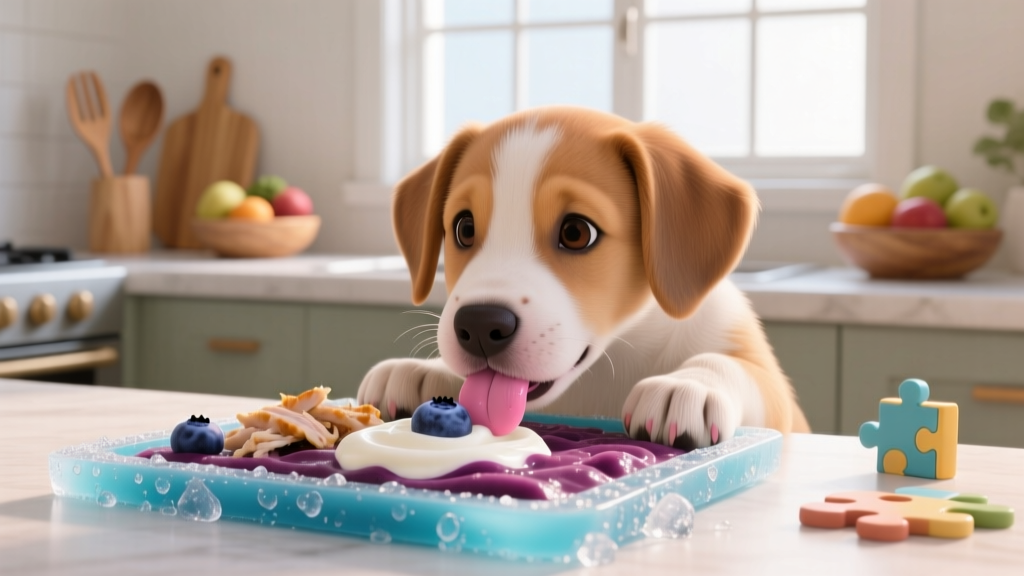
- Frozen washcloth: Wet a clean washcloth, twist into a rope, freeze for 2 hours. Supervise use and remove once pieces start tearing off.
- Kong Classic (puppy size): Fill with a mixture of plain pumpkin purée and kibble, freeze overnight. The rubber is gentle on emerging teeth.
- Benebone Puppy Wishbone: Designed for puppies under 30 lb, made from softer nylon that won't damage developing teeth. Replace once heavily worn.
- Carrot sticks (refrigerated, not frozen): Low-calorie, safe if your puppy gnaws rather than swallows whole. Supervise closely.
Avoid: Rawhide (choking and blockage risk, especially for Frenchies who tend to gulp), hard antlers or weight-bearing bones (fracture risk on puppy teeth), and any chew toy harder than your fingernail.
Vet check: At your 6-month appointment, ask your vet to evaluate for retained deciduous teeth. If baby canines or incisors haven't fallen out while adult teeth are visible beside them, extraction prevents long-term dental crowding and periodontal disease — conditions French Bulldogs are already predisposed to.
Common French Bulldog Puppy Problems and Solutions
Puppy Biting and Nipping
French Bulldog puppies are mouthy — more so than many breeds. Their play style involves a lot of jaw grabbing and mouthing, which is normal litter behavior but unwelcome in your home. Here's the approach that works:
- Redirect immediately. When teeth touch skin, say "ouch" in a calm, flat tone (not a high-pitched yelp, which can excite some puppies more). Offer a chew toy within 2 seconds.
- Withdraw attention. If redirecting fails, stand up, fold your arms, and become boring for 15-20 seconds. No eye contact, no talking. Resume interaction once the puppy has all four paws on the floor.
- Provide structured outlets. Tug games with clear rules ("drop it" cue rewarded with a treat, then tug resumes) satisfy the mouthy impulse in an acceptable way.
Never use physical punishment, muzzle-holding, or alpha rolls. These damage trust and can trigger defensive aggression. Positive reinforcement and consistent redirection resolve mouthing in most Frenchies by 5-6 months.
Nighttime Whining
Expect 3-7 nights of crate whining when you first bring your puppy home. Ensure the puppy has been exercised, has had a final potty break within 30 minutes of bedtime, and the crate is in your bedroom where they can hear and smell you. A snuggle puppy toy with a heartbeat simulator (such as the SmartPetLove Snuggle Puppy, approximately $35-45) can ease the transition. If whining continues beyond 20 minutes and you've ruled out a potty need, wait it out — responding teaches that whining works.
Destructive Chewing
Peak chewing in French Bulldogs occurs between 4-7 months, coinciding with teething and increased independence. Puppy-proof proactively: use bitter apple spray on baseboards and furniture legs, provide a rotation of 5-6 approved chew toys (rotate every 2 days to maintain novelty), and never leave a puppy unsupervised in an un-proofed room. A playpen with approved toys is the best management tool for times you can't actively watch them.
When Can Your French Bulldog Puppy Go Outside and Meet Other Dogs?
This is one of the most common questions new Frenchie owners ask, and the answer requires balancing disease risk against the socialization clock.
What's safe before full vaccination (before 16 weeks):
- Carrying your puppy in public spaces — parks, outdoor cafés, neighborhood walks in your arms or a stroller
- Meeting fully vaccinated, healthy adult dogs in controlled private settings (your home, a friend's fenced yard)
- Puppy kindergarten classes that require proof of at least the first DHPP vaccine and maintain sanitized facilities — the American Veterinary Society of Animal Behavior explicitly recommends socialization classes begin before full vaccination because the behavioral risks of undersocialization outweigh the disease risks in clean, managed environments
What to avoid until 1-2 weeks after the final DHPP (around 17-18 weeks):
- Dog parks (unvaccinated dogs, unknown health status)
- Pet store floors (high parvo contamination risk)
- Public sidewalks in areas with heavy dog traffic
- Boarding facilities without verified vaccination requirements
Heat safety note: French Bulldogs are extremely heat-sensitive. Even fully vaccinated puppies should never exercise in temperatures above 80°F (27°C). Walk during early morning or evening, always carry water, and watch for excessive panting, blue-tinged gums, or collapse — these are veterinary emergencies.
First-Year Cost Breakdown for a French Bulldog Puppy
Budgeting accurately prevents sticker shock. French Bulldogs are among the more expensive breeds to maintain due to their health predispositions. Here are realistic 2026 cost ranges based on US averages:
| Category | Estimated Range | Details |
|---|---|---|
| Purchase/Adoption | $2,000 - $5,500 | Responsible breeder range; breed-specific rescues: $300-$600 |
| Veterinary (routine) | $600 - $1,200 | 3 puppy visits, vaccines, fecal tests, deworming, spay/neuter |
| Food | $400 - $700 | Quality puppy kibble ($50-$80/bag, lasts 4-6 weeks) |
| Supplies | $300 - $600 | Crate ($60-$120), harness ($25-$50), bed, bowls, toys, gate |
| Training | $150 - $500 | Puppy kindergarten ($150-$250/6-week session), optional private sessions |
| Pet Insurance | $500 - $900/year | Higher for Frenchies due to breed risks; enroll before conditions develop |
| Emergency Fund (recommended) | $1,000 - $2,000 | Set aside for unexpected vet visits — Frenchie puppies are prone to GI issues |
Total first-year estimate: $4,950 - $11,400 depending on purchase source, insurance choice, and whether any health issues arise.
French Bulldogs are predisposed to conditions that may require attention in the first year, including cherry eye (surgical correction: $300-$800), allergies (diagnostic workup: $200-$500), and patellar luxation (evaluation and possible surgery: $1,500-$3,500). Pet insurance enrollment at 8-10 weeks, before any conditions are documented, offers the best coverage and lowest premiums.
Frequently Asked Questions
How often should I feed my French Bulldog puppy at each age?
At 8-12 weeks, feed 4 meals per day. From 3-6 months, reduce to 3 meals. From 6 months onward, feed 2 meals daily. Never free-feed a Frenchie — their food motivation and tendency toward obesity make measured portions essential. See the feeding table above for specific cup amounts based on expected adult weight.
When will my French Bulldog puppy be fully potty trained?
Most French Bulldogs achieve reliable house-training between 4 and 6 months of age, though some take up to 8 months. Consistency is the biggest variable — puppies on a fixed schedule with supervised outdoor trips and crate management train faster. If your puppy is still having frequent accidents past 6 months, rule out urinary tract infections with your vet.
How do I stop my French Bulldog puppy from biting and nipping?
Redirect every mouth-to-skin contact to an appropriate chew toy, and withdraw attention (stand still, no eye contact for 15-20 seconds) when redirecting doesn't work. Provide structured tug play as an outlet. Never use physical punishment. Most Frenchies outgrow intense mouthing by 5-6 months as adult teeth come in and they learn bite inhibition from consistent feedback.
What vaccines does my French Bulldog puppy need and when?
The core series is DHPP at 6-8 weeks, 10-12 weeks, and 14-16 weeks, plus a Rabies vaccine at 14-16 weeks. Bordetella is strongly recommended for French Bulldogs due to their respiratory vulnerability. Your vet may also recommend Leptospirosis or Lyme based on your area. See the full vaccination table above.
Can French Bulldog puppies go to dog parks?
Not until 1-2 weeks after their final DHPP vaccine, typically around 17-18 weeks of age. Even then, dog parks carry risk for Frenchies — they can be bullied by larger dogs, and their breathing limitations make rough play dangerous. Structured playdates with known, vaccinated, size-matched dogs are a safer alternative.
Is pet insurance worth it for a French Bulldog puppy?
Yes, strongly recommended. French Bulldogs consistently rank among the top breeds for insurance claims due to brachycephalic obstructive airway syndrome (BOAS), allergies, spinal issues (IVDD), and skin fold infections. Enrolling at 8-10 weeks, before any pre-existing conditions are documented, gives you the broadest coverage. Expect premiums of $45-$75/month for comprehensive plans in 2026.
Raising a French Bulldog puppy requires patience, preparation, and a willingness to work with — rather than against — the breed's unique traits. Their stubbornness is intelligence, their sensitivity is attunement, and their ridiculousness is why you chose them in the first place. Stick to the timelines, keep your vet visits current, and remember that every frustrating week is building the foundation for a well-adjusted adult dog.
Tom Renshaw
All our authors care for dogs every day — read more of their work on the authors page.