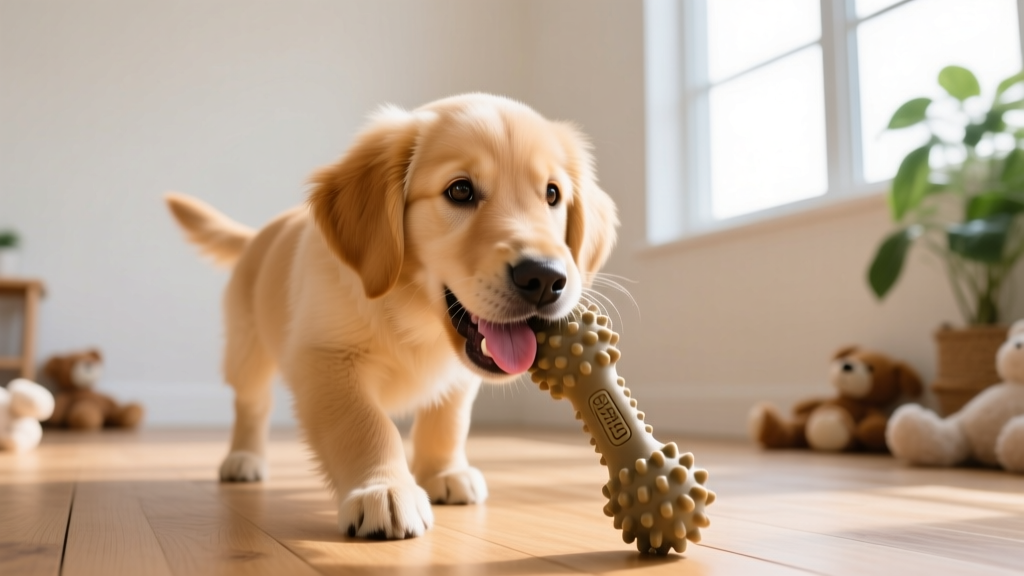
Fluffy Puppies: The Complete Puppy Care Guide for Long-Haired Breeds
Raising fluffy puppies? This breed-specific guide covers feeding, potty training, socialization, vaccines, and grooming milestones for long-haired breed pups.

If you've just brought home a fluffy puppy — whether it's a Pomeranian, Bernese Mountain Dog, Samoyed, Cocker Spaniel, or another long-coated breed — you're in for a rewarding but uniquely demanding experience. Those gorgeous coats come with specific care requirements that start from day one, and fluffy puppies hit developmental milestones with some quirks that owners of short-haired breeds don't have to navigate.
This guide gives you the exact week-by-week roadmap for raising a fluffy puppy through the first year, with concrete feeding amounts, training timelines, socialization checklists, and the grooming habits you need to establish early. All data reflects current 2026 veterinary guidance and pricing.
When Should I Bring My Fluffy Puppy Home?
The American Kennel Club recommends bringing puppies home between 8 and 12 weeks of age. For fluffy, long-coated breeds specifically, the 8-to-10-week window is ideal because:
- Socialization window is still wide open. The critical socialization period (weeks 3-14) means every day in your home counts toward building confidence.
- Coat transition begins around 12 weeks. Puppies shed their soft puppy coat and begin growing their adult double coat. Being in your home during this transition lets you establish grooming routines before matting becomes a problem.
- Bite inhibition learning peaks. Weeks 8-12 are when puppies learn how hard is too hard. Siblings and the dam teach this in the litter; after you bring them home, it's your job.
Fluffy Puppy Milestone Timeline: Birth Through 12 Months
Here's what to expect at each stage, with breed-specific notes for long-coated puppies.
Weeks 4-8: Still With the Breeder (Pre-Adoption)
- Eyes fully open; vision developing rapidly
- Deciduous (baby) teeth erupting — 28 teeth total by week 6
- Social play with littermates begins; bite inhibition foundations laid
- First deworming typically at 2, 4, and 6 weeks
- Introduction to soft/moistened puppy food around week 4
- Fluffy-specific: Puppy coat is at its softest; breeders should begin gentle handling of paws, ears, and mouth to prep for future grooming
Weeks 8-12: The Homecoming Window
- First DHPP vaccine (if not already given at 6-8 weeks)
- Weight gain of approximately 5-10% of body weight per week depending on breed size
- Crate training introduction — start with 15-20 minute sessions
- Potty training begins immediately (see timeline below)
- Fear imprint period (weeks 8-11): avoid traumatic experiences — loud noises, rough handling, forced interactions
- Fluffy-specific: Begin daily brushing with a soft slicker brush for 5 minutes. Goal is not removing tangles — it's building positive associations with grooming tools
Weeks 12-16: Building Foundations
- Second and third DHPP boosters administered
- Rabies vaccine given at 12-16 weeks (varies by state law)
- Can attend puppy socialization classes after second DHPP (confirm with your vet)
- Basic cue training: sit, name recognition, come
- Bladder control improving — can hold approximately 1 hour per month of age
- Fluffy-specific: Puppy coat transition begins around week 12-14. Expect increased shedding. Switch to a pin brush and metal greyhound comb for daily grooming sessions of 10-15 minutes
Weeks 16-24: Adolescence Approaching
- Final DHPP booster at 16 weeks or later (per AVMA guidelines)
- Spay/neuter discussion with your veterinarian — most vets recommend 6 months for small breeds, 12-18 months for large/giant fluffy breeds like Bernese Mountain Dogs
- Teething begins (see dedicated section below)
- Testing boundaries — regression in training is normal
- Fluffy-specific: Adult coat is growing in. If your breed has a double coat (Samoyed, Bernese, Pomeranian), the undercoat is developing. This is when matting risk increases dramatically if brushing is inconsistent
Months 6-12: Young Adulthood
- Adult teeth fully in by 7 months — 42 permanent teeth
- Transition from puppy food to adult food (timing varies: small breeds at 9-12 months, large breeds at 12-18 months)
- Energy levels remain high but attention span improves
- Sexual maturity — intact dogs may begin marking, roaming, or mounting behaviors
- Fluffy-specific: First professional grooming appointment recommended around 6 months. Full adult coat typically established by 12-18 months. Some breeds (Pomeranians) experience "puppy uglies" — a coat blow where the puppy coat sheds heavily and the dog looks patchy before the adult coat fills in
Feeding Schedule: Exact Portions for Fluffy Puppies
Fluffy breeds span a huge weight range — from 4-pound Pomeranians to 90-pound Bernese Mountain Dogs. Feeding amounts depend on your puppy's expected adult weight, current age, and the calorie density of your chosen food. Always choose a food with an AAFCO statement confirming it meets nutritional requirements for growth.
The table below uses a mid-range calorie kibble (~375 kcal/cup) as a baseline. Adjust based on your specific food's guaranteed analysis.
| Puppy Age | Toy Breed (5-15 lb adult) | Medium Breed (20-50 lb adult) | Large Breed (55-90 lb adult) | Meals Per Day |
|---|---|---|---|---|
| 8-12 weeks | ¼ – ⅓ cup/day | ¾ – 1 cup/day | 1½ – 2 cups/day | 4 meals |
| 3-4 months | ⅓ – ½ cup/day | 1 – 1½ cups/day | 2 – 3 cups/day | 3 meals |
| 4-6 months | ½ – ¾ cup/day | 1½ – 2¼ cups/day | 3 – 4½ cups/day | 3 meals |
| 6-9 months | ¾ – 1 cup/day | 2 – 3 cups/day | 4 – 5½ cups/day | 2 meals |
| 9-12 months | Transition to adult food | 2½ – 3½ cups/day | 4½ – 6 cups/day (still puppy food) | 2 meals |
Key feeding rules for fluffy puppies:
- Measure food with a standard 8-oz measuring cup — don't estimate by eye.
- Remove uneaten food after 15-20 minutes to prevent grazing habits.
- Toy fluffy breeds (Pomeranians, Bichons) are prone to hypoglycemia. Never skip meals in puppies under 4 months. Keep Nutri-Cal gel on hand for emergencies.
- Large fluffy breeds (Bernese, Newfoundlands) MUST eat large-breed puppy formula to control calcium/phosphorus ratios and prevent orthopedic disease.
- Treats should not exceed 10% of daily caloric intake.
Potty Training Timeline: Realistic Expectations for Fluffy Puppies
Fluffy puppies are neither harder nor easier to potty train than short-haired breeds, but toy-sized fluffy dogs (Pomeranians, Havanese, Bichon Frises) have smaller bladders and faster metabolisms, meaning more frequent outings. Here's a realistic timeline:
| Age | Bladder Hold Time | Expected Accidents Per Week | Training Focus |
|---|---|---|---|
| 8-10 weeks | 30-60 minutes | 4-8 | Establish routine: out after every meal, nap, and play session |
| 10-14 weeks | 1-2 hours | 2-5 | Verbal cue association ("go potty"), reward immediately outdoors |
| 3-4 months | 2-3 hours | 1-3 | Bell training at the door, consistent outdoor spot |
| 4-6 months | 3-4 hours | 0-2 | Reliability building, reducing indoor supervision gaps |
| 6-9 months | 4-6 hours | 0-1 | Proofing against distractions, marking prevention in intact dogs |
Troubleshooting common potty training problems:
- Puppy pees inside 10 minutes after coming back in: The bladder wasn't fully emptied. Wait outside longer, use your verbal cue, and reward only after full voiding.
- Puppy only pees on pee pads, refuses outdoors: Gradually move the pad closer to the door each day, then outside, then remove it. Alternatively, eliminate pads entirely and increase outdoor trip frequency to every 30-45 minutes.
- Regression after being "trained": Common at 4-5 months and again at 7-9 months (adolescent regression). Return to frequent outings and high-value treats. This is temporary.
Vaccination Schedule: What Your Fluffy Puppy Needs and When
Vaccine timing is not optional — it follows a specific immunological window. Maternal antibodies interfere with early vaccines, which is why boosters are given in a series. Your veterinarian will customize this based on your region and your puppy's risk factors, but here is the standard core schedule:
| Age | Vaccine | Notes |
|---|---|---|
| 6-8 weeks | DHPP (Distemper, Hepatitis, Parainfluenza, Parvovirus) — 1st dose | Often given by breeder before pickup |
| 10-12 weeks | DHPP — 2nd dose; Bordetella (optional, recommended for socialization classes) | Leptospirosis may be added based on regional risk |
| 14-16 weeks | DHPP — 3rd (final) dose; Rabies | Rabies timing varies by state law — some require 12 weeks, others 16 |
| 12-16 months | DHPP booster; Rabies booster (1-year or 3-year depending on vaccine type) | First adult wellness exam |
Non-core vaccines your vet may recommend:
- Lyme disease: If you live in or travel to tick-endemic areas (Northeast, Upper Midwest, Pacific Northwest)
- Canine influenza (H3N2/H3N8): Recommended for dogs attending daycare, boarding, or group classes
- Leptospirosis: Increasingly recommended in suburban and rural areas with wildlife exposure
Always consult your veterinarian about your puppy's specific vaccine needs. Never skip or delay core vaccines — parvovirus has a mortality rate of up to 91% in untreated puppies, according to the Merck Veterinary Manual.
The Socialization Window (Weeks 3-14): Your Fluffy Puppy's Exposure Checklist
The primary socialization window closes around 14 weeks. After this, unfamiliar stimuli are more likely to trigger fear than curiosity. For fluffy breeds — many of which are companion dogs bred to be alert and sometimes reserved with strangers (Pomeranians, Chow Chows, Shih Tzus) — this window is critical.
Fluffy Puppy Socialization Checklist:
| Category | Specific Exposures | Frequency Goal |
|---|---|---|
| People | Men with beards, children under 10, people in hats/sunglasses, wheelchair users, delivery workers, people of different ethnicities | 10+ different people |
| Surfaces | Gravel, grass, metal grates, wet pavement, carpet, tile, wobble boards | 8+ surface types |
| Sounds | Vacuum cleaner, doorbell, thunderstorm recordings (low volume), traffic, hair dryer (critical for fluffy breeds!) | Daily exposure to 2-3 sounds |
| Handling | Paw touching, ear inspection, mouth opening, tail handling, being lifted, nail clippers near paws | Daily 5-minute sessions |
| Other animals | Vaccinated adult dogs, puppies of different sizes, cats (controlled), livestock if rural | 5+ positive dog interactions |
| Environments | Car rides, pet store visits, outdoor café patios, vet clinic (happy visits only), grooming table | 3+ new locations per week |
| Grooming tools | Slicker brush, comb, nail grinder, hair dryer on cool, grooming table | Daily 3-5 minute sessions (critical for fluffy breeds) |
Teething Timeline and Relief Strategies (3-6 Months)
Puppy deciduous teeth begin falling out around 12-16 weeks, with all 42 adult teeth typically erupted by 6-7 months. During this window, your fluffy puppy will chew everything — and the discomfort makes some puppies irritable and bitey.
Teething relief recommendations:
- Frozen KONG Classic (size-appropriate): Fill with plain yogurt or pumpkin puree and freeze overnight. The cold numbs gums while the texture satisfies chewing urges.
- Wet washcloth frozen in a twist: Soak a clean washcloth in water, wring it, twist into a rope, and freeze. Supervise use — discard if fibers start coming loose.
- Benebone Wishbone or Nylabone Dura Chew: Choose the puppy-specific version (softer material). Size up — if your puppy can fit the entire toy in their mouth, it's too small and a choking risk.
- Chilled carrot sticks or apple slices (no seeds): Natural, low-calorie, and safe. Supervise to prevent choking on large pieces.
Avoid: Real bones (splinter risk), rawhide (choking and digestive blockage risk), ice cubes for toy breeds (tooth fracture risk), and any chew toy small enough to swallow whole.
Crate Training Progression and Time Limits
A crate is a management tool, not a babysitter. The general rule for maximum crate time is one hour per month of age, plus one — but this applies to daytime confinement. Overnight, puppies can typically hold longer because they're sleeping.
| Puppy Age | Max Daytime Crate Time | Overnight Expectation |
|---|---|---|
| 8-10 weeks | 30-60 minutes | 2-3 hours (expect overnight potty break) |
| 10-14 weeks | 1-2 hours | 3-4 hours |
| 3-4 months | 2-3 hours | 4-5 hours |
| 4-6 months | 3-4 hours | 6-7 hours |
| 6+ months | 4-5 hours | 7-8 hours |
Crate training steps for fluffy puppies:
- Leave the crate door open with a soft blanket and treats inside. Let the puppy explore voluntarily for 2-3 days.
- Feed all meals inside the crate with the door open, then closed for the duration of the meal.
- Begin closing the door for 5-minute intervals while you're in the room. Gradually extend to 15, then 30 minutes.
- Leave the room for short periods (1 minute, then 5, then 15). Return before the puppy panics.
- Never use the crate as punishment. It must remain a positive space.
Fluffy-specific crate note: Long-coated puppies can overheat in enclosed plastic crates, especially double-coated breeds. Use a wire crate with good airflow, and avoid heavy blankets in warm weather. A single cotton sheet draped over the top for den-like security is sufficient.
Common Fluffy Puppy Problems and Solutions
Puppy Biting and Nipping
All puppies mouth, but fluffy companion breeds (Pomeranians, Bichons, Havanese) often have persistent nipping habits that owners mistake for aggression. It's play behavior, but it needs redirection:
- When teeth touch skin, say "ouch" in a calm voice and immediately withdraw attention for 10-15 seconds (stand up, turn away).
- Redirect to an appropriate chew toy. Praise when they chew the toy.
- Ensure your puppy is getting adequate physical and mental exercise — overtired puppies bite more. Enforce nap times in the crate every 1-2 hours.
- Never hold the mouth shut, alpha roll, or use physical punishment. These methods increase fear and can create defensive aggression.
Excessive Whining in the Crate
- Distinguish between "I need to potty" whining and "I don't want to be alone" whining. If the puppy was recently out, wait 5-10 minutes before responding to avoid reinforcing the behavior.
- Cover the crate with a light sheet to reduce visual stimulation.
- Place a Snuggle Puppy (heartbeat toy) or a warm water bottle wrapped in a towel inside for comfort.
- Keep the crate in your bedroom for the first 2-3 weeks, then gradually move it to the desired permanent location.
Destructive Chewing
- Puppies explore the world with their mouths. Management is key: puppy-proof rooms by removing shoes, cords, and small objects.
- Rotate chew toys every 3-4 days to maintain novelty.
- Use bitter apple spray on furniture legs and baseboards as a deterrent — but pair this with providing attractive alternatives.
Matting and Coat Care Struggles
- Start grooming immediately upon bringing your puppy home, even if the coat doesn't need it yet. The goal is habituation.
- Use high-value treats (freeze-dried liver, small cheese pieces) during grooming sessions.
- Brush in short sessions (5-10 minutes for puppies under 4 months) and end on a positive note before the puppy becomes frustrated.
- Introduce the sound of a hair dryer on cool/low setting during week 8-10. Fluffy breeds will need regular blow-drying after baths throughout life — desensitize early.
First-Year Cost Breakdown for Fluffy Puppies
Budget realistically. Fluffy breeds often carry higher grooming costs than short-haired dogs. Below is a 2026 cost estimate for a medium-sized fluffy breed (e.g., Cocker Spaniel, Miniature American Shepherd). Adjust upward for large breeds and downward for toys.
| Category | Low Estimate | Mid Estimate | High Estimate |
|---|---|---|---|
| Puppy purchase (responsible breeder) | $1,500 | $2,500 | $5,000+ |
| Initial vet visits (vaccines, exams, fecal tests) | $400 | $600 | $900 |
| Spay/neuter | $300 | $500 | $800 |
| Food (12 months, quality puppy food) | $350 | $550 | $800 |
| Supplies (crate, bed, leash, collar, bowls, toys) | $200 | $350 | $600 |
| Grooming (professional, every 6-8 weeks for fluffy breeds) | $480 | $720 | $1,200 |
| Training (puppy class + basic obedience) | $150 | $300 | $600 |
| Preventive medications (flea/tick, heartworm — 12 months) | $200 | $350 | $500 |
| Pet insurance (annual premium) | $400 | $600 | $900 |
| Total first year | $3,980 | $6,470 | $11,300 |
Cost notes:
- Adoption from a rescue typically costs $200-$600 and often includes initial vaccines and spay/neuter, significantly reducing first-year costs.
- Emergency vet visits are not included above. A single emergency can cost $500-$5,000+. Pet insurance or an emergency fund is strongly recommended.
- Fluffy breeds with high-maintenance coats (Poodles, Doodles, Shih Tzus) may need grooming every 4-6 weeks, pushing grooming costs to $1,000-$1,500 annually.
Frequently Asked Questions
How often should I feed my puppy at 10 weeks old?
At 10 weeks, feed your fluffy puppy 4 meals per day, spaced roughly 4 hours apart during waking hours. For a medium-breed puppy, this is approximately ¼ cup per meal (1 cup total daily). Adjust based on body condition — you should be able to feel ribs without pressing hard, but not see them prominently.
How do I stop my fluffy puppy from biting my hands?
Use the "ouch and redirect" method: when teeth touch skin, say "ouch" calmly, withdraw attention for 10-15 seconds, then offer a chew toy. Consistency from all household members is essential. Most puppies significantly reduce mouthing by 5-6 months once adult teeth erupt. If biting intensifies or breaks skin after 6 months, consult a certified professional dog trainer (CPDT-KA or IAABC credentialed).
When will my fluffy puppy's coat look like an adult's?
Most fluffy breeds transition from puppy coat to adult coat between 4 and 12 months. Double-coated breeds (Samoyeds, Pomeranians, Bernese Mountain Dogs) may take up to 18-24 months for the full adult coat, including guard hairs and undercoat density. During the transition, expect increased shedding and matting risk — daily brushing is essential.
Can I bathe my fluffy puppy?
Yes, but limit full baths to once every 3-4 weeks to avoid stripping natural coat oils. Use a puppy-specific, pH-balanced shampoo (dog skin pH is 6.2-7.4, not the same as human products). Spot-clean with a damp cloth between baths. Always fully dry the coat — a damp undercoat leads to hot spots and fungal infections.
Should I get pet insurance for my fluffy puppy?
Enrolling during puppyhood (before any pre-existing conditions develop) gives you the best coverage. Popular providers like Trupanion, Healthy Paws, and Nationwide offer puppy plans starting around $30-$50/month for accident-and-illness coverage. Review exclusions carefully — some plans don't cover breed-specific conditions or hereditary issues unless you select a comprehensive tier.
Jonas Cole
All our authors care for dogs every day — read more of their work on the authors page.