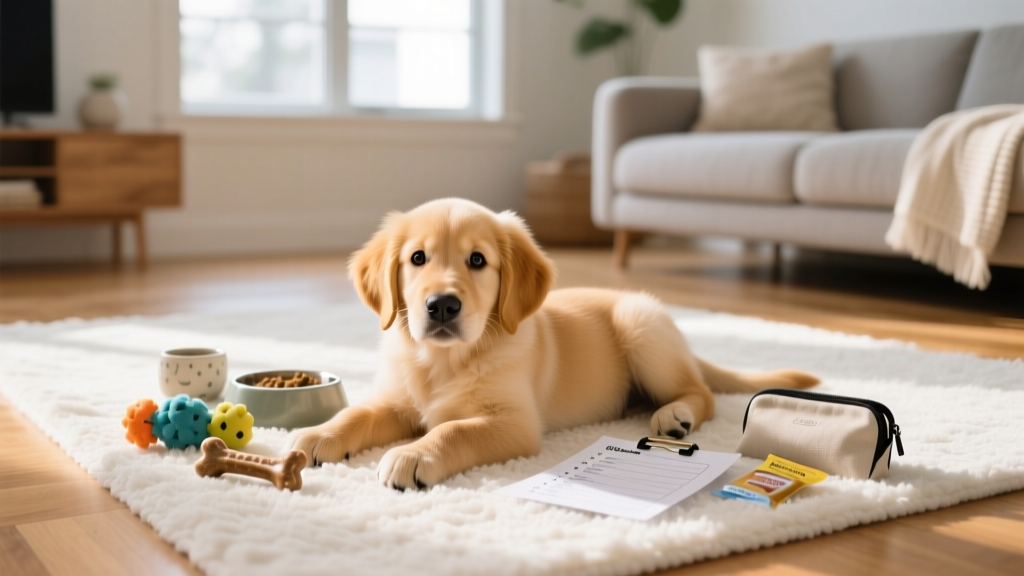
Best Female Puppy Names & Your Complete Puppy Care Guide
Discover the best female puppy name ideas for 2026 plus a complete puppy care timeline covering feeding, vaccines, potty training, and first-year costs.

Picking the Perfect Female Puppy Name (And What Comes Next)
Choosing a female puppy name is one of the first and most exciting decisions you'll make as a new dog owner. Whether you've just brought home a Golden Retriever, a French Bulldog, or a shelter mix, the name you pick will shape daily life for the next 10–15 years. But naming is only the beginning. This guide pairs a curated list of standout female puppy names with a complete, age-by-age puppy care roadmap so you're prepared for every milestone from week 4 through month 12.
- Classic & Timeless: Bella, Daisy, Lucy, Sadie, Molly, Maggie, Sophie
- Nature-Inspired: Willow, Ivy, Juniper, Hazel, Sage, Maple, Clover
- Strong & Bold: Athena, Nova, Freya, Storm, Rogue, Zelda, Harley
- Sweet & Playful: Biscuit, Peanut, Mochi, Noodle, Pixie, Dot, Waffles
- Elegant & Unique: Cleo, Odette, Calliope, Seraphina, Elowen, Isolde
- Food-Inspired: Olive, Ginger, Pepper, Cinnamon, Brie, Taffy, Churro
Tip from certified trainers: Pick a name with one or two syllables ending in a vowel sound (like "Bella" or "Willow"). Dogs respond faster to short, high-pitched names, and a vowel ending makes it easier to call out in a park without straining your voice.
Once you've settled on a name — say, Willow — the real work begins. Below is your complete timeline, built on guidance from the American Kennel Club and the American Veterinary Medical Association.
Age-Specific Milestones: What to Expect Week by Week
Weeks 4–8: The Breeder's Window
At 4 weeks, puppies begin weaning onto softened kibble and start learning bite inhibition from littermates. By 6–7 weeks, they can respond to their name with repetition. Eyes and ears are fully functional. This is when responsible breeders begin early neurological stimulation (ENS) and introduce novel textures — crinkly tarps, wobble boards, different floor surfaces. Puppies should not leave the breeder before 8 weeks minimum; many breed specialists recommend 10–12 weeks for toy and brachycephalic breeds (French Bulldogs, Chihuahuas, Pugs) due to slower developmental timelines.
Weeks 8–12: The Homecoming Phase
This is when most puppies join their new families. Expect 18–20 hours of sleep per day. Your puppy will test boundaries, mouth everything, and have limited bladder control (roughly 1 hour per month of age). Bonding and name recognition are your top priorities. Keep training sessions under 5 minutes. Introduce the crate as a positive space with meals and chews inside — never as punishment.
Weeks 12–16: Rapid Learning Window
Cognitive development accelerates. Your puppy can now learn sit, down, touch, and recall foundations. Bladder control extends to 2–3 hours. The fear imprint period (weeks 8–11) may be winding down, but a second fear period can emerge around 16 weeks. Watch for sudden skittishness toward previously familiar objects — this is normal. Respond with calm encouragement, never force exposure.
Weeks 16–24 (4–6 Months): The Teenage Transition
Teething begins in earnest around 12–16 weeks and peaks between 4–6 months. You'll find tiny baby teeth on the floor. Chewing intensity increases dramatically. This is also when puppies start testing recall reliability and may seem to "forget" commands. Consistency and high-value treats (freeze-dried liver, boiled chicken) are essential. Spay/neuter discussions with your vet typically happen during this window.
Months 6–12: Adolescent Consolidation
Physical growth slows for most breeds (giant breeds like Great Danes continue growing until 18–24 months). Hormonal changes drive roaming, marking, and selective hearing. If your puppy hasn't completed a formal group training class, now is the time — social skills with other dogs refine significantly during adolescence. Expect energy levels to remain high; structured exercise and mental enrichment (snuffle mats, frozen Kongs, scent work) prevent destructive boredom.
Feeding Schedule: Exact Portions by Age and Weight
Portion sizes vary by food brand, caloric density, and your puppy's body condition score (BCS). The table below uses a standard AAFCO-approved puppy kibble at approximately 400 kcal/cup as a baseline. Always check your specific food's feeding chart and adjust based on your vet's body condition assessment — you should be able to feel (but not prominently see) ribs, and your puppy should have a visible waist when viewed from above.
| Age | Meals Per Day | Small Breed (10–25 lb adult) | Medium Breed (25–55 lb adult) | Large Breed (55–100+ lb adult) |
|---|---|---|---|---|
| 8–12 weeks | 4 meals/day | ¼–½ cup/day total | ¾–1¼ cups/day total | 1½–2½ cups/day total |
| 3–6 months | 3 meals/day | ½–¾ cup/day total | 1¼–2 cups/day total | 2½–4 cups/day total |
| 6–12 months | 2 meals/day | ¾–1 cup/day total | 1¾–2¾ cups/day total | 3½–5½ cups/day total |
| 12+ months | 2 meals/day | Transition to adult food | Transition to adult food | Large breed adult food at 18–24 mo |
Important for large/giant breeds: Feed a food specifically labeled for large-breed puppies (calcium capped at 1.2–1.8% on a dry matter basis). Excess calcium and rapid growth increase the risk of hip dysplasia and osteochondrosis. The Merck Veterinary Manual recommends keeping large-breed puppies lean — slightly on the thin side of ideal — through the first year.
Potty Training Timeline: Realistic Expectations and Troubleshooting
Let's set realistic expectations right away: most puppies are not reliably house-trained until 4–6 months of age, and some small breeds (Chihuahuas, Yorkshire Terriers, Dachshunds) may take 8–12 months due to smaller bladders and higher metabolisms. Anyone promising "potty trained in 3 days" is selling something.
The Bladder Rule of Thumb
A puppy can hold urine for approximately 1 hour per month of age, plus 1. So a 3-month-old puppy can hold for about 4 hours maximum — but that's the absolute ceiling, not the target. Take them out far more frequently:
- 8–12 weeks: Every 30–60 minutes during waking hours, plus immediately after meals, naps, and play sessions
- 3–4 months: Every 1–2 hours
- 5–6 months: Every 2–3 hours
- 6+ months: Every 3–4 hours, building toward an adult schedule
Core Method: Positive Reinforcement Protocol
- Take your puppy to the same outdoor spot on a leash every time.
- Use a consistent cue word ("go potty," "do your business") as they begin to eliminate.
- Immediately reward with a high-value treat after they finish — not after they come back inside.
- If you catch them mid-accident indoors, interrupt calmly ("oops!") and carry them outside. Never punish — punishment creates fear of eliminating in front of you, which leads to hiding behind furniture.
- Clean accidents with an enzymatic cleaner (Nature's Miracle, Rocco & Roxie) to destroy urine proteins that attract repeat elimination.
Track these data points in a notebook or phone app:
| Time | Location | Type | Cue Used | Reward Given | Accident? |
|---|---|---|---|---|---|
| 7:00 AM | Backyard | Urine | "Go potty" | Yes — chicken | No |
| 7:45 AM | Kitchen | Urine | — | — | Yes |
Patterns emerge within 5–7 days. You'll start predicting when your puppy needs to go — that's when real training clicks.
Common Troubleshooting
- Submissive/excitement urination: Common in puppies under 6 months. Don't greet with high energy — crouch sideways, speak softly, and take them outside immediately upon arriving home.
- Regression at 4–5 months: Often coincides with teething distraction or a fear period. Return to frequent outings and higher-value rewards.
- Nighttime accidents: Set an alarm for 3–4 hours after bedtime. Gradually extend the interval by 30 minutes per week.
Socialization Window (Weeks 3–14): Your Critical Checklist
The primary socialization window — when puppies are neurologically primed to accept new experiences without fear — closes between 12 and 14 weeks of age. This is the single most important developmental period for long-term behavioral health. According to the AVMA, undersocialized puppies are significantly more likely to develop fear-based aggression, anxiety, and reactivity later in life.
The challenge: your puppy won't be fully vaccinated until 16 weeks. The solution, endorsed by the American Veterinary Society of Animal Behavior (AVSAB), is to socialize safely — avoiding high-risk areas like dog parks while maximizing controlled positive exposures.
Vaccination Schedule: What Your Puppy Needs and When
Your veterinarian will tailor this schedule to your puppy's risk profile, local disease prevalence, and breed. The following represents the standard protocol recommended by the AKC and aligned with AAHA (American Animal Hospital Association) canine vaccination guidelines.
| Age | Vaccine | Type | Notes |
|---|---|---|---|
| 6–8 weeks | DHPP (Distemper, Hepatitis/Adenovirus, Parainfluenza, Parvovirus) — 1st dose | Core | Often given by breeder or rescue before adoption |
| 8–10 weeks | DHPP — 2nd dose; Bordetella (optional) | Core + Lifestyle | Bordetella recommended if attending puppy classes or boarding |
| 10–12 weeks | DHPP — 3rd dose; Leptospirosis (optional, 1st of 2); Lyme (optional, 1st of 2) | Core + Lifestyle | Lepto and Lyme depend on geographic risk and outdoor exposure |
| 14–16 weeks | DHPP — 4th (final puppy) dose; Rabies (required by law) | Core | Final DHPP must be given at or after 16 weeks for adequate maternal antibody override |
| 16–20 weeks | Leptospirosis (2nd dose); Lyme (2nd dose) — if started | Lifestyle | 2-dose series must be completed within 2–4 weeks of first dose |
| 12–16 months | DHPP booster; Rabies booster (1-year or 3-year per local law) | Core | First annual booster is critical — then titers testing can guide future decisions |
Your puppy can explore your own yard (if no unvaccinated dogs have access) immediately. Public areas with unknown dog traffic (parks, pet stores, dog parks) should wait until 7 days after the final DHPP dose at 16 weeks. However, controlled socialization with known, fully vaccinated dogs in clean home environments is safe and encouraged from 8 weeks onward — the AVSAB explicitly states that the behavioral risk of delaying socialization outweighs the disease risk when managed properly.
Teething Timeline: Relief Strategies and Safe Chews
Puppies have 28 deciduous (baby) teeth that erupt between 3–6 weeks. These begin falling out around 12–16 weeks, replaced by 42 permanent adult teeth. The process typically completes by 6–7 months, though small breeds may retain baby teeth longer (requiring veterinary extraction).
Teething Phases
- 12–16 weeks: Incisors loosen first. You may notice increased drooling and mild gum bleeding.
- 16–20 weeks: Canines and premolars shift. Chewing intensity peaks. Your puppy will target furniture legs, shoes, and fingers.
- 5–7 months: Molars come in at the back. Some puppies eat less during this phase due to gum soreness.
Safe Chew Recommendations by Age
- 8–16 weeks: Frozen washcloth (wet, twisted, frozen), rubber teething rings (Kong Puppy, Nylabone Puppy), chilled carrot sticks
- 4–6 months: Bully sticks (supervised, remove at 2 inches), Yak cheese chews (soaked in water first to soften), Kong Classic stuffed with frozen peanut butter and kibble
- 6+ months: Benebone, West Tuff toys, antler alternatives (avoid real antlers — fracture risk for developing teeth)
Avoid: Rawhide (choking and blockage risk), cooked bones (splinter hazard), ice cubes for puppies under 4 months (tooth fracture risk on developing enamel), and any chew smaller than your puppy's mouth.
Crate Training Progression and Time Limits
A crate is your puppy's den — a safe retreat, not a storage unit. The goal is for your puppy to voluntarily choose the crate for naps by 4–5 months. Here's a progressive timeline:
| Age | Max Crate Time (Daytime) | Max Crate Time (Night) | Training Focus |
|---|---|---|---|
| 8–10 weeks | 30–60 minutes | 2–3 hours (alarm needed) | Meals in crate, door open naps, short departures |
| 10–14 weeks | 1–2 hours | 3–4 hours | Building duration with stuffed Kong, practicing calm entry/exit |
| 3–5 months | 2–3 hours | 5–6 hours | Leaving room during crating, reducing treat frequency |
| 6+ months | 4 hours max (then exercise break) | 7–8 hours | Transitioning to free roaming if reliable (many dogs aren't ready until 12–18 months) |
Whining protocol: If your puppy whines in the crate at night, first determine if it's a potty signal or an attention bid. Take them out on leash, stand still for 3–5 minutes. If they eliminate, reward and return to crate. If they don't, return to crate calmly without interaction. Consistency over 3–5 nights typically resolves nighttime whining.
Common Puppy Problems: Breed-Specific Solutions
Puppy Biting and Nipping
All puppies mouth — it's how they explore the world and relieve teething discomfort. However, bite inhibition must be taught before 16 weeks for best results. Use this protocol:
- When teeth touch skin, say "ouch" in a high-pitched yelp and immediately withdraw attention (stand up, turn away, or step behind a baby gate) for 10–15 seconds.
- Return and redirect to an appropriate chew toy.
- If biting continues with high intensity, end the play session entirely — the puppy is likely overstimulated and needs a nap (overtired puppies bite more, not less).
- Never hold the mouth shut, alpha roll, or use physical punishment. These methods increase fear and can escalate to defensive biting.
Destructive Chewing
Provide 5–7 approved chew options rotated weekly to maintain novelty. Puppy-proof by removing shoes, cables, and toxic plants (lilies, sago palm, oleander — if ingestion is suspected, call ASPCA Animal Poison Control at (888) 426-4435 immediately, 24/7, consultation fee applies). Use bitter apple spray on furniture legs as a deterrent, but pair with positive chew alternatives — deterrent alone rarely works.
Jumping on People
Teach an incompatible behavior: "sit to greet." Have visitors ignore the puppy (no eye contact, no touching) until all four paws are on the floor, then reward with attention. Consistency from every household member and visitor is critical — one person allowing jumping undoes weeks of training.
First-Year Cost Breakdown: Budgeting for Your Puppy
First-year puppy costs consistently surprise new owners. Here's a realistic breakdown based on 2026 veterinary and retail pricing across the United States. Ranges reflect geographic variation (urban areas trend 20–40% higher than rural).
| Category | Low Estimate | Medium Estimate | High Estimate | Notes |
|---|---|---|---|---|
| Veterinary (vaccines, exams, spay/neuter, fecal tests, heartworm prevention) | $600 | $1,200 | $2,500 | Spay/neuter alone ranges $200–$800 depending on size and clinic type |
| Food (puppy formula, treats, supplements) | $350 | $650 | $1,200 | Large/giant breeds and premium raw diets drive costs higher |
| Supplies (crate, bed, leash, harness, bowls, gates, toys, chews) | $250 | $500 | $900 | Invest in a quality crate ($60–$120) and adjustable harness ($25–$50) |
| Training (group classes, private sessions) | $150 | $400 | $1,500 | 6-week group class: $150–$300; private sessions: $80–$200/hour |
| Pet Insurance (annual premium) | $300 | $600 | $1,200 | Enroll before first vet visit to avoid pre-existing condition exclusions |
| Grooming (if applicable) | $0 | $400 | $1,200 | Short-coated breeds: $0; Poodles, Doodles, Shih Tzus: $50–$100/session every 6–8 weeks |
| Total First Year | $1,650 | $3,750 | $8,500 | Does not include purchase/adoption fee ($50–$5,000+) |
Emergency fund recommendation: Set aside an additional $500–$1,000 for unexpected veterinary visits. Puppies are prone to intestinal blockages (foreign body surgery: $2,000–$7,000), parvovirus treatment ($1,500–$5,000), and toxin ingestion. Pet insurance with a $250 deductible and 80% reimbursement typically costs $40–$80/month for puppies — a worthwhile investment given first-year unpredictability.
Frequently Asked Questions
When should I bring my puppy home?
The ideal age is 8–10 weeks for most breeds. Toy breeds (under 10 lb adult weight) and brachycephalic breeds benefit from staying with the breeder until 10–12 weeks for additional developmental stability. Never bring home a puppy under 7 weeks — early separation is linked to increased separation anxiety, fear aggression, and poor bite inhibition. If adopting from a rescue, ask about the puppy's foster environment and any behavioral observations.
How often should I feed my puppy at each age?
Feed 4 meals per day from 8–12 weeks, 3 meals per day from 3–6 months, and transition to 2 meals per day at 6 months. Consistent meal timing (e.g., 7 AM, 12 PM, 5 PM, 9 PM for 4x/day) aids potty training predictability. Free-feeding (leaving food out all day) is not recommended — it makes it impossible to track appetite changes, which are an early indicator of illness.
When will my puppy be fully potty trained?
Most puppies achieve reliable house training between 4–6 months, defined as fewer than one accident per month. Small breeds often take 8–12 months. "Reliable" means they signal (go to the door, ring a bell, whine) when they need to go out. Setbacks are normal during fear periods, moves, schedule changes, and illness. If accidents suddenly increase, rule out a urinary tract infection with your vet before assuming it's a training issue.
What vaccines does my puppy need and when?
Core vaccines include DHPP (Distemper, Hepatitis, Parainfluenza, Parvovirus) given at 6–8, 10–12, and 14–16 weeks, plus Rabies at 14–16 weeks. Lifestyle vaccines — Bordetella, Leptospirosis, Lyme, and Canine Influenza — depend on your geographic area and your dog's activities. Your veterinarian will determine the appropriate protocol. Always ask for a copy of the vaccination record to keep in your files.
How do I stop puppy biting and nipping?
Use the yelp-and-withdraw method: when teeth touch skin, make a high-pitched "ouch" sound, withdraw attention for 10–15 seconds, then redirect to a chew toy. Ensure your puppy is getting adequate sleep (18–20 hours/day for young puppies) — overtired puppies bite harder and more frequently. Provide appropriate chew outlets and end play sessions that escalate. If biting breaks skin consistently past 16 weeks, consult a certified professional dog trainer (CPDT-KA or IAABC-certified) for personalized guidance. Never use physical punishment, which increases aggression risk.
When can my puppy go outside and meet other dogs?
Your puppy can explore your private yard immediately. Controlled playdates with known, fully vaccinated dogs are safe from 8 weeks onward and critical for socialization. Avoid high-traffic public areas (dog parks, pet store floors, public trails with heavy dog traffic) until 7 days after the final DHPP vaccine at 16 weeks. Carry your puppy in a sling or backpack for outdoor exposure to new sights and sounds during the pre-vaccination window — socialization doesn't require four paws on public ground.
This guide is for informational purposes and does not replace professional veterinary advice. Always consult your veterinarian for decisions regarding your puppy's health, vaccination protocol, nutrition, and spay/neuter timing. Individual puppies may have unique needs based on breed, health status, and environment.
Aaron Whyte
All our authors care for dogs every day — read more of their work on the authors page.