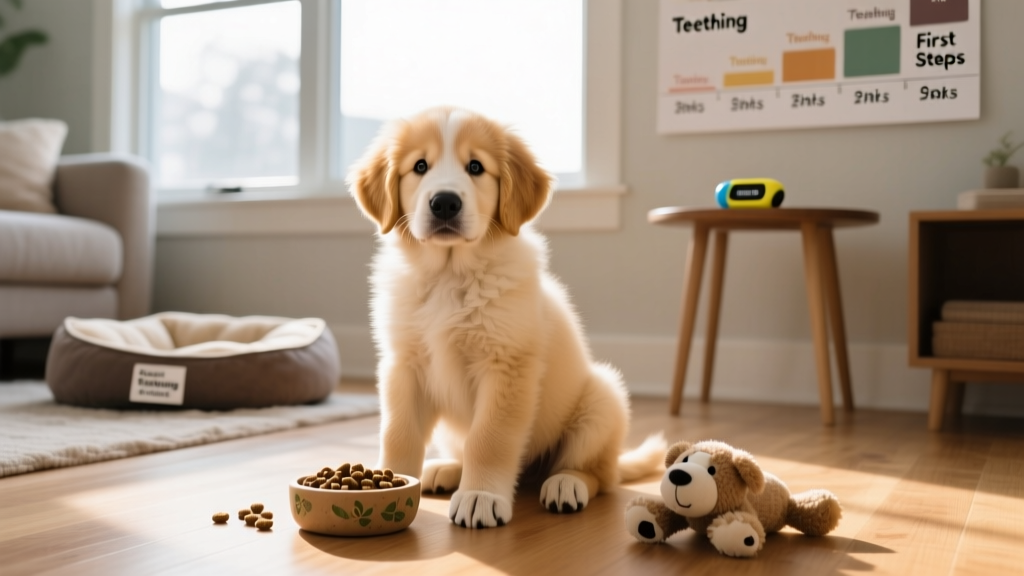
English Mastiff Puppies: Complete Growth, Feeding & Training Guide
Everything you need to raise English Mastiff puppies: age-specific milestones, feeding portions, vaccination schedule, potty training timelines, and first-year costs.

Bringing Home English Mastiff Puppies: What Makes This Breed Different
Raising English Mastiff puppies is unlike raising any other breed. These gentle giants will grow from a 1-pound newborn into a 150-220 lb adult within 18-24 months, and every decision you make in the first year shapes their skeletal health, temperament, and lifelong habits. Their massive growth rate demands precise nutrition management — overfeeding causes developmental orthopedic diseases like osteochondrosis and hip dysplasia, while underfeeding stunts their frame.
This guide covers the exact milestones, feeding portions, vaccination schedules, and training timelines you need from week 4 through month 12. Whether you're on a breeder's waiting list or just brought your pup home, you'll find breed-specific numbers and realistic expectations — not generic puppy advice that could leave you unprepared for a dog that will eventually weigh more than most adults.
When Should I Bring My English Mastiff Puppy Home?
The ideal age to bring an English Mastiff puppy home is 8 to 10 weeks. While some breeders hold giant-breed puppies until 10-12 weeks to ensure proper socialization with littermates, 8 weeks is the minimum acceptable age per AKC guidelines.
Why not earlier? English Mastiff puppies learn critical bite inhibition and canine communication from their mother and siblings between weeks 6-8. Puppies removed before 8 weeks show higher rates of fear-based reactivity and resource guarding later in life. For a breed that will weigh 200 lb, you cannot afford behavioral deficits.
What to expect at pickup (8 weeks):
- Weight: 15-25 lb (varies by litter size and dam nutrition)
- Already weaned onto solid food (ask breeder for exact brand/formula)
- First DHPP vaccine administered (usually at 6-8 weeks)
- First deworming completed (pyrantel pamoate at 2, 4, and 6 weeks)
- Veterinary health certificate and written health guarantee
English Mastiff Puppy Milestones: Week-by-Week Timeline
Giant breeds develop on a different timeline than smaller dogs. Here's what to expect at each critical stage.
Weeks 4-8 (Still with Breeder)
This is the transitional period. Puppies begin eating gruel (kibble soaked in puppy formula) around week 4, transition to dry kibble by week 6, and learn social hierarchy through littermate play. Eyes and ears are fully functional. Fear imprinting begins around week 8 — negative experiences during this window can create lasting phobias.
Weeks 8-12 (Adjustment Period)
Your puppy is learning your household rules. Expect 18-20 hours of sleep per day. Growth rate is explosive — your Mastiff may gain 2-5 lb per week during this window. Coordination is still clumsy; stairs should be limited to prevent joint stress. This is peak socialization readiness.
Weeks 12-16 (Building Confidence)
Teething discomfort begins as baby teeth loosen. Chewing intensity increases dramatically. Your puppy can hold their bladder for approximately 1 hour per month of age (so 3-4 hours at 12 weeks, 4 hours at 16 weeks). Fear periods may occur around 12-14 weeks — previously confident puppies may suddenly seem wary of new stimuli.
Weeks 16-24 (The Teenage Phase Begins)
Adult teeth erupt between 4-6 months. Your Mastiff may reach 60-90 lb by 6 months. Hormonal changes begin if not yet spayed/neutered (most vets recommend waiting until 12-18 months for giant breeds to allow growth plate closure). Independence increases — recall reliability may temporarily decline.
Months 6-12 (Adolescent Giant)
Your English Mastiff will reach approximately 70-80% of adult weight by 12 months but won't fill out in chest and muscle mass until 24-36 months. Energy levels may actually decrease compared to smaller adolescent breeds — Mastiffs are not high-endurance dogs. Continue controlled exercise to protect developing joints.
Feeding Schedule: Exact Portions by Age and Weight
Overfeeding is the single most common nutritional mistake with English Mastiff puppies. Excess calories accelerate growth beyond what their cartilage and bone can support, leading to panosteitis ("growing pains"), hypertrophic osteodystrophy (HOD), and permanent joint damage. Your goal is lean, steady growth — you should be able to feel (but not prominently see) ribs.
Feed a large-breed puppy formula that meets AAFCO standards for growth. These formulas contain controlled calcium (1.0-1.8% on a dry matter basis) and phosphorus ratios critical for giant-breed skeletal development. Never supplement with calcium tablets — this can cause abnormal bone remodeling.
| Age | Meals Per Day | Approx. Cups/Day (Large-Breed Puppy Kibble) | Expected Weight Range |
|---|---|---|---|
| 8-12 weeks | 3-4 meals | 3-5 cups | 20-40 lb |
| 3-4 months | 3 meals | 5-7 cups | 40-65 lb |
| 5-6 months | 2-3 meals | 7-10 cups | 65-95 lb |
| 7-9 months | 2 meals | 9-12 cups | 95-135 lb |
| 10-12 months | 2 meals | 10-14 cups | 130-170 lb |
Important feeding rules for Mastiffs:
- Use a slow-feeder bowl or snuffle mat — giant breeds are at elevated risk for gastric dilatation-volvulus (bloat/GDV). Rapid eating is a known risk factor.
- Never exercise your puppy 1 hour before or 2 hours after meals.
- Elevated food bowls are no longer recommended — research suggests they may actually increase bloat risk in large breeds.
- Transition to adult large-breed food between 18-24 months, not 12 months as with smaller breeds.
- Always provide fresh water, but don't allow gulping large volumes immediately after eating.
Vaccination Schedule for English Mastiff Puppies
Your puppy's vaccination timeline follows standard protocols, but because Mastiff puppies are often larger than expected at each visit, your vet may adjust injection sites to account for muscle mass. The core vaccine series protects against distemper, adenovirus (hepatitis), parvovirus, and parainfluenza (DHPP/DAPP).
| Age | Vaccine | Notes |
|---|---|---|
| 6-8 weeks | DHPP (1st dose) | Usually given by breeder before pickup |
| 10-12 weeks | DHPP (2nd dose), Bordetella (optional) | Bordetella recommended if attending puppy classes |
| 14-16 weeks | DHPP (3rd dose), Rabies | Rabies required by law; timing varies by state |
| 12-16 months | DHPP booster, Rabies booster | Then every 3 years per AAHA guidelines |
Non-core vaccines to discuss with your vet: Leptospirosis (if you live near standing water or wildlife), Lyme disease (tick-endemic regions), and Canine Influenza (H3N2/H3N8 — if boarding or in high-density dog areas). Your veterinarian will determine which are appropriate based on your geographic location and lifestyle.
The Critical Socialization Window: Weeks 3-14
English Mastiffs are naturally watchful and reserved with strangers. Without deliberate socialization during the 3-14 week critical period (identified by veterinary behaviorists as the window when puppies form lasting impressions of what is "safe"), your Mastiff may develop fear-based aggression or extreme shyness — dangerous traits in a 200 lb dog.
Socialization does not mean overwhelming your puppy. It means controlled, positive exposures where your puppy remains under their fear threshold and receives high-value treats (boiled chicken, cheese, freeze-dried liver) for calm behavior.
English Mastiff Socialization Checklist
- Surfaces: Grass, gravel, tile, metal grates, wet pavement, carpet, sand
- People: Children (supervised), people wearing hats/sunglasses, people using wheelchairs or crutches, tall people, people with deep voices, delivery workers
- Sounds: Vacuum cleaner, thunderstorms (play recordings at low volume), doorbell, car horns, construction noise, fireworks recordings
- Handling: Paw touching, ear examination, mouth opening, nail trimming practice, being lifted (while still manageable), towel drying
- Environments: Car rides, vet clinic (happy visits only — no vaccines that day), pet-friendly stores, outdoor seating areas, different rooms of your house
- Animals: Fully vaccinated adult dogs (known health status), cats (if applicable), livestock (if rural)
- Objects: Umbrellas opening, plastic bags rustling, brooms, bicycles, skateboards
Rule of thumb: Aim for 5-10 new positive experiences per week during the socialization window. If your puppy shows fear (cowering, tucked tail, refusal to take treats), increase distance from the stimulus and let them observe without pressure. Never force interaction.
Potty Training: Realistic Timelines and Troubleshooting
English Mastiff puppies can be fully potty trained between 5 and 7 months of age, though some giant-breed individuals take until 8-9 months due to slower physical maturation of bladder sphincter control. Claims of potty training "in 3 days" are unrealistic for any breed, and especially for giant breeds with developing urinary systems.
Bladder capacity rule: A puppy can hold their bladder for approximately 1 hour per month of age, plus 1 hour. So a 3-month-old Mastiff puppy can hold for roughly 4 hours maximum — but you should take them out far more frequently to prevent accidents.
Potty Training Schedule for an 8-16 Week Mastiff Puppy
- Immediately upon waking (morning and after every nap)
- Within 15-30 minutes after every meal
- After every play session or excitement spike
- Every 1-2 hours during active daytime hours
- Once during the night (set an alarm for 2-3 AM for the first 2-3 weeks)
- Immediately before crating and immediately after release from crate
Crate training supports potty training because dogs naturally avoid soiling their sleeping space. Here are the safe maximum crate times by age:
| Age | Maximum Daytime Crate Time | Nighttime |
|---|---|---|
| 8-10 weeks | 1-2 hours | 3-4 hours (then potty break) |
| 11-14 weeks | 2-3 hours | 4-5 hours |
| 15-16 weeks | 3-4 hours | 5-6 hours |
| 5-6 months | 4-5 hours | 7-8 hours |
Crate size matters for Mastiffs: Buy a 54-inch XXL crate (such as the MidWest Ultima Pro 54" or Frisco 54" Double Door) with a divider panel. Adjust the divider so your puppy can stand, turn around, and lie down — but not so much space that they can eliminate in one corner and sleep in another. You'll remove the divider as they grow.
Troubleshooting common potty problems:
- Frequent small accidents: Rule out urinary tract infection with your vet. Also check if you're feeding too much water right before crating.
- Submissive urination when greeted: Common in Mastiff puppies. Greet calmly, avoid direct eye contact, crouch sideways, and let the puppy approach you. Never scold — this makes it worse.
- Regression after progress: Normal around fear periods (8-10 weeks, 12-14 weeks, 6-8 months). Return to more frequent potty breaks and higher-value outdoor rewards.
Teething Timeline and Safe Chew Strategies
English Mastiff puppies begin teething around 3-4 months as baby teeth (deciduous teeth) loosen and adult teeth push through. The process continues until approximately 6-7 months, when all 42 adult teeth should be fully erupted. During this window, your puppy's urge to chew will be intense — and a Mastiff puppy's jaw strength can destroy baseboards, furniture legs, and cheap dog toys within minutes.
Teething relief strategies:
- Frozen washcloths: Wet a clean washcloth, twist into a rope, freeze for 2 hours. The cold numbs sore gums. Supervise to prevent swallowing fabric.
- Kong Classic (XXL or XL for Mastiff puppies): Fill with plain yogurt mixed with pumpkin puree and freeze overnight. Provides 30-45 minutes of soothing chewing.
- Benebone Wishbone or Nylabone Dura Chew: Choose the XL or Souper size rated for dogs 50+ lb. Discard when pieces begin to break off.
- Chilled carrots or apple slices: Cold, crunchy, low-calorie. Remove apple seeds (contain trace cyanide).
Retained baby teeth: Giant breeds sometimes retain deciduous teeth alongside erupting adult teeth (especially the canine/fang teeth). If you see a "double row" of teeth persisting past 6 months, your vet may need to extract the baby teeth under sedation to prevent misalignment of the adult bite.
Common English Mastiff Puppy Problems and Solutions
Every breed has its predictable puppy challenges. Here's what Mastiff owners encounter most often and how to handle each one with force-free, positive reinforcement methods.
Puppy Biting and Nipping
Mastiff puppies explore the world with their mouths, and their baby teeth are needle-sharp. Biting peaks between 8-16 weeks and should steadily decrease with consistent training.
What to do:
- When teeth touch skin, say "ouch" in a calm, slightly high-pitched tone and immediately withdraw attention for 10-15 seconds (stand up, turn away, or step behind a baby gate).
- Redirect to an appropriate chew toy the moment they stop biting you. Reward chewing the toy with calm praise.
- Ensure your puppy is getting adequate sleep — overtired puppies bite more. Enforce crate naps if your puppy becomes mouthy after 2+ hours of activity.
- Never hold the mouth shut, slap the nose, or perform "alpha rolls." These aversive methods damage trust and can trigger defensive aggression — counterproductive with a dog that will outweigh you.
Whining and Crying in the Crate
Nighttime whining is nearly universal in the first 2-3 weeks home. Your puppy has never slept alone.
What to do:
- Place the crate in your bedroom for the first 2-4 weeks so your puppy can hear and smell you.
- Cover the crate with a breathable blanket to create a den-like feel.
- Use a Snuggle Puppy (a plush toy with a heartbeat simulator and heat pack) — many Mastiff breeders recommend these.
- If whining persists past 20-30 minutes and you've ruled out a potty need, wait for a brief moment of silence before acknowledging. Rewarding silence teaches quiet; rewarding whining teaches volume.
Destructive Chewing
Mastiff puppies have powerful jaws and a long adolescence. Destructive chewing typically peaks between 4-8 months.
What to do:
- Puppy-proof your home: use bitter apple spray on baseboards, block access to rooms with baby gates, keep shoes and remote controls in closed containers.
- Rotate chew toys every 2-3 days to maintain novelty. A bored Mastiff puppy will find its own entertainment — usually at your expense.
- Provide at least 30 minutes of structured mental enrichment daily: food puzzles, snuffle mats, frozen Kongs, and short training sessions (5-10 minutes, 2-3 times daily).
Jumping Up on People
A 15 lb puppy jumping is cute. A 150 lb adolescent Mastiff jumping can knock down children and elderly visitors. Address this early.
What to do:
- Teach "four on the floor" — reward all four paws on the ground with treats and attention. Turn away and cross your arms the moment front paws leave the floor.
- Teach an incompatible behavior: a solid "sit" for greetings. Practice with family members first, then add visitors once reliable.
- Ask guests to ignore the puppy until all four paws are down. Brief visitors before they enter — consistency from everyone is essential.
First-Year Cost Breakdown for an English Mastiff Puppy
Giant breeds cost significantly more than average dogs to raise. Here's a realistic budget for your Mastiff's first year, based on 2025-2026 pricing from veterinary cost surveys and major pet supply retailers.
| Category | Low Estimate | High Estimate | Notes |
|---|---|---|---|
| Puppy purchase (responsible breeder) | $2,000 | $4,500 | Includes health testing, AKC registration, early socialization |
| Veterinary care (vaccines, exams, spay/neuter) | $800 | $1,500 | Giant-breed spay/neuter costs more due to size |
| Food (large-breed puppy formula) | $1,200 | $2,000 | 10-14 cups/day adds up quickly |
| Supplies (crate, bed, bowls, leash, collar, gates) | $400 | $800 | XL/XXL sizes cost more; orthopedic bed recommended |
| Heartworm/flea/tick prevention (12 months) | $300 | $600 | Dosed by weight; giant-breed doses are the most expensive tier |
| Training (puppy class + basic obedience) | $200 | $600 | Group classes vs. private sessions |
| Pet insurance (optional but recommended) | $600 | $1,200 | Giant breeds have higher premiums; consider for GDV/orthopedic coverage |
| Total First Year | $5,500 | $11,200 | Excluding emergency veterinary visits |
Emergency veterinary visits for bloat, foreign body ingestion, or orthopedic injuries can add $2,000-$8,000+ per incident. Pet insurance or a dedicated emergency fund of at least $3,000 is strongly recommended for giant breeds.
Frequently Asked Questions About English Mastiff Puppies
How often should I feed my English Mastiff puppy at each age?
Feed 3-4 meals per day from 8-12 weeks, 3 meals from 3-4 months, 2-3 meals from 5-6 months, and 2 meals per day from 7 months onward. Splitting daily portions across multiple meals reduces bloat risk and maintains stable blood sugar. Never free-feed a Mastiff puppy — their appetite does not self-regulate well.
How do I stop my Mastiff puppy from biting and nipping?
Use the "ouch and withdraw" method: when teeth touch skin, say "ouch" calmly, withdraw attention for 10-15 seconds, then redirect to a chew toy. Consistency from every household member is essential. Most puppies show significant improvement by 16-20 weeks as adult teeth come in and bite inhibition training takes hold. If biting intensifies rather than decreases after 5 months, consult a certified professional dog trainer (CPDT-KA or IAABC-credentialed).
When will my English Mastiff puppy be fully potty trained?
Expect reliable potty training between 5-7 months, with some giant-breed puppies taking until 8-9 months. Consistency in schedule, high-value outdoor rewards, and proper crate training are the three factors that most influence timeline. Regression during fear periods is normal — return to more frequent outdoor trips and don't punish accidents.
What vaccines does my Mastiff puppy need and when?
The core series is DHPP (distemper, hepatitis/adenovirus, parvovirus, parainfluenza) at 6-8 weeks, 10-12 weeks, and 14-16 weeks, plus rabies at 14-16 weeks. Non-core vaccines (Bordetella, Leptospirosis, Lyme, Canine Influenza) depend on your location and lifestyle. Your veterinarian will tailor the protocol to your puppy's risk profile.
When can my puppy go outside and meet other dogs?
You can carry your puppy in public for socialization immediately after bringing them home. However, avoid areas where unknown dogs walk or eliminate (dog parks, pet store floors, shared apartment hallways) until 1 week after the final DHPP vaccine at 14-16 weeks. Controlled playdates with fully vaccinated, healthy adult dogs in private yards are acceptable earlier. Puppy socialization classes that require proof of vaccination for all attendees are generally safe after the second DHPP dose (10-12 weeks), per AVSAB recommendations.
How much exercise does an English Mastiff puppy need?
Follow the "5 minutes per month of age" rule for structured walks: a 4-month-old gets approximately 20 minutes of leash walking per day, split into two sessions. Free play in a fenced yard is fine — Mastiff puppies self-regulate and will lie down when tired. Avoid forced running, jumping from heights, or repetitive stair climbing until growth plates close (typically 18-24 months for giant breeds). High-impact exercise on developing joints increases hip and elbow dysplasia risk.
Aaron Whyte
All our authors care for dogs every day — read more of their work on the authors page.