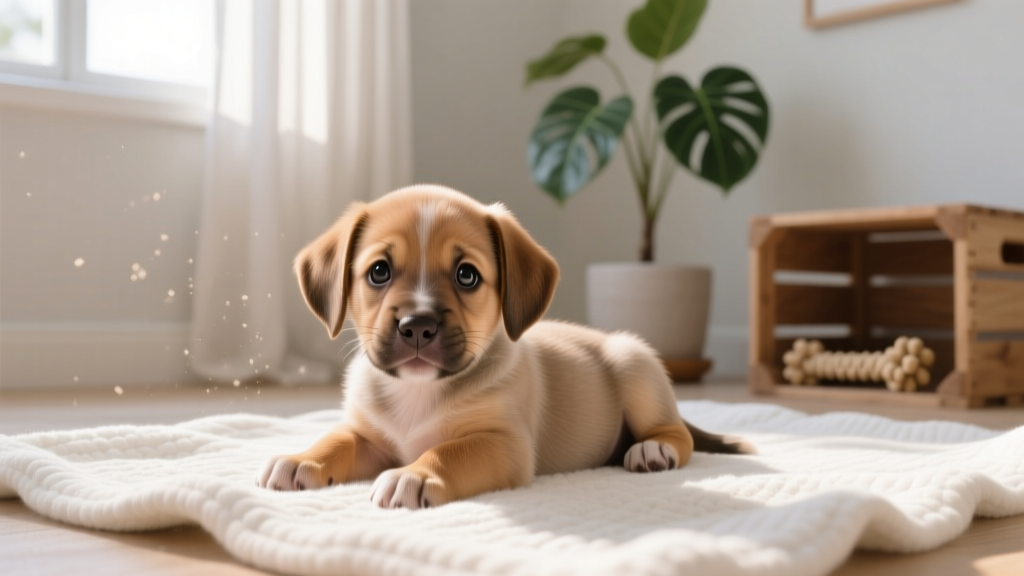
Dry Puppy Skin Remedies: A Complete Puppy Care Guide by Age & Stage
Discover safe dry puppy skin remedies alongside age-specific feeding, vaccination, potty training, and socialization milestones for your growing pup.

Why Puppies Get Dry Skin — and What's Normal vs. Concerning
Puppy skin is thinner and more sensitive than adult dog skin, making it prone to flaking, itching, and irritation during the first year. Before reaching for remedies, it helps to understand what's driving the dryness. In my years working with puppy parents, the most common culprits are low humidity in winter months, over-bathing (anything more than once a month strips natural oils), dietary deficiencies — particularly insufficient omega-3 and omega-6 fatty acids — and environmental allergens like dust mites or pollen.
Less common but important to rule out: parasitic infections such as Cheyletiella mites (sometimes called "walking dandruff"), fungal conditions like ringworm, or bacterial pyoderma. If your puppy's dry skin is accompanied by hair loss, open sores, intense scratching that interrupts sleep, or a greasy odor, consult your veterinarian before trying home remedies.
Safe Dry Puppy Skin Remedies by Age
Not every remedy is appropriate for every age. A 6-week-old puppy's skin is vastly more delicate than a 9-month-old's. Here's a breakdown of what's safe and effective at each stage:
| Age Range | Safe Remedies | Avoid |
|---|---|---|
| 4–8 weeks | Humidifier in sleeping area (cool mist, 40–50% humidity); gentle wipe-down with lukewarm damp cloth; ensure nursing mother or formula provides adequate fat content | Any topical oils, oatmeal baths, medicated shampoos, essential oils |
| 8–12 weeks | Colloidal oatmeal bath (lukewarm, 5-minute soak, once every 3–4 weeks max); coconut oil applied sparingly to dry patches (¼ tsp for small breeds, ½ tsp for large breeds); omega-3 fish oil supplement formulated for puppies (dose per label, typically 1 pump for dogs under 20 lb) | Human moisturizers with fragrance, tea tree oil (toxic to dogs), frequent bathing |
| 12–16 weeks | Continue oatmeal baths; add veterinary-recommended puppy shampoo with aloe or chamomile (e.g., Earthbath Oatmeal & Aloe Puppy Shampoo); introduce salmon oil topper to kibble (1–2 pumps daily depending on weight); humidifier at night | Hot water baths, human anti-dandruff shampoos containing zinc pyrithione or selenium sulfide |
| 16–24 weeks | All above remedies; can now consider veterinary-prescribed fatty acid supplements like Virgo Omega-3 Plus or Nutramax Welactin; wipe paws after outdoor exposure to remove allergens | Over-supplementing (excess fish oil can cause loose stools — stick to label or vet dosing) |
| 6–12 months | Full range of puppy-safe remedies; can transition to adult-formulated skin-support supplements if vet approves; regular brushing (2–3x/week) to distribute natural oils; dietary review with vet if dryness persists | Essential oil diffusers near sleeping area, undiluted apple cider vinegar rinses |
Pro tip: If dryness persists beyond 2–3 weeks of consistent home care, ask your vet about a skin scraping or allergy panel. Food allergies typically manifest as paw licking and ear infections alongside dry skin, while environmental allergies (atopic dermatitis) often appear seasonally.
Age-Specific Puppy Milestones: Weeks 4 Through 12 Months
Understanding what's developmentally normal at each stage helps you distinguish between typical puppy behavior and signs that something — including skin irritation — needs attention.
Weeks 4–8: The Litter Phase
- Physical: Baby teeth fully erupted; eyes and ears fully functional; rapid growth (gaining 5–10% of body weight weekly depending on breed).
- Behavioral: Learning bite inhibition from littermates; beginning to explore beyond the whelping area; first solid food introductions (gruel consistency at 4 weeks, soft kibble by 6 weeks).
- Skin note: Puppies this young rarely need any topical intervention. Dryness at this age often points to low ambient humidity or a parasitic issue the breeder should address.
Weeks 8–12: Home Transition
- Physical: Brain development peaks — this is the prime learning window; coordination improves dramatically; immune system relies on maternal antibodies (which begin waning around week 10).
- Behavioral: Fear imprinting period (weeks 8–11) — traumatic experiences can create lasting phobias; bonding with new family; beginning house training awareness.
- Skin note: Stress from relocation can temporarily suppress immune function, making skin more susceptible to irritation. Keep bathing to an absolute minimum during the first 2 weeks home.
Weeks 12–16: Confidence Building
- Physical: Second and third vaccination rounds completed; adult coat may begin showing at the base of hairs; growth rate slows slightly for small breeds, continues rapidly for large/giant breeds.
- Behavioral: Testing boundaries; short attention spans (30–60 seconds for training reps); beginning to understand basic cues like "sit" and name recognition.
- Skin note: Post-vaccination mild lethargy is normal; injection site reactions (small lump, mild tenderness) usually resolve in 48 hours. Report any hives, facial swelling, or vomiting immediately.
Weeks 16–24: The Juvenile Stage
- Physical: Teething begins around 12–16 weeks (baby teeth fall out, adult teeth erupt); growth plates still open; large breeds may reach 50–60% of adult weight.
- Behavioral: Chewing intensity peaks; second fear period may occur around 6–8 months; recall reliability varies wildly.
- Skin note: Hormonal changes can affect skin oil production. Some puppies develop "puppy acne" on the chin — small red bumps that usually resolve without treatment.
Months 6–12: Adolescence
- Physical: Adult teeth fully in by 7 months; growth rate slows significantly for small/medium breeds (large breeds continue growing to 18–24 months); spay/neuter typically performed around 6 months for small breeds, 9–12 months for large breeds per current veterinary recommendations.
- Behavioral: Independence-seeking; regression in previously learned cues is normal; sexual maturity brings marking, roaming, and mounting behaviors if intact.
- Skin note: Post-spay/neuter coat changes are common — some dogs develop a softer or slightly drier coat. Omega-3 supplementation can help during this transition.
Feeding Schedule: Exact Portions by Age and Weight
Proper nutrition is one of the most effective dry puppy skin remedies from the inside out. Puppies need higher fat and protein than adult dogs, and deficiencies in essential fatty acids (linoleic acid and alpha-linolenic acid) directly manifest as dry, flaky skin.
| Age | Meals per Day | Small Breed (5–20 lb adult) Cups/Day | Medium Breed (21–50 lb adult) Cups/Day | Large Breed (51–100 lb adult) Cups/Day |
|---|---|---|---|---|
| 8–12 weeks | 4 | ½ – ¾ cup | ¾ – 1¼ cups | 1 – 2 cups |
| 12–16 weeks | 3 | ½ – 1 cup | 1 – 1¾ cups | 1½ – 3 cups |
| 4–6 months | 3 | ¾ – 1¼ cups | 1½ – 2½ cups | 2 – 4 cups |
| 6–9 months | 2 | ¾ – 1¼ cups | 1½ – 2½ cups | 2½ – 4½ cups |
| 9–12 months | 2 | ½ – 1 cup (may transition to adult food) | 1½ – 2½ cups | 3 – 5 cups (stay on puppy food until 12–18 months) |
Key feeding notes:
- These are starting estimates for AAFCO-certified puppy food with 22–28% protein and 8–15% fat on a dry matter basis. Always adjust based on body condition score (BCS) — you should feel ribs without pressing hard but not see them prominently.
- Large and giant breed puppies must eat food labeled for "large breed growth" to prevent rapid bone development and joint issues. Per the AKC, large breed puppy formulas contain controlled calcium and phosphorus ratios.
- For skin health specifically, look for foods listing fish oil, flaxseed, or chicken fat in the first 10 ingredients.
- Free-feeding (leaving food out all day) is not recommended — it makes potty training harder and masks appetite changes that signal illness.
Vaccination Schedule: What Your Puppy Needs and When
Vaccines are non-negotiable for puppy health, and some post-vaccine skin reactions (mild localized dryness or flaking at the injection site) are normal. Here's the standard schedule recommended by the AVMA:
| Age | Vaccine | Notes |
|---|---|---|
| 6–8 weeks | DHPP (Distemper, Hepatitis/Adenovirus, Parainfluenza, Parvovirus) — 1st dose | Often given by breeder or rescue before you bring puppy home |
| 10–12 weeks | DHPP — 2nd dose; Bordetella (optional, recommended if attending group classes or boarding) | Maternal antibodies may interfere with first dose; this booster is critical |
| 14–16 weeks | DHPP — 3rd dose; Rabies (required by law in most US states) | Final puppy DHPP ensures protection after maternal antibodies wane |
| 12–16 months | DHPP booster; Rabies booster (1-year or 3-year depending on local law) | After this, DHPP is typically boostered every 3 years |
When can my puppy go outside and meet other dogs? Until your puppy has received their second DHPP dose (around 10–12 weeks) and waited 5–7 days for immunity to build, avoid public dog areas — parks, pet stores, dog-friendly patios. Controlled socialization with known, fully vaccinated adult dogs in private yards is generally safe after the first DHPP dose. Full protection isn't established until 5–7 days after the 14–16 week final dose.
Potty Training Timeline and Troubleshooting
Realistic expectations prevent frustration. A puppy's bladder capacity is roughly one hour per month of age, plus one. So a 3-month-old puppy can hold it approximately 4 hours — but that's a maximum, not a target.
| Age | Outing Frequency | Realistic Accident Expectation | Milestone |
|---|---|---|---|
| 8–10 weeks | Every 30–60 minutes while awake; immediately after meals, naps, play | 3–6 accidents per week is normal | Beginning to associate outdoors with elimination |
| 10–14 weeks | Every 1–2 hours; overnight crate break at 2–3 AM | 1–3 accidents per week | Starting to go to door or signal (whining, pacing) |
| 3–4 months | Every 2–3 hours; overnight stretch of 4–5 hours possible | 0–2 accidents per week | Reliable signaling developing; can hold through short naps |
| 4–6 months | Every 3–4 hours; overnight 6–8 hours for many puppies | Rare accidents (1–2 per month) | Considered "mostly house trained" by most owners |
| 6–12 months | Every 4–6 hours; full overnight hold | Occasional marking if intact; regression possible during adolescence | Fully reliable for most dogs; intact males may need longer for marking behavior to resolve post-neuter |
Troubleshooting common issues:
- Puppy pees outside then immediately pees inside: They haven't fully emptied. Stay outside longer, use a consistent "go potty" cue, and reward generously (high-value treat within 2 seconds of finishing).
- Submissive/excited urination: Common in puppies under 6 months. Don't punish — it's involuntary. Greet calmly, take them outside immediately upon arriving home, and avoid leaning over them during greetings.
- Regression at 6–8 months: Adolescent hormone surges and brain remodeling cause temporary setbacks. Return to more frequent outings and reinforce rewards. This passes in 2–4 weeks with consistency.
Socialization Window (Weeks 3–14): Your Checklist
The primary socialization period closes around 12–14 weeks — this is a biological window, not a suggestion. According to the Merck Veterinary Manual, puppies not exposed to diverse stimuli during this period are significantly more likely to develop fear-based behavioral problems later in life.
Weeks 3–5 (with breeder): Handling by multiple people, exposure to household sounds (vacuum, TV, doorbell), varied floor textures.
Weeks 8–14 (with you): Aim for 100 new positive experiences before 14 weeks. Here's your exposure checklist:
- ✅ 10+ different people (varying ages, ethnicities, heights, wearing hats/glasses/coats)
- ✅ 5+ other vaccinated, friendly dogs (varied sizes and play styles)
- ✅ 5+ surfaces (grass, gravel, metal grates, wet pavement, carpet)
- ✅ Car rides (start with 2-minute trips, build to 15 minutes)
- ✅ Grooming handling — touch ears, paws, mouth, tail daily for 30 seconds each
- ✅ Loud sounds at low volume (thunderstorm recordings, fireworks clips — pair with treats)
- ✅ Umbrellas opening, bags rustling, bicycles passing at a distance
- ✅ Being gently restrained (for future vet visits) — 5 seconds, then reward
- ✅ Alone time practice — start with 5 minutes in crate while you're in another room
- ✅ Different environments — parking lots, quiet suburban streets, outdoor seating areas (carry puppy if not fully vaccinated)
Golden rule: Every new experience must end positively. If your puppy shows fear (tucked tail, flattened ears, freezing), increase distance from the stimulus and offer high-value treats. Never force interaction — flooding a puppy with scary stimuli during this window can create permanent fear responses.
Teething Timeline and Relief Strategies
Puppies have 28 baby teeth that begin erupting around 3–4 weeks and are fully in by 6–8 weeks. The transition to 42 adult teeth begins around 12–16 weeks and is usually complete by 6–7 months.
| Age | What's Happening | Relief Strategies |
|---|---|---|
| 3–6 weeks | Baby teeth erupting; nursing mother may start avoiding puppy | Soft teething rings designed for puppies (KONG Puppy Teething Stick) |
| 12–16 weeks | Incisors and canines begin loosening; increased chewing and drooling | Frozen wet washcloth (twist, soak in water, freeze); Nylabone Puppy Chew (softer formula); frozen carrot sticks for larger breeds |
| 4–5 months | Premolars and molars erupting; peak chewing intensity — furniture at highest risk | Benebone Wishbone (puppy formula); frozen stuffed KONG Classic (puppy size); rotate 4–5 chew toys to maintain novelty |
| 6–7 months | Final adult teeth settling; retained baby teeth may need veterinary extraction | Check for "double teeth" (baby tooth not falling out as adult tooth erupts) — common in small breeds; vet extraction costs $50–$150 per tooth |
Safety note: Avoid rawhide chews for puppies (choking and intestinal blockage risk), antlers (too hard — can fracture developing teeth), and any chew toy smaller than your puppy's mouth. If you can dent a chew toy with your thumbnail, it's generally safe for puppy teeth.
Crate Training Progression with Time Limits
Crate training supports potty training, prevents destructive chewing, and gives your puppy a safe den. Time limits are critical — over-crating causes anxiety and can worsen skin conditions through stress.
| Age | Maximum Daytime Crate Time | Maximum Overnight Crate Time | Notes |
|---|---|---|---|
| 8–10 weeks | 30–60 minutes | 2–3 hours (set alarm for potty break) | Crate should be just large enough to stand, turn, and lie down — use a divider in a larger crate |
| 10–14 weeks | 1–2 hours | 3–4 hours (one overnight break) | Feed meals in crate; practice with door open during playtime |
| 3–4 months | 2–3 hours | 5–6 hours (may sleep through) | Begin leaving room while crated for short periods to prevent separation anxiety |
| 4–6 months | 3–4 hours | 7–8 hours | Can transition to exercise pen for longer daytime confinement if needed |
| 6+ months | 4–5 hours (not a daily routine — arrange midday breaks) | 8 hours | Consider dog walker or daycare for days exceeding 5 hours |
Common Puppy Problems and Solutions
Puppy Biting and Nipping
Mouthing is normal puppy communication — they explore the world with their mouths. The goal is teaching bite inhibition (soft mouth), not eliminating mouthing entirely until they mature.
- Redirect: When teeth touch skin, say "oops" calmly, withdraw attention for 5 seconds, then offer a chew toy.
- Time-out method: If biting persists after 2 redirects, calmly place puppy in a playpen for 30–60 seconds. This teaches that biting ends fun.
- Manage arousal: Most biting escalates when puppies are overtired. Enforce naps — puppies need 18–20 hours of sleep per day in the first few months.
- Never: Hold the mouth shut, alpha roll, yell, or use physical punishment. These methods increase fear and can worsen biting or create defensive aggression.
Nighttime Whining in the Crate
- Ensure puppy has eliminated right before crating.
- Place crate near your bed initially — proximity reduces anxiety.
- Use a Snuggle Puppy (with heartbeat simulator) or a warm water bottle wrapped in a towel.
- If whining continues after a potty break and comfort, wait 5–10 minutes before responding to avoid reinforcing the behavior. Distinguish between "I'm lonely" whining and "I need to pee" whining (the latter is more urgent, often with scratching at the crate).
Destructive Chewing
- Puppy-proof one room completely rather than trying to protect the whole house.
- Provide 5–7 appropriate chew toys of varying textures.
- Use bitter apple spray (e.g., Grannick's Bitter Apple, ~$8–$12) on furniture legs and cords as a deterrent — test on a hidden area first.
- Rotate toys weekly to maintain novelty.
First-Year Cost Breakdown
Budgeting realistically prevents sticker shock and ensures you can afford consistent skin care and preventive health measures throughout puppyhood.
| Category | Low Estimate | Mid Estimate | High Estimate | Notes |
|---|---|---|---|---|
| Veterinary (vaccines, wellness exams, spay/neuter) | $600 | $1,200 | $2,500 | Includes 3–4 puppy visits, fecal tests, heartworm prevention start; spay/neuter costs vary by size and region |
| Food (puppy formula, 12 months) | $300 | $600 | $1,200 | Small breeds eat less; large breed puppy food costs more per bag; premium/fresh food diets push costs higher |
| Supplements (omega-3 for skin, probiotics) | $60 | $150 | $300 | Fish oil toppers range $12–$25/bottle lasting 1–2 months |
| Supplies (crate, bed, bowls, leash, collar, toys, grooming tools) | $200 | $450 | $800 | Quality wire crate: $40–$80; orthopedic puppy bed: $30–$90; grooming kit: $20–$50 |
| Training (group classes, private sessions) | $100 | $350 | $800 | Group puppy class: $100–$200 for 6 weeks; private trainer: $75–$150/session |
| Preventive medications (heartworm, flea/tick) | $150 | $300 | $500 | Year-round prevention recommended; Simparica Trio, NexGard, or Interceptor Plus |
| Pet insurance (optional but recommended) | $360 | $600 | $960 | $30–$80/month depending on breed, age, deductible; enroll before first illness for best coverage |
| Total First Year | $1,770 | $3,650 | $7,060 | Does not include purchase/adoption price or emergency vet visits |
Frequently Asked Questions
When should I bring my puppy home?
The ideal age is 8–10 weeks. Puppies removed from their mother and littermates before 8 weeks miss critical socialization lessons — particularly bite inhibition and canine communication signals. Some breeders of small or toy breeds keep puppies until 10–12 weeks due to their fragility and slower development. Avoid any breeder offering puppies younger than 7 weeks.
How often should I feed my puppy?
At 8–12 weeks, feed 4 meals per day spaced roughly 4 hours apart during waking hours. Transition to 3 meals at 12–16 weeks, and 2 meals by 6 months. Consistent meal timing (rather than free-feeding) supports potty training predictability and lets you monitor appetite changes that could signal illness.
When will my puppy be fully potty trained?
Most puppies are reliably house trained between 4–6 months, meaning fewer than 1–2 accidents per month. Full reliability — including no accidents during schedule disruptions, guests visiting, or weather changes — typically solidifies between 8–12 months. Small breeds may take longer due to smaller bladders. If accidents increase suddenly at any age, rule out a urinary tract infection with your vet.
How do I stop puppy biting and nipping?
You can't stop it immediately — it's developmentally normal until 5–6 months. Instead, teach bite inhibition through consistent redirection to chew toys, brief attention withdrawal when teeth touch skin, and ensuring your puppy gets adequate sleep (overtired puppies bite more). Most puppies significantly reduce mouthing by 6–7 months as adult teeth fully erupt and they mature. If biting is intense, breaks skin, or is accompanied by growling and stiffening, consult a certified positive-reinforcement trainer or veterinary behaviorist.
Can I bathe my puppy to help with dry skin?
Yes, but infrequently and with the right products. Limit baths to once every 3–4 weeks using lukewarm water and a puppy-specific oatmeal or aloe shampoo. Over-bathing is a leading cause of dry puppy skin because it strips protective oils. Between baths, use a damp cloth for spot cleaning and a soft-bristle brush to distribute natural oils across the coat. If your puppy gets into something messy, rinse with plain water rather than shampooing every time.
When should I worry about my puppy's dry skin?
Consult your veterinarian if dry skin is accompanied by any of the following: hair loss in patches, redness or inflammation, persistent scratching that causes wounds, greasy or waxy buildup, a yeasty or foul odor, circular lesions (possible ringworm), or visible parasites (tiny white moving specks could be Cheyletiella mites). These signs suggest an underlying condition that requires professional diagnosis — potentially skin scrapings, fungal cultures, or allergy testing — rather than home remedies alone.
Tom Renshaw
All our authors care for dogs every day — read more of their work on the authors page.