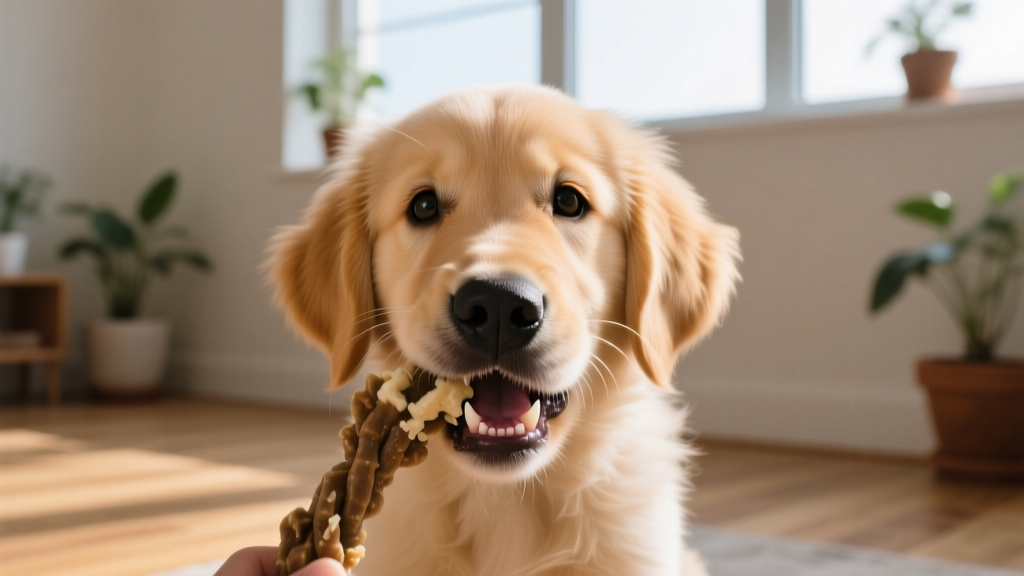
Do Puppies Lose Their Baby Teeth? Complete Teething & Puppy Care Timeline
Do puppies lose their baby teeth? Yes — typically between 12 and 24 weeks.

If you've found a tiny, rice-grain-sized tooth on your living room floor, you're not alone — and your puppy is perfectly fine. The question do puppies lose their baby teeth comes up constantly among first-time owners, and the short answer is a definitive yes. Puppies develop 28 deciduous (baby) teeth that begin falling out between 12 and 16 weeks of age, replaced by 42 permanent adult teeth by the time they're 6 to 7 months old.
But teething is just one thread in a much larger tapestry of puppy development. This guide walks you through every milestone from week 4 through month 12 — with exact feeding portions, vaccination dates, potty training expectations, and cost breakdowns so you can plan with confidence.
Do Puppies Lose Their Baby Teeth? The Complete Teething Timeline
Puppies are born without visible teeth. Their deciduous teeth erupt through the gums in a predictable sequence, and the transition to adult teeth follows an equally reliable pattern. Understanding this timeline helps you distinguish normal teething discomfort from problems that require veterinary attention.
Baby Tooth Eruption (Weeks 3–8)
- Weeks 3–4: Deciduous incisors (front teeth) begin erupting — 6 upper, 6 lower
- Weeks 4–5: Deciduous canines (fangs) emerge — 2 upper, 2 lower
- Weeks 5–6: Deciduous premolars appear — 6 upper, 6 lower
- Week 8: Full set of 28 baby teeth typically in place
Adult Tooth Transition (Weeks 12–28)
- Weeks 12–16: Incisors shed first — you may find tiny teeth in bedding or toys
- Weeks 16–20: Canines fall out — this is when "double fangs" (retained baby canines alongside emerging adult canines) are most noticeable
- Weeks 20–24: Premolars transition; adult molars erupt behind them (puppies have no deciduous molars)
- Weeks 24–28: Full set of 42 adult teeth should be in place
Teething Relief Strategies & Safe Chew Recommendations
During the 12–28 week window, your puppy will seek relief from gum soreness through chewing. The key is redirecting that instinct to appropriate items rather than your shoes or furniture.
| Age Range | Recommended Items | Avoid |
|---|---|---|
| 12–16 weeks | Frozen damp washcloth (knot one end), Nylabone Puppy Chew (soft formula), KONG Puppy (XS, stuffed with plain yogurt and frozen) | Hard antlers, cooked bones, ice cubes (too hard for emerging teeth) |
| 16–20 weeks | Benebone Puppy (small), frozen carrot sticks, West Paw Zogoflex Tux (small, with peanut butter) | Rawhide chews, hard nylon bones, tennis balls (abrasive to gums) |
| 20–28 weeks | KONG Classic (small, red rubber), Bullymake chew toys, Whimzees Teenies dental chews | Weight-bearing bones from large animals, hooves, any toy harder than a fingernail |
The thumbnail test: Press your thumbnail into the chew toy. If you can't leave an indent, it's too hard for a teething puppy and risks slab fractures on the carnassial teeth. According to the Merck Veterinary Manual, tooth fractures are among the most common dental injuries in puppies.
- Retained baby teeth after 7 months (adult tooth fully erupted alongside baby tooth)
- Bleeding that doesn't stop within 10 minutes
- Refusal to eat for more than 24 hours
- Swelling or pus around the gum line
- Foul breath beyond normal "puppy breath" odor
Age-Specific Puppy Milestones: What to Expect Week by Week
Every puppy develops on a slightly different schedule, but these milestones represent well-established developmental windows recognized by veterinary behaviorists and cited by the American Kennel Club.
Weeks 4–8: The Litter Phase
During this period, your puppy is still with their breeder or foster. Critical developments include:
- Social play with littermates: Bite inhibition learning begins — puppies that yelp when bitten too hard teach siblings to soften their mouths
- Introduction to solid food: Kibble softened with warm water or puppy milk replacer, offered 3–4 times daily
- Sensory exposure: Exposure to varied surfaces (tile, carpet, grass), household sounds, and gentle handling of paws, ears, and mouth
- First deworming: Typically at weeks 2, 4, 6, and 8 per AVMA guidelines
Weeks 8–12: Homecoming and Bonding
This is when most puppies join their new families. Expect:
- Sleep: 18–20 hours per day — puppies this age need enormous amounts of rest
- Attention span: 2–5 minutes per training session, maximum
- Bladder capacity: Roughly 1 hour per month of age (so a 2-month-old puppy can hold it about 2 hours, but shouldn't be expected to)
- Fear period: Weeks 8–11 often include a heightened sensitivity to novel stimuli — keep experiences positive and avoid traumatic events
Weeks 12–16: Confidence Building
- Training readiness increases: Can learn sit, down, come, and name recognition reliably
- Baby teeth begin shedding: Chewing intensity increases
- Second fear period may begin: Around 14–16 weeks, some puppies become temporarily more cautious
- Bladder control improves: Can manage 3–4 hours between potty breaks during the day
Weeks 16–24: Adolescence Approaching
- Adult teeth transitioning: Peak teething discomfort
- Energy surges: Need structured exercise and mental stimulation
- Testing boundaries: May "forget" previously learned commands — consistency is critical
- Social maturity begins: Interactions with other dogs become more complex
Months 6–12: Adolescence
- Sexual maturity: Intact females may experience first estrus cycle; discuss spay/neuter timing with your vet
- Adult teeth fully in: If baby teeth are retained past 7 months, veterinary extraction may be needed
- Energy peak: Most breeds hit their highest activity levels between 8–14 months
- Training consolidation: Advanced commands and reliable recall development
Feeding Schedule: Exact Portions by Age and Weight
Puppies require significantly more calories per pound of body weight than adult dogs. Their small stomachs demand frequent, measured meals. The portions below are based on feeding a standard AAFCO-approved puppy kibble (approximately 400 kcal/cup, such as Purina Pro Plan Puppy or Royal Canin Puppy).
| Age | Meals/Day | Small Breed (10–25 lb adult) | Medium Breed (25–50 lb adult) | Large Breed (50–90 lb adult) |
|---|---|---|---|---|
| 8–12 weeks | 4 | ¼–½ cup/day | ½–¾ cup/day | ¾–1¼ cups/day |
| 12–16 weeks | 3 | ⅓–⅔ cup/day | ¾–1 cup/day | 1–2 cups/day |
| 16–24 weeks | 3 | ½–¾ cup/day | 1–1½ cups/day | 1¾–3 cups/day |
| 6–9 months | 2 | ½–¾ cup/day | 1½–2 cups/day | 2½–4 cups/day |
| 9–12 months | 2 | Adult portions* | 2–2½ cups/day | 3–5 cups/day |
*Small breeds often transition to adult food at 9–10 months; large breeds may stay on puppy formula until 12–18 months. Always check the food label's AAFCO statement and consult your veterinarian for breed-specific guidance.
Large breed note: Puppies expected to reach over 50 lb as adults should be fed a kibble specifically formulated for large-breed puppies. These diets contain controlled calcium and phosphorus levels to prevent developmental orthopedic diseases like hypertrophic osteodystrophy (HOD) and osteochondritis dissecans (OCD).
Vaccination Schedule: Core and Non-Core Immunizations
Your puppy's immune system is immature at birth. Maternal antibodies from colostrum provide temporary protection, but these antibodies also interfere with early vaccines — which is why puppies receive a series of boosters rather than a single shot.
| Age | Vaccine | Type | Typical Cost (per visit) |
|---|---|---|---|
| 6–8 weeks | DHPP (Distemper, Hepatitis/Adenovirus, Parainfluenza, Parvovirus) — 1st dose | Core | $25–$50 |
| 10–12 weeks | DHPP — 2nd dose; Bordetella (optional, recommended if attending puppy classes) | Core + Non-Core | $35–$65 |
| 14–16 weeks | DHPP — 3rd dose; Rabies (required by law in most US states) | Core | $40–$75 |
| 12–16 months | DHPP booster; Rabies booster; Bordetella (annual if exposed) | Core + Non-Core | $50–$90 |
Non-core vaccines to discuss with your vet based on lifestyle:
- Leptospirosis: Recommended for dogs exposed to wildlife, standing water, or urban rodent populations
- Lyme disease: For dogs in tick-endemic regions (Northeast, Upper Midwest, Pacific Coast)
- Canine influenza (H3N2/H3N8): For dogs in boarding, daycare, or dog-show environments
The Critical Socialization Window: Weeks 3–14
Research by veterinary behaviorists, including the landmark studies referenced by the AVMA, identifies weeks 3 through 14 as the primary socialization period. During this window, puppies form lasting impressions about what is safe versus threatening. Inadequate socialization during this period is the single strongest predictor of fear-based behavioral problems in adult dogs.
Socialization Exposure Checklist
Aim for positive, non-forceful exposure to each of these categories before 14 weeks. Carry your puppy in public spaces until fully vaccinated — do not place them on the ground where unknown dogs have been.
- People (10+ types): Children, elderly individuals, people wearing hats, sunglasses, uniforms, hoodies, beards, tall people, people using wheelchairs or crutches
- Surfaces (8+ types): Grass, gravel, tile, hardwood, metal grates, wet pavement, sand, stairs
- Sounds (10+ types): Vacuum cleaner, doorbell, thunder (play recordings at low volume), traffic, construction noise, fireworks recordings, clapping, whistles, alarms, hair dryer
- Handling exercises (daily): Paw handling, ear inspection, mouth/tooth examination, collar grabs, gentle restraint, nail clipping simulation, towel wrapping
- Novel objects (weekly): Umbrellas opening, plastic bags, balloons, bicycles, skateboards, shopping carts
- Other animals (supervised): Fully vaccinated, temperament-tested adult dogs; cats (if household has them); livestock (if rural)
The 100-in-100 rule: Many trainers recommend exposing your puppy to 100 new positive experiences in their first 100 days home. This isn't a rigid quota — it's a mindset that encourages daily novelty and enrichment.
Potty Training Timeline: Realistic Expectations and Troubleshooting
Let's set a realistic expectation right now: most puppies are not reliably house-trained until 4 to 6 months of age. Some small breeds take 8 to 12 months due to their proportionally smaller bladders and higher metabolisms. Anyone promising "potty trained in 3 days" is selling you frustration.
Potty Training Milestones
- 8–10 weeks: Take outside every 1–2 hours, including overnight. Expect accidents — you're building a habit, not expecting perfection.
- 10–14 weeks: Intervals stretch to 2–3 hours. Puppy begins showing pre-elimination signals (circling, sniffing, restlessness).
- 14–20 weeks: Can hold 3–4 hours during the day. Overnight stretches of 5–6 hours become possible.
- 20–28 weeks: Most puppies can signal or wait 4–6 hours. Accidents become rare if routine is consistent.
- 6–12 months: Reliable house training for most breeds. Small breeds may still need a midday break.
Troubleshooting Common Potty Problems
Submissive/excitement urination: Common in puppies under 6 months. Don't punish — ignore the behavior, greet calmly, and take outside immediately after arrivals. Most puppies outgrow this.
Regression at 4–5 months: Often coincides with teething discomfort or a fear period. Return to more frequent outings and higher-value treats for outdoor elimination.
Crate accidents overnight: If your puppy soils the crate, the crate may be too large (they're eliminating in one corner and sleeping in another). Use a divider to size it so they can stand, turn, and lie down — no more. Alternatively, set an alarm for a 2 AM potty break during the first few weeks.
Crate Training Progression: Time Limits by Age
A crate should be your puppy's den — a safe, comfortable retreat — never a punishment space. The general guideline for maximum crate time is one hour per month of age, plus one, during the day. Overnight, puppies can typically manage slightly longer because they're less active.
| Age | Daytime Maximum | Overnight Maximum | Notes |
|---|---|---|---|
| 8–10 weeks | 1–2 hours | 3–4 hours (set an alarm) | Keep crate in bedroom for reassurance |
| 10–14 weeks | 2–3 hours | 4–5 hours | Begin short absences from the room |
| 14–18 weeks | 3–4 hours | 5–6 hours | Can begin moving crate to a quieter area |
| 18–24 weeks | 4–5 hours | 7–8 hours | Most puppies sleep through the night |
| 6–12 months | 5–6 hours | 8 hours | Consider dog walker for midday break |
Important: No puppy or adult dog should be crated for more than 8 hours total without a break for exercise, hydration, and elimination. Extended crating leads to anxiety, muscle atrophy, and behavioral deterioration.
Common Puppy Problems: Biting, Chewing, and Whining
Puppy Biting and Nipping
Mouthing is normal canine behavior — puppies explore the world with their mouths, and they haven't yet learned that human skin is entirely off-limits. Here's how to address it using positive reinforcement methods:
- Redirect: When teeth touch skin, immediately offer an appropriate chew toy. Praise enthusiastically when they bite the toy instead.
- Withdraw attention: If redirecting doesn't work, stand up, cross your arms, and be still for 10–15 seconds (a "time-out" from play). Resume interaction only when all four paws are on the floor and mouth is calm.
- Teach "leave it": Start with a treat in a closed fist. When your puppy stops nosing at your hand, mark with "yes" and reward from your other hand.
- Ensure adequate exercise: Overtired and under-exercised puppies bite more. A 10-minute structured play session can reduce nipping dramatically.
Never hold your puppy's mouth shut, push fingers into their throat, or use physical punishment. These methods damage trust and can escalate aggression. The ASPCA recommends force-free redirection as the gold standard for managing puppy mouthing.
Destructive Chewing
Peak chewing coincides with teething (3–6 months) and adolescent exploration (6–12 months). Management is more effective than correction:
- Puppy-proof: Remove shoes, remote controls, and cords from reach. Use bitter apple spray on furniture legs if needed.
- Rotate toys: Offer 3–4 toys at a time, rotating weekly to maintain novelty.
- Supervise or confine: When you can't watch, your puppy should be in a crate or puppy-safe pen.
Whining and Crying
New puppies whine for predictable reasons: loneliness (especially overnight), need to eliminate, boredom, or overstimulation. Before responding, run through a quick checklist:
- Does the puppy need to go outside?
- Has it been more than 2 hours since the last meal or water?
- Is the crate too warm, too cold, or in a drafty area?
- Has the puppy had adequate physical and mental stimulation today?
If all needs are met and the whining continues, wait for a brief pause in the noise before opening the crate or providing attention — this teaches that quiet, not noise, earns your response.
First-Year Cost Breakdown: Budgeting for Your Puppy
Puppy ownership costs more in the first year than any subsequent year. Here's a realistic breakdown based on 2026 US pricing data:
| Category | Low Estimate | Medium Estimate | High Estimate |
|---|---|---|---|
| Puppy purchase/adoption fee | $100 (rescue) | $1,200 (responsible breeder) | $3,500+ (specialty breed) |
| Veterinary care (vaccines, spay/neuter, deworming, microchip) | $400 | $700 | $1,200 |
| Food (12 months, puppy formula) | $250 | $450 | $800 |
| Supplies (crate, bed, bowls, leash, collar, toys, gates) | $200 | $400 | $700 |
| Training (group classes or private sessions) | $100 (group) | $350 (group + private) | $1,200 (board-and-train) |
| Preventive medications (flea/tick, heartworm) | $150 | $250 | $400 |
| Pet insurance (optional, annual premium) | $300 | $500 | $800 |
| Emergency fund reserve (recommended) | $500 | $500 | $1,000 |
| TOTAL FIRST YEAR | $2,000 | $4,350 | $9,600 |
Hidden costs new owners overlook: Dog walking ($15–$25/walk), boarding ($40–$80/night), grooming for coated breeds ($50–$120/session, every 6–8 weeks), and damage replacement (chewed items). Budget an additional $500–$1,500 annually for these depending on your lifestyle.
Frequently Asked Questions
When should I bring my puppy home?
The optimal age is 8 to 10 weeks. Puppies removed from their litter before 8 weeks miss critical bite-inhibition learning and social development. Some breeders of smaller breeds prefer to keep puppies until 10–12 weeks for additional maturity. Avoid bringing a puppy home during a major life transition (moving, new baby, holiday travel) if possible — stability helps adjustment.
How often should I feed my puppy at 8 weeks old?
At 8 weeks, feed 4 meals per day spaced roughly 4 hours apart during waking hours (for example: 7 AM, 11 AM, 3 PM, 7 PM). Use the feeding table above for portion guidance based on your puppy's expected adult weight. Free-feeding (leaving food out all day) is not recommended — it makes potty training unpredictable and can lead to overeating.
When will my puppy be fully potty trained?
Most puppies achieve reliable house training between 4 and 6 months of age, provided you maintain a consistent schedule. Small breeds (under 15 lb) may take 8 to 12 months due to smaller bladder capacity. "Reliable" means fewer than one accident per month. If accidents increase or your puppy strains to urinate, consult your vet to rule out urinary tract infection.
What vaccines does my puppy need and when?
Core vaccines include DHPP (Distemper, Hepatitis, Parainfluenza, Parvovirus) given as a series at 6–8, 10–12, and 14–16 weeks, plus Rabies at 14–16 weeks. Non-core vaccines like Bordetella, Leptospirosis, and Lyme depend on your puppy's lifestyle and geographic risk. Your veterinarian will tailor the schedule to your puppy's specific needs.
How do I stop puppy biting and nipping?
Redirect every bite to an appropriate chew toy, and withdraw attention (stand still, no eye contact, 10–15 seconds) if teeth touch skin. Consistency across all household members is essential. Most puppies significantly reduce mouthing by 5–6 months as adult teeth come in and they learn bite inhibition. If biting is intense or accompanied by growling and stiffening, consult a certified professional dog trainer (CPDT) or veterinary behaviorist.
When can my puppy go outside and meet other dogs?
Your puppy can be carried in public spaces (parks, outdoor cafés, pet-friendly stores) immediately after coming home — this is important for socialization. However, avoid placing your puppy on the ground where unknown dogs have been until they've completed their DHPP series (typically after the 14–16 week booster). Controlled playdates with fully vaccinated, healthy dogs in private yards are generally safe from 10–12 weeks onward. The AKC recommends balancing disease risk against the closing socialization window — discuss timing with your vet based on local parvovirus prevalence.
Tom Renshaw
All our authors care for dogs every day — read more of their work on the authors page.