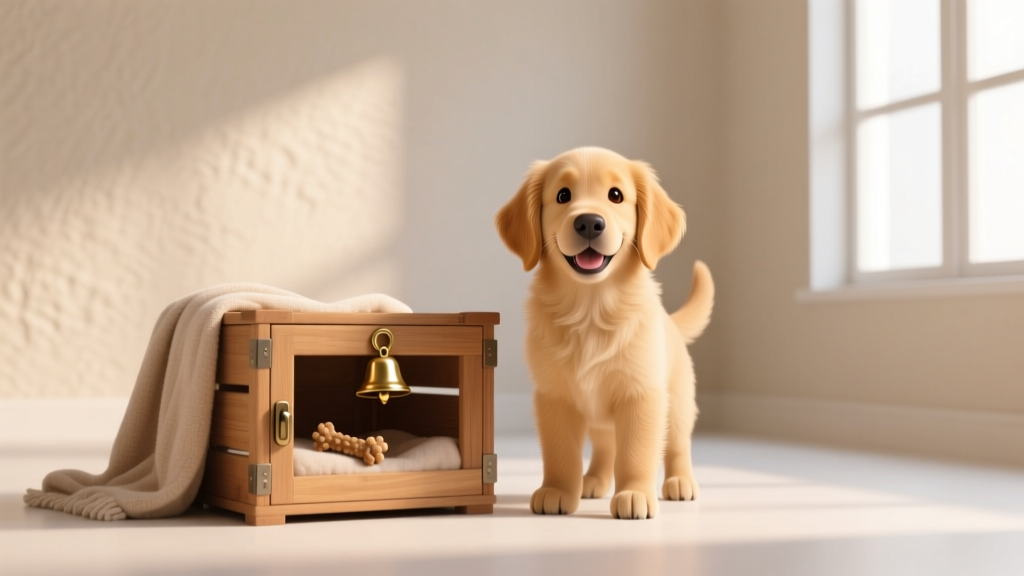
Diapers on Puppies: When They Help, When They Hurt, and
Are diapers on puppies a good idea? Learn when puppy diapers help, when they hinder potty training, and get a complete puppy care timeline for success.

Should You Put Diapers on Your Puppy? The Honest Answer
Search any puppy forum and you'll find exhausted owners asking whether diapers on puppies are a shortcut to sanity during the potty-training phase. The short answer: puppy diapers have a handful of legitimate uses, but relying on them as a house-training strategy will almost always backfire.
Diapers on puppies are appropriate for short-term medical recovery, travel, or managing incontinence in puppies with congenital conditions. They are not a substitute for structured potty training and can actually delay bladder control development if used as a crutch.
According to the American Kennel Club, consistent outdoor reward-based training remains the gold standard for housebreaking, with most puppies achieving reliability between 4 and 6 months of age. Diapers can mask the very signals — sniffing, circling, whining — that you need to read in order to reinforce good habits.
That said, this guide covers the full puppy care timeline with practical milestones, feeding schedules, vaccination windows, and real cost expectations so you can navigate the first year with confidence — whether you use diapers temporarily or skip them entirely.
When Bringing Your Puppy Home Makes Sense (and When Diapers Enter the Picture)
The American Veterinary Medical Association recommends puppies stay with their litter until at least 8 weeks of age. Many responsible breeders of smaller breeds keep puppies until 10–12 weeks to ensure better socialization and immune development.
Age-Specific Milestone Timeline
Weeks 4–8 (Still with Breeder)
- Weaning onto solid puppy food (3–4 meals/day of softened kibble)
- First socialization with littermates — bite inhibition learning begins
- First deworming at 2, 4, 6, and 8 weeks; first DHPP vaccine at 6–8 weeks
- Weight gain benchmark: puppy should roughly double birth weight by week 5
Weeks 8–12 (Home Transition)
- 3–4 meals/day; expect 1–2 cups total daily for a 10–15 lb breed puppy (adjust per food label and vet guidance)
- Crate training begins: 1–2 hour max sessions during the day, overnight with a potty break
- Potty trips every 30–60 minutes while awake, plus immediately after meals, naps, and play
- Socialization window opens wide — expose to 5–10 new surfaces, sounds, and people per week
- Diaper note: If your puppy has a medical issue (post-surgical, congenital incontinence), your vet may recommend a canine diaper temporarily. Use belly bands for males with marking issues only under veterinary guidance.
Weeks 12–16 (Building Routines)
- Transition to 3 meals/day around week 12
- Crate time can extend to 2–3 hours during the day
- Potty accidents should begin decreasing if you're consistent — aim for trips every 1–2 hours
- Teething discomfort begins around week 12–16; provide frozen Kong toys and Nylabone Puppy chews
- Second and third DHPP boosters given at this stage
Weeks 16–24 (Adolescence Begins)
- Transition to 2 meals/day around 6 months (4 months for giant breeds)
- Bladder capacity improves: rule of thumb is age in months + 1 = hours they can hold it (a 5-month-old = ~6 hours max)
- Adult teeth emerge; baby teeth should be fully lost by 6–7 months — if retained baby teeth appear, consult your vet
- Spay/neuter typically performed between 5–6 months for most breeds (discuss timing for large breeds with your vet, as some benefit from waiting until 12–18 months)
Months 6–12 (Teenage Phase)
- Feeding: 2 meals/day, transitioning to adult food at 10–12 months for small breeds, 18–24 months for giant breeds
- Energy peaks — 60–90 minutes of structured exercise daily for most breeds
- Regression in potty training is common around 8–10 months; return to more frequent outdoor trips
- Diaper note: If you're still relying on diapers at this stage for house training, reassess your routine. A certified positive-reinforcement trainer can identify gaps. Medical causes should be ruled out by your veterinarian.
Feeding Schedule: Exact Portions by Age and Weight
Puppy nutrition is not one-size-fits-all. The following table uses AAFCO growth-stage guidelines and assumes a calorie-dense, AAFCO-approved puppy kibble (approximately 400 kcal/cup). Always check your specific food's guaranteed analysis and feeding chart.
| Puppy Weight (Expected Adult) | 8–12 Weeks | 12–16 Weeks | 4–6 Months | 6–12 Months |
|---|---|---|---|---|
| Small (under 20 lb / 9 kg) | ½–¾ cup, 4x/day | ¾–1 cup, 3x/day | 1–1¼ cups, 2x/day | 1–1½ cups, 2x/day (adult food) |
| Medium (20–50 lb / 9–23 kg) | ¾–1¼ cups, 4x/day | 1¼–2 cups, 3x/day | 2–2¾ cups, 2x/day | 2½–3½ cups, 2x/day |
| Large (50–90 lb / 23–41 kg) | 1–2 cups, 4x/day | 2–3 cups, 3x/day | 3–4 cups, 2x/day | 4–5½ cups, 2x/day (large-breed formula) |
| Giant (90+ lb / 41+ kg) | 1½–3 cups, 4x/day | 3–4 cups, 3x/day | 4–6 cups, 2x/day | 5–8 cups, 2x/day (large-breed puppy until 18–24 mo) |
Key feeding rules: Use a large-breed puppy formula for dogs expected to exceed 50 lb (23 kg) as adults — these formulas have controlled calcium and phosphorus ratios to prevent developmental orthopedic disease. Never free-feed; measured meals help you monitor appetite changes, which are early illness indicators.
Vaccination Schedule: What Your Puppy Needs and When
The Merck Veterinary Manual outlines core and non-core vaccines for puppies. Your veterinarian will tailor this schedule to your region and your puppy's lifestyle.
| Age | Vaccine | Type | Notes |
|---|---|---|---|
| 6–8 weeks | DHPP (Distemper, Hepatitis/Adenovirus, Parainfluenza, Parvovirus) | Core | Often given by breeder; first in the series |
| 8–10 weeks | DHPP booster #2; Bordetella (optional) | Core + Non-core | Bordetella recommended if attending puppy classes or boarding |
| 10–12 weeks | DHPP booster #3; Leptospirosis (if risk area); Lyme (if tick-endemic area) | Core + Non-core | Lepto is a 2-dose series, 2–4 weeks apart |
| 14–16 weeks | DHPP final booster; Rabies (required by law) | Core | Rabies given at 12–16 weeks depending on state law; DHPP series must extend past 16 weeks for adequate maternal antibody override |
| 12 months | DHPP booster; Rabies booster; any non-core boosters | Core + Non-core | After this, DHPP typically moves to every 3 years; Rabies every 1–3 years per local law |
When can your puppy go outside and meet other dogs? Until the full DHPP series is complete (usually around 16–18 weeks of age), avoid high-traffic dog areas like dog parks and pet store floors. Controlled playdates with fully vaccinated, healthy adult dogs in private yards are generally safe and important for socialization. Discuss specific timing with your veterinarian based on local parvovirus prevalence.
Potty Training Timeline: Realistic Expectations and Troubleshooting
Here's what experienced trainers know: a puppy's bladder control develops on a biological timeline. No amount of training can override physiology.
Typical Potty Training Milestones
- 8–10 weeks: Accidents every 1–2 days are normal. Take puppy out every 30–60 minutes during active hours.
- 10–14 weeks: Accidents drop to 2–3 per week with consistent routine. Puppy begins to signal (whining, going to the door).
- 14–20 weeks: Most puppies are mostly reliable with 0–1 accidents per week if schedule is maintained.
- 5–6 months: Considered "mostly house-trained" by most owners. Can hold for 4–6 hours during the day.
- 8–12 months: Fully reliable for most breeds. Some toy breeds and easily distracted dogs may take up to 12 months.
Troubleshooting regression: If accidents suddenly increase after a period of success, rule out urinary tract infection (common in puppies), dietary changes, stress events (moves, new household members), or hormonal changes around spay/neuter timing. Always consult your veterinarian before assuming it's purely behavioral.
Why Diapers on Puppies Can Slow Potty Training
When a puppy wears a diaper, they don't experience the natural consequence of feeling wet or soiled — which is one of the mild discomforts that motivates them to seek an appropriate elimination spot. Diapers also absorb the scent markers that would otherwise remind you to clean enzymatically and redirect. If you must use diapers temporarily (post-surgery, long car trip), limit use to the specific hours needed and return to your normal potty schedule immediately afterward.
Socialization Window: Weeks 3–14 Exposure Checklist
The primary socialization period closes around 12–14 weeks of age. What your puppy experiences (or doesn't experience) during this window shapes their lifelong responses to the world. The AVMA emphasizes that positive, low-stress exposures during this period reduce fear-based behavior problems later in life.
Teething Timeline and Relief Strategies (Months 3–6)
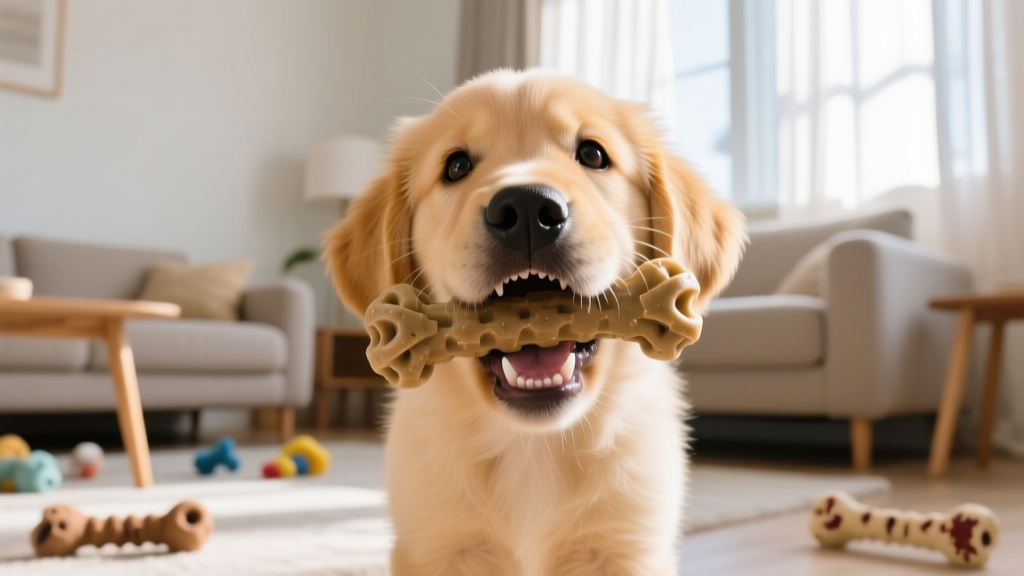
Puppies have 28 deciduous (baby) teeth that begin erupting around 3–4 weeks and are fully in by 6–8 weeks. The real teething discomfort hits when adult teeth push baby teeth out, typically between 3 and 6 months of age.
Teething progression:
- 3–4 months: Incisors begin loosening; you may find tiny teeth on the floor or in toys
- 4–5 months: Canines and premolars shift; peak chewing and nipping behavior
- 5–6 months: Most baby teeth should be gone; 42 adult teeth emerging
- 7+ months: If baby teeth remain (especially canines), consult your vet — retained deciduous teeth are common in small breeds and may require extraction
Safe teething relief options:
- Frozen Kong Classic (stuffed with peanut butter — xylitol-free only — and frozen overnight)
- Nylabone Puppy Chew (specifically the puppy-formula line, softer than adult versions)
- Frozen wet washcloth (twist, wet, freeze — supervise to prevent swallowing fabric)
- Benebone Puppy (softer rubber formulation for developing teeth)
- Carrot sticks (frozen) — low-calorie and safe to chew
Avoid: Hard antlers, cooked bones, ice cubes (too hard for developing teeth and can cause fractures), and any chew toy harder than your fingernail. If you can't indent it with your thumbnail, it's too hard for a puppy's teeth.
Common Puppy Problems: Biting, Whining, and Chewing
These three behaviors account for the majority of puppy-owner frustration. All three are normal developmental behaviors that require management, not punishment.
How to Stop Puppy Biting and Nipping
Puppies explore the world with their mouths, and bite inhibition is learned primarily from littermates between weeks 3–8. When you bring a puppy home, you continue that education:
- Redirect: When puppy teeth touch skin, immediately offer an appropriate chew toy. Praise enthusiastically when they chew the toy.
- Withdraw attention: If biting continues, stand up, cross your arms, and be still for 10–15 seconds (a "time-out" from play). Resume play when puppy is calm.
- Manage arousal: Puppies bite most when overtired or overstimulated. A puppy biting intensely at 7 PM likely needs a nap in their crate, not more play.
- Never use physical punishment: Alpha rolls, muzzle grabbing, or holding the mouth shut increase fear and can escalate biting. Positive reinforcement and management are the only methods recommended by certified trainers and veterinary behaviorists.
Nighttime Whining in the Crate
A puppy whining at 2 AM during the first week home is normal — they've never slept alone. Strategies:
- Place the crate in your bedroom for the first 1–2 weeks so your presence is reassuring
- Cover the crate with a breathable blanket to create a den-like feel
- Use a Snuggle Puppy (heartbeat toy) or a warm water bottle wrapped in a towel
- Set an alarm for a mid-night potty break (around 2–3 AM for 8–10 week olds) to prevent bladder-related waking
- If you're confident the puppy doesn't need to eliminate, wait out the whining — responding teaches that whining opens the crate door
Destructive Chewing
Puppies chew to explore and to relieve teething pain. Management is key:
- Provide 5–7 appropriate chew toys of varying textures, rotated weekly to maintain novelty
- Use bitter apple spray on furniture legs and baseboards as a deterrent (test on a hidden area first)
- Supervise or confine — an unsupervised puppy will find something inappropriate to chew
- If you catch them chewing something forbidden, trade up: offer a higher-value chew toy and praise the switch
First-Year Cost Breakdown: What to Budget
New puppy owners consistently underestimate first-year costs. Here's a realistic breakdown based on 2026 national averages for a medium-breed puppy (30–50 lb adult weight):
| Category | Low Estimate | Mid Estimate | High Estimate |
|---|---|---|---|
| Puppy purchase/adoption fee | $200 (rescue) | $1,500 (responsible breeder) | $3,500+ (show-line breeder) |
| Veterinary (vaccines, spay/neuter, wellness exams, fecal tests, heartworm prevention) | $600 | $1,200 | $2,000 (includes emergency visits) |
| Food (quality puppy kibble + treats) | $400 | $700 | $1,200 (premium/fresh food) |
| Supplies (crate, bed, leash, harness, bowls, toys, gates, grooming tools) | $250 | $500 | $800 |
| Training (group puppy class + private sessions if needed) | $150 (group class only) | $500 | $1,500 (board-and-train or intensive private) |
| Pet insurance (annual premium) | $360 | $600 | $900 |
| Miscellaneous (grooming, boarding/daycare, replacement items) | $300 | $800 | $1,500 |
| TOTAL FIRST YEAR | $2,260 | $5,800 | $11,400 |
Budget tip: Pet insurance premiums are lowest when enrolled at 8–10 weeks (before any pre-existing conditions develop). Policies from providers like Trupanion, Healthy Paws, or Lemonade typically range from $30–$75/month for puppies, and can reimburse 70–90% of unexpected veterinary bills.
When Puppy Diapers Are Actually Appropriate
Despite the cautions above, there are legitimate scenarios where diapers on puppies serve a real purpose:
- Post-surgical recovery: After spay/neuter or orthopedic surgery, a diaper or recovery suit can protect incision sites from licking. The Buster Body Suit or similar recovery garments often work better than standard diapers.
- Travel and transit: For long car rides or flights, a disposable puppy diaper can contain accidents without soiling carriers. Remove immediately upon arrival and resume normal potty routine.
- Medical incontinence: Rare congenital conditions like ectopic ureters (more common in female dogs, especially Siberian Huskies and Labrador Retrievers) cause continuous dribbling. Your veterinarian will diagnose this — treatment is usually surgical, and diapers manage symptoms in the interim.
- Female puppy heat cycles: If you have an intact female puppy who reaches sexual maturity before spay (possible in small breeds as early as 6 months), diapers manage bloody discharge. However, spaying before the first heat is recommended by most veterinarians to prevent pyometra and reduce mammary cancer risk.
If you do use diapers: Change them every 2–3 hours maximum to prevent urine scald and skin infection. Clean the area with pet-safe wipes at each change. Watch for redness, rash, or odor — these signal irritation or infection requiring veterinary attention.
Frequently Asked Questions
When should I bring my puppy home?
Most puppies are ready to leave their breeder or foster at 8 weeks of age. Small and toy breeds often benefit from staying until 10–12 weeks for better developmental stability. Never bring a puppy home before 7 weeks — early separation is linked to increased fear, aggression, and anxiety behaviors in adulthood.
How often should I feed my puppy at 10 weeks old?
At 10 weeks, feed 4 meals per day spaced roughly 4 hours apart during waking hours (e.g., 7 AM, 11 AM, 3 PM, 7 PM). Portion size depends on your puppy's expected adult weight and the specific food's caloric density — refer to the feeding table above and adjust based on your puppy's body condition score (you should feel ribs easily but not see them prominently).
When will my puppy be fully potty trained?
Most puppies achieve reliable house training between 4 and 6 months of age with consistent scheduling. Small breeds may take longer (up to 8–12 months) due to smaller bladder capacity and higher metabolisms. If your puppy is still having frequent accidents past 6 months despite a consistent routine, consult your veterinarian to rule out medical causes.
What vaccines does my puppy need and when?
Core vaccines include the DHPP series (given at 6–8, 10–12, and 14–16 weeks) and Rabies (given once between 12–16 weeks, depending on state law). Non-core vaccines like Bordetella, Leptospirosis, and Lyme are recommended based on your puppy's lifestyle and geographic risk. Your veterinarian will create a tailored protocol.
How do I stop puppy biting and nipping?
Redirect biting to appropriate chew toys, withdraw attention (stand still, no eye contact) for 10–15 seconds when teeth touch skin, and ensure your puppy gets adequate sleep (18–20 hours/day for young puppies). Never use physical punishment. If biting is intense and persistent past 5 months, consult a certified professional dog trainer (CPDT-KA or IAABC-credentialed) for personalized guidance.
When can my puppy go outside and meet other dogs?
Controlled exposure to fully vaccinated, known-healthy dogs in private settings is safe and beneficial starting at 8 weeks. Avoid public dog parks, pet store floors, and high-traffic dog areas until 7–10 days after the final DHPP booster (typically around 17–18 weeks of age). Carry your puppy in a sling or backpack for outdoor socialization walks in public areas before vaccination is complete — the mental stimulation of seeing the world is valuable even without four-on-the-ground contact.
Are diapers on puppies ever a good idea for potty training?
No — diapers are not a potty training tool. They can delay training progress by removing the natural feedback loop (feeling wet) and masking the signals you need to read. Use diapers only for short-term medical needs, travel, or managing specific conditions under veterinary guidance. For house training, invest in consistent scheduling, high-value outdoor rewards, enzymatic cleaners for accidents, and patience.
Disclaimer: This article provides educational guidance and does not replace professional veterinary advice. Always consult your veterinarian for health, vaccination, and behavioral concerns specific to your puppy. If you suspect your puppy has ingested a toxic substance, contact ASPCA Animal Poison Control at (888) 426-4435 (24/7, consultation fee applies).
Beth Carrasco
All our authors care for dogs every day — read more of their work on the authors page.